Rhône Blends: GSM and the Art of Southern French Wine

By the Sommy Team — AI-assisted, human-edited.
Updated Apr 29, 2026
Contents (12)
- Rhône Blend Grapes — The Art of Mediterranean Wine
- What Is a Rhône Blend, in 100 Words
- A Short History — Avignon, Popes, and the Trinity
- The GSM Trinity, Grape by Grape
- The Thirteen Grapes of Châteauneuf-du-Pape
- The Côtes-du-Rhône Hierarchy
- Northern Rhône vs Southern Rhône — Two Worlds, One River
- GSM Around the World
- How to Pair Rhône Blends with Food
- Serving and Aging Rhône Blends
- Tasting Rhône Blends the Sommy Way
- Where to Start with Rhône Blend Grapes
TL;DR
Rhône blend grapes follow the GSM formula — Grenache, Syrah, and Mourvèdre — with Grenache giving juicy red fruit and warmth, Syrah adding color and pepper, and Mourvèdre supplying dark, savory backbone. The trinity anchors Châteauneuf-du-Pape, Côtes-du-Rhône, and modern GSM wines from Australia, California, and Spain.
Rhône Blend Grapes — The Art of Mediterranean Wine
If you have ever poured a wine that smelled like crushed raspberries and warm stones, dusted with cracked pepper and dried thyme, you probably had a glass of Rhône blend grapes in your hand. The Rhône Valley sits along France's most sun-soaked river corridor, where wine has been made since the Romans, and the formula it perfected — Grenache, Syrah, and Mourvèdre, abbreviated GSM — has become one of the most influential blueprints in the wine world.
This guide unpacks the trio behind the Southern Rhône, walks through the broader thirteen-grape lineup permitted in Châteauneuf-du-Pape, contrasts the warm south with the cooler Northern Rhône, and follows the GSM idea around the globe — from the Barossa Valley to Paso Robles to Jumilla.
What Is a Rhône Blend, in 100 Words
A Rhône blend is a red wine built on the Southern Rhône formula of Grenache (40 to 80 percent of the blend), Syrah (10 to 30 percent), and Mourvèdre (5 to 25 percent), often shorthand-labeled GSM. Grenache supplies juicy red fruit, softness, and alcohol; Syrah adds dark color, black pepper, and structure; Mourvèdre provides dark fruit, firm tannin, and a meaty, earthy backbone. Châteauneuf-du-Pape permits up to thirteen grape varieties total, but the trinity dominates. Northern Rhône reds, in contrast, are made from 100 percent Syrah, with Côte-Rôtie permitted to co-ferment a small share of the white grape Viognier.
A Short History — Avignon, Popes, and the Trinity
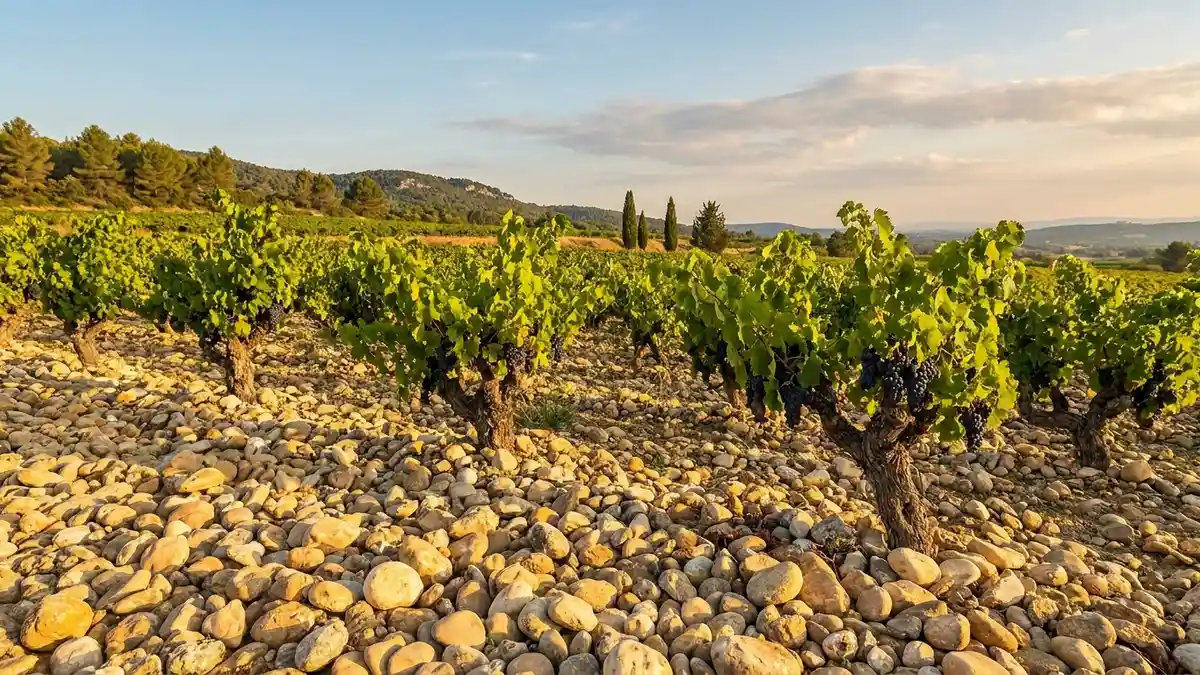
The Rhône Valley's wine heritage stretches back to Roman antiquity, but the modern story really begins in the 14th century when the papacy moved to Avignon for nearly seventy years. The popes built a summer palace just north of the city in a village now known as Châteauneuf-du-Pape — literally, "the Pope's new castle." Vines flourished on the surrounding pebble-strewn hills, and a regional identity began to take shape.
Grenache, which had spread north from Spain's Aragón region (see the Grenache wine guide for the full migration story), found a perfect home in the Southern Rhône's heat. Syrah, the cooler-climate Northern Rhône grape (the Syrah vs Shiraz guide covers its range in detail), drifted south as a structural partner. Mourvèdre — Spain's Monastrell — joined the lineup from the south, bringing tannin and savory depth.
By the time French wine law was modernized in the 1930s, Châteauneuf-du-Pape was the first appellation officially codified under the AOC system, in 1936. The thirteen-grape rule was written into the regulations — and the GSM trinity has anchored Southern Rhône wine ever since.
The GSM Trinity, Grape by Grape
Each of the three Rhône blend grapes brings a distinct contribution. The art of blending is balancing them so that no one voice drowns the others.
Grenache — The Juicy Heart
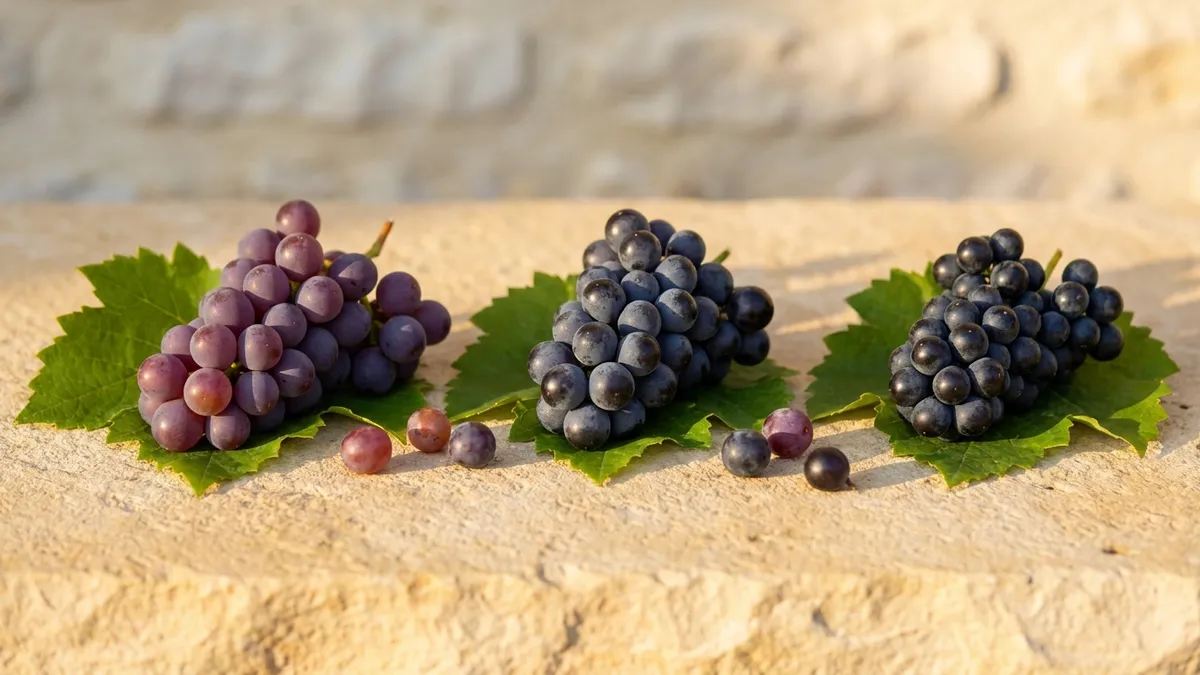
Grenache (called Garnacha in Spain, Cannonau on Sardinia) is the dominant partner in most Southern Rhône blends, often making up 50 to 80 percent of the wine.
- Color — pale ruby, sometimes with an orange tint
- Aromas — strawberry, raspberry, kirsch, dried herbs, white pepper, orange peel
- Palate — soft tannins, low-to-medium acidity, full body, alcohol typically 14 to 16 percent
- Role in the blend — fruit, generosity, alcohol, warmth
Grenache is the grape that gives a Rhône blend its Mediterranean glow. Without it, the wine would lack roundness and fruit lift; with too much of it, the wine can feel jammy and unstructured. Most appellations cap or implicitly limit how much Grenache a blend can contain, which is why the supporting grapes matter so much.
Syrah — The Spine
Syrah is the bone structure of the blend. In the Northern Rhône it stands alone in appellations like Hermitage, Côte-Rôtie, and Cornas, but in the Southern Rhône it plays a focused supporting role at 10 to 30 percent of the blend.
- Color — deep purple-black
- Aromas — blackberry, black pepper (a compound called rotundone), violet, smoked meat, olive
- Palate — firm tannins, medium-high acidity, full body
- Role in the blend — color, structure, peppery spice
When you taste a Châteauneuf-du-Pape and notice a flash of cracked pepper and inky dark fruit beneath the strawberry generosity, that is Syrah doing its quiet structural work.
Mourvèdre — The Savory Backbone
Mourvèdre (Monastrell in Spain, Mataro in Australia) is the oldest of the three in cultural terms, with documented plantings in eastern Spain since the Middle Ages. It is the latest-ripening of the trinity and demands the warmest sites — which is why it thrives in Bandol on the Mediterranean coast and in the hottest Southern Rhône vineyards.
- Color — deep purple to almost black
- Aromas — blackberry, leather, game, dried herbs, black pepper, sometimes a forest-floor or barnyard note
- Palate — firm, sometimes austere tannins, medium acidity, full body
- Role in the blend — savory depth, tannin, age-worthiness
Mourvèdre contributes what tasters often describe as the meaty or earthy dimension of a great Rhône blend. It also extends the wine's life — bottlings with significant Mourvèdre can age noticeably longer than Grenache-dominant ones.
For more on how these structural elements work together in any wine, see the tannins, acidity, and body guide and the wine balance explainer.
The Thirteen Grapes of Châteauneuf-du-Pape
Châteauneuf-du-Pape's appellation rules permit up to thirteen grape varieties, including both reds and whites. Most producers focus on the GSM trinity, but the full lineup gives bottlings their distinctive complexity. The thirteen are:
- Reds — Grenache, Syrah, Mourvèdre, Cinsault, Counoise, Vaccarèse, Muscardin, Terret Noir
- Whites (often co-fermented with reds in small amounts) — Grenache Blanc, Roussanne, Bourboulenc, Clairette, Picpoul
The three lesser-known reds — Cinsault, Counoise, and Vaccarèse — add aromatic lift, perfume, and a touch of acidity. The whites soften texture and brighten the aromatic profile when used judiciously.
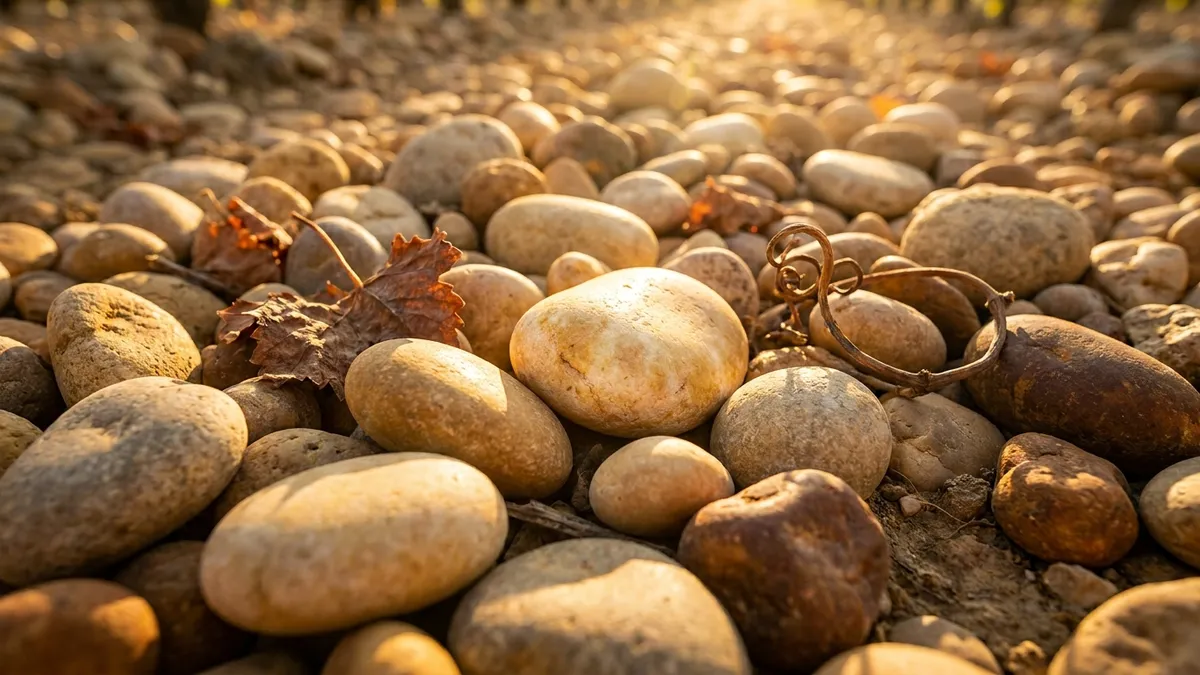
The Châteauneuf vineyards are famous for the galets roulés — large rounded stones, polished smooth by the ancient Rhône glacier, that cover the soil. They store daytime heat and radiate it back to the vines after sunset, encouraging the deep ripeness that Grenache loves. (For more on how soil shapes flavor, see how soil affects wine taste and what does terroir taste like.)
The Côtes-du-Rhône Hierarchy
Châteauneuf-du-Pape is the prestige tier, but the Southern Rhône is built around a pyramid of appellations, each with stricter rules and higher quality expectations as you move up.
The Pyramid
- Côtes-du-Rhône — the broadest appellation, covering both Northern and Southern Rhône. Inexpensive, food-friendly, mostly Grenache-led
- Côtes-du-Rhône-Villages — a step up in quality, restricted to specific villages with stricter yields
- Named Villages (e.g. Cairanne, Sablet, Séguret) — eighteen villages allowed to add their name to the label
- Crus — top-tier appellations with their own AOCs: Gigondas, Vacqueyras, Rasteau, Beaumes-de-Venise, Vinsobres, Cairanne, and others
- Châteauneuf-du-Pape — the prestige cru, with its thirteen-grape rule and prized terroir
For a wine drinker on a budget, Côtes-du-Rhône-Villages and the named villages offer some of the best value in the Mediterranean, often with the same Grenache-Syrah-Mourvèdre core as Châteauneuf at a fraction of the price. Gigondas in particular is sometimes called "baby Châteauneuf" — denser, more structured than basic Côtes-du-Rhône, and built to age a decade.
For a broader French context, see the French wine regions guide.
Northern Rhône vs Southern Rhône — Two Worlds, One River
The Rhône Valley is really two regions stitched together by a river. Geography, climate, soil, and grape choice differ at almost every level.
| Feature | Northern Rhône | Southern Rhône | |---|---|---| | Climate | Continental, cooler, granite | Mediterranean, hot, varied | | Vineyard layout | Steep terraced slopes | Flatter rolling vineyards | | Soils | Granite, schist | Galets, limestone, sand, clay | | Red grape | 100% Syrah | Grenache-led GSM blends | | White grapes | Viognier, Marsanne, Roussanne | Grenache Blanc, Clairette, Bourboulenc | | Style | Peppery, structured, focused | Warm, generous, herbal | | Top appellations | Côte-Rôtie, Hermitage, Cornas, Saint-Joseph | Châteauneuf-du-Pape, Gigondas, Vacqueyras |
In Côte-Rôtie, producers are allowed to co-ferment up to 20 percent of the white grape Viognier alongside Syrah, a practice that softens the wine and adds an extraordinary floral lift — apricot blossom, jasmine, fresh peach. The result is one of the most aromatic red wines on earth. (See the Viognier wine guide for more on the grape.)
The Southern Rhône, by contrast, is the home of the blend. Even producers who could legally make a varietal Grenache choose to blend, because the Mediterranean climate produces fruit that is generous and warm but rarely structured enough on its own to age.
GSM Around the World
The Rhône blend formula has traveled. Wherever climates resemble the Southern Rhône — hot, dry, sun-soaked, with cool nights and stony soils — GSM tends to follow.
Australia — Barossa and McLaren Vale
Australia has some of the world's oldest Grenache vines, planted in the mid-1800s and still bearing fruit. The Barossa Valley and McLaren Vale in South Australia are the country's GSM heartland, producing wines that combine New World ripeness with Old World structure. The Australian style tends toward generous fruit and a slightly higher alcohol register, though the best producers have moved toward earlier picking and lighter extraction. For the regional context, see the Australian wine guide.
California — Paso Robles and the Central Coast
In California, GSM blends thrive in warm, sun-drenched regions like Paso Robles and Santa Ynez Valley, often produced by a movement of growers who self-identify as the Rhône Rangers. California's old-vine Grenache plantings — vineyards established a century ago for jug-wine production and now rediscovered as treasures — produce some of the most surprising and elegant GSM wines outside France.
Spain — Garnacha and Monastrell
Spain produces what could be called the GSM blueprint in reverse — Garnacha (Grenache) blended with Monastrell (Mourvèdre), often supported by Tempranillo or Cariñena rather than Syrah. Regions like Jumilla, Yecla, and Aragón make full-bodied, fruit-forward wines that mirror the Southern Rhône's logic with Iberian character. The Spanish wine regions guide covers the full picture.
South Africa and Beyond
The Swartland in South Africa has emerged as one of the most exciting GSM-style regions in the New World, where dry-farmed bush vines on schist and granite soils produce refined, herb-inflected wines. Washington State (Walla Walla and Columbia Valley) and Chile are smaller but increasingly serious players.
How to Pair Rhône Blends with Food
GSM wines are among the most food-friendly reds on earth. Their juicy fruit, ripe tannins, and Mediterranean herb character match an enormous range of dishes.
Classic Pairings
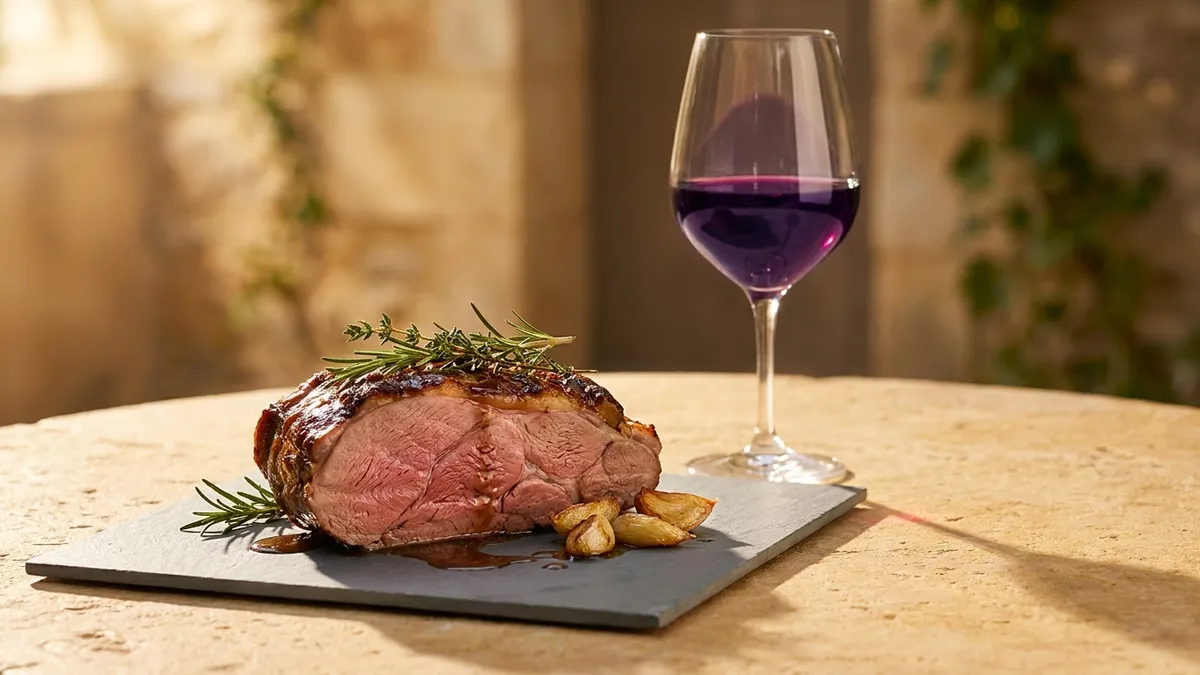
- Grilled lamb — rosemary, thyme, and garlic mirror the wine's herbal lift
- Beef stews and braises — daube, bourguignon, osso buco, short ribs
- Roast duck and game — partridge, wild boar, venison
- Charcuterie — saucisson, jamón, pâté, rillettes
- Hard sheep cheese — Manchego, Pecorino, Ossau-Iraty
- Mediterranean dishes — ratatouille, pissaladière, paella, eggplant Parmesan
- Mushroom dishes — risotto, truffle pasta, grilled portobellos
Less Obvious But Excellent
- Smoky barbecue — GSM handles char and pepper rubs with ease
- Moroccan and North African food — tagines, ras el hanout, preserved lemon
- Hearty bean dishes — cassoulet, fagioli all'uccelletto, braised lentils
For broader pairing principles, see the wine and food pairing guide and the pairing rules cheat sheet.
What to Avoid
The combination of high alcohol, ripe fruit, and full body can overwhelm light, delicate dishes. Skip Rhône blends with raw fish, cream-based pastas, and very simple vegetable preparations. For those, reach for an aromatic white like Riesling or a lighter red.
Serving and Aging Rhône Blends
Temperature
Serve red Rhône blends slightly cooler than you might think — 15 to 17 °C (59 to 63 °F). The high alcohol can taste hot if the wine is too warm, and a short rest in the fridge sharpens the fruit and lifts the herbs. The full breakdown lives in the wine serving temperature chart.
Decanting
Young Châteauneuf-du-Pape and Gigondas benefit from 30 to 60 minutes of air. The aromatics open, the alcohol integrates, and the wine becomes noticeably more expressive. Older bottlings need only gentle decanting to separate sediment.
Aging Window
Most Côtes-du-Rhône is best enjoyed within five years of the vintage. The exceptions are worth knowing:
- Côtes-du-Rhône-Villages and named villages — eight to twelve years
- Gigondas and Vacqueyras — ten to fifteen years
- Châteauneuf-du-Pape — fifteen to twenty-five years from a strong producer
- Cornas and Hermitage (Northern Rhône Syrah) — twenty to thirty years
For curiosity about how aging changes wine, see tasting young vs aged wine.
Tasting Rhône Blends the Sommy Way
Rhône blends are one of the most rewarding categories for a beginner to study, because tasting them teaches a lesson that scales to every other wine region — how component grapes contribute to a whole. Pour a basic Côtes-du-Rhône, a Gigondas, and a Châteauneuf-du-Pape side by side. Look for how the same Grenache-Syrah-Mourvèdre core deepens, structures, and lengthens as quality climbs.
This kind of structured, comparative tasting is exactly what the Sommy app is built around. Guided exercises walk you through what to notice in color, aromas, and structure, and help you connect what you sense in the glass to what is on the label. For more on building this kind of palate awareness, read the develop your wine palate guide and how to taste red wine.
Where to Start with Rhône Blend Grapes
A short tasting plan to build a real sense of Rhône wine:
- A Côtes-du-Rhône — the everyday face of the blend; juicy, herbal, food-friendly
- A Côtes-du-Rhône-Villages or Cairanne — one step up in concentration and depth
- A Gigondas or Vacqueyras — the cru tier, denser and built to age
- A Châteauneuf-du-Pape — the prestige expression, layered and structured
- A Northern Rhône Syrah — Crozes-Hermitage or Saint-Joseph for cool-climate pepper
- A New World GSM — Australian, Californian, or South African for comparison
Tasted across a few weeks, this lineup teaches Rhône blends as a concept — a Mediterranean formula that travels gracefully wherever the climate permits. Whether you sip a Tuesday-night Côtes-du-Rhône or save up for a special-occasion Châteauneuf, the GSM trinity offers some of the most welcoming, generous, and honest red wine in the world.
Frequently Asked Questions
What does GSM stand for in Rhône blends?
GSM stands for Grenache, Syrah, and Mourvèdre — the three classic red grapes of the Southern Rhône Valley. Grenache contributes red fruit and softness, Syrah adds color and black pepper, and Mourvèdre brings dark fruit, tannin, and savory depth. The acronym is now used worldwide for any wine built around this trio, especially in Australia, California, and Spain.
How many grapes are allowed in Châteauneuf-du-Pape?
Châteauneuf-du-Pape permits up to 13 grape varieties, including white grapes that can be co-fermented with the reds. In practice, Grenache dominates most blends at 60 to 80 percent, supported by Syrah and Mourvèdre. Other authorized grapes include Cinsault, Counoise, Vaccarèse, Muscardin, Terret Noir, and the white grapes Grenache Blanc, Roussanne, Bourboulenc, Clairette, and Picpoul.
What is the difference between Northern and Southern Rhône wines?
Northern Rhône reds are 100 percent Syrah from steep granite slopes, producing peppery, structured wines like Hermitage, Côte-Rôtie, and Cornas. Southern Rhône reds are blends built on Grenache, with Syrah and Mourvèdre as supporting players, made on flatter ground covered in rounded stones. The Northern style is leaner and more focused; the Southern style is warmer and more generous.
What does a typical GSM blend taste like?
A typical GSM blend tastes of ripe red and black fruit — strawberry, raspberry, blackberry, and plum — layered with white pepper, dried herbs, leather, and a savory, almost meaty undertone. The body is medium-full, the tannins are ripe and rounded, and the alcohol often runs 14 to 15 percent. Mediterranean character drives every sip.
What food pairs best with Rhône blends?
Rhône blends pair beautifully with grilled lamb, beef stew, slow-cooked duck, charcuterie, hard sheep cheese, and Mediterranean dishes built around tomato, garlic, and herbs. The GSM formula's juicy fruit and ripe tannins also handle moderately spiced food, mushroom dishes, and barbecue. For richer Châteauneuf-du-Pape, reach for game, braised short ribs, or wild boar.
Are GSM wines made outside France?
Yes. The GSM formula has spread to Australia (Barossa Valley and McLaren Vale), California (Paso Robles and the Central Coast), Spain (Jumilla and Aragón), South Africa (the Swartland), and Washington State. Each region adapts the proportions and ripeness level, but the trinity remains recognizable. Australian GSM tends toward riper fruit; Spanish versions feature Garnacha-Monastrell pairings; California sits between the two.
How long do Rhône blend wines age?
Most Côtes-du-Rhône and entry-level GSM wines drink best within five years. Côtes-du-Rhône-Villages and named villages like Gigondas and Vacqueyras hold for eight to twelve years. Châteauneuf-du-Pape from a strong producer can age fifteen to twenty-five years, developing leather, dried fig, garrigue, and forest-floor notes that the young wine only hints at.
Sommy Team
LinkedInFounder & Wine Educator
The Sommy Team is building the world's most approachable wine education app, helping beginners develop real tasting skills through structured courses and AI-guided practice.