Port vs Sherry: Side by Side (Sweetness, Alcohol, Serving)

By the Sommy Team — AI-assisted, human-edited.
Updated Oct 23, 2026
Contents (9)
- Port vs Sherry, Side by Side
- How Is Each One Made?
- Is Sherry Always Dry and Port Always Sweet?
- Which Has More Alcohol, Port or Sherry?
- How Do You Serve Port and Sherry?
- How Long Do Port and Sherry Keep Once Opened?
- Can You Swap Port for Sherry?
- Where Do Port and Sherry Come From?
- Taste the Difference Tonight
TL;DR
Port is fortified partway through fermentation, so grape sugar stays and it tastes sweet, at 19 to 22% alcohol. Sherry ferments dry first and is fortified afterwards, so most sherry is dry, at 15 to 22%. Serve fino cold before dinner and port cool after it; aged tawny and sweet sherry keep for weeks once open.
Port vs sherry comes down to one moment: when the grape spirit goes in. Port gets it partway through fermentation, which stops the yeast and leaves grape sugar in the wine. Sherry ferments dry first and is fortified afterwards. So port's sweetness is the grape's own, and a sweet sherry is made sweet on purpose, from dried grapes or by blending.
Port vs Sherry, Side by Side
Port and sherry are both fortified wines (wine with grape spirit added, which lifts it to about 15 to 22% alcohol). Port comes from the Douro Valley in northern Portugal, is mostly red, and is sweet in nearly every style. Sherry comes from the Sherry Triangle around Jerez in southern Spain, is made mainly from the white Palomino grape, and is dry in most styles. Port usually runs 19 to 22% alcohol, a fino sherry 15 to 17%. Serve fino cold before dinner and port cool after it. Once open, an aged tawny port lasts for months, while a fino should be finished soon.
| Port | Sherry | |
|---|---|---|
| Made in | Douro Valley, northern Portugal | Sherry Triangle: Jerez, Sanlúcar and El Puerto, southern Spain |
| Main grapes | Red blends led by Touriga Nacional, Touriga Franca and Tinta Roriz | White Palomino; dried Pedro Ximénez or Moscatel for sweet styles |
| Spirit goes in | During fermentation, so grape sugar stays | After fermentation, on a dry wine (PX: during) |
| Sweetness | Sweet in most styles; white port also comes dry | Mostly dry; cream and Pedro Ximénez are sweet |
| Alcohol | 19-22% | 14-17% (fino) up to 22% (oloroso, cream, PX) |
| Main styles | Ruby, tawny, LBV, vintage, white | Fino, manzanilla, amontillado, oloroso, cream, PX |
| Serve at | White 6-10°C, tawny 10-14°C, ruby 12-16°C | Fino and manzanilla about 7°C, amontillado and oloroso about 13°C |
| Keeps once open | Vintage 1-2 days, ruby 8-10 days, aged tawny 1-4 months | Fino: drink soon; cream and PX: weeks to months |
| Pour it with | Blue cheese and walnuts, chocolate desserts | Fino with olives, almonds and fried fish; PX over vanilla ice cream |
How Is Each One Made?
Port is fortified while its yeast is still at work, most sherry only once the yeast has finished. Crushed red grapes start fermenting as for any red wine, and while plenty of sugar remains, the winemaker adds aguardente (a neutral grape spirit). The jump in alcohol kills the yeast, so the uneaten sugar stays in the wine.
Sherry's base wine ferments all the way to dry before the grape spirit goes in, so the spirit stops nothing; it only raises the strength.
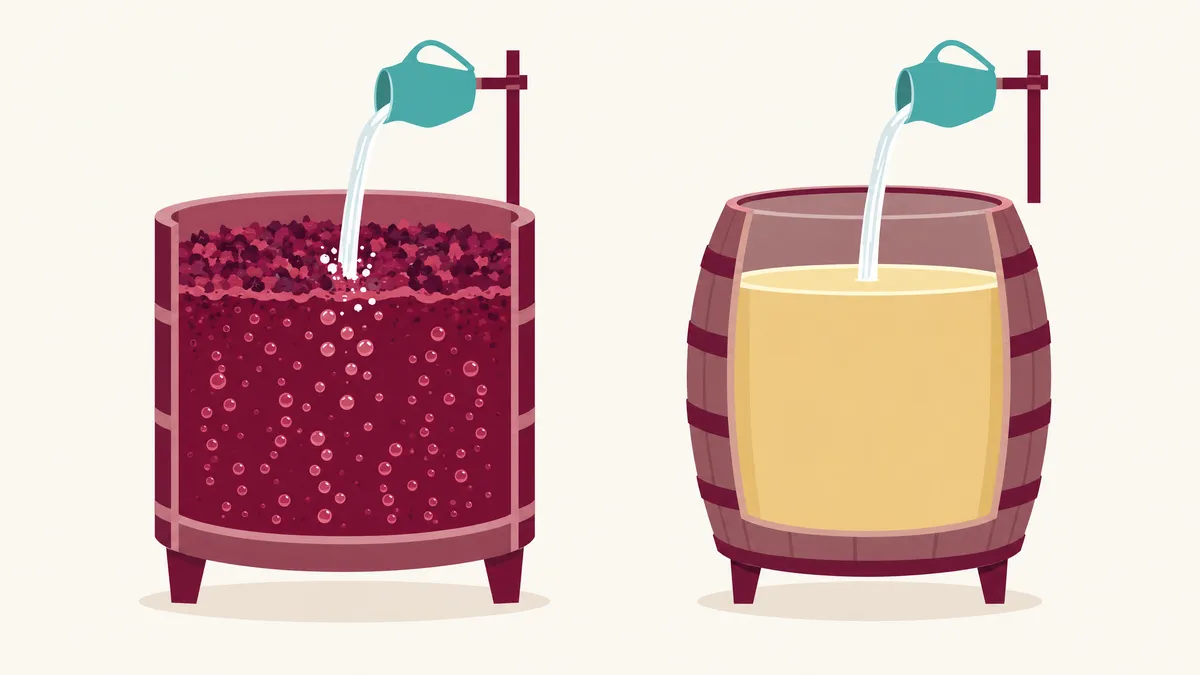
Ageing then splits each wine in two. Ruby port is kept in concrete or steel tanks, which hold its deep red colour and fresh plum and cherry fruit. Tawny port ages in wooden barrels, where slow contact with air turns it golden-brown and nutty. The full style ladder, from ruby to vintage, is in the port wine guide.
Sherry splits on a film of yeast. Lighter base wines are fortified to about 15.5% and grow flor, a pale yeast layer on the wine's surface that protects it from air. Aged only under flor, the wine becomes fino, the driest and palest sherry; fino from Sanlúcar de Barrameda is sold as manzanilla.
Amontillado starts under flor and is then exposed to air. Oloroso is fortified to at least 17%, ages in contact with air for longer, and comes out darker and richer. Each style is profiled in the sherry wine guide.


Quick check
One question on what you just read
Port tastes sweet and most sherry tastes dry. What makes the difference?
Tap an answer to see how you did.
Is Sherry Always Dry and Port Always Sweet?
No. Most sherry is dry, but Pedro Ximénez and cream sherry are sweet, and port makes a dry white. Pedro Ximénez (PX) is made from grapes dried until they shrivel, and spirit stops its fermentation early, as in port. It holds at least 212 grams of residual sugar (grape sugar left unfermented) per litre.
Cream sherry is a blend, usually oloroso with PX, at 115 to 140 grams. Medium sherry spans 4 to 115 grams.
Port runs the other way: tawny comes sweet or medium dry, and white port is labelled dry, sweet or lágrima, the sweetest. A dry white port with tonic and ice makes the Portonic, a Portuguese long drink.
If the label says fino, manzanilla, amontillado or oloroso and nothing more, expect a dry wine. If it says cream, medium or Pedro Ximénez, expect a sweet one. The wine sweetness scale shows where each lands next to table wines.
Which Has More Alcohol, Port or Sherry?
Port, usually. It sits at 19 to 22% alcohol, while fino and manzanilla mostly sell at 15 to 17%. The darker sherries close the gap: oloroso runs 17 to 22%, and PX and cream can reach 22%. The chart of alcohol in wine by type sets both beside table wine.
If you pour both in one evening, start with the fino and end with the port. A dry, lighter wine tastes thin and sour after a sweet, strong one.
How Do You Serve Port and Sherry?
Serve fino and manzanilla cold as an aperitif and port cool after dinner, in small glasses. The table's temperatures come from the Port and Douro Wines Institute for port and from a former sommelier writing on sherry.wine, the Sherry regulator's site. The wine serving temperature chart shows how to hit them with a fridge.
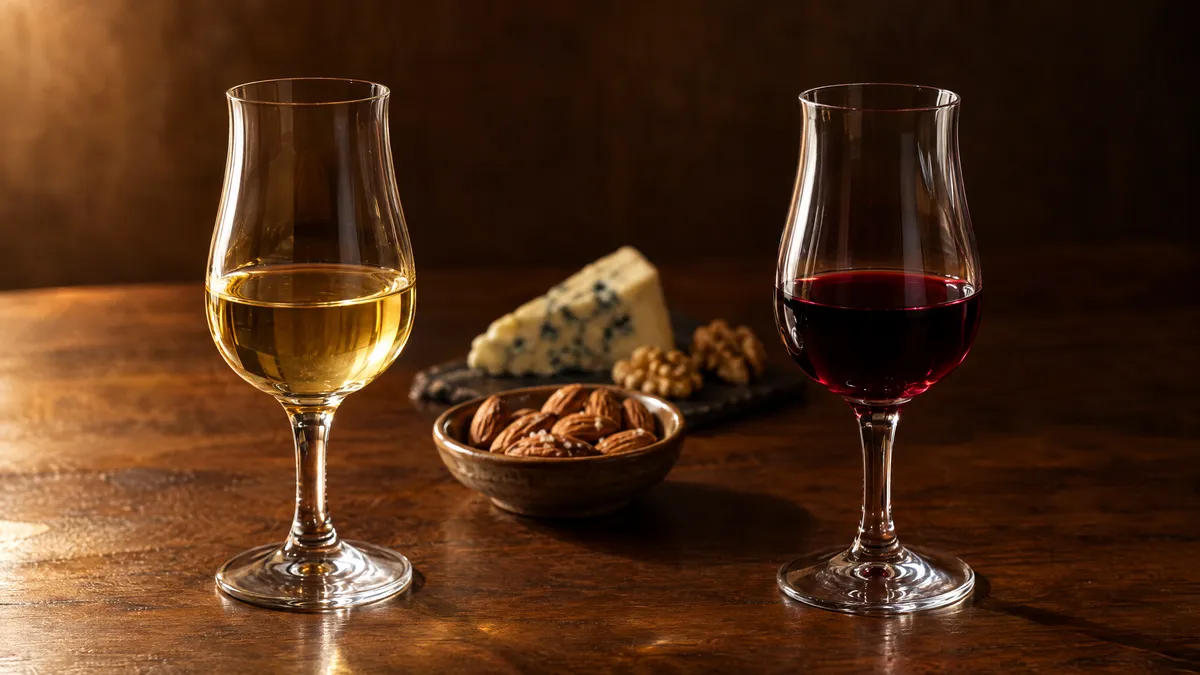
Match the food to the wine's sugar and salt. Fino's dry, salty tang suits salty food: olives, salted almonds, fried fish. A sweet wine needs food less sweet than itself, or the wine tastes thin, so ruby port or PX goes with chocolate desserts. Salty blue cheese meets port's sugar, and the Institute pairs a chilled 10-year tawny with strong cheese, dried fruit and walnuts.
If dessert or blue cheese is on the table, pour port or PX. If it is olives and salted almonds before dinner, pour fino. A Christmas meal can use both, fino with the starters and port with the cheese: wine for Christmas dinner plans every course, and wine with blue cheese sets ruby against tawny.
How Long Do Port and Sherry Keep Once Opened?
Tawny port and sweet sherry keep for weeks once open; fino and vintage port do not. Between the extremes in the table, the Port and Douro Wines Institute gives 4 to 5 days for LBV and 3 to 4 weeks for a tawny with no age statement. It calls these times guidance only.
Fino and manzanilla should be drunk soon after opening. Amontillado and oloroso keep longer, and cream and PX last several weeks or even months, helped by their sugar. The pattern: sugar and years of contact with air slow a wine's change once opened, while flor wines and vintage port fade fast.
If a bottle will take you a month to finish, buy an aged tawny, a cream or a PX. If it will be gone tonight, fino and vintage port are the right buy. The rules for table wines are in how long wine lasts after opening.
Can You Swap Port for Sherry?
Only within the same sweetness: a sweet sherry can stand in for port, a dry one cannot. In cooking with wine, if a recipe says dry sherry, use fino or amontillado and never port, which adds sugar and turns a pale sauce pink. If it says port, a cream sherry or PX gives the sweetness but turns the sauce brown.
| If you like | Try | What they share | What changes |
|---|---|---|---|
| Tawny port | Amontillado or oloroso | Amber colour, years in wood, walnut and caramel | Dry instead of sweet |
| Tawny port | Cream sherry | Brown, nutty and sweet | Raisin from the PX in the blend |
| Ruby port | Pedro Ximénez | Dark, sweet, made for chocolate | Raisin and fig instead of fresh plum; thicker |
| Dry white port | Fino or manzanilla | Pale, served cold before dinner | Salty and bready from the flor |
Where Do Port and Sherry Come From?
Port comes only from Portugal's Douro and sherry only from the Sherry Triangle in Andalusia, the area between Jerez de la Frontera, Sanlúcar de Barrameda and El Puerto de Santa María. The Douro permits more than 80 grape varieties, so a port label names its style, such as ruby or tawny.
Much of the wine leaves the Douro Valley to age in lodges in Vila Nova de Gaia, across the river from Porto.

Most sherry is blended in a solera (tiers of barrels in which younger wine tops up older), so a sherry label rarely shows a year; the solera system explained shows the arithmetic. Vintage port works the other way: it comes from a single declared year, printed on the label.
Taste the Difference Tonight
Buy a half bottle of fino and one of 10-year tawny port. Chill the fino in the fridge for an hour and give the tawny 20 minutes there. Pour small glasses, fino first, and use the fortified tasting method to compare dry with sweet and pale with amber. Sommy's Port, Sherry and Madeira course goes further, with Madeira and the wine styles hub beside it. Then photograph each label in Sommy's AI-guided tasting mode (sommy.wine) and log which glass you would pour again.
Sources
- Port and Douro Wines Institute (IVDP): Choose and enjoy Port
- Wikipedia: Port wine
- Wikipedia: Sherry
- Sherry.wine: How to host a sherry wine tasting, part 2
- Wine Spectator: What's the difference between Port and Sherry?
- Sherry.wine: Pedro Ximénez
- Official Journal of the EU: Jerez-Xérès-Sherry specification amendment (C/2026/4549)
Frequently Asked Questions
Is port sweeter than sherry?
Usually, but not always. Most port is sweet because spirit stops its fermentation while sugar remains. Most sherry is dry because it is fortified only after fermentation ends. The exceptions cross over: Pedro Ximénez sherry holds at least 212 grams of sugar per litre and cream sherry 115 to 140 grams, while white port also comes dry. Read the style name on the label, not just the word port or sherry.
Which has more alcohol, port or sherry?
Port, in most cases. It is usually 19 to 22% alcohol. Fino and manzanilla sherry usually sit at 15 to 17%, because they are fortified only to about 15.5% to suit the flor yeast that ages them. Oloroso, cream and Pedro Ximénez sherry can run higher, up to 22%, which puts the strongest sherries level with port.
Can I use sherry instead of port in cooking?
Only a sweet one. Cream sherry or Pedro Ximénez can replace port in a sauce or a reduction, giving similar sweetness but a brown colour and a raisin flavour instead of fresh plum and cherry. A dry sherry such as fino or amontillado cannot replace port. The reverse swap fails too: port in place of dry sherry adds sugar and turns a pale sauce pink.
Do port and sherry need to go in the fridge after opening?
Fino and manzanilla do. Keep them stoppered in the fridge and drink them soon after opening, because their fresh, salty character fades fast. Port and the darker sherries are steadier, but a stopper and a cool spot help any open bottle. Aged tawny port, oloroso, cream sherry and Pedro Ximénez keep well, from several weeks to a few months.
Should port or sherry be served chilled?
Fino and manzanilla sherry, yes: serve them cold, around 7°C. The Port and Douro Wines Institute suggests 6 to 10°C for white port and about 4°C for rosé port. Ruby and tawny port are served cool rather than cold, at 12 to 16°C and 10 to 14°C. Amontillado and oloroso sherry suit about 13°C.
Is port made only from red grapes?
No. Most port is red, from blends led by Touriga Nacional, Touriga Franca and Tinta Roriz, and more than 80 grape varieties are permitted. White port is made from white grapes such as Malvasia Fina, Gouveio, Codega and Rabigato, and is labelled dry, sweet or lágrima, the sweetest. Sherry is the reverse case: mostly the white Palomino grape.
What is the difference between tawny port and amontillado sherry?
Both age in wood with contact with air, turn amber and taste of walnut and caramel, so they look alike in the glass. Tawny port is sweet, because spirit stopped its fermentation, and usually 19 to 22% alcohol. Amontillado is dry: it ferments fully, ages first under a film of flor yeast, then with air. If you like tawny but want less sugar, amontillado is the bridge.
Sommy Team
LinkedInFounder & Wine Educator
The Sommy Team is building the world's most approachable wine education app, helping beginners develop real tasting skills through structured courses and AI-guided practice.