Pinot Grigio vs Sauvignon Blanc: Side by Side (Taste, Food)

By the Sommy Team — AI-assisted, human-edited.
Updated Oct 23, 2026
Contents (8)
- Pinot Grigio vs Sauvignon Blanc, in One Paragraph
- How Do Pinot Grigio and Sauvignon Blanc Compare Side by Side?
- Which Is Sweeter, Pinot Grigio or Sauvignon Blanc?
- Which One Is Crisper?
- What Food Goes With Each?
- Which Is Better for Cooking?
- Is Pinot Grigio the Same as Pinot Gris?
- Which Should You Pick at the Shop?
TL;DR
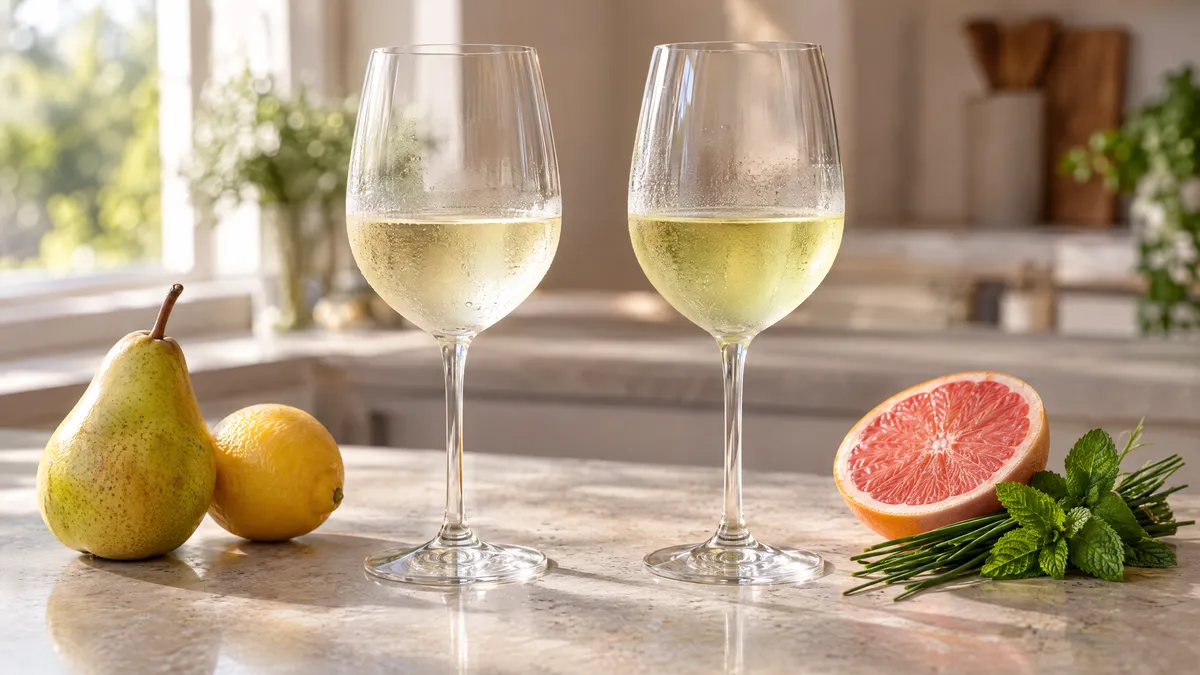
Sauvignon Blanc is the louder, tarter white: grapefruit, gooseberry and cut grass, with high acidity. Pinot Grigio is quieter, with pear, lemon zest and green almond and a softer finish. Both are normally dry, at 11.5 to 13.5% alcohol. Pour Sauvignon Blanc with herbs and goat cheese, Pinot Grigio with mild seafood and salads.
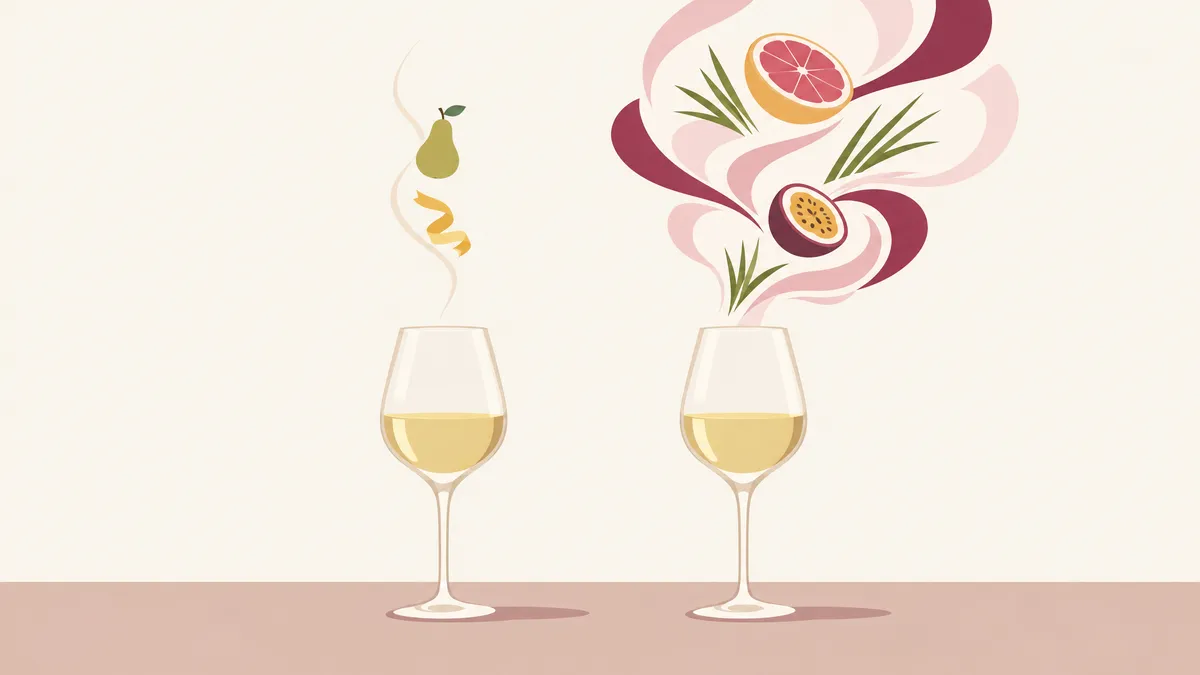
Pinot Grigio vs Sauvignon Blanc is a choice between loud and quiet. Sauvignon Blanc is the tart one, with grapefruit and cut grass you smell before the glass reaches your nose. Pinot Grigio has pear, lemon and a softer finish. Both are normally dry.
Pinot Grigio vs Sauvignon Blanc, in One Paragraph
Pinot Grigio and Sauvignon Blanc are both dry, light white wines served cold, but Sauvignon Blanc smells far louder and tastes tarter. Sauvignon Blanc has high acidity (the tartness that makes your mouth water) and a medium-light body (weight in the mouth, like skimmed versus whole milk). It tastes of grapefruit, gooseberry and passion fruit. Italian Pinot Grigio has medium-high acidity, a lighter and leaner body, and a mild smell of pear, lemon zest and white peach. Both usually land between 11.5 and 13.5% alcohol. Pour Sauvignon Blanc when the food is green or tangy, and Pinot Grigio when it is mild and delicate.
How Do Pinot Grigio and Sauvignon Blanc Compare Side by Side?
Sauvignon Blanc is the louder, tarter wine; Pinot Grigio is quieter and softer. The same grape sold as Pinot Gris, from Alsace or Oregon, is riper and rounder again, so the name on the label says as much about the glass as the grape does.
| Pinot Grigio (Italy) | Pinot Gris (Alsace, Oregon) | Sauvignon Blanc | |
|---|---|---|---|
| Smell | Quiet: pear, lemon zest, green almond | Riper: pear, apple, melon, tropical fruit | Loud: grapefruit, gooseberry, passion fruit, cut grass |
| Acidity | Medium-high, brisk | Moderate | High |
| Body | Light and lean | Medium to full | Medium-light |
| Sugar | Dry | Dry to sweet (late harvest is usually sweet) | Dry |
| Serve at | 7 to 12°C (45 to 55°F) | 7 to 12°C (45 to 55°F) | 7 to 12°C (45 to 55°F) |
| Goes with | Seafood, salads, mild cheese | Roast chicken, pork, oily fish | Herbs, pesto, goat cheese, oysters |
| Pick it if | You want a cold, quiet white that stays behind the food | You want a white with weight for a richer dish | You want a tart white that smells of something |
The gap in volume starts in the grape. Sauvignon Blanc's green smells of cut grass, peas and asparagus come from methoxypyrazines (natural grape compounds with a green, vegetal smell). Its passion fruit and boxwood are linked to thiols (sulphur compounds that smell of tropical fruit). Pinot Grigio is a subtler, more neutral grape, so its pear and lemon show only after a swirl.

Quick check
One question on what you just read
A pale white smells of grapefruit and cut grass before you even swirl it. Which is it most likely?
Tap an answer to see how you did.
Which Is Sweeter, Pinot Grigio or Sauvignon Blanc?
Neither grape is sweeter by nature: both are normally fermented dry (no sugar you can taste). Italian Pinot Grigio is usually totally dry. Some Marlborough Sauvignon Blanc keeps a gram or two of residual sugar (grape sugar left after fermentation) to balance its very high acidity, and it still tastes dry.
Pinot Grigio tastes softer, not sweeter. Its acidity is lower and its fruit milder, so it feels rounder, while Sauvignon Blanc's sharp acid makes it taste drier. Sweet vs dry wine shows why ripe fruit smells get mistaken for sugar.
The sweet bottles sit under the other name. Pinot Gris can be sweet when the grapes are picked late or shrivelled by noble rot (a mould that concentrates grape sugar). If the label says Pinot Grigio, expect dry. If it says Pinot Gris with Alsace's Vendange Tardive (late harvest) or Sélection de Grains Nobles, expect a sweeter late-harvest wine.
Which One Is Crisper?
Sauvignon Blanc. It has higher acidity than Pinot Grigio, and a cool climate (a place where grapes ripen slowly and keep their tartness) pushes it higher still. Cool sites also make its methoxypyrazines more pronounced, so the grassiest, sharpest Sauvignon Blanc comes from the coolest places. In hot places it turns tropical and can lose much of its aroma.
Italian Pinot Grigio is often picked early to keep its refreshing acidity, so it is crisp and lean but never as sharp. If you want the sharpest glass, buy Sauvignon Blanc from a cool region; if tart wines make you wince, buy Italian Pinot Grigio. Sommy's Wine 101 course explains why acidity makes your mouth water in its part on sweetness and acidity.
What Food Goes With Each?
Sauvignon Blanc goes with green, herby and tangy food; Pinot Grigio with mild, delicate food; Pinot Gris with richer white meat. If the dish is strongly flavoured, pour the louder wine, because a quiet one fades under herbs and tang. If it is delicate, pour the quieter one, which leaves the food in front.
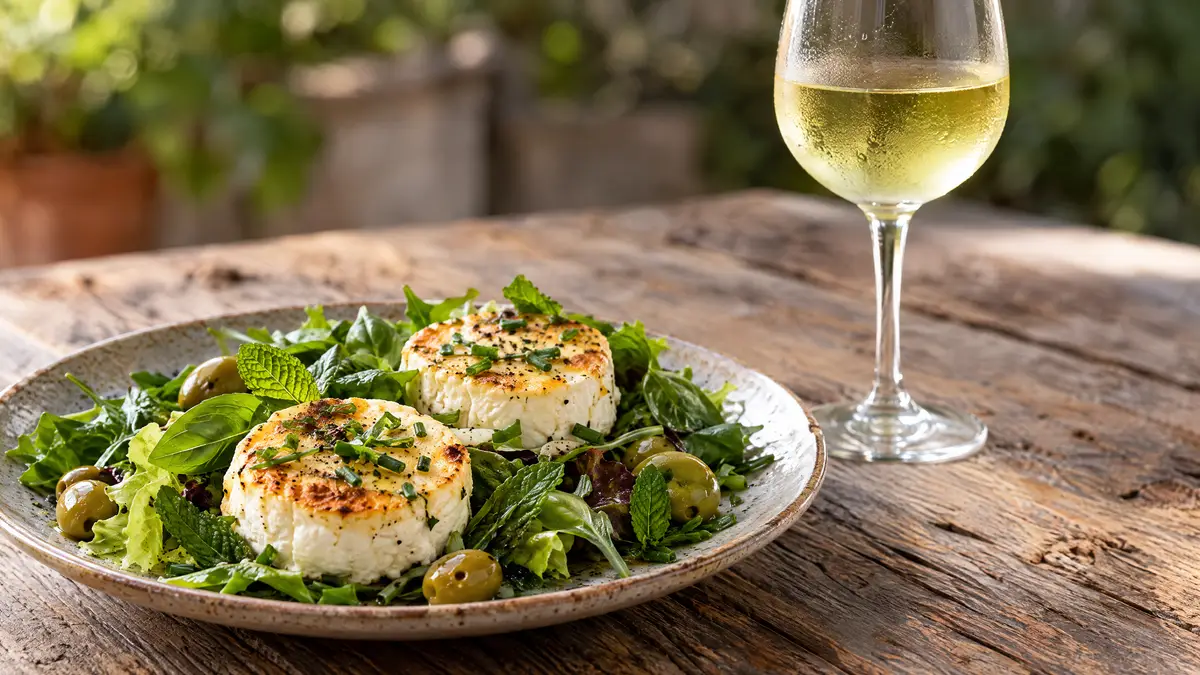
- Herbs, pesto, green olives or goat cheese: Sauvignon Blanc. Its grassy smell echoes the herbs, and its high acid stands up to tangy goat cheese.
- Lemon, vinegar or raw oysters: Sauvignon Blanc, because sharp acid in the food makes a softer wine taste flat.
- Plain white fish, seafood salads, mild cheese: Italian Pinot Grigio, which brings no strong smell to cover delicate flavours.
- Roast chicken, pork or salmon: Pinot Gris from Alsace or Oregon, whose fuller body matches the fat.
Which Is Better for Cooking?
Either works, because both are normally dry and light, so cook with the one you will pour at the table. If a bottle says late harvest or Vendange Tardive, keep it out of savoury cooking: reducing a sauce concentrates its sugar. The cooking wine guide gives amounts and timing.
Is Pinot Grigio the Same as Pinot Gris?
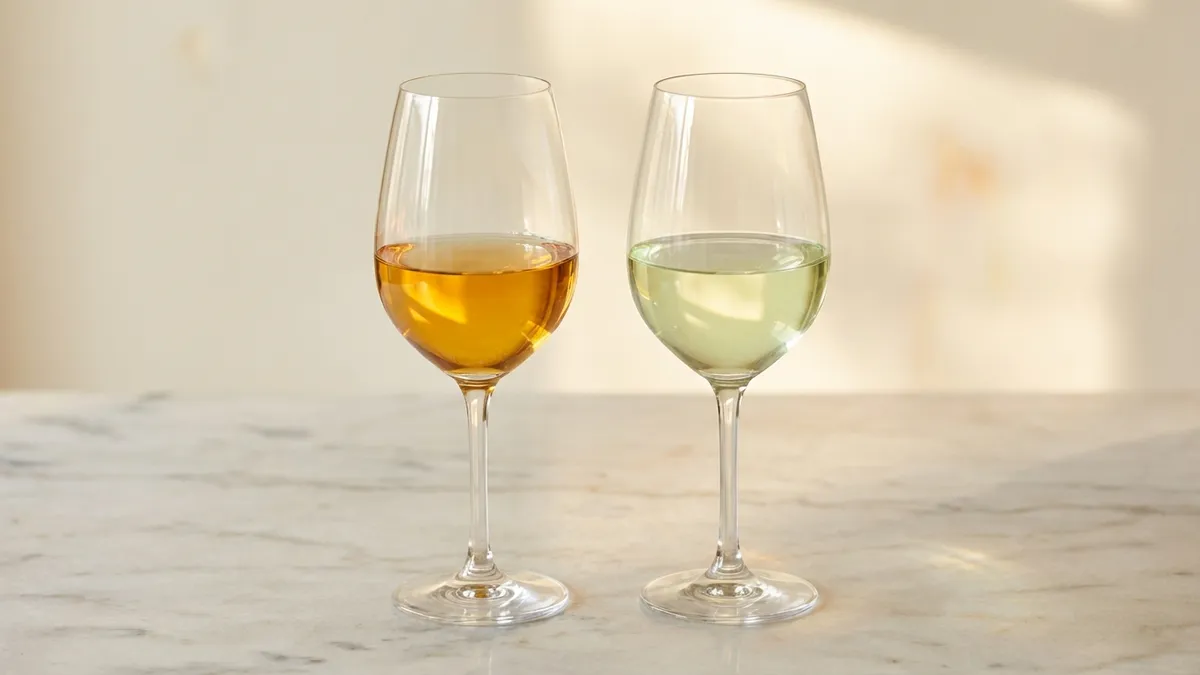
Yes. Pinot Grigio and Pinot Gris are one grape, not two, with an Italian name and a French name. The grape is thought to be a mutation of Pinot Noir. Its skins are pinkish-grey, ranging from blue-grey to pinkish-brown, while Sauvignon Blanc's are green-gold.
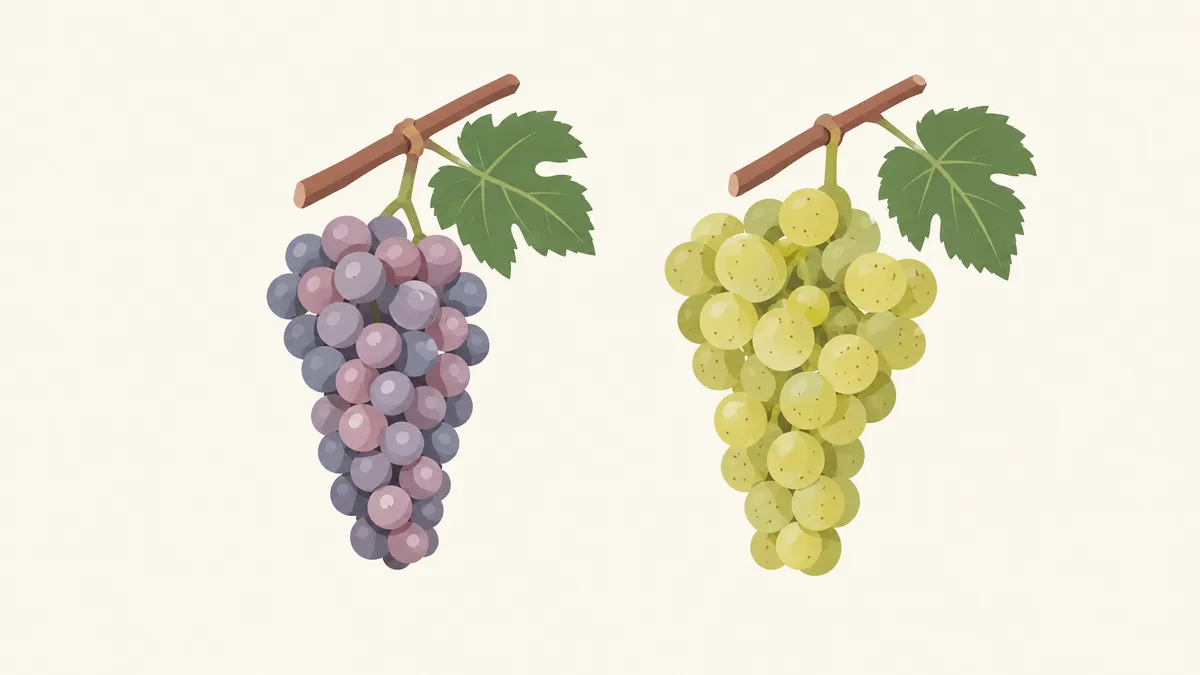
Those coloured skins explain the copper wines. Pinot Gris can run from deep gold to copper or even light pink, and it is a popular grape for skin-contact wine (white grapes fermented with their skins), as in orange wine. Riper Alsace Pinot Gris adds a rich, somewhat floral smell; Pinot Grigio vs Pinot Gris compares the styles side by side.
Which Should You Pick at the Shop?
Pick Sauvignon Blanc if the wine should taste of something, and Pinot Grigio if it should stay in the background behind the food. Then read the label for place names, which often give away the style before the grape name does.
- White Sancerre or Pouilly-Fumé: Sauvignon Blanc from France's Loire Valley, even when the grape is not named. Expect a tart wine, sometimes with a slightly smoky smell.
- Marlborough: New Zealand Sauvignon Blanc from a cool climate where ocean breezes offset warm days. Expect concentrated wine with very high acidity.
- Pinot Grigio from Italy: the light, dry, lean style. Italy is the grape's largest producer, with plantings in Friuli-Venezia Giulia, Alto Adige and Lombardy.
- Pinot Gris from Alsace or Oregon: the riper, rounder style. In Alsace, skip Vendange Tardive unless you want sweet.
Tonight, buy one Sauvignon Blanc and one Italian Pinot Grigio, chill both and run the hand's-width smell test with the two-glass method. Then open Sommy, photograph each label and let the AI tasting mode walk you through look, smell and taste, saving both sets of notes to your tasting journal. Next, pick another pair from the grape varieties hub.
Sources
Frequently Asked Questions
Which is sweeter, Pinot Grigio or Sauvignon Blanc?
Neither, as a rule. Both grapes are normally fermented dry. Pinot Grigio can taste softer because its acidity is lower and its pear and peach fruit is mild. Some Marlborough Sauvignon Blanc keeps a gram or two of sugar to balance its very high acidity, and it still tastes dry. The sweet versions of these grapes are late-harvest Pinot Gris, such as Alsace Vendange Tardive.
Which is crisper, Pinot Grigio or Sauvignon Blanc?
Sauvignon Blanc. It has higher acidity than Pinot Grigio, so it makes your mouth water for longer and feels sharper with food. Cool places such as the Loire Valley push its acidity higher still. Italian Pinot Grigio is crisp too, because it is often picked early to keep its acidity, but it finishes softer. Pinot Gris from Alsace or Oregon is the least tart of the three styles.
Which is better for cooking, Pinot Grigio or Sauvignon Blanc?
Either works, because both are normally dry and light. Cook with the one you will drink with the meal: Sauvignon Blanc suits dishes built on herbs, lemon or goat cheese, and Pinot Grigio suits milder fish and seafood. Keep any bottle labelled late harvest or Vendange Tardive out of savoury cooking, because reducing a sauce concentrates its sugar.
Is Pinot Grigio the same as Pinot Gris?
Yes, it is the same grape. Pinot Grigio is the Italian name and Pinot Gris the French one. The grape is thought to be a mutation of Pinot Noir and has pinkish-grey skins. The name on the label usually signals the style: Pinot Grigio is light and lean, while Pinot Gris from Alsace is medium to full-bodied and riper.
Which has more alcohol, Pinot Grigio or Sauvignon Blanc?
Neither, on average. Both grapes usually make wines of 11.5 to 13.5% alcohol. The number on the label tells you more than the grape name: a white near 11.5% feels lighter and leaner, and one near 13.5% feels fuller and riper. Alsace Pinot Gris made from very ripe grapes and fermented fully dry can run higher than either.
Which is better for a beginner, Pinot Grigio or Sauvignon Blanc?
Start with Sauvignon Blanc if you want to learn to name aromas, because grapefruit, gooseberry and cut grass are easy to pick out. Start with Pinot Grigio if tart wines make you wince, because its lower acidity and mild pear and lemon fruit are gentler. Then taste the two side by side and notice which one you can smell first.
What does Pinot Grigio taste like compared to Sauvignon Blanc?
Italian Pinot Grigio is subtle: pear, lemon zest and white peach, with a slightly bitter green-almond finish, light body and brisk acidity. Sauvignon Blanc is louder: grapefruit, gooseberry and passion fruit, often with cut grass, peas or asparagus, and sharper acidity. Sauvignon Blanc usually reaches your nose before you swirl; Pinot Grigio needs a swirl and a close sniff.
Sommy Team
LinkedInFounder & Wine Educator
The Sommy Team is building the world's most approachable wine education app, helping beginners develop real tasting skills through structured courses and AI-guided practice.