Wine with Goat Cheese: From Chèvre to Aged Varieties

By the Sommy Team — AI-assisted, human-edited.
Updated Oct 1, 2026
Contents (9)
- Wine With Goat Cheese, in One Paragraph
- Why Does Sauvignon Blanc Work So Well With Goat Cheese?
- Does the Age of the Goat Cheese Change the Wine?
- Can You Drink Red Wine With Goat Cheese?
- What Wine Goes With Ash-Coated or Bloomy Goat Cheese?
- What Wine Goes With Baked Goat Cheese or Goat Cheese Salad?
- What Sparkling or Sweet Wine Works With Goat Cheese?
- Is Sancerre Really the Classic Match for Crottin de Chavignol?
- How Do You Taste the Pairing at Home?
TL;DR
Goat cheese needs a wine with high acidity and little or no tannin. Fresh chèvre takes the tartest whites, such as Loire Sauvignon Blanc. Bloomy and ash-coated cheeses suit dry sparkling wine or Chenin Blanc. Firm, aged goat cheese can take a light red like Cabernet Franc, Pinot Noir or Gamay.
The best wine with goat cheese is a tart, unoaked white, and the classic pick is Sauvignon Blanc from France's Loire Valley. Goat cheese is tangy, creamy and low in salt when fresh, so it needs a wine with more acid than fruit. As the cheese ages and dries out, it can take more body, up to a light red you can see through.
Wine With Goat Cheese, in One Paragraph
Pick the wine by the cheese's age. Fresh chèvre wants high acidity (the tartness that makes your mouth water) and no oak: Loire Sauvignon Blanc, as in Sancerre or Pouilly-Fumé, is the textbook match. Bloomy-rind and ash-coated cheeses suit dry sparkling wine or dry Chenin Blanc. Firm, aged goat cheese takes a rounder white or a light, low-tannin red such as Cabernet Franc, Pinot Noir or Gamay. Baked goat cheese suits dry rosé. Big, oaky reds and buttery whites flatten all of them.
Why Does Sauvignon Blanc Work So Well With Goat Cheese?
Sauvignon Blanc works because its high acidity cuts the cheese's fat and refreshes the tang, and its grassy, citrus smell sits close to the cheese's own flavour. In cool climates like the Loire, the grape makes wines with noticeable acidity and green, herbal notes.
The goaty flavour has a chemical source. Goat milk carries a higher share of medium-chain fatty acids, mainly caproic and caprylic acid, which give the cheese its tart, "goat" tang. Their names come from capra, Latin for goat.
A common belief says the two go together because both are sour. The pairing works by contrast and refresh, not by matching. The cheese coats the tongue with fat, and the wine's acid strips it off, so the next bite tastes as fresh as the first. A soft, low-acid white leaves the coating in place and tastes flat.
The aroma link is real too. Sauvignon Blanc's grassy, green-pepper smell comes from compounds called methoxypyrazines. Fresh goat cheese often smells of grass, lemon and chalk, so the wine echoes it instead of fighting it. Our Sauvignon Blanc wine guide covers where the grape grows grassy and where it turns tropical, and what wine acidity is explains why tart wines suit fatty food.
Does the Age of the Goat Cheese Change the Wine?
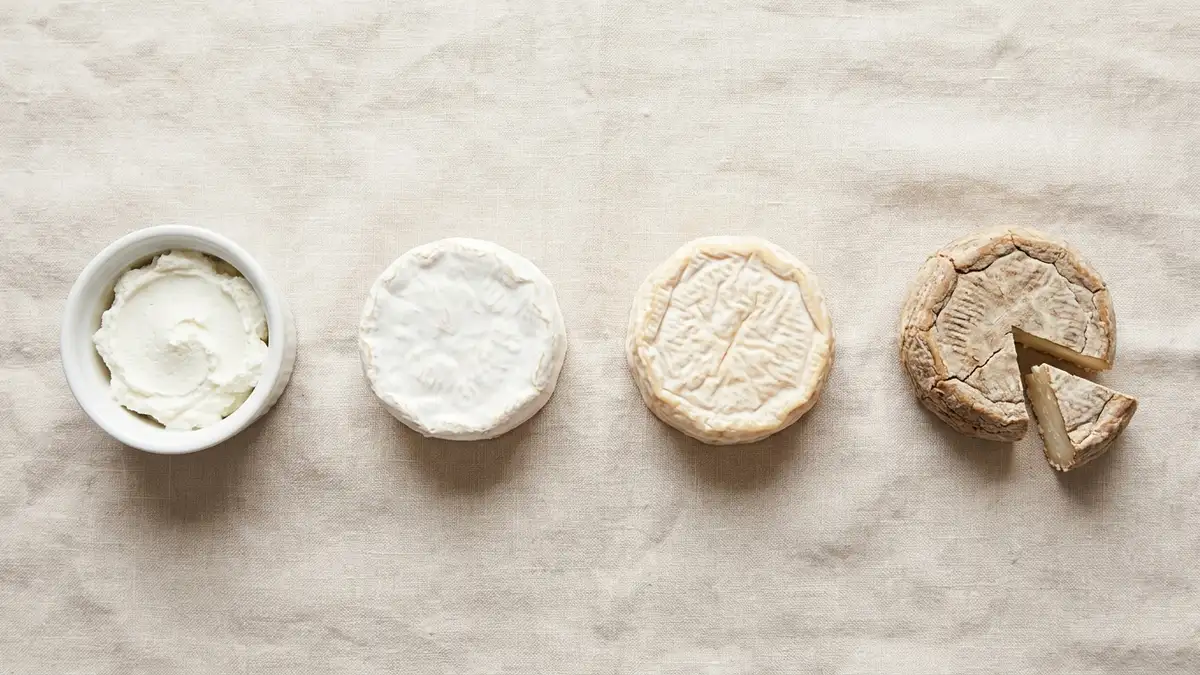
Yes: the older the goat cheese, the firmer, saltier and nuttier it gets, so the wine can gain body and lose some sharpness. Fresh chèvre is soft, creamy and barely aged. As a cheese ripens, it loses water, grows a rind and concentrates its flavour.
| Cheese stage | What it tastes like | Wine style | Pour this |
|---|---|---|---|
| Fresh (log, spreadable chèvre) | Lemony, milky, tangy, soft | Tart, unoaked, light white | Loire Sauvignon Blanc, Sancerre, Pouilly-Fumé |
| Bloomy rind (a few weeks) | Creamy under the rind, mushroomy edge | Dry sparkling or crisp white with some roundness | Brut sparkling, dry Chenin Blanc |
| Ash-coated | Chalky centre, runny edge, earthy rind | Bubbles or a fuller crisp white | Brut sparkling, dry Chenin Blanc, Sauvignon Blanc |
| Baked or grilled | Warm, browned, softer tang | Rounder white or dry rosé | Dry rosé, dry Chenin Blanc |
| Firm and aged | Nutty, salty, dense, still tangy | Rounder white or light low-tannin red | Cabernet Franc, Pinot Noir, Gamay, dry Chenin Blanc |
If the cheese is still soft enough to spread, pour the tartest white you have. If it crumbles and smells of nuts, move to a rounder white or a light red. Wine Folly makes the same call for aged goat cheese, which it says needs a wine "with bigger shoulders".
Can You Drink Red Wine With Goat Cheese?
Yes, if the red is light and low in tannin. Tannin (the drying grip on your gums) clashes with the cheese's tang and turns bitter, and fresh goat cheese has less fat and protein than a firm aged cheese to soften it. Wine Folly warns that a big, fruity red "overwhelms the soft, impressionable nature of goat cheese".
The myth is that goat cheese is a white-wine-only food. Aged and firmer goat cheeses take a light red well, because they have more salt and density and less sharp tang. The rule is low tannin and bright acid, whatever the colour.
The three reds that work:
- Cabernet Franc from the Loire, with red-currant fruit and a green, leafy edge that echoes the cheese. Wine Folly calls it a great choice for goat cheese. See the Cabernet Franc wine guide.
- Pinot Noir, with thin skins and soft tannin. Our Pinot Noir guide explains why it stays light.
- Gamay, the juicy, low-tannin grape of Beaujolais, covered in the Gamay wine guide.
If you want red, choose one you can see through when you hold the glass up, and chill it for about 20 minutes. Save young Cabernet Sauvignon and other tannic reds for aged cow's-milk cheeses.
What Wine Goes With Ash-Coated or Bloomy Goat Cheese?
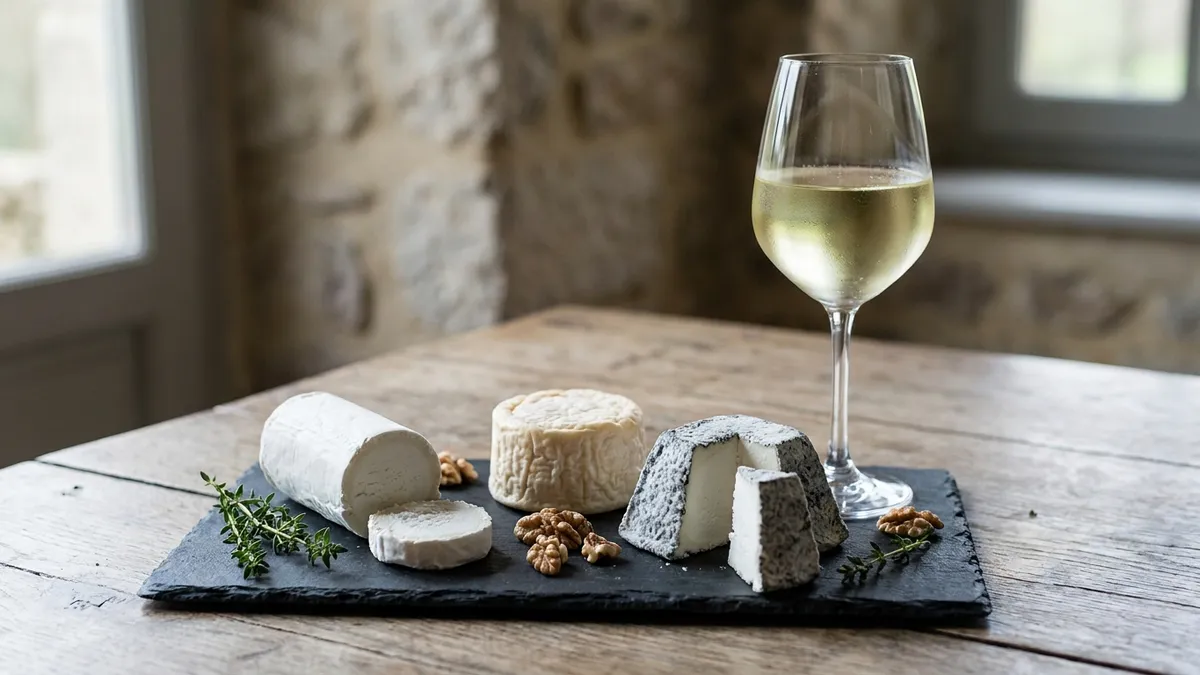
A dry sparkling wine or a crisp white with a little roundness, such as dry Chenin Blanc. A bloomy rind (the soft white mould skin also seen on Brie) makes the cheese runny and mushroomy just under the surface, while the centre stays chalky. The wine has to handle both textures.
Ash is a French tradition. Valençay, from the Berry area of central France, is a truncated pyramid covered in charcoal dust, and it gained AOC status in 1998. The ash was first used to help the cheese keep; for the wine, the bloom and the runny layer under it matter more.
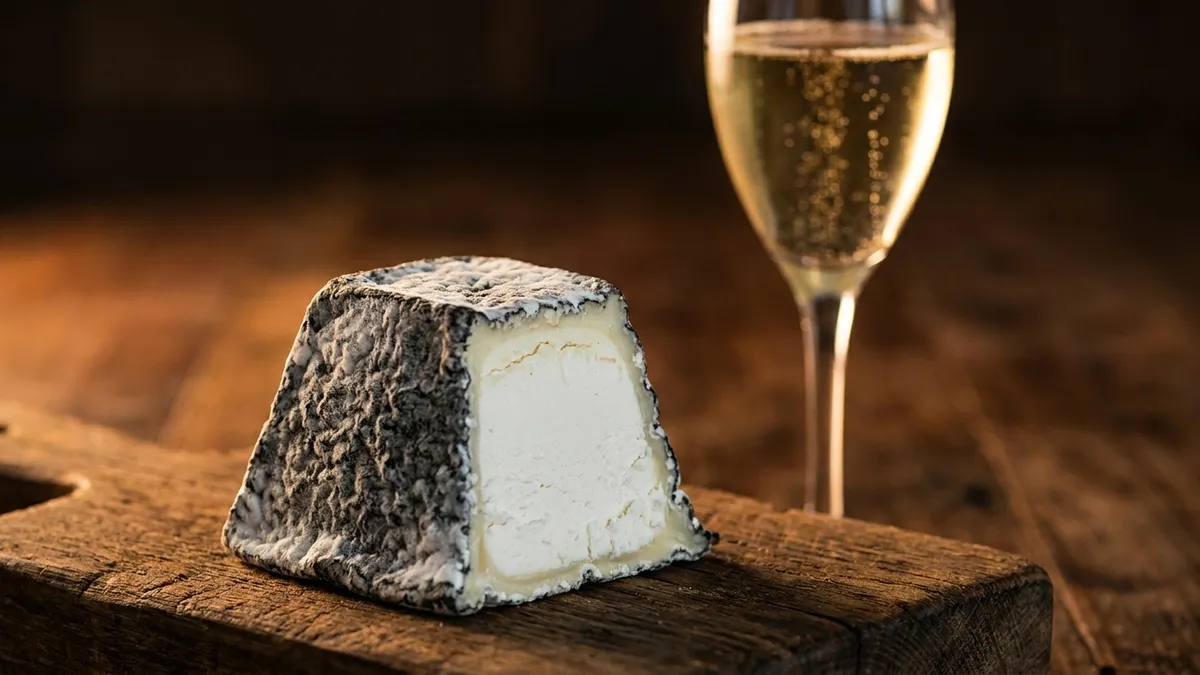
If the rind is bloomy or ashed and the edge is runny, pick bubbles. The acidity and bubbles in a Brut sparkling wine scrub the creamy layer from your tongue. If you prefer still wine, dry Chenin Blanc has the acidity of Sauvignon Blanc with more body; our Chenin Blanc wine guide shows how to tell dry from off-dry on the label.
What Wine Goes With Baked Goat Cheese or Goat Cheese Salad?
Baked goat cheese takes a rounder white or a dry rosé, while a goat cheese salad is paired to its dressing. Heat softens the tang and browns the crust, which adds toasty, nutty flavour. That warmth needs a wine with a little more body than a lean Sauvignon Blanc.
If the cheese comes out of the oven browned, move up to dry Chenin Blanc or a dry rosé. Rosé's red-berry fruit and fresh acidity carry the toast without the tannin of a red. Our rosé wine guide explains how the colour and style are made.
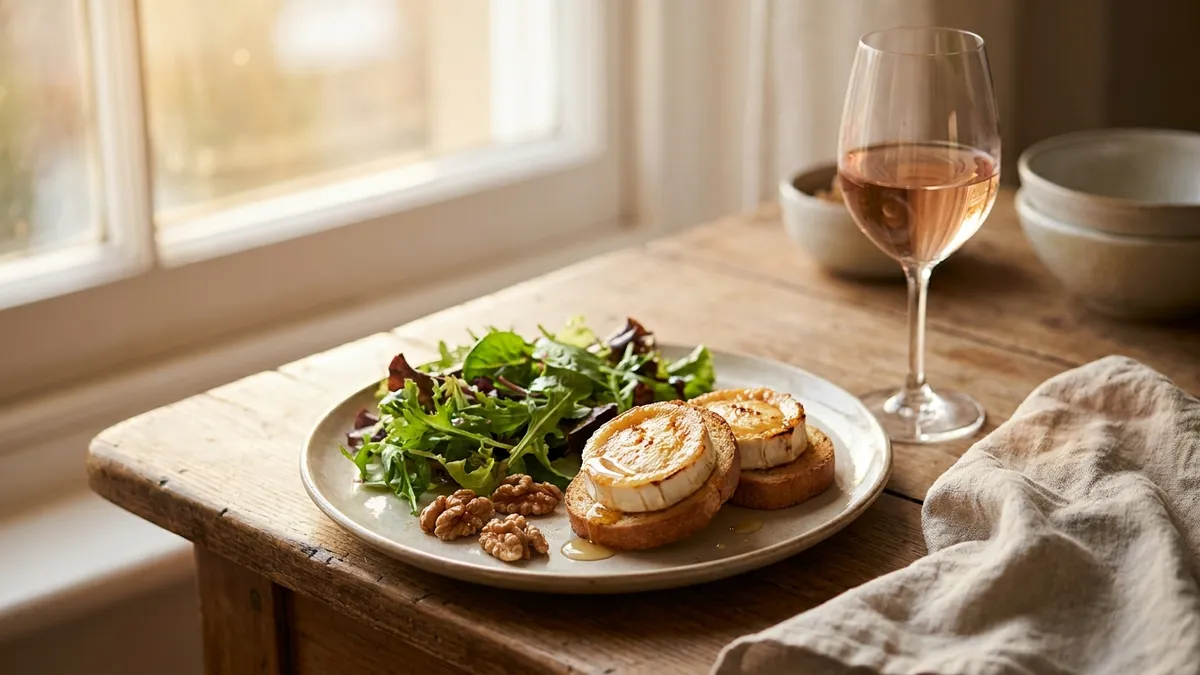
For a cold salad with crumbled goat cheese, the vinaigrette sets the bar. The wine must be at least as tart as the dressing, or it tastes thin. Loire Sauvignon Blanc is the safe pick there. Our guide to wine with salad matches every common dressing to a wine.
What Sparkling or Sweet Wine Works With Goat Cheese?
Dry sparkling wine works with almost any goat cheese; sweet wine only when the dish carries honey or fruit. A Brut wine has the acidity of a crisp white plus bubbles, which makes it the safest single bottle for a mixed goat cheese board. Traditional-method sparkling wines, with their bready notes, also suit firmer, aged cheeses.
Sweet wine is a narrower choice. On its own, fresh goat cheese makes a sweet wine taste cloying, because there is no salt or richness to balance the sugar. Honey, figs or fruit chutney supply the sweetness the wine needs to meet.
If the plate carries honey or fig, the wine must be at least as sweet as the food, or it tastes sour. An off-dry (slightly sweet) Chenin Blanc from the Loire is the natural choice. Our list of sparkling wine types shows which labels mean dry.
Is Sancerre Really the Classic Match for Crottin de Chavignol?
Yes: the two come from the same hills, and Crottin is said to go well with Sancerre from its home region. Crottin de Chavignol is a small, drum-shaped goat cheese from the village of Chavignol, just outside Sancerre. It has held AOC status since 1976.
Sancerre is an appellation (a protected place name) that allows only two grapes: Sauvignon Blanc for the white and Pinot Noir for the red. So both the classic white and a light red for goat cheese grow in one place. The vineyards sit on three soils: stony limestone called caillottes, chalky clay called terres blanches, and flint, called silex. Across the river, Pouilly-Fumé is made only from Sauvignon Blanc.
Western France has other goat cheeses with their own wine neighbours. Chabichou du Poitou, made in the north of the Nouvelle-Aquitaine region, is aged for at least 10 days, usually two or three weeks, and gained AOC status in 1990. It suits the same tart Loire whites. Wine Folly sums up the logic: "what grows together, goes together". The Loire Valley wine guide maps the full river from Muscadet to Sancerre.
How Do You Taste the Pairing at Home?
Buy one goat cheese and three wines, and taste the cheese with each. Use a fresh goat cheese log, a Sauvignon Blanc, a Brut sparkling wine and a light red such as Gamay. Chill the whites, and give the red 20 minutes in the fridge.
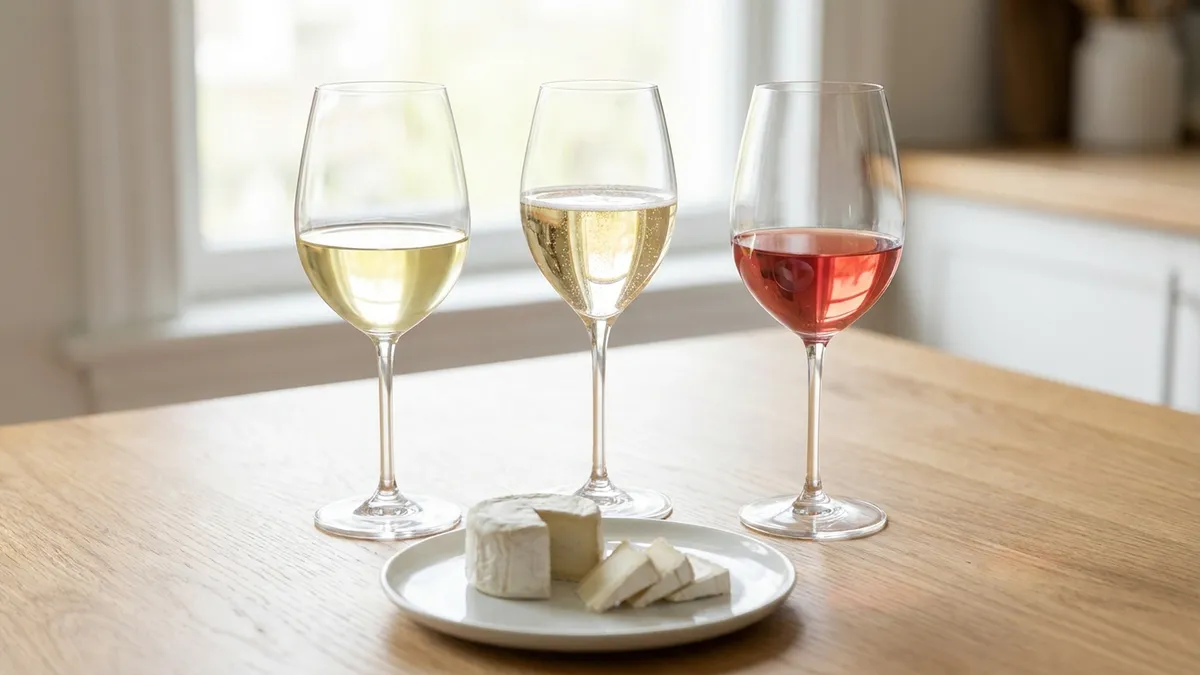
Take a bite, then a sip, then a second bite. Score each wine on two points: the second bite should taste as fresh as the first, and the wine should still taste of fruit. The Sauvignon Blanc usually wins the first question, the sparkling wine handles the texture, and the red shows where tannin starts to bite. If a wine fails both points, it is wrong for that cheese, so drop it from your list. Repeat with an aged goat cheese and the order often changes. The method works for any cheese, as our wine and cheese pairing guide shows.
More pairings by food sit in the food pairing hub, and the Sommy app at sommy.wine has a bite-sized France course that covers the Loire. Buy a fresh goat cheese log and a Loire Sauvignon Blanc tonight, pour a cold glass, and taste them bite by bite.
Sources
Frequently Asked Questions
What wine goes best with goat cheese?
Sauvignon Blanc is the most reliable choice, especially from the Loire Valley, as in Sancerre or Pouilly-Fumé. Its high acidity cuts the cheese's creamy fat and refreshes the tang, and its grassy, citrus smell sits close to the cheese's own flavour. Dry Chenin Blanc, dry rosé and dry sparkling wine are strong second choices.
Does red wine go with goat cheese?
Yes, if the red is light and low in tannin. Loire Cabernet Franc, Pinot Noir and Gamay work, especially with firmer, aged goat cheese. Serve them slightly chilled. Big, fruity, tannic reds such as young Cabernet Sauvignon flatten fresh goat cheese and taste bitter beside it, so save those for aged cow's-milk cheeses.
What wine goes with goat cheese salad?
Pair to the dressing as much as the cheese. With a vinaigrette, pour a high-acid white such as Sauvignon Blanc, which matches the vinegar's tartness and cuts the cheese. With warm baked goat cheese on toast, a dry rosé or a dry Chenin Blanc has the extra body to meet the browned crust. If honey goes on, choose an off-dry white.
What wine goes with aged goat cheese?
Aged goat cheese is firmer, saltier and nuttier than fresh chèvre, so it can take a wine with more body. A rounder white such as dry Chenin Blanc works, and so does a light red with soft tannin, like Loire Cabernet Franc or Pinot Noir. Keep tannic, oaky reds away, because the cheese still has the sharp goat tang.
Why does Sauvignon Blanc pair with goat cheese?
Goat milk is rich in caproic and caprylic acids, the fatty acids behind the cheese's sharp, tangy flavour. Sauvignon Blanc, especially from cool climates, has high acidity that cuts through that fat and leaves the mouth fresh, so each bite tastes new. Its grassy and citrus aromas also sit close to the cheese's own green, tangy flavour.
What sparkling wine goes with goat cheese?
A dry sparkling wine, labelled Brut, goes with almost any goat cheese. The bubbles and high acidity scrub the creamy texture from the palate, which helps most with bloomy-rind and ash-coated cheeses that turn runny under the rind. Traditional-method sparkling wines with bready notes also suit aged goat cheese. Avoid sweet sparkling wine unless the dish has honey or fruit.
Sommy Team
LinkedInFounder & Wine Educator
The Sommy Team is building the world's most approachable wine education app, helping beginners develop real tasting skills through structured courses and AI-guided practice.