Orange Wine Guide: What It Is and How to Taste It

By the Sommy Team — AI-assisted, human-edited.
Updated Apr 29, 2026
Contents (12)
- What Orange Wine Actually Is
- Orange Wine, in 90 Seconds
- How Orange Wine Is Made
- Orange Wine Versus the Other Three Colors
- Where Orange Wine Comes From
- What Orange Wine Tastes Like
- How to Taste Orange Wine: A Four-Bottle Flight
- Common Orange Wine Grapes
- Food Pairings That Make Sense of the Style
- Serving and Buying
- Common Misconceptions About Orange Wine
- Where to Go From Here
TL;DR
Orange wine is white wine fermented with the grape skins, the way red wine is made. The result is amber color, gentle tannin, savory complexity, and a texture that feels closer to a light red than a crisp white. It started in Georgia 8,000 years ago, was revived in Friuli in the 1990s, and pairs beautifully with bold, textured food.
What Orange Wine Actually Is
Orange wine is white wine made the way red wine is made — fermented with the grape skins for an extended period. That single change unlocks a different wine entirely. The amber color, the tannic grip, the savory backbone, the dried-fruit aromatics — all of it comes from the skins.
If you have only ever tasted crisp white wine, the first sip of orange wine can feel disorienting. The grape varieties are familiar — Pinot Grigio, Chardonnay, Riesling — but the texture and structure feel closer to a delicate red. That mismatch is the whole point of the style.
Orange wine is sometimes called the fourth color of wine, alongside red, white, and rosé. The label has stuck because it captures something true: this is its own category, with its own logic, and judging it against conventional white wine misses the entire point.
Orange Wine, in 90 Seconds
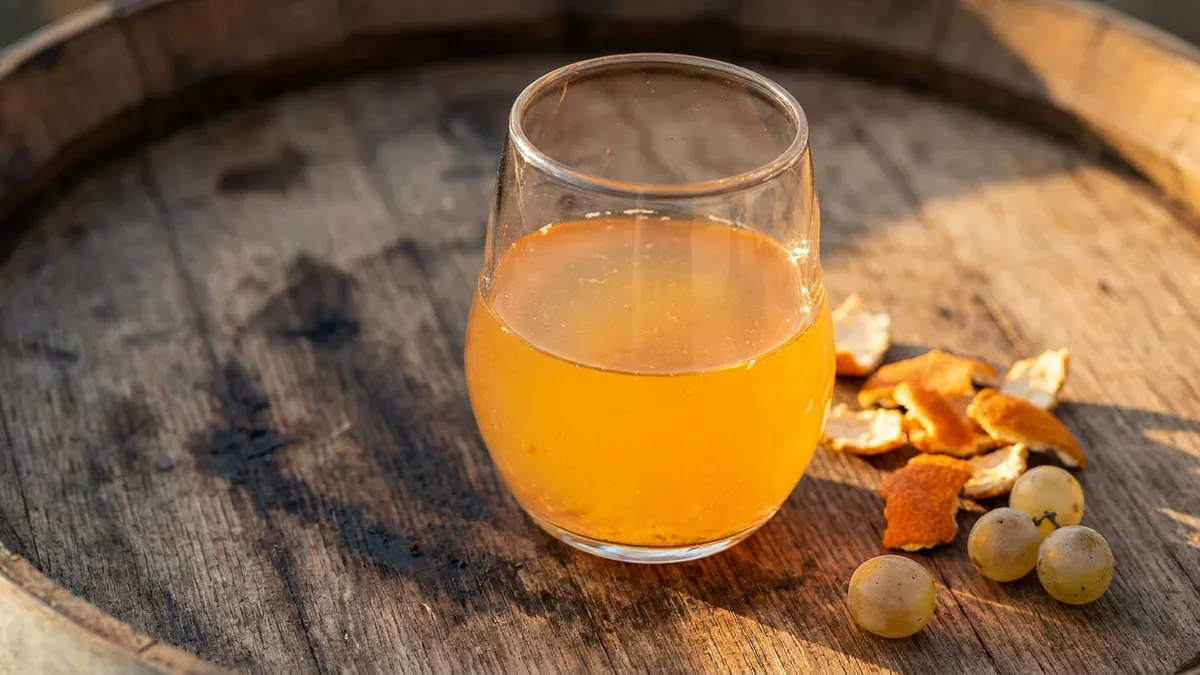
Take white grapes — aromatic varieties like Rkatsiteli, Ribolla Gialla, Pinot Grigio, or Friulano. Crush them. Then, instead of pressing the juice off the skins immediately as you would for white wine, leave the skins in.
Let the must ferment with the skins for a few days to several months. The skins release color, tannin, and phenolic compounds. Press off the wine, age it in clay amphora, oak, or steel, and bottle. Georgian winemakers have been doing this for over 8,000 years in buried clay vessels.
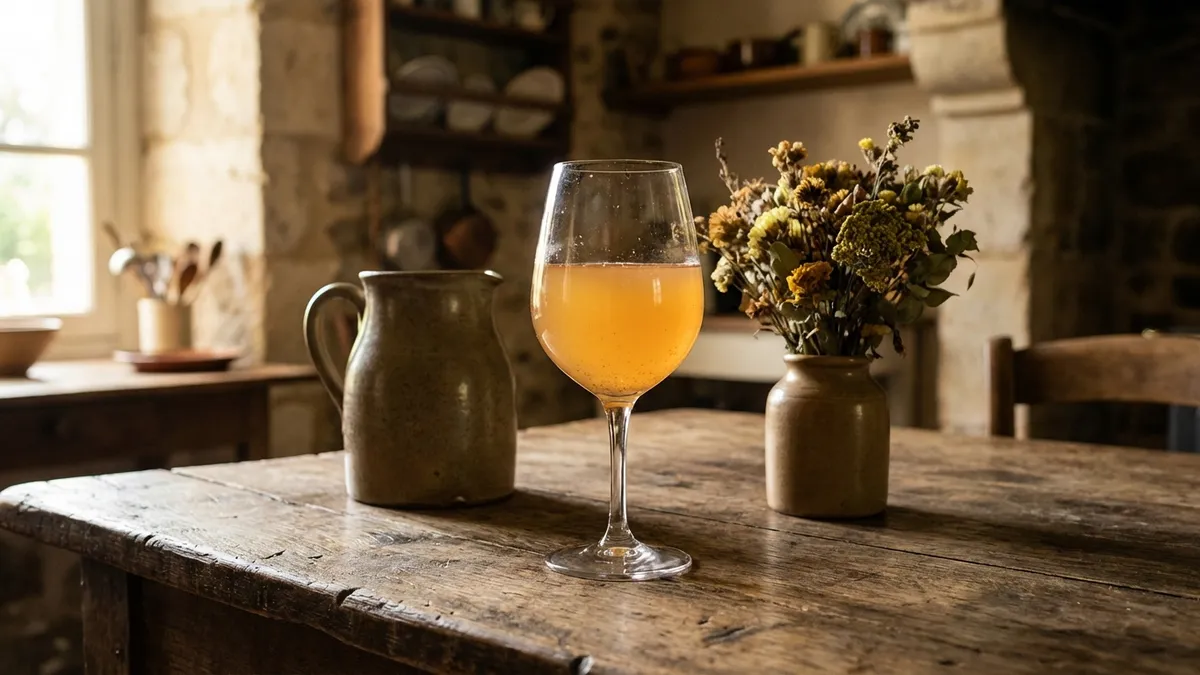
The result is amber to deep copper in color, with noticeable tannin (the drying, gripping sensation from grape skins) and high acidity (the tart, mouth-watering freshness wines need to feel alive). Aromas lean savory and dried — apricot, orange peel, walnut, chamomile, mead.
Orange wine sits between white and red on every axis: lighter than red, more textured than white, more savory than fruity. It rewards food and patience.
How Orange Wine Is Made
Skin Contact, Step by Step
Every grape — red or white — has clear juice inside. Color comes from skins. Conventional white winemaking presses grapes immediately and discards the skins. Orange winemaking keeps them.
The process:
- Pick the white grapes, often hand-harvested at full ripeness
- Crush the berries into a tank or vessel, sometimes with stems
- Ferment the juice with the skins for days, weeks, or months
- Press the wine off the skins once maceration is complete
- Age in qvevri (clay amphora), neutral oak, or stainless steel
- Bottle — often unfiltered, often with low or no added sulfites
The skins float and form a cap the winemaker manages by punching down or pumping over, exactly like red winemaking. Longer contact extracts more tannin and color.
Maceration Time and What It Does
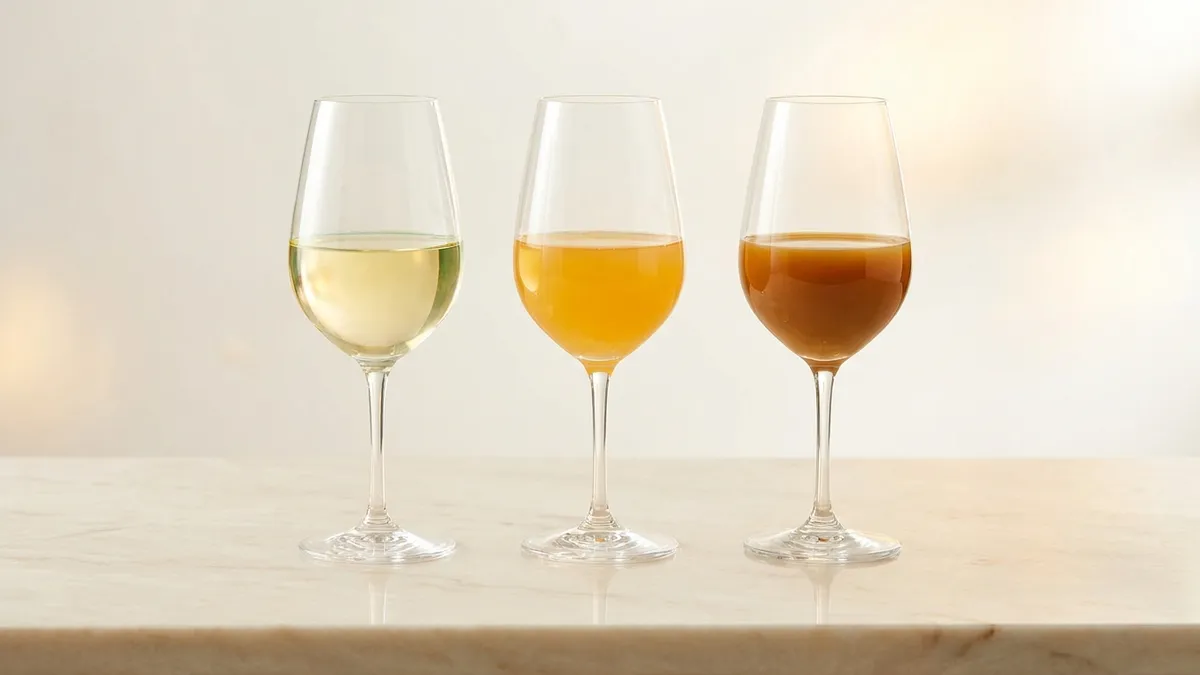
Skin-contact time is the single biggest variable in orange wine style. A short maceration produces a gentle, transitional wine that still feels white-wine-shaped. A long maceration produces something that drinks more like a tannic, oxidative red.
- Short (3 to 7 days) — pale gold to pale amber, gentle tannin, subtle savory edge, easy entry point
- Medium (1 to 4 weeks) — clear amber color, noticeable tannin, complex dried-fruit aromatics
- Long (1 to 12 months) — deep copper to brown-amber, firm tannin, pronounced oxidative character, ageable
There is no "correct" maceration time. Friuli pioneers in the 1990s often pushed past four months. Georgian traditional winemaking ferments for six months or more in qvevri. Modern producers experimenting with the style might stop at five days. Each choice produces a different wine.
Vessels Matter
Where the wine ferments and ages shapes what it becomes. Three vessels dominate orange wine production.
Clay amphora — including Georgian qvevri buried underground and Italian terracotta amphorae — allows minimal oxygen exchange and contributes a textural, almost mineral quality.
Neutral oak — older barrels that no longer add wood flavor — allows controlled oxidation and softens tannins without imposing toast or vanilla notes.
Stainless steel — produces the cleanest, most modern style of orange wine, with bright fruit preserved alongside the tannic structure.
Many producers blend approaches: ferment in qvevri, age in neutral oak, bottle without filtration.
Orange Wine Versus the Other Three Colors
The simplest way to understand orange wine is to position it against the categories you already know.
- Red wine — red grapes, full skin contact, full tannin and color
- White wine — white grapes, no skin contact, pale color, minimal tannin
- Rosé wine — red grapes, brief skin contact (hours), pale pink, soft tannin
- Orange wine — white grapes, extended skin contact (days to months), amber, noticeable tannin
Orange and rosé both involve partial skin contact, but they start from opposite grape colors. Same idea, mirrored grapes, opposite ends of the spectrum.
Tasting orange wine as if it were a white wine is the most common beginner mistake. The structure, temperature, and food-pairing logic all sit closer to a light red. Approach it that way and the style makes sense quickly.
Where Orange Wine Comes From
Georgia: The 8,000-Year-Old Original
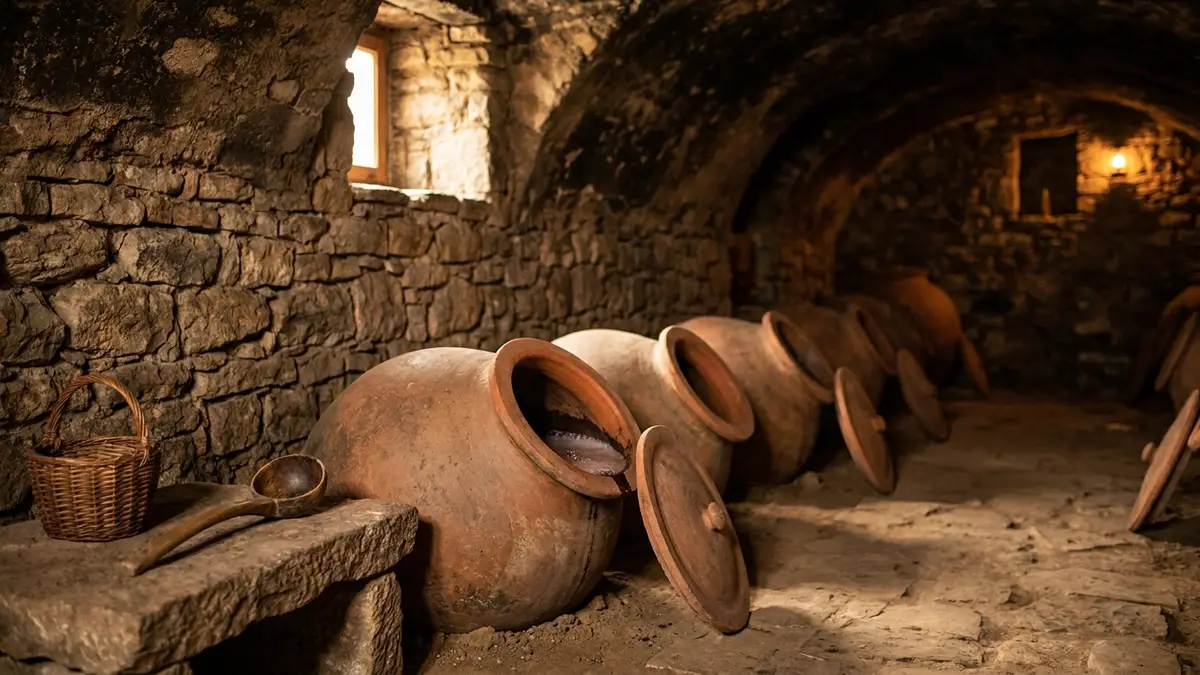
Orange wine is not a trend. It is the original wine. Archaeologists have found evidence of qvevri winemaking in the South Caucasus dating back roughly 8,000 years, and the technique has continued unbroken in Kakheti, the heartland of Georgian wine country. UNESCO recognized qvevri winemaking as Intangible Cultural Heritage in 2013.
Traditional Georgian orange wine ferments and ages in qvevri — large egg-shaped clay vessels buried up to their necks in the ground. Wines spend months on their skins, then continue maturing in qvevri for additional months before bottling. How long depends on the tradition, and qvevri wine explained compares the long Kakhetian and shorter Imeretian methods. The grape varieties — Rkatsiteli, Mtsvane, Kisi — are central European cousins of the white grapes that ended up across the Mediterranean.
Friuli and Slovenia: The 1990s Revival
The modern revival started in Friuli-Venezia Giulia, a region in northeastern Italy bordering Slovenia. Friuli pioneers in the 1990s, inspired by Georgian tradition and frustrated with squeaky-clean international whites, began experimenting with extended skin contact on local grapes — Ribolla Gialla, Friulano, Pinot Grigio, Vitovska.
The movement crossed into Slovenia's Goriška Brda and Vipava valleys, where many of the best modern orange wines are still made. From there it spread to Veneto, Trentino, parts of Hungary, and small producers in California, Oregon, and South Africa.
Modern orange wine remains a niche — perhaps one or two percent of global production — but it has fixed itself permanently on serious wine lists worldwide.
What Orange Wine Tastes Like
Aromas and Flavors
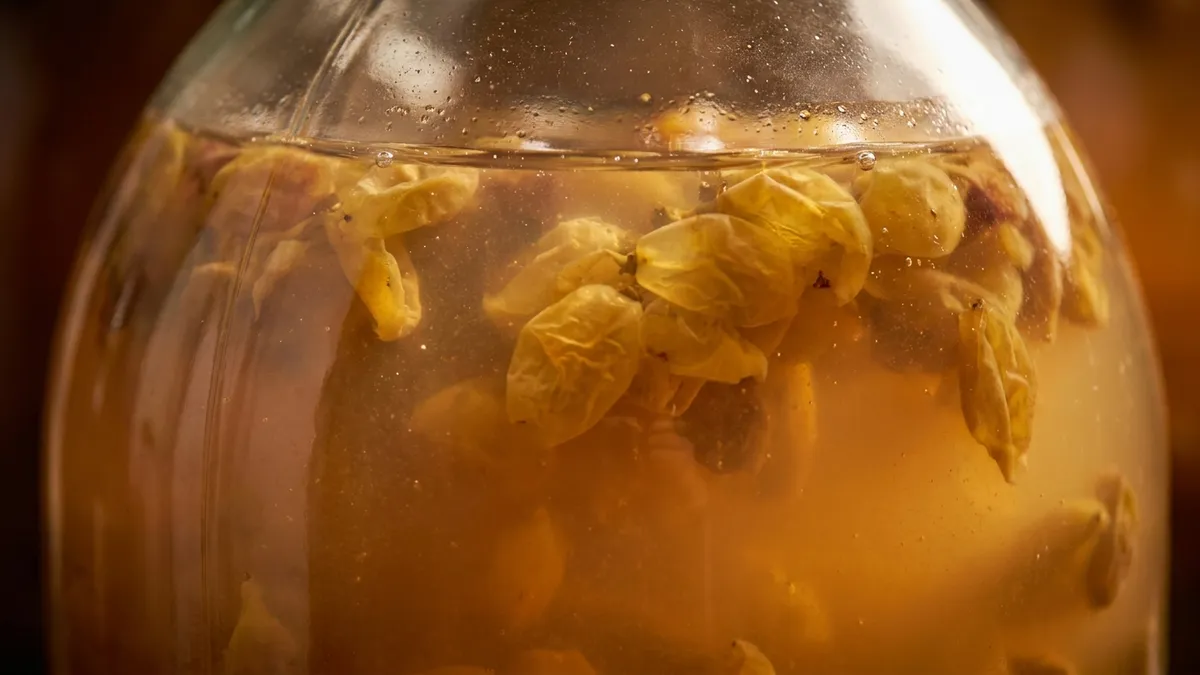
Orange wine smells and tastes nothing like a fresh, bright white. The dominant register is dried, cooked, and savory rather than fresh and primary. If you have done primary, secondary, and tertiary aromas work, orange wine sits firmly in the secondary and tertiary zone.
Common notes include:
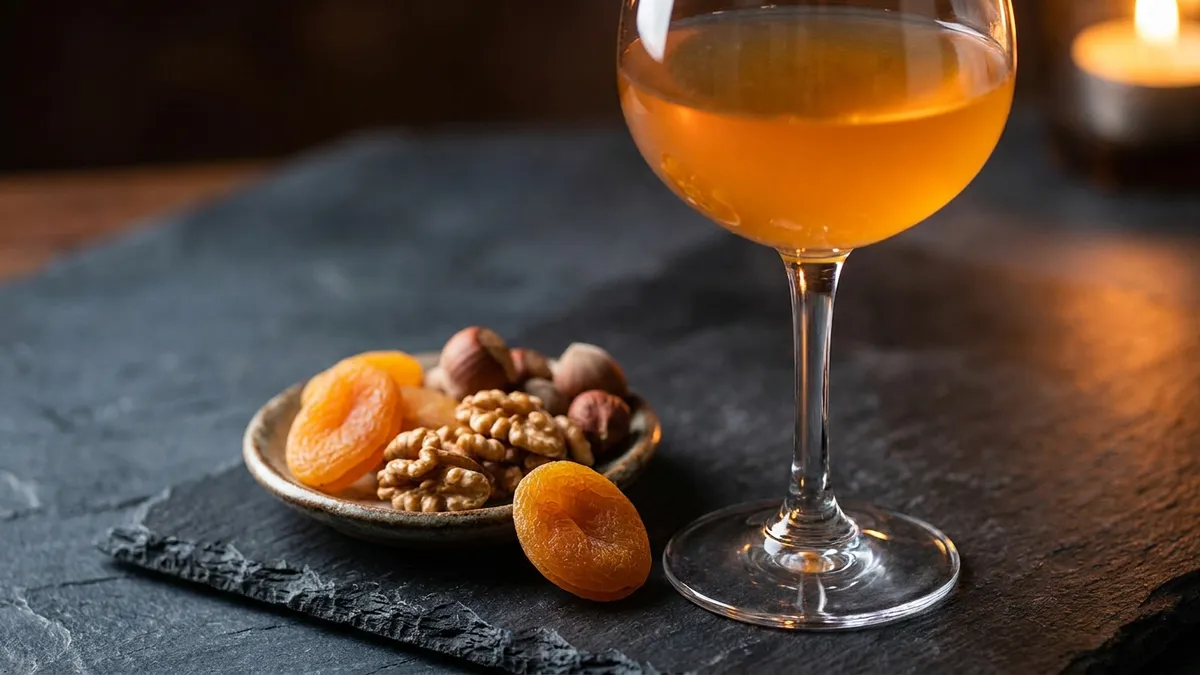
- Dried fruit — apricot, peach skin, quince, marmalade, candied orange peel
- Nutty — hazelnut, walnut, toasted almond
- Floral and herbal — chamomile tea, dried hay, saffron
- Oxidative — mead, beeswax, sherry-like nuttiness
- Savory — yeast, sourdough, miso, soy
If you are still building an aroma vocabulary, our wine tasting vocabulary cheat sheet covers the descriptors that come up most often in orange wine tasting notes.
Structure and Texture
This is where orange wine breaks from white wine entirely. The numbers tell the story.
- Color — pale gold to deep amber-copper, never water-clear
- Tannin — present, sometimes firm, always more than a conventional white
- Acidity — usually high, which is what keeps the wine from feeling heavy
- Body — medium to medium-plus, fuller than most whites
- Finish — long, often slightly oxidative, with a savory or grippy aftertaste
The combination of tannin plus high acidity creates a mouthfeel that feels architectural. The wine has shape. It pushes back. That is the structural fingerprint of skin contact, and it is the single biggest reason orange wine pairs with food the way it does.
Why Beginners Sometimes Bounce Off It
Three things commonly trip up first-time tasters.
Tannic white feels wrong. The brain expects fresh fruit and instead gets grippy texture. The fix is to reframe: think "light red," not "white."
Oxidative notes feel like a fault. The mead, walnut, and bruised-apple character is intentional. Our guide to common wine tasting mistakes covers how to tell style from flaw.
Funky aromas in natural styles. Some natural-leaning orange wines carry yeast or leather notes from minimal-intervention winemaking. These are separate from skin contact itself.
How to Taste Orange Wine: A Four-Bottle Flight
The cleanest way to learn orange wine is to taste it as a flight, with maceration time as the variable. Walk up the skin-contact scale and watch the wine transform.
Bottle 1 — Short skin contact (4 to 7 days). A white-leaning entry point. Pale gold, gentle tannin, recognizably fruity. The bridge from conventional white wine.
Bottle 2 — Medium skin contact (2 to 3 weeks). The transitional wine. Clear amber, noticeable tannin, dried-fruit aromas appearing. The most common style on the market.
Bottle 3 — Long skin contact (2 to 4 months). Full orange wine territory. Deep copper, firm tannin, walnut and mead notes dominate.
Bottle 4 — Traditional qvevri-aged. A Georgian or Georgian-style wine aged in clay for six months or longer. Brown-amber, intensely tannic, deeply savory.
Each step adds color, tannin, and oxidative complexity. The Sommy app's tasting flow walks you through color, aroma, palate, and structure for each glass and saves the result so you can compare flights weeks apart.
Common Orange Wine Grapes
Almost any white grape can be made into orange wine, but a handful show up most often.
- Rkatsiteli — Georgia's signature grape; high-acid, tannic, classic for qvevri winemaking
- Ribolla Gialla — Friuli and Slovenia's flagship; floral, structured, ages well
- Pinot Grigio — when made with extended skin contact, transforms into something completely different
- Friulano — Friuli's local white, savory and herbal in skin-contact form
- Furmint — Hungary and Slovenia; high acidity makes it ideal for long maceration
- Garganega — Veneto's Soave grape, increasingly used for skin contact
- Chardonnay and Riesling — international grapes also showing up in modern orange styles
The choice of grape sets the aromatic framework. Skin contact and maceration time then determine the final shape.
Food Pairings That Make Sense of the Style
Orange wine is a food wine. Drinking it on its own is fine, but the style truly clicks when there is something on the plate that needs the tannic grip and high acidity at the same time.
The strongest pairings include:
- Aged hard cheeses — Parmigiano, aged Gouda, Manchego; the tannin and salt balance each other
- Charcuterie boards — cured meats, pâtés, terrines; high acid cuts the fat
- Roasted root vegetables — beets, carrots, parsnips with caramelization to match the wine's earthiness
- Mushroom dishes — savory, umami-driven food that maps onto the wine's tertiary notes
- Spicy curries — Indian, Moroccan, Korean; the tannin handles heat the way few whites can
- Tagines and slow-braised meats — orange peel, dried fruit, and spices in the food echo the wine
- Whole-grain bread with good olive oil — simple, but the textures align surprisingly well
The pairing rule is straightforward: orange wine works wherever a light red would work, plus a few categories where light reds struggle (spicy food, aged cheeses, vegetable-heavy plates).
Serving and Buying
Serving Temperature and Glassware
Serve orange wine cooler than red but warmer than white — around 12 to 14 degrees Celsius, or 54 to 57 degrees Fahrenheit. If a bottle has been sitting in the fridge, let it warm up for 10 to 15 minutes before pouring. Over-chilling mutes the aromatics.
A standard white wine glass works fine. A universal stem with a slightly wider bowl is even better, since orange wine benefits from a little air. Young, aggressive examples can soften with a 30-minute decant or simply being left in the glass to open.
Aging Potential
Most orange wines drink best within five years of release. Top examples — particularly Georgian qvevri wines and long-macerated Friulian whites — can age 10 to 20 years gracefully, sometimes longer. The skin-derived phenolics protect the wine against oxidation in a way that white wine simply cannot match.
If you are curious how a wine evolves with age, our guide on tasting young versus aged wine walks through the structural changes year by year.
Buying Without Getting Lost
Orange wine is rarely cheap, but it does not need to be expensive.
- 20 to 35 dollars — entry-level skin-contact wines from Italy, Slovenia, or California
- 40 to 80 dollars — serious Friulian, Slovenian, or Georgian examples
- 100+ dollars — top traditional qvevri wines and cult Friuli bottles
Look for label words that signal the style — "skin contact," "macerated," "amphora," "qvevri" — and pay attention to regions known for it: Friuli, Goriška Brda, Vipava, and Kakheti.
Common Misconceptions About Orange Wine
A handful of myths come up repeatedly.
"Orange wine is sweet." Almost never. The dried-fruit aromatics suggest sweetness, but the wines are typically dry. High acidity and tannin reinforce that dryness on the palate.
"Orange wine is always cloudy." Some are; many are not. Cloudiness comes from being unfiltered, which is a separate choice from skin contact.
"Orange wine is automatically natural wine." Often, not always. The technique does not require organic farming or low sulfites. It overlaps with natural wine but is not the same thing.
"Orange wine is just trendy." It has 8,000 years of continuous history in Georgia. The trend is the rediscovery, not the wine.
Where to Go From Here
Orange wine is one of the clearest examples of how technique — not grape variety, not climate — defines a wine's character. The same Pinot Grigio grape can produce a clean, neutral white in stainless steel or a tannic, savory, amber wine after three weeks of skin contact.
Our wine styles pillar hub covers reds, whites, rosés, sparkling, dessert, and orange wines side by side. For a structured way to develop your tasting muscles, how to taste wine like a sommelier and developing your wine palate give you a framework that works for any style.
The Sommy app guides you through the same color, aroma, palate, and structure logic sommeliers use, with skin-contact wines treated as their own category rather than miscategorized whites.
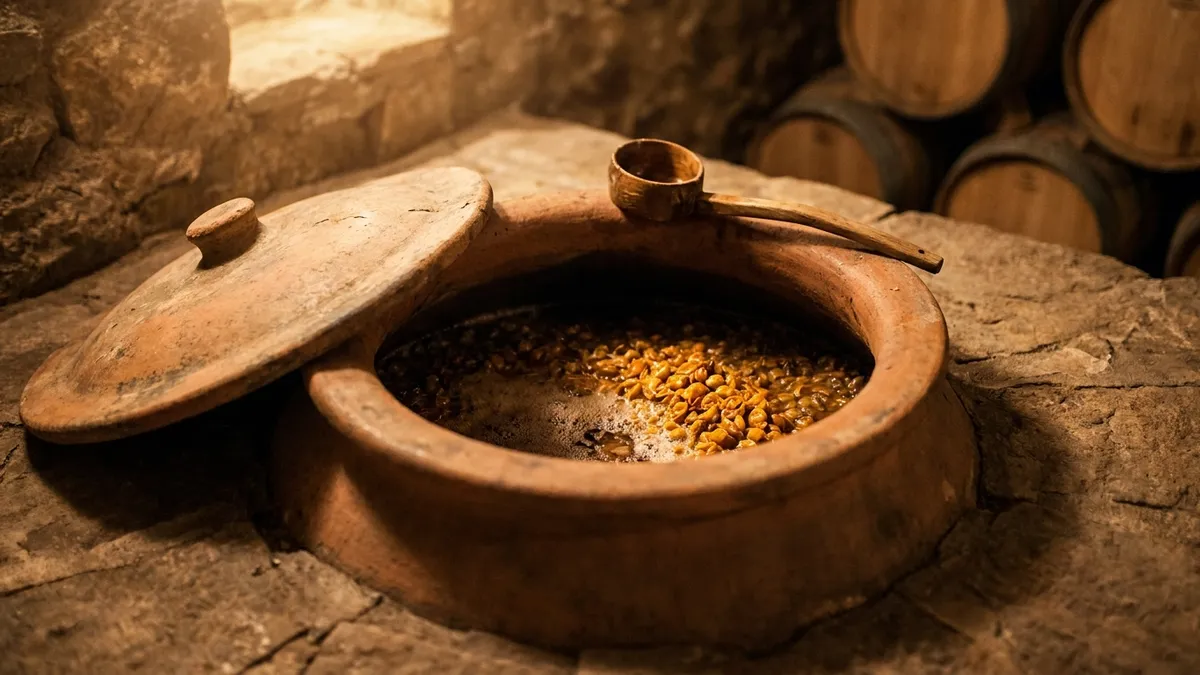
Orange wine rewards patience. The first glass is rarely a love-at-first-sip moment. By the third or fourth, the dried fruit and savory backbone start to feel familiar — and food pairings that no other style handles cleanly suddenly snap into place.
Frequently Asked Questions
What does orange wine actually taste like?
Expect dried apricot, orange peel, hazelnut, herbal tea, mead, and a savory walnut note. Texturally, it has gentle tannin and grippy mouthfeel that feels closer to a light red wine than a typical white. Acidity is usually high, and finishes often carry a faint oxidative or nutty character — that is part of the style, not a fault.
How is orange wine different from rosé?
Rosé is made from red grapes with brief skin contact, usually a few hours, which extracts pink color but little tannin. Orange wine is made from white grapes with extended skin contact, lasting days to months, which extracts amber pigments and noticeable tannin. Different grape color, different contact time, very different wines.
Is orange wine the same as natural wine?
Not always. Orange wine refers to a winemaking technique — extended skin contact on white grapes. Natural wine refers to a low-intervention philosophy. Many orange wines are also natural wines because the modern revival came from the natural wine movement, but conventional producers also make skin-contact whites without going low-intervention.
Why does orange wine have tannin if it's white wine?
Tannins live in grape skins, seeds, and stems. White winemaking removes the skins immediately, so tannins never enter the juice. Orange winemaking keeps the skins in contact with the juice for days or weeks, which extracts those tannins. The grape variety stays white — the structure becomes red-like.
What food should I drink orange wine with?
Orange wine shines with food that has weight, spice, or texture. Aged hard cheeses, charcuterie, roasted root vegetables, mushroom dishes, Indian and Moroccan curries, and tagines all pair beautifully. The tannin grips fat and protein, while the high acidity cuts through richness — a useful combination that few other styles offer.
How should orange wine be served?
Serve cooler than red but warmer than white — around 12 to 14 degrees Celsius, or 54 to 57 degrees Fahrenheit. Use a white wine glass or a universal stem. Young, aggressive examples benefit from a 30-minute decant or simply being left in the glass to open. Over-chilling mutes the savory aromatics that make the style interesting.
How long does orange wine age?
Most orange wines are best within five years of release. Top examples from longer maceration and clay-vessel aging can hold 10 to 20 years, sometimes longer. The skin-derived tannins and phenolics protect against oxidation in a way that conventional whites cannot match, which is why traditional Georgian wines age gracefully for decades.
Is orange wine an acquired taste?
For many beginners, yes. The first sip can feel strange because the brain expects fruit-forward white wine and instead gets tannin, savory complexity, and oxidative notes. The fix is to taste it next to food, start with shorter-skin styles, and approach it like a light red rather than a chilled white.
Sommy Team
LinkedInFounder & Wine Educator
The Sommy Team is building the world's most approachable wine education app, helping beginners develop real tasting skills through structured courses and AI-guided practice.