Wine with Nuts: Almonds, Walnuts, Pistachios, and More

By the Sommy Team — AI-assisted, human-edited.
Updated Oct 1, 2026
Contents (10)
- What Wine Goes With Nuts, in One Paragraph?
- Which Wine Goes With Each Nut?
- Why Do Nuts Make Some Wines Taste Better and Others Worse?
- What Wine Goes With Almonds?
- Does Red Wine Go With Walnuts?
- What Wine Goes With Pistachios, Hazelnuts, Pecans and Cashews?
- Do Roasted, Salted and Candied Nuts Change the Wine?
- What Dessert Wine Goes With Nut Sweets?
- How Do You Build a Nut and Cheese Board for Wine?
- Pour Sherry With Your Almonds Tonight
TL;DR
Nuts bring fat, roast, salt and, in walnuts, tannin in the skin. Dry fino or manzanilla sherry is the safest wine with nuts, sparkling wine handles salt and fat, and soft low-tannin reds suit walnuts. Big tannic reds clash with walnut skins, and nut desserts need a wine at least as sweet.
Wine with nuts works when the wine brings what the nut lacks. Acidity or bubbles rinse away the fat, a nutty taste of its own echoes the roast, and a salty tang or a little sweetness meets the salt. Dry sherry does all three, which is why southern Spanish bars pour it next to a dish of almonds. The one combination to avoid is a big tannic red with walnuts.
What Wine Goes With Nuts, in One Paragraph?
Dry sherry is the safest wine with nuts, followed by sparkling wine and crisp whites. Fino and manzanilla, fortified to about 15.5% alcohol, suit almonds and mixed salted nuts. Brut sparkling wine and high-acid whites such as Albariño or dry Riesling clean up the oil in pistachios, cashews and macadamias. Walnuts and pecans want a soft red like Pinot Noir or an oxidised wine such as amontillado or tawny port, because walnuts carry tannin in their skins. Sweet nut desserts need a dessert wine at least as sweet: Vin Santo with almond biscotti, Madeira or cream sherry with pecan pie and baklava.
Which Wine Goes With Each Nut?
Match the wine to the nut and to how it was cooked, because a raw almond, a salted pistachio and a candied pecan each pull on a different part of the wine. If you only buy one bottle for a mixed nut bowl, make it a chilled fino or manzanilla sherry.
| Nut | What it brings | Pour this | Why it works |
|---|---|---|---|
| Almonds (raw or salted) | Mild sweetness, oil, salt | Fino or manzanilla sherry, Albariño | Salty tang and acidity cut the oil and echo the almond |
| Smoked or dark-roasted almonds | Toast, smoke | Amontillado sherry, oaked Chardonnay | Oxidised and oak flavours echo the roast |
| Walnuts | Oil, tannin in the skin | Pinot Noir, Gamay, tawny port, oloroso | Low tannin avoids a double dose of dryness |
| Pistachios (salted) | Lots of fat, salt | Brut sparkling wine, Sauvignon Blanc | Bubbles and acidity scrub the fat, salt softens the acid |
| Hazelnuts | Roast, some skin tannin | Amontillado, aged Champagne, Chardonnay | Toasty wine flavours meet toasty nut |
| Pecans | Buttery fat, natural sweetness | Off-dry Riesling, tawny port | A little sugar matches the sweet nut |
| Cashews and macadamias | Soft, creamy fat | Chenin Blanc, dry sparkling wine | Acidity lifts the creaminess |
| Candied or honey-glazed nuts | Sugar | Moscato, Sauternes, sweet Madeira | The wine must be sweeter than the coating |
Why Do Nuts Make Some Wines Taste Better and Others Worse?
Four things in a nut decide the wine: fat, roast, salt and skin. Fat and salt change how acidity tastes, roast sets the flavour the wine should echo, and the skin adds tannin that stacks on the tannin in a red wine.
- Fat coats the mouth. It needs acidity (the tartness that makes your mouth water) or bubbles to rinse it off.
- Roast adds toasted, caramel flavours. Wines aged with oxygen already taste of toasted nuts, so they echo it.
- Salt makes acidic wines taste rounder and fruitier, but pushes bitterness and alcohol forward in big reds.
- Skin carries tannin, the part that clashes with red wine.
Tannin is the drying grip on your gums. Chemically, tannins are compounds that bind to and precipitate proteins, including the proteins in your saliva, which is why your mouth feels rough and dry. Walnuts, hazelnuts, pecans and almonds all contain tannins, in lower amounts than acorns. Eat a walnut, then sip a high-tannin red, and both doses land on the same saliva at once.
Our explainer on what tannins are shows how to feel them in any wine. The same fat, salt and acid logic runs through all the wine pairing rules.
What Wine Goes With Almonds?
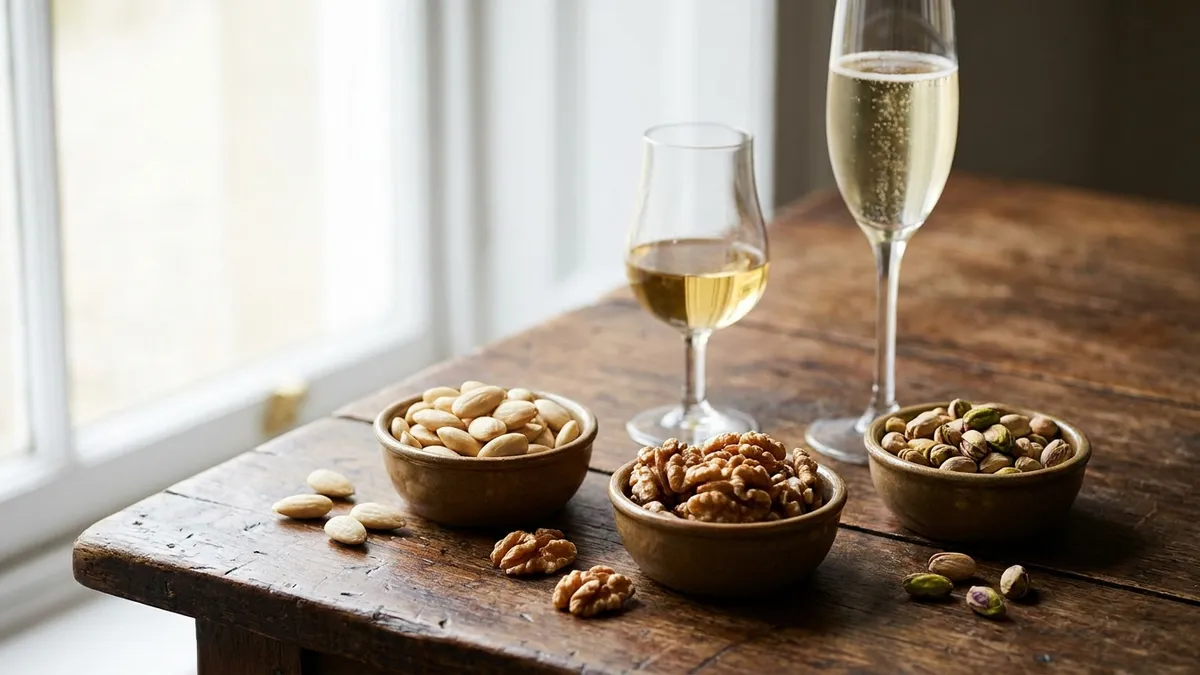
Pour a chilled fino or manzanilla sherry with almonds, the way bars in southern Spain serve them. Both are fortified (spirit added, about 15 to 22% alcohol; for these two, 15.5%) and aged under flor, a layer of yeast that floats on the wine and keeps oxygen away.
Flor gives a dry, tangy, salty taste and a smell of raw almond. The wine echoes the nut while its acidity cuts the oil.
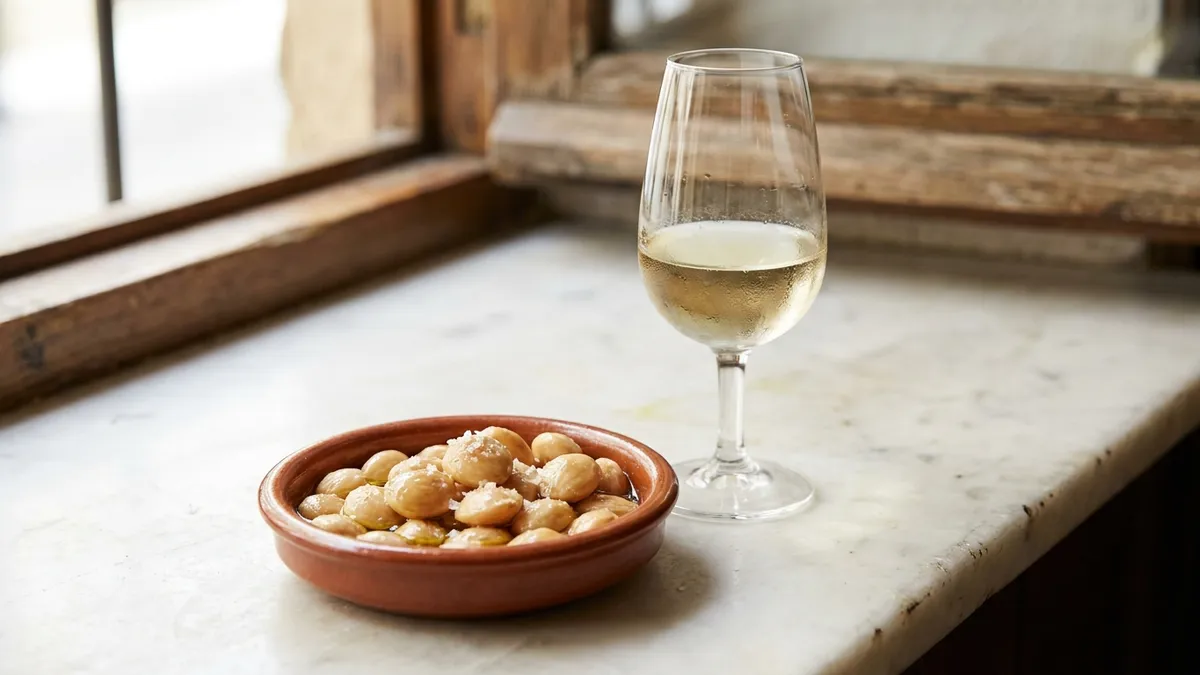
Sherry is often assumed to be sweet. Fino and manzanilla are bone dry, and the sweet styles are cream, medium and Pedro Ximénez. All sherry must come from the Sherry Triangle in Cádiz, Spain: Jerez de la Frontera, Sanlúcar de Barrameda and El Puerto de Santa María. Manzanilla is the fino made in Sanlúcar. The styles and how to read the label are in our sherry wine guide, and the grape behind them in the Palomino Fino guide.
The Marcona almond, a Spanish variety, is short, round, relatively sweet and delicate in texture. Fried in oil and salted, it is a classic bar snack with fino.
If the almonds are smoked or roasted dark, choose an amontillado instead. It starts under flor and is then exposed to oxygen, which turns it darker and gives it a toasted hazelnut flavour. That oxidative style (aged with deliberate contact with air) matches the roast. If sherry is not an option, a crisp Albariño or a dry Champagne does the same job with acid alone.
Does Red Wine Go With Walnuts?
Only a soft one. "Red wine with nuts" sounds like a safe rule, but walnuts are where it fails most often, because their tannin stacks on the wine's and the sip turns harsh and drying. Choose a red with low tannin and bright acidity, such as Pinot Noir or Gamay, and serve it slightly cool, around cellar temperature.
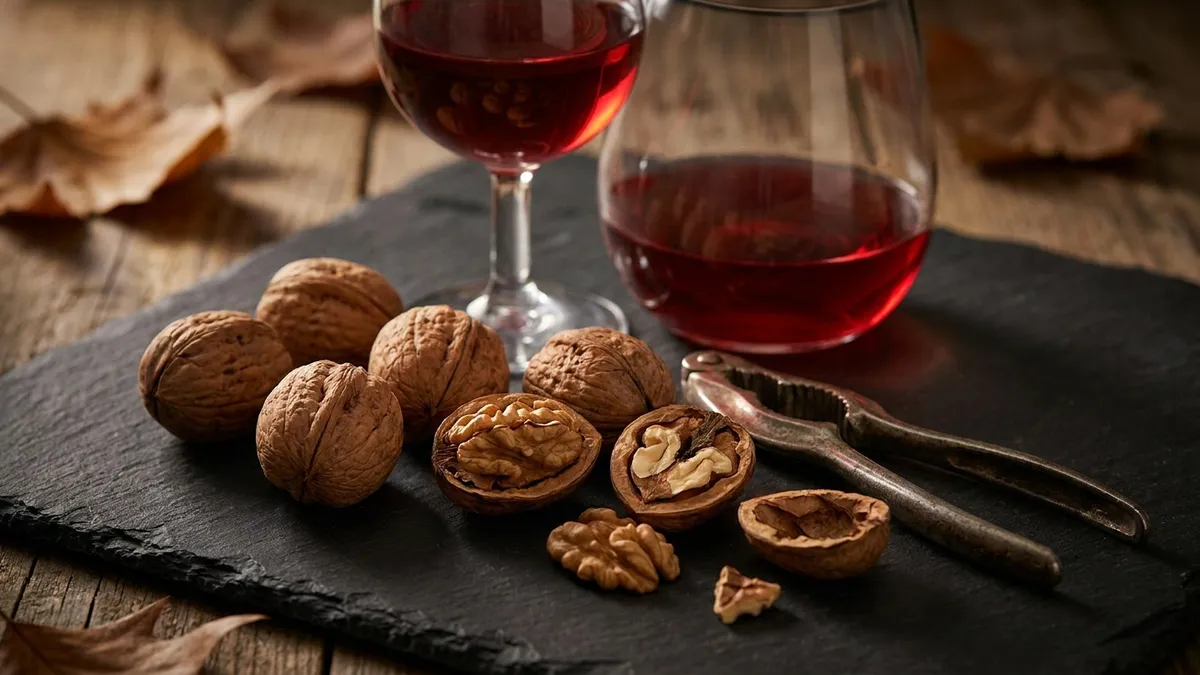
Walnuts are also among the most fragile nuts. Their oil is largely polyunsaturated (72% of the fat), the type that reacts fastest with oxygen. Compounds in the thin seed coat shield it from air, but an old bag of walnut halves often tastes stale and sharp. That rancid edge makes any wine taste flat, so taste the walnuts before opening a good bottle.
If you want a red with more grip, give the walnuts cheese to work against. A blue cheese or aged hard cheese adds protein and fat that soften the tannin. Better still with walnuts are oxidised wines: tawny port, oloroso sherry or a dry Madeira such as Sercial, which already taste of walnut. Our guide to oxidative and reductive winemaking shows where that flavour comes from.
What Wine Goes With Pistachios, Hazelnuts, Pecans and Cashews?
Match the wine to the nut's fat and sweetness. The fattiest nuts, pistachios, cashews and macadamias, want acid and bubbles to rinse the palate. The toastiest, hazelnuts, want a wine with toast of its own. The sweetest, pecans, want a little sugar in the glass.
Pistachios are about 45% fat and 20% protein, and botanically they are the seed of a drupe, a fruit with a stone, like a peach. Their fat and the salt on roasted shells call for a brut (dry) sparkling wine. If the pistachios are salted, open sparkling wine, because the bubbles scrub the oil and the salt makes the wine taste fruitier. Our guide to sparkling wine types sorts the dry styles.
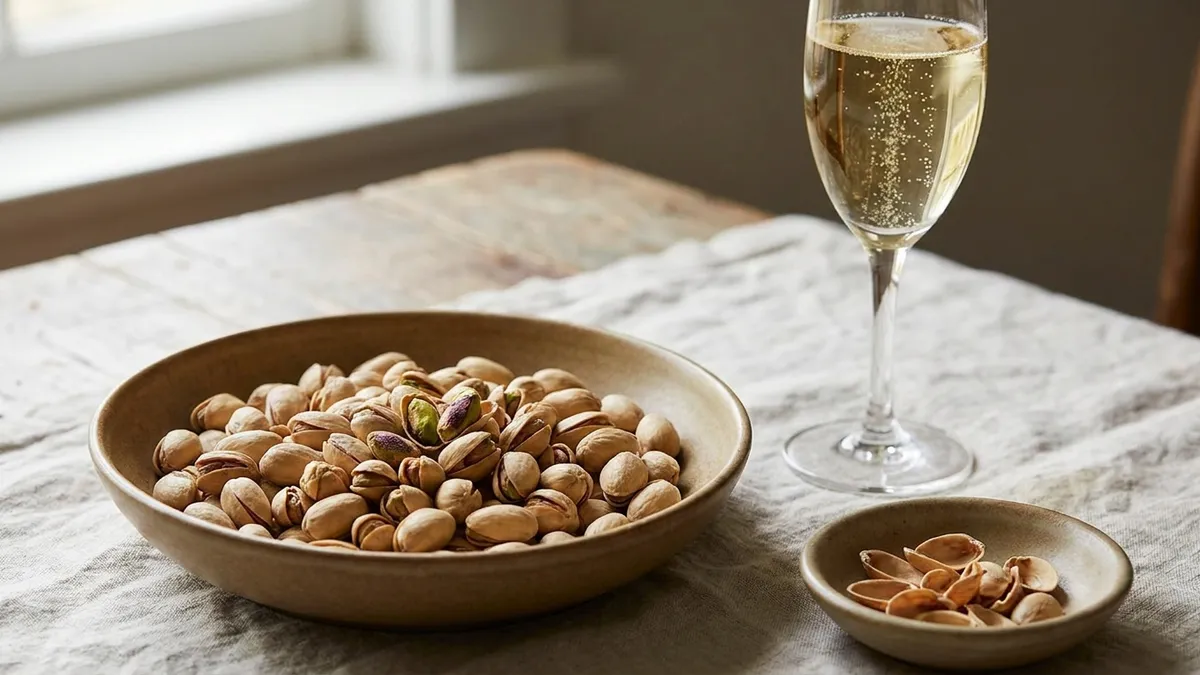
Hazelnuts are the nuttiest-tasting nut once roasted. Amontillado, aged Champagne and barrel-aged Chardonnay all carry toast from ageing or oak and meet them halfway. Rub off the loose papery skins after roasting, because they taste dry and bitter.
Pecans are buttery and naturally sweet. If the pecans are plain, an off-dry Riesling works; its touch of sugar matches theirs and its acidity cuts the butter.
Cashews and macadamias are soft and creamy with almost no skin to worry about. A high-acid white such as Chenin Blanc or a dry sparkling wine lifts the creaminess.
Salted roasted peanuts, botanically legumes, follow the pistachio rule: something dry and sparkling.
Do Roasted, Salted and Candied Nuts Change the Wine?
Yes, and the treatment often matters more than the nut. A raw almond suits a fino, while the same almond smoked or roasted dark wants an amontillado. Roasting, salt, spice and sugar each move the choice in a predictable direction.
Roasting browns nuts through the Maillard reaction, the browning between sugars and proteins under dry heat. It builds toast and caramel flavours. If the nuts are roasted dark, pick a wine with its own toast: amontillado, aged Champagne or oaked Chardonnay.
Salt makes high-acid wines taste softer and fruitier, which is why bar snacks and dry sparkling wine work. If the nuts are heavily salted, avoid high-alcohol, oaky reds: salt pushes their bitterness and heat forward.
Spice and chilli coatings make alcohol burn. If the nuts are spiced, choose a wine under about 12.5% alcohol with a little sweetness, such as an off-dry Riesling.
Sugar is the strictest dial. If the nuts are candied or honey-glazed, the wine must be sweeter than the coating, or it will taste sour and thin. A Moscato or a Sauternes handles a bowl of candied pecans.
What Dessert Wine Goes With Nut Sweets?
Vin Santo with almond biscotti, and Madeira or cream sherry with pecan pie and baklava. All of these wines are aged in ways that give them nutty, caramel flavours, so they echo the dessert, and all keep enough acidity to cut butter and pastry.
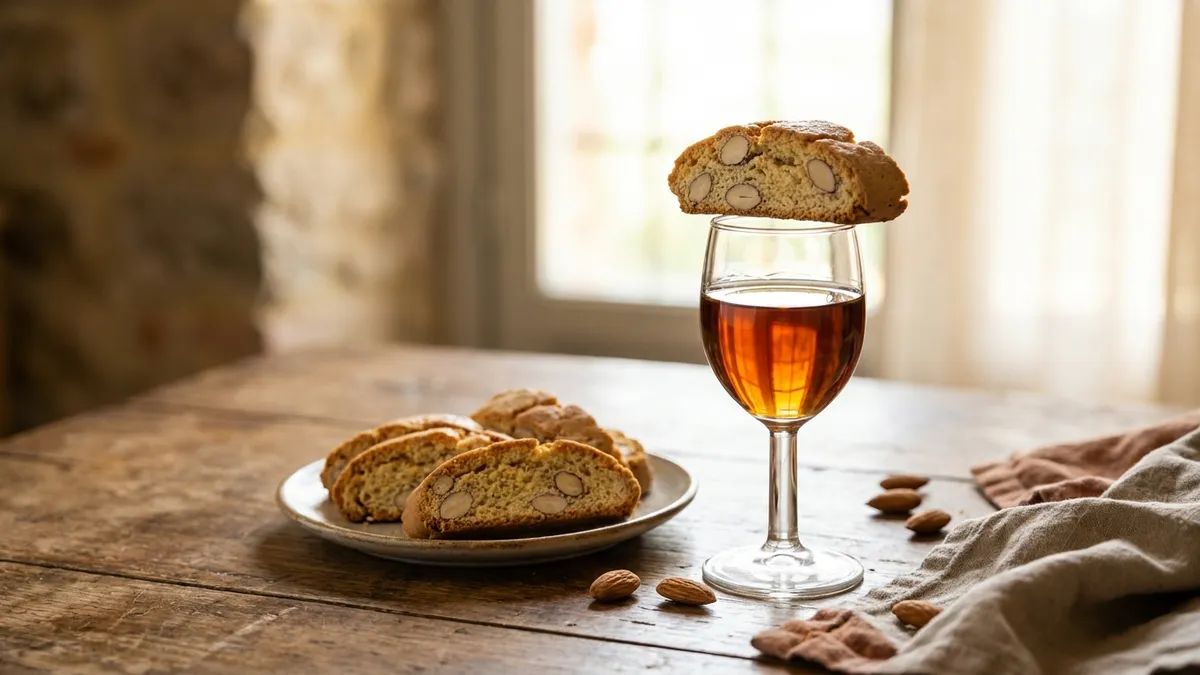
Vin Santo is Tuscany's dried-grape wine, aged in small barrels, at least 3 years under most of its rules. It can be bone dry or very sweet and tastes of nuts and raisins. In Italy it is served with cantucci, the hard almond biscuits that get dunked into the glass. Check the label for the sweetness word before buying, as the Vin Santo guide explains.
Madeira is heated on purpose during ageing, which gives it its toffee and roasted-nut flavour. Its styles run from dry Sercial to sweet Malmsey, and Malmsey is the one for pecan pie. Full detail is in the Madeira wine guide.
Oloroso is sherry aged with oxygen from the start, usually at 18 to 20% alcohol, and it tastes of walnut and dried fruit. Dry oloroso suits a walnut cake; sweetened oloroso, labelled cream sherry, suits baklava.
More sweet styles are compared in the dessert wine guide.
How Do You Build a Nut and Cheese Board for Wine?
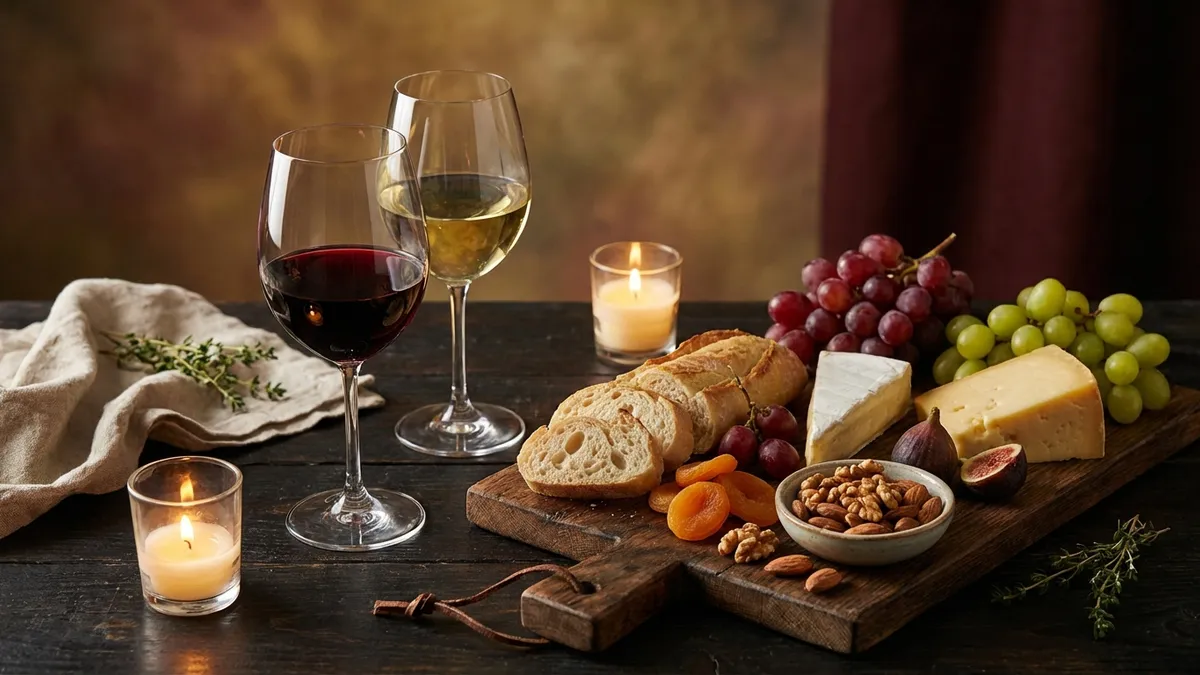
Build it around one dry sherry or one sparkling wine, and keep any tannic red for the hard cheese. Nuts and cheese share fat and salt, so the same high-acid wines cover both. A tannic red belongs beside the aged hard cheese, whose protein and fat soften its grip.
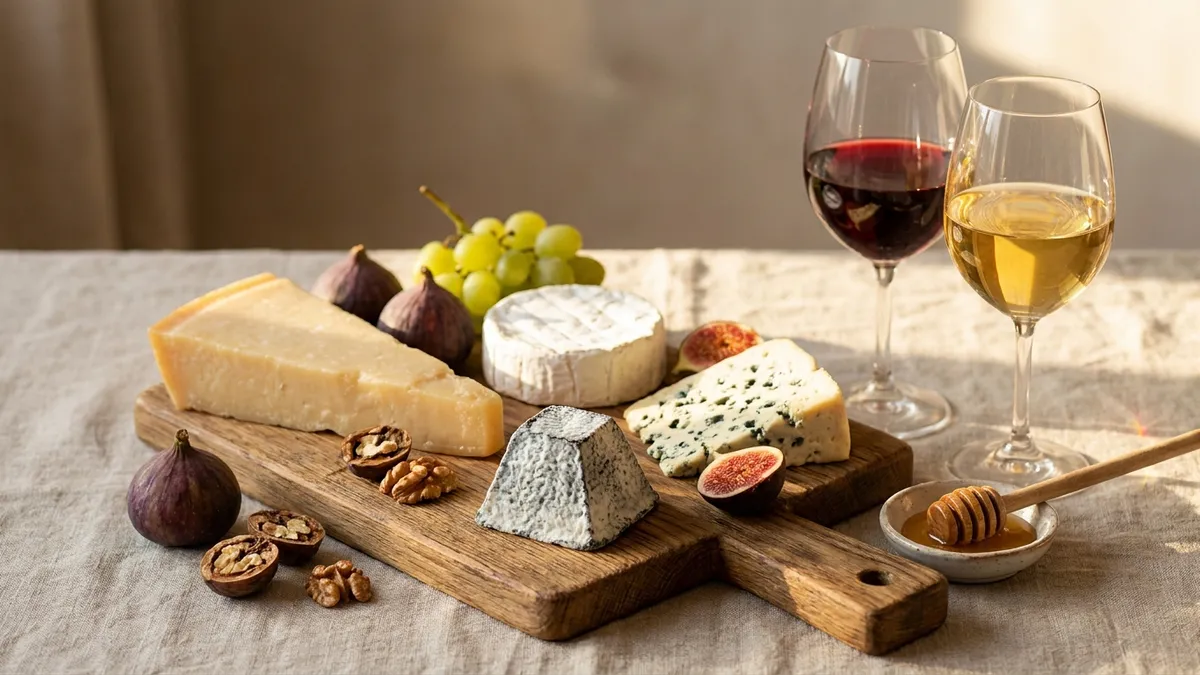
Put out three nuts that hit different dials: salted almonds, roasted hazelnuts and walnuts. Add an aged hard cheese, a soft cheese and one blue, plus dried figs or apricots for sweetness. If the board has blue cheese and walnuts together, add a sweet wine such as tawny port: the sugar meets the salt in the cheese and the walnut's tannin finds something rich to work against.
If you can open only one bottle, open a brut sparkling wine or a fino. Both handle salt, fat and the cheese rind. Cheese-by-cheese matches are in our wine and cheese pairing guide, and the wider pairing method is in the food pairing hub.
If anyone at the table has a nut allergy, leave the nuts off the board.
Pour Sherry With Your Almonds Tonight
Buy a bag of salted almonds and a bottle of fino or manzanilla, and chill the wine for an hour. Taste an almond, then a sip, then a sip on its own, and notice how the salt makes the wine taste rounder. In the Sommy app, photograph the label and the AI-guided tasting walks you through look, smell and taste and saves your notes to your tasting journal. Next time, swap the almonds for walnuts and pour a Pinot Noir.
Sources
Frequently Asked Questions
What wine goes best with almonds?
Chilled fino or manzanilla sherry is the classic choice, and it is how almonds are served in the bars of southern Spain. Both are dry, salty-tasting and fortified to about 15.5%, so they cut the almond's oil and echo its toasted flavour. With smoked or dark-roasted almonds, step up to an amontillado. A dry sparkling wine or a crisp Albariño also works.
Does red wine go with walnuts?
Only a soft one. Walnuts carry tannin of their own, and their thin papery skin tastes the most drying. Tannin binds the proteins in saliva. Add a high-tannin red such as Cabernet Sauvignon and the dryness doubles, so the wine tastes harsh. A low-tannin red like Pinot Noir or Gamay works, and so does a tawny port or oloroso.
What wine goes with pistachios?
Dry sparkling wine is the easiest match for roasted, salted pistachios: the bubbles and acidity scrub away the oil, and the salt makes the wine taste fruitier. Pistachios are about 45% fat, so they need that cleansing lift. A crisp Sauvignon Blanc or a dry rosé works too. For pistachio desserts, choose a sweet Moscato or a late-harvest white.
What wine goes with mixed salted nuts?
A dry wine with high acidity or bubbles, because salt makes acidic and fruity wines taste rounder and softer. Brut Champagne, Cava, Prosecco, fino sherry and dry Riesling all handle a bowl of mixed salted nuts. Avoid big oaky or tannic reds: salt and roast push their bitterness and alcohol forward.
Does sherry go with nuts?
Yes, sherry is the most reliable wine with nuts. Fino and manzanilla are aged under a layer of yeast and taste dry, tangy and almond-like, so they suit raw or lightly salted almonds. Amontillado and oloroso are aged with oxygen and taste of toasted walnut and hazelnut, so they echo roasted nuts. Cream sherry, a sweetened blend, goes with nut desserts.
What wine goes with baklava or pecan pie?
Choose a dessert wine at least as sweet as the dessert, or the wine will taste thin and sour. Sweet Madeira such as Malmsey, oloroso-based cream sherry, tawny port and sweet Vin Santo all carry caramel and nutty flavours from their ageing. Their acidity also cuts the butter in the pastry.
Can you drink wine with peanuts?
Yes. Peanuts are legumes, not true nuts, but on the plate they follow the same rules: fat, roast and salt. Salted roasted peanuts go best with a dry sparkling wine, a crisp off-dry Riesling or a light, chilled red. Honey-roasted peanuts want a touch of sweetness in the glass, such as an off-dry Riesling or a Moscato d'Asti.
Sommy Team
LinkedInFounder & Wine Educator
The Sommy Team is building the world's most approachable wine education app, helping beginners develop real tasting skills through structured courses and AI-guided practice.