How Wine Is Made: The Winemaking Process from Grape to Glass

By the Sommy Team — AI-assisted, human-edited.
Updated Oct 1, 2026
Contents (9)
- How Is Wine Made, in One Paragraph?
- What Happens Between the Vineyard and the Tank?
- How Does Skin Contact Decide the Colour of Wine?
- How Does Grape Juice Turn Into Alcohol?
- What Is Malolactic Fermentation, and Why Do Some Wines Skip It?
- Why Is Wine Aged, and What Does Oak Do?
- What Do Fining, Filtering and Sulfites Do?
- How Is Sparkling Wine Made Differently?
- How Can You Taste the Winemaking in Your Glass?
TL;DR
Wine is grape juice that yeast turns into alcohol, in five steps: pick, crush or press, ferment, age, bottle. The time the skins spend in the juice decides white, rosé, red or orange. After that, choices like oak, malolactic fermentation, fining and a second fermentation for bubbles shape what you taste.
How wine is made comes down to one living process: yeast eats the sugar in grape juice and leaves alcohol behind. The time the skins spend in that juice sets the colour. Almost everything you taste after that, from vanilla to butter to bubbles, is a choice a winemaker made in the cellar.
How Is Wine Made, in One Paragraph?
Wine is made in five steps: pick the grapes, crush or press them, ferment the sugar into alcohol, age the wine, and bottle it. Red wine ferments with its skins at about 22 to 25 °C. White wine is pressed first and only the juice ferments, cooler, at 15 to 18 °C. Fermentation takes days to weeks and turns roughly half of each gram of sugar into alcohol, so juice with 24% sugar becomes a wine of about 12%. Then come the choices: malolactic fermentation, oak, fining, filtering and sulfur dioxide. Many dry reds age 18 to 24 months before bottling; some whites are bottled within months.
What Happens Between the Vineyard and the Tank?
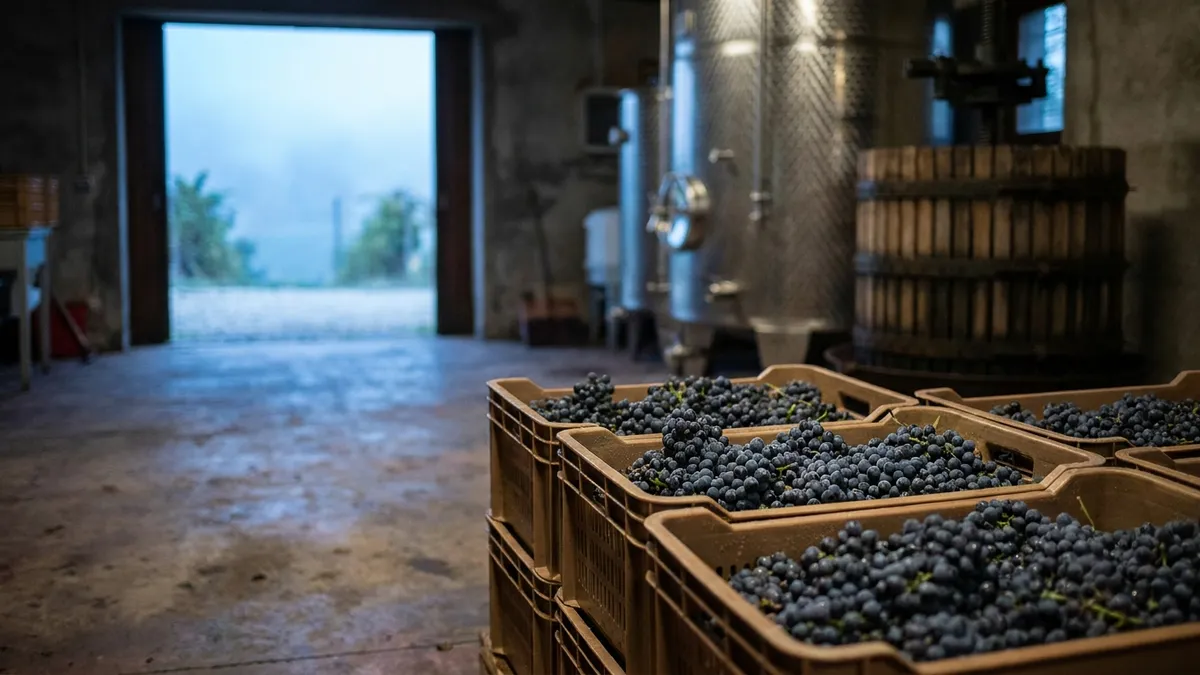
Grapes are picked when sugar and acidity reach the balance the winemaker wants, then sorted and either crushed or pressed within hours. Picking earlier keeps more acidity (the tartness that makes your mouth water); picking later gives more sugar, and so more alcohol and riper fruit.
Colour decides the next step. Red grapes are usually destemmed and crushed so the skins split and the juice runs out, and everything goes into the tank together. Some winemakers keep whole bunches, stems included; whole-cluster fermentation explains what that adds. White grapes go straight to the press, and only the juice moves on.
The mix of juice, skins, pulp and seeds is called must.
How Does Skin Contact Decide the Colour of Wine?
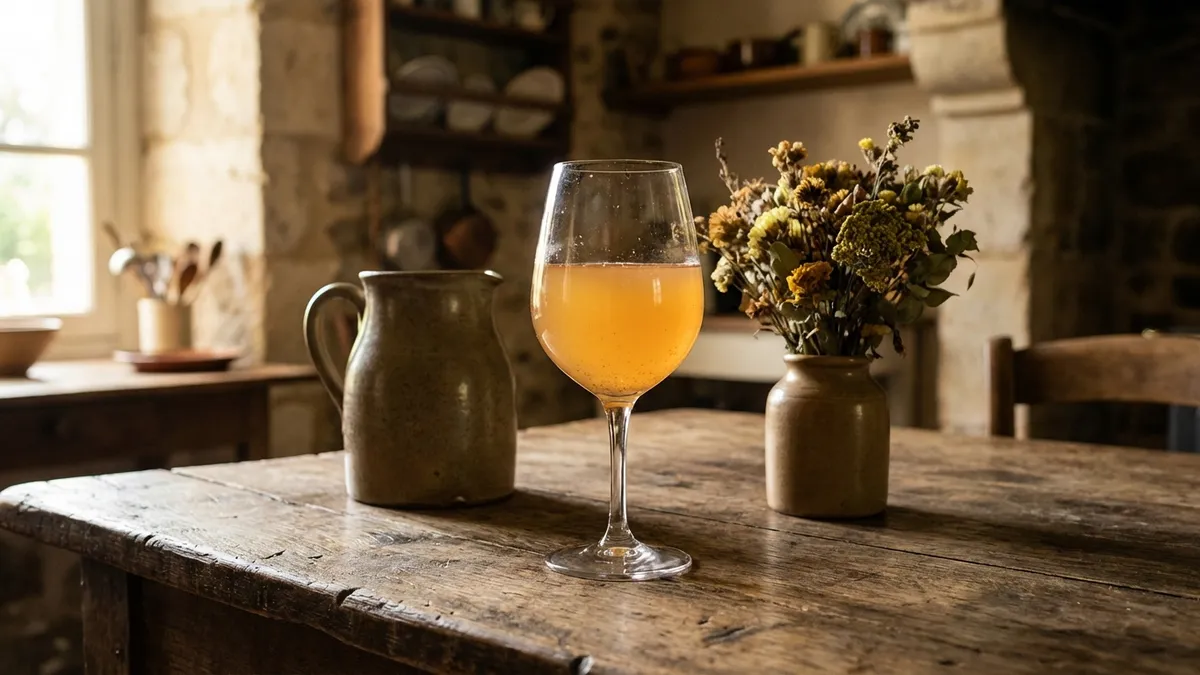
The juice of almost every grape is clear, so a red wine's colour comes from the skins, not from red juice. How long the skins stay in the juice decides whether the result is white, rosé, red or orange. That soaking is called maceration, and it also pulls out tannin (the drying grip on your gums).
| Style | Grapes | Skin contact | What it gives | Choose it when |
|---|---|---|---|---|
| White | Usually white | None: pressed before fermenting | Fresh fruit, high acidity, no tannin | The food is light, or you want a cold glass that wakes the palate |
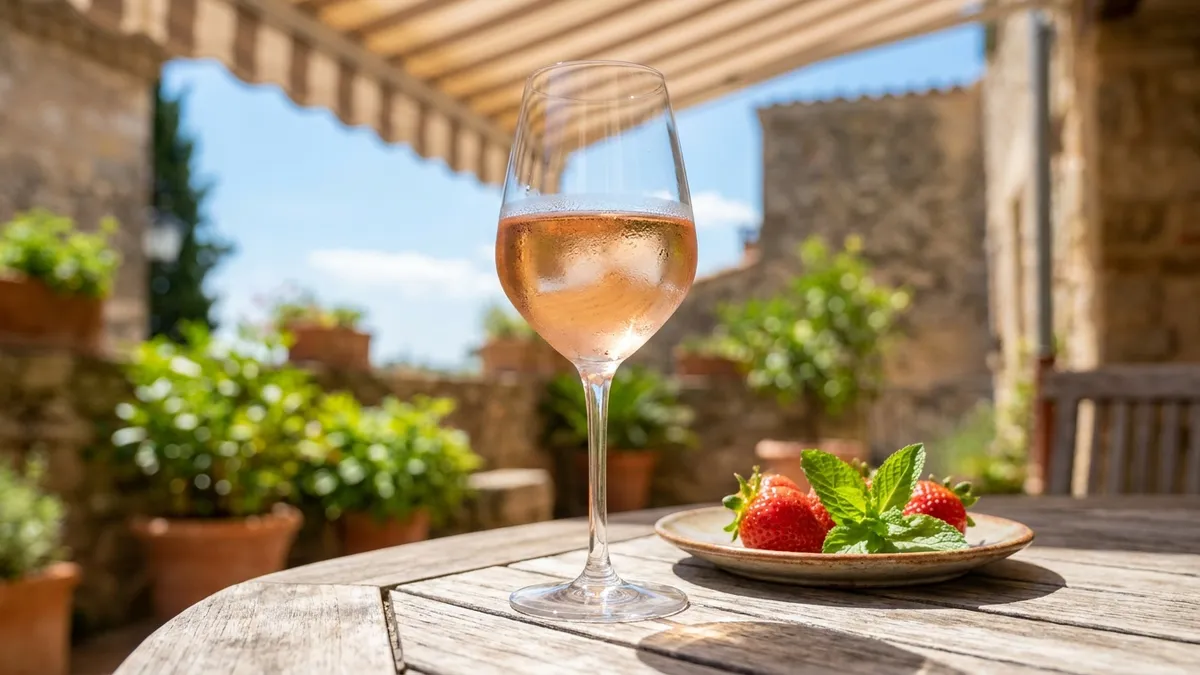
| Rosé | Red | About 2 to 20 hours | Pink colour, red fruit, almost no tannin | You want red-fruit flavour with white-wine freshness |
| Red | Red | All of fermentation, sometimes longer | Deep colour and tannin | The plate has fat or protein to soften the grip |
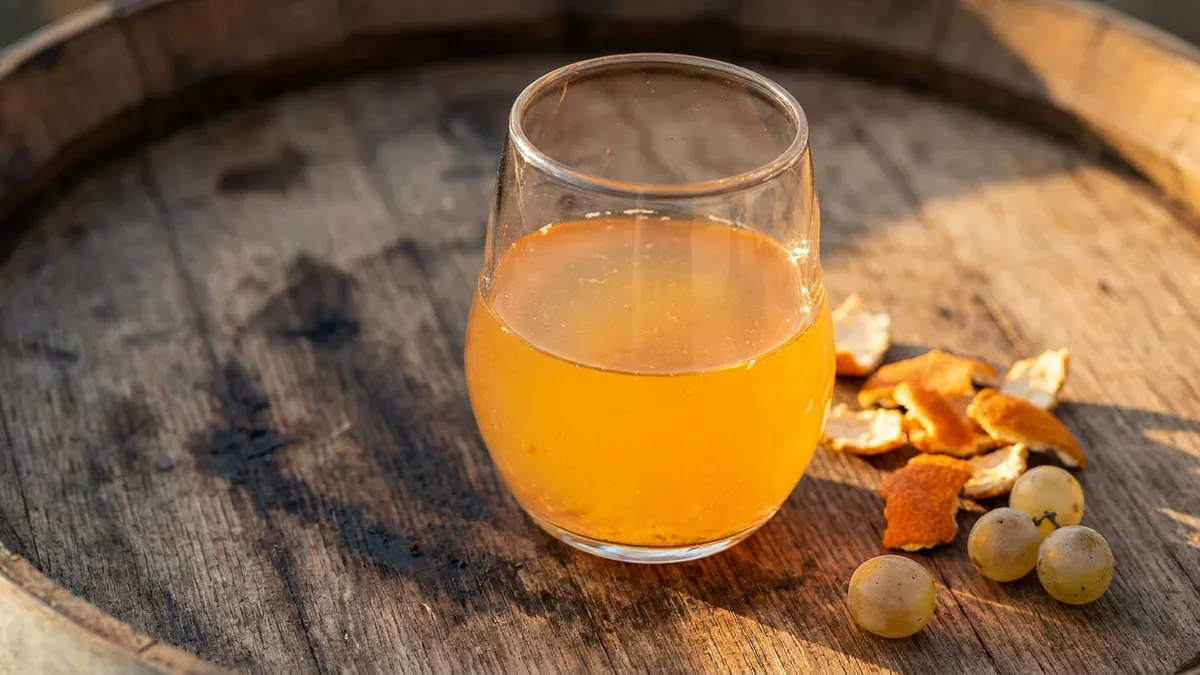
| Orange | White | Days to months | Amber colour, light tannin, dried-fruit and tea notes | You like whites but want more texture and grip |
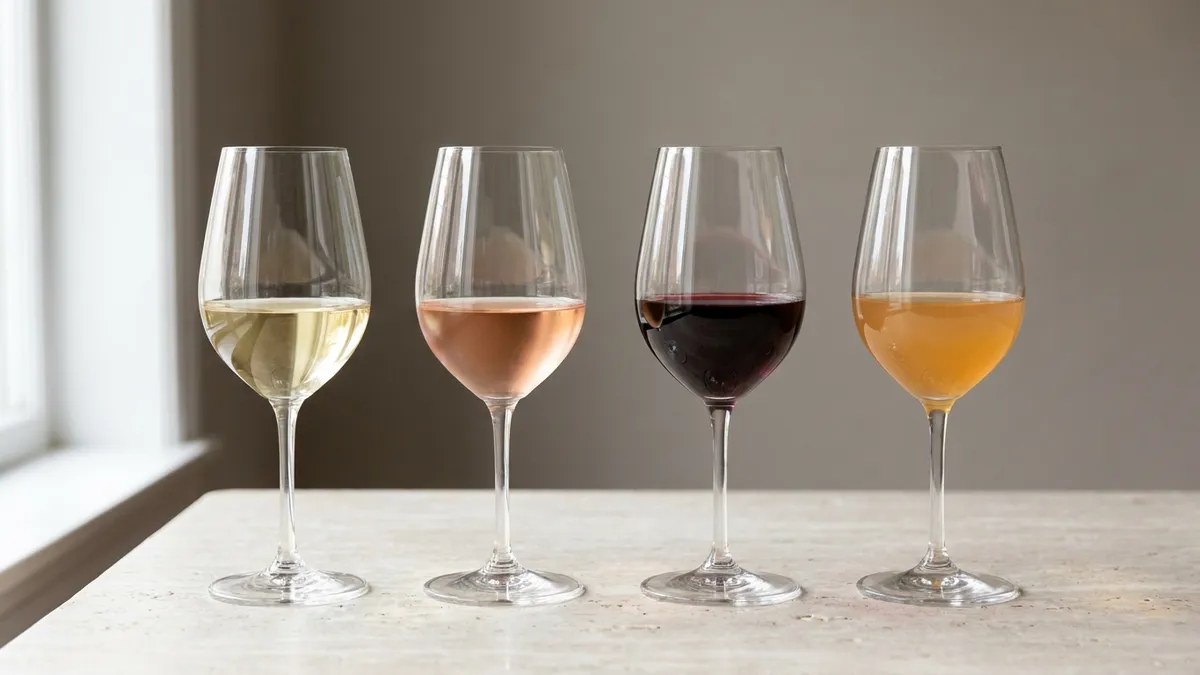
Rosé gets its colour from a short soak, or from the saignée method (French for "bleeding"), where pink juice is drawn off a red wine tank early and fermented on its own. Mixing finished red and white wine is the shortcut people imagine, and France bans it for rosé except in Champagne. Our rosé wine guide covers the styles, and orange wine explained shows what a long soak does to white grapes.
If a wine is pink and dry, it almost always came from red grapes on their skins for a few hours.
How Does Grape Juice Turn Into Alcohol?
Yeast eats the sugar in the must and turns it into alcohol and carbon dioxide. Roughly half a gram of alcohol comes from each gram of sugar. So to reach 12% alcohol, the juice needs about 24% sugar, which is why ripeness at picking sets the strength of the wine.
The yeast does not have to be added. It is usually already on the grapes, visible as a powdery bloom on the skins. Many winemakers still add a selected strain because it ferments more predictably; wine yeast and fermentation compares the two routes. Neither is a quality rule.
Temperature shapes flavour. White wines ferment cool, at 15 to 18 °C, which keeps fresh fruit aromas in the wine. Reds ferment warmer, at 22 to 25 °C, which helps draw colour and tannin from the skins.
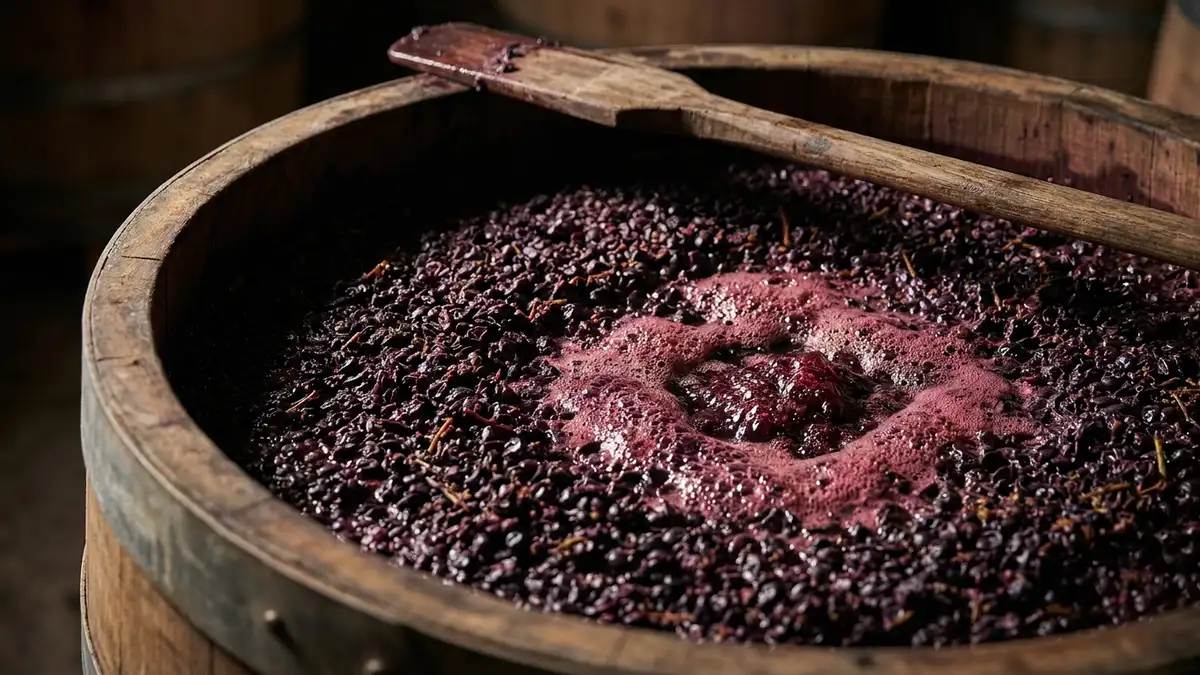
In a red ferment, the carbon dioxide pushes the skins to the surface, where they form a floating layer called the cap. Left alone, it would dry out and stop giving colour. Winemakers push it back under with a paddle, called punching down, or pump juice from the bottom over the top, called pumping over. When the sugar is gone, a red is pressed off its skins.
What Is Malolactic Fermentation, and Why Do Some Wines Skip It?
Malolactic fermentation is a second conversion, done by bacteria rather than yeast. A bacterium called Oenococcus oeni turns tart malic acid, the acid of green apples, into softer lactic acid. The wine tastes rounder and less sharp, and the process can make diacetyl, the compound behind a buttery smell.
It is standard for most red wines. For whites, it is a style decision: nearly 20% of the world's white wines go through it, and buttery Chardonnay is the famous example. Winemakers block it in fruity, floral whites such as Riesling and Gewürztraminer to keep them crisp. Keeping the wine below 15 °C is one way to hold it back, because the bacteria slow sharply in the cold.
If a white smells of butter and feels creamy rather than sharp, it almost certainly went through malolactic fermentation. Our guide to what malolactic fermentation is shows how to taste the difference.
Why Is Wine Aged, and What Does Oak Do?
Ageing gives the wine time to settle, clear and soften before bottling. After fermentation, dead yeast and grape solids sink to the bottom as lees (spent yeast that can add bread and biscuit notes). The winemaker either leaves the wine resting on them for texture, or moves it off them into a clean container, a step called racking.
The vessel matters. Stainless steel and concrete add no flavour of their own, so the fruit stays front and centre. Oak barrels add oak aromas, such as vanilla, toast or spice, and some extra tannin of their own; what oaked means explains how new and old barrels differ. Oak is a flavour choice, and an unoaked wine is no lesser for skipping it. The trade-off is set out in stainless steel vs oak.
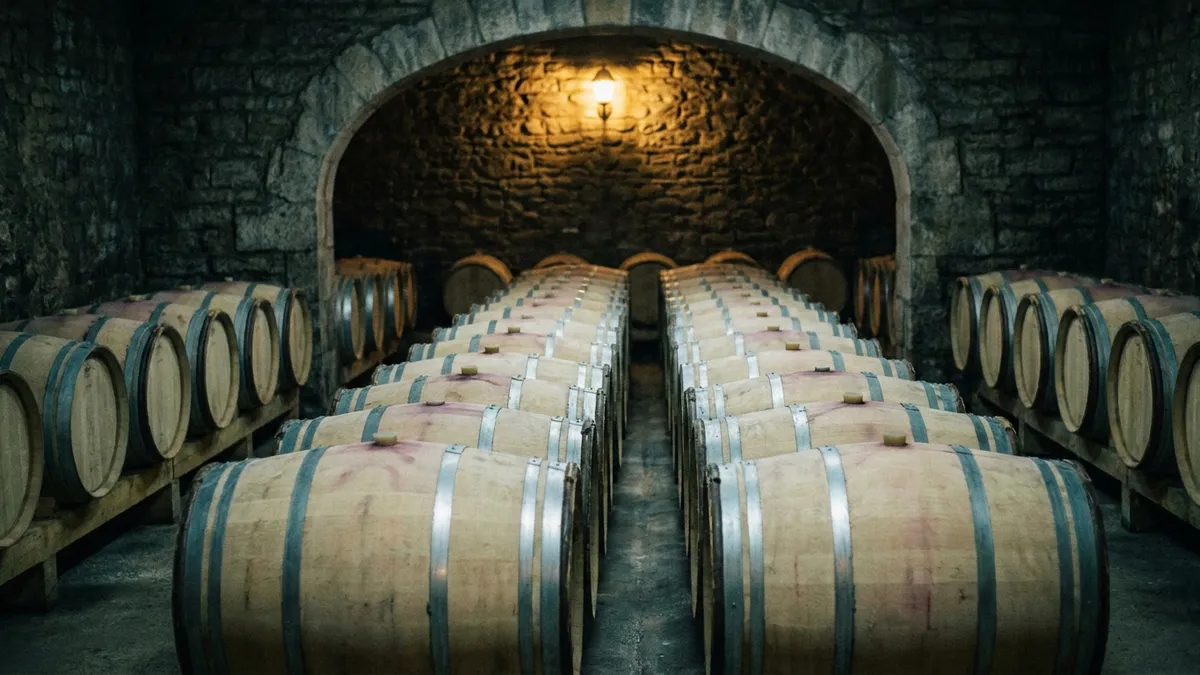
Time differs by style. Many dry reds age 18 to 24 months before bottling. Many fresh whites and rosés are bottled within a few months of harvest, because their appeal is young fruit.
If the label says "unoaked" or "stainless steel", expect fresh fruit and crisp acidity. If it says "barrel-fermented" or "barrel-aged", expect vanilla, toast and a rounder feel.
What Do Fining, Filtering and Sulfites Do?
Fining and filtering clear the wine, and sulfur dioxide protects it from microbes and air. All three are choices made wine by wine. A winemaker decides whether to fine, filter or cold-stabilise (chill the wine so harmless crystals drop out in the tank before bottling), and some skip every step.
Fining adds an agent that grabs haze and harsh compounds, then settles out with them. Some agents are animal products, such as egg white or milk protein, and others are not. The agent is often not listed on the label, so vegan wine explained covers how to tell. Filtering strains out yeast and particles. Unfined, unfiltered wines can look slightly hazy, and that haze is expected.
Sulfur dioxide has two jobs: it stops unwanted microbes, and it shields the wine from oxygen, which would flatten fresh fruit and brown the colour. It is typically, though not always, added again at bottling. Sulfites in wine explains the label rules.
If you avoid animal products, choose wines labelled vegan or unfined, because the label may not list a fining agent.
How Is Sparkling Wine Made Differently?
Sparkling wine gets a second fermentation in a closed container, so the carbon dioxide cannot escape and dissolves into the wine as bubbles. Under EU rules, a wine counts as fully sparkling at 3 bar of pressure or more. Where that second fermentation happens defines the style.
In the traditional method, the second fermentation happens in the bottle you buy. The wine rests on its lees, which gives bread and brioche notes. Champagne and Cava use it; see méthode champenoise explained.
In the tank method, the second fermentation happens in a stainless steel pressure tank, then the wine is bottled. It keeps fresh, fruity aromas and suits Prosecco; see the Charmat method.
If you want toast and brioche in your fizz, choose "traditional method" on the label. If you want pear and fresh flowers, choose a tank-method wine.
How Can You Taste the Winemaking in Your Glass?
Each choice leaves a mark you can see, smell or feel, and a word on the back label usually tells you which choice was made. Colour shows skin contact, smell shows oak and lees, and texture shows malolactic fermentation. Read the label before you open the bottle, then look for the matching sign:
- Skin contact: deeper colour and a drying grip mean longer maceration.
- Malolactic fermentation: a buttery smell and creamy feel in a white.
- Oak: vanilla, toast or sweet spice, and slightly more grip.
- Lees ageing: bread or biscuit notes, especially in sparkling wine.
- Unfined or unfiltered: a faint haze in the glass.
If a label names none of these, judge by colour and smell first: pale and crisp usually means steel and a cool ferment, golden and creamy usually means oak and malolactic. More styles built from these choices sit in the wine styles hub.
Sommy's Wine 101 course at sommy.wine teaches these steps in bite-sized lessons. Pour a glass tonight, find one winemaking word on the back label, and taste for its mark.
Sources
Frequently Asked Questions
What are the main steps in making wine?
There are five: pick the grapes, crush or press them, ferment the sugar into alcohol, age the wine, and bottle it. Reds ferment with their skins and are pressed afterwards. Whites are pressed first and only the juice ferments. Between fermentation and bottling, winemakers decide on oak, malolactic fermentation, fining and filtering.
How long does it take to make wine?
Fermentation itself takes days to weeks. The rest depends on style. Some whites are bottled a few months after harvest, while many dry reds spend 18 to 24 months ageing before bottling. Sparkling wines made by the traditional method add a second fermentation and more time resting in the bottle before release.
Do winemakers add sugar or yeast to make wine?
They do not have to. Ripe grapes carry their own sugar, and yeast is usually already on the skins as a powdery bloom. Many winemakers still add a chosen yeast for a more predictable fermentation. Both routes are normal. As a rough guide, juice with about 24% sugar ferments to about 12% alcohol.
Is rosé made by mixing red and white wine?
Usually not. Most rosé comes from red grapes whose skins stay in the juice for roughly two to twenty hours, just long enough for pink colour. Another method bleeds some pink juice off a red wine tank early. In France, blending red and white wine to make rosé is banned except in Champagne.
Why are sulfites added to wine?
Sulfur dioxide does two jobs. It stops unwanted microbes, and it protects the wine from oxygen, which would otherwise turn fresh fruit flat and brown. It is typically, though not always, added at bottling. Skipping it is possible, but the wine then needs very clean handling and less exposure to air.
Is all wine vegan?
No. Fining, the step that clears haze and smooths harsh edges, sometimes uses animal products such as egg white, milk protein or fish-derived isinglass. The fining agent settles out and is often not listed on the label. If you avoid animal products, look for wines labelled vegan, or for unfined wines, which skip the step entirely.
Sommy Team
LinkedInFounder & Wine Educator
The Sommy Team is building the world's most approachable wine education app, helping beginners develop real tasting skills through structured courses and AI-guided practice.