Whole Cluster Fermentation Wine: Stems, Spice, Structure

By the Sommy Team — AI-assisted, human-edited.
Updated Sep 25, 2026
Contents (9)
- What Is Whole Cluster Fermentation Wine, in One Paragraph?
- How Is Whole Cluster Different From Carbonic Maceration?
- Why Do Winemakers Keep the Stems In?
- What Do Stems Add to the Taste of Wine?
- When Do Stems Make a Wine Taste Green?
- Which Wines Use Whole Cluster Fermentation?
- How Do You Spot Whole Cluster on a Wine Label?
- How Can You Taste for Stems in the Glass?
- Does Whole Cluster Fermentation Make a Better Wine?
TL;DR
Whole cluster fermentation puts entire grape bunches, stems included, into the tank. Ripe brown stems add drier tannin, a savoury herbal lift and channels that help juice move through the cap; green stems can make wine smell vegetal. It is related to carbonic maceration but not the same, and it is most common in Pinot Noir and Syrah.
What Is Whole Cluster Fermentation Wine, in One Paragraph?
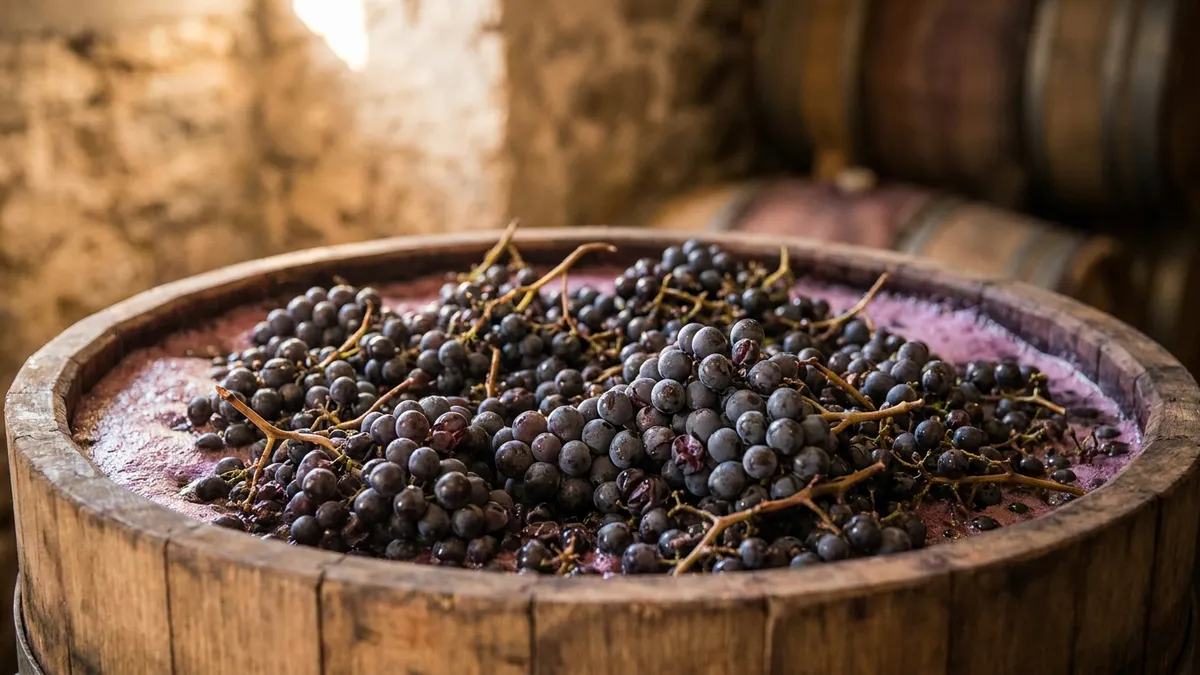
Whole cluster fermentation wine is red wine fermented from full bunches of grapes, stems and all. Most red wine is destemmed first, meaning the berries are stripped off their stalks. Keeping the stems changes three things. The wine gains tannin (the drying grip on your gums) that feels more tea-like than skin tannin. It picks up a savoury, herbal smell. And in the tank, stems open channels through the floating skins so juice drains evenly. Ripe brown stems do this well; green, sappy stems can smell vegetal. Pinot Noir and Syrah use the method most, often for only part of the harvest.
How Is Whole Cluster Different From Carbonic Maceration?
Whole cluster is about keeping the stems; carbonic maceration is about keeping the berries unbroken. The two get used as synonyms, but Wikipedia's entry on the technique describes carbonic maceration as "distinct from the process of whole bunch fermentation common in the Burgundy wine production of Pinot noir."
In carbonic maceration, whole grapes sit in a sealed tank full of carbon dioxide. The gas soaks through the skins and starts fermentation inside each intact berry, before any yeast gets to work on free juice. The result is fruity red wine with very low tannin, ready to drink young but without the backbone for long ageing. Louis Pasteur first noted the effect in 1872: grapes kept in carbon dioxide before crushing made wine with different flavours from grapes kept in air.
A whole cluster Pinot Noir works differently. The bunches go into an open vat, some berries burst under the weight, and ordinary yeast fermentation takes over within days. Some of the berries stay whole for a while, so a little carbonic character creeps in. The main effect, though, comes from the stems themselves.
Two more terms sit between these poles. Whole berry fermentation removes the stems but leaves the berries uncrushed, which keeps fruity aromas through partial carbonic maceration; winemakers use it with delicate reds such as Pinot Noir and Syrah. Semi-carbonic maceration gives whole grapes a short carbonic spell, followed by a normal yeast fermentation. It is the everyday method behind most Beaujolais.
| Method | Stems in the tank? | Berries crushed? | How fermentation starts | What to expect in the glass |
|---|---|---|---|---|
| Destemmed and crushed | No | Yes | Yeast on free juice | Fruit and skin tannin only; the default for most reds |
| Whole berry | No | No, left whole | Yeast, with some fermentation inside berries | Extra fresh fruit aroma, no stem grip |
| Whole cluster | Yes, some or all | Only by their own weight | Mostly yeast | Drier, tea-like tannin and a herbal, savoury lift |
| Semi-carbonic | Often yes | Bottom layer only | Carbonic spell, then yeast | Juicy fruit, soft tannin (most Beaujolais) |
| Full carbonic | Yes, bunches sealed in | No | Inside each berry, under carbon dioxide | Very fruity, very low tannin, drink young |
Why Do Winemakers Keep the Stems In?
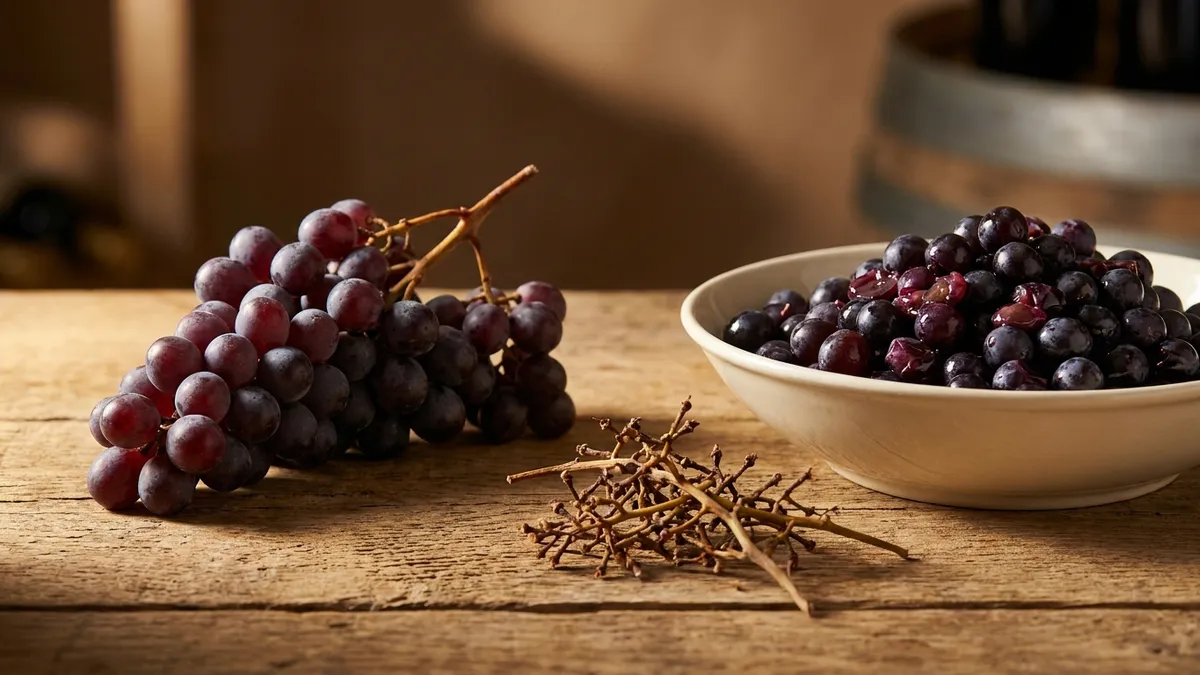
For two practical reasons: stems add tannin when the grape itself has little, and they build channels through the cap so juice flows evenly. Flavour matters too, but the first decisions are about grip and about what happens inside the tank.
Start with tannin. Red wine is usually destemmed because stems have "a relatively high tannin content", as the Wikipedia winemaking entry puts it. The same entry notes the exception: a winemaker may leave them in when the grapes carry less tannin than wanted. That is the case for Pinot Noir. Its thin skins give little tannin on their own, so a share of stems fills the gap. The Pinot Noir guide explains why that grape makes such pale, translucent wine, and what tannins are covers how skins, seeds, stems and oak each add grip.
Then the tank. During a red fermentation, carbon dioxide pushes the skins to the top, where they form a thick floating layer called the cap. Whole bunches build a looser, bigger cap, with the stems acting like scaffolding. The juice finds pathways through it and flows more evenly, rather than pooling under a dense mat of skins. White winemakers use the same trick in the press, where stems help the juice run out.
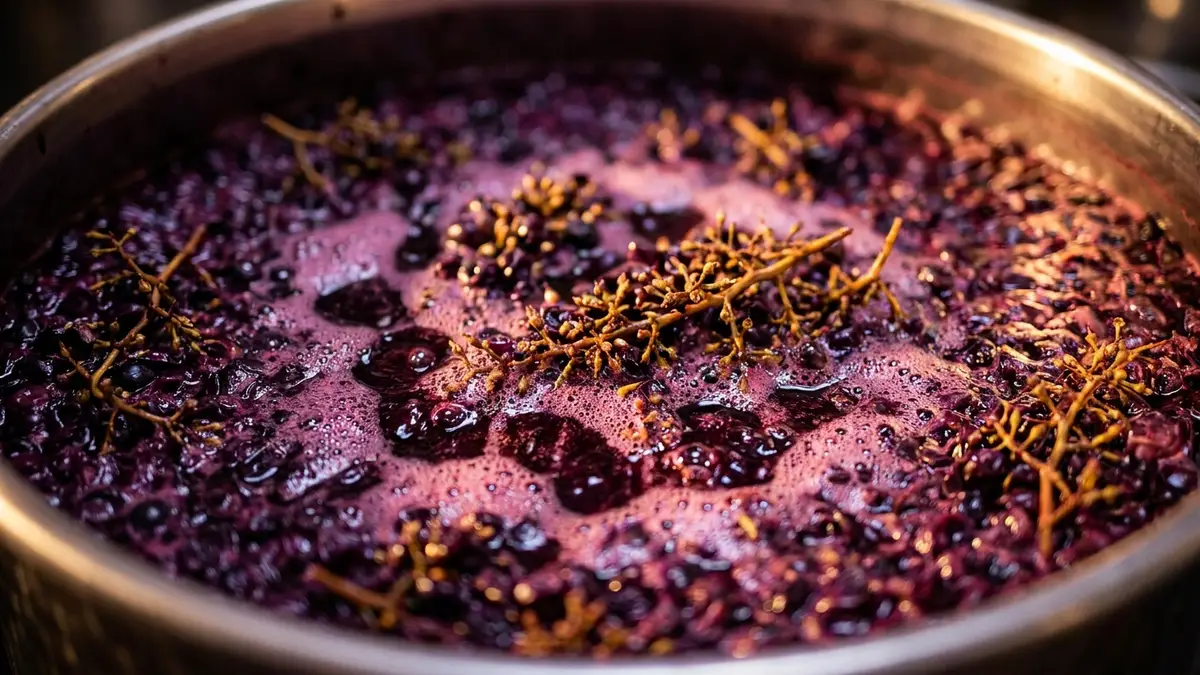
Stems also work as a dial. A winemaker can keep the stems on part of the crop and destem the rest, or ferment one lot fully whole cluster and blend it in later. If the grape is thin-skinned and the stems are brown, the share goes up; if the stems are green or the grape is already tannic, it goes down.
What Do Stems Add to the Taste of Wine?
Mostly tannin you feel and a savoury, herbal smell; the black pepper people credit to stems comes mainly from the grape skin. Start with the grip, because it is the easiest effect to notice in a light red, and it shows up on the gums a few seconds after you swallow.
Tannins are compounds that bind to proteins, including the ones in your saliva. That is why they leave your gums dry. Stem tannin feels drier and more tea-like than the tannin from ripe skins. In a light red, it shows up as a firm, slightly dusty finish that lasts longer than the fruit.
On the nose, stems bring a savoury layer of dried herbs, tea leaves and crushed stalks. Next to the same wine made without stems, a whole cluster version often smells fresher and less sweet-fruited.
Where the pepper really comes from
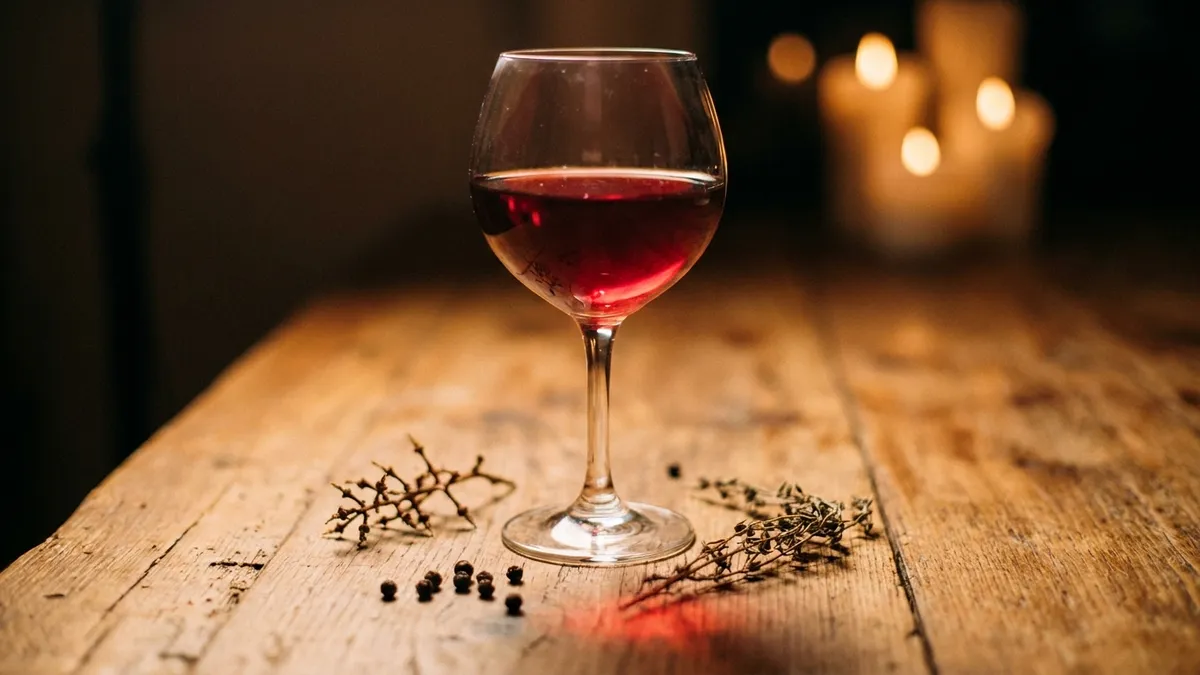
Black pepper is the flavour most often pinned on stems, and here the popular story is only half right. The pepper smell in cool-climate Syrah comes from rotundone, a compound also found in black pepper, marjoram, oregano, rosemary and thyme. Research on Syrah found that the rotundone in wine comes mainly from the berry skin, though stems carry it too. A fully destemmed Syrah can smell like a pepper grinder, and a stemmy Pinot Noir may not smell of pepper at all. The Syrah vs Shiraz guide shows how climate sets the level.
When Do Stems Make a Wine Taste Green?
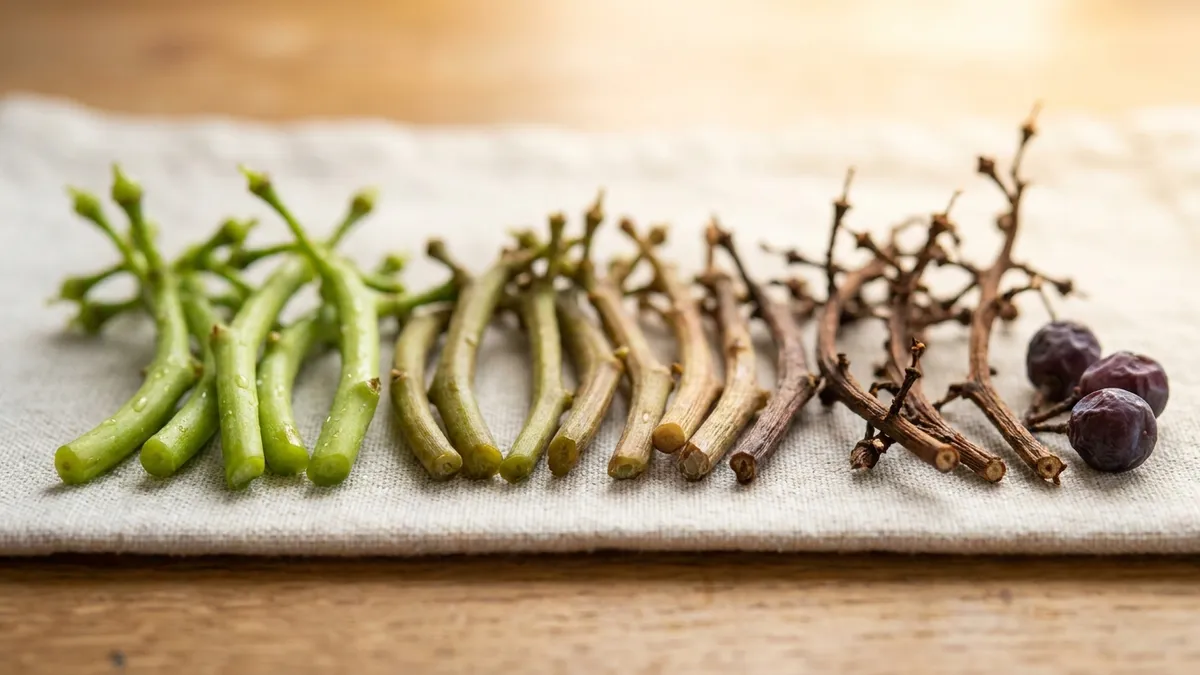
When the stems are still green and sappy at harvest, they can give wine a vegetal smell of cut stalks, leaves or green pepper. The Wikipedia winemaking entry lists this as the second reason to destem: stems can add "a vegetal aroma" as well as tannin.
Stem ripeness does not always track grape ripeness. In a cool or short season, the berries can reach full sugar while the stems are still green. Winemakers check them by colour and feel. A ripe stem has turned brown and woody, like a thin twig. An unripe one is green, bendy and wet when snapped. Brown stems give the finer, drier grip described above. Green stems give coarser tannin and the leafy smell.
Green flavours are hard to hide because the nose is so sensitive to them. The compounds behind green bell pepper in wine are called methoxypyrazines, and the best known is IBMP. In water, people can notice them at around 2 parts per trillion; wine hides them a little better, but the threshold stays tiny. A little green goes a long way.
So one cellar may ferment full bunches after a warm summer, when the stems turn brown, and destem most of the crop after a cool one.
Which Wines Use Whole Cluster Fermentation?
Thin-skinned, lower-tannin reds use it most, led by Pinot Noir in Burgundy, with Syrah and Grenache close behind. The method turns up wherever those grapes grow, from French hillsides to cool New World valleys, and Beaujolais uses whole bunches for a different goal.
- Pinot Noir is the classic case. Whole bunch fermentation is common in Burgundy, and cool-climate regions such as Oregon use it to add grip to light, pale wine.
- Syrah is the other red that winemaking texts pair with Pinot Noir for whole berry work, and it often keeps some stems too. The Rhône Valley guide covers the northern slopes where its peppery reds grow.
- Grenache is sometimes fermented hot with its stems to pull out the most colour and grip from its thin skins. The Grenache guide explains why this grape needs the help.
- Gamay in Beaujolais goes into cement or steel tanks as whole bunches, in tanks of 4,000 to 30,000 litres. Here the goal is the carbonic fruit rather than stem grip. Beaujolais Nouveau can finish this stage in as little as four days, and the rules cap it at ten. The Beaujolais wine guide and the Gamay guide cover the style.
For a first bottle, the rule is simple. If you want to learn what stems taste like, pick a Pinot Noir or Syrah whose back label gives a whole cluster percentage. If you want soft, juicy fruit with almost no grip, pick a young Beaujolais instead.
How Do You Spot Whole Cluster on a Wine Label?
Look for the words "whole cluster", "whole bunch", "stem inclusion" or the French vendange entière (whole harvest) on the back label or the producer's website. Many producers add a percentage, which tells you roughly how much of the wine came from stemmy bunches.
Front labels rarely mention it. Burgundy and the Rhône are ruled by appellation law (a protected place name with its own rules), and those rules do not require the method to be stated. So a bottle with no stem wording tells you nothing either way. The broader rules for reading the front are in how to read a wine label.
Two quick label rules help in the shop. If a young Gamay is sold as juicy and very low in tannin, it was most likely semi-carbonic rather than whole cluster. If a Pinot Noir label gives a high whole cluster percentage, expect a firmer, more herbal wine than its pale colour suggests.
How Can You Taste for Stems in the Glass?
Look for grip on the gums that feels drier and more tea-like than the fruit suggests, plus a smell of dried herbs or crushed stalks. The clearest way to learn it is side by side, with two wines from the same grape.
Pour two Pinot Noirs from a similar region and price: one described as destemmed, one with a stated whole cluster share. Smell each first. The stemmy glass often smells fresher and more herbal, with less sweet cherry. Then taste, swallow, and run your tongue along your gums. Stem tannin leaves a dry, slightly dusty feel that lingers after the fruit fades.
Keep the fruit and the tannin separate in your notes, as the how to taste red wine guide teaches. If the fruit is light but the finish grips like strong tea, stems are a likely reason. If the wine smells of cut grass and the grip feels rough rather than fine, the stems were probably not fully ripe. The primary, secondary and tertiary aromas explainer shows where stem smells sit among the others.
Does Whole Cluster Fermentation Make a Better Wine?
No. It is a style choice that works only when the stems are ripe and the grape needs the tannin. Put ripe stems in a thin-skinned Pinot Noir and the wine gains grip, a longer finish and a savoury smell. Put green stems in any grape and the wine smells of cut stalks and tastes coarse.
The same logic runs the other way. A thick-skinned grape that already has plenty of tannin gains little from stems, which is why most Cabernet Sauvignon is destemmed. A higher percentage on the label points to a firmer, more herbal style, and it says nothing about quality. The wine styles hub maps how other winemaking choices, from oak to fermentation temperature, shift a wine's style in the same way. For a guided route through grapes like these, the Sommy app at sommy.wine has bite-sized courses, from Wine 101 to regional courses on France and California.
Tonight, pour any Pinot Noir, take a sip, and rub your tongue along your gums after you swallow. Note whether the grip feels dry like tea and whether the glass smells of dried herbs. Then check the back label for a stem percentage.
Sources
- Wikipedia: Carbonic maceration (whole bunch vs carbonic, semi-carbonic)
- Wikipedia: Winemaking (destemming, stem tannin and vegetal aroma)
- Wikipedia: Methoxypyrazine (detection threshold)
- PubMed: Cytochrome P450 CYP71BE5 in grapevine catalyzes the formation of (-)-rotundone (Syrah grape skin)
- PubMed: Distribution of rotundone amongst grapevine tissues in Shiraz (skin, leaves and stems)
- Wikipedia: Beaujolais (whole-cluster tanks and Nouveau rules)
Frequently Asked Questions
What is whole cluster fermentation in wine?
It is a red winemaking method where entire bunches of grapes go into the fermentation tank with their stems still attached, instead of being destemmed first. Winemakers may use every bunch or only a share of them. The stems add tannin and a savoury, herbal smell, and they open channels in the layer of skins so juice drains through it more evenly.
Is whole cluster fermentation the same as carbonic maceration?
No. Whole cluster means the stems stay in. Carbonic maceration means whole, unbroken berries sit in carbon dioxide so fermentation starts inside each grape, which gives very fruity, low-tannin wine such as young Beaujolais. The two overlap, because whole bunches keep many berries intact, but a whole cluster Pinot Noir is usually fermented by yeast in the normal way.
Does whole cluster fermentation add tannin?
Yes. Grape stems carry a relatively high amount of tannin, which is why most red wine is destemmed. Keeping them adds grip that feels drier and more tea-like than skin tannin. Winemakers lean on this with thin-skinned grapes such as Pinot Noir, whose own skins give little tannin, and cut back on it with grapes that are already firm.
Why does whole cluster wine sometimes taste green?
Stems can give wine a vegetal smell, and the risk is highest when they are still green and sappy at harvest rather than brown and woody. The result smells of cut stalks, leaves or green pepper, and the tannin feels coarse. Green-pepper compounds called methoxypyrazines can be noticed at around 2 parts per trillion in water, so a small amount goes a long way.
Do stems make wine taste peppery?
Only partly. The black pepper smell in wines such as cool-climate Syrah comes from rotundone, which reaches wine mainly from the grape skin. Stems contain some rotundone too, and they add a herbal, savoury impression that is easy to confuse with pepper, but a fully destemmed Syrah can still smell strongly of a pepper grinder.
How can I tell if a wine was made with whole clusters?
Check the back label or the producer's technical notes for the words whole cluster, whole bunch, stem inclusion or the French vendange entière, often with a percentage. In the glass, look for tannin that feels drier than the fruit suggests, a smell of dried herbs or tea leaves, and a fresh, lifted aroma in a light red such as Pinot Noir.
Sommy Team
LinkedInFounder & Wine Educator
The Sommy Team is building the world's most approachable wine education app, helping beginners develop real tasting skills through structured courses and AI-guided practice.