The Science of Sensory Evaluation in Wine

By the Sommy Team — AI-assisted, human-edited.
Updated Apr 29, 2026
Contents (8)
TL;DR
Sensory evaluation is the scientific framework that turns wine tasting into measurable data. It draws on five basic tastes, tactile mouthfeel, orthonasal and retronasal olfaction, and trigeminal nerve responses. Trained panels use ISO 3591 glasses, controlled lighting, and rubrics like WSET SAT or OIV grids to deliver reproducible scores any taster can verify, refine, and trust.
TLDR
Sensory evaluation is the scientific framework that turns wine tasting into measurable, repeatable data. It draws on five basic tastes, tactile mouthfeel, orthonasal and retronasal olfaction, and trigeminal nerve responses. Trained panels use ISO 3591 glasses, controlled lighting, and rubrics like WSET SAT or OIV grids to deliver reproducible scores any taster can verify, refine, and trust.
What Sensory Evaluation Means in 100 Words
Sensory evaluation is the disciplined scientific framework used to quantify a wine's appearance, aroma, taste, and structure. It rests on the five basic tastes (sweet, sour, salty, bitter, umami), tactile mouthfeel sensations (astringency, alcohol heat, body, temperature), olfaction through both nostrils and the back of the throat (roughly 400 receptor types capable of distinguishing tens of thousands of odors), and trigeminal nerve stimulation (mint cool, capsaicin burn, mustard sting, carbon dioxide prickle). Trained panels apply ISO 3591 glasses, controlled lighting, blinded samples, and standardized rubrics — most often WSET SAT or OIV scoring grids — to produce reproducible results that hold up across tasters and sessions.
Sensory evaluation differs from casual tasting in one decisive way: every step is designed to remove variables that are not the wine. Glass shape, lighting, expectation, fatigue, and order all influence perception, so they get controlled before any score is recorded.
The Five Senses That Build a Tasting Score
Wine evaluation is multisensory by definition. Each sense contributes a different kind of information, and the better tasters learn to read each input on its own before fusing them into an overall judgment.
Vision
Sight is the first input. Hue, saturation, rim color, and clarity all carry information about grape variety, age, and winemaking. A purple-cored opaque red signals youthful anthocyanin extraction. A garnet rim signals years of polymerization. Clarity flags filtration choices and faults. The wine appearance guide walks through what each visual cue actually predicts.
Olfaction
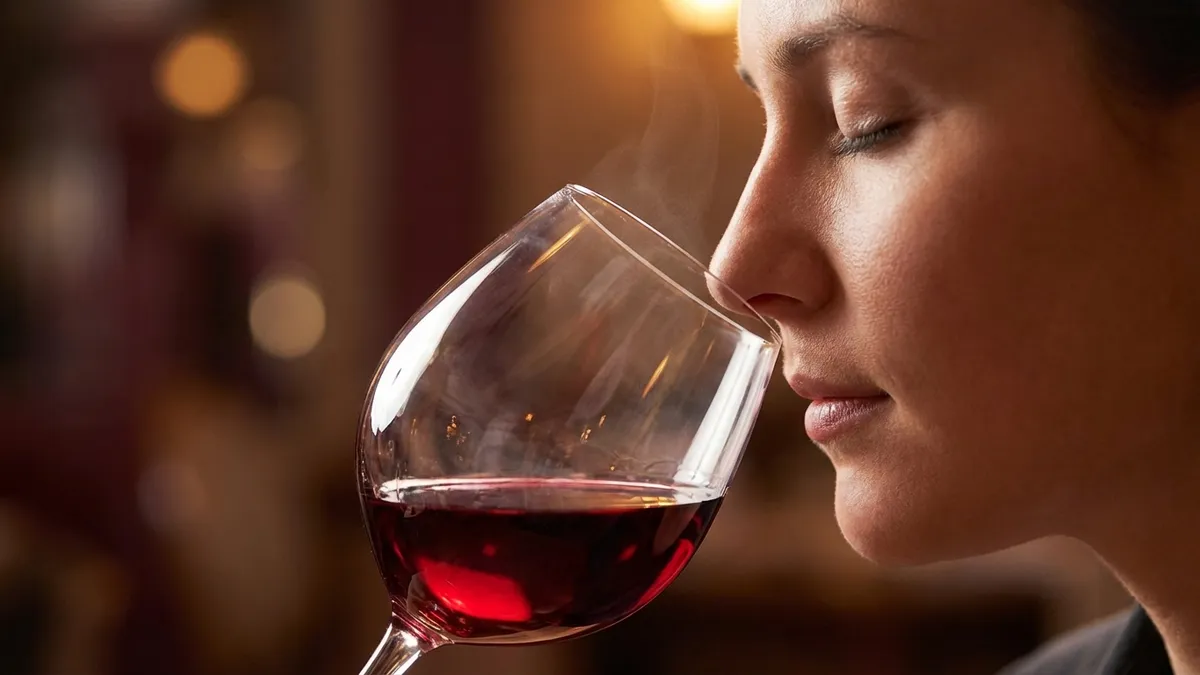
Olfaction is the dominant sense in wine, responsible for somewhere between 70 and 80 percent of what tasters call flavor. It runs along two paths. Orthonasal olfaction — sniffing through the nostrils — delivers volatile compounds from the glass to the olfactory epithelium at the top of the nasal cavity. Retronasal olfaction — air rising from inside the mouth through the soft palate — feeds the same receptor field from below. Both routes hit roughly 400 receptor types, decoded by the brain into the tens of thousands of distinct odor impressions a healthy adult can register. The retronasal smell wine guide covers why the back-route matters more than most beginners realize.
Taste
The tongue handles only five basic taste qualities: sweet, sour (acidity), salty, bitter, and umami. Every other "taste" experience is olfaction, trigeminal stimulation, or temperature. This narrowness is a feature for sensory evaluation — it gives the rubric a small, stable set of axes to score on the palate side.
Trigeminal (Chemesthesis)
The trigeminal nerve carries chemical-touch signals that are neither taste nor smell. In wine it registers astringency from tannin binding to salivary proteins, the heat of alcohol, the cool of menthol or eucalyptus terpenes, the prickle of carbon dioxide in sparkling wines, and the burn of mustard or capsaicin in food pairings. Many beginners misclassify these as taste; sensory evaluation isolates them as their own dimension.
Hearing
Auditory cues play a small but real role in sparkling wine evaluation. Bead size, persistence of the perlage, and the audible release on the pour all factor into sparkling wine evaluation. For still wine, hearing is largely irrelevant.
How Trained Panels Actually Work
The gold standard for objective wine evaluation is the trained sensory panel — a group of tasters calibrated to use the same vocabulary, same scoring grid, and same reference standards, then deployed against blinded samples in controlled conditions.
Calibration
Before scoring real wines, panel members work through reference solutions: water spiked with known concentrations of acid, sugar, ethanol, and aroma compounds. The goal is shared anchor points, so a "medium acidity" rating from one taster matches a "medium acidity" rating from another. Without calibration, two tasters can score the same wine three points apart purely from vocabulary drift.
Standardized Rubrics
Most panels use one of two scoring frameworks. The WSET Systematic Approach to Tasting (SAT) is a structured grid covering appearance, nose, palate, and conclusions on quality, readiness, and identification. The OIV grid (Office International de la Vigne et du Vin) is the international standard for competition judging, weighting visual, olfactory, gustative, and harmony components on a 100-point scale. Both produce reproducible numerical output. The wine judging criteria guide breaks down how each weights its dimensions.
Controlled Conditions
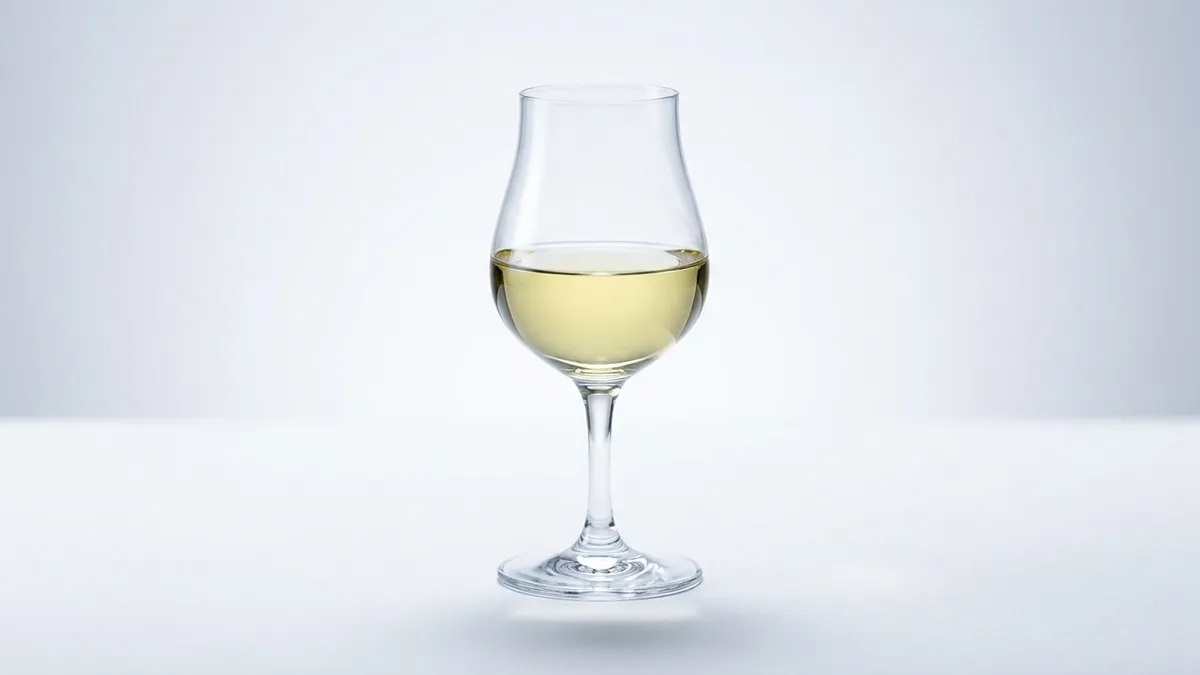
ISO 3591 glasses, neutral white backgrounds, daylight or 5000K white LEDs, room temperature near 22 degrees Celsius, and consistent pour size of around 50 milliliters are non-negotiable. Even ambient odor matters — perfumed evaluators are excluded from professional panels for the same reason a perfumed kitchen ruins a tasting flight.
Fatigue Management
Sensory fatigue is real and fast. Olfactory adaptation can flatten a taster's response after as few as six to eight wines in close succession. Professional panels rest five to ten minutes between flights and break for fifteen minutes after twelve to fifteen wines. The wine palate fatigue guide explains the physiology and recovery protocols.
Sample Coding and Order
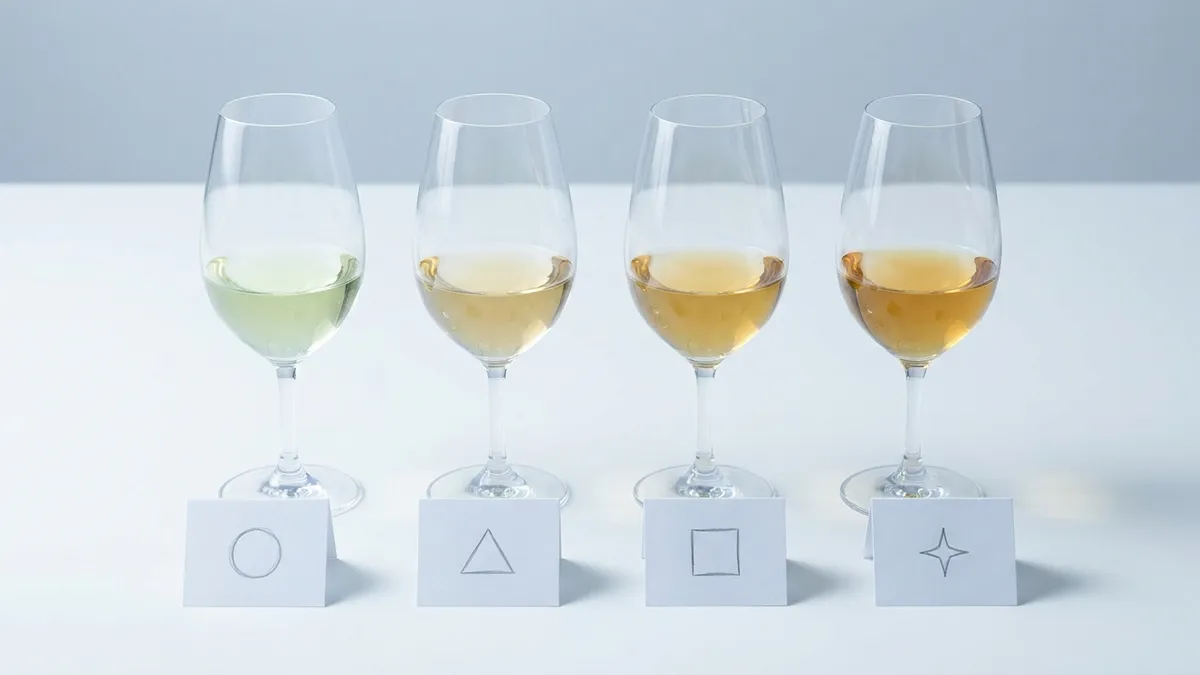
Every sample is poured behind a screen, given a random three-digit code, and presented in a randomized order to prevent expectation bias. Lighter wines come first within a flight to avoid masking. Sweet wines come last because residual sugar coats the palate.
What Consumers and Experts Perceive Differently
A common assumption is that experts simply taste more than beginners. The picture is more interesting than that.
Experts and beginners both have roughly the same biological hardware. Where they differ is in three trained skills.
Pattern recognition is the first. After thousands of structured tastings, an expert maps a wine's aroma profile against a deep memory bank of templates: Loire Sauvignon Blanc, mature Nebbiolo, late-harvest Riesling. The actual perception is similar to a beginner's; the labeling is faster and more confident.
Vocabulary is the second. Without precise language, perceptions blur. A beginner may genuinely smell black cherry but file it under "fruity," losing the distinction between black cherry and red cherry that an expert holds onto. Sensory evaluation forces a structured lexicon — see the wine tasting vocabulary cheat sheet — so perceptions get pinned to specific words.
Attention discipline is the third. Experts have learned to hold attention on a single dimension at a time: tannin grip alone, then acidity alone, then finish length alone. Beginners try to perceive everything at once and drop most of the signal. The how to taste wine like a sommelier guide walks through the attention sequence in detail.
Sensitivity to specific compounds varies genetically. Roughly a quarter of the population are PROP supertasters with denser fungiform papillae and stronger bitter response. Another fraction is anosmic to specific compounds — most famously rotundone, the peppery marker in Syrah, which around 20 percent of people cannot smell at all. Sensory panels screen for these traits before assembling.
How Context Shapes What You Taste
A wine does not arrive at the senses neutrally. Expectation shapes perception at almost every stage.
Color Expectation
In a famous experiment, white wine dyed red was tasted by oenology students who described it using red-wine vocabulary — "cherry," "tobacco," "leather" — even though the underlying wine was unchanged. Visual cues genuinely rewrite olfactory perception in real time. This is why blind tastings are poured from black glasses or under colored light when the experimenter wants to remove the color variable entirely.
Label and Price
Showing tasters a higher price tag reliably increases their pleasure ratings, even with identical wine in two glasses. Functional MRI work has shown the medial orbitofrontal cortex actually activates more strongly for the higher-priced sample. The pleasure is real; the wine is the same.
Music and Ambient Context
Music in a tasting room shifts perceived characteristics. Classical music skews tasters toward "elegant" descriptors, hard rock toward "bold," and silence toward "neutral." The why wine tastes different every time guide covers context effects in everyday drinking.
Glass Weight and Shape
A heavier glass increases perceived quality. A wider bowl shifts aroma intensity. ISO 3591 standardizes the glass for exactly this reason — once the glass is the same across samples, glass-driven differences vanish from the score.
Sensory evaluation's job is not to deny context but to control it. Knowing how strongly context biases the score is half of why blinded protocols exist in the first place.
Applying Scientific Rigor at Home
You do not need a sensory laboratory to bring real method to a home tasting. A few protocols cover most of the gap.
Match the Glassware
Use the same shape and fill volume across every wine in a flight. ISO 3591 is the cheapest professional answer, but any clean tulip-shaped glass at consistent 50 to 75 milliliter pour works. The point is that glass-driven variation is removed.
Control the Lighting
Daylight or neutral 5000K LED against a white background. Avoid candlelight, warm bulbs, or colored room paint — they all alter visual reads on hue and clarity.
Design the Flight
Order samples from lightest body and least sweet to heaviest and sweetest. Place sparkling first if it is in the flight. Save fortified or sweet wines for last. The wine tasting order guide has a full template.
Blind Where Possible
Have someone else pour the samples into numbered glasses behind a screen. Even a single blinded sample teaches more than ten labeled ones, because expectation drops out and the score is forced onto the senses.
Use a Structured Rubric
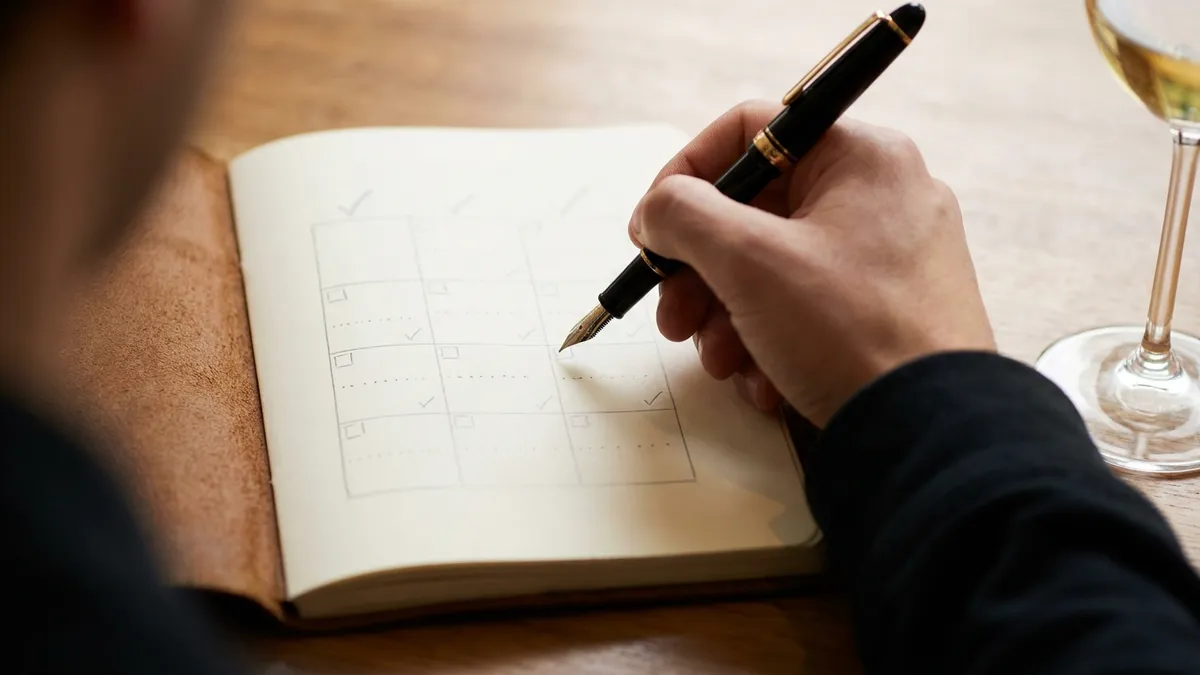
Free-form prose tasting notes are pleasant to write but hard to compare. A structured field-by-field rubric — appearance hue and intensity, aroma intensity and identification, sweetness, acidity, tannin, body, alcohol, finish length, quality conclusion — produces data that lines up across sessions. Sommy's tasting flow uses exactly this kind of structured input, with each dimension prompted in turn so nothing gets skipped.
Manage Fatigue
Limit yourself to six to eight wines per session. Cleanse the palate with plain water and a neutral cracker between samples. Rest fifteen minutes after the first flight if a second is planned. Spit when the wines are tannic or high in alcohol — the how to spit wine tasting guide covers technique.
Train the Vocabulary
Build a personal aroma reference set. Smell crushed black pepper, dried thyme, wet stone, vanilla pod. The act of pairing a label with a real-world smell anchors retrieval later in the glass. The develop your wine palate guide lays out a daily five-minute drill.
For a complete end-to-end protocol that ties sensory evaluation to a regular practice habit, head to sommy.wine and let the app guide your next tasting through structured fields, neutral lighting cues, and a built-in flight planner.
Why Sensory Evaluation Matters
Sensory evaluation is not academic ritual. It is what separates "I liked it" from "this wine has medium-plus acidity, fine-grained tannin, and a thirty-second savory finish." The first is a preference; the second is information that travels — across tasters, across vintages, across the years you spend learning the craft.
The framework is also what makes wine learnable at all. Without rubrics, without standardized conditions, without trained vocabulary, every glass is a fresh subjective event. With them, each wine becomes a data point that strengthens the next, and the structured tasting field-by-field that felt clinical at first becomes the very thing that frees you to notice more.
Pour two wines from the same grape but different regions tonight, in the same glass, under the same light, blind if you can manage it, and score them on a written rubric. The second wine of the second flight is where the method begins to feel like instinct — and that is the moment sensory evaluation stops being a checklist and starts being how you actually taste.
Frequently Asked Questions
What is sensory evaluation in wine?
Sensory evaluation is the disciplined application of human senses to measure a wine's appearance, aroma, flavor, and structure. It blends physiology, statistics, and standardized procedure. Trained panels use calibrated rubrics, ISO tasting glasses, neutral lighting, and controlled flight order to produce scores that can be compared across tasters, sessions, and vintages with reasonable reproducibility.
What senses are involved in tasting wine?
Five senses contribute. Vision reads color, clarity, and viscosity. Olfaction picks up volatile aromas through the nostrils and from inside the mouth. Taste handles five basic qualities on the tongue. The trigeminal nerve registers heat, cool, astringency, and prickle. Hearing plays a minor role, mostly for sparkling wines where bead size and persistence are audible.
Why do trained panels use ISO 3591 glasses?
ISO 3591 specifies a tulip-shaped glass with fixed dimensions that focuses aromas at the rim and standardizes pour size. Using the same glass across tasters and sessions removes shape and volume as variables, so any difference noticed comes from the wine itself rather than the vessel. It is the standard for scientific comparison, not a luxury preference.
How many odors can humans actually distinguish?
Earlier estimates suggested around 10,000 distinguishable odors, while a 2014 study controversially proposed over a trillion. The truth sits somewhere between, and individual variation is huge. What matters for sensory evaluation is not the absolute ceiling but training. Repeated exposure and labeling sharpens both detection thresholds and recall, often within weeks of structured practice.
What is the trigeminal system in wine tasting?
The trigeminal nerve carries chemesthetic signals that are neither taste nor smell. In wine it registers alcohol heat, mint or eucalyptus cool, the prickle of carbon dioxide in sparkling wines, the burn of capsaicin in spicy food pairings, and the drying tactile pull of tannin. Many sensations called flavor are actually trigeminal responses processed in parallel with olfaction.
Can context bias what a taster perceives?
Yes. Color expectation, label prestige, price information, ambient music, and even glass weight all shift perceived quality and aroma identification. Studies have shown white wine dyed red gets described in red-wine vocabulary, and the same wine scores higher with a fancier label. Blind tasting protocols exist precisely to remove these context cues from the evaluation.
How can a beginner apply sensory evaluation at home?
Pour into ISO 3591 or any clean tulip glass at the same fill level. Use neutral indoor lighting against a white surface. Taste in flight order from light to heavy. Use a written rubric with structured fields rather than free-form notes. Cleanse the palate with plain water and a neutral cracker between samples, and rest every fifteen minutes.
Sommy Team
LinkedInFounder & Wine Educator
The Sommy Team is building the world's most approachable wine education app, helping beginners develop real tasting skills through structured courses and AI-guided practice.