Why the Same Wine Tastes Different Every Time You Open It
By the Sommy Team — AI-assisted, human-edited.
Updated Apr 29, 2026
Contents (11)
- TLDR
- Why the Same Wine Tastes Different Each Time, in One Paragraph
- Reason 1: Bottle Variation Is Real
- Reason 2: Temperature on the Day
- Reason 3: Glassware Changes the Pour
- Reason 4: Food Resets Your Baseline
- Reason 5: Time of Day and Palate State
- Reason 6: Context, Mood, and Setting
- Reason 7 (The Hidden One): Oxidation and Time in the Glass
- How to Get More Honest Tastings
- What This Means for the Way You Drink
TL;DR
The same wine tastes different every time because six variables shift between pours: small bottle-to-bottle variation from cork porosity and storage, serving temperature, glassware, food eaten beforehand, time of day and palate state, and context like lighting and mood. Each effect is measurable and stacks with the others.
TLDR
The same wine tastes different every time because six variables shift between pours: small bottle-to-bottle variation from cork porosity and storage, serving temperature, glassware, food eaten beforehand, time of day and palate state, and context like lighting and mood. Each effect is measurable and stacks with the others.
Why the Same Wine Tastes Different Each Time, in One Paragraph
When the same wine tastes different from one night to the next, it is almost never the bottle behaving randomly. Six measurable variables shift between pours and stack on top of each other. Around one in twenty natural-cork bottles drifts from its peers because of cork porosity, slow oxygen transfer, or trace TCA (the chemical behind cork taint). Serving temperature changes which aromas evaporate and how sweet, sharp, or tannic the wine reads. Glass shape redirects aromatics and how the wine lands on your tongue. Food eaten in the previous hour resets your baseline for sweetness, salt, and acid. Time of day shifts saliva volume and smell sensitivity by a third or more. Mood, lighting, music, and company layer perception on top of every sip. The same wine tastes different because you, the room, and the bottle are all moving variables.
Reason 1: Bottle Variation Is Real
Two bottles filled from the same tank, sealed in the same hour, and stored in the same case will not taste identical a year later. Our guide to bottle variation in wine shows how to tell one bad bottle from a bad batch. The reason sits in the closure and the shelf life of every bottle.
Cork Porosity and Oxygen Transfer
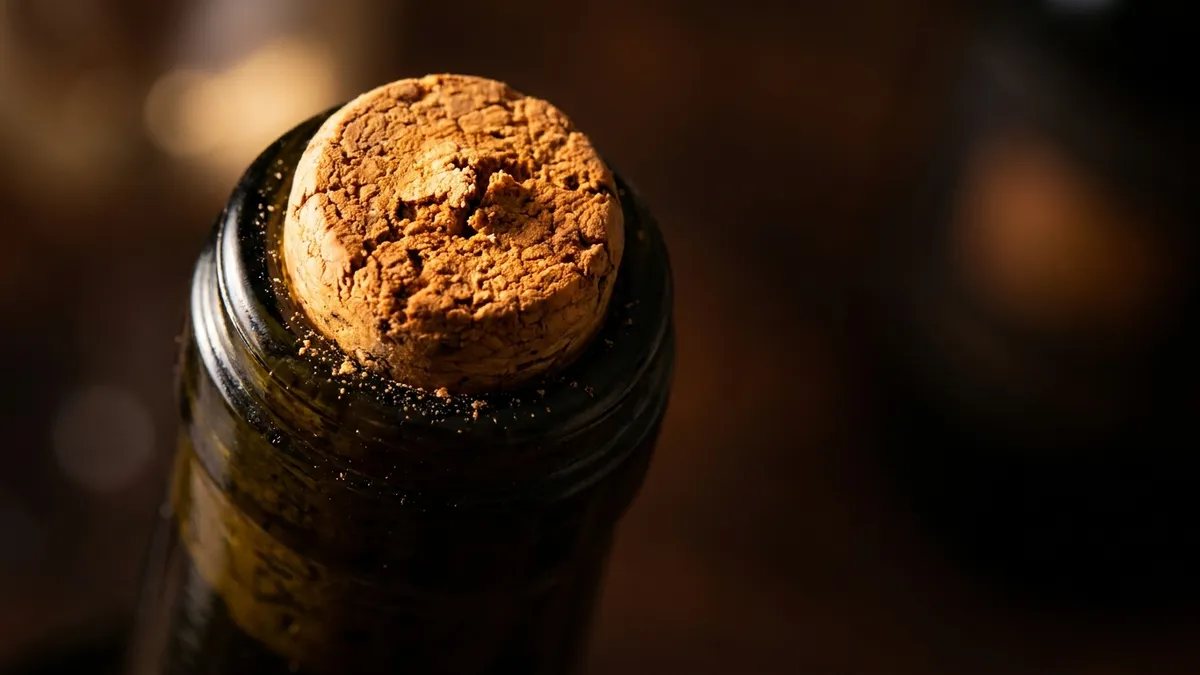
Natural cork is bark — a living material with thousands of microscopic channels. Each cork lets a tiny amount of oxygen through every year, and that amount varies by the structure of that specific cork. A slightly tighter cork keeps the wine more reductive and youthful. A slightly looser cork lets the wine evolve faster. After three or four years of cellaring, two bottles from the same case can sit at noticeably different points on the aging curve.
The drift is most obvious in long-aged reds. A ten-year-old Bordeaux pulled from the same case can show fresh blackcurrant in one bottle and softened plum and leather in another. The bottling line was identical. The cork made the difference.
Storage History
Most bottles travel through a logistics chain — winery, importer, distributor, retailer, your kitchen — and each leg has its own temperature curve. A pallet that sat on a hot dock for a weekend ages faster than one that did not. A bottle that lived horizontally in a steady cellar shows differently from one that stood upright next to a kitchen radiator. You rarely know which path your bottle took. To go deeper on what aging does to wine, see our guide to tasting young versus aged wine.
Cork Taint and Trace TCA
Around three to five percent of natural-cork bottles carry TCA — the compound 2,4,6-trichloroanisole, which produces the wet-cardboard smell of a corked wine. Most cases are obvious and unpleasant. The harder cases are sub-threshold TCA — too low to recognize as a fault, but high enough to mute fruit and shorten the finish. A bottle with sub-threshold TCA reads as "fine, but not as good as last time." The wine is not lying. It is faintly compromised. Our piece on how to tell if wine is corked covers the full smell range, and the Sommy app's tasting flow includes a fault-check step that prompts you to look for the wet-cardboard signature before logging the bottle.
Reason 2: Temperature on the Day
Of all the variables, serving temperature has the largest single effect on how a wine tastes. A six-degree shift can move the same bottle from balanced to bitter or from balanced to flabby.
Cold mutes aromas, sharpens acid, and hardens tannin. Warmth amplifies aromas, softens tannin, and pushes alcohol forward. The window where each wine sits in balance is narrow — usually about a four-degree band per style. Most home pours land outside that window. The full breakdown of why this happens is in our deep dive on how temperature affects wine taste.
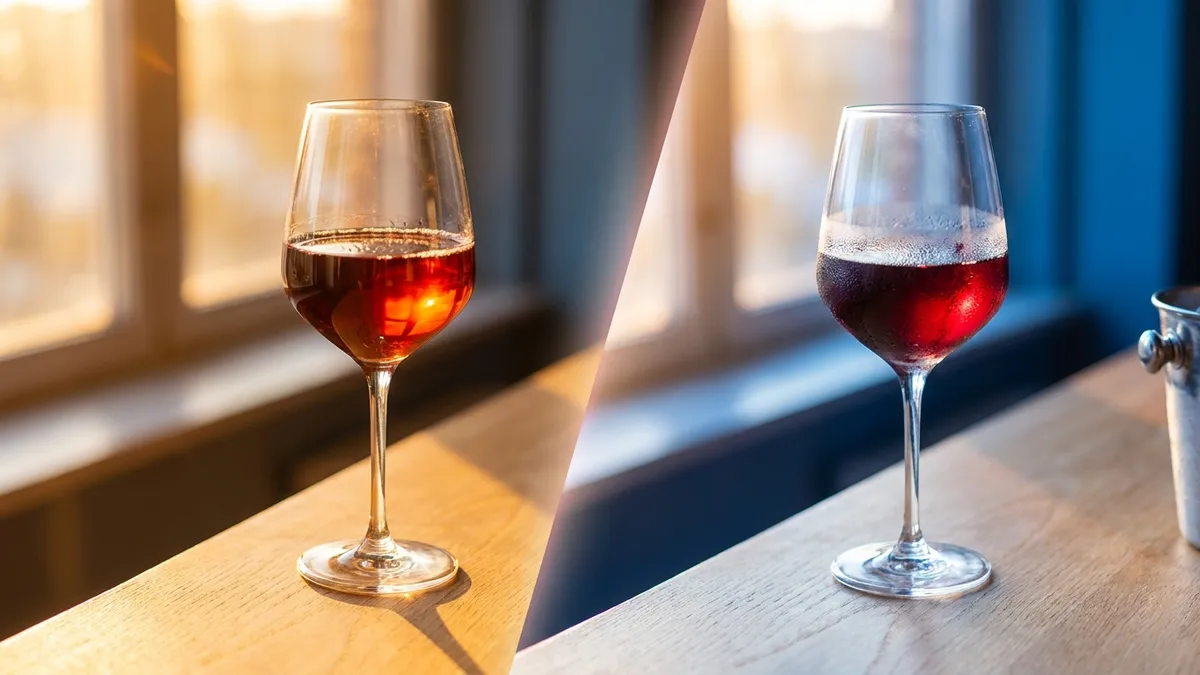
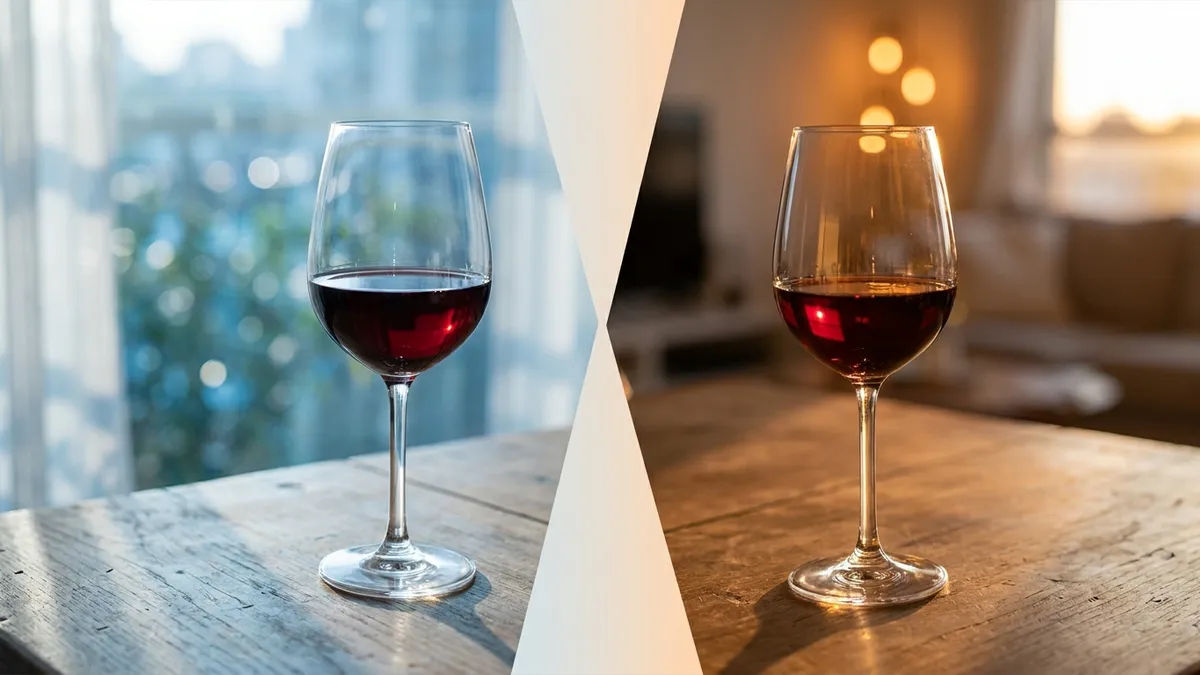
If you opened the same bottle on a cool autumn evening at sixteen degrees and again at twenty-two degrees in summer, you tasted two different wines. The bottle was identical. The thermometer changed everything else.
Reason 3: Glassware Changes the Pour
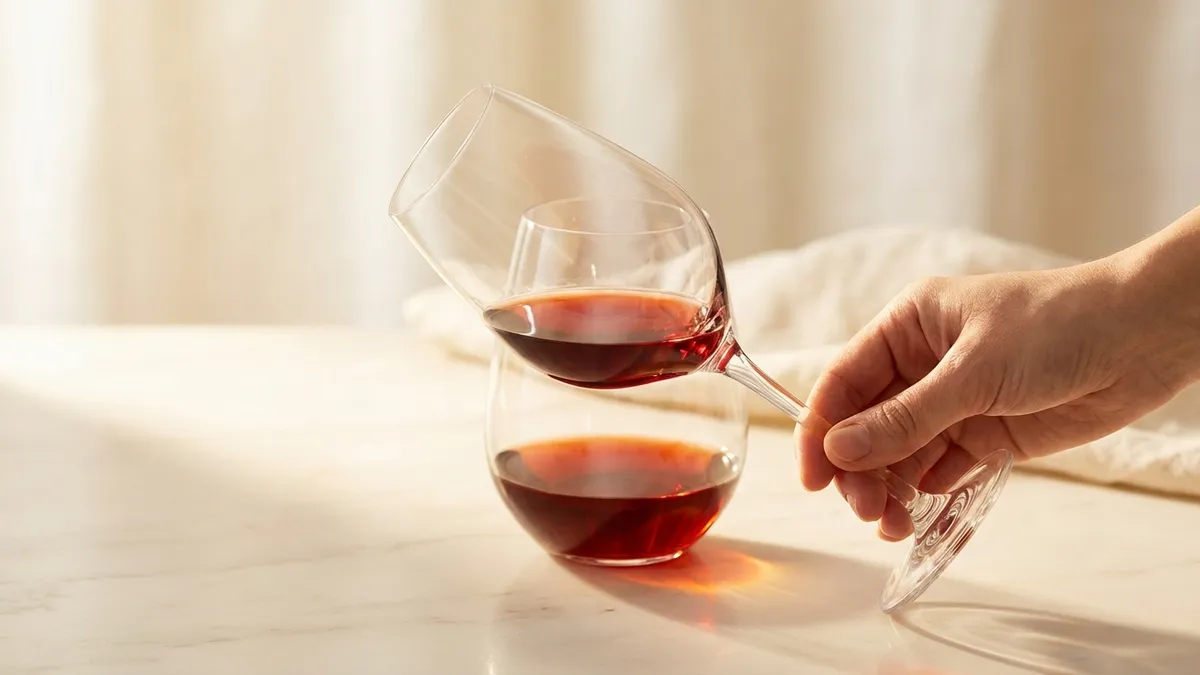
Glass shape is the second largest controllable variable after temperature. A thick-rimmed tumbler and a thin-rimmed crystal tulip can make the same wine read as cheap or refined.
Three things matter: bowl width, rim diameter, and lip thickness. A wider bowl gives the wine more surface area to oxygenate and release aromatics in the few seconds after the swirl. A narrower rim funnels those aromas toward your nose rather than letting them disperse around the room. A thinner lip tips the wine onto the front of the tongue, which reads sweetness and fruit. A thicker lip drops it toward the back of the mouth, which reads bitterness and structure.
The differences are not subtle. The same Pinot Noir in a wide Burgundy glass and in a tall Champagne flute is barely the same drink. For more detail on which shapes do what, see does wine glass shape affect taste.
Reason 4: Food Resets Your Baseline
Anything you ate or drank in the hour before the first sip moves your palate. Tasting on an empty stomach gives one reference point. Tasting after a buttery pasta gives another. Tasting after a sweet dessert gives a third.
How Food Shifts Each Component
- Fat coats the tongue and softens tannin perception in the next sip
- Salt suppresses acid and brings out fruit
- Sugar raises your sweetness threshold, so dry wines read drier
- Acid sharpens your sensitivity to bright wines and dulls tannin
A Cabernet with steak and the same Cabernet with chocolate are not the same experience. The wine has not changed — the receptors have been rewritten by the previous mouthful. Our wine and food pairing rules covers the basic chemistry of why certain combinations sing and others fight.
Coffee, Toothpaste, and the Last Sip Before
Three things will distort almost any wine. A recent coffee leaves bitterness on the tongue that carries straight into the next sip. Toothpaste flips your perception of sweetness for fifteen to thirty minutes after brushing — which is why orange juice tastes terrible after toothpaste. And a different wine right before resets your baseline through tannin or sugar load. If you want a clean read on a wine, give your mouth ten minutes of nothing but water.
Reason 5: Time of Day and Palate State
Your palate is not a constant instrument. It runs on a daily cycle just like sleep and energy.
Saliva volume peaks in late morning and afternoon, and drops sharply at night. Smell sensitivity follows a similar curve, partly tied to alertness. Most professional tasting panels run between ten in the morning and one in the afternoon for this reason — that is the window where discrimination is sharpest. By eleven at night, after a full meal and previous drinks, the same nose can be fifty percent less sensitive to subtle aromas.
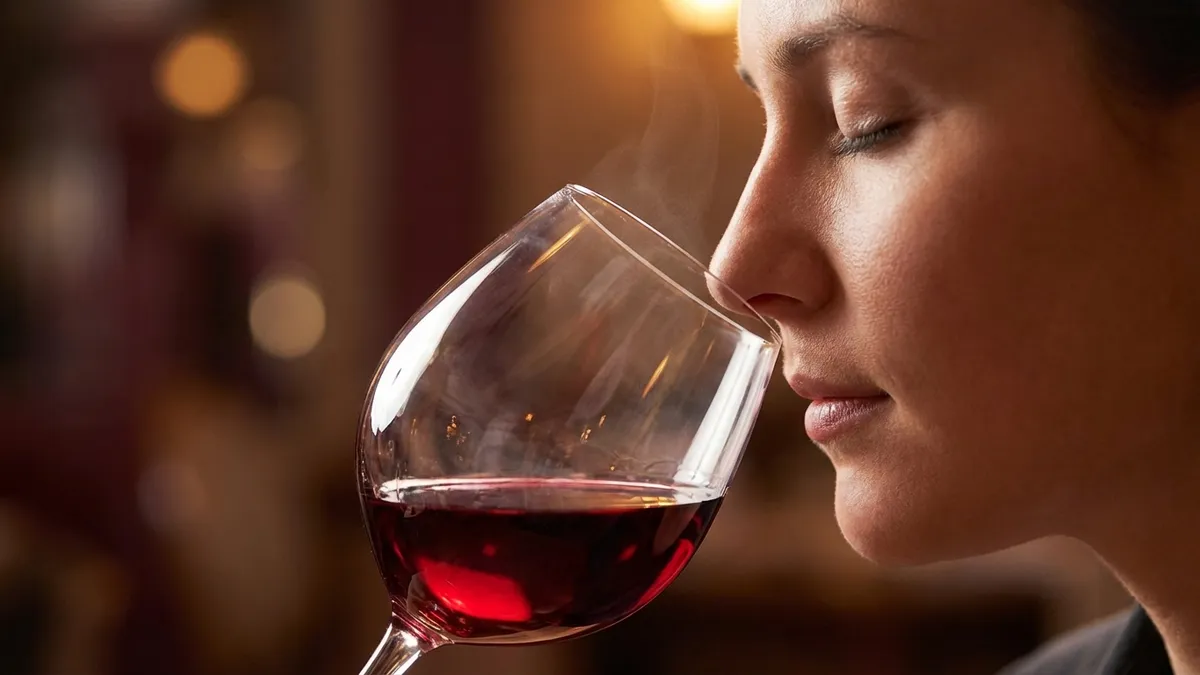
The implication for casual drinkers is direct. A bottle opened at eight on a weeknight after a heavy day of work will taste muted compared to the same bottle opened on a Saturday morning at brunch. Neither reading is wrong — they are taken with different instruments. To go deeper on how the nose actually works, read how to smell wine.
Palate Fatigue Within a Session
Even within a single evening, your palate dulls. Tannin coats the tongue, alcohol slows pattern recognition, and the nose adapts to repeated aromas in a process called olfactory habituation — your brain literally turns down the volume on smells it has already cataloged. By the third or fourth glass, the wine that started bright reads softer. The full mechanism, plus how to reset, is in our piece on wine palate fatigue.
Reason 6: Context, Mood, and Setting
The least technical reason is also one of the strongest. Context bleeds into perception in ways that are hard to control but easy to recognize once you watch for them.
Lighting and Color
Lighting changes how wine looks, and how wine looks changes how it tastes. Studies have shown the same white wine rated as fruitier in red light and as more acidic in green light. Warm yellow light makes reds look richer and read smoother. Cold blue light makes them look thinner and read sharper.
Music and Noise
Music affects perception measurably. Classical music tends to push perceived elegance and complexity up. Loud bass-heavy music pushes the same wine toward "bold" and "fruity." Background restaurant noise above seventy decibels reduces sensitivity to sweetness and saltiness, which is why airline wine lists tend toward bolder, fruitier styles.
Mood and Company
Wine drunk alone after a stressful day reads differently from wine shared on a celebration. Cortisol levels affect taste sensitivity. Conversation distracts attention from the glass, and attention is the prerequisite for noticing subtle flavors. None of this is in the wine — but it is all in the experience of the wine, and you cannot fully separate the two.
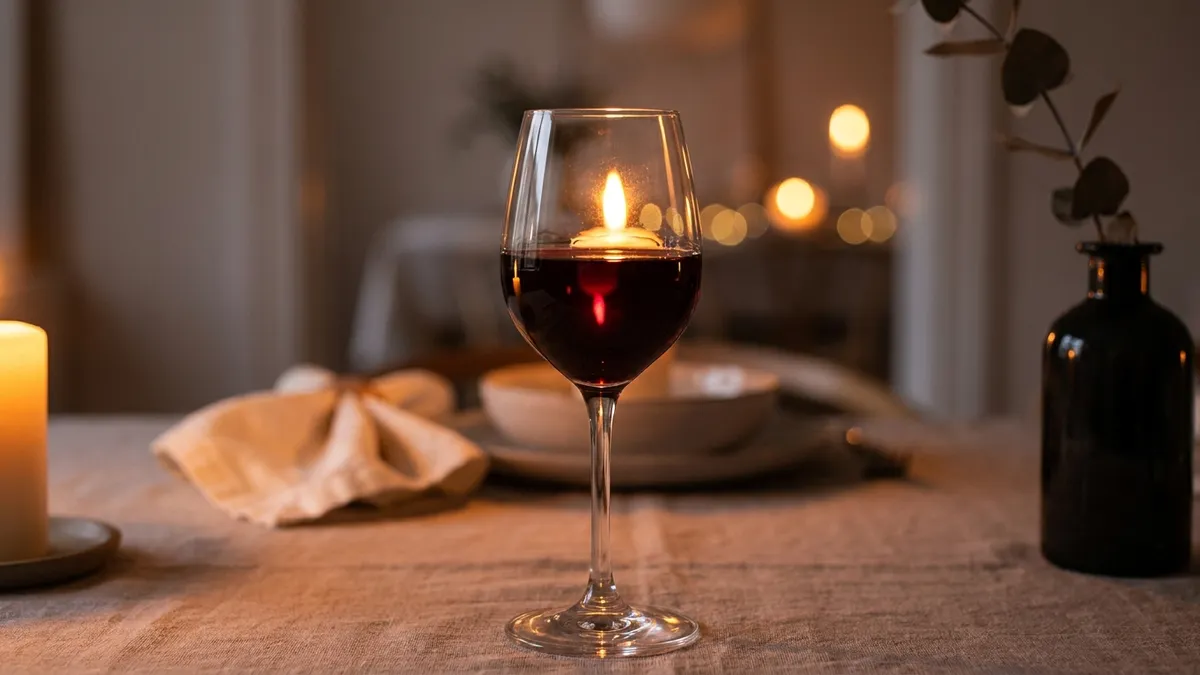
Reason 7 (The Hidden One): Oxidation and Time in the Glass
Worth noting on its own. The first sip from a freshly opened bottle and the last sip thirty minutes later are not chemically identical. Oxygen has been working on the wine in the glass — softening tannin, opening aromas, then eventually flattening fruit.
A young, tight red can need fifteen to thirty minutes of air to show its best. The same bottle on the second night, after a partial pour and a stopper, will taste different again — sometimes better as the wine relaxes, sometimes worse as it tires. This is part of why the same wine seems to shift across an evening even when nothing else changed.
How to Get More Honest Tastings
You cannot remove all the variables, but you can control the biggest ones.
- Match the temperature. Whites at eight to twelve degrees, light reds at twelve to fifteen, full reds at fifteen to eighteen. Pull whites out of the fridge twenty minutes early; chill reds for fifteen.
- Use the same glass shape across sessions. A medium tulip works for almost every wine. Switching glasses between sessions adds noise to your comparison.
- Taste before food, not after. A clean palate reads the wine on its own terms. Pair afterward for enjoyment.
- Pick consistent times. Late morning to early afternoon if you want maximum discrimination. Evenings if you want the wine in its real-world context.
- Write notes the same way each time. A structured journal turns scattered impressions into pattern recognition. Our wine tasting notes template covers a simple repeatable format.
The Sommy app builds these controls into the practice loop. Each tasting session prompts you to log temperature, glass shape, time of day, and food eaten beforehand alongside the actual notes. Over a few sessions, the journal starts surfacing patterns — which wines you read more harshly when tired, which ones bloom in warmer rooms, which bottles drift bottle to bottle. The variables stop being noise and start being information.
What This Means for the Way You Drink
The myth that a great wine should always taste the same is a marketing line, not a tasting reality. Wine is a living interaction between a bottle, a room, and a person, and any of those three changing changes the result. That is not a bug. It is part of the depth of the subject — and part of why two friends can disagree completely on the same bottle without either of them being wrong.
The practical takeaway is short. Stop expecting the same wine to give you the same experience. Start expecting it to give you a slightly different reading every time, then control the variables you can — temperature, glassware, palate state — so the variation you do see comes from the wine itself rather than the conditions around it. Once you can separate "the bottle is different" from "the taster is different tonight," your tasting skill compounds quickly.
For a structured way to build this skill into a regular habit, visit sommy.wine. The first courses cover sensory awareness end to end — from temperature to glassware to palate state — and the AI tasting guide flags when your notes hint at a wine being read in poor conditions rather than poured in poor form. The bigger picture sits in our pillar guide on how to taste wine, which connects each of these variables to a single repeatable framework.
The same wine never quite tastes the same twice. The skill is learning why — and what to do about it.
Frequently Asked Questions
Why does the same wine taste different each time I open it?
Six factors stack up: bottle-to-bottle variation from cork porosity and storage history, serving temperature on the day, glassware shape, food eaten before the first sip, time of day plus current palate state, and context such as lighting, noise, and company. None of these change the chemistry of the wine on the shelf, but together they shift how it lands.
Is bottle variation real or a myth?
It is real and well documented. Natural cork is a porous bark, so two bottles from the same case let in slightly different amounts of oxygen over years of cellaring. Around three to five percent of natural-cork bottles also carry a trace of TCA, the compound behind cork taint. Even bottles with no fault drift from each other on aroma intensity and color depth as they age.
How much does temperature change wine flavor?
A lot. A six-degree shift in serving temperature changes which aromas evaporate, how sweet the wine seems, how sharp the acid feels, and how dry the tannin reads. The same Cabernet at ten degrees and at twenty degrees can taste like two different wines — one tight and bitter, one flabby and hot. The right window is narrower than most people think.
Does the glass really change how wine tastes?
Yes, but not for mystical reasons. Glass shape changes how aromas concentrate at the rim, how much surface area the wine has to oxygenate, and how the liquid lands on your tongue. A wider bowl releases more aroma. A narrow rim funnels it toward your nose. A thick lip pours wine onto a different part of the tongue than a thin one.
Why does wine taste different after eating?
Food coats the tongue with fat, sugar, salt, or acid, and each one resets your baseline. After a creamy pasta, an acidic white tastes brighter because your palate is craving contrast. After a sweet dessert, a dry red tastes harsh because your sweetness threshold has been pushed up. The wine has not changed — your reference point has.
Does the time of day affect wine tasting?
Yes. Saliva volume, smell sensitivity, and discrimination of subtle flavors all peak in late morning and dip again at night. A wine tasted at eleven in the morning will read sharper, more aromatic, and more structured than the same wine at eleven at night when fatigue and previous meals have dulled the palate. Professional tasters work mornings for this reason.
Can mood and context change how a wine tastes?
Strongly. Lighting, music, conversation, and emotional state all bleed into perception. Studies show the same wine rated higher when served with classical music versus loud rock, and lower in red light versus warm yellow. None of this is in the wine. It is in the brain layering context onto every sip — which is why wine in a great setting often tastes better than the same bottle alone at home.
How do I get more consistent results when tasting the same wine?
Control the variables you can. Pull whites out of the fridge twenty minutes before pouring, gently chill reds for fifteen, use the same glass shape across sessions, taste before a meal rather than after, and write notes the same way each time. A structured journal lets you separate real bottle variation from temporary palate state, so you build accurate memories of each wine.
Sommy Team
LinkedInFounder & Wine Educator
The Sommy Team is building the world's most approachable wine education app, helping beginners develop real tasting skills through structured courses and AI-guided practice.