Oregon Wine Guide: Willamette Valley Pinot Noir and More
Sommy Team
Founder & Wine Educator
April 13, 2026
8 min read
TL;DR
Oregon is America's premier Pinot Noir region, with the Willamette Valley producing 70 percent of the state's wine from 11 distinct AVAs. Cool maritime climate, volcanic and marine sedimentary soils, and a Burgundian philosophy of terroir-driven winemaking have made Oregon a global benchmark for elegant, site-specific Pinot Noir and excellent Pinot Gris and Chardonnay.
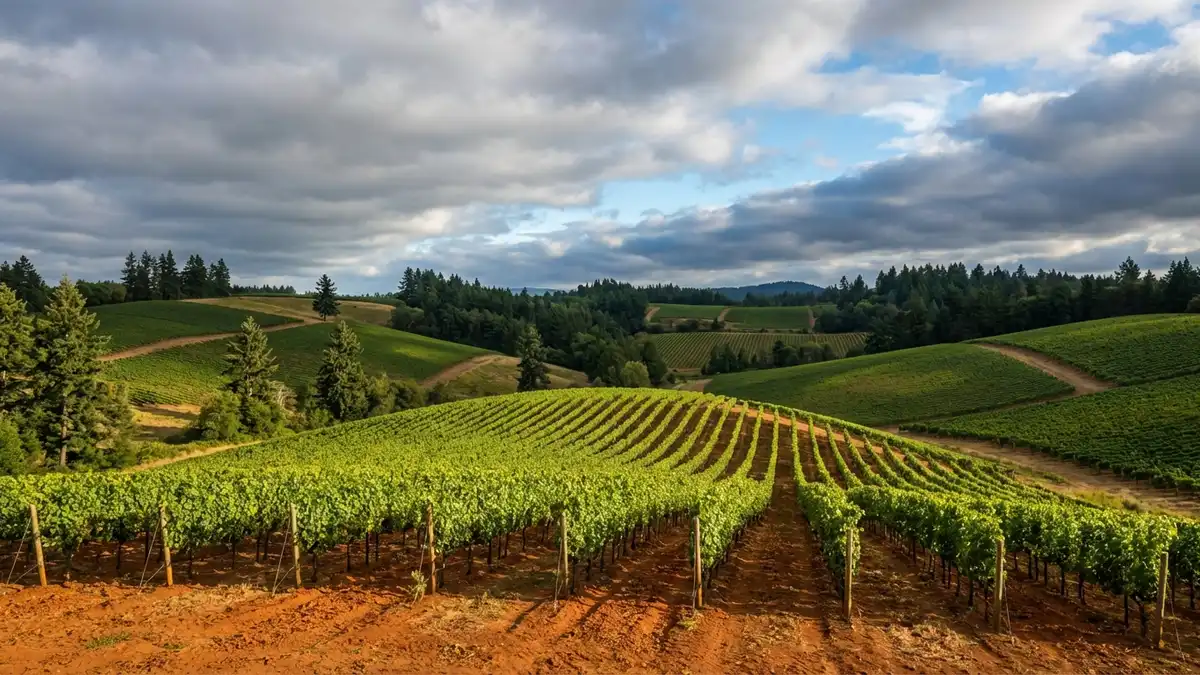
What Makes Oregon Wine Regions Special
Oregon has emerged as one of the world's most respected wine regions, built almost entirely on one grape: Pinot Noir. The Willamette Valley — a 120-mile stretch running south from Portland — is the state's flagship, home to over 700 wineries, 27,000 acres of vineyard, and 11 distinct AVAs that produce some of the finest Pinot Noir outside Burgundy.
What sets oregon wine regions apart from other American wine areas is philosophy as much as climate. While Napa Valley built its reputation on power and concentration, Oregon took the opposite path — chasing elegance, transparency, and the expression of individual vineyard sites. The result is a wine culture that feels more Burgundian than Californian, even though the two states share a border.
Oregon's cool, maritime climate produces wines with bright acidity, moderate alcohol, and a purity of fruit that rewards careful attention. The state's strict labeling laws — requiring 90% of the named grape in varietal wines, compared to the US federal minimum of 75% — reflect this commitment to authenticity.
The Willamette Valley — Oregon's Heart
The Willamette Valley produces approximately 70% of Oregon's wine. The valley floor sits at low elevation, flanked by the Coast Range to the west and the Cascade Mountains to the east. Cool air from the Pacific moderates temperatures, while the rain shadow created by the Coast Range keeps the valley drier than the coast.
Key Willamette Valley AVAs
The 11 nested AVAs within the Willamette Valley each have distinct soil profiles and microclimates.
Dundee Hills — The most famous Oregon AVA. Volcanic Jory soils — deep, red, iron-rich clay derived from ancient basalt flows — produce Pinot Noir with elegant red fruit, fine tannins, and a signature earthy, mineral quality. This is the AVA that put Oregon on the world wine map.
Eola-Amity Hills — Defined by the Van Duzer Corridor winds that funnel cool Pacific air through a gap in the Coast Range each afternoon. The resulting wines have bright acidity, firmer structure, and a savory, herbal character that distinguishes them from the rounder Dundee Hills style.
Yamhill-Carlton — Marine sedimentary soils (ancient ocean floor) produce darker, more structured Pinot Noir with black cherry, cola, and a firmer tannic grip. These wines often age better than softer examples from other AVAs.
Ribbon Ridge — A tiny AVA within Yamhill-Carlton, known for its loam and silt soils that produce the most delicate, aromatic Pinot Noir in Oregon — floral, spicy, and finely structured.
Chehalem Mountains — Diverse soils (volcanic, loess, and marine sedimentary) produce a wide range of styles. The AVA's higher elevations deliver wines with excellent concentration and complexity.
McMinnville — Marine sedimentary and volcanic soils on west-facing slopes. Produces structured, age-worthy Pinot Noir and increasingly impressive Chardonnay.
Van Duzer Corridor — Named for the wind gap that channels afternoon ocean breezes. Produces high-acid, crisp wines with a distinctive cool-climate vibrancy.
Laurelwood District and Tualatin Hills — Northern AVAs with windblown loess soils (Laurelwood series) that produce lifted, aromatic wines with refined texture.
Lower Long Tom and Mount Pisgah — Southern AVAs, still establishing their identities. Generally warmer, with potential for both Pinot Noir and other varieties.
Oregon's Key Grapes
Pinot Noir — The Star
Oregon Pinot Noir accounts for roughly 70% of Willamette Valley plantings — over 23,500 acres statewide. The cool climate produces wines with:
- Fruit — bright cherry, raspberry, cranberry, sometimes strawberry
- Earth — forest floor, mushroom, damp earth
- Spice — baking spice, cola, sometimes a distinctive oregano note
- Structure — silky tannins, bright acidity, medium body
- Alcohol — typically 13–14%
The best Oregon Pinot Noir is transparent — you can taste the vineyard through the wine. Compare a Dundee Hills example (red fruit, earth, volcanic mineral) with a Yamhill-Carlton (darker fruit, firmer tannins, marine sediment) and the soil difference comes through clearly.
Pinot Gris
Oregon's second most planted grape, with over 5,400 acres. Oregon was among the first American regions to plant Pinot Gris seriously, and the style sits between Italian crispness and Alsatian richness — medium body, ripe pear and melon, moderate acidity, and a slightly creamy texture.
Chardonnay
Oregon Chardonnay has improved dramatically in recent years, with the best examples rivaling Burgundy for complexity. Cool-climate sites produce wines with bright citrus, green apple, and mineral notes, often with judicious oak influence.
Other Varieties
- Riesling — Small but excellent plantings, producing lean, dry styles from cooler sites
- Syrah — Thriving in the warmer Rogue Valley and Walla Walla Valley (shared with Washington)
- Tempranillo — Emerging in southern Oregon's warmer regions
- Sparkling wine — A fast-growing category, using Pinot Noir and Chardonnay in Methode Traditionnelle. The inaugural Method Oregon showcase in 2025 featured over 50 producers.
How to Pair Oregon Wine with Food
Oregon Pinot Noir
Oregon Pinot Noir's lighter body and bright acidity make it one of the most food-friendly red wines:
- Salmon — The iconic Pacific Northwest pairing. Grilled, pan-seared, or smoked.
- Duck — Roasted or confit. The wine's fruit and earth complement duck's richness.
- Mushrooms — Wild chanterelles, morels, or a mushroom risotto. Oregon's forest-floor terroir mirrors its forest-floor cuisine.
- Lamb — Herb-crusted rack or braised shanks.
- Soft cheeses — Brie, Camembert, or Oregon's own artisan cheeses.
Oregon Pinot Gris
- Seafood — Dungeness crab, halibut, grilled shrimp
- Pork — Roast tenderloin, charcuterie
- Asian cuisine — Thai, Vietnamese, mild Japanese
For more pairing ideas, see the wine and food pairing guide.
Beyond the Willamette Valley
Oregon has several other wine regions worth knowing.
Southern Oregon
The warmer Rogue Valley and Umpqua Valley produce a broader range of varieties than the Willamette Valley. Tempranillo, Syrah, Cabernet Franc, and Viognier all thrive here. The Umpqua Valley was actually home to Oregon's first post-Prohibition vineyard planting in 1961, predating the Willamette Valley's rise by several years.
Columbia Gorge and Walla Walla Valley
Eastern Oregon shares the Walla Walla Valley AVA with Washington State, producing bolder, riper reds — Cabernet Sauvignon, Merlot, and Syrah — in a warmer, more continental climate. The Columbia Gorge AVA straddles the Cascade Range, creating a dramatic transition from cool, wet western Oregon to dry, warm eastern Oregon within a single appellation.
The Soil Factor — Why It Matters in Oregon
Oregon's winemakers talk about soil more than almost any other topic. Three major soil types define the Willamette Valley's character:
- Volcanic (Jory) — Deep, red, iron-rich clay from ancient basalt flows. Found in the Dundee Hills and parts of Eola-Amity Hills. Produces Pinot Noir with red fruit, fine tannins, and earthy mineral notes.
- Marine sedimentary — Ancient ocean-floor deposits of sandstone, siltstone, and fossil-rich clay. Found in Yamhill-Carlton and McMinnville. Produces darker, more structured wines with firmer grip.
- Loess (windblown) — Fine, silty soil deposited by ancient winds (Missoula Floods). Found in the Laurelwood District and Chehalem Mountains. Produces lifted, aromatic wines with refined texture.
Understanding these three soil types is the fastest way to predict what a Willamette Valley wine will taste like before you open the bottle.
Oregon vs Other Pinot Noir Regions
| Feature | Oregon (Willamette) | Burgundy (France) | Central Otago (NZ) | Napa (Carneros) | |---|---|---|---|---| | Climate | Cool maritime | Cool continental | Cool continental | Cool maritime | | Key soils | Volcanic, marine sed. | Limestone, clay | Schist, loess | Clay, alluvial | | Style | Elegant, earthy | Mineral, austere | Bright, silky | Rich, rounded | | Typical ABV | 13–14% | 12.5–13.5% | 13–14% | 13.5–14.5% | | Price range | $25–$80 (core) | $30–$200+ (core) | $25–$60 (core) | $25–$60 (core) |
Oregon Wine — Value and Price
Oregon offers strong value compared to Burgundy, though prices are higher than many New World regions:
- Under $20 — Good entry-level Pinot Gris and simple Pinot Noir
- $20–$35 — Solid Willamette Valley Pinot Noir with AVA character
- $35–$60 — Single-vineyard and reserve-level Pinot Noir. Real complexity.
- $60–$120 — Top-tier, site-specific wines from the best producers
Compared to Burgundy, where equivalent quality often costs two to five times more, Oregon remains a relative bargain for world-class Pinot Noir. The $25–$40 range in particular delivers wines that would cost $60–$100+ from comparable Burgundy appellations.
Building Your Oregon Tasting Skills
Oregon is the ideal region for learning about soil and terroir in Pinot Noir. Try tasting examples from three different AVAs — Dundee Hills, Eola-Amity Hills, and Yamhill-Carlton. Same grape, same vintage, different soils. The differences in color, aroma, and mouthfeel teach you more about how place shapes wine than any textbook.
The Sommy app includes guided tasting exercises that walk you through these kinds of terroir comparisons, helping you build the vocabulary to articulate what you sense in the glass. Oregon wines reward the kind of careful, thoughtful tasting that turns a casual wine drinker into a confident one.
Frequently Asked Questions
What is Oregon best known for in wine?
Oregon is best known for Pinot Noir, which accounts for about 70 percent of vineyard plantings in the Willamette Valley. The cool, maritime climate produces Pinot Noir with bright fruit, silky tannins, and a Burgundian elegance that has earned international acclaim. Oregon is also recognized for excellent Pinot Gris and Chardonnay.
How many AVAs are in the Willamette Valley?
The Willamette Valley contains 11 nested AVAs: Chehalem Mountains, Dundee Hills, Eola-Amity Hills, Laurelwood District, Lower Long Tom, McMinnville, Mount Pisgah, Ribbon Ridge, Tualatin Hills, Van Duzer Corridor, and Yamhill-Carlton. Each has distinct soils and microclimates that shape the character of its wines.
How does Oregon Pinot Noir compare to Burgundy?
Oregon Pinot Noir is often compared to Burgundy because of the similar cool climate and terroir-focused winemaking philosophy. Oregon wines tend to show brighter, more overt fruit with silky tannins, while Burgundy is typically more earthy, mineral, and restrained. Both are elegant and age-worthy, but the stylistic emphasis differs.
What food pairs well with Oregon Pinot Noir?
Oregon Pinot Noir pairs well with duck, salmon, lamb, mushroom dishes, roasted beets, charcuterie, and soft aged cheeses like Brie or Camembert. Its lighter body and bright acidity also make it a strong match for roast chicken and pork tenderloin.
Is Oregon wine expensive?
Oregon wine is moderately priced compared to Burgundy or Napa. Good Willamette Valley Pinot Noir starts around 20 to 25 dollars, with serious single-vineyard bottlings in the 40 to 60 dollar range. Top producers can reach 80 to 120 dollars, but that is still significantly less than equivalent Burgundy.
What is Pinot Gris in Oregon?
Pinot Gris is Oregon's second most planted grape, covering about 13 percent of vineyard area. Oregon was one of the first American regions to plant it seriously, and the style splits the difference between Italian Pinot Grigio and Alsatian Pinot Gris — medium bodied with pear and melon flavors and moderate acidity.
Does Oregon make sparkling wine?
Yes. Oregon is increasingly recognized for Methode Traditionnelle sparkling wine made from Pinot Noir and Chardonnay. The cool climate produces base wines with the high acidity needed for world-class bubbles. The inaugural Method Oregon showcase in 2025 featured over 50 producers.
What are the best Willamette Valley AVAs for Pinot Noir?
Dundee Hills is the most famous, known for its volcanic Jory soils and elegant, red-fruited Pinot Noir. Eola-Amity Hills produces more structured, wind-influenced wines. Yamhill-Carlton is known for darker, more tannic wines from marine sedimentary soils. Ribbon Ridge produces the most delicate and aromatic examples.
Get the free Wine 101 course
Start learning to taste wine like a pro with structured lessons and AI-guided practice.
Sommy Team
LinkedInFounder & Wine Educator
The Sommy Team is building the world's most approachable wine education app, helping beginners develop real tasting skills through structured courses and AI-guided practice.
Keep Reading
French Wine Regions: A Complete Guide
Explore the major French wine regions from Bordeaux to Provence. Understand the AOC system, signature grapes, and what makes each region unique.
Italian Wine: From Chianti to Barolo
Discover Italian wine from north to south. Learn the key regions, native grapes, classification system, and why Italian wine and food are inseparable.
Spanish Wine Regions: From Rioja to Sherry
Explore Spain's major wine regions, from the legendary Rioja to the unique world of Sherry. Learn the DO system, key grapes, and aging classifications.