Pinot Grigio vs Pinot Gris: Same Grape, Different Wine
Sommy Team
Founder & Wine Educator
April 11, 2026
10 min read
TL;DR
Pinot Grigio and Pinot Gris are the same grape variety — the difference is winemaking style and region. Italian Pinot Grigio is light, crisp, and citrus-driven; Alsatian Pinot Gris is richer, spicier, and sometimes off-dry. Understanding the label tells you exactly what to expect in the glass.
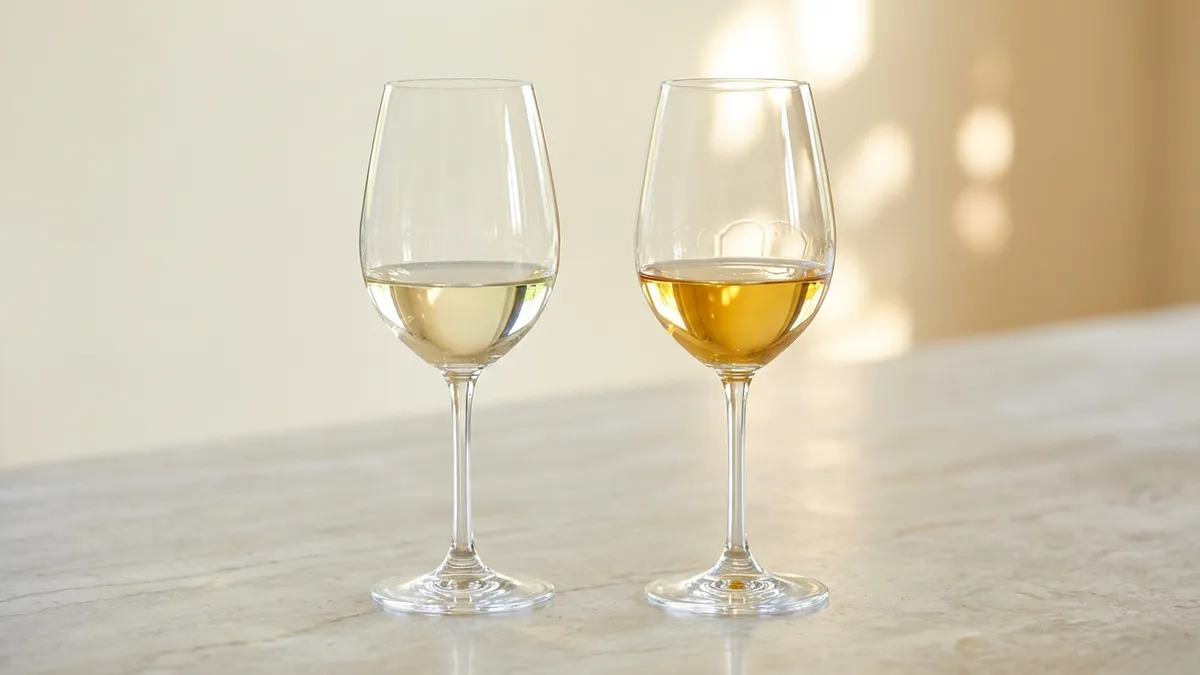
Pinot Grigio vs Pinot Gris — One Grape, Two Identities
Here is a fact that surprises many wine drinkers: Pinot Grigio and Pinot Gris are the exact same grape. Not cousins, not siblings — the same variety, grown on the same type of vine, producing the same greyish-pink berries. The difference between the two wines sitting on a store shelf is not genetic. It is geographic, cultural, and stylistic.
Pinot Grigio is the Italian name. Pinot Gris is the French name. And those two labels signal two very different wines — one light and crisp, the other rich and aromatic. Understanding the difference between pinot grigio vs pinot gris is one of the most practical things you can learn as a wine drinker, because it turns a single grape variety into two distinct tools for pairing, sipping, and exploring.
The Grape Itself — A Quick Origin Story
Pinot Gris is a color mutation of Pinot Noir — the same famous red grape behind Burgundy and many of the world's most elegant reds. At some point centuries ago, a Pinot Noir vine spontaneously mutated, producing berries with greyish-pink skins instead of deep purple ones. The French word gris means grey, which is where the name comes from.
The grape has been documented in Burgundy since the Middle Ages and spread throughout Europe over the following centuries. It arrived in Italy's northeastern regions — particularly the Tre Venezie (Veneto, Trentino-Alto Adige, and Friuli-Venezia Giulia) — where it was renamed Pinot Grigio and took on a completely different winemaking identity.
Today, roughly 115,000 hectares of Pinot Gris/Grigio are planted worldwide, making it one of the most widely grown white grape varieties on earth. Italy leads with over 24,000 hectares, followed by Germany, Australia, New Zealand, the United States, and France.
Italian Pinot Grigio — Light, Crisp, and Refreshing
When most people think of Pinot Grigio, they picture the Italian style — and for good reason. Italy produces more of this grape than any other country, and the Italian approach has defined the variety for a generation of wine drinkers.
How Italian Pinot Grigio Is Made
The Italian style prioritizes freshness above all else. Grapes are typically harvested early, before they develop too much sugar or lose their bright acidity. Fermentation happens in stainless steel tanks at cool temperatures, preserving the grape's delicate fruit aromas and keeping the wine light-bodied. Oak aging is rare. The goal is a clean, refreshing wine that is ready to drink young.
What Italian Pinot Grigio Tastes Like
- Aromas — green apple, lemon zest, lime, white pear, sometimes a hint of almond
- Palate — light body, high acidity, dry, with a crisp mineral finish
- Alcohol — typically 11.5–12.5%
- Color — very pale straw-yellow, almost water-white
The best Italian Pinot Grigio has a clean, almost transparent quality — it tastes like biting into a crisp pear on a hot afternoon. It is not trying to be complex or profound. It is trying to be refreshing, and when it is well made, it succeeds beautifully.
Key Italian Regions
Not all Italian Pinot Grigio is identical. The sub-regions of northeastern Italy produce distinct styles:
- Trentino-Alto Adige — The highest quality zone. Cool mountain air and alpine soils produce Pinot Grigio with more structure, mineral depth, and aromatic complexity than the average supermarket bottle. Alto Adige (Südtirol) in particular is known for wines with real personality.
- Friuli-Venezia Giulia — Produces fuller-bodied, more textured versions, especially from the Collio and Colli Orientali sub-zones. Some producers here use brief skin contact to add weight and a faintly copper tinge.
- Veneto — The largest producing region, responsible for much of the high-volume, everyday Pinot Grigio that fills shelves worldwide. Quality ranges from neutral and forgettable to genuinely pleasant.
Alsatian Pinot Gris — Rich, Aromatic, and Complex
Cross the Alps from Italy into France, and the same grape produces a radically different wine. In Alsace — the narrow strip of northeastern France between the Vosges Mountains and the Rhine River — Pinot Gris is one of the four "noble" grape varieties permitted in Grand Cru vineyards, alongside Riesling, Gewürztraminer, and Muscat.
How Alsatian Pinot Gris Is Made
The Alsatian approach is almost the opposite of the Italian one. Grapes are left on the vine longer, sometimes well into autumn, developing richer flavors and higher sugar levels. Fermentation may happen in large oak casks (foudres) or stainless steel, and winemakers often allow a longer period of lees contact to build texture and complexity. Some wines retain a touch of residual sugar, creating an off-dry style that balances richness with the grape's natural acidity.
What Alsatian Pinot Gris Tastes Like
- Aromas — ripe pear, honey, baking spice (cinnamon, clove), ginger, sometimes a smoky or waxy quality
- Palate — medium to full body, lower acidity than Pinot Grigio, rich and sometimes slightly viscous, with a long spicy finish
- Alcohol — typically 13–14.5%
- Color — deeper golden-yellow, sometimes with coppery hints
Where Italian Pinot Grigio is a sprinter — lean, fast, and refreshing — Alsatian Pinot Gris is a heavyweight. It has the body and richness to stand alongside dishes that would overwhelm a light Italian white. The spice notes, in particular, set it apart from most other white wines and make it one of the most versatile food wines on the planet.
Alsace Label Terms to Know
Alsatian wine labels can be confusing, but a few terms help decode what is in the bottle:
- Grand Cru — From one of 51 designated vineyard sites. These are typically the richest, most age-worthy Pinot Gris wines.
- Vendange Tardive (VT) — Late harvest. Rich, concentrated, and usually off-dry to sweet.
- Sélection de Grains Nobles (SGN) — Made from individually selected botrytized (noble rot) berries. Intensely sweet dessert wines.
- Sec — Dry. Increasingly common as Alsatian producers respond to demand for drier styles.
Pinot Gris Around the World
The grape thrives well beyond Italy and France. Several other regions have developed their own distinctive styles.
Oregon, USA
Oregon's Willamette Valley has arguably become the New World capital of Pinot Gris. The cool, maritime climate produces wines that split the difference between Italian crispness and Alsatian richness — medium-bodied, with ripe pear and melon flavors, moderate acidity, and a slightly creamy texture. Oregon was one of the first American regions to plant Pinot Gris seriously, and it remains the state's most planted white grape.
New Zealand
New Zealand's Pinot Gris — particularly from Marlborough, Central Otago, and Hawke's Bay — tends toward the richer end of the spectrum. Expect ripe stone fruit, a touch of sweetness, and generous body. With over 2,400 hectares planted, it is the country's second most popular white grape after Sauvignon Blanc.
Germany
In Germany, the grape is called Grauburgunder (literally "grey Burgundy") when made in a dry, crisp style, or Ruländer when made in a richer, sweeter tradition. Germany has over 5,000 hectares planted, making it one of the top global producers. The dry Grauburgunder style from Baden is particularly worth seeking out.
Australia
Australian Pinot Gris/Grigio comes in both styles — lighter Grigio-labeled versions from cooler regions like the Adelaide Hills and King Valley, and richer Gris-style wines from warmer areas. With nearly 3,000 hectares planted, Australia is a significant and growing producer.
Side-by-Side Comparison
| Feature | Pinot Grigio (Italian style) | Pinot Gris (Alsatian style) | |---|---|---| | Body | Light | Medium to full | | Acidity | High | Medium | | Sweetness | Dry | Dry to off-dry | | Alcohol | 11.5–12.5% | 13–14.5% | | Key flavors | Green apple, lemon, mineral | Pear, honey, spice, ginger | | Color | Pale straw | Deeper golden | | Oak | Rarely | Sometimes (foudre) | | Best served at | 7–10°C (45–50°F) | 10–12°C (50–54°F) | | Aging potential | Drink young (1–2 years) | Can age 5–10+ years (Grand Cru) |
How to Pair Pinot Grigio and Pinot Gris with Food
The two styles pair with very different types of food, which is part of what makes this grape so useful to understand.
Pinot Grigio Pairings
Think light, fresh, and Mediterranean:
- Seafood — grilled shrimp, steamed clams, raw oysters, ceviche, seared scallops
- Salads — arugula with shaved Parmesan, Caprese, or grain-based salads with lemon vinaigrette
- Light pasta — pesto, primavera, or aglio e olio
- Soft cheese — fresh mozzarella, burrata, ricotta
- Vegetables — grilled zucchini, artichokes, asparagus
A useful rule of thumb: anything you would squeeze lemon on pairs well with Pinot Grigio.
Pinot Gris Pairings
Think richer, spicier, and more substantial:
- Pork — roast loin, charcuterie, pork belly
- Poultry — roast duck, chicken in cream sauce, turkey
- Mushroom dishes — risotto, tarts, stuffed mushrooms
- Spicy Asian cuisine — Thai green curry, Vietnamese pho, mild Sichuan dishes
- Rich cheese — Gruyère, Comté, washed-rind varieties like Epoisses
The spice notes in Alsatian Pinot Gris create a natural bridge to cuisines that would clash with a lighter white. For more pairing principles, see the wine and food pairing guide.
Serving and Storing Tips
Both styles benefit from proper chilling, but the ideal temperature differs.
Pinot Grigio should be served cold — around 7–10°C (45–50°F). This preserves its crispness and keeps the light fruit flavors bright. Drink it within a year or two of the vintage for maximum freshness. For detailed temperature guidance by wine type, check the wine serving temperature chart.
Pinot Gris can be served a few degrees warmer — 10–12°C (50–54°F) — to let its richer aromatics develop. Standard bottlings are best within 2–3 years, but Grand Cru and Vendange Tardive versions can age beautifully for 5–10 years or more.
Neither style typically needs decanting. Pour and enjoy.
How to Read the Label
The name on the label is the single best clue to what style you are getting:
- Pinot Grigio — Expect light, crisp, dry. Italian or Italian-inspired style.
- Pinot Gris — Expect richer, fuller, possibly off-dry. French or French-inspired style.
- Grauburgunder — German dry style. Crisp but with a bit more body than Italian Grigio.
- Ruländer — German sweeter style. Richer and more honeyed.
Some New World producers (Oregon, Australia, New Zealand) choose the name that best reflects their winemaking style, regardless of the grape's origin. An Oregon wine labeled "Pinot Gris" is telling you it leans toward the richer, Alsatian end of the spectrum.
Building Your Palate — Pinot Grigio vs Pinot Gris Tasting Exercise
One of the best ways to understand this grape is to taste both styles side by side. Pick up an Italian Pinot Grigio (look for Trentino-Alto Adige on the label for better quality) and an Alsatian Pinot Gris. Pour them next to each other and compare.
Notice the difference in color — the Grigio will be paler, the Gris more golden. Smell each glass and look for the citrus-mineral profile in the Grigio versus the spice-honey-pear profile in the Gris. On the palate, pay attention to body and mouthfeel — the Gris will feel noticeably heavier and more viscous.
This kind of comparative tasting is one of the fastest ways to train your palate. The Sommy app includes guided exercises that walk you through exactly this process, helping you put words to what you are sensing and build confidence with every sip.
If you are exploring white grape varieties, you might also enjoy the Chardonnay vs Sauvignon Blanc comparison — another case where the same category (white wine) hides dramatically different styles.
Frequently Asked Questions
Are Pinot Grigio and Pinot Gris the same grape?
Yes. Pinot Grigio and Pinot Gris are two names for exactly the same grape variety. Pinot Grigio is the Italian name, Pinot Gris is the French name. The difference between the wines comes from where they are grown and how they are made, not from the grape itself.
Is Pinot Grigio dry or sweet?
Most Italian Pinot Grigio is dry with little to no residual sugar. Alsatian Pinot Gris can range from dry to off-dry to fully sweet, depending on the producer and the classification. Look for trocken or sec on the label if you want a dry style from Germany or Alsace.
Which is better, Pinot Grigio or Pinot Gris?
Neither is better — they are different styles for different occasions. Pinot Grigio is ideal for warm-weather sipping and light meals. Pinot Gris suits richer dishes and cooler evenings. The best choice depends on what you are eating and what mood you are in.
What does Pinot Grigio taste like?
Italian Pinot Grigio typically tastes of green apple, lemon, lime, and white pear, with a crisp mineral finish and light body. It is refreshing, clean, and straightforward — designed for easy drinking rather than contemplation.
What does Pinot Gris taste like?
Alsatian Pinot Gris is richer and more complex, with flavors of ripe pear, honey, baking spice, ginger, and sometimes a smoky or waxy quality. It has fuller body, lower acidity, and a longer finish than its Italian counterpart.
What food pairs well with Pinot Grigio?
Pinot Grigio pairs well with light seafood like grilled shrimp, steamed mussels, and raw oysters, as well as salads, fresh pasta with pesto, and soft cheeses like mozzarella and ricotta. A useful rule: anything you would squeeze lemon on pairs well with Pinot Grigio.
What food pairs well with Pinot Gris?
Pinot Gris works with richer dishes — roast pork, duck, creamy chicken, mushroom risotto, and washed-rind cheeses. Its body and spice also make it a strong match for mildly spicy Asian cuisines like Thai and Vietnamese food.
Should I chill Pinot Grigio or Pinot Gris?
Both should be served chilled, but at slightly different temperatures. Pinot Grigio is best at 7 to 10 degrees Celsius (45 to 50 degrees Fahrenheit) — crisp and cold. Pinot Gris can be served slightly warmer, around 10 to 12 degrees Celsius (50 to 54 degrees Fahrenheit), to let its richer aromatics open up.
Get the free Wine 101 course
Start learning to taste wine like a pro with structured lessons and AI-guided practice.
Sommy Team
LinkedInFounder & Wine Educator
The Sommy Team is building the world's most approachable wine education app, helping beginners develop real tasting skills through structured courses and AI-guided practice.
Keep Reading
The 6 Noble Grapes Every Wine Lover Should Know
Meet the six grape varieties that form the foundation of the wine world. Learn their flavor profiles, key regions, and food pairings.
Cabernet Sauvignon vs Merlot: What Is the Difference?
Cabernet Sauvignon vs Merlot is the most common wine comparison in the world. Here is how they actually differ in flavor, structure, food pairing, and aging, with a side-by-side comparison you can try at home.
Chardonnay vs Sauvignon Blanc: How to Choose
Chardonnay vs Sauvignon Blanc is the white wine version of Cab vs Merlot. Here is how they actually differ in flavor, body, oak, food pairing, and style — and how to pick the right one for any occasion.