How Red Wine Is Made: From Crush to Bottle, Step by Step

By the Sommy Team — AI-assisted, human-edited.
Updated Oct 1, 2026
Contents (10)
- How Is Red Wine Made, Step by Step?
- Why Is Red Wine Red If the Juice Is Clear?
- Which Winemaker Choices Change the Taste?
- What Happens at Harvest and Crushing?
- What Happens During Fermentation?
- How Long Do the Skins Stay In?
- When Is Red Wine Pressed?
- What Is Malolactic Fermentation?
- Why Is Red Wine Aged in Oak?
- How Is Red Wine Fined and Bottled?
TL;DR
Red wine is made by fermenting crushed dark grapes with their skins, which give colour and tannin, then pressing, softening the acidity through malolactic fermentation, ageing in tank or oak, and clarifying before bottling. Fermentation temperature, skin time and oak decide whether the wine tastes soft and fruity or firm and built to age.
How red wine is made comes down to one choice of order: the grape juice ferments together with the skins, and only afterwards is the wine pressed off them. The skins give red wine its colour, its drying grip and much of its flavour. Every later step, from pressing to oak to bottling, adjusts what those skins put in.
How Is Red Wine Made, Step by Step?
Red wine is made by crushing dark grapes and fermenting the juice with its skins. The new wine is then pressed off the skins, softened by a second fermentation, aged, clarified and bottled. Yeast turns the grape sugar into alcohol over roughly 5 to 14 days. Meanwhile the skins release colour and tannin (the drying grip on your gums).
After pressing, bacteria convert tart malic acid into softer lactic acid. The wine rests in steel, concrete or oak barrels for months or years. Before bottling it is cleared and protected with sulfur dioxide. White wine skips the skin stage: its grapes are usually pressed first.
Why Is Red Wine Red If the Juice Is Clear?
The colour sits in the skins. Squeeze most dark grapes and the juice runs greenish-white; the red and purple pigments, called anthocyanins, live in the skin. Red wine takes its colour from days of soaking with the skins while it ferments.
That is the one difference in order between the two colours. A white wine is pressed before fermentation, so only juice goes into the tank. A red goes into the tank as a mash of juice, skins and seeds, and is pressed only once the skins have given up colour, tannin and flavour. It is also why some white wines, Champagne among them, can come from red grapes: press them gently and fast, and the juice stays pale.
Which Winemaker Choices Change the Taste?
Five decisions do most of the work: how warm the fermentation runs, how long the skins stay in, how hard the grapes are pressed, whether the acidity is softened, and what the wine ages in. Each one moves the wine toward soft and fruity or firm and long-lived.
You taste the result as tannin, acidity and body (weight in the mouth, like skimmed versus whole milk). Those three structures are explained in understanding tannins, acidity and body.
| Winemaker choice | What it does | What you notice | Choose it when you want |
|---|---|---|---|
| Carbonic maceration (whole grapes in CO2) | Ferments uncrushed berries, extracts little tannin | Very fruity, soft, almost no grip | A light red to chill slightly for lunch or a picnic |
| Cool fermentation, short skin contact | Pulls less tannin from the skins | Fresh fruit, gentle grip | An easy red to open tonight with pasta or pizza |
| Warm fermentation, long skin contact | Extracts more colour and tannin | Deep colour, drying grip on the gums | A red for steak or a bottle to keep for years |
| Press wine blended in | Adds the tougher wine squeezed from the skins | Firmer, coarser tannin, lower acidity | More structure next to rich, fatty food |
| Malolactic fermentation | Swaps tart malic acid for softer lactic acid | Rounder, less sharp acidity | Nearly every red has it; a very sharp red may have skipped it |
| Ageing in new oak barrels | Adds oak flavour and a slow trickle of air | Vanilla, toast, spice, softer edges | A label that says barrique, new oak or barrel-aged |
| Ageing in steel or concrete | Adds no flavour of its own | Pure fruit, fresher feel | A label that says unoaked, for fruit first |
If a red tastes too drying, it probably had a warm fermentation, long skin contact or a share of press wine, and fat or protein on the plate will soften it. If you want soft and fruity tonight, look for young reds from light grapes such as Gamay or Pinot Noir, or a wine made by carbonic maceration.
What Happens at Harvest and Crushing?
Picked grapes are usually destemmed and crushed so the skins split and the juice runs out, but the skins stay with the juice. This mix of juice, skins and seeds is called the must. Some winemakers keep a share of whole bunches with their stems in the tank instead, a choice covered in whole-cluster fermentation.
Grape type matters before any machine does. Thick-skinned grapes such as Cabernet Sauvignon give more colour and tannin than thin-skinned Pinot Noir, as explained in thick vs thin-skinned grapes.
What Happens During Fermentation?
Yeast eats the grape sugar and turns it into alcohol and carbon dioxide, usually over 5 to 14 days. Most cultured yeasts belong to one species, Saccharomyces cerevisiae. Some winemakers let the wild yeasts already on the grapes and in the cellar do the job instead.
Wild ferments can taste more distinctive but are less predictable. Fermentation stops when the sugar runs out or when the alcohol reaches about 15%, where most yeast can no longer work. More on how yeast shapes flavour is in wine yeast and fermentation.
The cap and how it is managed
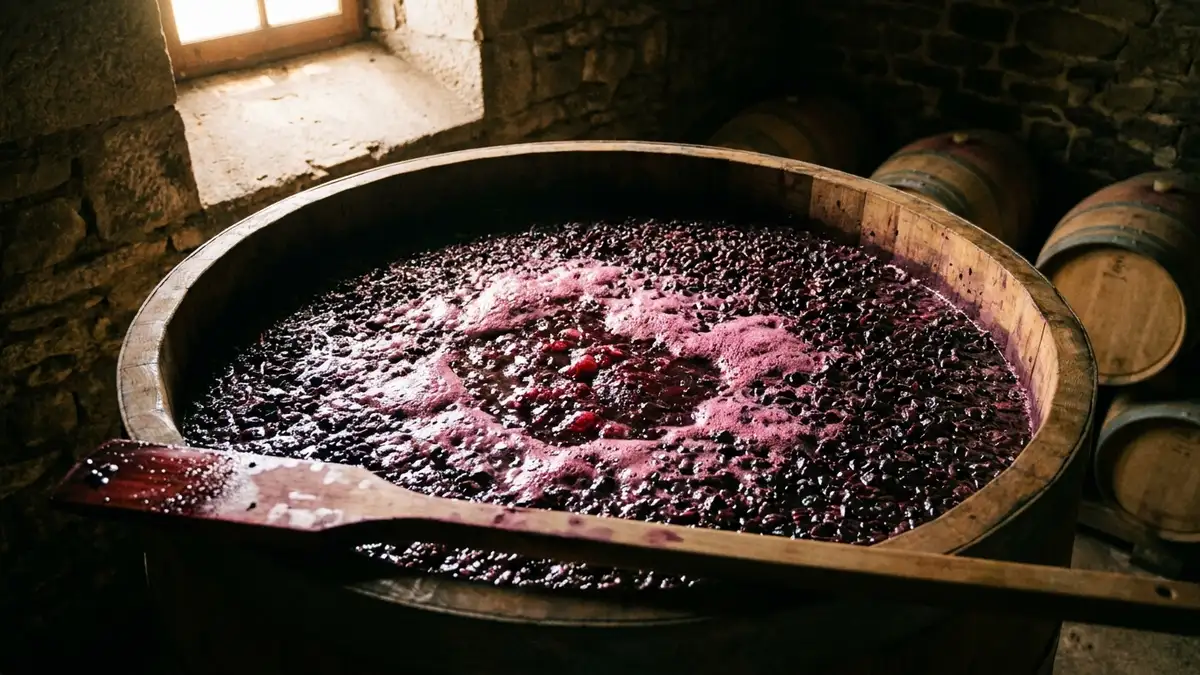
The carbon dioxide pushes the skins to the top of the tank, where they form a thick floating layer called the cap. Left alone, the cap dries out and stops giving colour to the juice below. So the winemaker mixes it back in, several times a day.
Punching down pushes the cap under the juice with a paddle or plunger. Pumping over draws juice from the bottom of the tank and sprays it over the cap.
Temperature
Fermentation makes its own heat, which can push the tank out of the range the winemaker wants, so tanks are often cooled. Cooler ferments of about 25 to 28 °C tend to give fruitier reds for early drinking. Warmer ones of 28 to 35 °C pull more tannin from the skins for wines built to age. Sources quote slightly different ranges, so read these as a direction rather than fixed rules.
How Long Do the Skins Stay In?
From a few days to several weeks. The longer the skins stay, the more colour and tannin the wine takes in. Soaking the skins in the juice or wine is called maceration, and the winemaker can stretch it at either end of fermentation.
Before fermentation, some winemakers hold the crushed grapes cold for one to four days. This cold soak draws out colour and fruit flavour while there is no alcohol yet. After fermentation, an extended maceration keeps the dry wine on its skins for extra days or weeks. Higher temperatures speed up the extraction at every stage.
At the other extreme sits carbonic maceration: whole, uncrushed grapes ferment inside the berry in a tank full of carbon dioxide before they are crushed. The wine comes out very fruity with very low tannin, the style behind young Beaujolais. The method is covered in carbonic maceration explained.
When Is Red Wine Pressed?
After fermentation, when the new wine is drained off and the soaked skins are squeezed. The wine that drains under its own weight is called free-run wine. The rest is squeezed out of the skins in a press and is called press wine. What remains, the pressed cake of skins and seeds, is the pomace.
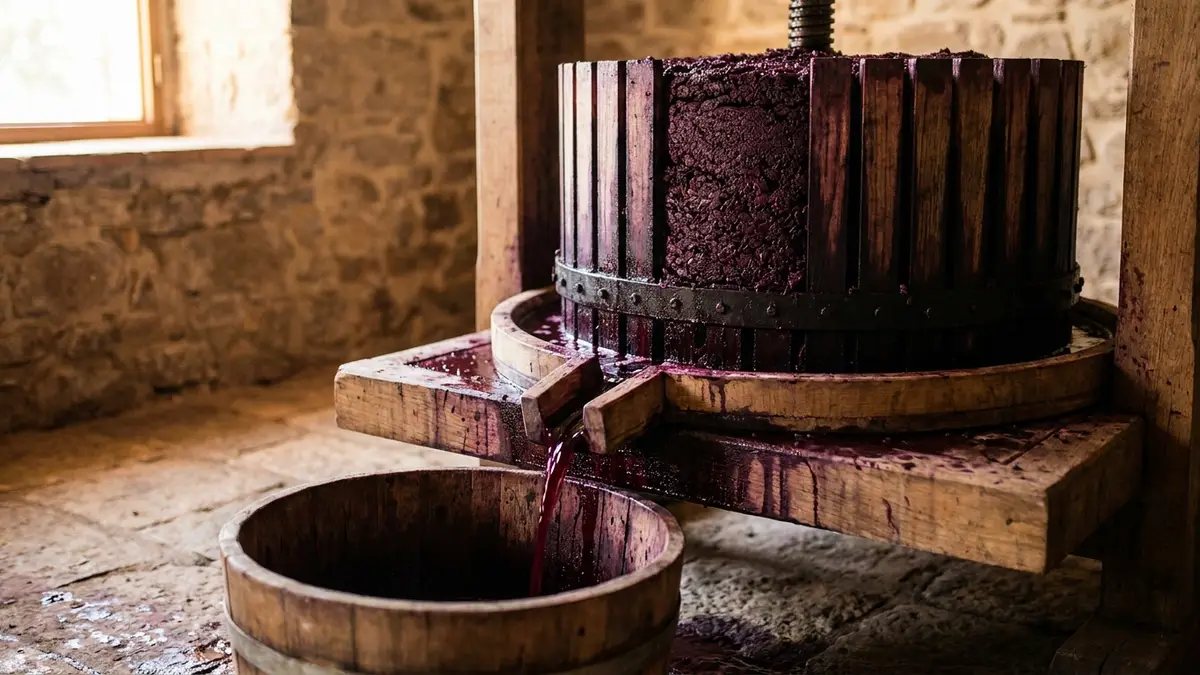
Press wine is tougher. It has more tannin and other skin compounds, lower acidity and a higher pH than free-run wine. The winemaker tastes both and decides how much press wine to blend back in. A little adds backbone; too much makes the wine coarse and bitter.
What Is Malolactic Fermentation?
Malolactic fermentation is a second fermentation in which bacteria turn tart malic acid, the acid of green apples, into softer lactic acid. The main bacterium is Oenococcus oeni. The change lowers acidity by about 1 to 3 grams per litre, so the wine feels rounder and less sharp.
Nearly every red goes through it, usually just after the main fermentation. It also makes the wine more stable, because the malic acid it removes would otherwise feed bacteria later in the bottle. The step is covered in more detail in what is malolactic fermentation.
Why Is Red Wine Aged in Oak?
Oak adds vanilla, toast and spice and lets a little air reach the wine through the wood, which softens its edges. The classic barrel is the barrique, which holds 225 litres. Most of the oak flavour goes into the wine in the first few months.
A barrel is largely spent after three to five vintages, so new barrels mark a wine far more than old ones.
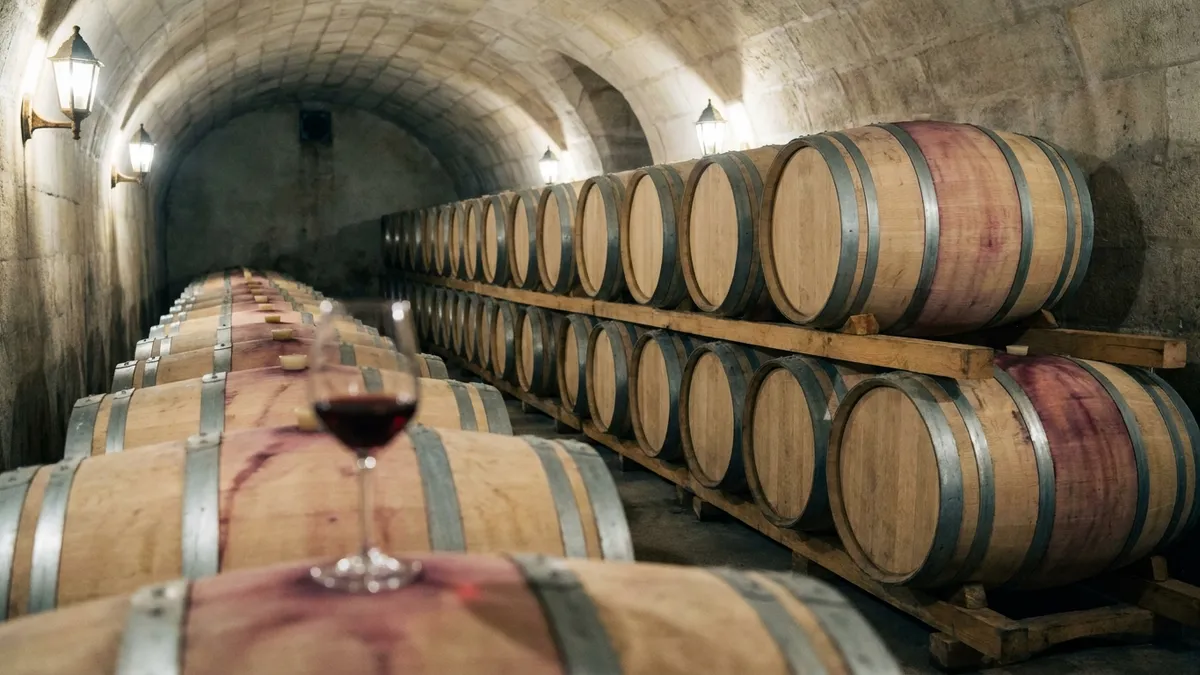
The origin of the oak changes the flavour. American oak gives sweet vanilla aromas; French oak gives finer, silkier tannin and a more subtle flavour. The trade-offs are set out in French oak vs American oak.
Oak adds some tannin of its own, but most of a red's tannin comes from the skins and seeds, not the barrel. Its vanilla smell can read as sweetness, yet oak adds no sugar. If you dislike vanilla and toast, choose a red aged in steel or concrete, compared in stainless steel vs oak.
How Is Red Wine Fined and Bottled?
The wine is cleared by settling, fining or filtering, protected with sulfur dioxide, then bottled. Time does much of the work: solids sink to the bottom of the tank or barrel, and the clear wine is moved off them into a clean vessel. A final filtration before bottling is common but optional.
Fining means adding an agent that binds to tiny floating particles so they drop out. Traditional agents include egg whites, casein from milk, gelatin and isinglass from fish; bentonite, a clay, does the same job without animal products. Only trace amounts remain in the wine. Fining agents are not listed on most labels, so if you need a vegan red, look for a vegan mark. The rules are in vegan wine explained.
Sulfur dioxide protects the wine from oxygen and from spoilage bacteria. Yeast makes a small amount during fermentation, and most winemakers add more. Wines at or above about 10 milligrams per litre must say "contains sulfites" on the label in the US and the EU. The details are in sulfites in wine.
The colour and texture differences between the two main styles are compared in red vs white wine, and other production-led styles sit together in the wine styles hub. The Sommy app has a Wine 101 course and an AI-guided tasting mode that logs each glass to your journal. Tonight, tilt a glass of red over a white sheet of paper, check how deep the colour runs to the rim, then sip and rate its grip on your gums.
Sources
Frequently Asked Questions
How is red wine made step by step?
Dark grapes are picked, destemmed and crushed. The juice ferments with its skins for about 5 to 14 days while yeast turns sugar into alcohol, and the skins release colour and tannin. The new wine is drained and the skins pressed. Bacteria then soften the acidity in malolactic fermentation. The wine ages in tank or barrel, is clarified, protected with sulfur dioxide and bottled.
What is the difference between how red and white wine are made?
The order. Red grapes are crushed and fermented with their skins, then pressed, so the wine takes in colour and tannin. White grapes are usually pressed first and only the juice is fermented, so the wine stays pale and has little tannin. That single change in order explains most of the difference in colour and texture between the two.
Why is red wine red if grape juice is clear?
The juice of most dark grapes is greenish-white. The red and purple pigments, called anthocyanins, sit in the skins. During fermentation the juice soaks with the skins, and the rising alcohol and heat help pull the pigment out. The longer the skins stay in contact, the deeper the colour. That is also why white wine can be made from red grapes.
How long does it take to make red wine?
The fermentation itself usually takes 5 to 14 days. Skin contact may run a few days longer, and malolactic fermentation adds weeks. After that comes ageing, which ranges from a few months in tank for fresh, fruity reds to several years in barrel and bottle for wines built to age. A red can be on the shelf within months or kept by the winery for years.
Is all red wine vegan?
No. Many reds are fined, a clarifying step in which an agent is added to bind and remove tiny particles. Common fining agents include egg whites, casein from milk, gelatin and isinglass from fish, though only trace amounts remain. Bentonite, a clay, is a mineral alternative. Since fining agents are not listed on most labels, look for a vegan mark if it matters to you.
What does malolactic fermentation do to red wine?
Malolactic fermentation is a second fermentation in which bacteria, mainly Oenococcus oeni, turn tart malic acid into softer lactic acid. It lowers the wine's acidity by about 1 to 3 grams per litre, so the wine feels rounder and less sharp. Nearly all red wines go through it, usually after the main alcoholic fermentation.
Sommy Team
LinkedInFounder & Wine Educator
The Sommy Team is building the world's most approachable wine education app, helping beginners develop real tasting skills through structured courses and AI-guided practice.