French Oak vs American Oak Wine: The Barrel Flavor Breakdown

By the Sommy Team — AI-assisted, human-edited.
Updated Sep 25, 2026
Contents (11)
- French Oak vs American Oak Wine, in One Paragraph
- What Does Each Oak Taste Like in the Glass?
- Which Wines Use French Oak, and Which Use American?
- Which Oak Suits Your Dinner?
- Can You Taste the Difference Blind?
- Why Does American Oak Taste Sweeter?
- Why Is French Oak More Expensive?
- What Does Toasting Do to a Barrel?
- Does a New Barrel Matter More Than the Forest?
- Why Did Rioja Switch to American Oak?
- Try the Two-Glass Test Tonight
TL;DR
American oak has two to four times the lactones of French oak, so it smells of coconut and vanilla. French oak gives finer tannin and quieter spice. French oak must be split, using only 20 to 25% of a tree, while American oak can be sawn, making it at least twice as economical.
The French oak vs American oak wine question comes down to one fact you can repeat at dinner: American oak tastes sweeter and costs less for the same reason, because it is a different tree. It can be sawn instead of split, and it carries two to four times as much of the coconut-smelling compound that French oak holds back. Oak here means barrels that add vanilla, toast or spice to the wine inside.
French Oak vs American Oak Wine, in One Paragraph
French barrels come from two European species, Quercus robur and Quercus petraea, with a tight grain that gives fine, silky tannin (the drying grip on your gums) and gentle spice. American barrels come from Quercus alba, a faster-growing, wider-grained tree with lower wood tannin and two to four times as many lactones, so it smells of coconut and vanilla. French oak must be split along the grain, so only 20 to 25% of a tree becomes barrel wood. American oak can be sawn, which makes it at least twice as economical. Both are toasted, which boosts vanillin. Traditional Rioja is the classic American-oak red; Bordeaux and Burgundy are French-oak country.
What Does Each Oak Taste Like in the Glass?
American oak smells of coconut, vanilla and sometimes fresh-cut dill, and it makes a dry red feel rounder. French oak gives cedar, clove and toast at a lower volume, with a firmer but finer tannin. The difference is loudest in wine from new barrels and in fuller reds.
| Trait | French oak | American oak | What you notice in the glass |
|---|---|---|---|
| Tree species | Quercus robur, Quercus petraea | Quercus alba | Nothing on the label, but it sets every row below |
| Grain | Tight, slow-grown | Wider, fast-grown | Tight grain releases flavour gradually; wide grain gives it up faster |
| Wood tannin | Higher, silky and fine | Lower | French oak adds a fine, firm grip on the gums |
| Lactones (coconut) | Lower | Two to four times more | Coconut and fresh wood point to American oak |
| How staves are cut | Split along the grain | Sawn | Explains most of the price gap |
| Typical time in barrel | Longer maturations | About 6 to 10 months | American oak flavour arrives fast |
| Classic regions | Bordeaux, Burgundy | Traditional Rioja | Use the region as your first clue |
The grain row explains the texture. A slow-grown French tree packs its growth rings tightly, so its flavours seep into the wine gradually over a long rest. American oak releases its aromas faster and loses its harsh edge sooner, which is why winemakers use it for shorter maturations of about six to ten months.
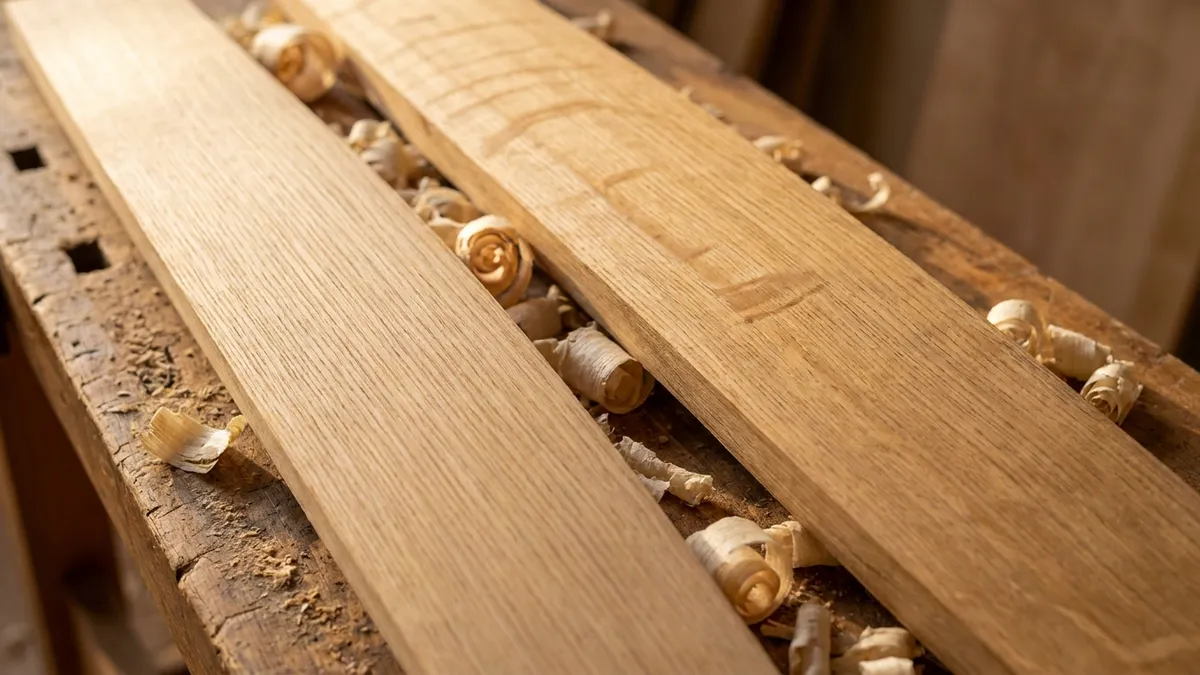
For the full list of oak aromas and how to find them, our guide to detecting oak flavours when tasting goes aroma by aroma. If the basics of barrel aging are new, start with what oaked wine means.
Which Wines Use French Oak, and Which Use American?
Bordeaux and Burgundy are French-oak country, and traditional Rioja is the classic American-oak red. Many modern Rioja producers now age wine in both and blend the two. American oak also turns up in plenty of reds from California and Australia, especially Zinfandel, Shiraz and Cabernet Sauvignon.
On the shelf, the fastest clue is a label word. If a traditional Rioja says Crianza, Reserva or Gran Reserva, expect American oak's vanilla and coconut; if the bottle is a red Bordeaux or a Burgundy, expect French oak's cedar and fine tannin. Rioja's age words also tell you how long the wine sat in wood:
- Crianza: at least two years of aging from 1 October of the harvest year, with at least one year in oak barrel.
- Reserva: at least 36 months of aging, with at least 12 months in oak.
- Gran Reserva: at least 24 months in barrel, then at least 36 months in bottle.
The longer the barrel time, the more the vanilla blends into dried cherry and leather. Our Rioja wine guide covers the traditional and modern styles, and the Tempranillo guide explains why this grape takes American oak so well.
For whites, French oak dominates. If a Chardonnay tastes of toast and hazelnut with a creamy feel, expect French oak plus malolactic fermentation. That second fermentation softens sharp acid into a buttery feel. The Chardonnay guide and our explainer on malolactic fermentation cover both.
Which Oak Suits Your Dinner?
If the plate has char, smoke or a sweet glaze, choose a red aged in American oak. If the plate is lean or delicate, choose French oak. The coconut and vanilla in American oak echo the caramelised crust on grilled food, while French oak's finer tannin leaves room for subtle flavours.
- Grilled lamb chops or smoky ribs: a traditional Rioja Crianza, because the browned crust meets the toast and vanilla halfway.
- Roast chicken with herbs: a French-oaked Burgundy red, because the lean meat needs low tannin and gentle spice.
- Steak with a fatty edge: a French-oaked Bordeaux, because fat softens its firmer, finer tannin.
- Barbecued pork with a sweet sauce: an American-oaked Zinfandel, because sugar in food makes dry wine taste thin unless the wine has ripe fruit and sweet spice of its own.
Avoid new American oak with raw fish or light salads. The coconut and vanilla drown delicate food.
Can You Taste the Difference Blind?
Yes, in reds from new barrels, and coconut is the giveaway. If the first sniff brings coconut, vanilla or fresh dill, bet on American oak. If you find cedar, clove and toast with a firm, fine grip and no coconut, bet on French. With old barrels the call gets much harder.
Structure comes first. French oak adds more wood tannin, so after you swallow, press your tongue to your gums: a fine, dry, slightly chalky grip that lingers suggests French oak. American oak leaves a rounder feel with less grip. Then smell. Coconut is the one aroma French oak rarely delivers at full volume.
Grape and age can blur the result. A ripe, warm-climate Shiraz already smells of jammy blackberry, and bottle age turns vanilla into leather and tobacco. Our guide to primary, secondary and tertiary aromas shows how to tell oak aromas from aging aromas, and what are tannins explains the grip.
Why Does American Oak Taste Sweeter?
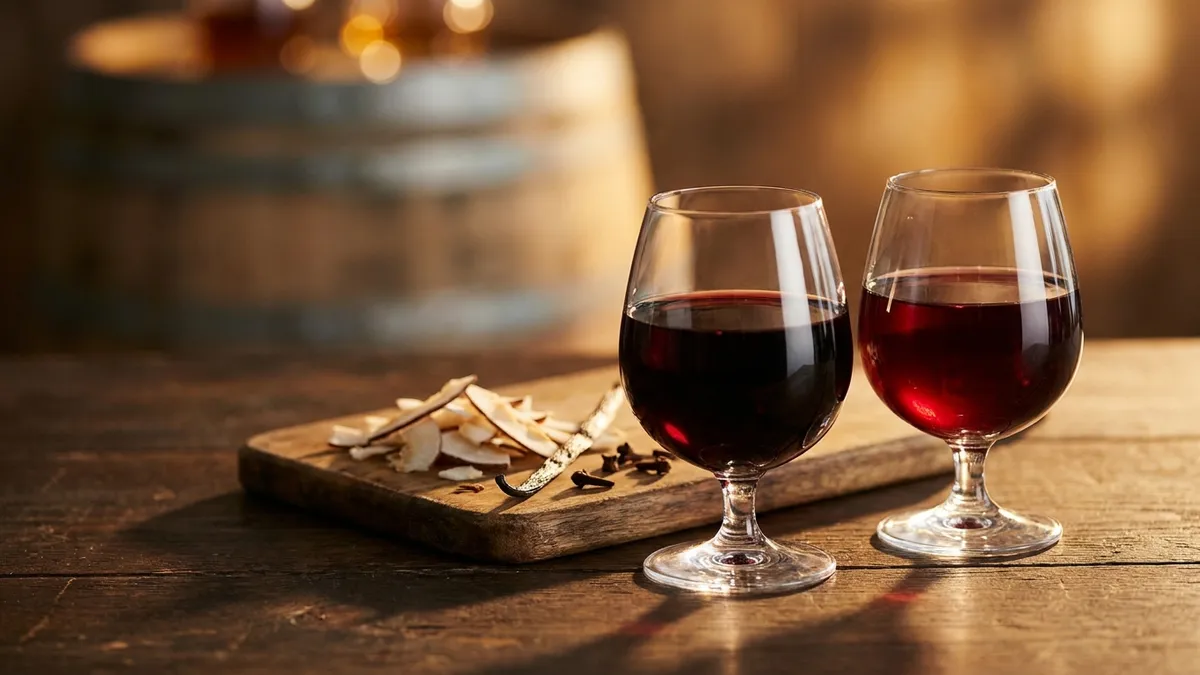
American oak carries two to four times as many lactones as French oak. Lactones are aroma compounds in oak wood, and the main one, whisky lactone, smells of coconut, celery or fresh wood. Coconut and vanilla read as dessert to your brain, so a dry wine seems sweeter without any added sugar.
The same compound is the backbone of whiskey aroma. Its dominant form in oak-aged drinks is called whisky lactone or quercus lactone, after the Latin name for oak. A wine that meets new American oak picks up enough of it to smell faintly of toasted coconut.
French oak gives wine a different impression of sweetness. Its silky tannins carry a sensation of light sweetness alongside the fruit, softer and harder to pin to one aroma.
That is why American oak is a style choice, not a cheap shortcut. Rioja producers chose it for its generous, sweet-spice character, and some top Rioja producers have aged wine for up to ten years in American oak to build an earthy, cedar and herbal profile.
Why Is French Oak More Expensive?
French oak has to be split along the grain, so only 20 to 25% of each tree becomes barrel wood. American oak can be sawn, which makes it at least twice as economical. In late 2007 an American barrel cost about US$600 to 800 and a French one US$1,200 and up.
The reason sawing works lies inside the wood. American white oak is full of tyloses, tiny growths that plug the wood's pores and give it a closed, water- and rot-resistant cell structure. Cut straight across the grain, it still holds liquid. French oak must be split along its natural grain lines so that each stave (one curved plank of the barrel) stays watertight, and that splitting wastes most of the trunk.
After the cut, most coopers season both kinds of wood in the open air for 24 to 36 months before shaping them. Both cost more today, so treat the 2007 prices as the historical gap. The standard Bordeaux-style barrique holds 225 litres, so a French barrel spreads its higher price over roughly 300 bottles of wine.
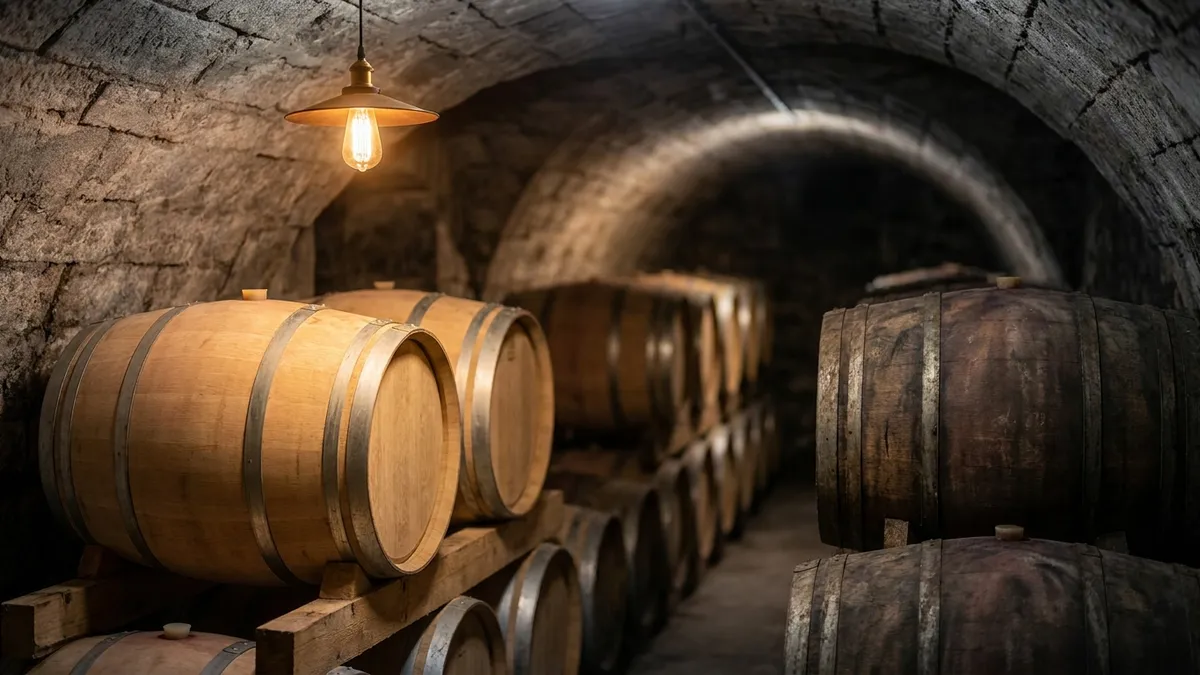
That price gap shows up on the wine shelf. If two similar reds differ sharply in price and the dearer one mentions new French oak on the back label, much of the gap is the barrel.
What Does Toasting Do to a Barrel?
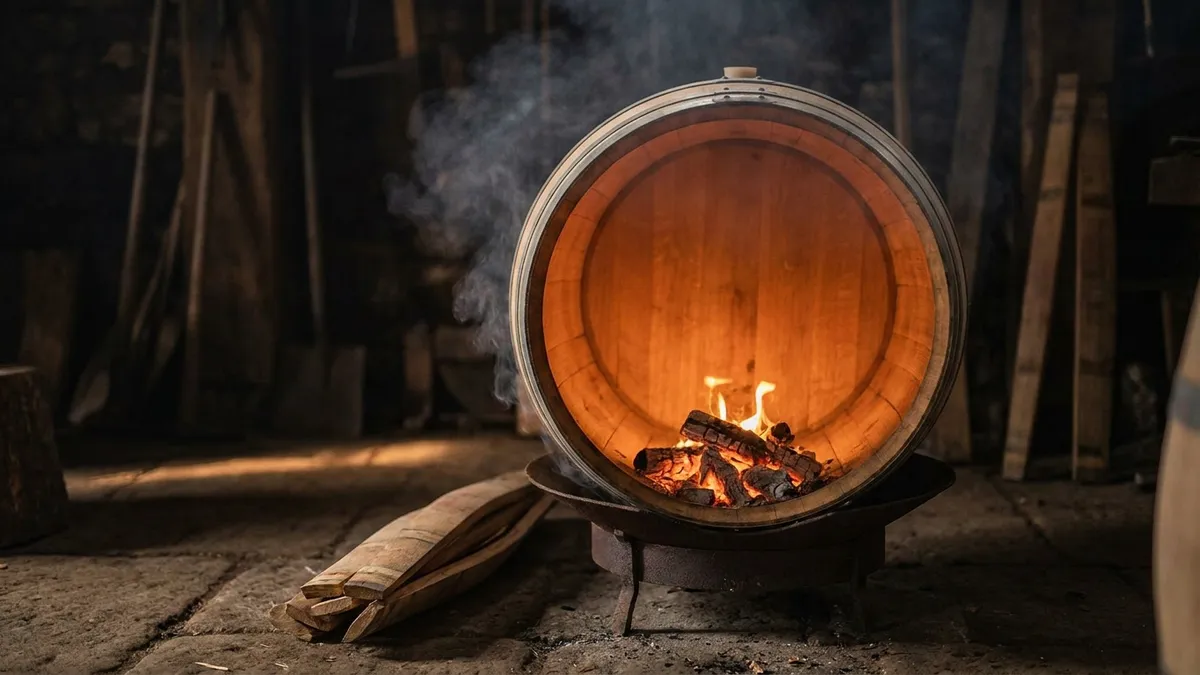
Toasting cooks the sugars in the inner wall of the barrel and boosts vanillin, the main flavour compound in vanilla. A wine barrel is toasted for around 35 minutes over a low fire. Both French and American barrels are toasted, so vanilla alone does not tell you which oak you are tasting.
Lighter toast leaves more raw wood, so it passes more oak flavour and wood tannin into the wine. Heavier toast trades some of that for roasted notes such as coffee, smoke and caramel. The winemaker picks the toast level when ordering the barrel.
Whiskey barrels show what happens at the extreme. Instead of a slow toast, they are charred for about 45 seconds over a high flame, reaching about 704°C (1,300°F) to burn the surface black. American bourbon law requires new charred oak barrels, which in practice are almost always American white oak. Wine barrels never go that far.
Does a New Barrel Matter More Than the Forest?
Usually, yes. A new barrel gives the most flavour, and after three to five vintages it may give little or no oak flavour at all. So old French oak can taste less oaky than new American oak, and barrel age often outweighs the tree species.
Once the flavour is spent, the wood is called neutral oak, and it adds only slow air contact and texture.
Many wines never see a barrel. Oak chips placed in fabric sacks in the tank, or oak staves suspended in the wine, can give intense oak flavour in a matter of weeks. A barrel needs a year or more to reach the same intensity. So "oaky" flavour does not prove barrel aging; it may be chips.
This matters for what you buy and how long you keep it. Wines made with chips or staves usually do not age as well as wines matured in barrels. The oak aging explainer covers these barrel alternatives in more detail.
Why Did Rioja Switch to American Oak?
Cost. Rioja once aged its wines in French oak. As French barrels grew more expensive, many bodegas began buying American oak planks and building barrels at Spanish cooperages. That switch helped give traditional Rioja the vanilla and coconut aroma it is known for today.
The story has turned again. More bodegas now use French oak, and many age wine in both kinds of barrel and blend them. So a modern Rioja can show American coconut and French cedar in the same glass. For the full map of Spain's wine regions, see the Spanish wine regions guide.
Try the Two-Glass Test Tonight
Buy a traditional Rioja Crianza and a red Bordeaux at a similar price, and pour them side by side. Smell each for coconut first, then cedar and clove, then press your tongue to your gums to feel the grip. If one glass smells of coconut and grips less, that is the Rioja's American oak. The Sommy app at sommy.wine walks through look, smell and taste for each glass and saves both notes in a tasting journal. For more on this family of winemaking choices, browse the wine styles hub.
Sources
Frequently Asked Questions
What is the difference between French oak and American oak in wine?
They come from different trees. French barrels use Quercus robur or Quercus petraea, which grow slowly with a tight grain and give fine tannin and gentle spice. American barrels use Quercus alba, a wider-grained, faster-growing tree with two to four times as many lactones, so it smells more of coconut and vanilla and tastes a little sweeter.
Which is more expensive, French oak or American oak barrels?
French oak. It has to be split along the grain to stay watertight, so only 20 to 25% of a tree ends up as staves. American oak can be sawn, which makes it at least twice as economical. In late 2007 an American barrel cost about US$600 to 800 and a French one US$1,200 and up; both cost more today.
Does American oak make wine taste sweeter?
It makes wine smell and feel sweeter without adding sugar. American oak carries two to four times the lactones of French oak, and lactones smell of coconut and fresh wood. Toasting adds vanillin, the main flavour in vanilla. Your brain links coconut and vanilla with dessert, so a dry red aged in new American oak can seem softer and rounder.
What wines are aged in American oak?
Traditional Rioja is the classic American-oak red, and the style is common in Spanish Tempranillo more broadly. American oak also shows up in many reds from California and Australia, often in Zinfandel, Shiraz and Cabernet. Because it gives up flavour quickly, it suits shorter maturations of about six to ten months. Many Rioja producers now blend wine from both oaks.
Can you taste the difference between French and American oak?
Often, yes, when the barrels were new. Sniff for coconut or fresh-cut dill first: that points to American oak. If instead you find cedar, clove and a firm, fine tannin with no coconut, French oak is more likely. The gap shrinks with used barrels, because after three to five vintages a barrel may give little or no oak flavour.
Is oaky flavour in cheap wine from real barrels?
Often not. Oak chips in fabric sacks or oak staves dropped into a tank can give intense oak flavour in a matter of weeks, while a barrel needs a year or more for similar intensity. It is a legal and common technique, but wines made this way usually do not age as well as barrel-aged wine, so drink them young.
Sommy Team
LinkedInFounder & Wine Educator
The Sommy Team is building the world's most approachable wine education app, helping beginners develop real tasting skills through structured courses and AI-guided practice.