Wine Tasting Games: 12 Party Games With Rules and Scoring
By the Sommy Team — AI-assisted, human-edited.
Updated Oct 21, 2026
Contents (6)
TL;DR
The easiest wine tasting games for a party are Wine Bingo, Guess the Price and Wine Brackets, which need no wine knowledge. Match games pair smells or places with cards, and guess-the-vintage games score early guesses higher. Pour 30 ml per glass, hide labels in bags, and reveal only after every guess is written down.
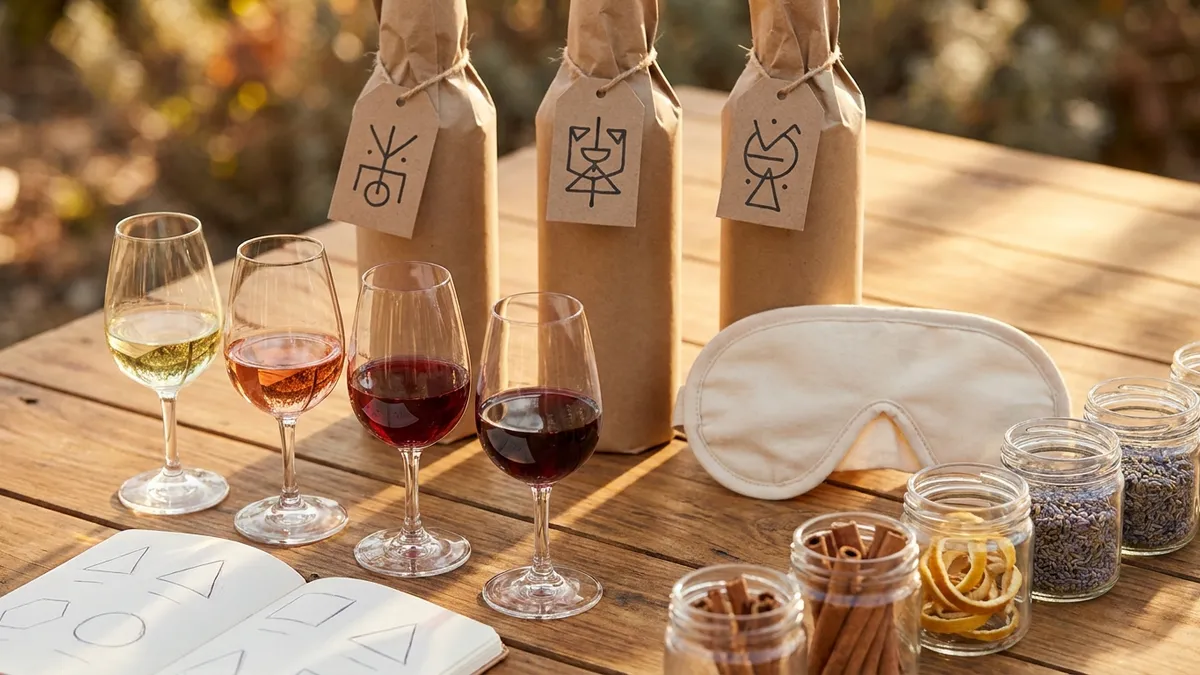
Wine tasting games turn a few hidden bottles into a contest with a score. The twelve below need two to eight wines, paper bags or foil, identical glasses and a pen, and most run in 15 to 40 minutes. Party games need no wine knowledge, while match games and vintage guessing train what you smell and taste.
Which wine tasting game should you play?
Pick by the room. If guests know little about wine, play Wine Bingo, Guess the Price or Wine Brackets. If the table wants to learn, play a match game or the Sweetness Sort. A couple with two bottles fits the Finish Race, and a collector with older bottles fits Guess the Vintage.
| Game | Wines | Players | Prep | Best for |
|---|---|---|---|---|
| Aroma Match | None (jars) | 2 to 8 | 30 min | Learning to name smells |
| Region Match | 3 or 4 | 3 to 8 | 10 min | Tasting how place changes a grape |
| Wine Bingo | 5 or 6 | 4 to 12 | 15 min | Guests new to wine |
| Guess the Price | 1 per guest | 4 to 8 | 10 min | Mixed groups |
| Wine Trivia | 0 to 4 | 6+ in teams | 20 min | A quick quiz between pours |
| Blindfold Color Guess | 3 to 5 | 2 to 6 | 5 min | Laughs, and testing how much sight helps |
| Wine Brackets | 8 | 8+ | 15 min | Big parties that like to vote |
| Guess the Vintage | 3 to 5 | 2 to 8 | 5 min per wine | Collectors with older bottles |
| Wine Options | 3 to 5 | 4 to 12 | 5 min | A standing elimination round |
| Sweetness Sort | 4 | 2 to 8 | 10 min | A first game for beginners |
| Finish Race | 2 | 2 | 5 min | Couples |
| Five Tastes Warm-Up | None | Any | 10 min | Before any other game |
Wine match games
In a wine match game, players pair what is in front of them with a card: a smell with its name, or a glass with its place. Both games score one point per correct card.
Aroma Match
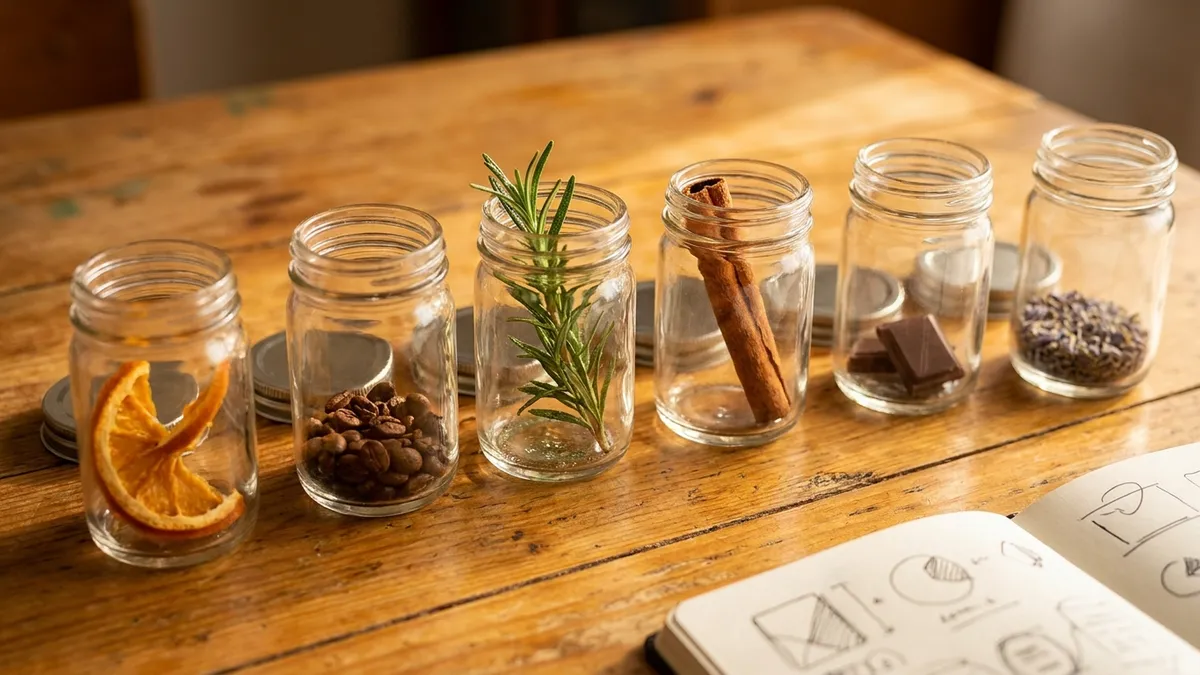
Players sniff small jars of everyday foods that share smells with wine, then lay the matching name card beside each jar.
You need: 10 small lidded jars and 10 name cards. Fill each jar with one ingredient: lemon zest, raspberry jam, vanilla extract on cotton, a clove, a coffee bean, fresh thyme, butter, green pepper, orange peel and a black peppercorn.
Play: Set a five-minute timer. Players sniff and sort the cards, and the host reveals at the end.
Score: One point per correct card. Ties go to the faster player.
Trains: Naming smells. After one round, the vanilla from oak barrels and the black pepper in Syrah are easier to spot in a real glass. The three layers of wine aroma explain where each smell comes from, and an olfactory reference kit is the bought version of these jars.
Region Match
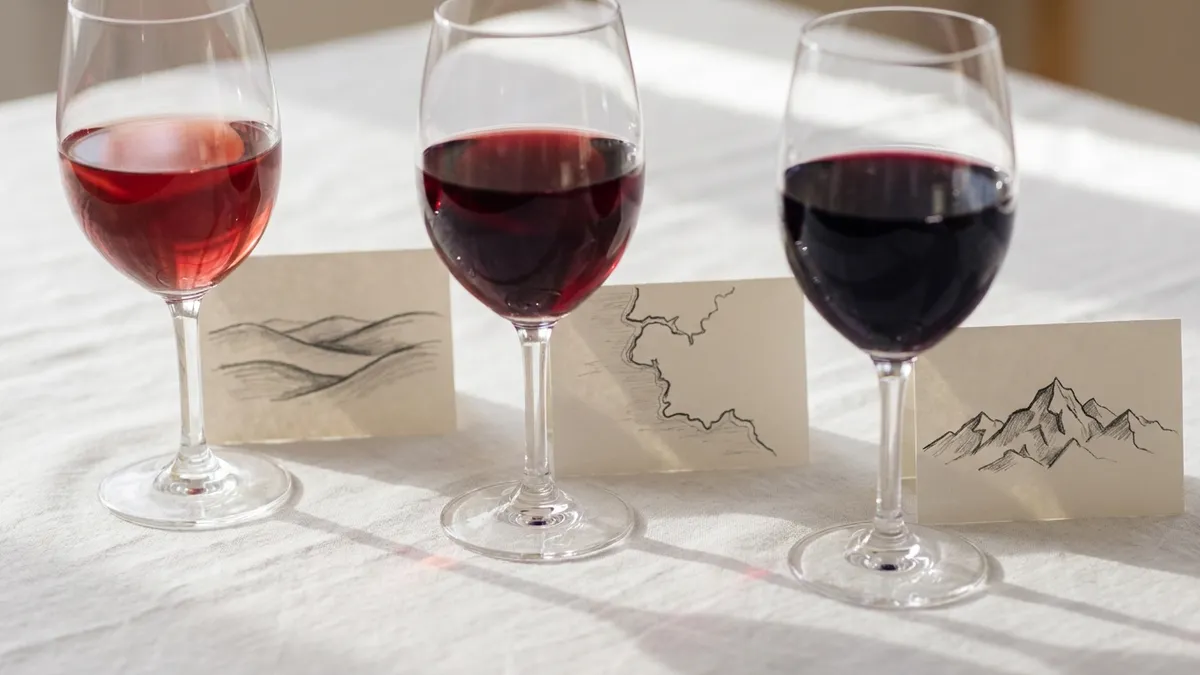
Three wines from one grape and three different places, poured blind. Players match each glass to a place card.
You need: Three bottles of one grape, such as Pinot Noir from Burgundy, Oregon and California, plus paper bags and one card per place.
Play: Pour all three at once. Players taste along the row and put a card under each glass.
Score: One point per correct match.
Trains: Tasting what climate does to a grape. A warm climate often gives riper, darker fruit and more alcohol, and a cool one tarter, lighter wine. If a round proves too hard, reveal each wine's alcohol percentage as a clue. This is a horizontal tasting with a score, and more flights to build it around sit in our wine tasting themes.
Variant, Old World or New World: pour four wines of one grape, two from Europe and two from elsewhere, and players write "Old" or "New" for each. European versions are often tarter and less ripe, though many producers now blur the line. The clues to listen for are set out in Old World vs New World tasting style.
Quick check
One question on what you just read
In Region Match, three Pinot Noirs come from three places. Which clue points to the warmest one?
Tap an answer to see how you did.
Wine party games anyone can play
These five games need no wine knowledge, because the fun is in the guess and the vote. Four follow published rules: bingo, trivia and guess the price from the retailer J.J. Buckley Fine Wines, and brackets from Wine Folly.
Wine Bingo
Classic bingo, played with glasses: each square on the card names a wine.
You need: A 3x3 card per player listing nine grapes or styles, five or six of which you pour blind, plus coins as markers.
Play: Call out a glass number. Everyone tastes it and puts a coin on one square.
Score: J.J. Buckley's classic rule is that the first player to complete a row wins. With only five or six wines, check the coins at the reveal and play to the most correct squares instead.
Guess the Price
Guests bring a bottle each at any price and tell only the host what it cost.
You need: One bottle per guest, a jug or decanter per wine, and a sheet with a line per wine. J.J. Buckley's tip is to decant each wine so labels and bottle shapes give nothing away.
Play: Taste the flight and write a price beside each number.
Score: Our house rule is to add up how far off each player's guesses are. The smallest total wins.
Wine Trivia
A quick wine quiz between pours. J.J. Buckley puts players in teams of at least three and gives the prize to the team with the most correct answers.
You need: 10 to 20 wine trivia questions, paper or buzzers, and teams of three or more.
Play: Ask one round after each wine, about the grape or place in the glass, so players can taste their way to the answer.
Score: One point per correct answer.
Blindfold Color Guess
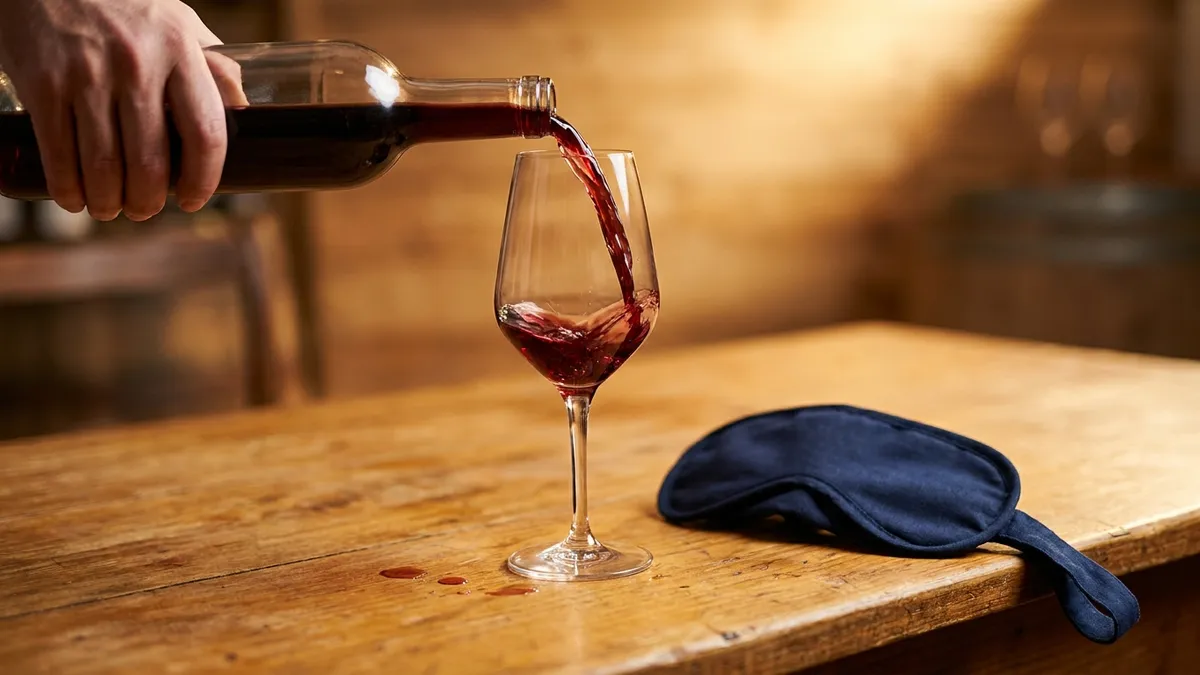
A blindfolded player tastes a wine and names its color: pale white, deep white, rosé, light red or full red.
You need: A blindfold, three to five wines across the colors and identical glasses.
Play: Hand over a 30 ml pour. The player smells, sips and calls a color, then the blindfold comes off. Rotate tasters each wine.
Score: One point per correct color.
Trains: Reading body and tannin (the drying grip on your gums) without sight. A light red against a full-bodied white is harder to call than it sounds, which makes the reveal the best part. What wine color tells you covers the same skill with the blindfold off.
Wine Brackets
Wine Folly's brackets format puts eight wines on one theme head to head, two at a time, and the room votes each winner through.
You need: Eight bottles on one theme, foil or paper bags, the numbers 1 to 8 and a bracket drawn on paper.
Play: Pour wine 1 against wine 2 and vote, and the winner moves on. Repeat for 3 against 4, 5 against 6 and 7 against 8, then run the semifinals. The final two face off in one last blind tasting.
Score: Votes decide every round. If the group is over eight people, pour 15 ml per round so the bottles last to the final.
Guess the vintage games
To guess the vintage (the harvest year), taste for age. Red wine moves from purple toward brick and white from lemon toward gold, while fresh fruit gives way to leather, dried fig and mushroom. The two games below turn those signals into points or an elimination round.
Guess the Vintage (3-2-1 scoring)
Wine Spectator's 3-2-1 game gives each taster three tries at a blind wine, and earlier right answers earn more points.
You need: Three to five wines between 3 and 20 years old, whose vintages only the host knows. Give each player a sheet with lines for Old or New World, country, region, grape and vintage.
Play: Everyone fills in every line. The host marks which answers are right, and players rewrite the wrong ones for round two, then again for round three.
Score: 3 points per correct answer in round one, 2 in round two and 1 in round three. Our house rule for the year is that a guess within two years counts.
Trains: Reading age in color, smell and grip. The signals to look for are laid out in tasting young vs aged wine.
Wine Options
Everyone stands, tastes the same blind wine, and answers this-or-that questions. A wrong answer means sitting down.
You need: A flight of three to five wines and a host who knows each one.
Play: In J.J. Buckley's version the questions start broad, with the country or region, move to the grape, and end on the vintage. Give two or three options each time, such as Old World or New World, then before or after 2015.
Score: The last players standing win that wine. Play the best of three wines for the night.
Palate drills for two to four players
These three drills train one part of a wine at a time: sweetness, length and the basic tastes. Each one isolates a step of how to taste wine, and each takes ten minutes or less to set up.
Sweetness Sort
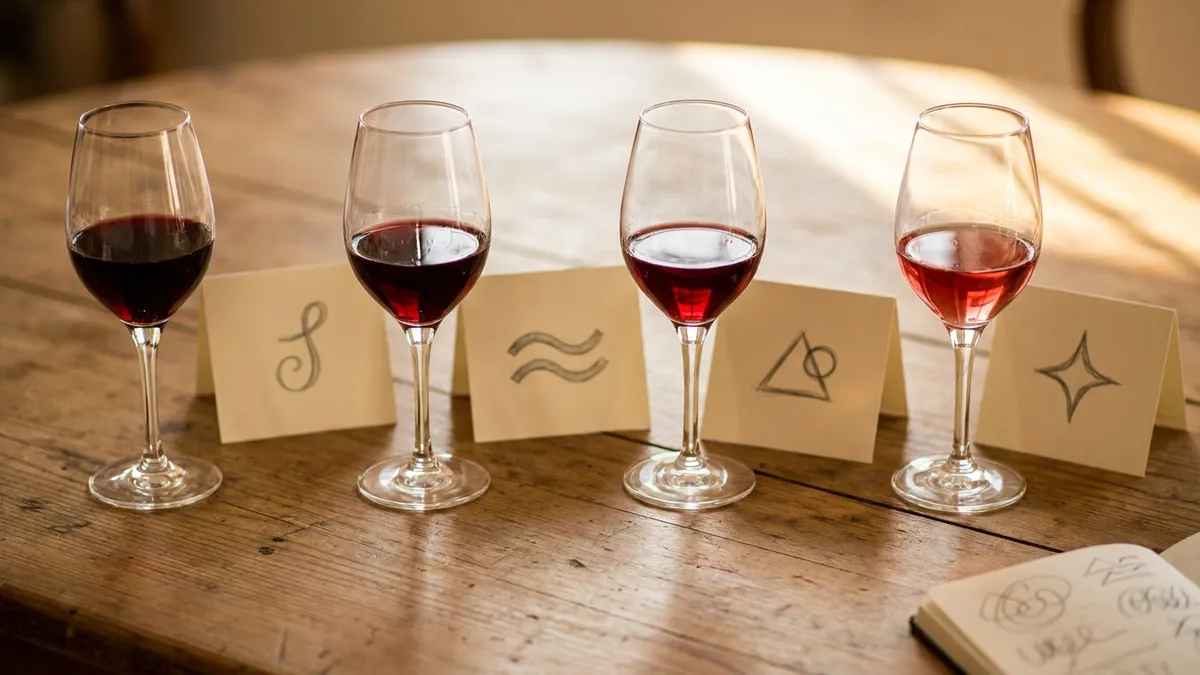
Four wines from dry to sweet, poured in random order. Players rank them from driest (1) to sweetest (4).
You need: A dry Sauvignon Blanc, an off-dry Riesling, a Spätlese Riesling without "trocken" (dry) on the label, and a Sauternes or late-harvest Riesling.
Play: Pour blind, taste along the row and write the order.
Score: One point per wine in its correct place.
Trains: Telling sugar from ripe fruit. Dry means no sugar you can taste, so a fruity red can still be dry. The middle two wines are the hard part. The wine sweetness scale places common styles from dry to sweet, and residual sugar tasting covers what the label numbers mean.
Finish Race
Two wines and a stopwatch decide which flavor lasts longer after the sip.
You need: Two contrasting wines, such as a young Beaujolais and an older Barolo, or an unoaked Chablis and an oaked California Chardonnay, plus a phone stopwatch.
Play: Sip, swallow or spit, and start the watch. Stop it when the flavor fades. Run three pairings.
Score: The wine with the longer average time wins each round.
Trains: Noticing the finish (how long flavor stays after the wine is gone), one of the cues tasters use to judge quality. More on reading it in wine finish meaning and what is wine length.
Five Tastes Warm-Up
Five glasses of water, each with one basic taste, give the table a shared reference before any wine is poured.
You need: Water with a quarter teaspoon of sugar, water with a few drops of lemon juice, water with a pinch of salt, a splash of cold espresso, and a spoon of low-salt broth.
Play: Taste each one slowly and note how strong it is and how long it lasts. Then taste a wine and name which of the five you find.
Trains: The lemon water shows what acidity does in wine: it makes your mouth water. The espresso shows bitterness, which beginners often confuse with the drying grip of tannin. Tannins, acidity and body explains each one.
How do you host a wine tasting game night?
Hide every label, pour about 30 ml per glass, and give each player water, a spit cup and a scorecard. A 750 ml bottle gives about 25 pours of that size. Reveal nothing until every guess is on paper, and sort out rides home before the first pour.
Wine Cellar HQ's method for hiding the bottles is to keep each wine in a bag and pour it into numbered glasses. If a bottle's shape gives it away, decant it. Once a label shows, that round is over.
A two-hour evening fits two games and dinner:
- 0:00 Five Tastes Warm-Up
- 0:20 Sweetness Sort or Region Match as the main game
- 1:00 The reveal, and which clue each player trusted
- 1:20 Dinner, with the wines poured again at full glass size
Glassware, food and room set-up are in our wine tasting party guide, and the slips that spoil a flight are in common wine tasting mistakes. Each skill these games train has its own page in the wine tasting hub.
After the reveal, photograph each label in the Sommy app: its AI-guided tasting walks you through look, smell and taste and saves your notes to a tasting journal. Start tonight: bag four bottles, play the Sweetness Sort and keep score.
Sources
Frequently Asked Questions
What are some fun wine tasting games?
Wine Bingo, Guess the Price and Wine Brackets are the easiest for a party, because nobody needs wine knowledge. For a table that wants to learn, the Aroma Match game and the Sweetness Sort train smell and taste. Guess the Vintage and Wine Options suit groups with older bottles and a host who knows them. Most need two to eight wines, paper bags and identical glasses.
How do you play the wine match game?
In Aroma Match, players sniff ten small jars of foods that share smells with wine, such as lemon zest, vanilla, clove and black pepper, and lay a name card beside each jar. Each correct card scores a point, and ties go to the faster player. In Region Match, players taste one grape from three places and match each glass to a place card.
How do you play guess the vintage with wine?
Pour three to five wines of known age blind. Each player writes a year, plus the country and grape if you want a longer game. In Wine Spectator's 3-2-1 format, correct answers score 3 points in round one, 2 in round two and 1 in round three, and wrong answers are rewritten between rounds. Counting any year within two of the real one keeps it fair for beginners.
What is the Wine Options game?
Wine Options is a standing elimination game. Everyone tastes the same blind wine while the host asks this-or-that questions, starting with the country or region, then the grape, then the vintage. Anyone who answers wrong sits down, and the last players standing win that wine. It works best with four to twelve players and a host who knows every wine in the flight.
What are good wine party games for beginners?
Pick games where the fun comes from guessing. Wine Bingo has players mark the grape they think each glass holds. Guess the Price asks for a price per glass. Wine Brackets has the room vote for favorites two at a time. The Blindfold Color Guess, where a blindfolded player names the wine's color, is the quickest laugh of the night.
How many wines do you need for a wine tasting game?
Two to eight. The Finish Race needs two, Region Match three or four, the Sweetness Sort four and Wine Brackets eight. Pour about 30 ml per glass: a 750 ml bottle then gives around 25 pours, so one bottle per wine covers a party of ten with some left for second tastes. Keep water and spit cups on the table.
Can couples play wine tasting games?
Yes. The Finish Race is built for two: taste two contrasting wines, start a stopwatch after each sip and see which flavor lasts longer. The Sweetness Sort and Aroma Match also work with two players, and the Five Tastes Warm-Up works with one. Save Wine Options for four or more players and Wine Brackets for eight or more.
Sommy Team
LinkedInFounder & Wine Educator
The Sommy Team is building the world's most approachable wine education app, helping beginners develop real tasting skills through structured courses and AI-guided practice.