Wine Bar Etiquette: How to Order, Tip, and Not Look Lost

By the Sommy Team — AI-assisted, human-edited.
Updated Apr 29, 2026
Contents (18)
- TLDR
- Wine Bar Etiquette, in 90 Seconds
- Wine Bars Are Casual — That Is the Whole Point
- The Three Types of Wine Bar (and How Etiquette Shifts)
- Reading the By-the-Glass List Like a Regular
- Ordering Without the Snobbery
- Asking for a Taste — the Quiet Power Move
- The Flight — the Single Best Move for Learning
- The Tasting Ritual at a Wine Bar
- Tipping at a Wine Bar
- The Bottle Shop With a Bar (the New Model)
- Solo at the Wine Bar
- The Natural Wine Bar — Specifics
- What Not to Do at a Wine Bar
- Pairing at a Wine Bar
- A Practical First-Visit Script
- The Sommy Connection
- The Bottom Line
TL;DR
Wine bar etiquette is mostly internal. Staff are trained to help beginners, not test you. Start with the by-the-glass list, ask for a small taste before committing, consider a flight, and stay in the twelve-to-eighteen-dollar sweet spot. Tip eighteen to twenty percent in the United States, ten to fifteen in Europe. The script is short.
TLDR
Wine bar etiquette is mostly internal. Staff are trained to help beginners, not test you. Start with the by-the-glass list, ask for a small taste before committing, consider a flight, and stay in the twelve-to-eighteen-dollar sweet spot. Tip eighteen to twenty percent in the United States, ten to fifteen in Europe. The script is short.
Wine Bar Etiquette, in 90 Seconds
Good wine bar etiquette comes down to one mindset and three moves. The mindset: a wine bar is built for exploration, not examination. Staff are trained to guide curious beginners, and the awkwardness you feel at the door is almost entirely internal. The three moves: open the menu to the by-the-glass list first, ask for a small taste before committing to a full pour, and consider a flight if you want to try several wines for the price of one or two. Stay between twelve and eighteen dollars per glass for best value, tip eighteen to twenty percent in the United States or ten to fifteen in Europe, and drink water alongside the wine. That is the whole etiquette code, in one paragraph.
Wine Bars Are Casual — That Is the Whole Point
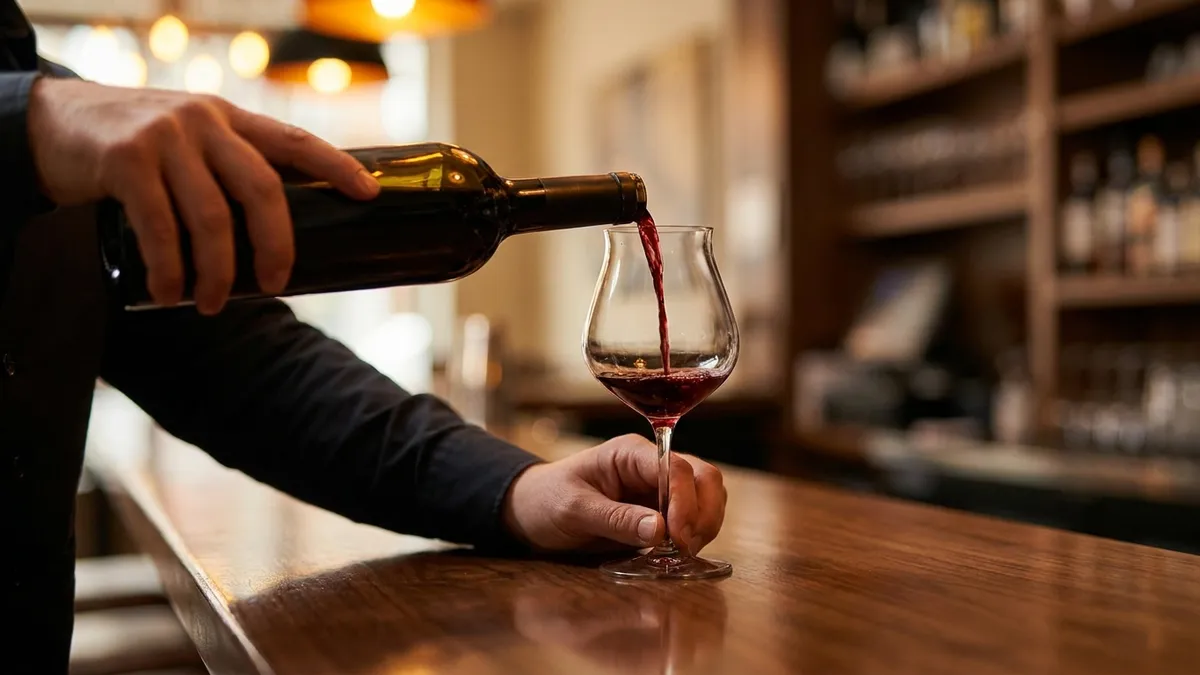
The biggest misread newcomers bring through the door is that a wine bar is a quieter version of a tasting exam. It is not. The format exists because people wanted somewhere lower-stakes than a fine-dining restaurant to drink interesting wine.
Most wine bars hire staff who enjoy explaining their list. Pours are smaller than a restaurant glass, prices are visible on the menu rather than hidden behind a sommelier consultation, and the seating is casual. The form factor is built for beginners. The intimidation is internal — and recognizing that is half the etiquette.
The Three Types of Wine Bar (and How Etiquette Shifts)
Not all wine bars are the same room. Knowing which one you walked into adjusts the etiquette by one or two clicks.
Casual neighborhood wine bar
Small list, friendly staff, glass pours typically eight to fifteen dollars. The vibe is conversational and staff are usually generalists rather than sommeliers. You can sit, order, and ask questions without burning their time.
Sommelier-led or natural wine bar
Rotating list, focus on small producers, glass pours fourteen to twenty-five dollars. Staff often have formal training and the conversation can run deeper. This is the venue where asking "what surprised you on this week's list" gets a five-minute answer.
Fine-dining wine bar
Large list, formal setting, glass pours twenty to fifty dollars. Etiquette tightens slightly — closer to restaurant rules. Reservations may be required, and bottles dominate the by-the-glass options. Our how to order wine at a restaurant guide covers the formal end in detail.
Reading the By-the-Glass List Like a Regular
Most wine bars print a separate by-the-glass list, sometimes on a chalkboard or single-page insert. Read it before the main bottle list — the glass section is where the bar curates its most interesting pours.
Three rules cut decision time in half:
- Skip the cheapest pour. A six-to-eight-dollar glass is typically a generic house wine with the highest percentage mark-up on the list.
- Skip the most expensive pour. A glass above twenty-five dollars is usually paying for label recognition rather than quality.
- Stay in the twelve-to-eighteen-dollar range. That is where most wine bars place their best-value glass pours.
A useful trick: scan for producers you do not recognize. Famous names get marked up to clear minimums; smaller producers often deliver more per dollar.
If a region or grape on the list is unfamiliar, ask. The wine tasting vocabulary cheat sheet covers the descriptors most lists rely on, and our Cabernet Sauvignon vs Merlot and Champagne vs Prosecco vs Cava comparisons translate label terms into flavor profiles.

Ordering Without the Snobbery
The most useful sentence at a wine bar is honest and short. "I am still learning — I usually like X. What would you suggest?" Some variations that work the same way:
- "What is a good intro to natural wine?"
- "I usually drink full-bodied reds — what would surprise me?"
- "I am here for the food. What pairs with the burrata?"
What never works: "What is the best wine you have?" Lazy and signals you have not read the list. Staff respond to specifics — a price, a dish, a preference — not vague invitations. The Sommy app's tasting module quizzes you on the descriptor language servers actually use, so by the third visit you are translating "bright" or "earthy" or "structured" into specific flavor profiles rather than guessing.
Asking for a Taste — the Quiet Power Move
Almost every wine bar will pour a small splash of any glass-pour wine on request, no obligation to order. The taste is usually a quarter-ounce — enough to read the wine without committing.
Phrasing that does not feel awkward: "Could I try a small taste of the Riesling before I order?" Servers expect this question and use it to read your palate. A guest who tastes, decides, and orders confidently is easier to recommend to than a guest who silently picks at random.
If the bar is busy, ask politely and accept it might come a minute or two later. If the staff seems annoyed, that is a flag about the venue, not about you.
The Flight — the Single Best Move for Learning
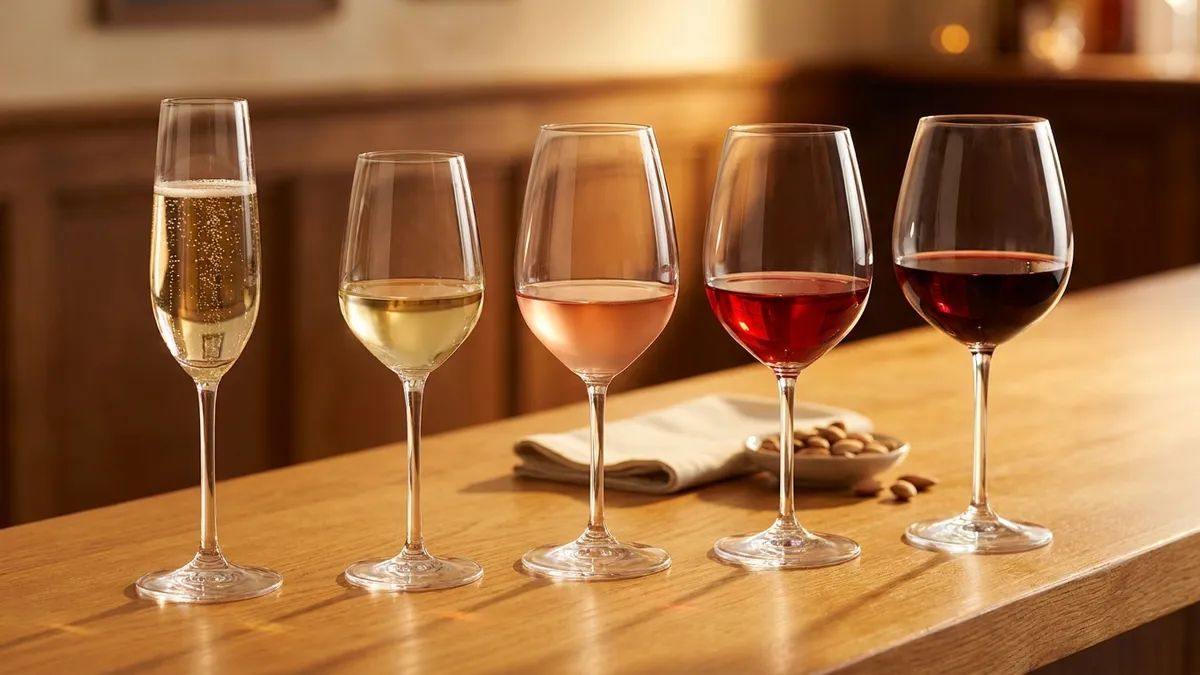
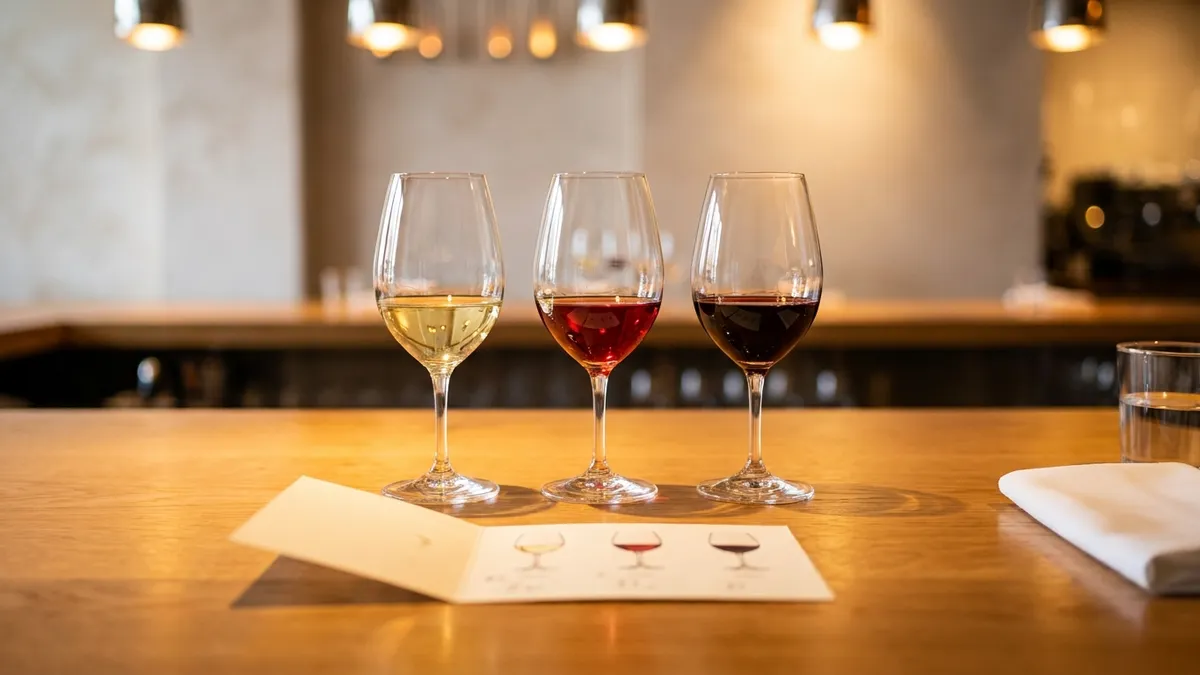
A wine flight is three small pours served together, usually themed: three Pinot Noirs from different regions, three sparkling wines, or three wines from one producer. How a flight compares with a glass or a half bottle is covered in wine list types explained. Flights typically run twenty to thirty-five dollars at one-and-a-half to two ounces per pour.
Two reasons flights are the best value at a wine bar:
- Cost — a flight is cheaper per ounce than three glasses ordered separately
- Learning — tasting three wines side by side reveals contrasts single glasses cannot
If your goal is to develop your palate, flights are the format you want. The same three wines tasted across three visits do not register the way three wines tasted in ten minutes do. Our develop your wine palate walk-through covers the structured side-by-side method.
The Tasting Ritual at a Wine Bar
If you ordered a bottle, the server presents the label, opens the wine, and pours a small amount to check. Run the same three-step fault check used at any restaurant: glance at the label, smell for ten seconds, sip briefly. The taste is for fault detection, not preference confirmation.
For glass pours, the ritual is shorter — a quick swirl, a brief smell, a small sip. Performatively swirling and sniffing every glass marks a beginner. Our how to taste wine like a sommelier guide breaks down the three-step check, and when to send wine back covers the fault-versus-preference distinction. If something is wrong with a glass pour, tell the server calmly — they will pour another.
Tipping at a Wine Bar
Tipping rules vary sharply by country.
United States
Tip eighteen to twenty percent on the pre-tax total — wine and food combined. Card tips are generally preferred since they get reported through the system and shared with the rest of the staff. Cash tips are also welcome. Tip on the total bill, not just the food portion. The wine mark-up is already factored in, so the percentage handles the math.
Europe
Service charge is often already included on the bill — check before adding more. If service is not included, ten to fifteen percent is generous. Rounding up to the nearest five or ten euros is common in casual wine bars. Cash is widely preferred over card.
Service-included and sommelier-led venues
A growing number of natural wine bars in the United States and United Kingdom price service into the menu. The bill should make this explicit; an additional cash tip is welcome but not expected. At a venue with a dedicated sommelier, the standard percentage on the total already covers their work — a separate cash thank-you is appreciated at the very high end but never required.
The Bottle Shop With a Bar (the New Model)
A growing number of wine retailers operate a small bar alongside the shop. Buy a bottle off the retail shelf, pay a corkage fee of five to fifteen dollars, and drink it on premises with proper glassware. Total cost is often half what the equivalent bottle would cost at a traditional restaurant.
Etiquette is light: ask the staff to recommend a bottle in your price range, let them open it and pour the first glass, and tip on the corkage and any food rather than on the bottle retail price. Good staff at these venues are often more useful than restaurant sommeliers because their job is bottle education rather than mark-up justification. Our wine glass guide covers the basic glassware these venues use, and most will let you take an unfinished bottle home recorked.
Solo at the Wine Bar
Wine bars are one of the few hospitality formats genuinely friendly to solo guests. The bar seat is built for it: you face the staff, you can talk to them as much or as little as you want, and you can read or take notes between sips without an empty chair across from you.
A few habits make solo visits work:
- Sit at the bar rather than a two-top table
- Bring a book, a journal, or a phone you intend to ignore
- Engage the staff if they are not slammed — most love wine talk
- Order food alongside wine — the kitchen runs slower for drink-only guests
- Pace at one glass per hour if walking out, less if driving
Three or four solo visits in and the staff remember your preferences, which converts into better recommendations and occasionally a free pour of something off-menu.
The Natural Wine Bar — Specifics
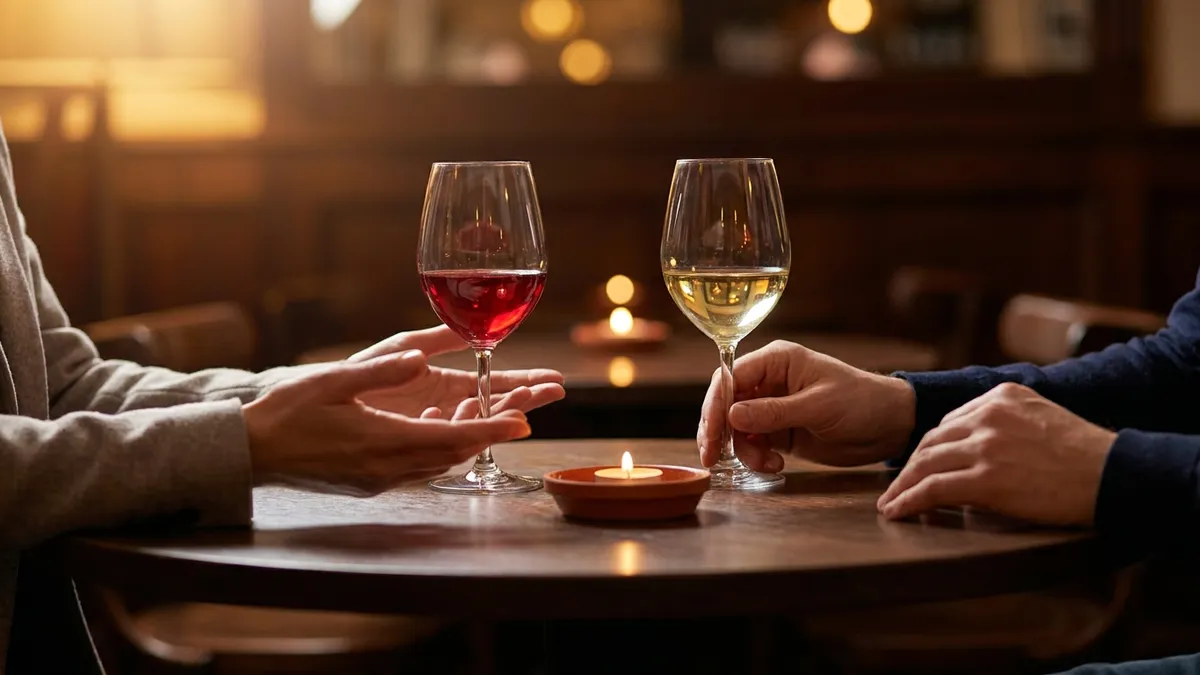
Natural wine bars run on slightly different conventions. The wines may be cloudy, lightly fizzy in still wines, or noticeably funky in aroma — that is the category, not a flaw.
Three notes that smooth the visit:
- Cloudiness, sediment, and slight fizz are normal in unfiltered natural wines. Do not assume the wine is faulty.
- Funky aromas — barnyard, earthy, slightly sour — are part of the style. If they are too much, ask for something cleaner; the staff will not be offended.
- Embrace the experiment but do not apologize for liking conventional wine.
The best opener at a natural wine bar is "I am new to natural wine — what is a good place to start?" That sentence triggers a five-minute conversation and usually ends with a glass you enjoy.
What Not to Do at a Wine Bar
A short list of moves that mark you as a guest rather than a regular:
- Lecturing the staff — they probably know more than you, and even if not, it is their list
- Asking "what is the best wine you have" — lazy and signals you have not read the list
- Ordering by what is trending on social media — most viral wine recommendations are marketing
- Dominating the bar conversation — read the room; some guests want quiet drinks
- Drinking and driving — pace at one glass per hour if driving, and order a substantial snack
- Swirling and sniffing performatively — a quick swirl is fine; a long performance is not
- Sending back a wine you simply do not like — sound wines are not faulty
Wine tasting etiquette covers the broader social rules across dinners, vineyards, and structured tastings — most carry over to a wine bar with minor adjustments.
Pairing at a Wine Bar
If the bar serves food, ask the staff to pair. Small plates and glass pours are designed to flex around each other. Useful phrasing: "I am ordering the lamb skewers — what would you pair?" or "We are doing a charcuterie board, what white works?" Wine bar staff who serve food daily have already done this calculation hundreds of times — their first suggestion is almost always better than what you would pick from the list cold.
A Practical First-Visit Script
The whole etiquette code reduces to a short opening line:
"Hi — I would love something I have not tried. I usually like crisp whites. What is by the glass that fits? Could I taste before committing? Cheers."
That single string covers all the bases: signals openness, gives the staff a preference, asks for a taste politely, and closes warmly. It is the only sentence you need to walk in confidently.
The Sommy Connection
The fastest way to build wine bar confidence is to track what you taste. Every wine you log in the Sommy app gets categorized by region, grape, and structure. Over twenty visits, the app surfaces patterns in your own preferences you would otherwise miss.
That data converts "I think I like Pinot Noir" into "I like cool-climate Pinot Noir from Oregon and Burgundy, but not the warmer-climate California style." Every visit becomes targeted rather than exploratory. The beginners-buying learning track walks through the supporting habits — label reading, structure, pairing logic — that turn the wine bar from a quiz into a regular hangout.
The Bottom Line
Wine bar etiquette is mostly self-imposed. The format is built for casual exploration, not formal service. Open the menu to the by-the-glass list, ask for a taste before committing, consider a flight if you want to learn quickly, and tip eighteen to twenty percent in the United States or ten to fifteen in Europe.
The staff are not testing you — they are hoping you ask. Three or four visits in, the room feels familiar and the wine list stops looking like a quiz. Confidence at a wine bar is procedure, not memory.
Frequently Asked Questions
What is the basic etiquette at a wine bar for beginners?
Walk in, sit at the bar if you are solo, and start with the by-the-glass list rather than bottles. Tell the server one preference and one dish or mood, then ask for a small taste before committing to a full pour. Most wine bars are explicitly built for casual exploration, not formal sommelier service. The intimidation is mostly internal — staff want curious guests, not silent ones.
Is it OK to ask for a taste before ordering a glass at a wine bar?
Yes — almost every wine bar will offer a small splash of any glass-pour wine on request. The pour is usually a quarter-ounce, and there is no obligation to order what you taste. Servers expect this question and use it to read your palate, which leads to better recommendations. Asking 'could I try a small taste of the Riesling first' is standard, not awkward.
How much should I tip at a wine bar?
In the United States, tip eighteen to twenty percent on the pre-tax total, including wine. Card tips are generally preferred since they get reported and shared. In most of Europe, ten to fifteen percent is generous and service charge is often already included — check the bill before adding more. Cash tips are welcome anywhere. Tip on the total, not just the food portion.
What is a wine flight and is it worth ordering?
A wine flight is three small pours served together, usually themed around one grape, one region, or a comparison like three different Pinot Noirs. Flights typically run twenty to thirty-five dollars and let you taste several wines for the cost of one or two glasses. They are the single best way to train your palate at a wine bar — you can compare side by side rather than guessing across visits.
How do I order at a natural wine bar without sounding clueless?
Be honest. Say 'I am new to natural wine, what is a good place to start' or describe a wine you usually like and ask for the natural-wine equivalent. Natural wine staff almost universally love this opener because their job involves a lot of education. Cloudiness, bubbles in still wine, and funky aromas are normal in this category — they are features, not flaws to apologize for.
Can I bring my own bottle to a wine bar?
Sometimes — corkage at a wine bar typically runs twenty to forty dollars per bottle, but many wine bars do not allow it because their business model depends on selling wine. Always call ahead. If they do allow it, two etiquette rules apply: do not bring something already on their list, and offer a small pour to the staff or sommelier as a gesture of generosity.
Should I order the cheapest wine on the by-the-glass list?
Usually skip it. The cheapest pour at most wine bars is in the six-to-eight-dollar range and is typically the lowest-quality wine on the list, often a generic house pour with the highest percentage mark-up. The sweet spot is twelve to eighteen dollars per glass — that range is where serious wine bars place their most interesting and best-value bottles by the glass.
What should I avoid doing at a wine bar?
Avoid lecturing the staff, asking 'what is the best wine you have' (lazy and unhelpful), ordering by what is trending on social media, and dominating the bar conversation when others are clearly there for quiet drinks. Drink water alongside wine, pace at roughly one glass per hour if driving later, and resist the urge to performatively swirl and sniff for the table — staff notice.
Sommy Team
LinkedInFounder & Wine Educator
The Sommy Team is building the world's most approachable wine education app, helping beginners develop real tasting skills through structured courses and AI-guided practice.