Vermentino vs Sauvignon Blanc: Side by Side (Taste, Food)

By the Sommy Team — AI-assisted, human-edited.
Updated Oct 29, 2026
Contents (8)
TL;DR
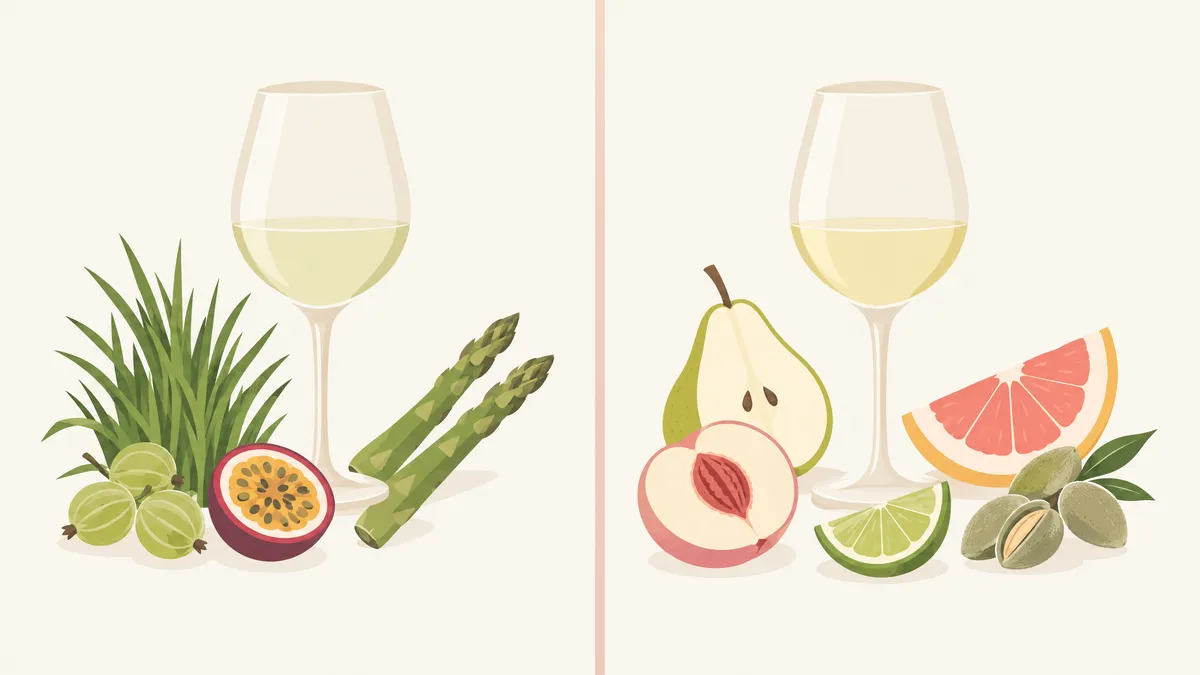
Sauvignon Blanc smells of cut grass, gooseberry and passion fruit and has high acidity. Vermentino smells quieter, of pear, white peach and lime, feels slightly oily and ends faintly bitter, like grapefruit pith or almond. Smell first, then wait for the finish. Pour Sauvignon Blanc with goat cheese, Vermentino with pesto.
Vermentino vs Sauvignon Blanc is a contest of nose against finish. Sauvignon Blanc tells you what it is the moment you lift the glass: cut grass and passion fruit. Vermentino smells quieter and saves its signature for after you swallow, when it turns faintly bitter, like almond skin or grapefruit pith.
Vermentino vs Sauvignon Blanc, in One Paragraph
Both are dry, pale white wines served cold, and fans of one usually like the other. Sauvignon Blanc has high acidity (the tartness that makes your mouth water) and a medium-light body (weight in the mouth, like skimmed versus whole milk). It smells of gooseberry, grapefruit, passion fruit and cut grass, at 11.5 to 13.5% alcohol. Vermentino is light-bodied, slightly oily and almost always dry. It smells of pear, white peach, lime and pink grapefruit. Its tell is the finish: a light bitterness, like grapefruit pith or fresh almond, often with a salty feel.
| Sauvignon Blanc | Vermentino | What to do with it | |
|---|---|---|---|
| First smell | Loud: cut grass, gooseberry, passion fruit, asparagus | Quiet: pear, white peach, lime, pink grapefruit | Sniff before you sip. Green and loud means Sauvignon Blanc |
| Acidity | High | Often moderate; high in Corsica | Tart or pickled food: pour Sauvignon Blanc |
| Body and texture | Medium-light, crisp | Light, slightly oily | Want a softer glass with no oak? Pick Vermentino |
| Finish | Tart and clean | Faintly bitter: grapefruit pith or almond, often salty | Count to five after swallowing. Bitter means Vermentino |
| Sweetness | Dry; some Marlborough keeps a gram or two of sugar | Almost always dry | Either works as a dry aperitif |
| Alcohol | 11.5 to 13.5% | At least 12% in Vermentino di Gallura (13% Superiore) | Similar strength: choose on taste, not alcohol |
| Serve at | 7 to 12°C | The same cold range | Chill both the same, so the comparison is fair |
| Goes with | Goat cheese, herb sauces, asparagus | Pesto, garlic, herby medium-weight dishes | Green and tangy plate: Sauvignon Blanc. Garlic and oil: Vermentino |
Are Vermentino and Sauvignon Blanc Related?
No source shows the two grapes are related. Shops often call Vermentino a "cousin" of Sauvignon Blanc because the two wines can taste alike, and the link ends there. Sauvignon Blanc is thought to descend from Savagnin, a separate French grape. Vermentino's only proven relatives are its own local names.
DNA typing showed that Pigato from Liguria and Favorita from Piedmont are the same grape as Vermentino. In southern France it is called Rolle, and in Corsica, Vermentinu. Pinot Grigio is a different grape altogether; the Pinot Grigio vs Sauvignon Blanc comparison sets that one out.
Sauvignon Blanc has an alias too: Fumé Blanc on a Californian label is a marketing name for it. The full profile of each grape is in the Vermentino guide and the Sauvignon Blanc guide.

Quick check
One question on what you just read
You sip a dry, pale white, swallow and count to five. Which finish points to Vermentino?
Tap an answer to see how you did.
Why Does Sauvignon Blanc Smell So Green?
Sauvignon Blanc smells of cut grass, green pepper and asparagus because its grapes carry methoxypyrazines, strong-smelling compounds that are more marked in cooler regions. Cool sites such as the Loire give the most grass and gooseberry, and warm, sunny ones tone it down.
The tropical side has a different source. Passion fruit and boxwood may come from thiols, a second group of aroma compounds linked to riper flavours.
Vermentino's usual smells are pear, peach and lime with little herb, so a white that smells of fresh-cut grass is far more likely Sauvignon Blanc.
Why Does Vermentino Finish Bitter and Salty?
Vermentino has higher levels of phenols (compounds from the skins that taste bitter and add grip) than many whites, and they leave a light bitterness on the finish. In leaner wines it tastes like grapefruit pith; in riper ones, like fresh almond. That bitterness belongs to the grape, so a bitter Vermentino is a sound one.
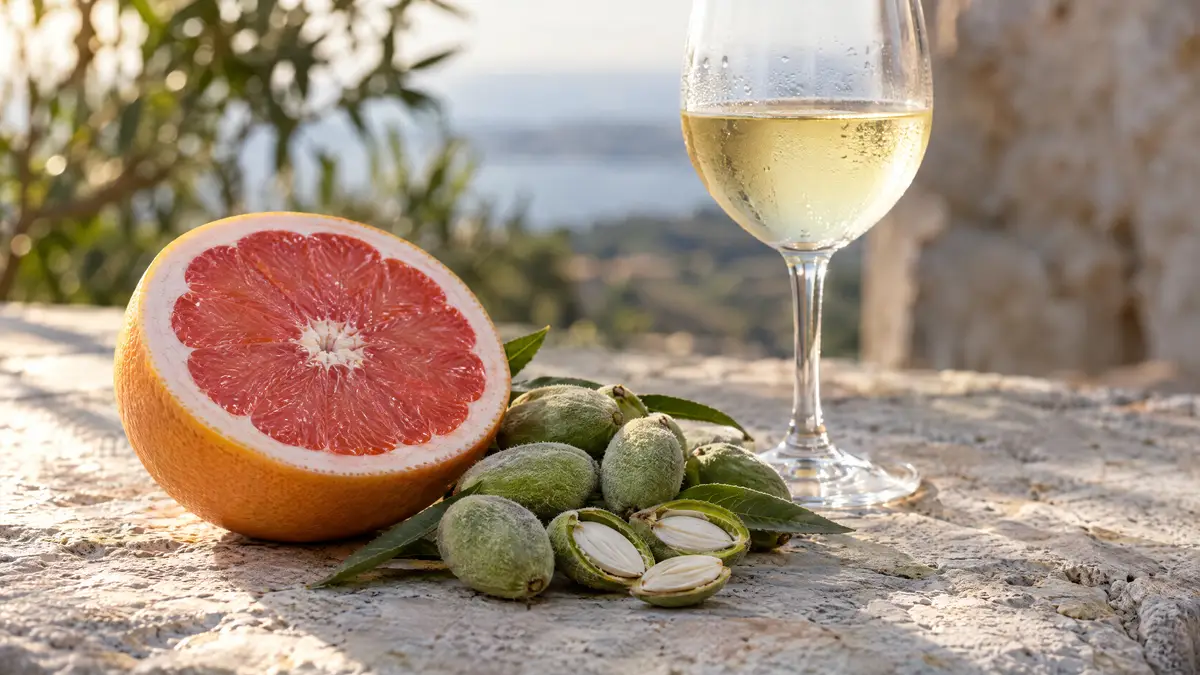
The palate is dry and somewhat oily, with a crushed-rock, salty feel. That salty feel is what tasters report, not proof that sea air got into the grapes. The salty and stony taste guide sets out the theories. Some winemakers also run malolactic fermentation (bacteria that turn tart acid into softer acid), which adds a creamy, buttery taste and a richer, oilier feel.
How Can You Tell Them Apart Blind?
Smell first, then wait for the finish. Sauvignon Blanc gives itself away on the nose before you swirl. Vermentino shows its hand only after you swallow, when the bitterness arrives. Pour both at the same temperature, because a colder glass smells weaker, and run three checks:
- Smell before swirling. Cut grass, green pepper, gooseberry or passion fruit point to Sauvignon Blanc. Pear, white peach and lime point to Vermentino.
- Feel the weight. A slightly oily, softer glass points to Vermentino; a crisp, mouth-watering one to Sauvignon Blanc.
- Sip, swallow and count to five. A faint bitterness, like pith or almond, means Vermentino. A clean, tart finish means Sauvignon Blanc.
If the nose is quiet and the finish is tart, think of a Corsican Vermentinu before a Sauvignon Blanc. More drills for unlabelled glasses are in the blind tasting tips.
Does Place Change the Taste?
Yes: where each grape grows moves it toward or away from the other, and for Vermentino a Corsican label is the surest clue to sharp acidity. If you love Sauvignon Blanc's sharpness, buy a Corsican Vermentinu. If you want a softer, rounder white, buy a riper Sardinian Superiore.
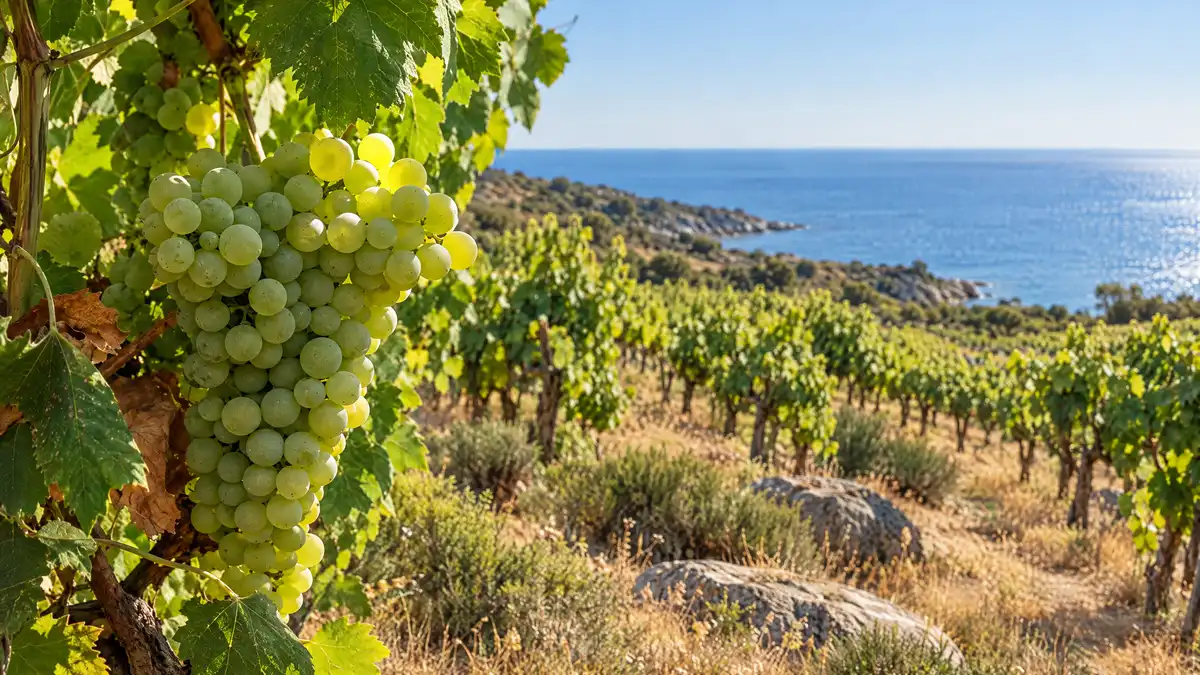
For Vermentino:
- Sardinia is the grape's best-known home in Italy. The top label is Vermentino di Gallura DOCG (Italy's strictest tier of protected names), at least 95% Vermentino. See the Sardinia wine guide.
- Corsica makes Vermentinu with high acidity, a lean feel and a subtle smoky note.
- Provence calls it Rolle and uses it in its best-known rosés, as the Provence wine guide shows.
For Sauvignon Blanc:
- Loire Valley: lively citrus and a stony edge. See the Loire Valley wine guide.
- Marlborough, New Zealand: concentrated passion fruit and gooseberry, sometimes with a gram or two of sugar. See the Marlborough guide.
- Bordeaux: dry whites blended with Sémillon.
What Food Goes With Each?
Pour Sauvignon Blanc with green, tangy food and Vermentino with garlic, herbs and olive oil. Sauvignon Blanc's high acidity cuts through goat cheese and matches lemon or vinegar. Its grass and green-pepper smell echoes asparagus and herb sauces. The wine with goat cheese guide splits fresh from aged cheeses.
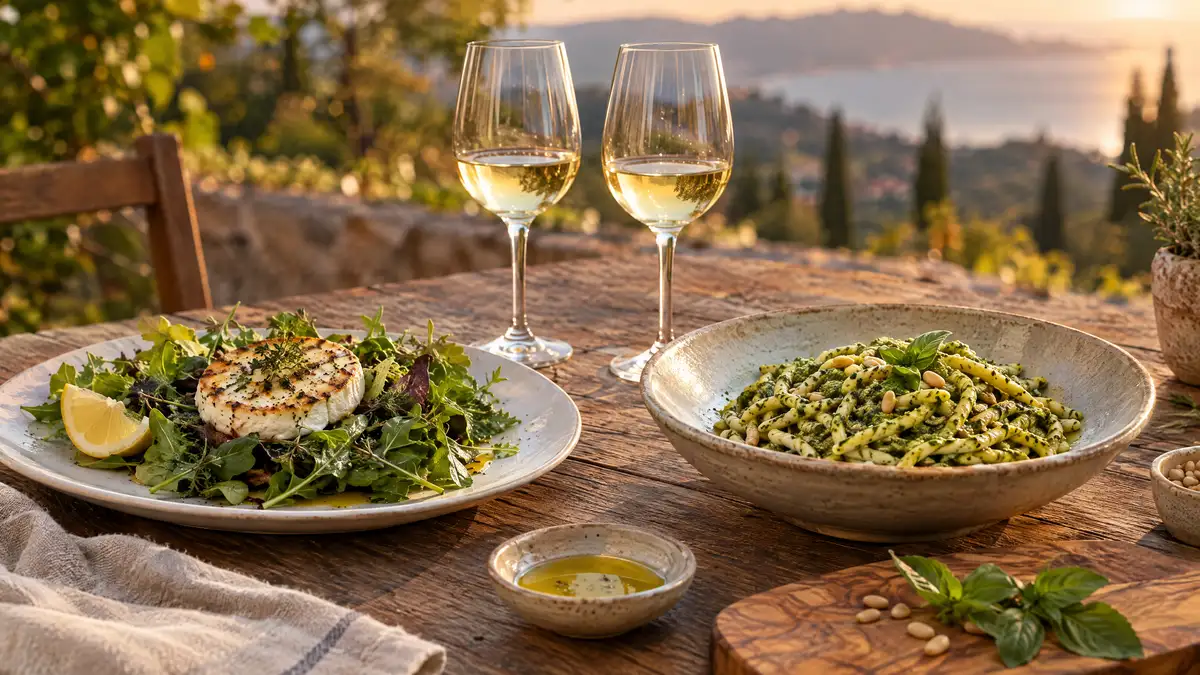
Vermentino goes with medium-weight dishes full of herbs and spices, and with garlic. Pesto is the classic, and the wine with pesto guide explains why. Its oily texture holds up to olive oil, and its bitter finish suits basil and almond. If the dish is tart or pickled, skip most Vermentino: its often softer acidity tastes flat next to vinegar.
Which One Should You Pour Tonight?
Buy one of each and taste them side by side. If you can only buy one, pick Sauvignon Blanc for a goat cheese salad and Vermentino for pesto pasta. More pairs to compare sit in the grape varieties hub, including Chardonnay vs Sauvignon Blanc.
The Sommy app's AI tasting mode takes a photo of each label and walks you through look, smell and taste, saving both notes to your tasting journal. Chill both bottles tonight, pour two small glasses, and count to five after every sip.
Sources
Frequently Asked Questions
Is Vermentino similar to Sauvignon Blanc?
In the glass, yes: both are dry, pale whites with citrus fruit, and fans of one usually enjoy the other. They differ in where the flavour sits. Sauvignon Blanc is loud on the nose, with cut grass, gooseberry and passion fruit. Vermentino smells quieter, of pear and lime, and shows its character on the finish, which turns faintly bitter and often salty.
Are Vermentino and Sauvignon Blanc related grapes?
No source shows any family link. Calling Vermentino a cousin of Sauvignon Blanc is a tasting comparison. Vermentino's proven relatives are its synonyms: DNA typing showed Pigato from Liguria and Favorita from Piedmont are the same grape, and in France it is called Rolle. Sauvignon Blanc is thought to descend from Savagnin, a separate French grape.
Which is more acidic, Vermentino or Sauvignon Blanc?
Sauvignon Blanc, in most bottles. Its acidity is high, the tartness that makes your mouth water for a long time. Vermentino varies by place. Much Vermentino lacks sharp acidity, which makes it feel rounder, while Corsican Vermentinu has high acidity and a lean, slightly smoky style. If you want the tartest glass, pick Sauvignon Blanc.
Is Vermentino sweeter than Sauvignon Blanc?
No. Both are almost always dry, with no sugar you can taste. Vermentino can seem softer because its acidity is often lower and its texture slightly oily. Some Marlborough Sauvignon Blanc keeps a gram or two of sugar to balance its sharp acidity and still tastes dry. If a Vermentino label says passito, it is a rare sweet style made from dried grapes.
What can I drink instead of Sauvignon Blanc?
Vermentino is the closest Italian swap: dry, pale, citrus-led and served cold. Expect less grass and passion fruit and more pear, lime and a bitter-almond finish. For the nearest match to Sauvignon Blanc's tartness, choose a Corsican Vermentinu, which has high acidity. For something softer and rounder, choose a riper Vermentino di Gallura Superiore.
What food goes with Vermentino and Sauvignon Blanc?
Sauvignon Blanc goes with green, tangy food: warm goat cheese, herb sauces, asparagus and dishes with lemon or vinegar. Vermentino goes with garlic, olive oil and herbs: pesto pasta, garlicky prawns and medium-weight dishes with rich herbs and spices. Avoid most Vermentino with tart pickled dishes, because its softer acidity tastes flat next to them.
Sommy Team
LinkedInFounder & Wine Educator
The Sommy Team is building the world's most approachable wine education app, helping beginners develop real tasting skills through structured courses and AI-guided practice.