Wine with Pesto: Basil, Pine Nuts, and the Right Pour

By the Sommy Team — AI-assisted, human-edited.
Updated Oct 1, 2026
Contents (9)
- What Wine Goes Best With Pesto?
- Why Does Pesto Make Some Wines Taste Off?
- Which Wine Goes With Which Pesto?
- Is Sauvignon Blanc Really the Best Match With Pesto?
- Why Does Vermentino Work, and What Is Pigato?
- Can You Drink Red Wine With Pesto?
- Does Chardonnay Go With Pesto?
- How Should You Serve Wine With Pesto?
- Where Does Pesto Come From, and What Does the Jar Promise?
TL;DR
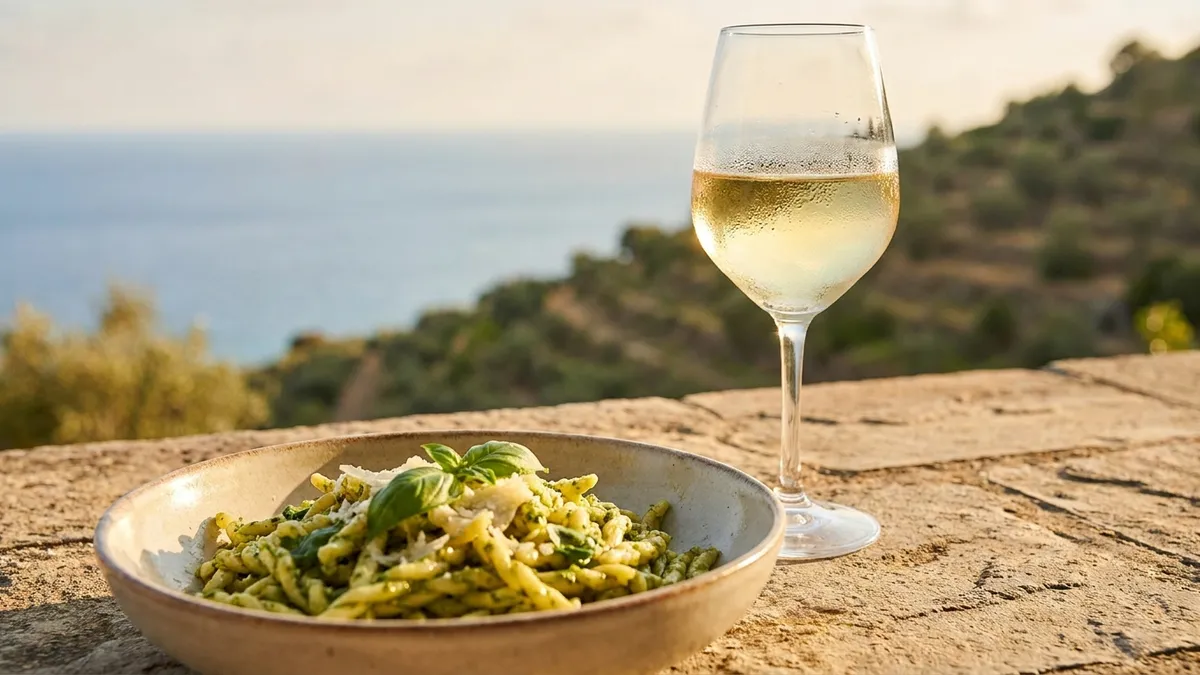
Pesto is oil, raw garlic, salty cheese and raw basil, so it needs a dry white with high acidity, no oak and a herbal smell. Vermentino from Liguria or Sardinia leads, unoaked Sauvignon Blanc follows. A red works only if it is light, low in tannin and served cool.
Wine with pesto has one clear answer: a dry white with high acidity, no oak and a green, herby smell of its own. Vermentino from Liguria or Sardinia leads, unoaked Sauvignon Blanc follows. Pesto is raw garlic and olive oil, so a red only works if it carries almost no tannin and arrives cool.
What Wine Goes Best With Pesto?
Open a dry, unoaked white with high acidity and a herbal smell: Vermentino from Liguria or Sardinia first, Sauvignon Blanc second. Both cut through the olive oil, neither has tannin to clash with raw garlic, and both smell green enough to sit beside fresh basil. Grüner Veltliner and Trebbiano also work. The sauce changes the pick when it changes colour: red sun-dried tomato pesto or a bitter rocket and walnut pesto moves you toward a light, chilled red such as Gamay or Dolcetto. Pesto on chicken wants a white with more weight. Avoid heavy oak and big, grippy reds, which turn the garlic harsh.
Why Does Pesto Make Some Wines Taste Off?
Pesto is olive oil, raw garlic, salty cheese and raw basil, and each one pushes on a different part of the wine. The traditional sauce is Genovese basil, extra virgin olive oil, Parmesan or Grana Padano, pecorino sardo, pine nuts and garlic, none of it cooked.
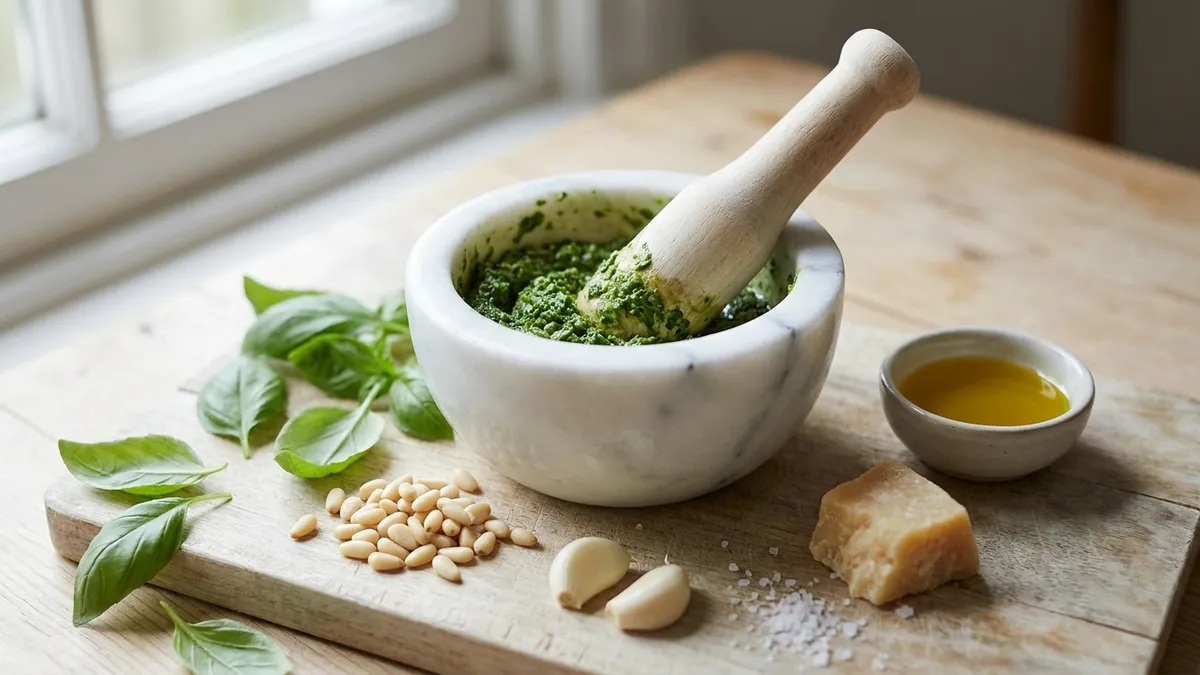
Oil coats the mouth, so the wine needs acidity (the tartness that makes your mouth water) to rinse it away. A low-acid white tastes flat and oily next to it.
Raw garlic and pine nuts carry a faint bitterness. Wine tannin (the drying grip on your gums, from grape skins and seeds) adds bitterness of its own, and with a grippy Cabernet or Syrah the two stack into a rough, metallic finish.
Salty cheese makes a wine taste fruitier and softer, which helps lean, tart whites and hurts wines that are already soft.
Raw basil is the loud part. In the mortar, garlic and pine nuts are pounded to a cream first, then basil goes in with coarse salt, so the leaves stay fresh and green rather than cooked. A neutral white disappears under that smell. A wine with a herbal smell of its own still tastes of itself beside it.
Which Wine Goes With Which Pesto?
The sauce's colour and what it is spooned over move the pick more than the word pesto does. Use the dish as the deciding factor, then check the wine's body (its weight in the mouth, like skimmed versus whole milk).
| Pesto or dish | What changes | Pour this |
|---|---|---|
| Basil pesto genovese on pasta | Oil, raw garlic, fresh herb, salty cheese | Ligurian Vermentino or Pigato, or unoaked Sauvignon Blanc, fridge-cold |
| Pesto on chicken or white fish | More protein and weight on the plate | Unoaked Chardonnay, Grüner Veltliner or a Sardinian Vermentino |
| Pesto pizza or caprese with pesto | Tomato acid and mild mozzarella | Sauvignon Blanc or Vermentino with high acidity |
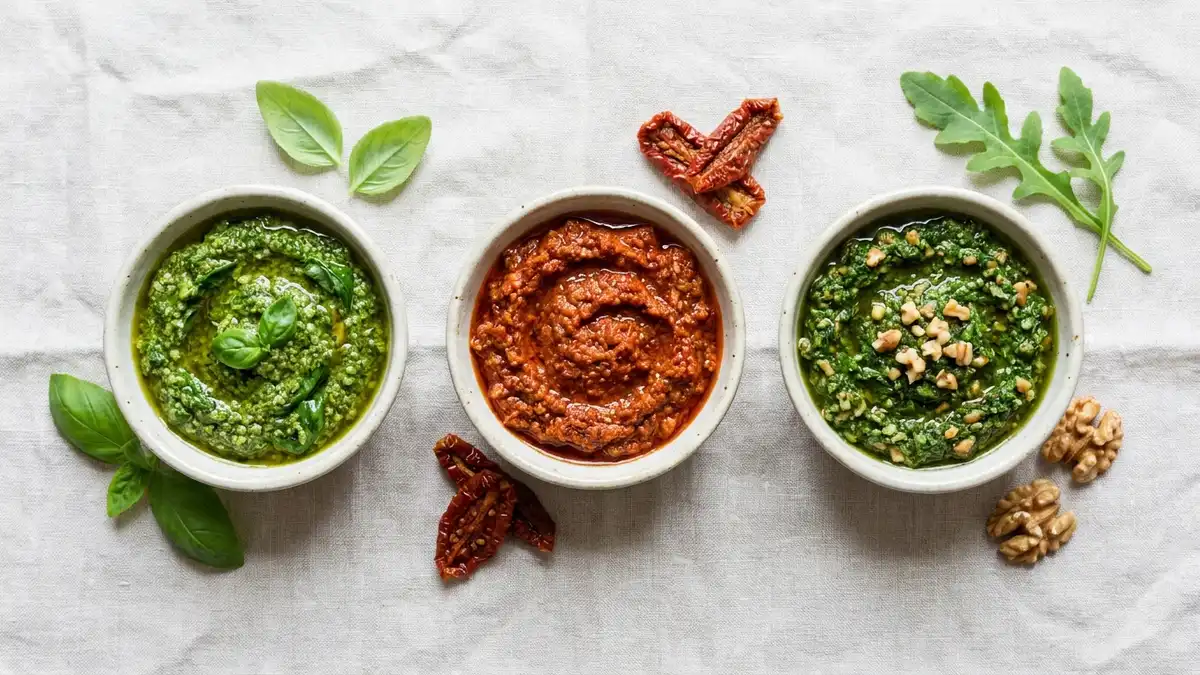
| Red pesto (sun-dried tomato) | Sweeter, tarter, less herbal | Light red: Gamay or Pinot Noir, served cool |
| Rocket or walnut pesto | More bitterness and nutty depth | Dolcetto or Gamay, or a fuller unoaked white |
| Creamy pesto or pesto with cream | Extra fat, softer garlic | Unoaked Chardonnay or Trebbiano |
If the pesto is red, switch to a light red. Sun-dried tomato brings sweetness and acidity that a tart Gamay meets better than a grassy white. If the pesto is spooned over chicken, add body to the white instead of changing colour. The full picture for the bird alone is in wine with chicken, and pizza toppings get their own breakdown in wine with pizza.
Is Sauvignon Blanc Really the Best Match With Pesto?
It is the most reliable choice outside Italy, because its acidity cuts the oil and its green, grassy smell sits next to the basil. Most pairing guides rank it first, and it is on almost every shop shelf.
The green smell has a known source. A compound called IBMP gives Sauvignon Blanc much of its bell-pepper, green edge, and people can smell it at about 2 nanograms per litre in water. IBMP forms early in the grape and breaks down after veraison (the point when grapes soften and change colour), so grapes picked riper, in warmer places, smell less green.
The match is one of impression, not chemistry. Basil's scent comes mainly from other compounds, such as linalool and estragole, so the green note is not explained by a shared molecule. What they share is a green, leafy feel, and that is enough to keep the wine from tasting thin beside the sauce.
If you want the greenest match for a basil-heavy pesto, pick a young, pale, unoaked Sauvignon Blanc from a cool region. If the label says Fumé or mentions barrels, that is a riper, oaked style built for richer food. The Sauvignon Blanc guide maps those styles region by region, and herbal notes in wine covers where else that green smell turns up.
Why Does Vermentino Work, and What Is Pigato?
Vermentino grows on the same coast as the basil, carries high acidity and a salty, bitter-herb finish, and Pigato is generally regarded as the Ligurian name for the same grape. DNA work links Pigato in the Riviera Ligure di Ponente and Favorita in Piedmont to Vermentino, and Rolle near Nice is widely treated as the same grape.
That shared coast is literal. Genovese basil grows on Liguria's sea-facing slopes, in places such as Genoa Pra' and the Piana di Albenga, and Pigato comes from the western Riviera around Albenga. The basil's smell is delicate and carries no mint at all, so a lean, salty white is enough to meet it without burying it.
The bitter edge matters too. Vermentino often finishes with a faint bitterness, like grapefruit pith or almond skin, which lines up with the pine nuts instead of fighting them.
If the label says Pigato, Riviera Ligure di Ponente or Vermentino di Gallura, it is the same grape and the same match. Vermentino di Gallura is Sardinia's DOCG and is widely exported; it tends to be a little fuller than Ligurian versions. The Vermentino wine guide covers each region's style.
Can You Drink Red Wine With Pesto?
Yes, if it is light, low in tannin and served cool. The old idea that pesto is white-only misses the real rule: the problem is tannin, not colour. A grippy red turns raw garlic and pine nuts bitter, while a light one simply adds fruit.
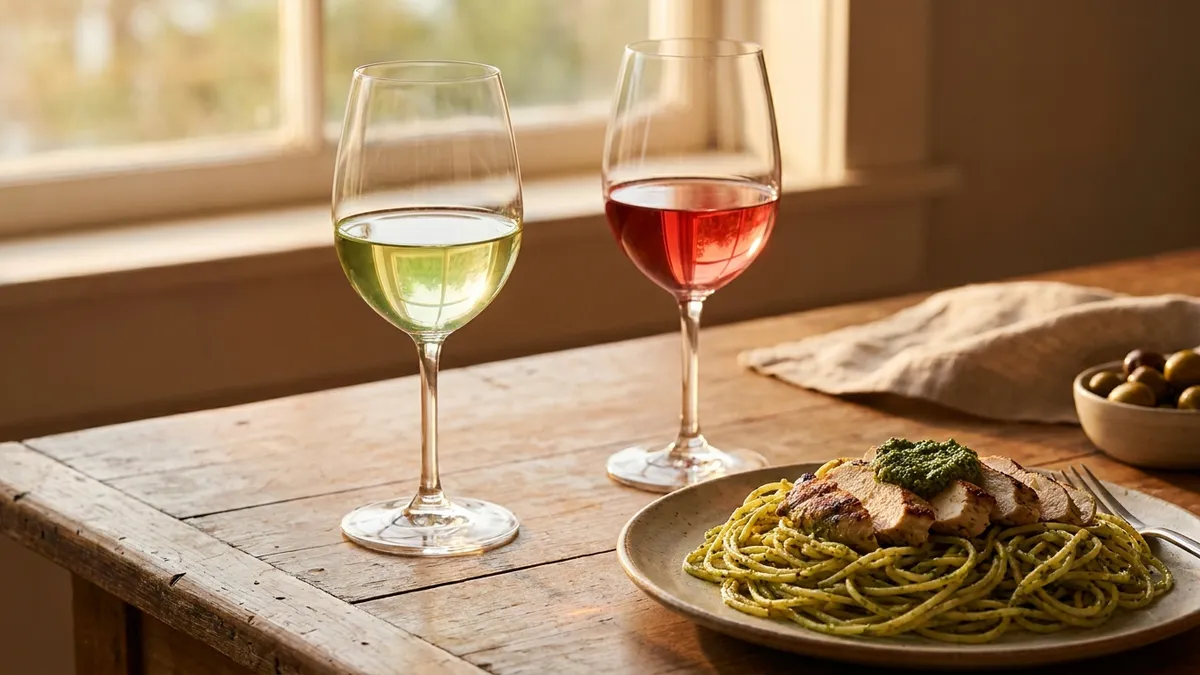
Three grapes do the job. Gamay, the grape of Beaujolais, is tart and low in tannin with fresh raspberry fruit; the Gamay guide explains why it handles a chill. Dolcetto from Piedmont is low in acidity with more grip than Gamay and a slightly bitter finish, so pick a young one for walnut and rocket pesto; see the Dolcetto guide. A light Pinot Noir works when the pesto is red and tomato-led.
If you cannot see through the wine in the glass, it is probably too tannic for pesto. Our explainer on what tannins are shows how to feel that grip before the food arrives.
Does Chardonnay Go With Pesto?
Unoaked Chardonnay works with pesto, especially on chicken or in a creamy sauce; heavily oaked Chardonnay does not. Oak (barrels that add vanilla, toast and a buttery, heavier feel) piles sweet, warm flavours on top of raw basil, and the garlic comes through harsh against it.
Unoaked or lightly oaked Chardonnay keeps its acidity and adds the body those richer plates need. If the back label mentions new oak, barrel fermentation or vanilla, pick another bottle. The difference is laid out in what oaked wine means.
How Should You Serve Wine With Pesto?
Serve the white properly cold and the light red cool, and pour it with the food rather than before it. Pesto is served at room temperature or barely warm, so a wine that starts cold stays fresh through the plate.
If the bottle has sat on the counter, give it time in the fridge before the pasta water boils. For a light red, a short spell in the fridge brings the tartness forward and keeps the alcohol from feeling hot next to raw garlic. Exact ranges for each style are in the wine serving temperature chart.
Where Does Pesto Come From, and What Does the Jar Promise?
Pesto is Genoa's sauce, written down in 1852, and the sauce itself carries no protected EU name, though its basil does. The word comes from the Genoese verb for pounding, after the marble mortar and wooden pestle. The first published recipe appeared in Emanuele Rossi's La Vera Cucineria Genovese in 1852, and the sauce traditionally dresses trofie, trenette and lasagne.
Basilico Genovese completed its PDO recognition in October 2005. The sauce has no protected name, so a jar labelled pesto genovese can be made anywhere. If the jar lists Basilico Genovese DOP, expect the mild, mint-free basil that a lean Ligurian white suits. If it does not, the basil may be louder and the garlic stronger, and a greener Sauvignon Blanc holds up better.
Sauce-by-sauce pasta pairings are in wine with pasta, and the principles behind them sit in the food pairing hub. The Sommy app has a bite-sized Italy course and an AI-guided tasting mode. Tonight: pour a fridge-cold Vermentino, stir pesto into a pot of pasta, and photograph the label in Sommy before the first forkful.
Sources
Frequently Asked Questions
What wine goes best with pesto pasta?
A dry, unoaked white with high acidity. Vermentino, which Liguria also calls Pigato, grows on the same coast as the basil and finishes salty and slightly bitter, which meets the cheese and the herbs. Unoaked Sauvignon Blanc is the easiest alternative to find, and Grüner Veltliner or Trebbiano also work. Serve it cold.
Can you drink red wine with pesto?
Yes, if it is light and low in tannin. Tannin turns bitter and metallic against raw garlic and pine nuts, so skip big reds. Gamay or a light Pinot Noir served slightly chilled work, especially with red sun-dried tomato pesto, and a young Dolcetto suits walnut pesto. If you cannot see through the wine in the glass, it is too heavy.
Is Sauvignon Blanc good with pesto?
Yes, unoaked Sauvignon Blanc is one of the safest choices. Its high acidity cuts the olive oil, and its green, grassy smell sits next to the basil. Cool-climate examples smell greener, because the compound behind the green-pepper note breaks down as grapes ripen. Avoid barrel-aged versions, which add vanilla and weight the sauce does not need.
Does Chardonnay go with pesto?
Unoaked or lightly oaked Chardonnay works, especially with pesto spooned over chicken or fish, where the dish has more weight. Heavily oaked Chardonnay clashes: vanilla, toast and a buttery feel sit on top of the fresh basil and make the garlic taste harsh. If the label mentions new oak or barrel fermentation, choose another bottle.
What wine goes with pesto chicken?
Chicken adds protein and weight, so pick a white with a little more body than you would for pasta: unoaked Chardonnay, Grüner Veltliner or a fuller Vermentino from Sardinia. If the chicken is grilled with charred skin, a light, chilled Gamay also works. Keep the wine unoaked and the acidity high, because the pesto is still raw garlic and oil.
What wine goes with red pesto?
Red pesto, made with sun-dried tomatoes, is sweeter and more acidic than basil pesto, so a light red fits it better than a herbal white. Choose Gamay or a light Pinot Noir served cool. The tomato's acidity needs a wine at least as tart, and low tannin keeps the garlic from tasting bitter.
What Italian wine goes with pesto genovese?
Vermentino. In Liguria, where pesto genovese comes from, the grape grows on terraces above the sea and is sold as Vermentino or, in the western Riviera, as Pigato. DNA work generally treats them as one variety. Vermentino di Gallura DOCG from northern Sardinia is a widely exported example and makes the same match.
Sommy Team
LinkedInFounder & Wine Educator
The Sommy Team is building the world's most approachable wine education app, helping beginners develop real tasting skills through structured courses and AI-guided practice.