Sustainable Wine Explained: What Each Certification Means

By the Sommy Team — AI-assisted, human-edited.
Updated Oct 1, 2026
Contents (8)
- What Is Sustainable Wine, in One Paragraph?
- Is Sustainable Wine the Same as Organic?
- How Do You Read a Sustainability Claim on a Label?
- Which Sustainability Certifications Should You Recognise?
- What Does a Certification Audit Check?
- Which Wine Regions Are Most Certified?
- Does Sustainable Wine Taste Different or Cost More?
- Where Does Biodynamic Fit?
TL;DR
Sustainable wine has no single legal definition. The word only means something when a named, third-party-audited scheme backs it, such as Sustainable Winegrowing New Zealand or Certified California Sustainable. Those schemes score water, soil, energy and workers every year, and allow some synthetic sprays, which organic forbids.
Sustainable wine is wine from a vineyard and winery run to a written code that covers water, soil, spraying, energy and workers. The word on its own is checked by nobody. It starts to mean something when a named scheme and an outside auditor sit behind it.
What Is Sustainable Wine, in One Paragraph?
Sustainable wine has no single legal definition. It is a family of private certification schemes, most of them national or regional, that score a grower on three things: the environment, the business and the people. A third-party audit (an inspection by an assessor who does not work for the winery) checks the score. The biggest schemes are large: Certified California Sustainable Winegrowing requires an annual third-party audit against 151 vineyard and 113 winery practices, and Sustainable Winegrowing New Zealand covers 98% of the country's vineyard area. Unlike organic farming, most sustainable schemes allow some synthetic sprays when a problem justifies them.
Is Sustainable Wine the Same as Organic?
No. Organic is a legal standard in the US and the EU: the grapes are grown without synthetic chemicals, and a government-accredited body certifies the farm. Sustainable schemes are private. They allow limited synthetic sprays and also judge what organic law ignores: water, energy and how workers are treated.
Most sustainable schemes are built on integrated pest management (watching for pests and spraying only when a set threshold is crossed, with the least harmful product that works). An organic grower faces the same mildew but may only reach for approved products such as copper and sulfur.
The labels sit on a ladder of how much is checked:
| Label claim | Who sets the rules | Who checks | Synthetic sprays | Sulfite rule | What to do at the shelf |
|---|---|---|---|---|---|
| "Sustainably farmed", no scheme named | The winery | Nobody | Unknown | Normal | Treat as marketing until a seal backs it |
| Named sustainable scheme (SWNZ, CSWA, Lodi Rules) | The scheme's code | Third-party auditor, usually yearly | Allowed when justified | Normal | Trust the farming and people claims |
| "Made with organic grapes" (US) | USDA organic rules | Accredited certifier | Banned in the vineyard | Added sulfites, max 100 ppm total | Organic farming, wine built to keep |
| "Organic" (US) or EU organic leaf | USDA or EU law | Accredited certifier | Banned | US: none added. EU: max 100 mg/L dry red, 150 dry white and rosé | Strictest legal farming claim |
| Biodynamic (Demeter or Biodyvin) | A private standard on top of organic | The standard's certifier | Banned | Below conventional levels | Organic plus extra farm rules |
Sulfites (sulfur compounds that keep wine from spoiling) are where the table splits most. US organic rules allow added sulfur dioxide only in wine labelled "made with organic grapes", with total sulfites capped at 100 ppm. Sustainable schemes set no such limit, so a sustainable wine carries the same sulfites as any other. The fuller picture is in sulfites in wine, and the organic side is laid out in organic vs conventional wine.
How Do You Read a Sustainability Claim on a Label?
Look for a named scheme and its seal before you trust the word. "Sustainably farmed", "eco-friendly" or "earth-friendly" printed on their own commit the winery to nothing anyone inspects. That gap is where greenwashing (green-sounding claims with no audit behind them) lives.

If the back label names no scheme and shows no seal, treat "sustainable" as an unchecked claim. If it names a scheme or shows its logo, an auditor has inspected at least the farming. If the scheme is new to you, look up its website for the words "third-party audit": a self-assessment alone is a checklist the winery marked itself.
Two details sharpen the reading. A seal on the bottle can cover the vineyard, the winery or the finished wine, and the strongest logos require all three. A winery's own sustainability page, without a scheme name, is the same unchecked claim at greater length. The legal lines on a back label, from "produced and bottled by" to the sulfite warning, are decoded in how to read a wine back label.
Which Sustainability Certifications Should You Recognise?
Each major wine country runs its own scheme, so the seal to look for is set by where the wine was made. A New Zealand bottle carries a different logo from a Californian or French one, and each scheme writes its own code. The names you are most likely to meet:
- New Zealand: Sustainable Winegrowing New Zealand (SWNZ), launched in 1995 and run by the national industry body.
- California: Certified California Sustainable Winegrowing (CSWA), plus Lodi Rules, a third-party-audited regional scheme, and Napa Green, which has separate vineyard and winery certifications built on more than 250 best practices.
- Other US schemes: SIP Certified, Fish Friendly Farming and LIVE (Low Input Viticulture and Enology).
- France: HVE (Haute Valeur Environnementale, "high environmental value") and Viticulture Durable en Champagne.
- Elsewhere: Sustainable Australia Winegrowing, the Bodegas de Argentina protocol, Chile's sustainability code, Fair'n Green in Germany and Equalitas in Italy.
If the bottle comes from one of these places and carries none of these seals, the producer either has not certified or does not print it. Either way, nothing on the bottle is checked. Champagne's rules and houses are covered in the Champagne region guide.
What Does a Certification Audit Check?
In California, an auditor checks the farm against a written code every year. CSWA, a nonprofit founded in 2003 that launched its certification in 2010, lists 151 vineyard and 113 winery best practices. To pass, a grower must meet all 63 vineyard or 43 winery prerequisites and rate Category 2 or higher on more than 85% of the practices.
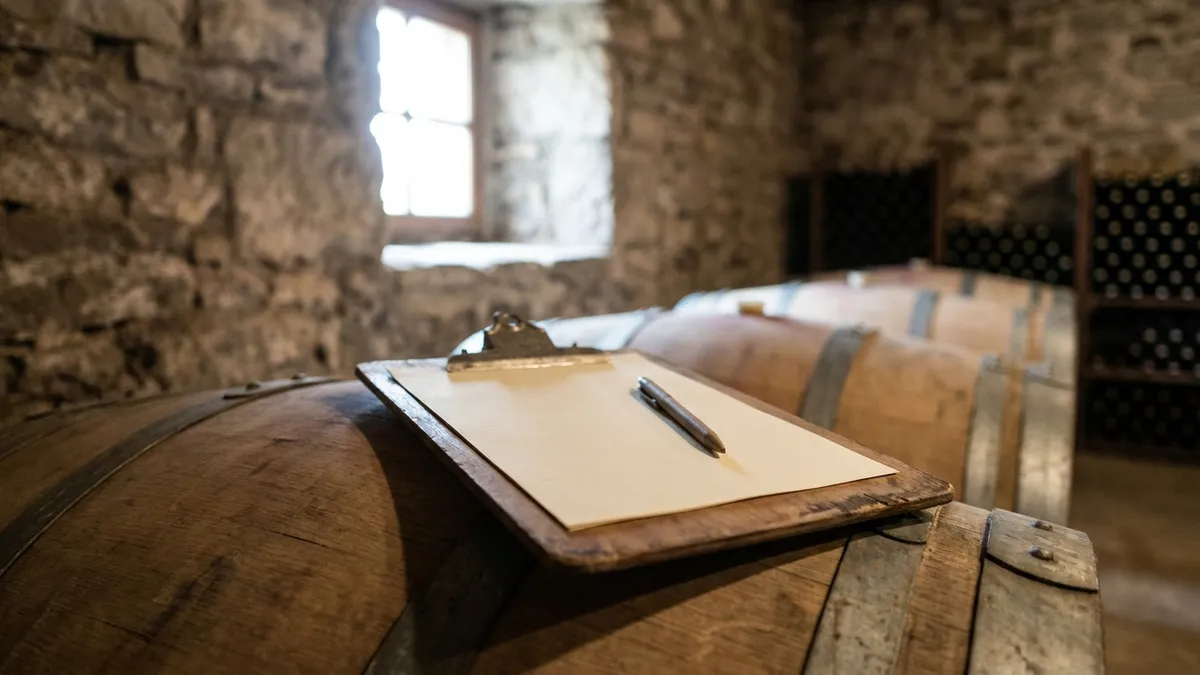
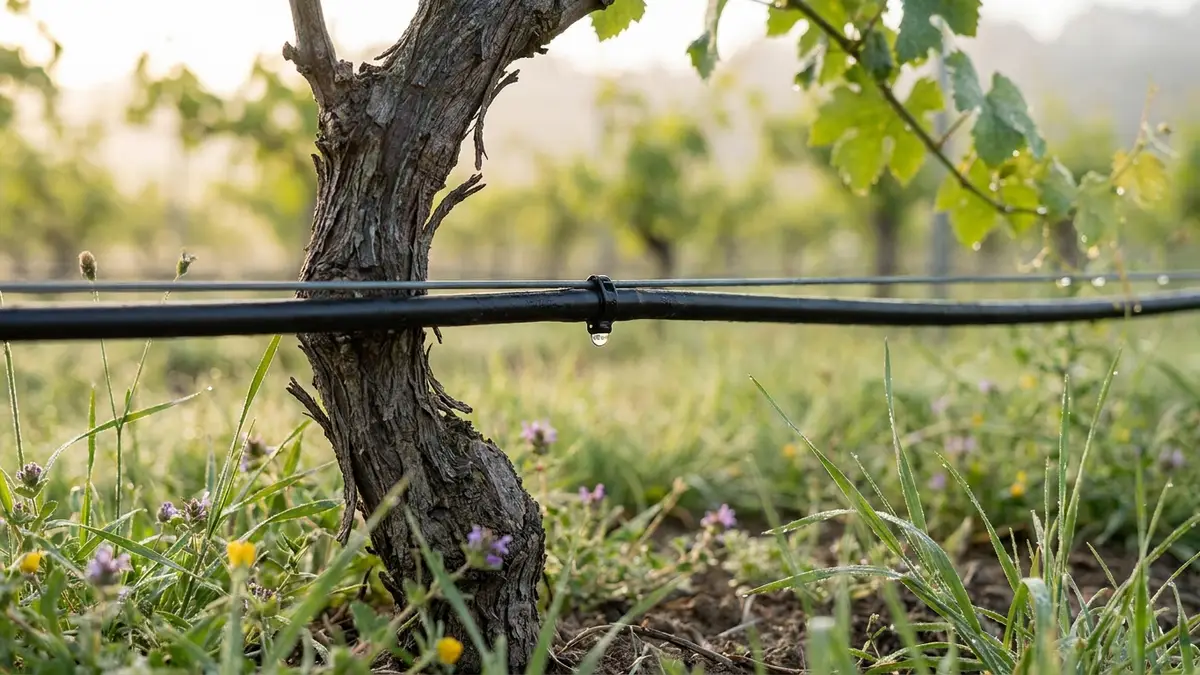
The practices run from the soil up. Cover crops between rows, measured irrigation, a spray plan with thresholds, energy and water records in the cellar, waste handling and training and safety for workers all appear in the code. A grower who fails a prerequisite does not pass, whatever the total score.
The bottle logo has a stricter test than the farm seal. A wine carrying the Certified California Sustainable logo must be made in a certified winery, from at least 85% certified-vineyard grapes, all of them Californian. A chain of custody audit (tracing the grapes from vineyard to bottle) checks that the certified fruit really went into that wine.
Which Wine Regions Are Most Certified?
New Zealand leads by share: 98% of its vineyard area is SWNZ certified. About 10% of its wineries hold organic certification. Nearly every vineyard passes the sustainable audit while one winery in ten has gone organic, so the two seals measure different things. The country's regions and grapes are mapped in the New Zealand wine guide.
California leads by size. In 2024, 2,634 certified vineyards farmed 251,687 acres, 43% of the state's winegrape area. The 223 certified wineries made 214 million cases, 90% of California wine. Those two numbers measure different things: a certified winery can still buy grapes from uncertified vineyards, which is why the bottle logo has its own 85% rule.
Two regions moved fast. In 2019, more than 89% of Sonoma County's 60,000 vineyard acres had gone through a third-party audit for certification, as covered in the Sonoma wine guide. By then Chile's code had grown from about 10 wineries to 80 producers making 90% of the country's exported wine, a story picked up in the Chile wine guide.
Does Sustainable Wine Taste Different or Cost More?
It does not taste different in any way you can point to. A certification describes how the vineyard and winery are run, and certified estates make every style, from crisp Sauvignon Blanc to tannic Cabernet. Grape, climate and winemaking set the flavour.
A seal is no guide to price. Certified wineries make most of California's wine, so certified bottles sit at everyday prices as well as at the top.
If two bottles suit the meal and cost the same, take the one with a named seal. If only one suits the meal, buy that one and check its back label at home. A New Zealand Sauvignon Blanc (the country's signature white, high in tartness and smelling of passion fruit and cut grass) is the easiest certified bottle to find. The Sauvignon Blanc guide explains why it tastes that way.
Where Does Biodynamic Fit?
Biodynamic sits above organic: a certified biodynamic vineyard meets the organic standard first, then adds farm-as-one-organism rules. The method comes from Rudolf Steiner's Agriculture Course of 1924 and uses a planting calendar tied to astrological configurations, which scientists still debate.
Its private certifiers, Demeter and Biodyvin, audit both the farm and the cellar, so a biodynamic seal is a stricter claim than a sustainable one. The preparations, the calendar and the evidence are covered in biodynamic wine explained. Natural wine is a separate cellar philosophy with no certification, set out in natural wine explained.
The wider family of styles and production choices sits in the wine styles hub. Sommy has bite-sized courses, including Wine 101 and a California course, and an AI-guided tasting mode that logs each bottle to your journal. Tonight, pour a glass, then read the back label and place the bottle on one of the five rows of the table above.
Sources
Frequently Asked Questions
What does sustainable wine mean?
Sustainable wine comes from vineyards and wineries that follow a written code covering the environment, the business and the people who work there: water use, soil care, spraying, energy, waste and fair treatment of workers. The word alone has no single legal definition, so it only carries weight when a named certification scheme with an outside audit stands behind it.
Is sustainable wine the same as organic wine?
No. Organic is a legal standard in the US and EU that bans synthetic pesticides, herbicides and fertilisers. Sustainable schemes are private codes that allow some targeted synthetic sprays when needed, but they also score things organic rules ignore, such as water, energy and worker conditions. A wine can be sustainable, organic, both or neither.
Is sustainable a legally protected term on a wine label?
Not in the way organic is. Each sustainability scheme writes its own rules, and a phrase like sustainably farmed with no scheme named can be printed without anyone checking it. A seal from a named programme, such as Certified California Sustainable or Sustainable Winegrowing New Zealand, means an outside auditor inspected the vineyard or winery against that programme's code.
Does sustainable wine have fewer sulfites?
Not as a rule. Most sustainability schemes focus on farming, energy and people, so the sulfite level of a sustainable wine follows ordinary winemaking. The labels with sulfite limits are organic ones. In the US, a wine labelled organic may have no added sulfites, and made with organic grapes allows up to 100 ppm. EU organic caps dry red wine at 100 mg/L.
Does sustainable wine taste better?
There is no taste you can point to as sustainable. A certification describes how the vineyard and winery are run, not a flavour, and certified estates make every style from light whites to tannic reds. Choose the style by grape, region and price as usual, then use the seal to decide between two bottles that already suit the meal.
Which country has the most sustainable vineyards?
New Zealand has the highest share. New Zealand Winegrowers reports that 98% of the country's vineyard area is certified under Sustainable Winegrowing New Zealand, a programme launched in 1995. California is the largest by size: in 2024, 251,687 acres, or 43% of the state's winegrape area, were certified under Certified California Sustainable Winegrowing.
Sommy Team
LinkedInFounder & Wine Educator
The Sommy Team is building the world's most approachable wine education app, helping beginners develop real tasting skills through structured courses and AI-guided practice.