Chilean Wine Guide: From the Andes to the Pacific

By the Sommy Team — AI-assisted, human-edited.
Updated Jun 17, 2026
Contents (10)
- What Is Chilean Wine?
- The Geography That Shapes Chilean Wine
- Carmenère: Chile's Signature Grape
- The Cool Coast: Casablanca and San Antonio
- The Warm Heart: Maipo, Colchagua, and the Central Valley
- The Southern Revival: Old-Vine País and Itata
- What Makes Chilean Wine Distinctive
- How a Beginner Should Start with Chilean Wine
- Chile Among the South American Wines
- The Reward of Learning Chilean Wine
TL;DR
Chile is a long, thin wine country pinned between the Andes and the Pacific, with a cool-to-warm gradient running east to west. Cabernet and Carmenère lead the warm central valleys, while cool coastal zones grow crisp whites. This Chilean wine guide shows beginners where to begin.
What Is Chilean Wine?
This Chilean wine guide begins with a map you can almost hold in your hand. Chile is one of the most extreme wine geographies on earth: a ribbon of land more than 4,000 kilometres long but rarely more than 175 kilometres wide, pinned between the towering Andes mountains to the east and the cold Pacific Ocean to the west. That narrow shape creates a remarkable east-west climate gradient. Cool coastal valleys like Casablanca grow crisp Sauvignon Blanc and Chardonnay, while warm central valleys like Maipo and Colchagua ripen full-bodied Cabernet Sauvignon. The signature grape is Carmenère, a Bordeaux variety rediscovered here in the 1990s, and the country is unusual for being almost entirely free of the vine pest phylloxera.
The Geography That Shapes Chilean Wine
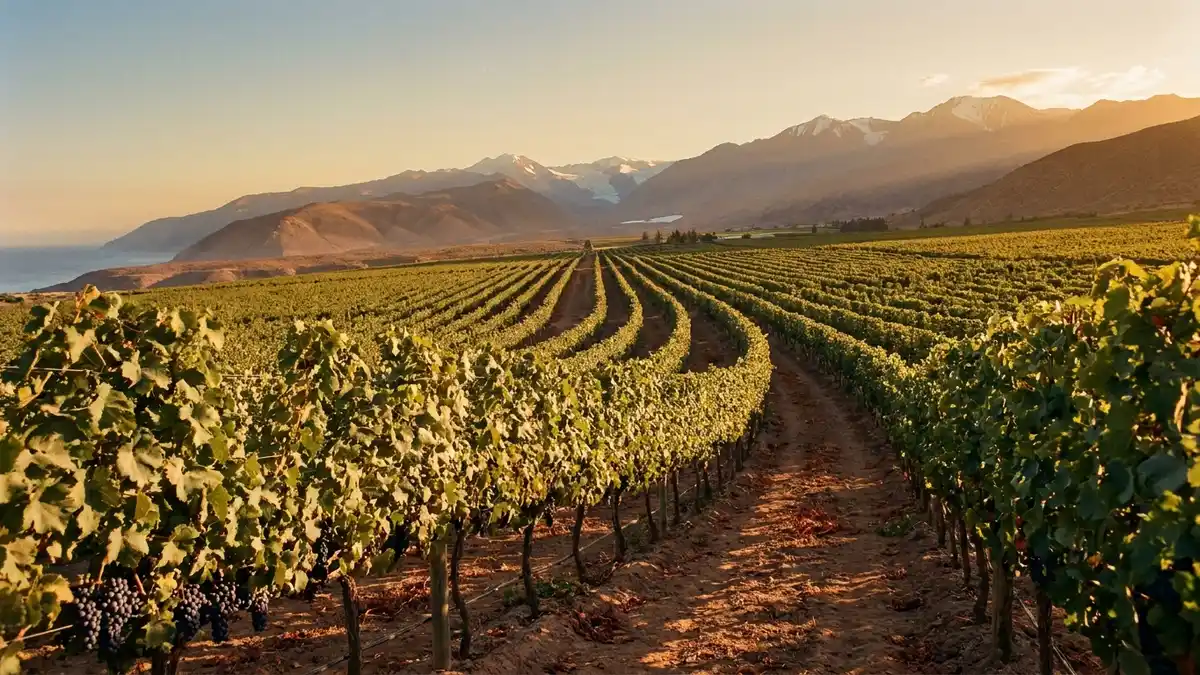
No other major wine country is built like Chile. To understand the wine, picture the squeeze: the Andes on one side, the Pacific on the other, the Atacama Desert to the north, and Patagonia trailing south. Vineyards sit in the valleys between, and where exactly they sit decides almost everything in the glass.
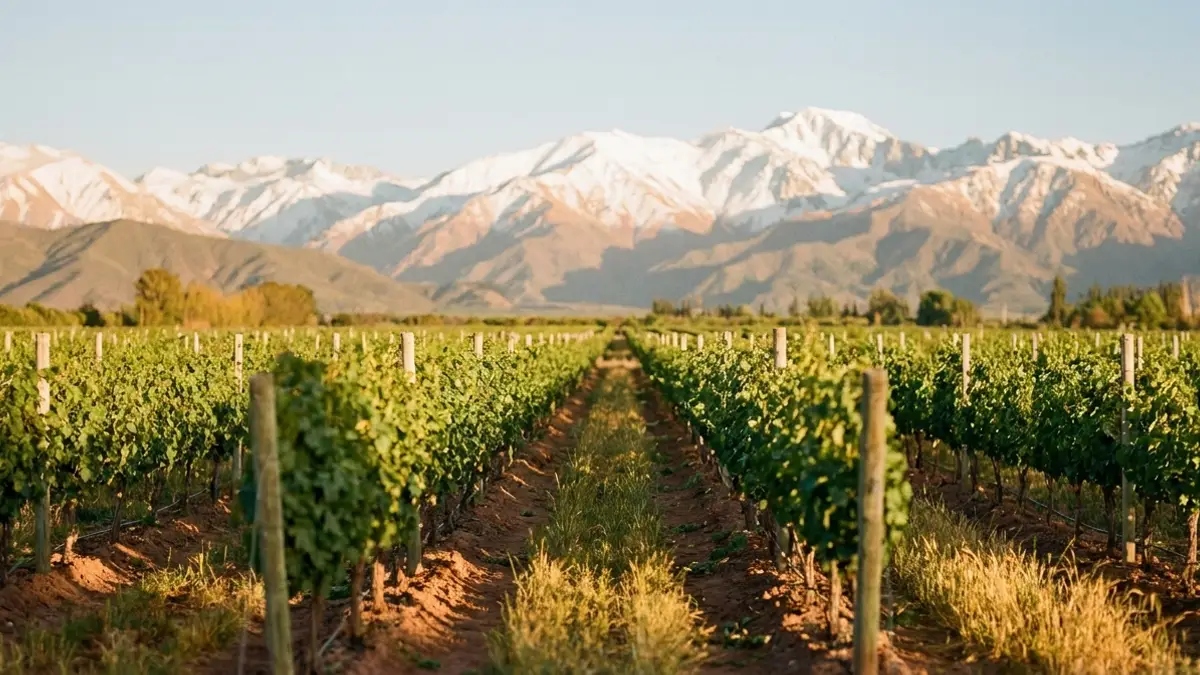
Most countries think about wine north to south, with warmth rising as you head toward the equator. Chile asks you to think east to west instead. The Pacific is brushed by the Humboldt Current, a band of cold water sweeping up from the Antarctic that drags chilly ocean fog over the coastal hills almost every morning. The Andes, meanwhile, funnel cool night air down from the snowline. Between these two cooling forces lies a warm, dry central corridor bathed in reliable sunshine.
So a single valley can hold two very different wines. Near the coast it is cool and crisp; toward the mountains it is warm and ripe. Learning to read a Chilean label means learning whether the grapes grew close to the ocean, up against the Andes, or in the sun-soaked middle.
The East-West Climate Gradient
This gradient is the most useful idea in all of Chilean wine, so it is worth slowing down on. Chile officially divides its valleys into three climate zones running across the country:
- Costa (coastal): Vineyards cooled by Pacific fog and the Humboldt Current, often just a short drive from the sea. Mornings are cloudy, afternoons mild, and the long, gentle ripening protects acidity. This is white-wine and Pinot Noir country — think zesty Sauvignon Blanc and citrusy Chardonnay.
- Entre Cordilleras (between the mountain ranges): The warm, sheltered central plain between the coastal hills and the Andes. Sunny and dry with big day-to-night temperature swings, it ripens fruit fully while keeping freshness. This is the historic home of Chilean Cabernet Sauvignon and Carmenère.
- Andes: Higher-altitude vineyards in the mountain foothills, where strong sun is balanced by cold nights and cool downslope breezes. The wines are structured and aromatic, with firm acidity and real ageing potential.
The lesson for a beginner is simple. Two reds from the same grape can taste completely different depending on which of these zones they came from — the same kind of place-driven difference our piece on why grapes that look the same can taste different explores in depth.
Carmenère: Chile's Signature Grape
Every great wine country has a grape it can call its own, and for Chile that grape is Carmenère — and the story of how it got there is one of the best in wine.
Carmenère was once a respected red variety in Bordeaux, France. Then the phylloxera louse swept through European vineyards in the late 1800s and Carmenère, hard to grow and slow to ripen, was largely abandoned and assumed extinct in its homeland. What no one realised was that cuttings brought to Chile decades earlier had survived — planted among the Merlot and, for more than a hundred years, mistaken for it.
The truth only emerged in 1994, when a visiting French ampelographer (a vine scientist) noticed that some of Chile's "Merlot" looked and behaved differently. DNA confirmed it in 1998: Chile had been quietly growing the world's largest stock of a grape everyone thought was gone. Today Chile is the global home of Carmenère, and it has become the country's proud calling card.
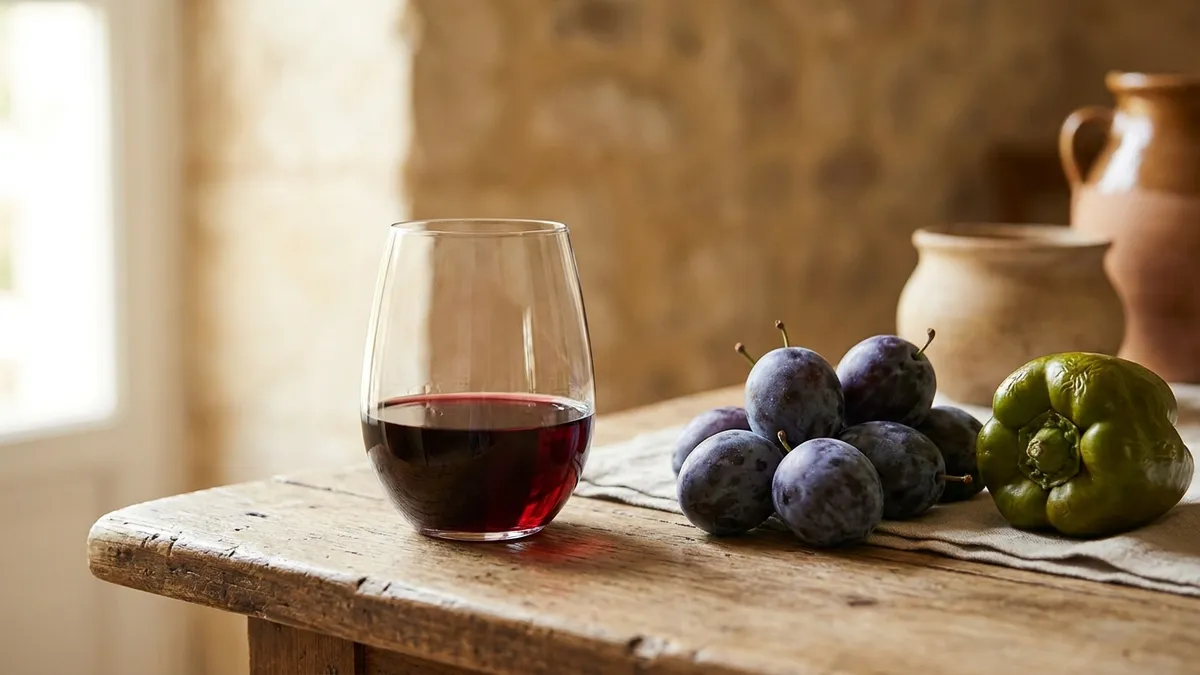
Carmenère makes a deeply coloured, medium-to-full red. Typical aromas: ripe plum, blackberry, dark chocolate, green peppercorn, and a distinctive herbal note of bell pepper or fresh herbs. Body: medium-to-full (4/5) · Acidity: medium (3/5) · Tannins: soft and round (3/5). That gentle, plummy texture with a savory herbal edge makes it one of the friendliest reds for a newcomer. For a deeper look at the grape itself, our Carmenère wine guide covers its history and styles in full.
Chile spent a century making the world's best Carmenère and called it Merlot the whole time.
The Sommy app turns that herbal-versus-fruity contrast into a guided exercise, helping you pin down the green-pepper note that sets Carmenère apart from softer Merlot.
The Cool Coast: Casablanca and San Antonio
Chile was famous for value reds long before the world noticed its whites. That changed when growers pushed vineyards toward the Pacific, into valleys too cool for Cabernet but ideal for crisp, aromatic grapes.
- Casablanca Valley: The pioneer of cool-climate Chilean wine, sitting between Santiago and the coastal city of Valparaíso. Morning fog rolls in off the ocean and burns away by midday, giving vivid Sauvignon Blanc full of citrus, green apple, and fresh-cut grass, alongside bright Chardonnay and increasingly serious Pinot Noir.
- San Antonio and Leyda: Even closer to the sea and even cooler, this is the cutting edge of coastal Chile. The Sauvignon Blanc here is taut and mineral, sometimes with a saline, almost oceanic snap, and the Pinot Noir is light, red-fruited, and elegant.
These coastal whites show a completely different face of Chile from its sunny reds. If you have only met the country through inexpensive Cabernet, a cool-coast Sauvignon Blanc is a revelation — and our Sauvignon Blanc wine guide explains how Chile's grassy, zesty style compares with the same grape elsewhere.
The Warm Heart: Maipo, Colchagua, and the Central Valley
Inland from the coast lies the Central Valley, the warm, sun-drenched engine room of Chilean wine and the source of most of what reaches shelves abroad. This is red-wine country, and Cabernet Sauvignon is king.
- Maipo Valley: Wrapped around the capital, Santiago, Maipo is the classic home of Chilean Cabernet Sauvignon, especially in its higher Andean foothills. The wines are firm, structured, and recognisably blackcurrant and mint, often called Chile's most "Bordeaux-like" reds. Our Cabernet Sauvignon wine guide sets these alongside the grape's global benchmarks.
- Colchagua Valley: Warmer and broader than Maipo, Colchagua is the powerhouse of ripe, generous reds. It excels at full-bodied Cabernet, plummy Carmenère, and inky Syrah, all with smooth tannins and ripe dark fruit. It is one of the easiest Chilean names to remember and trust for a crowd-pleasing red.
- Rapel, Cachapoal, and Maule: The wider Central Valley spreads across several sub-valleys producing huge volumes of dependable, fruit-forward wine, plus pockets of old vines that the modern wave is now rediscovering.
The reason these wines punch above their price is Chile's near-ideal farming conditions. Reliable sun ripens fruit almost every vintage, while the Andes and Pacific keep nights cool, locking in freshness. The result is clean, consistent, ripe wine at honest prices, vintage after vintage.
The Southern Revival: Old-Vine País and Itata
The newest chapter in Chilean wine is also its oldest. Head south of the Central Valley into the cooler, rainier regions of Itata, Bío-Bío, and southern Maule, and you find a quiet revolution rooted in ancient vines.
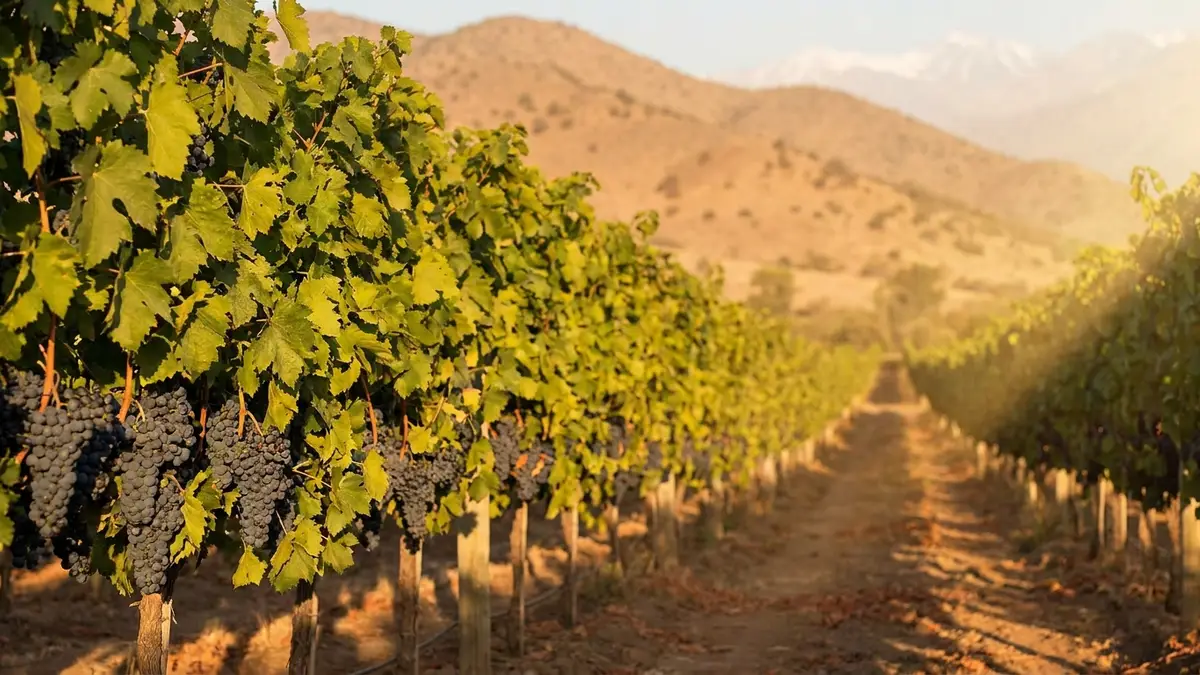
The grape at its centre is País, Chile's original variety, brought by Spanish settlers in the 1500s and for centuries dismissed as a humble bulk grape good only for jug wine. But many of those old País vines are over a hundred years old, ungrafted, dry-farmed, and full of character. A new generation of growers is reviving them to make light, juicy, fragrant reds with bright acidity and a wild, savory edge — wines that feel honest and alive.
This southern movement matters for two reasons. It honours Chile's deep history, and it offers a fresher, lower-alcohol, lower-intervention style that stands apart from the ripe Cabernet image. Our País grape wine guide digs into this heritage grape and why it is suddenly fashionable.
Alongside País, these southern valleys also revive old-vine Cinsault and Muscat, and grow more Chardonnay in their cooler, Atlantic-influenced pockets. It is the part of Chile most worth watching.
What Makes Chilean Wine Distinctive
Three things set Chile apart from almost every other wine country, and together they explain its reliability and its identity.
A Phylloxera-Free Paradise
Chile is one of the very few places on earth never invaded by phylloxera (a tiny root-feeding louse that destroyed most of the world's vineyards in the 1800s and forced growers to graft their vines onto resistant American rootstock). Chile's natural barriers — the Andes, the Atacama Desert, the Pacific, and the icy Humboldt Current — sealed the pest out.
The practical upshot is that many Chilean vines grow on their own roots, just as they did before the global phylloxera crisis. It keeps farming simpler, supports the survival of those ancient País vines, and gives Chile a living link to how wine was grown two centuries ago.
Reliable Sun, Cool Nights, Honest Prices
Chile's Mediterranean climate delivers dry, sunny summers with very little disease pressure, so grapes ripen cleanly and consistently. The cooling influence of ocean and mountains preserves acidity even in warm zones. That combination of ripeness and freshness, achieved with low farming costs, is exactly why Chilean wine has built its reputation on dependable quality at fair prices.
A Country Organised by Distance to the Sea
Most wine regions are mapped by appellation borders. Chile added a smarter layer in 2011: the Costa / Entre Cordilleras / Andes terms that tell you how close a vineyard sits to the ocean or the mountains. It is a rare labelling system built around climate rather than just place names, and once you know it, a Chilean label tells you the style before you taste a drop.
How a Beginner Should Start with Chilean Wine
You do not need a big budget to understand Chile — its best feature is that exploration is affordable. The smartest path is to taste across the geography on purpose and notice what the gradient does to the wine. Here is a practical order:
- Meet the warm heart first. Open a Maipo or Colchagua Cabernet Sauvignon. Notice the ripe blackcurrant fruit, the smooth tannins, and the hint of mint or herb that marks Chilean Cabernet.
- Cross to the cool coast. Pour a Casablanca or Leyda Sauvignon Blanc next to it. The leap from rich red to grassy, citrusy white shows the east-west gradient in two glasses.
- Taste the signature grape. Try a Carmenère and hunt for its trademark green-peppercorn note over plummy fruit. Compare it with the Cabernet to feel how soft and herbal it is by contrast.
- Reach for heritage. Find an old-vine País from Itata or Maule. Lighter, brighter, and a little wild, it rewrites what you think Chilean red can be.
- Build the tasting habit. Pay attention to body, fruit ripeness, and acidity each time. Our guide to how to taste wine gives you the step-by-step method, and our overview of the noble grapes puts Cabernet and Sauvignon Blanc in context.
Sommy turns these comparisons into guided exercises — naming the aromas, scoring the structure, and building the vocabulary to describe what you sense. You can start practising free at sommy.wine, then bring the method to your next Chilean bottle.
Chile Among the South American Wines
Chile rarely travels alone. Just over the Andes lies Argentina, its great rival and counterpart, and the two countries make a perfect study in contrast: Chile leans on cool-coast freshness and Cabernet, while Argentina builds its fame on high-altitude Malbec. Tasting one against the other is one of the most rewarding lessons in New World wine.
It is also worth placing Chile beside its Southern Hemisphere cousins. South Africa, with its own ocean-cooled vineyards and revival of old bush vines, rhymes with Chile's story in surprising ways, and Brazil offers the sharpest contrast of all — a South American neighbour that chased sparkling wine and fresh Merlot instead of powerhouse reds. Whether you start with the Andes or the Cape, the same skill carries across every region: learning to taste the place in the glass. Our broader guide to French wine regions shows where many of Chile's grapes — Cabernet, Carmenère, Sauvignon Blanc — first earned their fame.
The Reward of Learning Chilean Wine
Chile is the friendliest of the world's great wine countries to learn, and it gives a beginner an enormous amount back for very little outlay. The geography is legible, the prices are fair, the styles are clean, and the signature grape comes with a story you will not forget. Few regions make the link between place and taste so easy to see.
Start with two glasses — a warm-valley Cabernet and a cool-coast Sauvignon Blanc — and let the country's east-west gradient reveal itself. The Sommy app is built to make that habit stick, turning each bottle into a short, guided lesson so the next Chilean wine you open is a little clearer than the last.
Sources
Frequently Asked Questions
What is Chile's signature grape?
Carmenère is Chile's signature grape. Once a minor Bordeaux variety, it was thought extinct after phylloxera, then rediscovered in Chilean vineyards in 1994, having been mistaken for Merlot for over a century. Today Chile grows more Carmenère than anywhere on earth, making a soft, herbal, plummy red that has become the country's calling card.
What does Chilean wine taste like?
It depends on where the grapes grow. Warm central valleys give ripe, fruit-forward reds: blackcurrant Cabernet and plummy, peppery Carmenère with smooth tannins. Cool coastal zones give fresh, zesty whites: grassy Sauvignon Blanc and citrusy Chardonnay, plus light, red-fruited Pinot Noir. The shared thread is clean fruit and reliable value across both styles.
Why is Chilean wine usually good value?
Chile has near-perfect grape-growing conditions, low disease pressure, and a phylloxera-free environment that keeps farming simple and costs down. Its dry, sunny climate ripens fruit reliably almost every year, so the country produces clean, consistent wine at fair prices. Even entry-level Chilean Cabernet and Sauvignon Blanc tend to over-deliver for what they cost.
What is the difference between coastal and Andean Chilean wine?
Chile's climate shifts east to west, not just north to south. Vineyards near the Pacific are cooled by ocean fog and the Humboldt Current, favouring crisp Sauvignon Blanc, Chardonnay, and Pinot Noir. Vineyards toward the warm Andean foothills ripen full-bodied Cabernet and Carmenère. The same valley can hold both styles depending on how close it sits to the coast or mountains.
Is Chile really free of phylloxera?
Yes. Chile is one of very few wine countries never infested by phylloxera, the root louse that devastated the world's vineyards in the 1800s. The Andes, the Atacama Desert, the Pacific, and Antarctic-fed waters form natural barriers that have kept the pest out. As a result, many Chilean vines grow on their own roots rather than grafted American rootstock.
What is País and why does it matter?
País is Chile's oldest grape, brought by Spanish settlers in the 1500s and long used for simple bulk wine. A new wave of growers in southern regions like Itata, Bío-Bío, and Maule is now reviving old, ungrafted País vines to make light, juicy, characterful reds. It represents Chile's heritage and its most exciting fresh, low-intervention movement.
Where should a beginner start with Chilean wine?
Start with two contrasting bottles: a Maipo or Colchagua Cabernet Sauvignon for ripe, structured red, and a Casablanca Sauvignon Blanc for cool-coast freshness. Then try a Carmenère to meet the signature grape, and an old-vine País for heritage character. Taste them with attention to fruit, body, and acidity, and the country's geography starts to make sense.
Sommy Team
LinkedInFounder & Wine Educator
The Sommy Team is building the world's most approachable wine education app, helping beginners develop real tasting skills through structured courses and AI-guided practice.