Brazilian Wine Guide: From Serra Gaúcha to the Vale do São Francisco

By the Sommy Team — AI-assisted, human-edited.
Updated Jul 22, 2026
Contents (9)
- What Is Brazilian Wine?
- Two Countries in One Glass
- Where Brazilian Wine Grows: The Key Regions
- Why Brazil Bet on Bubbles
- The Grapes: Merlot Leads, Tannat and Ancellotta Support
- How Two Harvests a Year Actually Works
- What Brazilian Wine Actually Tastes Like
- Brazil Wine Guide: How a Beginner Should Start
- Brazil in the Wider Wine World
TL;DR
Brazil grows vines across two worlds: the cool, humid mountains of Serra Gaúcha, where sparkling wine is the calling card, and the tropical Vale do São Francisco, where vines crop twice a year. This Brazil wine guide covers the regions, the grapes led by Merlot, and where a beginner should start.
Brazil is the fifth-largest country on earth and, for most drinkers, the last place they would look for wine. That is the fun of it. This Brazil wine guide covers a producer that quietly makes serious sparkling wine in cool southern mountains and, at the same time, grows grapes in a tropical valley where the vines never truly stop. Two climates, one flag, and a house style that looks more toward Europe than toward the sun-baked reds of its neighbours.
What Is Brazilian Wine?
Brazilian wine is warm-country wine with a cool-climate heart. Roughly 90% of it comes from Rio Grande do Sul in the far south, where Italian immigrants planted vines from 1875 onward in the humid Serra Gaúcha highlands. The signature product is sparkling wine, made in both the traditional method and the tank-based Charmat method, defined by bright acidity. Merlot — the grape that ripens early enough to dodge the rain — leads the still reds, backed by Tannat, Cabernet Sauvignon, and Ancellotta. Far to the northeast, the tropical Vale do São Francisco harvests two or more crops a year. Brazil farms around 75,000 hectares of vine in total, though much of that goes to juice.
Two Countries in One Glass
Most wine nations have a single climate story. Brazil has two, separated by around 2,000 kilometres and roughly 20 degrees of latitude.
The south — Rio Grande do Sul and Santa Catarina — is temperate, hilly, and rainy. Vines here follow the familiar four-season cycle: bud in spring, ripen in the warm, wet summer, harvest in autumn, sleep through a cold winter. The challenge is water. This is one of the few serious wine regions on earth where rain, not drought, is the main enemy, which is why grape choice and canopy management matter so much.
The northeast is a different planet. The Vale do São Francisco sits in the semi-arid Sertão, the dry backcountry of the Caatinga biome, where the sun is relentless and the vines never experience a real winter. There, growers do not wait for the seasons — they schedule them.
Understanding Brazil means holding both pictures at once. It is the clearest single-country lesson in how climate rewrites the rulebook, a live demonstration of what terroir actually means rather than a marketing word.
Where Brazilian Wine Grows: The Key Regions
| Region | Where and climate | Elevation | What it does best |
|---|---|---|---|
| Serra Gaúcha | Southern mountains, humid, cool nights | 600–800 m | Traditional-method and Charmat sparkling, soft Merlot |
| Campanha | Southern border with Uruguay, dry, flat, sunny | 100–300 m | Structured Tannat and Cabernet reds |
| Serra do Sudeste | South-central, granite soils, cooler | 300–450 m | Slower-ripening, elegant reds and whites |
| Planalto Catarinense | Santa Catarina highlands | 900–1,400 m | High-altitude, cool-climate fine wine |
| Vale do São Francisco | Tropical northeast, semi-arid Sertão | ~350 m | Year-round harvests, everyday reds and sparkling |
Serra Gaúcha — The Heartland
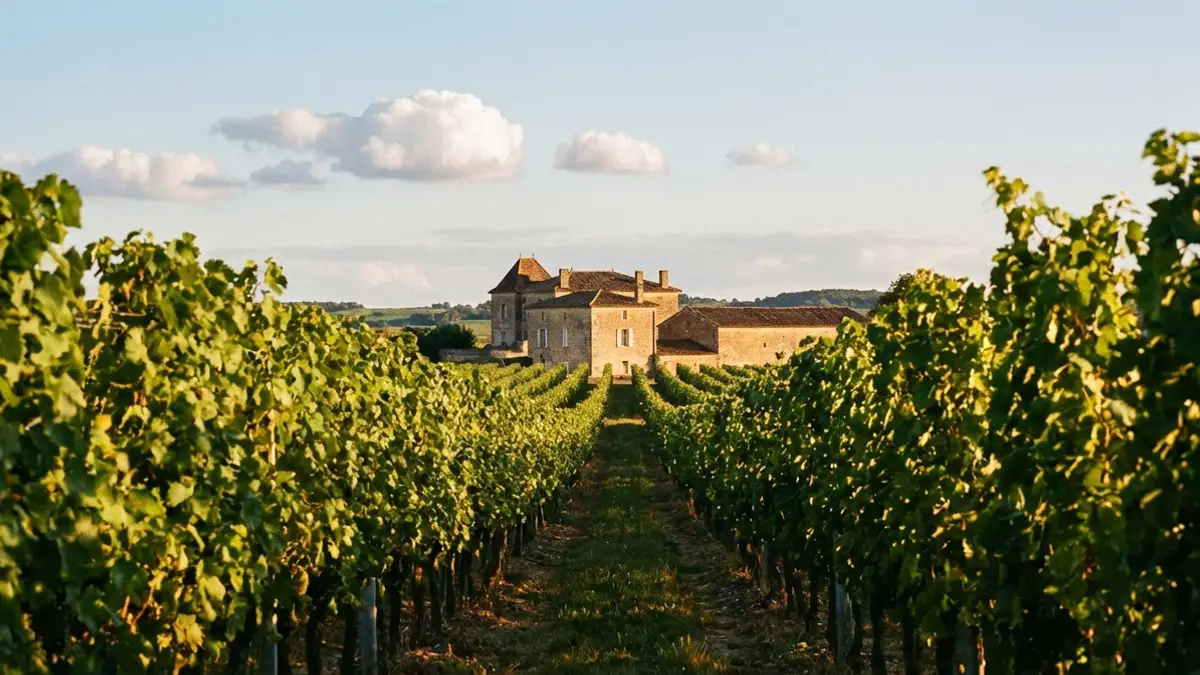
Serra Gaúcha is where Brazilian wine begins and, by volume, mostly ends: it accounts for the large majority of the country's fine-wine production. The landscape is a patchwork of steep green hills, stone farmhouses, and tiny holdings — the region counts more than 15,000 grape growers, many farming under two hectares each, a smallholder structure inherited directly from the Italian families who arrived in the 1870s.
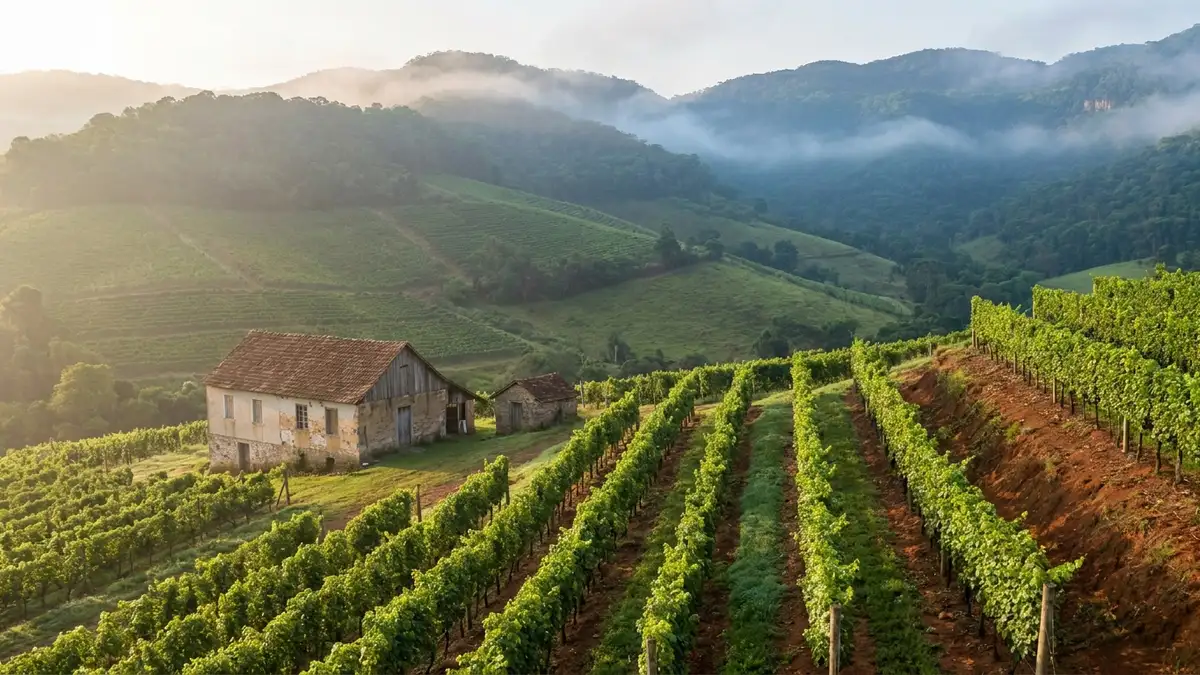
Within it sits Vale dos Vinhedos, the country's most celebrated sub-zone and its quality benchmark. In 2002 it became the first place in Brazil to earn a geographical indication, and about a decade later it was promoted to the country's first full Denomination of Origin — the stricter tier that ties a wine's identity to a defined place and set of rules. Neighbouring sub-appellations such as Pinto Bandeira, Altos Montes, Farroupilha, and Monte Belo have followed the same path toward officially protected origin.
Campanha and Serra do Sudeste
Head south toward the Uruguayan border and the rain eases. Campanha (the Campanha Gaúcha) is flatter, drier, and sunnier, which lets grapes ripen more fully and evenly. Reds here have firmer structure — this is Tannat and Cabernet Sauvignon country, closer in spirit to neighbouring Uruguay than to the misty Serra.
Serra do Sudeste, to the south-central, brings granite and cooler air. Its slower ripening produces reds and whites with more tension and finesse, and it is one of the zones ambitious producers watch most closely.
Planalto Catarinense — High and Cold
In the state of Santa Catarina, the Planalto Catarinense climbs to between 900 and 1,400 metres around the town of São Joaquim — some of the highest vineyards in southern Brazil, and cold enough to see occasional winter snow. The long, cool growing season keeps acidity high and pushes ripeness late into the season, yielding structured, aromatic wines that feel a world away from the tropics.
Vale do São Francisco — The Tropical Frontier
Nearly 2,000 kilometres north, straddling the São Francisco River near the twin cities of Petrolina and Juazeiro, lies Brazil's most unusual wine zone. At roughly nine degrees from the equator, the Vale do São Francisco is genuine tropical viticulture — sun, heat, and irrigation channelled from the river, producing everyday reds, whites, and a growing volume of sparkling.
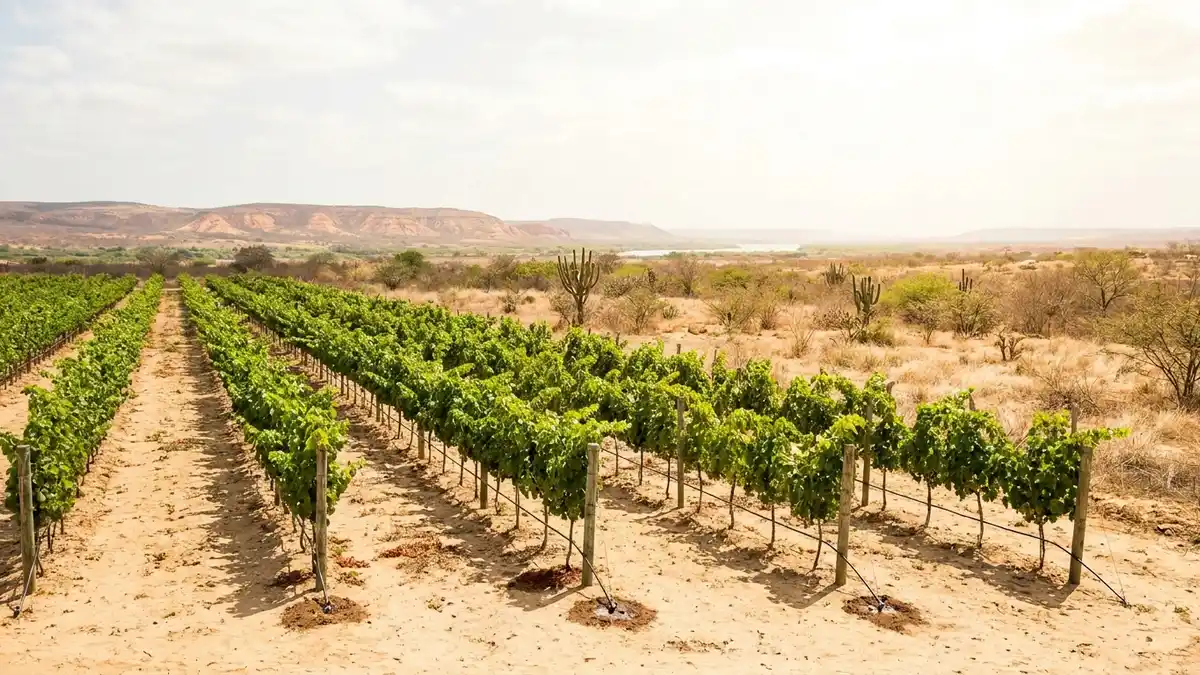
The wines are honest and fruit-forward rather than profound, but the region matters out of all proportion to its fame, because of how it grows grapes. More on that below.
Why Brazil Bet on Bubbles
If Brazil has a calling card, it is sparkling wine. The logic is simple once you know how fizz is built.
Sparkling wine needs grapes picked with high acidity — the tart, mouth-watering freshness that makes a wine feel lively — and relatively low sugar. Serra Gaúcha's cool nights and shorter ripening window deliver exactly that: bright, lean base wines that would be almost too sharp to drink still, but are perfect for turning into fizz.
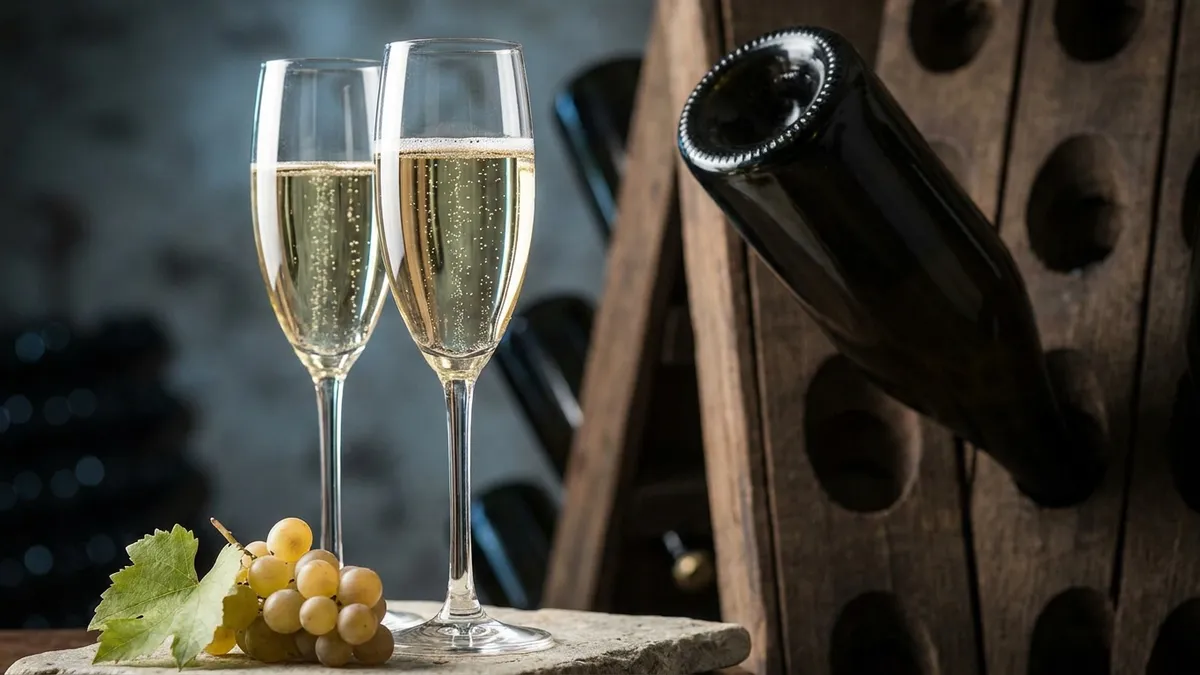
Brazil makes it two ways. The traditional method — the same second-fermentation-in-the-bottle process used in Champagne — builds toasty, biscuity complexity from long ageing on the lees (spent yeast), and is centred on Chardonnay and Pinot Noir. The Charmat method, where the bubbles form in a sealed tank, keeps things fresher, fruitier, and more affordable. In 2023 the sub-region of Altos de Pinto Bandeira became the New World's first Denomination of Origin dedicated exclusively to sparkling wine — a sign of how seriously the country now takes its bubbles.
If you want to hear how these styles differ before you buy, our guides to sparkling wine types and how to taste sparkling wine break down the method-by-method flavour cues, and the Champagne, Prosecco, and Cava comparison puts Brazil's fizz in global context.
The Grapes: Merlot Leads, Tannat and Ancellotta Support
Brazil's fine-wine vineyard is built on familiar international grapes, but the pecking order is its own.
- Merlot — the flagship red. Its early ripening is the whole point: it reaches maturity before autumn rains set in, where later-ripening grapes would rot on the vine. Serra Gaúcha Merlot is soft, medium-bodied, and red-fruited; the Merlot from the drier Campanha is firmer and darker. Same grape, two personalities, one country.
- Cabernet Sauvignon — structured and reliable, often blended with Merlot in a Bordeaux mould. See the full Cabernet Sauvignon guide for the grape's range.
- Tannat — the muscular, tannic red of the drier south, giving Campanha its most age-worthy bottles.
- Ancellotta — a deeply pigmented northern-Italian grape used to add colour and body to blends, and a nod to the region's Italian roots.
- Chardonnay and Pinot Noir — the sparkling engine, and increasingly the source of good still whites and light reds from the coolest sites.
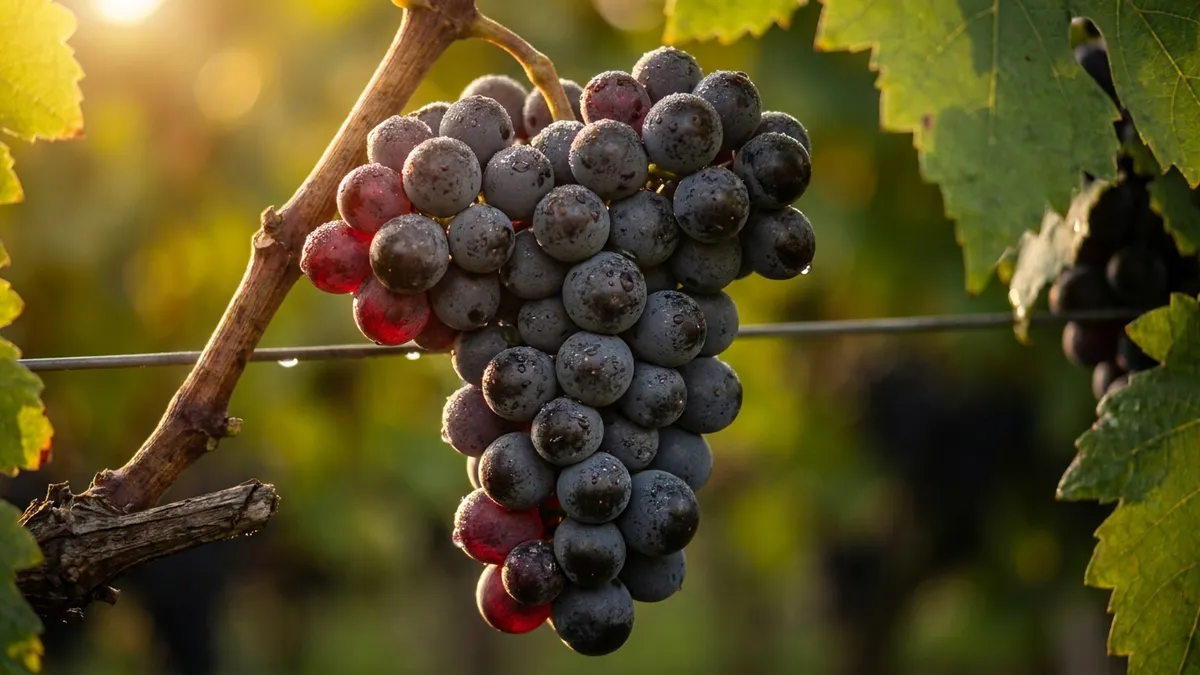
It is worth being honest about scale. Of Brazil's roughly 75,000 hectares of vineyard, a large majority is planted to American and hybrid varieties — Isabel, Bordô, Niagara — that mostly become grape juice and simple everyday wine, not the premium bottles this guide describes. The fine-wine story sits on a smaller vinifera core.
Typical Brazilian red aromas
Fruit
- Red Plum
- Black Cherry
- Blackberry
- Red Currant
Floral
- Violet
Spice/Herbal
- Dried Herbs
- Black Pepper
Oak/Aged
- Dark Chocolate
- Leather
- Tobacco
How Two Harvests a Year Actually Works
The Vale do São Francisco is the part of Brazilian wine most worth understanding, because it breaks a rule most drinkers assume is fixed: one vintage per year.
In temperate regions, cold winters force the vine into dormancy — a shut-down period where it drops its leaves and rests. Tropical vines never get that signal. In the São Francisco valley the average winter temperature sits around a balmy 20°C, so left alone the vine would grow, flower, and fruit in an endless, ragged cycle.
Growers turn that quirk into a tool. Using a double-pruning system — pruning twice a year, controlling irrigation, and deliberately stressing the vine with water — they schedule two or more distinct growth cycles annually. Stagger the pruning across different plots and the result is remarkable: somewhere in the valley, grapes are flowering, ripening, or being picked in every month of the calendar.
The trade-off is that constant production and tropical heat rarely make profound, age-worthy wine. These are bottles for freshness and value, not for cellaring. But as a piece of viticultural engineering, the São Francisco valley is one of the most interesting things happening in wine anywhere.
What Brazilian Wine Actually Tastes Like
Set expectations by the climate, not the latitude. Brazil's serious wines are fresher and lighter than the word "South America" might suggest.
The sparkling is the clearest expression: pale, brisk, and citrus-driven, with green apple and white flowers, a fine persistent bead, and — in aged traditional-method examples — toast, almond, and fresh bread from time on the lees. Acidity is the throughline.
The reds lean medium-bodied and juicy. A Serra Gaúcha Merlot offers red plum, cherry, and violet with soft, easy tannins; a Campanha Tannat or Cabernet firms up into darker fruit, dried herbs, and grip. Alcohol tends to stay moderate, and oak is usually a seasoning rather than the main event.
Critics reaching for a comparison tend to describe Brazil's best wines as more European in feel — fresher, leaner, more about balance than power — than the ripe, generous reds of warmer South American regions. That freshness is the national signature.
If you are still building the words for what you smell and taste, our guide on how to describe wine gives you a working vocabulary, and the Sommy app turns it into guided practice you can run against any bottle in your glass.
Brazil Wine Guide: How a Beginner Should Start
Work through it in three steps, letting each contrast teach you something.
- Start with a traditional-method sparkling from Serra Gaúcha. Serve it cold, around 6 to 8°C — our wine serving temperature chart has the full range. Look for the brisk apple-and-citrus attack and the toasty note underneath. This is Brazil at its most confident.
- Move to a Serra Gaúcha Merlot and, if you can, pour a firmer Campanha Tannat beside it. Tasting the two side by side makes the humid-versus-dry climate difference obvious in the glass — soft and red-fruited next to structured and dark.
- Finish with a Vale do São Francisco red. It will not be the deepest wine you drink this month, but knowing it was grown in a valley that harvests year-round changes how it tastes.
Tasting wines in pairs is the fastest way to build real skill, because the contrast does the teaching for you. The Sommy app walks you through comparisons exactly like these, so you learn to name what you are tasting instead of guessing at it.
Brazil in the Wider Wine World
Brazil is the odd one out among South American wine countries, and that is exactly what makes it worth learning. Where Argentina built its identity on high-altitude Malbec and Chile on sun-drenched Cabernet, Brazil went a different way: fizz, freshness, and Merlot, shaped by rain rather than desert sun.
By the usual Old World versus New World framework, Brazil sits awkwardly across the line. It is unmistakably New World in its varietal labelling and modern winemaking, yet its cool-climate, sparkling-first, Italian-immigrant character feels closer to Europe than to its neighbours. Its nearest stylistic cousin may be South Africa — another warm country that leans on cool sites, sea air, and a strong sparkling tradition to keep its wines fresh.
The reward for learning Brazilian wine is not one more region on a list. It is a single country that proves climate, not latitude, sets the terms — cool mountains making brilliant bubbles in the same borders as a valley that harvests all year long. Sommy's regional courses build exactly that kind of comparative instinct, one glass at a time.
Sources
- Brazilian Grape and Wine Market Overview — USDA Foreign Agricultural Service, 2026
- A beginner's guide to Brazil wines — Decanter
- Development of the geographic indication Vale do São Francisco for tropical wines in Brazil — IVES OpenScience
- Sparkling wine is having a moment in Brazil — here's why — National Geographic
Frequently Asked Questions
What is Brazilian wine best known for?
Brazil is best known for sparkling wine. The cool, humid mountains of Serra Gaúcha give grapes high natural acidity, which is exactly what fizz needs, so producers make both traditional-method and tank-method (Charmat) sparkling as the country's signature style. For still wine, Merlot is the flagship red, prized because it ripens early enough to beat the region's rain.
Where is wine made in Brazil?
Around 90% of Brazilian wine comes from Rio Grande do Sul, the country's southernmost state, and above all from its Serra Gaúcha highlands. Other zones include the drier Campanha and Serra do Sudeste further south, the high-altitude Planalto Catarinense in Santa Catarina, and the tropical Vale do São Francisco far to the northeast.
How can Brazil harvest grapes twice a year?
In the tropical Vale do São Francisco, roughly nine degrees from the equator, there is no cold winter to force vines into dormancy. Growers use a double-pruning system plus irrigation and controlled water stress to trigger two or more growth cycles a year, so different plots are flowering and ripening at any given month and harvest runs year-round.
What does Brazilian wine taste like?
Brazilian sparkling is bright, lean, and citrusy with green-apple freshness and, in aged traditional-method bottles, a toasty, biscuity depth. The reds tend to be lighter and fresher than other South American reds — medium-bodied Merlot with red plum and soft tannins, or firmer Tannat and Cabernet from the drier Campanha. The overall style leans more European than powerhouse.
Which grapes does Brazil grow?
For fine wine, Merlot leads the reds, supported by Cabernet Sauvignon, Cabernet Franc, Tannat, and the deeply colored Ancellotta. Chardonnay and Pinot Noir drive the sparkling wines. A very large share of Brazil's total vineyard, however, is planted to American and hybrid grapes such as Isabel and Bordô, which go mostly into grape juice and everyday table wine rather than premium bottles.
Is Brazilian wine any good for beginners?
Yes. Brazilian sparkling is one of the friendliest wines to start with — crisp, low in tannin, moderate in alcohol, and easy to pair with food. The reds are approachable and rarely heavy. Because the country makes both cool-climate and tropical wines, Brazil is also a clear teaching example of how climate, not just grape, shapes what ends up in the glass.
Sommy Team
LinkedInFounder & Wine Educator
The Sommy Team is building the world's most approachable wine education app, helping beginners develop real tasting skills through structured courses and AI-guided practice.