Riesling vs Sauvignon Blanc: Side by Side (Taste, Food)

By the Sommy Team — AI-assisted, human-edited.
Updated Nov 3, 2026
Contents (7)
TL;DR
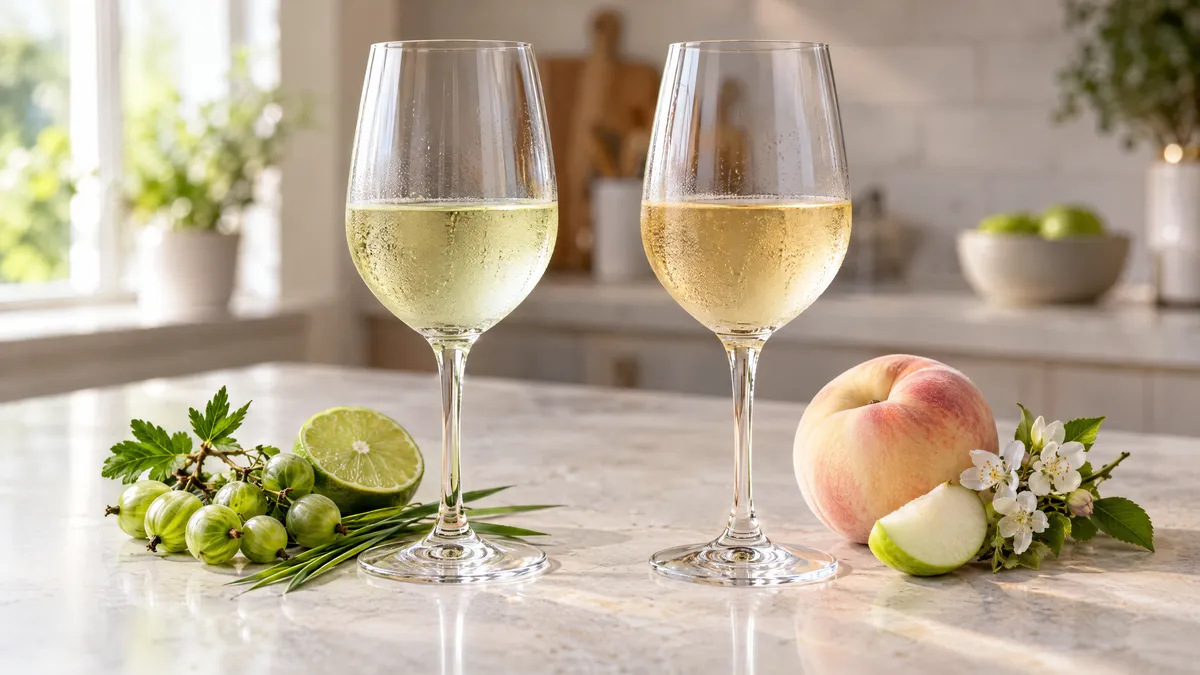
Both grapes make tart, tannin-free whites. Sauvignon Blanc smells green, of grass, green pepper and gooseberry, and is almost always dry. Riesling smells of flowers, lime and peach, gains a petrol note with age, and is made at every sweetness level, so read the label. Off-dry Riesling suits chilli; Sauvignon Blanc suits herbs and goat cheese.
Riesling vs Sauvignon Blanc is a contest between two smells and one label word. Sauvignon Blanc smells green and is almost always dry. Riesling smells of flowers and stone fruit, and its sweetness can be anything, so you read the bottle before you buy it.
Riesling vs Sauvignon Blanc, in One Paragraph
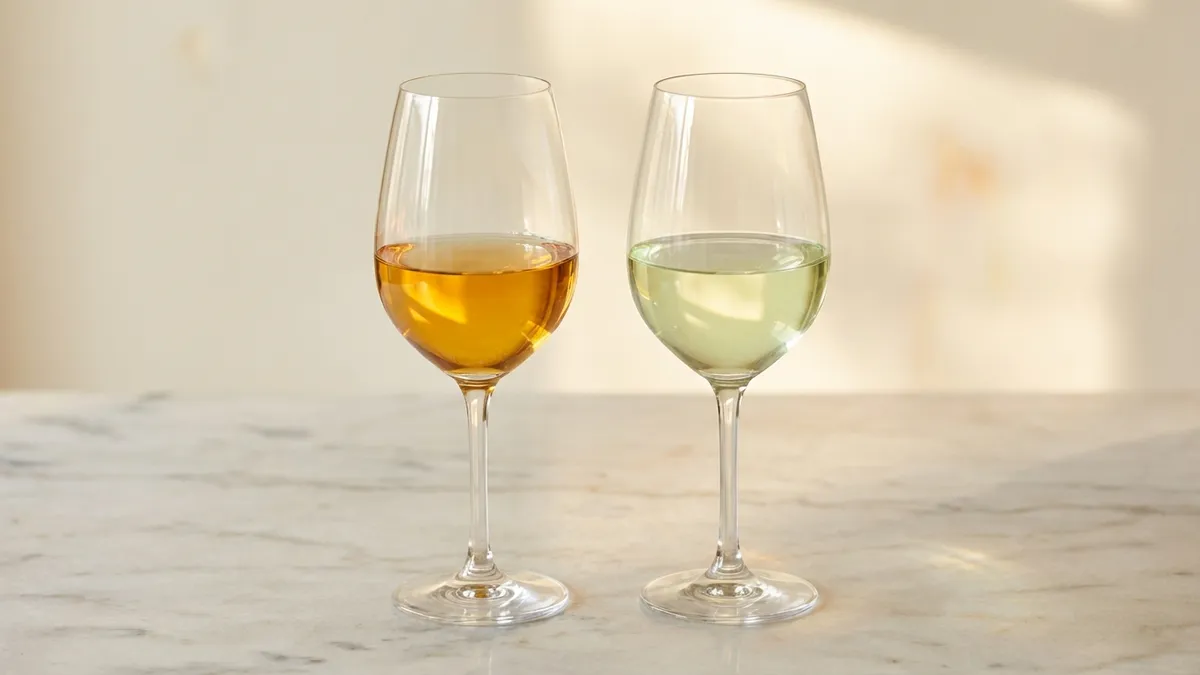
Both grapes make light, tart whites with high acidity (the tartness that makes your mouth water) and no tannin. Sauvignon Blanc, from Bordeaux and the Loire Valley, smells of cut grass, green pepper, gooseberry and grapefruit, sits at 11.5 to 13.5% alcohol and is almost always dry. Riesling is an aromatic grape with a flowery, almost perfumed smell of white blossom, lime and peach. It is made bone-dry, off-dry and very sweet, and with age it can smell of petrol. Sauvignon Blanc feels lean. Riesling is often just as light in body (weight in the mouth, like whole milk against skimmed) but has more texture, even when dry.
Riesling vs Sauvignon Blanc Side by Side
| Sauvignon Blanc | Riesling | |
|---|---|---|
| Smells of | Cut grass, green pepper, gooseberry, grapefruit; passion fruit when riper | White blossom, lime, green apple, white peach; petrol with age |
| Sweetness | Almost always dry | Bone-dry to very sweet: read the label |
| Acidity | High | High |
| Body and texture | Medium-light, lean | Light to medium, with more extract and an oilier feel |
| Tannin | None | None |
| Alcohol | 11.5 to 13.5% | Often under 10% when sweet; dry styles run higher |
| Oak | Occasionally | Seldom |
| Serve at | 7 to 12°C | 3 to 7°C |
| Pick it if | You want a dry, zesty white for herbs, salads and goat cheese | You want a fragrant white, or a touch of sugar against chilli |
If the bottle says Sauvignon Blanc, expect dry. If it says Riesling, find the sweetness word before you buy: trocken is dry, and a bottle with no such word may hold some sugar. Fumé Blanc on a California label is Sauvignon Blanc under a name used there since 1968.

Quick check
One question on what you just read
You want a dry white, and the label names only the grape. Which is the safer bet?
Tap an answer to see how you did.
Which Is Sweeter, Riesling or Sauvignon Blanc?
Riesling, when the label lets it. Sauvignon Blanc is nearly always fermented dry (no sugar you can taste; fruity is not sweet). Its sweet versions are mostly Bordeaux dessert wines such as Sauternes, blended with Sémillon. Riesling covers every step between, which is why it can sit on either side of a Sauvignon Blanc.
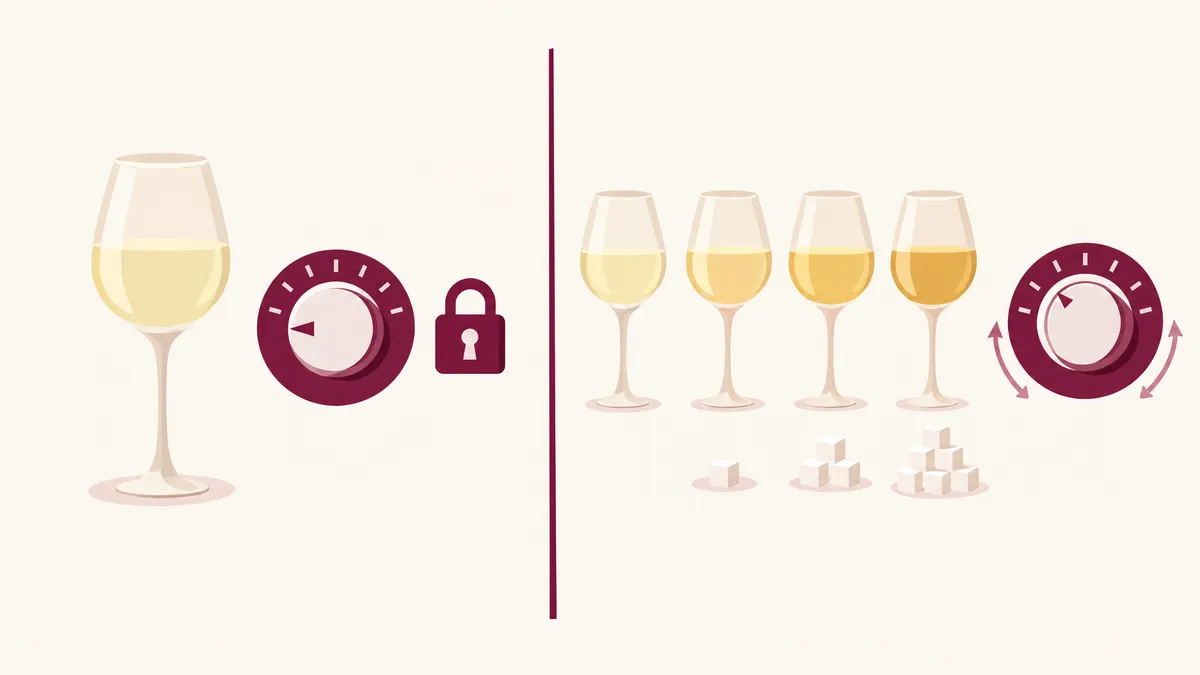
On a German Riesling, trocken means at most 9 grams of residual sugar (grape sugar left unfermented) per litre in a high-acid wine, and halbtrocken (half-dry) allows up to 12 grams, or 18 in a high-acid wine.
The words Kabinett, Spätlese and Auslese mark how ripe the grapes were at harvest, not how sweet the wine ended up. A Spätlese trocken is a dry wine from riper grapes. If a German Riesling says Kabinett and nothing about trocken, expect some sugar held in check by sharp acid. The full ripeness ladder is in Chardonnay vs Riesling, and the grams for each step are on the wine sweetness scale.
Why Does Sauvignon Blanc Smell Green and Riesling Like Flowers?
Different compounds. Sauvignon Blanc's green side comes from methoxypyrazines (aroma compounds that smell of green pepper and cut grass), and the nose detects them at around 2 parts per trillion. They are why a cool-grown Sauvignon Blanc can smell like a mown lawn or a sliced green pepper.
Ripeness shifts the balance. Riper Sauvignon Blanc carries fewer methoxypyrazines, so its thiols (sulphur-based aroma compounds), the ones linked to passion fruit and boxwood, show through more. So a cool-grown bottle smells of grass and gooseberry, and a sunnier one leans toward grapefruit and tropical fruit.
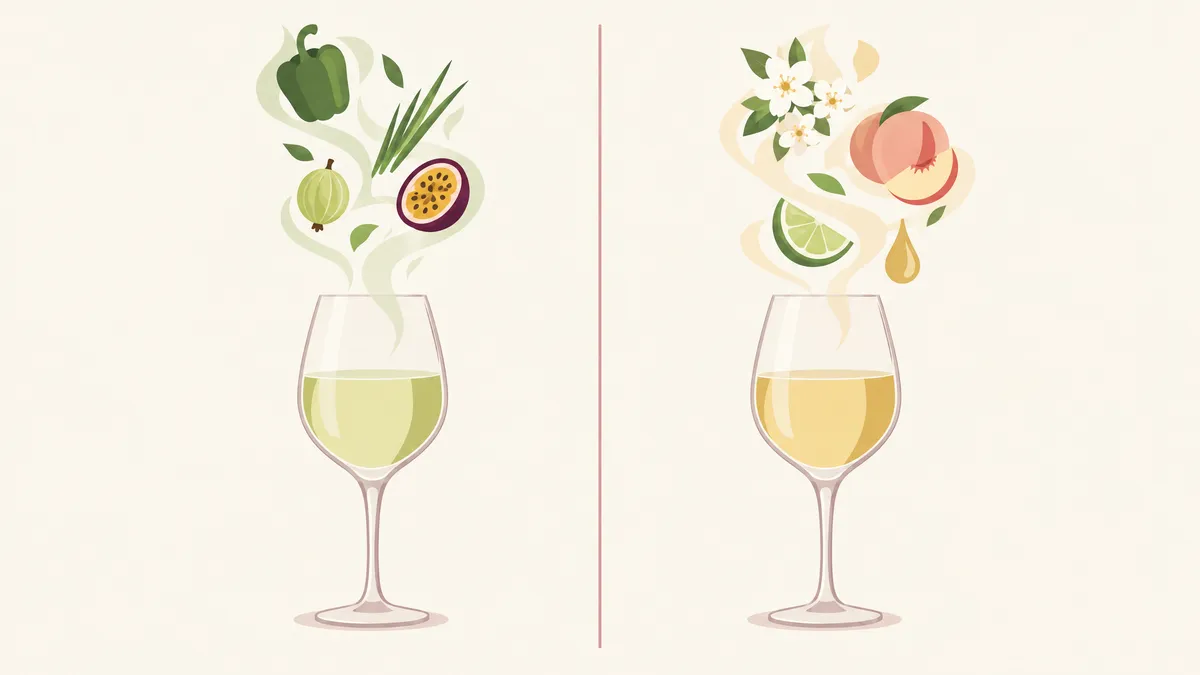
Riesling is one of the aromatic grapes, with a flowery, almost perfumed smell of blossom, lime and peach that comes from the grape itself. As the wine ages, a compound called TDN builds up and adds the famous petrol or kerosene note. Petrol in a Riesling usually marks age, not a fault. The same compounds are sorted by family in aromatic vs neutral grapes.
Which Goes Better With Food?
Pick by the strongest thing on the plate. Chilli, pork and duck go to Riesling; herbs, goat cheese, green vegetables and vinaigrette go to Sauvignon Blanc. If a dish brings chilli and herbs together, as a Thai salad with fresh coriander does, pick off-dry Riesling: the heat is the harder thing to match.
- Chilli heat (green curry, a hot vindaloo): off-dry Riesling, because a little sugar softens the burn and the acidity keeps it fresh. More dishes by heat level are in wine with spicy food and wine with Thai food.
- Goat cheese and herbs (a warm goat cheese salad, pesto): Sauvignon Blanc, because its sharp acid matches the tang of the cheese and its green smell echoes the herbs. The goat cheese pairing guide has the cheese-by-cheese version.
- Green vegetables (asparagus, peas, courgette): Sauvignon Blanc. When in doubt, go green.
- Pork, duck and crab: Riesling, dry or off-dry, because its fuller texture and fruit carry fat and sweet flesh.
- Oysters and raw shellfish: either, as long as it is dry, because the acid works like a squeeze of lemon. Wine with oysters covers the rest.
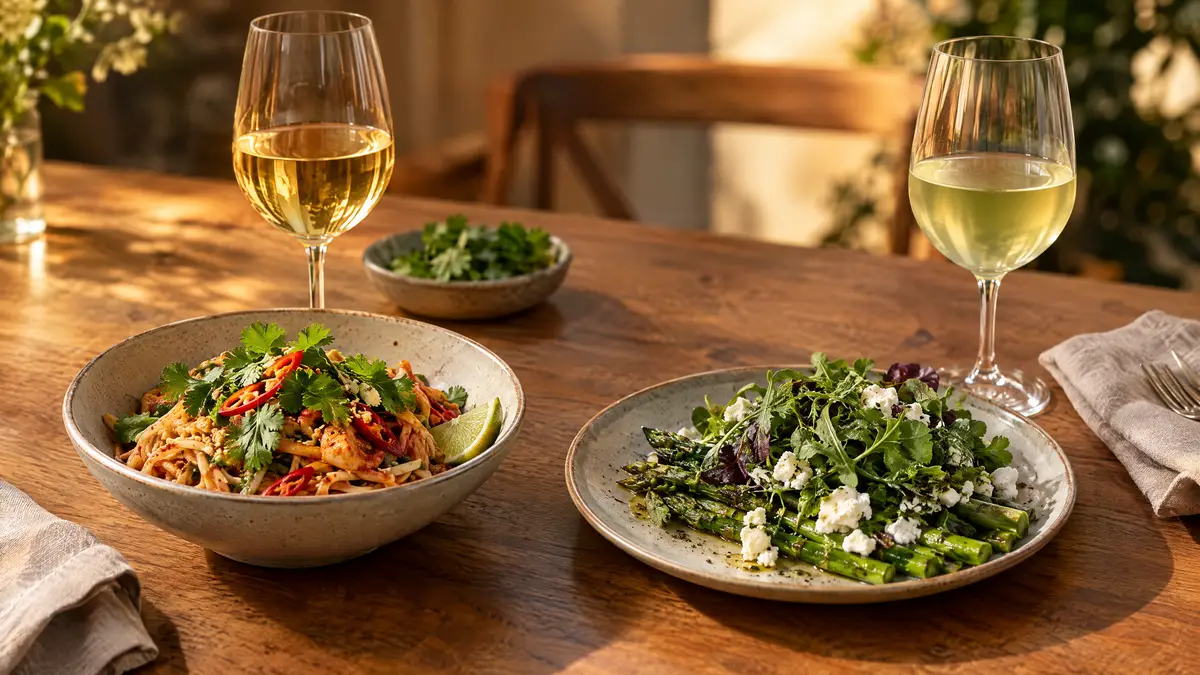
Serve the Riesling colder than the Sauvignon Blanc: 3 to 7°C against 7 to 12°C, so straight from the fridge for one and ten minutes out for the other.
How Does Place Change Each Grape?
Place sets how ripe each grape gets, and ripeness moves the aromas. Sauvignon Blanc began in Bordeaux and the Loire, and cool sites like these keep its acidity sharp and its smell green. In Marlborough, New Zealand, the prized sites have sandy soils over slate shingles, and the long bright days push the wine toward passion fruit and grapefruit.
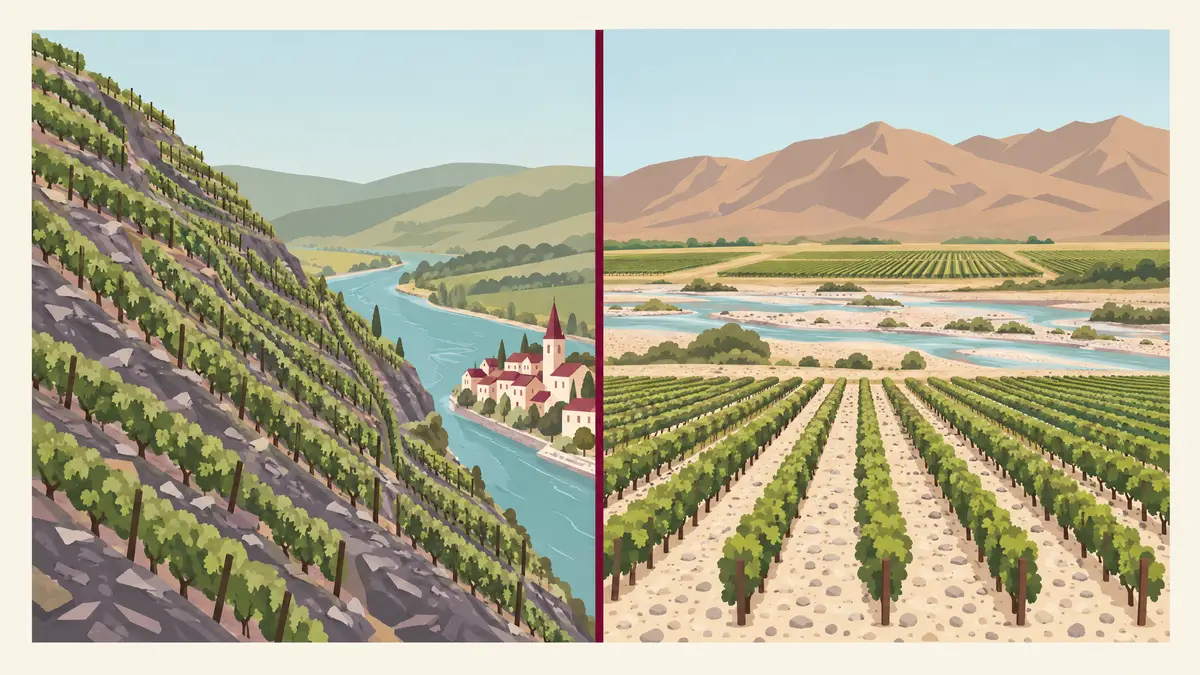
Riesling's best-known home is Germany's Mosel, a region dominated by Riesling and slate soils, where cool seasons give apple and tree fruit with pronounced acidity. Alsace, just over the French border, makes it mostly very dry and thick-bodied, at around 12% alcohol. If you want a leaner, more restrained Sauvignon Blanc, buy the Loire; if you want loud passion fruit, buy Marlborough. The Mosel wine guide and the Marlborough wine guide map the sites.
How Can You Tell Them Apart in the Glass?
Smell for tropical fruit and green notes, then feel the texture. In a Decanter blind-tasting guide, Sauvignon Blanc is the only one of three look-alike whites (with Chenin Blanc and Riesling) that can show clear passion fruit and guava. Riesling nearly always has the most extract (the dissolved solids that give a wine weight), so it has more texture and an oilier feel.
If you smell passion fruit or green pepper, guess Sauvignon Blanc. If you smell flowers or petrol, or the wine coats your tongue, guess Riesling. A white that smells of little and feels round is probably neither. More tricks are in blind wine tasting tips.
The single-grape detail is in the Sauvignon Blanc wine guide and the Riesling wine guide, and the grape varieties hub maps the rest. How to compare two wines sets up a fair side by side. Tonight, buy a Sauvignon Blanc and a German Riesling marked trocken, so sugar is out of the picture, and chill both. Taste them side by side with Sommy: photograph each label and the app walks you through look, smell and taste, then saves both glasses to your tasting journal.
Sources
Frequently Asked Questions
Is Riesling sweeter than Sauvignon Blanc?
Often, but not always. Sauvignon Blanc is almost always made dry, apart from Bordeaux dessert wines such as Sauternes where it is blended with Sémillon. Riesling is made at every level, from bone-dry to very sweet. On a German label, trocken means dry, with at most 9 grams of sugar per litre in a high-acid wine like Riesling, so a trocken Riesling tastes about as dry as most Sauvignon Blanc.
Which has more acidity, Riesling or Sauvignon Blanc?
Both are high-acid grapes, and Wine Folly rates each of them high. The difference you feel is texture. Riesling has more extract, the dissolved solids that give a wine weight, so its acidity sits inside a fuller, oilier feel. Sauvignon Blanc feels leaner and sharper. Riesling's sugar, when there is some, also softens how tart it tastes.
Why does Sauvignon Blanc smell like cut grass?
Because of methoxypyrazines, aroma compounds the nose picks up at around 2 parts per trillion. They give Sauvignon Blanc its green side: cut grass, green bell pepper and gooseberry. Riper grapes carry fewer of them, so thiols, the compounds behind passion fruit, show through more. That is why cool-grown Sauvignon Blanc smells greener and sunnier sites push it toward tropical fruit.
Why does Riesling smell like petrol?
The petrol or kerosene smell comes from a compound called TDN, which develops as Riesling ages. It is a known trait of older Riesling, not a sign that the wine has gone off. A young Riesling usually smells of flowers, lime, green apple and peach instead, and the petrol note grows over years in the bottle.
Which is better with spicy food, Riesling or Sauvignon Blanc?
Off-dry Riesling. A little sugar softens chilli heat, and the high acidity keeps the wine fresh next to strong sauces, which is why off-dry Riesling is the classic match for spicy Indian and Thai dishes. A dry Sauvignon Blanc works with mild, herby dishes but can taste sharp and thin next to real chilli. Serve the Riesling well chilled.
Can you substitute Riesling for Sauvignon Blanc in cooking?
Only a dry Riesling. Recipes that call for Sauvignon Blanc want a dry, tart white for deglazing or a pan sauce, and a Riesling marked trocken does the same job with a more floral smell. An off-dry or sweet Riesling adds sugar that reduces down and can make a savoury sauce taste sweet, so check the label first.
Which should a beginner try first, Riesling or Sauvignon Blanc?
Try both at once, dry. Buy a Sauvignon Blanc and a German Riesling marked trocken, chill them, and pour them side by side. With sugar out of the way, the differences you notice are smell and texture: green and grassy against flowery and peachy, lean against fuller. That one evening teaches more than a month of single bottles.
Sommy Team
LinkedInFounder & Wine Educator
The Sommy Team is building the world's most approachable wine education app, helping beginners develop real tasting skills through structured courses and AI-guided practice.