Chardonnay vs Riesling: Side by Side (Body, Sweetness, Food)

By the Sommy Team — AI-assisted, human-edited.
Updated Oct 29, 2026
Contents (8)
- Chardonnay vs Riesling, in One Paragraph
- Chardonnay vs Riesling Side by Side
- Which Is Sweeter, Chardonnay or Riesling?
- How Do You Read a Riesling Label for Sweetness?
- Why Does Chardonnay Taste Buttery, and Riesling Like Petrol?
- How Much Does Climate Change Each Grape?
- Which Goes Better With Food?
- How Can You Tell Them Apart in the Glass?
TL;DR
Riesling is the tarter, lighter and more perfumed white, rarely oaked, and made at every sweetness level. Chardonnay is fuller, almost always dry, and tastes of its climate and cellar: lemon and apple when cool and unoaked, butter and vanilla after oak. On a German Riesling, trocken means dry. Off-dry Riesling suits chilli; oaked Chardonnay suits cream.
Chardonnay vs Riesling comes down to who sets the flavour. Chardonnay tastes of the climate and the winemaker's choices. Riesling tastes of the grape, and the label word to check is the one about sugar.
Chardonnay vs Riesling, in One Paragraph
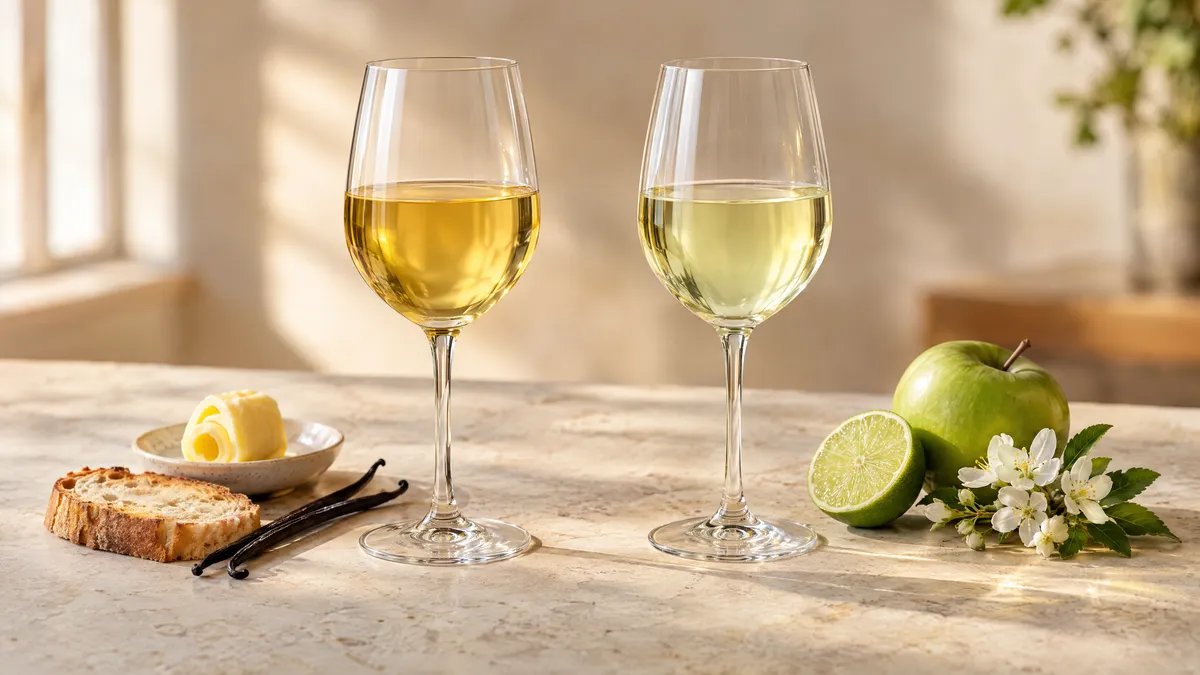
Riesling is the lighter, tarter and more perfumed grape, and it comes at every sweetness level. It is an aromatic variety with flowery aromas and naturally high acidity (the tartness that makes your mouth water), and it is seldom aged in oak. Chardonnay is fuller in body (weight in the mouth, like whole milk against skimmed) and almost always dry. The grape itself is neutral, so climate and cellar set its taste: green apple and pear when cool-grown, peach and melon when warm-grown, butter and vanilla after malolactic fermentation and oak.
Chardonnay vs Riesling Side by Side
| Chardonnay | Riesling | |
|---|---|---|
| Body | Medium to full; lightest in cool places such as Chablis | Light to medium; fuller in Austria |
| Acidity | Moderate; noticeable when cool-grown, softer after malolactic fermentation | High, even in sweet styles |
| Sweetness | Almost always dry | Dry, off-dry or sweet: read the label |
| Oak | Often barrel-fermented or barrel-aged: vanilla, toast, spice | Seldom oaked; almost never new oak |
| Smells of | Green apple and pear when cool, peach and melon when warm, butter after malolactic | Green apple, lime and white flowers; petrol with age |
| Home | Burgundy, France | Rhine Valley and Mosel, Germany |
| Goes with | Oaked: roast chicken, cream sauces, lobster with butter. Unoaked: grilled white fish | Off-dry: Thai and Indian dishes with chilli. Dry: oysters, sushi |
| Pick it if | You want a rounder white for rich, creamy food | You want a tart, fragrant white, or a touch of sweetness against spice |
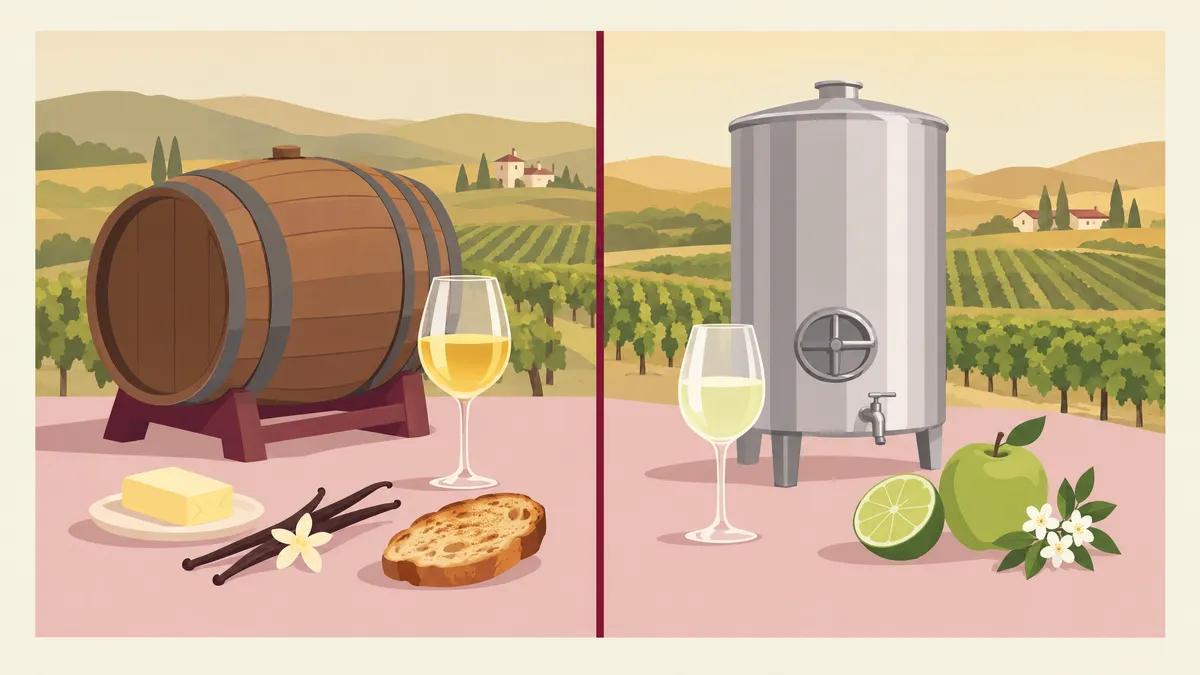
If a Chardonnay label says Chablis or unoaked, expect lemon and green apple with no butter. If it says barrel-fermented, expect oak (barrels adding vanilla, toast or spice) and a creamier, golden glass. Riesling skips that question: it almost never goes into new oak, so what you smell is the grape. Stainless steel vs oak shows what each vessel adds.

Quick check
One question on what you just read
Your Chardonnay smells of butter and vanilla. Where do those smells mostly come from?
Tap an answer to see how you did.
Which Is Sweeter, Chardonnay or Riesling?
Riesling, sometimes. Chardonnay is almost always made dry (no sugar you can taste; fruity is not sweet), while Riesling is made dry, semi-sweet and fully sweet, and as sparkling wine too. The myth says every Riesling is sweet, yet dry Riesling is a major style, marked trocken on German labels.
Acidity also changes how sugar tastes. Riesling's high acid pulls against any sugar, so an off-dry Riesling (a little sugar you can just taste) feels fresher than its number suggests. The wine sweetness scale gives the grams for each step.
If you want a dry white and the bottle says Riesling, find the sweetness word before you buy. A sweet, fizzy glass is more likely Moscato: see Riesling vs Moscato.
How Do You Read a Riesling Label for Sweetness?
Look for trocken first: it means dry. For a high-acid wine such as Riesling, German law lets a trocken wine hold at most 9 grams of residual sugar (grape sugar left unfermented) per litre. Halbtrocken (half-dry) allows up to 18 grams on the same terms. Feinherb is an unregulated word for wine slightly sweeter than halbtrocken.
The other label words measure how ripe the grapes were. Germany ranks its top wines by how much sugar the grapes held at harvest, from least ripe to most:
- Kabinett: typically semi-sweet with crisp acidity, unless the label also says trocken.
- Spätlese: late-picked; typically half-dry, often fruitier than Kabinett.
- Auslese: riper, selected bunches.
- Beerenauslese, Trockenbeerenauslese and Eiswein: the ripest and rarest grapes, made as dessert wines.
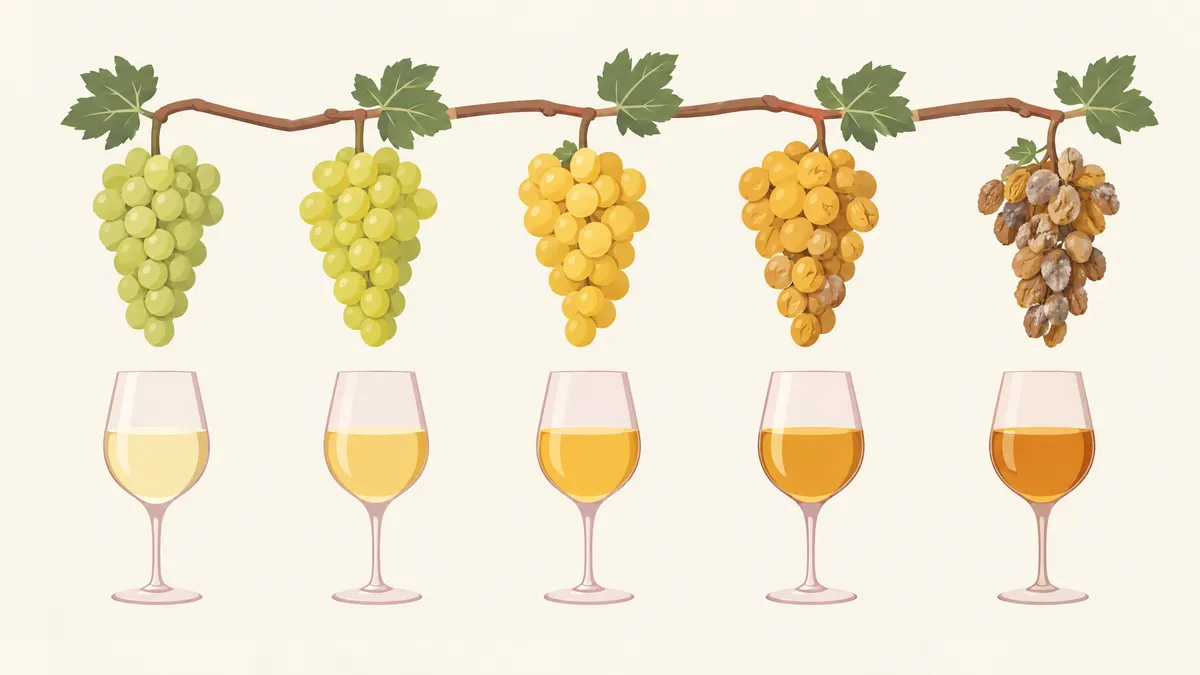
Because the ladder tracks ripeness, a Spätlese trocken is a dry wine from riper grapes. If a German Riesling says Kabinett and nothing about trocken, expect a little sweetness held in check by sharp acid. The Riesling wine guide and the Mosel wine guide go further.
Why Does Chardonnay Taste Buttery, and Riesling Like Petrol?
Butter in Chardonnay comes from the cellar; petrol in Riesling comes from the grape as the bottle ages. The butter starts with malolactic fermentation (bacteria turning tart malic acid into softer lactic acid). The process also makes diacetyl, the compound behind the buttery smell.
Oak barrels add vanilla, toast and spice on top. Because the grape is neutral, these cellar smells come through clearly, and a Chardonnay that skipped both steps tastes of lemon and apple. What is malolactic fermentation follows the process step by step.
Riesling's petrol, sometimes called kerosene, comes from a compound called TDN. It forms from carotenoid pigments in the grape during ageing, and a few bottles show it on release. The myth says petrol means the wine has gone wrong. Many experienced tasters treat it as a recognised mark of aged Riesling, so a whiff of it tells you the bottle has some years on it.
How Much Does Climate Change Each Grape?
Climate moves Chardonnay much further than Riesling. A cool climate (tarter, lighter wines) gives Chardonnay green apple, pear, a light-to-medium body and noticeable acidity. A warm climate (riper, stronger wines) moves it to citrus, peach and melon, with tropical fruit on the hottest sites.
Chablis is the cool benchmark. The appellation uses only Chardonnay, and basic Chablis is rarely oaked, so it shows the grape at its leanest; the Chablis wine guide maps its levels.
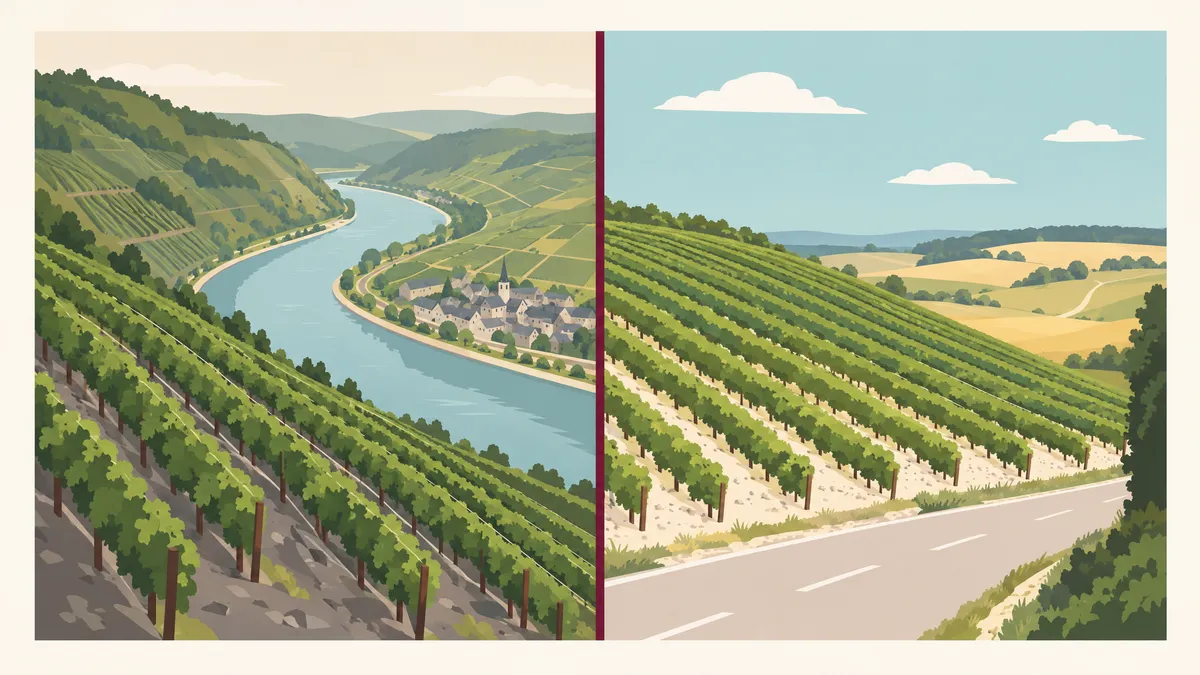
Riesling changes less. In the cool Mosel it smells of apple and tree fruit with pronounced acidity. Austrian Riesling is fuller-bodied and often reaches around 13% alcohol, high for this grape.
Which Goes Better With Food?
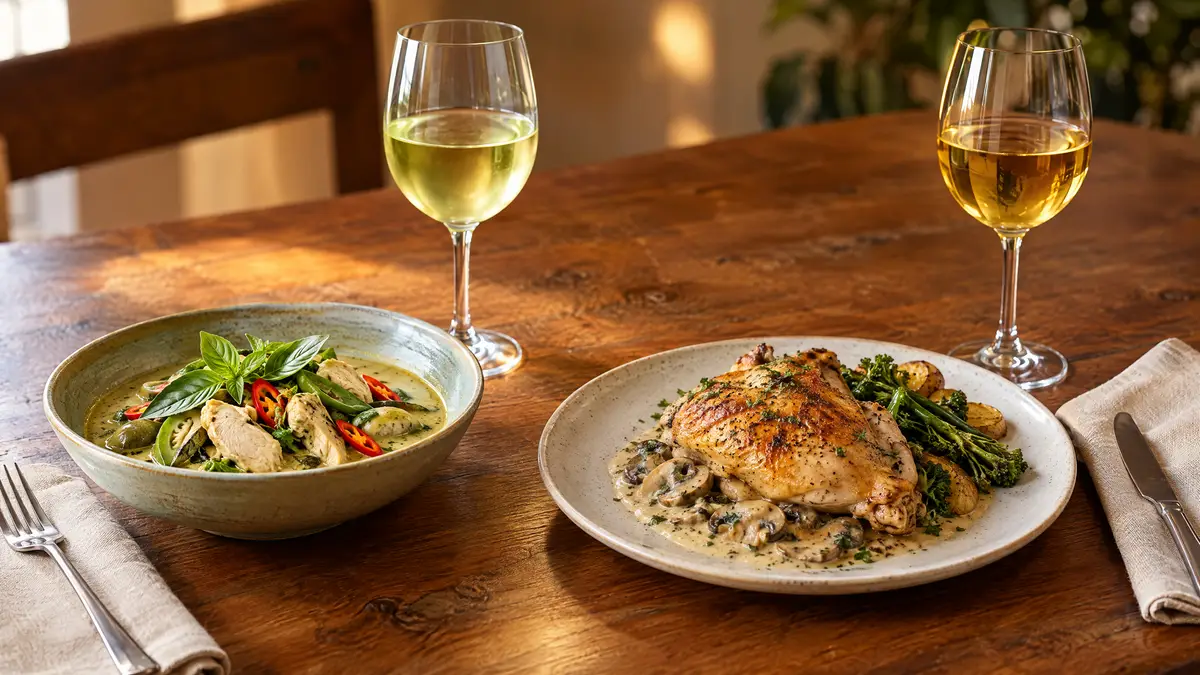
Pick by the strongest thing on the plate. Riesling's acidity and its option of sugar handle heat and salt; Chardonnay's body handles fat and cream. If a dish brings chilli and cream together, as a creamy red curry does, pick off-dry Riesling: the heat is the harder thing to match.
- Chilli heat (Thai green curry, Sichuan chicken): off-dry Riesling, because a little sugar softens the burn while high acidity keeps the wine fresh. More dishes by heat level are in wine with spicy food.
- Butter and cream (roast chicken with a cream sauce, lobster with butter): oaked Chardonnay, because its full body matches the fat and its buttery smell echoes the sauce.
- Raw shellfish and salt (oysters, sushi): Chablis or Riesling trocken, because sharp acid works like a squeeze of lemon.
- Pork with fruit (pork chop with apple sauce, glazed ham): Riesling Kabinett, because a sweet sauce makes a dry wine taste thin.
- Grilled white fish: unoaked Chardonnay, which adds body without oak to cover the fish.
How Can You Tell Them Apart in the Glass?
Smell first, then feel the acidity. Riesling throws flower and lime scent from arm's length; unoaked Chardonnay smells only faintly, and oaked Chardonnay smells of vanilla and toast. On the tongue, Riesling keeps the mouth watering longer, and Chardonnay feels heavier.
If it smells of flowers from arm's length, guess Riesling. If it smells of butter, guess oaked Chardonnay; if of little, and it feels round, guess unoaked Chardonnay. A white that smells of cut grass is neither: compare Chardonnay vs Sauvignon Blanc.
The Chardonnay wine guide follows one grape from Chablis to California, and the grape varieties hub maps the rest. Sommy's Wine 101 course teaches acidity and body in bite-sized lessons. Tonight, buy a basic Chablis and a German Riesling marked trocken, so both are dry and only acidity, body and smell differ. Taste them side by side with Sommy, which walks you through look, smell and taste and saves both glasses to your tasting journal.
Sources
Frequently Asked Questions
Is Riesling sweeter than Chardonnay?
Often, but not always. Chardonnay is almost always made dry. Riesling is made dry, off-dry and fully sweet, so a Riesling can sit on either side of a Chardonnay. On a German label, trocken means dry, with at most 9 grams of sugar per litre in a high-acid wine. Riesling's sharp acidity also makes a little sugar taste less sweet than the number suggests.
Which is more acidic, Chardonnay or Riesling?
Riesling. It is naturally high in acidity, the tartness that makes your mouth water. Cool-climate Chardonnay such as Chablis has noticeable acidity too, but most Chardonnay feels softer, especially after malolactic fermentation has turned sharp malic acid into softer lactic acid. If a white keeps your mouth watering for several seconds after you swallow, Riesling is the better guess.
Why does Chardonnay taste buttery?
Because of choices made in the cellar. Malolactic fermentation converts tart malic acid into softer lactic acid and produces diacetyl, the compound behind the buttery smell. Oak barrels add vanilla, toast and spice on top. The Chardonnay grape itself is neutral, so an unoaked Chablis that skipped both steps tastes of lemon and green apple instead of butter.
Why does some Riesling smell like petrol?
The petrol or kerosene smell comes from a compound called TDN, which forms from carotenoid pigments in the grape as Riesling ages. A few bottles show it on release; most gain it over years in the bottle. Many experienced tasters treat it as a recognised sign of an aged Riesling rather than a fault. A young, cool-climate Riesling usually smells of green apple and lime instead.
Which is better for beginners, Chardonnay or Riesling?
Start with the one that matches what you already enjoy. If you like rich, creamy food, an oaked Chardonnay feels familiar. If you like tart apples or lemonade, a dry Riesling will. To learn the most in one evening, buy an unoaked Chablis and a Riesling marked trocken: both are dry, so the differences you taste are acidity, body and smell.
Which wine goes better with spicy food, Chardonnay or Riesling?
Off-dry Riesling. A touch of sugar softens chilli heat, and high acidity keeps the wine fresh next to strong sauces such as Thai green curry. Oaked Chardonnay struggles with chilli, because its fuller body and higher alcohol make the burn feel stronger. Keep Chardonnay for buttery, creamy dishes such as roast chicken with a cream sauce or lobster with butter.
Sommy Team
LinkedInFounder & Wine Educator
The Sommy Team is building the world's most approachable wine education app, helping beginners develop real tasting skills through structured courses and AI-guided practice.