Qvevri Wine Explained: Georgia's Buried Clay Vessels

By the Sommy Team — AI-assisted, human-edited.
Updated Sep 25, 2026
Contents (11)
- What Is Qvevri Wine, in One Paragraph?
- What Is a Qvevri?
- How Is Qvevri Wine Made?
- Is Qvevri Wine the Same as Orange Wine?
- Kakhetian or Imeretian: Which Qvevri Wine Should You Buy?
- What Does Qvevri Wine Taste Like?
- How Should You Serve Qvevri Wine?
- Why Is a Qvevri Buried Underground?
- Is Georgia Really the Birthplace of Wine?
- Why Did UNESCO Protect Qvevri Winemaking?
- How to Taste Your First Qvevri Wine Tonight
TL;DR
Qvevri wine is fermented and aged in large egg-shaped clay vessels buried below ground in Georgia, where the soil holds them near 14-15°C. Grapes go in with skins, stalks and pips. Kakhetian wines stay on skins about six months, Imeretian ones for 15 to 30 days, which sets colour and grip.
Qvevri wine is wine fermented and aged in a clay egg buried up to its neck, and how long the grape skins stay inside that egg decides most of what you taste. In Imereti they stay for weeks. In Kakheti they stay for about six months. That choice turns the same white grape into a pale, gentle wine or a deep amber one with real grip.
What Is Qvevri Wine, in One Paragraph?
Qvevri wine is Georgian wine made in a qvevri (say "KVEV-ree"), a large egg-shaped clay vessel lined with beeswax and buried below ground. Qvevri range from 20 to 10,000 litres, with 800 litres a typical size. Grapes go in with their skins, stalks and pips, then sit sealed underground for five to six months. The soil holds the wine near 14-15°C with no power. Kakhetian qvevri wines stay on their skins about six months; Imeretian ones for 15 to 30 days. White grapes made this way become amber wine, Georgia's name for orange wine. UNESCO listed the method as Intangible Cultural Heritage in 2013.
What Is a Qvevri?
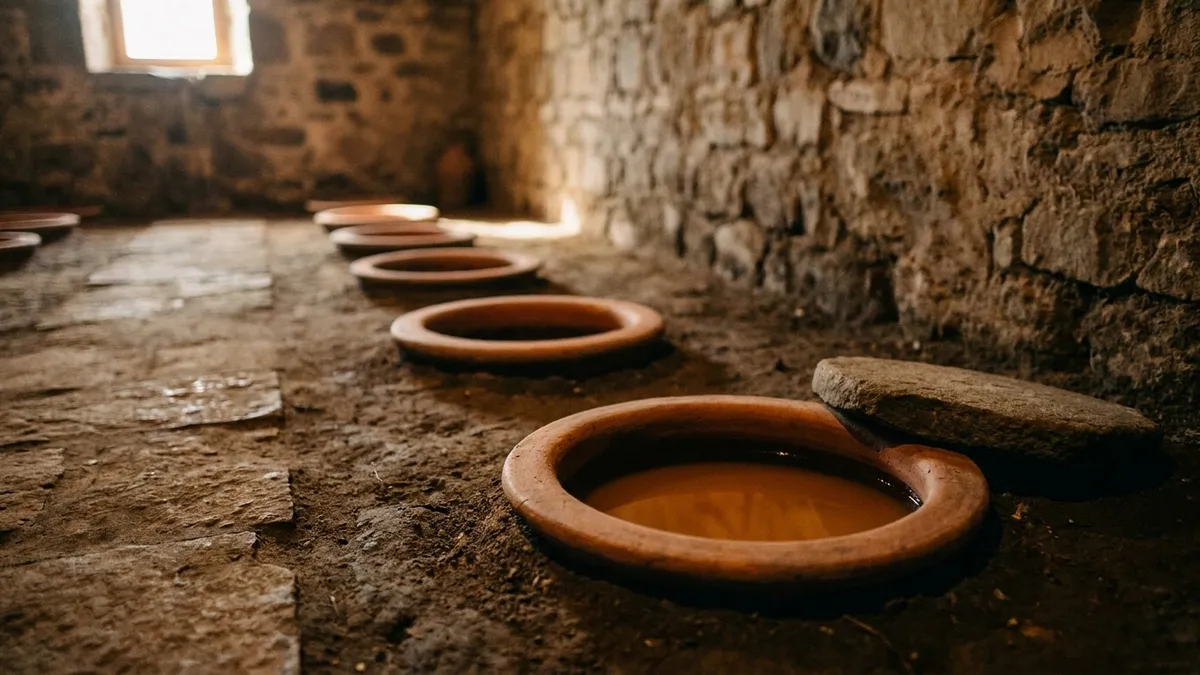
A qvevri is a large egg-shaped clay vessel, with no handles, used to ferment, store and age wine. It is buried so deep that even its outlet neck sits below ground level. Sizes run from a 20-litre pot to a 10,000-litre giant, and 800 litres is the standard working size.
The shape is wide at the shoulder and narrows to a rounded point at the base. Potters build them by hand, and the traditional qvevri-making villages sit in three regions: Guria, Imereti and Kakheti. The inside is coated in beeswax, which seals the clay walls.
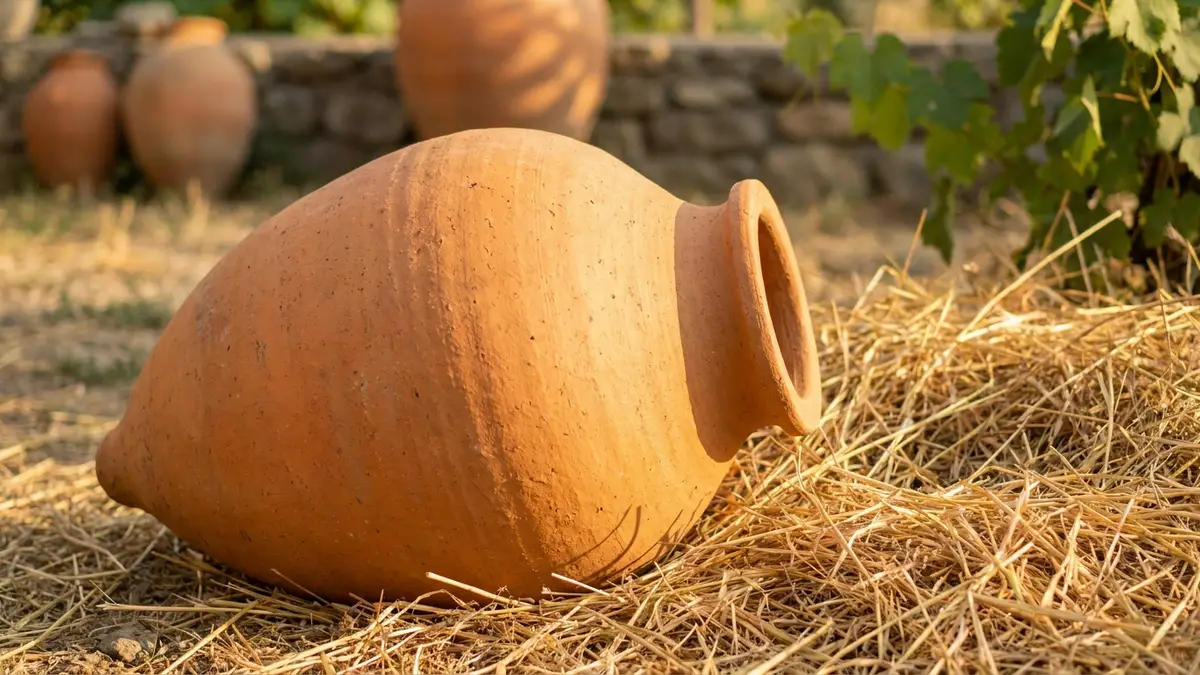
A qvevri is not thrown away after one vintage. Once emptied, it is washed, sterilised with lime and re-coated with beeswax, ready to be filled again. That cleaning routine is why the same buried vessel can serve a family cellar for years. For how clay compares with the other vessels winemakers use, see oak flavours in wine tasting, which covers what wood adds that clay does not.
How Is Qvevri Wine Made?
Grapes are crushed and poured into the qvevri with their skins, stalks and pips, then the vessel is sealed and left underground for five to six months. That is how UNESCO describes the traditional method. There is no pressing off the juice first, which is the step that keeps an ordinary white wine pale.
The skins, stalks and pips together are called chacha in Georgia. The same word names the spirit distilled from them later.
Leaving juice in contact with them is called skin contact, or maceration. During those weeks or months, the juice pulls colour, flavour and tannin (the drying grip you feel on your gums) out of the solids. Stalks and pips add extra grip on top of the skins.
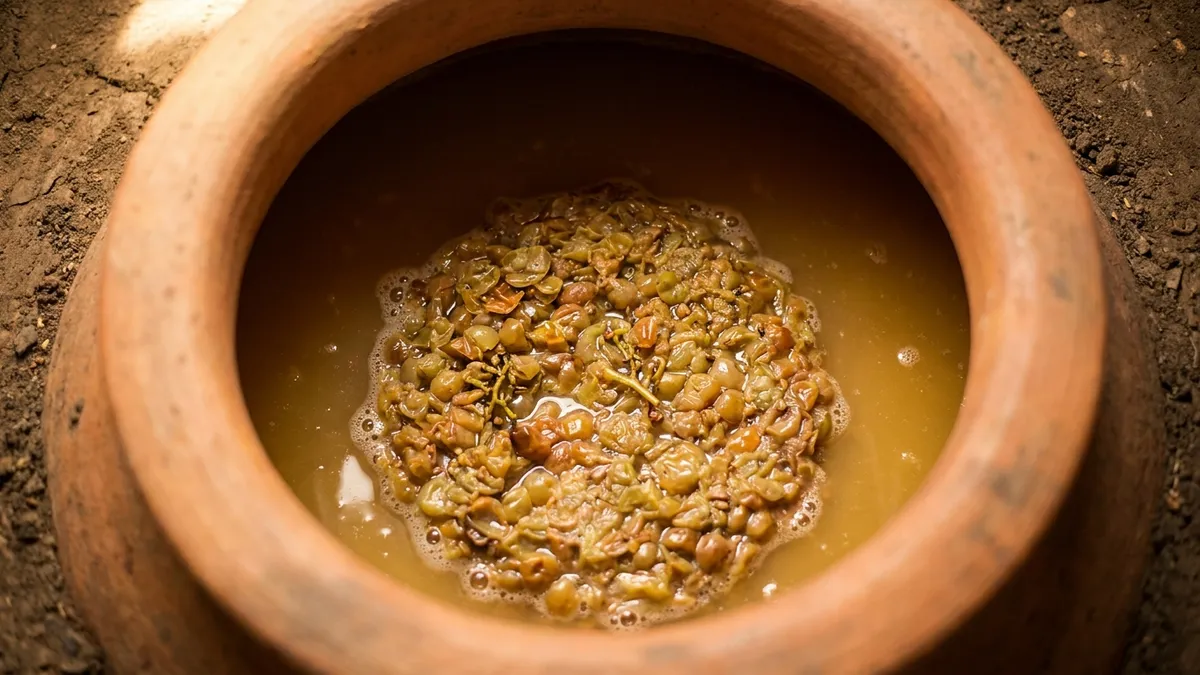
Fermentation starts in the open vessel. Once it has finished, the qvevri is sealed with a lid and left to rest in the cool ground. For white grapes, the result is a wine that behaves like a red: darker, grippier and built for food. For red grapes such as Saperavi, the same method gives a dark wine with firm tannin. For how yeast turns grape sugar into alcohol in any vessel, wine yeast and fermentation covers the process.
Is Qvevri Wine the Same as Orange Wine?
No. Qvevri names a Georgian vessel and method, while orange wine is a broader style made anywhere white grapes ferment on their skins. A Georgian amber white made in qvevri is one kind of orange wine. Many orange wines, from Italy, Slovenia or elsewhere, are made in steel, oak or other clay pots and never touch a qvevri.
The term "orange wine" itself is recent. The British wine importer David A. Harvey coined it in 2004. The International Organisation of Vine and Wine (OIV) now sets a minimum skin contact of one month for the style. Our orange wine explainer covers the style beyond Georgia.
The second myth is that qvevri wine is automatically natural wine. The vessel decides where the wine ferments and for how long it sits on skins; it says nothing about whether sulfites or cultured yeast were added. Natural wine is a separate philosophy about additives.
| Term | What it names | Skin contact | Where it is made | What to look for when buying |
|---|---|---|---|---|
| Qvevri wine | A vessel and a Georgian method | Weeks to about six months; reds too | Mostly Georgia | The word qvevri, plus Kakheti or Imereti on the label |
| Amber wine | Georgia's name for skin-contact white | Days to months | Georgia | Amber or orange colour through a clear bottle |
| Orange wine | A style of white wine | At least one month under OIV guidance | Anywhere | Orange or skin contact on the label; vessel not guaranteed |
| Natural wine | An approach to additives | Any, or none | Anywhere | Words such as no added sulfites, wild yeast |
If a label says orange or skin contact but never mentions qvevri, the wine could come from any country and any vessel. If you want the Georgian original, look for the word qvevri itself.
Kakhetian or Imeretian: Which Qvevri Wine Should You Buy?
Start with an Imeretian wine if you want a gentle first bottle, and a Kakhetian one if you want the full grip. The two regions give their names to two traditions. In the Kakhetian method, the wine stays on its skins for about six months. In the Imeretian method, only about a third of the skins go in, and maceration lasts 15 to 30 days.
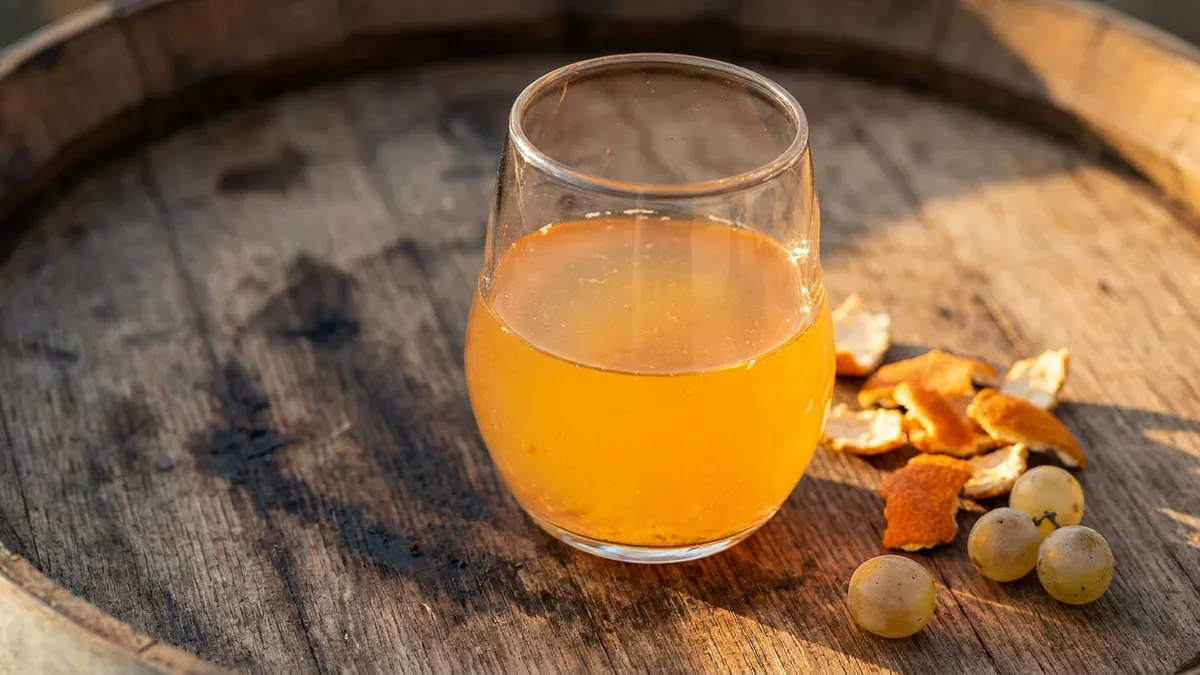
That gap shows up in the glass. Six months on skins, stalks and pips gives deep amber colour and tannin close to a light red. A few weeks on fewer skins gives a paler gold wine with softer grip and more fresh fruit.
Kakheti, in the east, grows about 70% of Georgia's grapes, so Kakhetian wines are the ones you are most likely to find on a shop shelf. Georgia records about 500 grape varieties, though only a few dozen are grown commercially. The white names you will meet most often in amber wines are Rkatsiteli, Mtsvane and Kisi from Kakheti, and Tsolikouri from Imereti. The Georgia wine guide maps every region and its grapes.
If the back label names Imereti or talks about weeks on skins, expect a paler, lighter wine that suits a first try. If it names Kakheti or talks about months on skins, expect deep amber colour and firm tannin that needs food.
What Does Qvevri Wine Taste Like?
Start with structure: an amber qvevri white is dry, with tannin you feel on your gums and fresh acidity (the tartness that makes your mouth water). It has more body (weight in the mouth, like whole milk against skimmed) than a typical white, because the skins add texture as well as tannin.
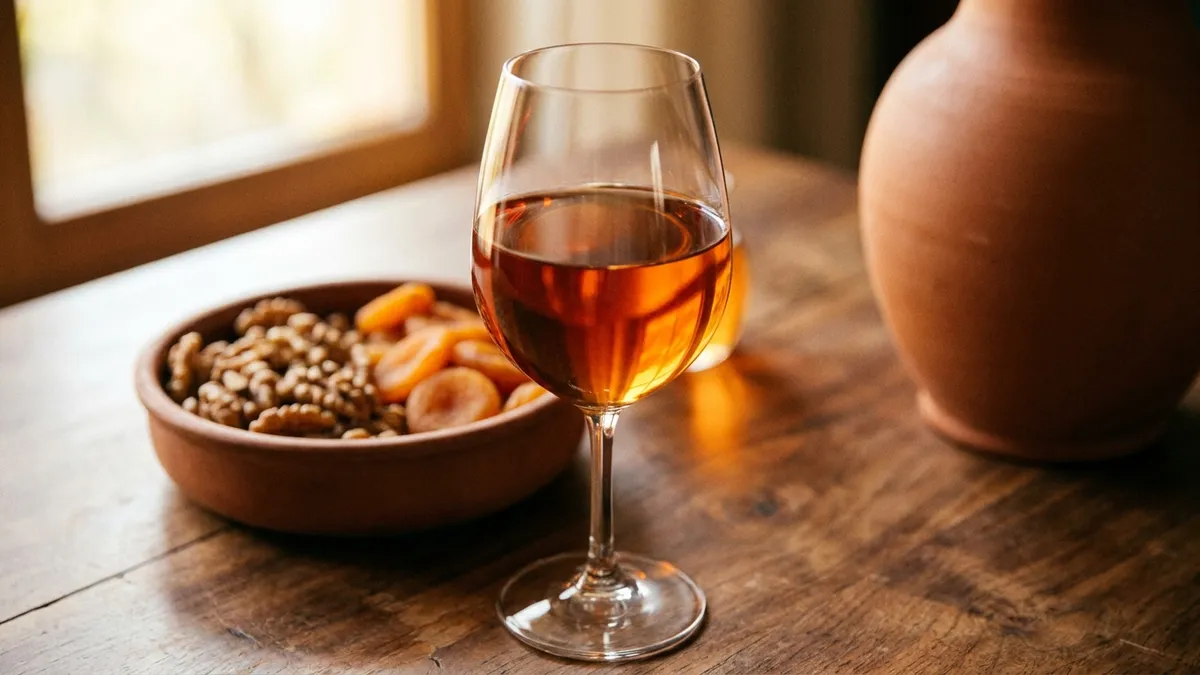
Then the flavours, each with a cause:
- Dried apricot and orange peel, because months on skins draw out colour and darken the fruit character.
- Black tea, because tannin from skins and pips dries the palate the way a strong cup does.
- Walnut skin, because the stalks and pips add a bitter, nutty edge to the finish.
Imeretian styles sit closer to a fresh white, with ripe pear and quince and only a light grip. Qvevri reds taste of dark plum and sour cherry, with firm tannin. If the idea of tannin in a white is new, what are tannins shows where to feel it, and how to taste white wine gives a method you can reuse on an amber glass.
How Should You Serve Qvevri Wine?
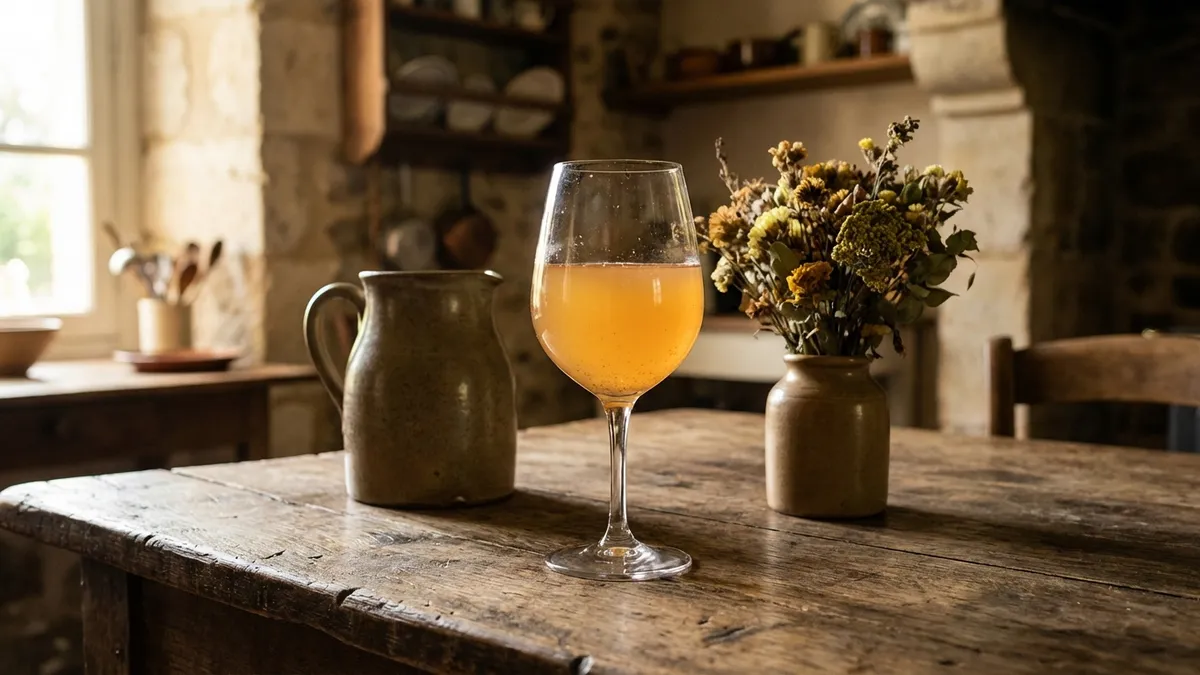
Serve qvevri wine lightly chilled, at cellar temperature, in an ordinary wine glass, with food that has fat or salt beside it. Treat a Kakhetian amber white like a light red, since it carries red-wine tannin. Treat an Imeretian white more like a fuller white wine.
Temperature matters because cold makes tannin taste harsher and hides fruit. If the wine is a long-macerated Kakhetian amber, take it out of the fridge well before dinner so it warms toward cellar temperature. If it is a short-contact Imeretian style, a lighter chill works. The wine serving temperature chart gives the exact ranges for each style.
For food, work from what is on the plate:
- Fat, such as roast pork, grilled chicken thighs or aged hard cheese, coats the mouth and softens tannin, so it suits the long-contact Kakhetian styles.
- Salt, such as feta, cured meat or salted walnuts, makes tannin feel smoother and fruit taste riper.
- Earthy dishes, such as mushrooms or lentils, echo the walnut and tea flavours.
- Lean, delicate food, such as plain white fish, is where the tannin feels too strong, so choose an Imeretian style or a regular white instead.
The rules behind these choices apply to any wine; wine and food pairing sets them out in full.
Why Is a Qvevri Buried Underground?
Burial keeps the wine at a steady 14-15°C through the year, with no electricity. That cool, stable temperature lets fermentation and months of skin contact run slowly and evenly. Elsewhere, winemakers rely on steel tanks with cooling jackets to do the same job.
Because the neck sits below ground level, the qvevri lies in the floor of the cellar rather than standing in it. In Georgia that cellar is called a marani. UNESCO notes that the wine cellar is traditionally considered the holiest place in the family home. Only the clay rims show in a marani floor, each one a round opening under a heavy lid.
Is Georgia Really the Birthplace of Wine?
Georgia holds the earliest known evidence of wine, from around 6000 BCE near Tbilisi. That makes it the oldest confirmed wine culture so far. Birthplace is still a claim about the evidence found to date, and new digs and dating methods keep revising the record.
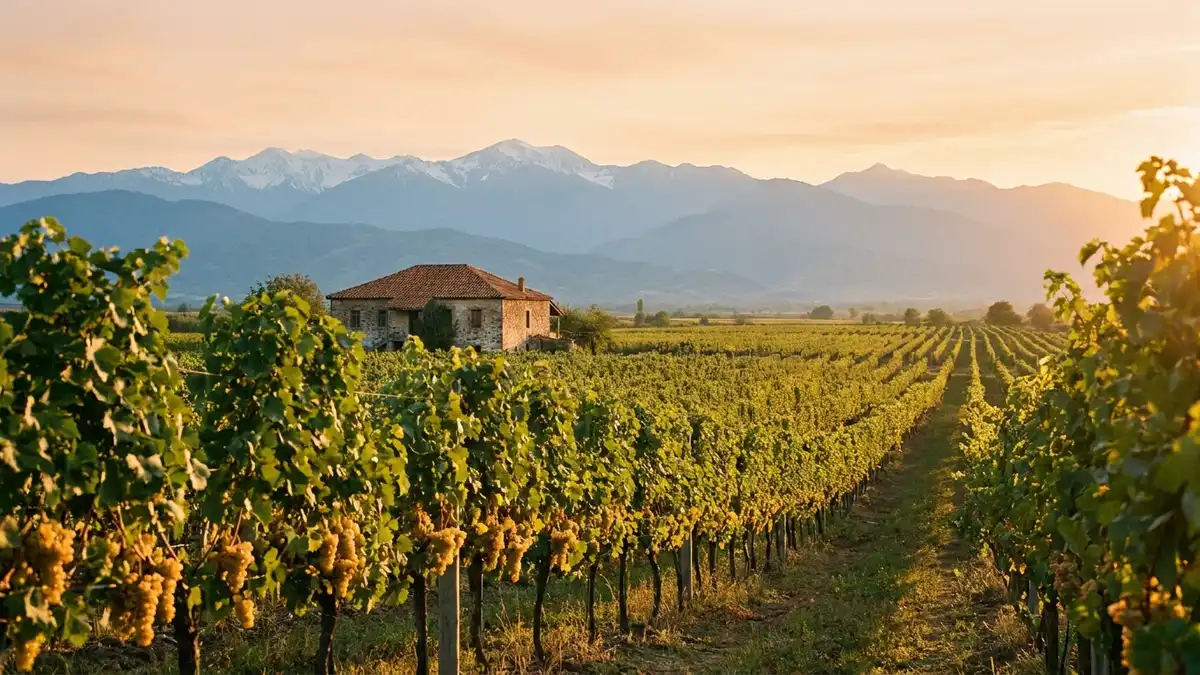
The finds are specific. Archaeologists in the Kvemo Kartli region uncovered grape pips and qvevri fragments dating to the 6th millennium BC. A vessel from the site of Khramis Didi Gora, from the first half of that millennium, is decorated with bunches of grapes.
The tradition shrank once. Commercial qvevri winemaking declined during the Soviet era, from 1921 to 1991, though families kept it going at home, and it revived after Georgia's independence in 1991. That revival helps explain why many qvevri wines on shelves today come from small family cellars. For the grapes that come with this deep past, see the oldest grape varieties.
Why Did UNESCO Protect Qvevri Winemaking?
UNESCO added the traditional qvevri method to its Intangible Cultural Heritage list in 2013, for the knowledge people pass on as much as for the wine. According to UNESCO, the skills of making qvevri and making wine in them are passed down by families, neighbours, friends and relatives, with children learning by watching their elders.
That matters when you buy. A qvevri wine is a record of one family's choices: how long the skins stay in, whether the stalks go in, when the lid goes on. Two bottles of the same grape from the same village can taste far apart. The wider family of styles this method belongs to sits in our wine styles hub.
How to Taste Your First Qvevri Wine Tonight
Pour one qvevri amber wine beside an ordinary white made from any grape. Look at both against a white sheet of paper, smell both, then sip and feel for grip on your gums. The darker colour and the drier gums both come from the skins.
For the next bottle, the Sommy app at sommy.wine has a Wine 101 course that teaches tannin, acidity and body in short lessons. Its AI-guided tasting mode starts from a photo of the label. Open the amber bottle first tonight, and taste it once cool and once after it warms in the glass.
Sources
Frequently Asked Questions
What is qvevri wine?
Qvevri wine is wine fermented, stored and aged in a qvevri, a large egg-shaped clay vessel lined with beeswax and buried so even its neck sits below ground. The method comes from Georgia, where grapes go in with their skins, stalks and pips and are sealed underground for months. UNESCO added the traditional method to its Intangible Cultural Heritage list in 2013.
Is qvevri wine the same as orange wine?
No. Qvevri is a Georgian vessel and method, and it is used for red wines as well as whites. Orange wine is a broader style: any white wine left on its skins for days to months, made in any country and any container. A Georgian amber white made in qvevri is one kind of orange wine, but many orange wines never touch a qvevri.
How long does qvevri wine ferment?
Between 15 days and about six months on skins, set by the regional tradition. UNESCO describes the sealed vessel resting underground for five to six months. In the Kakhetian method the wine stays on its skins for about six months, which gives deep amber colour and firm tannin. In the Imeretian method fewer skins go in and stay for 15 to 30 days, so the wine is paler and gentler.
Why are qvevri buried underground?
Burial is passive climate control. The surrounding soil keeps the wine at a steady temperature of around 14 to 15°C through the year, with no electricity. That cool, stable temperature lets fermentation and long skin contact run slowly and evenly. The vessel is buried so deep that even the outlet neck sits below ground level, usually in the floor of a family wine cellar.
How big is a qvevri?
Qvevri come in a huge range of sizes, from about 20 litres to 10,000 litres. A typical working vessel holds around 800 litres. They are egg-shaped with no handles, made by hand in traditional pottery villages in Guria, Imereti and Kakheti, and cleaned with lime and relined with beeswax between vintages so they can be used again for years.
What does qvevri wine taste like?
A qvevri white made with long skin contact tastes dry, with tannin you feel on your gums, fresh acidity and flavours of dried apricot, walnut skin and black tea. Short-contact Imeretian styles are paler and lighter, with more fresh fruit. Qvevri reds such as Saperavi are dark and grippy. The long, cool fermentation and the skins shape the taste more than the clay itself.
Is Georgia really the birthplace of wine?
Georgia holds the earliest known evidence of winemaking, from around 6000 BCE near Tbilisi, including grape pips and fragments of qvevri-type vessels in the Kvemo Kartli region. That makes it the oldest confirmed wine culture so far. Birthplace is a claim about evidence found to date, and new digs and dating methods keep the question open.
Sommy Team
LinkedInFounder & Wine Educator
The Sommy Team is building the world's most approachable wine education app, helping beginners develop real tasting skills through structured courses and AI-guided practice.