Piquette Wine: The Low-Alcohol Second-Press Wine Trend

By the Sommy Team — AI-assisted, human-edited.
Updated Oct 1, 2026
Contents (8)
- What Is Piquette Wine, in One Paragraph?
- How Is Piquette Made From Leftover Grape Skins?
- How Does Piquette Compare With Pet-Nat, Spritzers and Hard Seltzer?
- What Does Piquette Taste Like?
- Why Does Piquette Not Keep Like Wine?
- How Should You Buy and Serve Piquette?
- Is Piquette Legal? EU Rules Versus the US
- Where Did Piquette Come From?
TL;DR
Piquette is made by adding water to grape pomace, the skins and seeds left after pressing, and fermenting it again. It is tart, lightly fizzy and usually 4 to 9% alcohol. The added water raises pH, so it spoils faster than wine. The EU bans its sale; the US allows it.
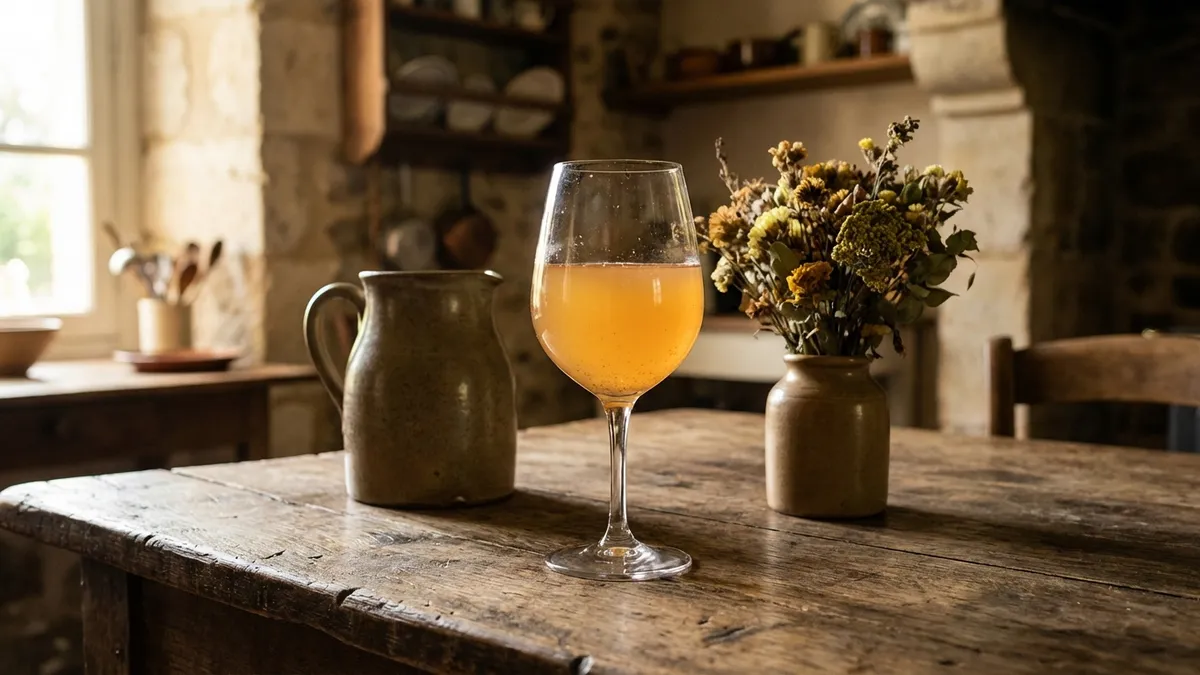
Piquette wine is what winemakers get when they pour water over grape skins that have already been pressed and let the mix ferment a second time. The drink that comes out is pale, tart, lightly fizzy and low in alcohol. It is meant to be drunk cold and young, and its trend status comes from that lightness plus a thrifty idea: making a second drink from what used to be thrown away.
What Is Piquette Wine, in One Paragraph?
Piquette is a drink made by adding water to grape pomace (the skins, seeds and pulp left after grapes are pressed for wine) and fermenting it again. The water pulls out the sugar and flavour the skins still hold, and yeast turns that sugar into a little alcohol and some fizz. Most piquette lands between 4 and 9% ABV (alcohol by volume, the percentage on the label), and many bottles sit at about 7%, well below a typical table wine.
How Is Piquette Made From Leftover Grape Skins?
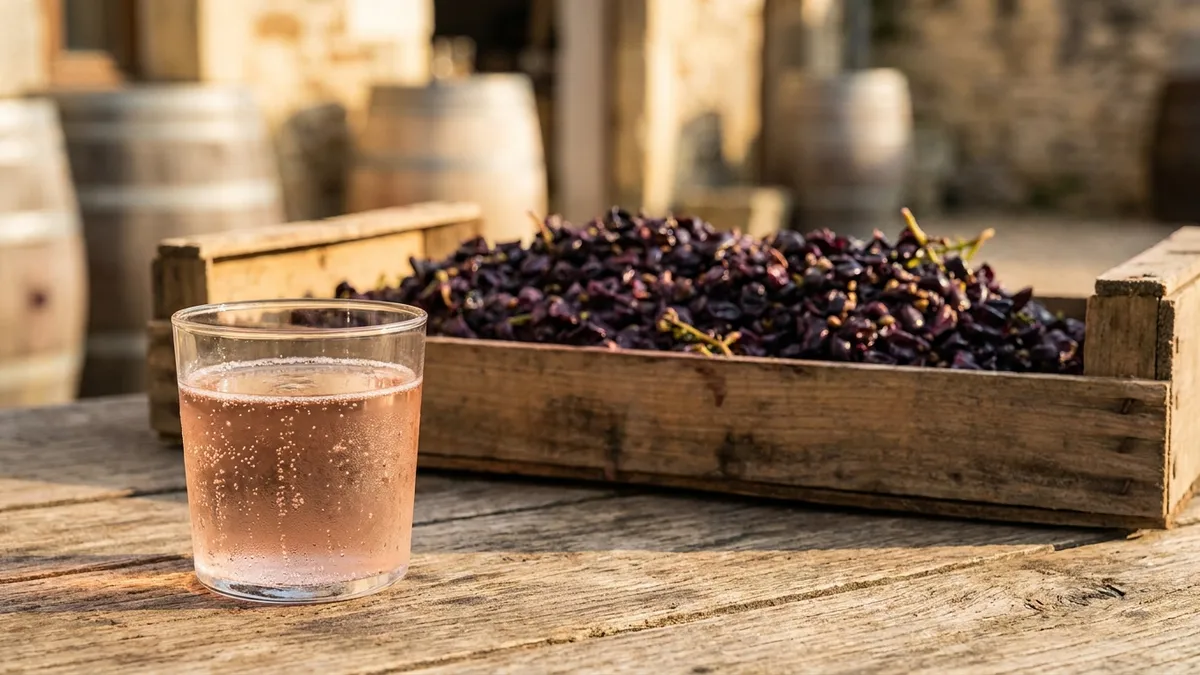
Water goes onto the pressed skins, pulls out the sugar and flavour they still hold, and that sugary water ferments a second time. Montana State University's fermentation researchers describe it plainly: adding water to pomace extracts residual sugar and flavour, which makes a second fermentation possible.
"Second press" is a loose name. The step that makes piquette is the soak and the new fermentation, not another squeeze. Producers handle the soak in two ways. Some ferment the water with the skins still in it. Others soak the skins, press them again and ferment only the liquid. Soak times run from about 48 hours to several days.
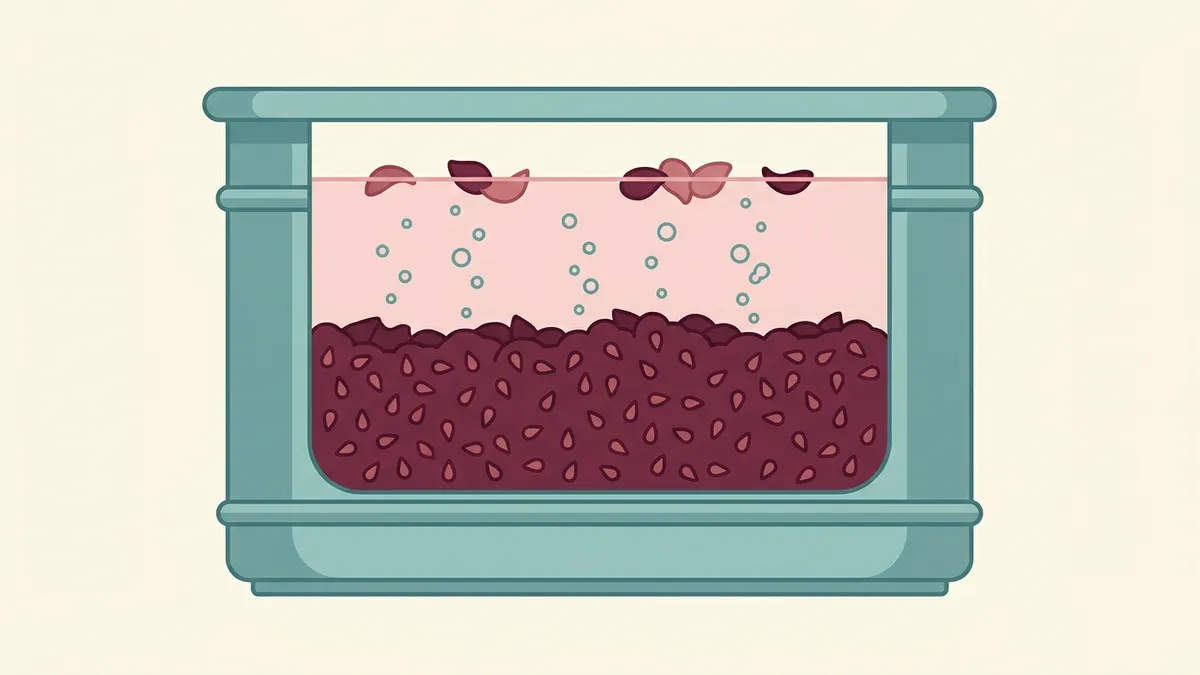
Sugar is where makers disagree. The traditional method, as the Montana State team describes it, uses just enough water to cover the pomace and adds no sugar. Some modern makers add sugar, or even honey, to lift the alcohol or create bubbles. One US producer added local wildflower honey before bottling so the last bit of fermentation happens under the cap.
That bottle trick is where the fizz comes from. Seal piquette before fermentation finishes and the carbon dioxide has nowhere to go, the same idea behind pet-nat sparkling wine. The general mechanism is laid out in how yeast turns sugar into wine.
How Does Piquette Compare With Pet-Nat, Spritzers and Hard Seltzer?
Piquette is the only one of the four made from leftover skins rather than juice, finished wine or a sugar base. That base explains its low alcohol and its short life. Pet-nat (short for pétillant naturel, a sparkling wine bottled before its first fermentation ends) is its closest cousin in the glass.
| Drink | Made from | Typical alcohol | Where the fizz comes from | Pick it when |
|---|---|---|---|---|
| Piquette | Pressed grape skins soaked in water, fermented again | 4 to 9%, often about 7% | Fermentation finishing in the bottle, sometimes helped by sugar or honey | You want a tart, light, wine-flavoured drink for a hot afternoon |
| Pet-nat | Grape juice, one fermentation | Wine strength, often at the lighter end | The first fermentation finishing in the bottle | You want real wine with soft bubbles and more body |
| Wine spritzer | Finished wine topped with soda water | About half the wine's alcohol at one part wine to one part soda | Added soda water | You have an open bottle of white or rosé and want it lighter |
| Hard seltzer | A fermented sugar or malt base with flavouring | Low, similar to light beer | Added carbonation | You want something neutral with no wine flavour at all |
The spritzer is the one people confuse it with. A spritzer dilutes a finished wine, so it keeps that wine's flavour at lower strength. Piquette never was wine. Its flavour is whatever the skins gave back to the water, which is why it tastes thinner and sharper than a spritzer of the same grape.
What Does Piquette Taste Like?
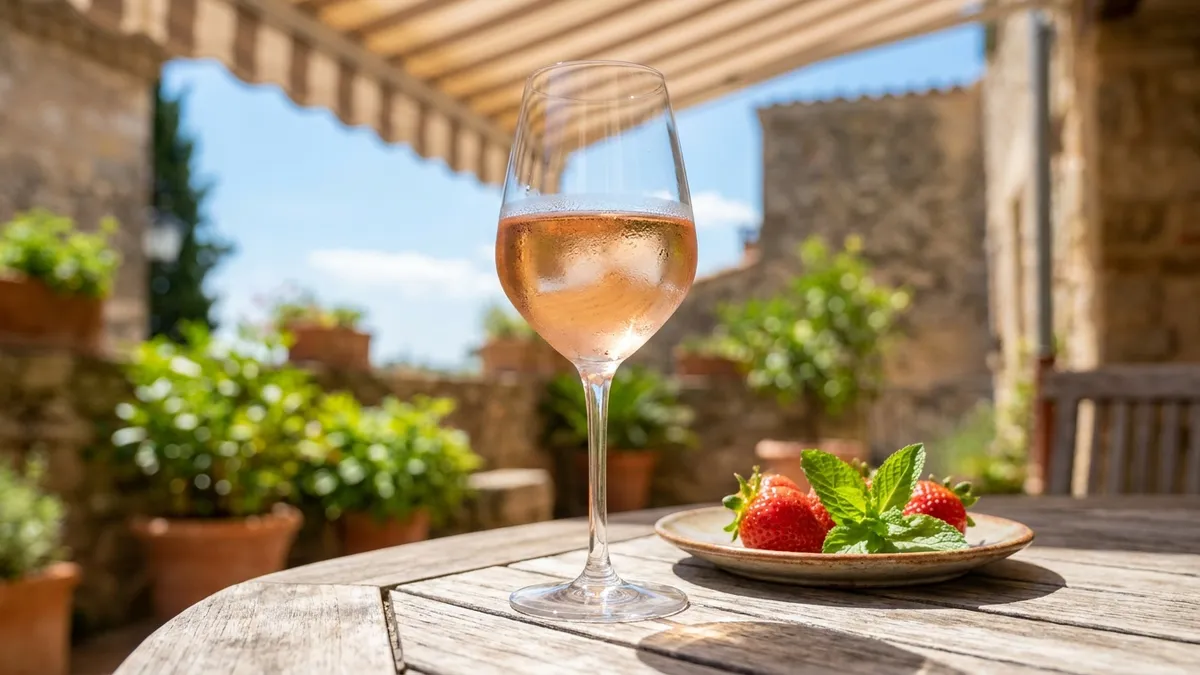
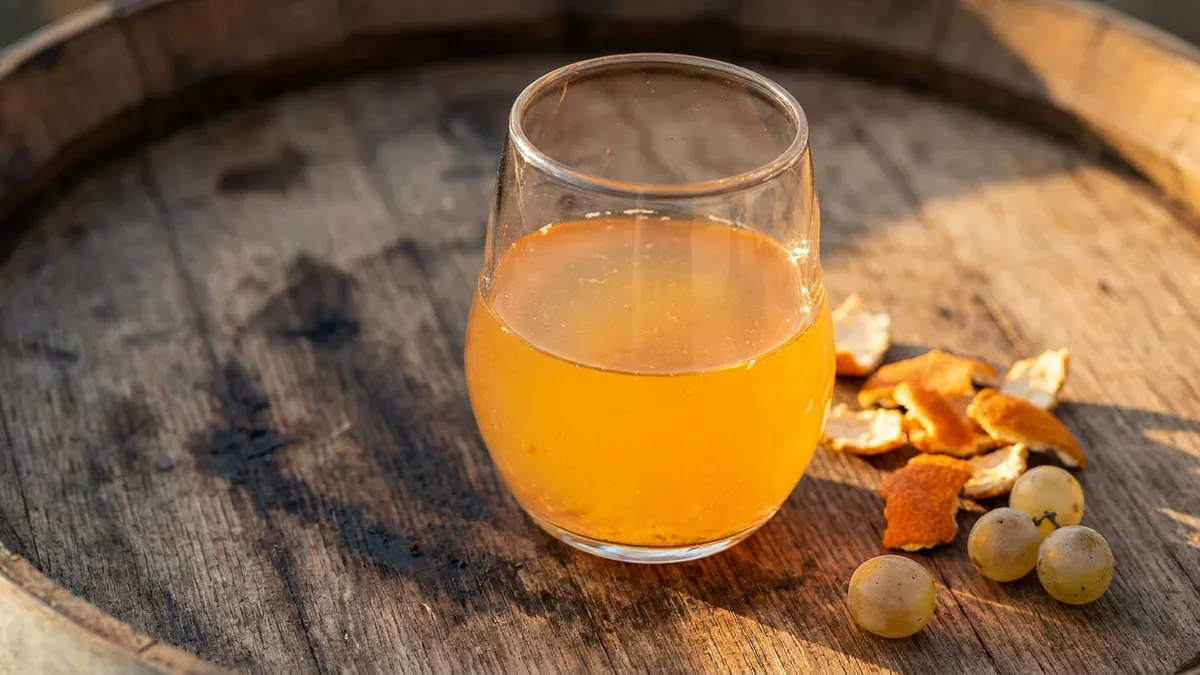
Light, tart and fizzy, closer to a sour fruit soda than to a glass of wine. Red grapes make it pink: Wine & Spirits Magazine calls one "radish-pink", smelling of herbal tea with light red-fruit flavours. Wine Anorak describes one white-grape piquette as bright and lemony, with a bitter edge like grapefruit pith.
Acidity (the tartness that makes your mouth water) carries most of the taste, because there is little alcohol or sugar to soften it. Body is light, closer to skimmed milk than whole. The skins can add a faint grip from tannin in red-grape versions. Some bottles are hazy from yeast left in the bottle, which is normal for the style.
Why Does Piquette Not Keep Like Wine?
Adding water raises the pH (the scale of how acidic a liquid is, where lower means more acidic), and higher pH lets bacteria grow. In normal wine, high acidity and higher alcohol both hold spoilage microbes back. Piquette has less of both, so the guard is down. Our wine acidity guide explains the scale.
The main worry is lactic acid bacteria (the microbes behind yogurt and sauerkraut, also present in winemaking). One US piquette maker told Wine Anorak that controlling them at the higher pH is the hardest part of the job. He says his piquette usually stays at pH 3.4 to 3.7, high enough for those bacteria to work but not so high they run riot, as long as oxygen and temperature are kept in check.
If a piquette smells of vinegar or sour milk, it has turned. Those are the faults covered in volatile acidity and mousy wine.
How Should You Buy and Serve Piquette?
Buy the newest bottle you can find, keep it in the fridge, and finish it the day you open it. The low alcohol and higher pH mean nothing improves with time in the bottle, so a recent release date is the first thing to check.
When choosing, look past the label art to who made it. The sommelier Pascaline Lepeltier told Wine & Spirits Magazine: "To make good piquette, you need good wine." The skins only give back what the grapes had. If the producer's regular wines are clean and tasty, their piquette has a head start. If the shop keeps its piquette on a warm shelf, buy a different bottle or a different style.
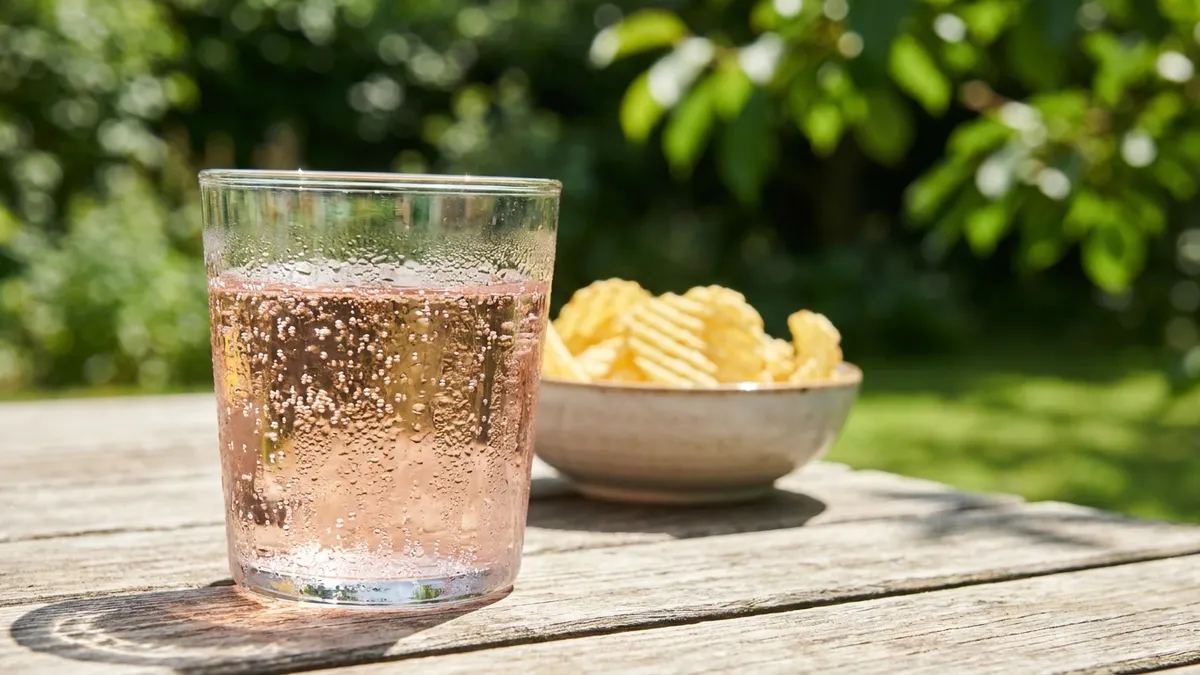
Serve it fridge-cold, as you would a light rosé; the wine serving temperature chart gives that range. Many bottles wear a crown cap (the metal cap used on beer bottles) and carry real pressure. If the bottle has been shaken or left warm, open it over the sink, tilted, and lift the cap slowly. If there is sediment at the bottom, pour gently and leave the last centimetre behind, or swirl it back in for a cloudier, yeastier glass.
Leftovers go back in the fridge, capped, for the next day at most. If you need to cool a bottle quickly, use the ice-and-salt-water method in how to chill wine fast.
With food, treat piquette like a tart, lightly sparkling drink. If the plate is salty or fried, such as chips, tempura or fried chicken, the bubbles and acid cut through the fat. If the plate is rich in sauce or slow-cooked meat, piquette is too light, so open a still wine instead.
Is Piquette Legal? EU Rules Versus the US
Where it is made decides it. The EU bans its sale, while the US lets it be sold and labels most of it like a food.
In the EU, where a member state allows piquette at all, it may only be distilled or drunk by the families of individual growers. It may not be sold. Wine Anorak reports a German producer who tried to sell piquette and had to destroy it all when the authorities found out.
In the US, the Alcohol and Tobacco Tax and Trade Bureau (TTB) states that wine under 7% alcohol follows the Food and Drug Administration's food labelling rules. It also says there is no federal pre-approval for those labels. If a US piquette reads 6.5% on the label, expect a food-style label. If it reads 7% or more, it falls back under wine rules. Our guide to alcohol in wine by type shows where that leaves piquette against everything else on the shelf.
Where Did Piquette Come From?
Piquette is ancient. The Greeks and Romans made it from pomace and called it lora, a drink for enslaved people and common workers. Romans pressed the grapes twice, soaked the pomace in water for a day, and pressed it a third time. More water went in afterwards, which is why it was thin.
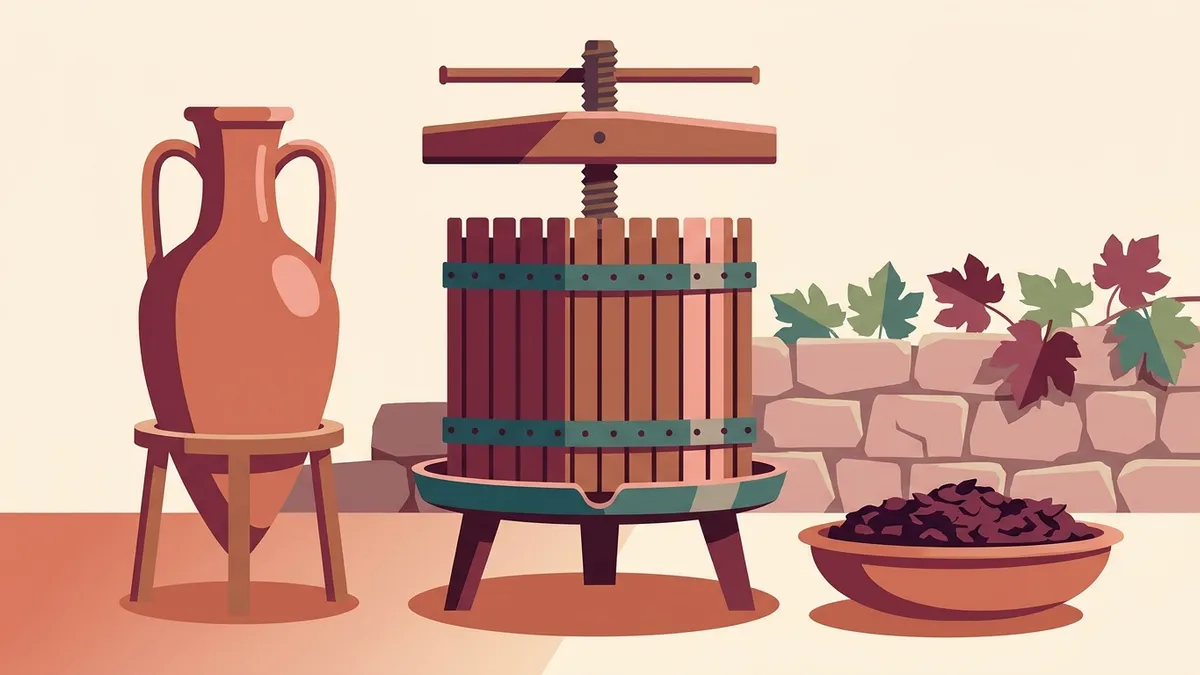
In France it stayed a worker's drink. Growers made it for farmhands, and it was produced in what were then the outskirts of Paris, in Belleville and Montmartre. The practice is recorded as late as the mid-20th century. In Italy the same drink goes by names such as acqua pazza and vinello.
The commercial revival is recent. A New York grower released what he believes was the first commercial piquette in the US in 2017, and natural-wine bars took it up from there. The appeal to winemakers is waste: the skins already exist, and piquette turns them into something to sell. The movement behind those bars is mapped in natural wine explained, and other light options sit in our guide to low-alcohol wines. The full family of styles lives in the wine styles hub.
Tonight, chill a piquette for an hour, open it over the sink, and pour it next to a still rosé made from a similar grape. Note which one tastes sharper and which feels heavier. Log both in the Sommy app, where the tasting mode walks you through look, smell and taste and saves the comparison to your journal.
Sources
- Wikipedia: Piquette
- Wine Anorak: Piquette, the natural wine craze taking off in the UK, but banned in the EU
- Wine & Spirits Magazine: Waste Not, upcycling grape pomace
- Montana State University Agricultural Research: Apple and grape pomace fermentation
- TTB: Wines containing less than 7 percent alcohol by volume
Frequently Asked Questions
What is piquette wine?
Piquette is a drink made by soaking grape pomace, the skins, seeds and pulp left after grapes are pressed for wine, in water and fermenting that liquid again. The water pulls out leftover sugar and flavour. The result is light, tart and usually a little fizzy, with roughly 4 to 9% alcohol, well below a typical bottle of wine.
Is piquette real wine?
Not in the strict sense. Wine is fermented grape juice, while piquette is fermented water that has soaked in grape skins after the juice was pressed out. In the EU it is legally separate from wine and cannot be sold at all. In the US it is sold, and below 7% alcohol it falls under food labelling rules instead of wine labelling rules.
How much alcohol is in piquette?
Most piquette sits between 4 and 9% alcohol, and many bottles land near 7%. That is low because the skins hold little sugar after pressing, and the water dilutes what is left. Some makers add sugar or honey to push the fermentation a little further, which is why the number varies from bottle to bottle.
Why is piquette banned in the EU?
EU wine law treats piquette as a by-product of winemaking, not as wine. Where a member state allows it to be made at all, it can only be distilled or drunk by the grower's own family. It may not be sold, so piquette made in the EU stays off the shelf, however good it is.
Is piquette the same as pet-nat?
No. Pet-nat is grape juice bottled before its first fermentation finishes, so it is a full wine with natural bubbles. Piquette starts from pressed skins soaked in water, so it is lighter and lower in alcohol. Some piquette is bottled while still fermenting, the same trick pet-nat uses, which is why the two can look alike in the glass.
How long does piquette last?
Treat it as a fresh drink, not a wine to age. The added water raises pH and the alcohol is low, so bacteria have an easier time than in normal wine. Keep sealed bottles in the fridge, buy recent releases, and finish an opened bottle the same day or the next, capped and cold.
Sommy Team
LinkedInFounder & Wine Educator
The Sommy Team is building the world's most approachable wine education app, helping beginners develop real tasting skills through structured courses and AI-guided practice.