Old Vine Wine: Do Older Vines Really Make Better Wine?

By the Sommy Team — AI-assisted, human-edited.
Updated Oct 1, 2026
Contents (9)
- What Is Old Vine Wine, in One Paragraph?
- How Old Does a Vine Have to Be to Count as Old?
- How Can You Tell If an Old Vine Wine Is the Real Thing?
- Do Older Vines Really Make Better Wine?
- Do Old Vines Always Give Lower Yields?
- How Should You Taste an Old Vine Wine?
- Are Old Vines the Same as Ungrafted Vines?
- Where Are the Famous Old Vine Regions?
- Is "Old Vine" a Legally Protected Term?
TL;DR
Old vine wine comes from vines the producer calls old, but the EU and US set no legal minimum. The OIV benchmark since 2024 is 35 years; Barossa runs from 35 to 125. Older vines often give balanced fruit, yet site matters more than age, so look for a stated age on the label.
Old vine wine is made from grapevines old enough that the winemaker chose to say so, yet neither the EU nor the US gives those words a legal minimum age. The front label promises nothing on its own. A stated vine age, planted on a good site, is what points to a better glass.
What Is Old Vine Wine, in One Paragraph?
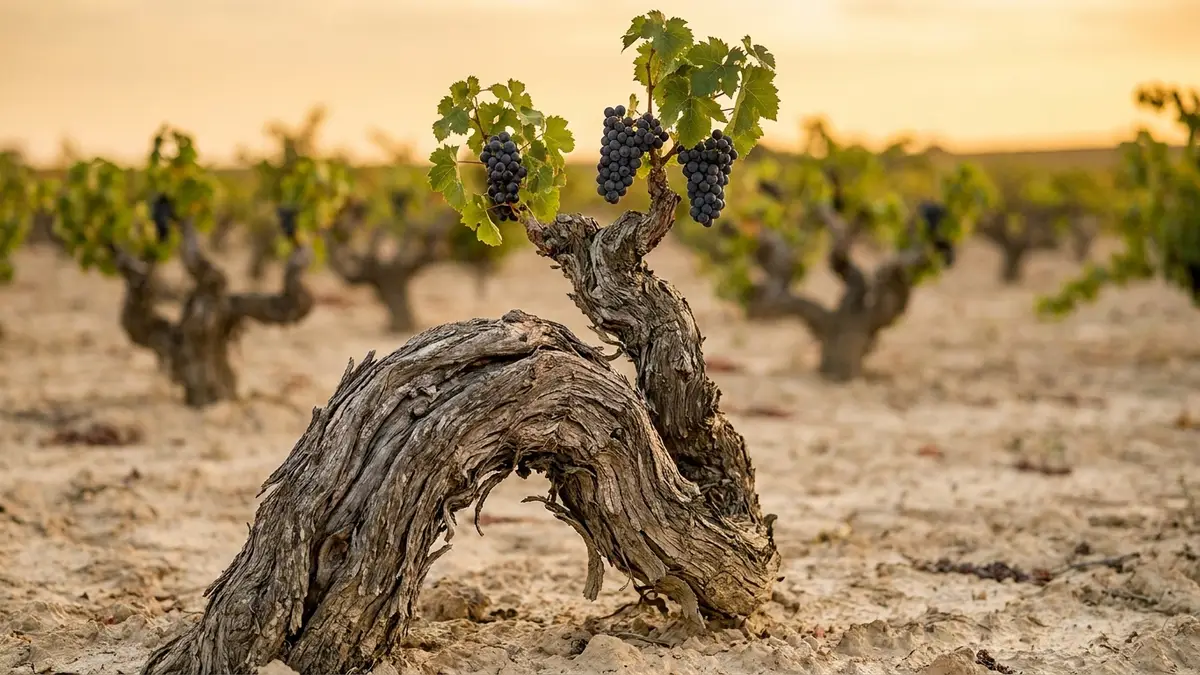
Old vine wine is wine from vines that have grown for decades, usually between 35 and well over 100 years. The world benchmark, adopted by the OIV (the International Organisation of Vine and Wine, an intergovernmental body) in 2024, is 35 years. The Barossa Valley in Australia adds tiers at 70, 100 and 125 years, and California's Historic Vineyard Society looks for vineyards of 50 years or more. On labels in the EU and US the term is unregulated. Older vines tend to give evenly ripe fruit from deep, wide root systems, though the site often matters more than the age.
How Old Does a Vine Have to Be to Count as Old?
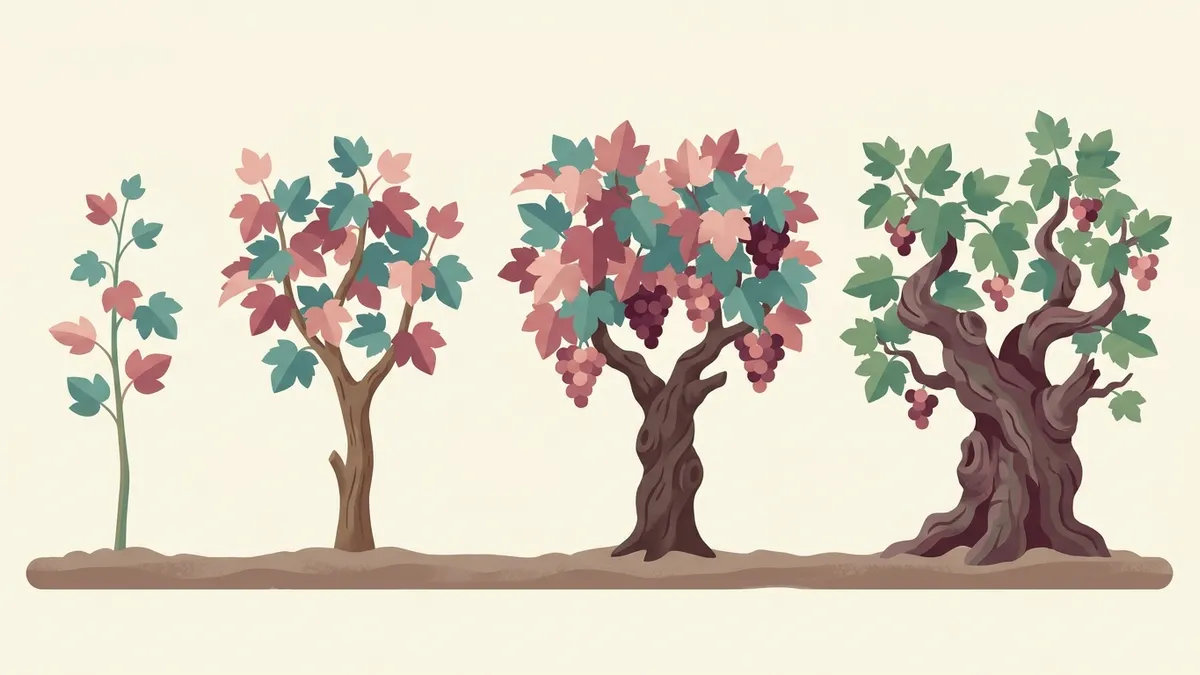
There is no single number. The OIV benchmark from 2024 is 35 years, and regional schemes run from 35 to 125. The OIV adds two details. A grafted vine counts only if its graft union has been undisturbed for 35 years. An old vineyard is a defined block where at least 85% of the vines qualify.
| Scheme | Where | Minimum vine age | What to check on the bottle |
|---|---|---|---|
| OIV definition (2024) | World benchmark | 35 years | A documented planting year; the benchmark is not a label law |
| Barossa Old Vine Charter: Old Vine | Barossa, Australia | 35 years | The tier named on the back label |
| Barossa Charter: Survivor | Barossa, Australia | 70 years | Survivor tier named on the label |
| Barossa Charter: Centenarian | Barossa, Australia | 100 years | Centenarian tier named on the label |
| Barossa Charter: Ancestor | Barossa, Australia | 125 years | Ancestor tier named on the label |
| Historic Vineyard Society | California, USA | 50 years, a third of the vines original | The vineyard name, then the society's register |
| Old Vine Project: Certified Heritage Vineyard | South Africa | 35 years | The certified seal, which vouches for the planting date |
| Vieilles vignes / old vine | EU and US labels | None set by law | The producer's notes for the real age |
The Barossa Charter began at one producer in 2007 and became an industry scheme with the regional grape and wine association in 2009. The Barossa Valley wine guide covers the region's Shiraz and Grenache beyond the vines themselves.
How Can You Tell If an Old Vine Wine Is the Real Thing?
Look for a number. A planting year, a vine age or a recognised seal on the back label tells you more than the words "old vine" on the front. A producer with a documented vineyard has the date to print, and a vague label with no date is the one to question before you pay more for it.
Turn the bottle around first. Our guide to the back label shows where producers put planting dates and vineyard names, and how to read a wine label covers the front.
If the label gives a planting year or a tier, check it against the table above. If it says only "old vine" or "vieilles vignes" with no number, treat the words as a style claim and look up the producer's notes before paying extra. If the bottle costs much more than the same producer's regular wine of that grape, a stated age is what justifies the gap; the wider rules on wine price versus quality apply here too.
Do Older Vines Really Make Better Wine?
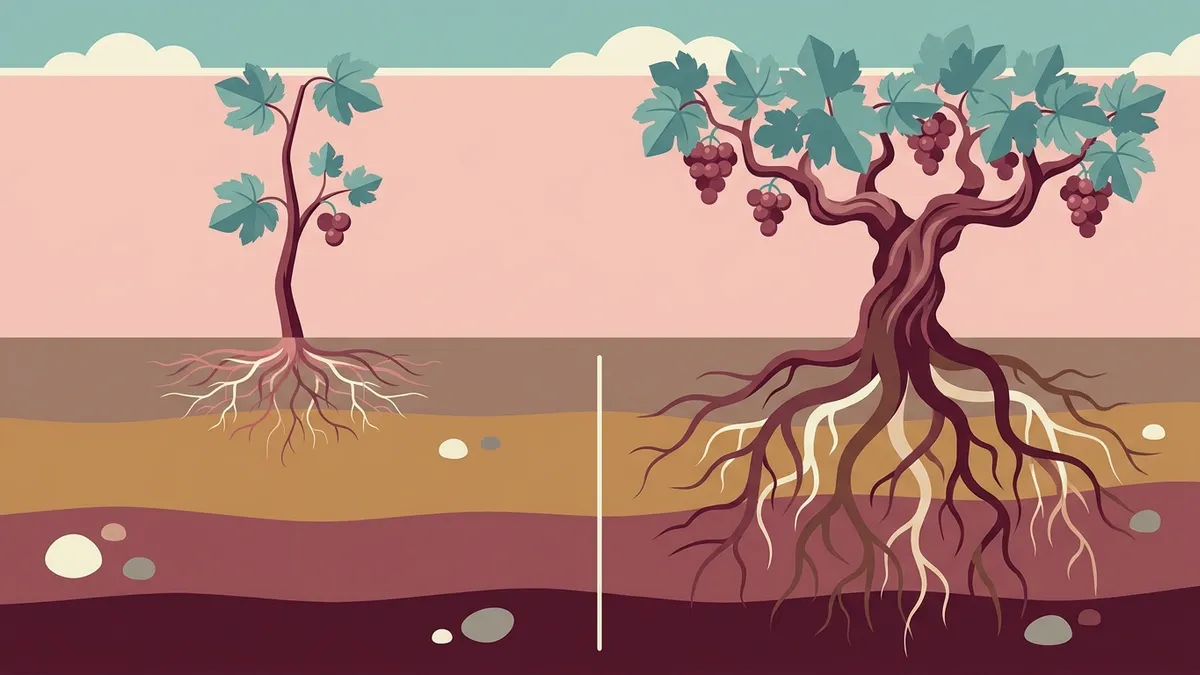
Often, but not because of age alone. Mature vines have an extensive root system that, in the words of the wine writer Jamie Goode, "thoroughly interrogates the soil", and a steadier balance between leaves and fruit. That balance helps the grapes ripen evenly instead of racing to sugar on a few overloaded shoots.
The second reason is less romantic. Goode calls it survivorship bias: "If a vineyard is making amazing wine, it's unlikely to be ripped out or replanted." Old vineyards are, by selection, the ones good enough to keep. Part of what people credit to the age of the vines belongs to the place, which our explainer on what terroir is breaks into soil, slope and sun.
So the site comes first. Goode puts it plainly: "Give me a 15-year-old vine on a great site versus a 50-year-old vine on the fertile valley floor any day." Rich valley soil pushes leafy growth and large crops whatever the vine's age, while a poor, well-drained slope holds any vine back.
Some writers link old vines to flavour through ideas such as soil fungi working with the roots. Those ideas remain hypotheses, so treat any bottle that claims a proven flavour from vine age with care.
Do Old Vines Always Give Lower Yields?
Usually somewhat lower, not always. Yield is the weight of grapes a vine or vineyard produces, and growers often see it start to dip after about 20 years. Smaller crops can mean riper, more even fruit, which is where the old-vine reputation for depth comes from.
The one hard test in the Barossa went the other way. A University of Adelaide study of old and young Shiraz found that "older vines produced a yield greater than that of younger vines". The old vines were 93 to 168 years old and the young ones 6 to 28, and the researchers tied yield closely to trunk size: a big old trunk could carry a big crop.
That is one region and one grape, so treat a low crop as a common tendency of old vines and leaf-to-fruit balance as the stronger explanation for their quality.
How Should You Taste an Old Vine Wine?
Taste it beside a young-vine wine of the same grape and region, and judge depth and length. Vine age is not wine age: a two-year-old wine from 100-year-old vines will taste young, with fresh fruit and no leather or dried-mushroom smells from bottle ageing.
Focus on structure. Body is the wine's weight in your mouth, like skimmed versus whole milk. Length is how long the flavour stays after you swallow. Old vines are said to show most clearly in these two, so they are the fairest test.
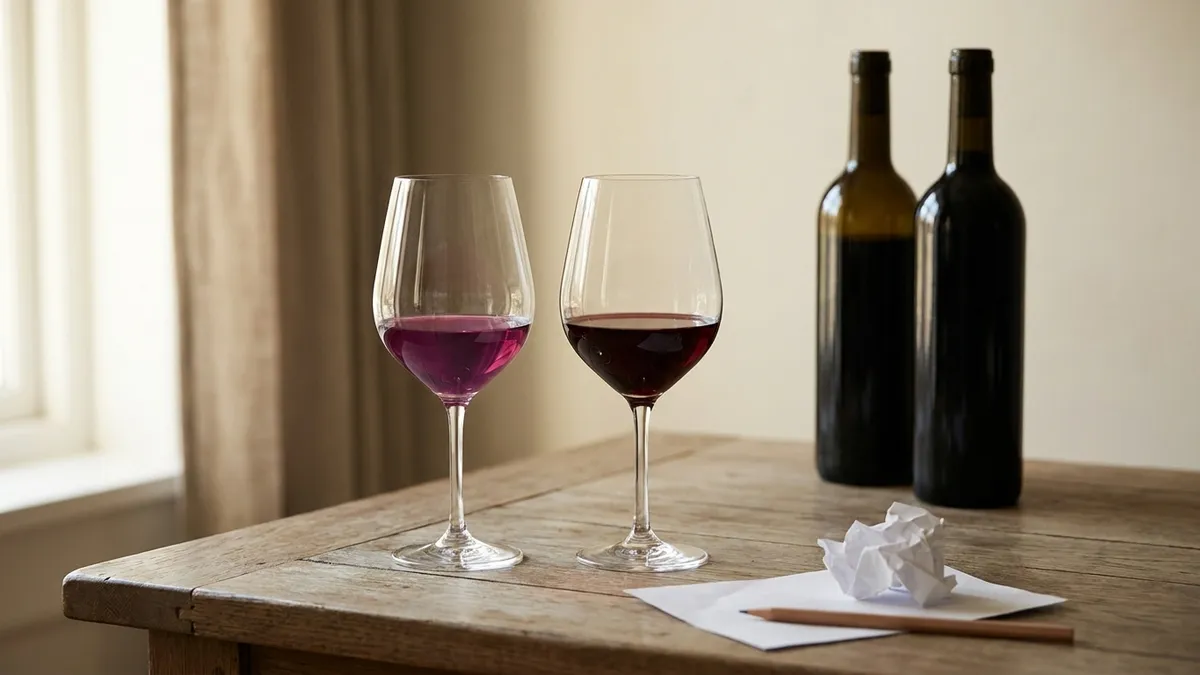
If the old-vine glass tastes only riper and hotter, with higher alcohol and jammy blackberry, the difference is probably later picking or a warmer site rather than the vines. If it holds its flavour several seconds longer with the same alcohol, you are tasting what the vines and site add. The wine body guide explains what changes that weight.
Are Old Vines the Same as Ungrafted Vines?
No. Most old vines are grafted, and only a small share grow on their own roots. Phylloxera is a tiny root louse that destroyed vineyards across Europe and much of the world in the late 1800s. The cure was grafting: joining the fruiting European vine onto the root of a resistant American vine, called the rootstock.
Ungrafted vines, growing on their own roots, survive only where the louse never arrived or cannot live. Sandy soil is one refuge: it cannot hold the stable tunnels phylloxera needs to feed on roots. Isolation is the other. South Australia has never recorded the louse, thanks to strict quarantine rules, and in Chile the Pacific on one side and the Andes on the other kept it out, and the Chile wine guide shows where its oldest vineyards sit.
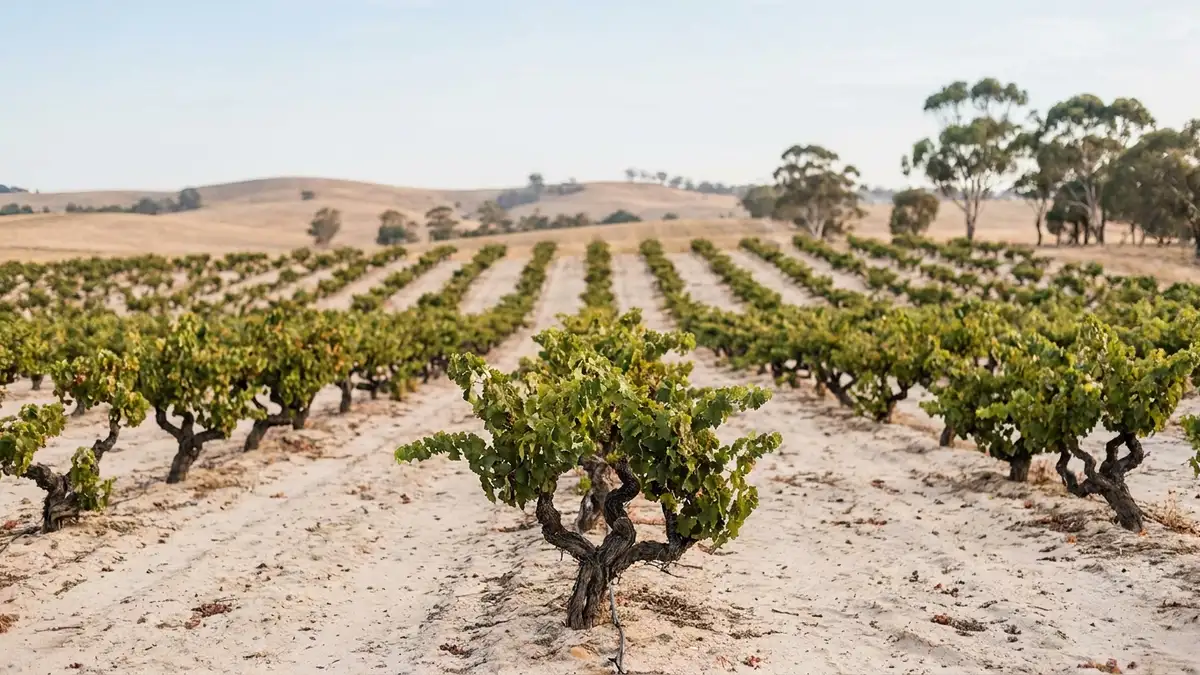
If a label says "ungrafted" or "own-rooted", that is a separate claim from "old vine". Every pre-phylloxera vine is old; most old vines are not pre-phylloxera.
Where Are the Famous Old Vine Regions?
The Barossa Valley in South Australia, California's Zinfandel country, South Africa and Chile hold the best-known old plantings. Barossa, California and South Africa run schemes that date the vines, and Barossa and Chile both escaped phylloxera entirely.
- Barossa Valley. Shiraz plantings from the 1840s still produce wine, and the Charter tiers make the age readable on the label.
- California. Growers in the 1900s and 1910s settled on Zinfandel, Alicante Bouschet, Petite Sirah and Mourvèdre, often mixed in one field blend (several grapes planted and picked together). The Zinfandel wine guide and our page on field blend wine cover those vineyards.
- South Africa. The Old Vine Project certifies vineyards of 35 years or more with a seal that vouches for the planting date. The South African wine guide maps the regions behind them.
- Chile. Phylloxera never arrived, so old vines there are commonly on their own roots.
The oldest single vines are garden curiosities: a Žametovka vine in Maribor, Slovenia, is over 400 years old, and the Great Vine at Hampton Court near London dates from 1768.
Is "Old Vine" a Legally Protected Term?
No. Neither the EU nor the US protects the term on wine labels. The EU has no regulation defining "old vines" as a labelling term, and "vieilles vignes" may appear as an optional description with no mandated minimum age. In the US there is no legal definition either.
The OIV definition in the table above is a benchmark that member countries may write into their own rules. The Barossa Charter, the Historic Vineyard Society and South Africa's seal are voluntary schemes that producers join.
Styles shaped by vineyard and cellar choices sit together in the wine styles hub, and the Sommy app at sommy.wine teaches tasting in bite-sized courses. Pour any red from your shelf tonight and read its back label for a planting year. Then photograph the label in Sommy and taste it through the look, smell and taste steps.
Sources
- Vinography: Officially defining and helping old vines around the world (OIV 2024 definition)
- Wine With Seth: What qualifies as old vine?
- Jamie Goode, Winemag: Old vines and wine quality
- AGRIS (FAO): Barossa Valley Shiraz vine age and yield study, University of Adelaide
- Wine Spectator: California's old-vine connoisseurs
Frequently Asked Questions
What does old vine mean on a wine label?
It means the producer considers the vines old, nothing more binding than that in the EU or the US. Neither sets a legal minimum age for the words 'old vine' or 'vieilles vignes'. The world benchmark adopted by the OIV in 2024 is 35 years, and schemes such as the Barossa Old Vine Charter use 35 years as their first tier. A planting year on the back label is the reliable clue.
How old does a vine have to be to be called old?
The OIV, the intergovernmental wine body, defined an old grapevine in 2024 as one documented at 35 years or older. The Barossa Old Vine Charter starts at 35 years and adds Survivor at 70, Centenarian at 100 and Ancestor at 125. California's Historic Vineyard Society looks for vineyards at least 50 years old. Producers outside these schemes pick their own number.
Do old vines make better wine?
Often, but age alone is not the reason. Mature vines have wide root systems and a steadier balance between leaves and fruit, which helps the grapes ripen evenly. Old vineyards also survive because they made good wine, so the best sites keep their oldest vines. A younger vine on a great site can beat an old vine on fertile valley soil.
Do old vines produce less fruit?
Usually somewhat less, but not always. Growers often see yields start to dip after about 20 years. A University of Adelaide study of Barossa Shiraz found the opposite in its sample: vines aged 93 to 168 years gave more fruit than vines aged 6 to 28, and trunk size mattered most. Low yield is a tendency, not a rule.
What does vieilles vignes mean?
Vieilles vignes is French for 'old vines'. In the EU it may appear on a label as an optional description of how the wine was made, but no minimum vine age is mandated. One producer may use it for 30-year-old vines and another for 80-year-old vines, so check the producer's notes for the actual age.
Are old vines the same as pre-phylloxera vines?
No. Most old vines today are grafted onto rootstocks that resist phylloxera, the root louse that destroyed vineyards worldwide in the late 1800s. Ungrafted, pre-phylloxera vines survive only where the louse never arrived or cannot thrive, such as deep sandy soils, quarantined South Australia and isolated Chile. Every pre-phylloxera vine is old; most old vines are not pre-phylloxera.
Is old vine Zinfandel different from regular Zinfandel?
It comes from older plantings, often field blends set in the early 1900s with Petite Sirah, Mourvèdre and other grapes mixed into the Zinfandel. Those mixed vineyards can give a wine with more layers than a single-variety block. In the US the term has no legal definition, so a stated planting year or a Historic Vineyard Society listing is the useful proof.
Sommy Team
LinkedInFounder & Wine Educator
The Sommy Team is building the world's most approachable wine education app, helping beginners develop real tasting skills through structured courses and AI-guided practice.