Field Blend Wine: How Grapes Were Blended in the Vineyard

By the Sommy Team — AI-assisted, human-edited.
Updated Sep 25, 2026
Contents (9)
- Field Blend Wine, in One Paragraph
- Field Blend vs Blend vs Co-Fermentation: What Is the Difference?
- How Do You Spot a Field Blend on the Shelf?
- What Does a Field Blend Taste Like?
- What Food Goes With a Field Blend?
- Why Were Old Vineyards Planted This Way?
- Where Do Field Blends Survive Today?
- Why Does Côte-Rôtie Ferment Syrah With Viognier on Purpose?
- How Should You Taste Your First Field Blend?
TL;DR
A field blend is a wine made from several grape varieties planted mixed together in one vineyard, then picked and usually fermented together. It began because growers planted from cuttings before varieties could be told apart. It survives in old California Zinfandel vineyards, Vienna's Gemischter Satz and the Douro.
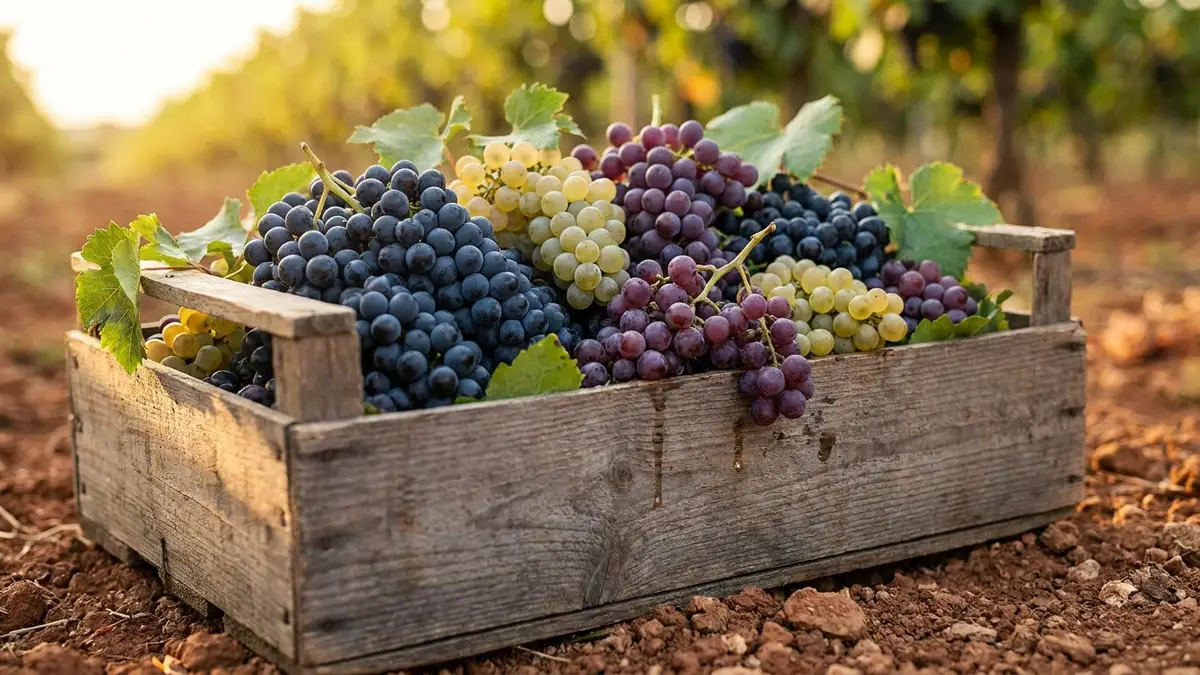
A field blend wine is blended in the vineyard, not in the cellar: several grape varieties grow mixed together in the same rows, are picked on the same morning and go into one tank. The recipe was fixed the day the vines went in, sometimes more than a century ago.
Field Blend Wine, in One Paragraph
A field blend is a wine made from two or more grape varieties interplanted (mixed vine by vine, rather than in separate blocks) in the same vineyard. The grapes are harvested together and traditionally fermented together, so the blend reflects what was planted. The practice began when vineyards were propagated from cuttings of older vineyards, before varieties could be reliably identified. Most wineries now ferment each variety separately, which makes field blends a surviving minority. Look for them in California's oldest Zinfandel vineyards, in Vienna's Gemischter Satz and in the Douro Valley.
Field Blend vs Blend vs Co-Fermentation: What Is the Difference?
A field blend mixes grapes in the vineyard, and an ordinary blend mixes finished wines in the cellar. Co-fermentation (fermenting two or more varieties in one vessel at the same time) mixes grapes in the tank, wherever they grew. The three overlap, and one bottle can involve two of them at once.
The deciding question is when the recipe gets fixed. In a cellar blend, each grape ferments on its own and the winemaker mixes the finished wines, often after weeks of trial glasses. That is how most famous blends are made, as wine blends explained shows for Bordeaux and the Rhône, and the single-varietal vs blend comparison sets out what the mixing adds. In a co-ferment, the recipe is fixed at the start of fermentation, and nothing can be adjusted afterwards. In a field blend, it is fixed even earlier, by the vines in the ground.
| Style | Grown together? | Fermented together? | Recipe fixed when | Label clue |
|---|---|---|---|---|
| Traditional field blend | Yes, mixed vine by vine | Yes | At planting | "Field blend", "interplanted", grapes listed without percentages |
| Field-blend vineyard, fermented by variety | Yes | No, each variety separately | In the cellar, within the planted mix | Old vineyard named, grapes listed, often with percentages |
| Gemischter Satz (Vienna) | Yes | Yes | At planting | "Wiener Gemischter Satz" |
| Deliberate co-ferment | Not necessarily, picked separately | Yes, on purpose | At the start of fermentation | "Côte-Rôtie" or "Shiraz-Viognier" |
| Cellar blend | No | No | After fermentation, by tasting | Exact percentages, or a famous blend region such as Bordeaux |
The second row surprises people. Some of California's oldest field-blend vineyards are now fermented variety by variety, then blended in the cellar. The vineyard is still a field blend; the wine inside the bottle is a cellar blend made from its grapes. If the back label says the varieties were fermented separately, you are drinking a blend of field-blend fruit, with the ratio set by the winemaker.
How Do You Spot a Field Blend on the Shelf?
Look for the words "field blend", "Gemischter Satz", "interplanted" or "co-planted", or a list of grapes with no percentages beside them. A named old vineyard on a California Zinfandel is the next best clue, because the oldest Zinfandel plots are the ones most likely to be mixed.
Labels rarely spell it out on the front. Field blends tend to show up in four ways:
- A style name: Wiener Gemischter Satz names the method outright.
- A description on the back label: phrases like "planted over a century ago" or "Zinfandel interplanted with Petite Sirah and Carignan".
- A grape list without numbers: a producer who cannot measure the ratio often lists the varieties and leaves the percentages out.
- A region with an old-vineyard tradition: Douro reds from old vineyards often name no single grape at all.
If the label lists several grapes without percentages and mentions old or interplanted vines, it is probably a field blend. If it gives exact percentages, the ratio was set in the cellar. Our guide to how to read a wine label covers the other words on the back.
A quick photo helps when the shelf is confusing. Sommy's AI-guided tasting mode starts from a photo of the label, then walks you through look, smell and taste, and saves your notes to your tasting journal.
What Does a Field Blend Taste Like?
Most field blends taste of one lead grape, with the minor varieties changing the structure more than the aroma. In a California field blend, Zinfandel usually leads. The supporting grapes mainly change colour, grip and length, so the differences show up on your gums and tongue before they show up in your nose.
Start with tannin (the drying grip on your gums). Zinfandel on its own is juicy with moderate grip. Petite Sirah, common in old California vineyards, brings deep colour and much firmer tannin, as the Petite Sirah wine guide explains. A Zinfandel-led field blend with Petite Sirah in the rows therefore feels firmer and darker than a single-variety Zinfandel. Carignan, covered in the Carignan wine guide, adds sharper acidity and a slightly rustic edge.
There is also a ripeness effect. Varieties that ripen at different speeds are picked on the same day, so some grapes come in riper than others. A field-blend red can smell of blackberry cooked to jam, because the ripest Zinfandel was picked with the rest, alongside fresher raspberry from a variety that was just ripe. Some of the oldest and lowest-yielding Zinfandel in California comes from field-blended vineyards, and low yields tend to concentrate flavour in each berry.
What Food Goes With a Field Blend?
Pair by the lead grape and by what is on the plate. A ripe, Zinfandel-led red field blend goes with char and sweet, smoky sauces. A crisp white Gemischter Satz goes with fried food and vinegar dressings, because its acidity (the tartness that makes your mouth water) cuts fat and matches sharpness.
For the reds, sugar and smoke are the deciding factors:
- Barbecue ribs with a sweet glaze: a ripe Zinfandel-led field blend, because the jammy fruit stands up to the sugar in the sauce.
- Grilled sausages or a charred burger: a field blend with Petite Sirah in the mix, because the firmer tannin grips the fat.
- Lamb stew or braised beef: an old-vineyard Douro red, because its firm tannin softens against slow-cooked protein.
For the whites, fat and acid decide. With schnitzel, fried chicken or tempura, pour a Gemischter Satz, because the acidity scrubs the oil from your palate. With a salad in a sharp vinaigrette the same wine works, because a low-acid white would taste flat next to the vinegar.
If the lead grape is Zinfandel, reach for char and sweet sauce; if the wine is a white Gemischter Satz, reach for fried food or a sharp dressing. The Zinfandel wine guide has more barbecue matches for the grape on its own.
Why Were Old Vineyards Planted This Way?
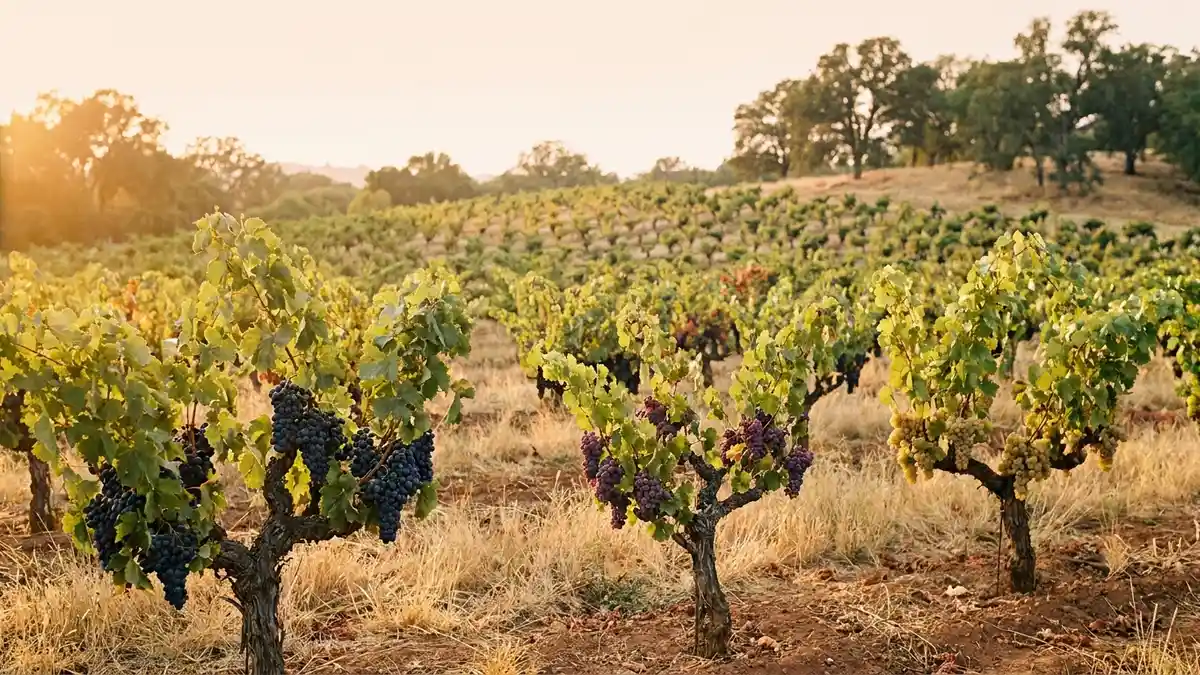
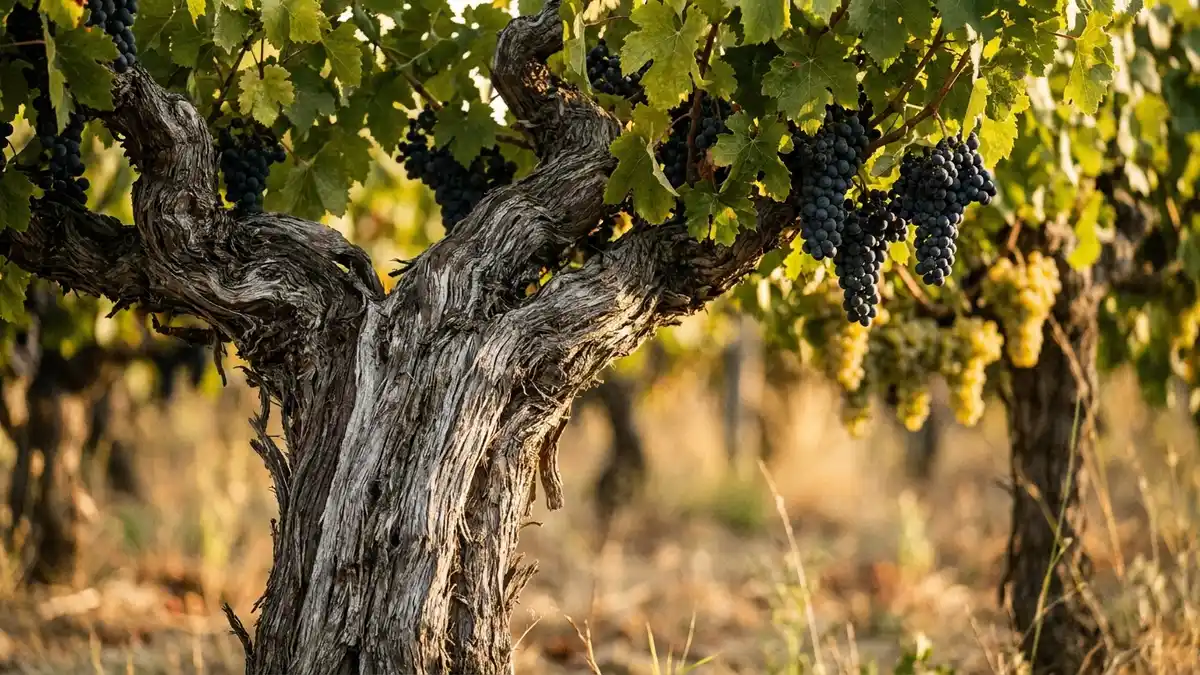
Growers planted new vineyards from cuttings (lengths of cane snipped from an existing vine and rooted) taken from older vineyards, long before anyone could reliably identify grape varieties. Whatever grew in the source vineyard was copied into the new one, mixed exactly as it had been.
The romantic story is that old growers mixed their vines to build layered flavour. The likelier story is plainer: propagation by cuttings, and little spare equipment to ferment each variety separately. Picking everything on one day and tipping it into one vat made blending effortless, though the recipe could never be adjusted. That trade-off still shapes the label. A producer working an old mixed vineyard often cannot say what share each grape takes, which is why so many field-blend labels list grapes without numbers.
Where Do Field Blends Survive Today?
Three places keep the tradition alive: California's oldest Zinfandel vineyards, the city of Vienna and Portugal's Douro Valley. Modern wineries ferment each lot in its own tank, which makes field blends an old-fashioned method. Each of the three places has its own label clue, listed in the table above.
California: old-vine Zinfandel
California Zinfandel was historically planted as a field blend, with Zinfandel vines interspersed among Durif (Petite Sirah), Carignan, Grenache, Mourvèdre, Mission and Muscat. Most California vineyards are now fully segregated by variety. The survivors are mostly the oldest plots. Some of these old plots are still picked as one mix; others are now fermented variety by variety, like the second row of the table above. The Sonoma wine guide covers one county where old-vine Zinfandel still grows.
Vienna: Gemischter Satz
Gemischter Satz ("mixed set") is the German-language term for a field blend: different varieties planted, harvested and vinified together. The practice was once common across German-speaking wine regions and has almost stopped, but it survives as a Vienna specialty, usually as a dry white. The Austria wine guide places it among the country's other styles.
The Douro: mixed plantations
In the Douro, mixed vineyards were the norm, and owners often did not know which varieties they were growing. A 1970s research effort singled out five red grapes as the best: Touriga Nacional, Tinta Roriz, Touriga Franca, Tinta Cão and Tinta Barroca. Most top estates now replant single-variety blocks, but older mixed vineyards will stay in production for decades. The Douro Valley wine guide and the Portuguese wine guide show where these reds fit.
Why Does Côte-Rôtie Ferment Syrah With Viognier on Purpose?
Because a small share of white Viognier fermented with red Syrah adds floral aroma and deepens colour. Côte-Rôtie, an appellation (a protected place name) in the northern Rhône, allows up to 20% Viognier, though most producers use 10% or less. Syrah and Viognier are the only two grapes permitted.
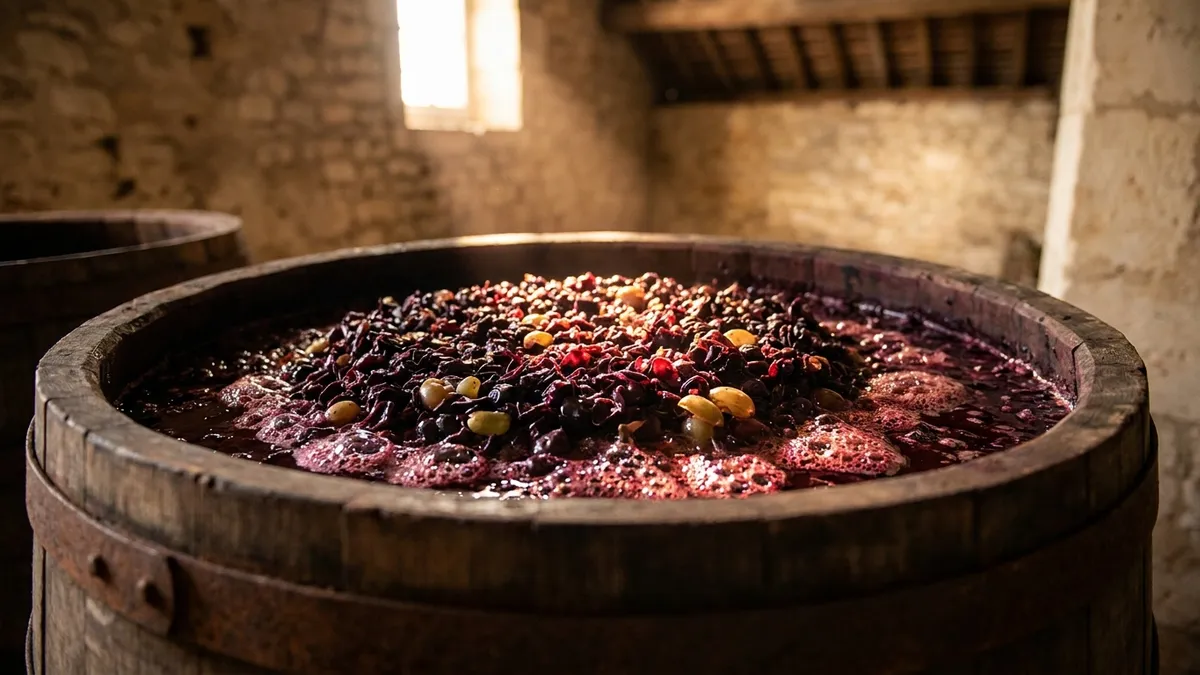
The rule goes further than the grape list. If Viognier is used, it must be fermented at the same time as the Syrah. Viognier ripens earlier, so it is normally picked separately and meets the Syrah in the tank, which makes Côte-Rôtie a deliberate co-ferment rather than a field blend. The result smells of cured meat and bacon from the Syrah alongside flowers from the Viognier, a pairing the Viognier wine guide describes from the white grape's side.
The colour effect has a name: co-pigmentation, where compounds from the white grape bond with the red pigments and deepen the wine's colour. Adding white grapes to red wine was once practised in Rioja and Tuscany too, though it has mostly disappeared there. Australian Shiraz-Viognier is made the same way. If a label says Shiraz-Viognier, expect a more perfumed red than a straight Shiraz, often with a deeper colour.
How Should You Taste Your First Field Blend?
Pour a field blend next to a single-variety wine made from its lead grape and compare the structure. The aroma will be similar; the grip, colour and finish are where the extra grapes show. Our wine styles hub has more pairs worth tasting this way.
Tonight, pick up one bottle that says "field blend" or "Gemischter Satz" and one wine of its lead grape made on its own. Taste them side by side, and log both in the Sommy app to see which structure you prefer before your next shop.
Sources
Frequently Asked Questions
What is a field blend wine?
A field blend is a wine made from two or more grape varieties planted mixed together in the same vineyard. The grapes are picked on the same day and traditionally fermented in the same tank, so the blend is set by the planting rather than by a winemaker in the cellar. Old California Zinfandel vineyards and Vienna's Gemischter Satz are the best-known examples.
What is the difference between a field blend and a blended wine?
A blended wine is usually made by fermenting each grape separately and mixing the finished wines in the cellar, where the winemaker can adjust the recipe after tasting. A field blend is mixed in the vineyard. The varieties grow in the same rows and go into the tank together, so the proportions are fixed by what was planted decades earlier.
Is a field blend the same as co-fermentation?
No. Co-fermentation means fermenting two or more varieties in one vessel at the same time, wherever they grew. A traditional field blend is almost always co-fermented because the vines are too mixed to pick separately. But Côte-Rôtie co-ferments Syrah with Viognier on purpose, and some old field-blend vineyards are now fermented variety by variety.
Is Zinfandel a field blend?
Zinfandel is a single grape variety, but many of California's oldest Zinfandel vineyards are field blends. Historically they were planted with Zinfandel mixed among Petite Sirah, Carignan, Grenache, Mourvèdre, Mission and Muscat. Most California vineyards are now planted one variety per block, so an old-vine field-blend Zinfandel is a surviving minority rather than the norm.
What is Gemischter Satz?
Gemischter Satz is the German-language term for a field blend: grapes of different varieties planted, harvested and vinified together. The practice was once common across German-speaking wine regions but has almost disappeared, and it now survives mainly as a specialty of Vienna. Look for the words Wiener Gemischter Satz on the label, usually on a crisp dry white.
Why did old vineyards use field blends?
Growers planted new vineyards from cuttings taken from existing ones, long before anyone could reliably identify grape varieties. Whatever grew in the old vineyard was copied into the new one. With little spare equipment to ferment each variety separately, picking and fermenting everything together was the simplest way to make wine, even though the recipe could not be adjusted.
Can you taste the individual grapes in a field blend?
Rarely one by one. In most field blends one grape leads, and the minor varieties change the structure more than the aroma: more colour, firmer tannin or sharper acidity. The easiest way to feel their effect is to taste a field blend next to a single-variety wine made from its lead grape and compare the grip and the finish.
Sommy Team
LinkedInFounder & Wine Educator
The Sommy Team is building the world's most approachable wine education app, helping beginners develop real tasting skills through structured courses and AI-guided practice.