Austrian Wine Guide: Grüner Veltliner, Riesling, and Beyond

By the Sommy Team — AI-assisted, human-edited.
Updated Jun 17, 2026
Contents (10)
- What Is Austrian Wine?
- The Cool-Climate Country East of the Alps
- Grüner Veltliner: Austria's Signature White
- World-Class Dry Riesling Along the Danube
- The Key White-Wine Regions
- The DAC Appellation System
- Burgenland: Austria's Red-Wine and Sweet-Wine Heart
- What Makes Austrian Wine Distinctive
- How a Beginner Should Start with Austrian Wine
- The Reward of Learning Austria
TL;DR
Austria makes crisp, cool-climate whites led by peppery Grüner Veltliner and world-class dry Riesling along the Danube, plus structured reds like Blaufränkisch in warmer Burgenland. The DAC system ties each wine to its region. This Austrian wine guide shows beginners which grapes, areas, and styles to taste first.
What Is Austrian Wine?
This Austrian wine guide starts with the grape that defines the country: Grüner Veltliner, a crisp white with citrus, green apple, and an unmistakable note of white pepper. Austria sits in central Europe, just east of the Alps, and its cool, continental climate gives wines remarkable freshness and precision. Most production is white, led by Grüner Veltliner and some of the world's finest dry Riesling, grown on steep terraces above the Danube River. In the warmer east, around the plains and lakes of Burgenland, the country also makes structured reds from Blaufränkisch and Zweigelt, plus luscious sweet wines. The DAC appellation system ties each style to its home region, making Austria far easier to read once you know the map.
The Cool-Climate Country East of the Alps
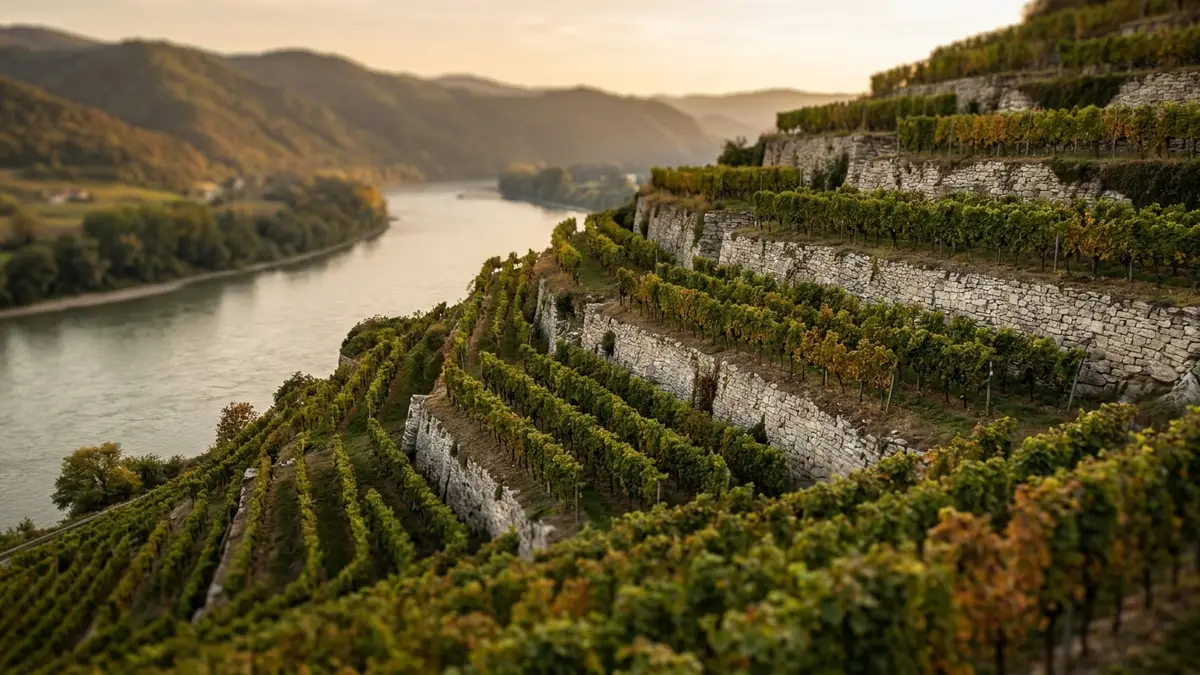
Austria's vineyards cluster in the east of the country, sheltered from the high Alps and warmed by the Pannonian plain that stretches in from Hungary. This is a continental climate — cold winters, warm summers, and big swings between day and night temperatures. Those swings are the secret to Austrian wine: warm days ripen the fruit while cool nights lock in acidity, so the wines taste vivid and energetic rather than heavy.
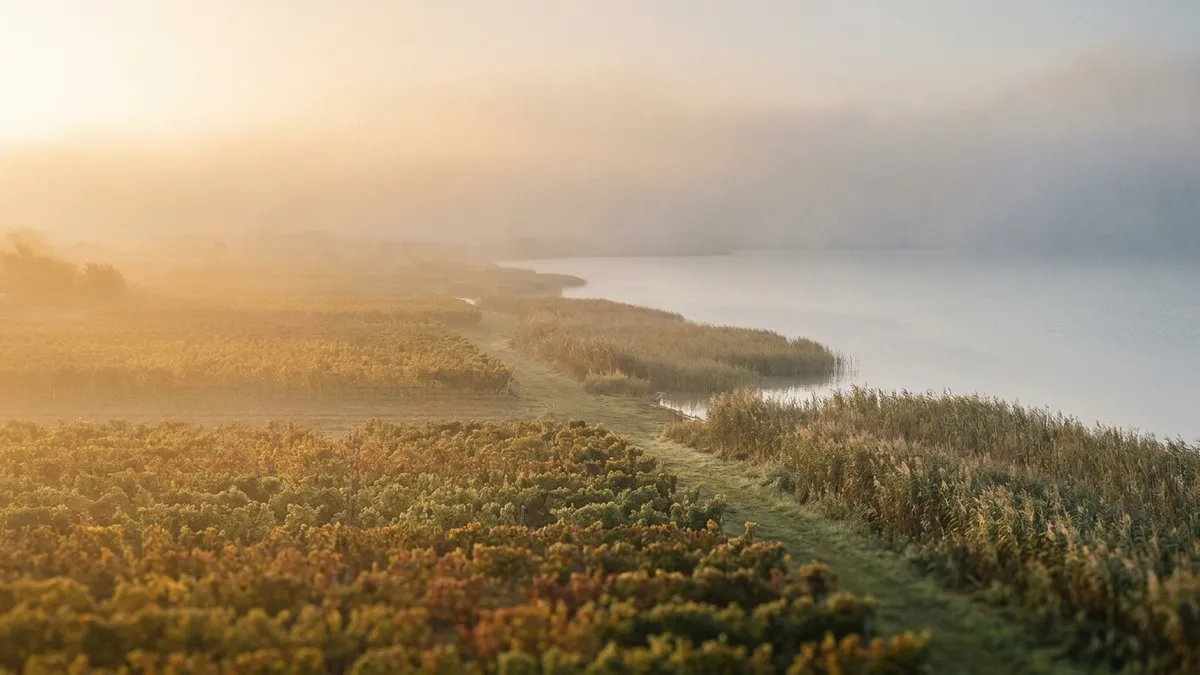
Two natural features shape the best sites. The Danube River and its tributaries carve steep, rocky valleys in the northwest, reflecting light and moderating temperature for the finest whites. To the east, the shallow, mist-prone Lake Neusiedl creates the humid autumns that make great sweet wine possible. Everything in Austrian wine flows from this balance of cool air and well-placed water.
The result is a style worth naming early: precision. Austrian whites are clean, dry, high in acidity, and built around clarity of flavor rather than oak or ripeness. If you have explored crisp German styles, our guide to German wine regions makes a useful neighbor — Austria shares the cool-climate logic but bottles it drier.
Grüner Veltliner: Austria's Signature White
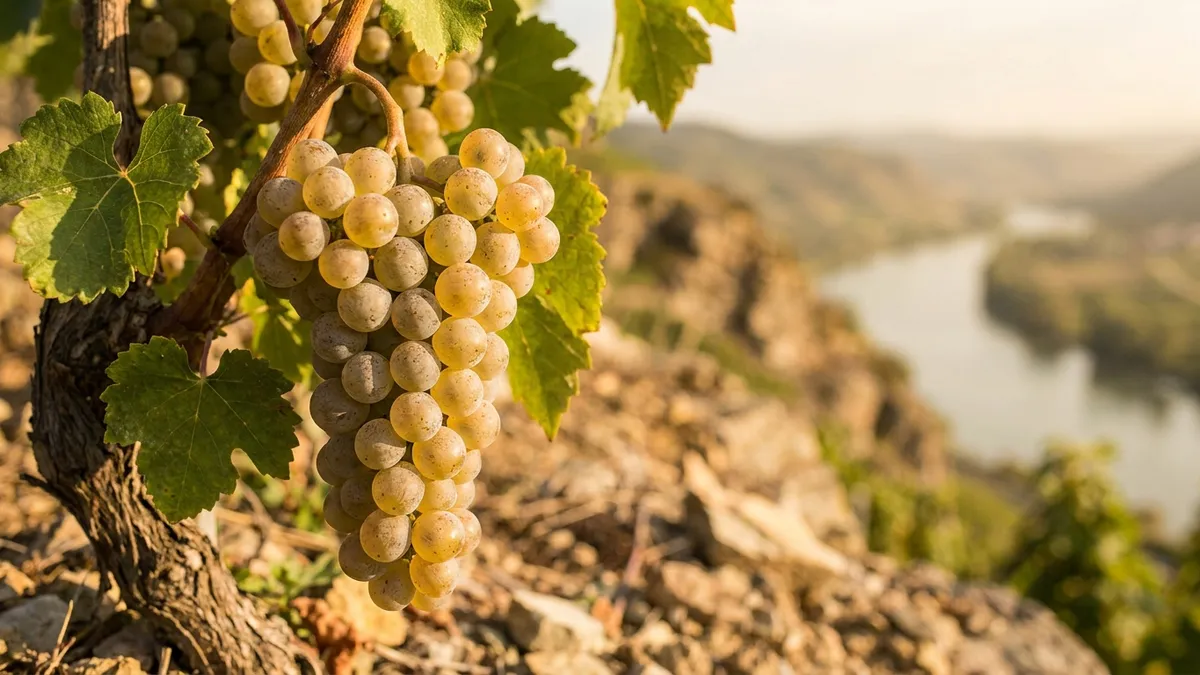
No grape explains Austria faster than Grüner Veltliner. It covers roughly a third of the country's vineyards — far more than any other variety — and it is the wine you should taste first. At its simplest it is light, zesty, and refreshing. At its best it is concentrated, layered, and able to age for a decade.
The signature you are looking for is a peppery snap. Where most crisp whites lean on citrus and herbs, Grüner adds a distinctive white-pepper or radish note that, once you spot it, is hard to miss.
- Grüner Veltliner — Color: pale lemon-green · Body: light to medium (2-3/5) · Acidity: high (4/5). Typical aromas: green apple, lime, grapefruit, white pepper, fresh herbs, and a savory mineral edge. Dry and food-friendly, it ranges from light "house wine" styles to rich, full-bodied bottlings from top sites.
Grüner's range is its strength. A lighter version is one of the most refreshing whites on any table; a serious one rivals white Burgundy for depth while staying drier and fresher. For a deeper look at this grape across its many styles, our Grüner Veltliner guide goes bottle by bottle. To place it among the whites every learner meets first, see our overview of the noble grapes.
The pepper note also makes Grüner a clear example of an aromatic-leaning grape — one with a recognizable flavor fingerprint. If that idea interests you, our piece on aromatic versus neutral grapes explains why some varieties shout and others whisper.
World-Class Dry Riesling Along the Danube
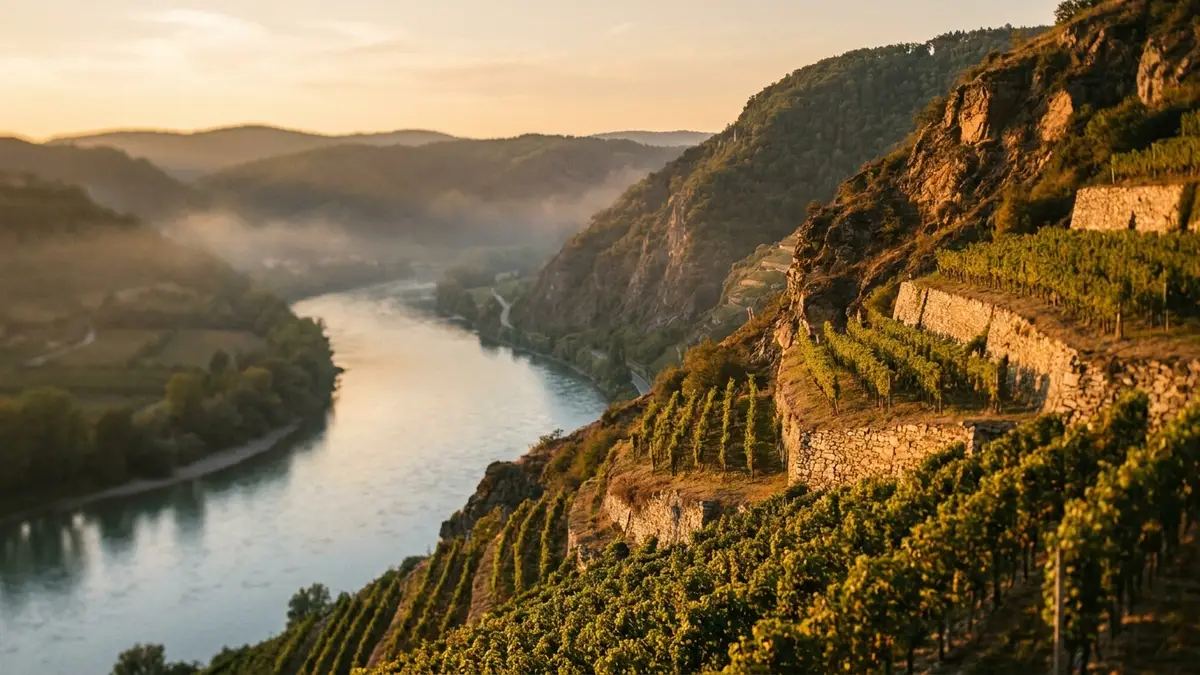
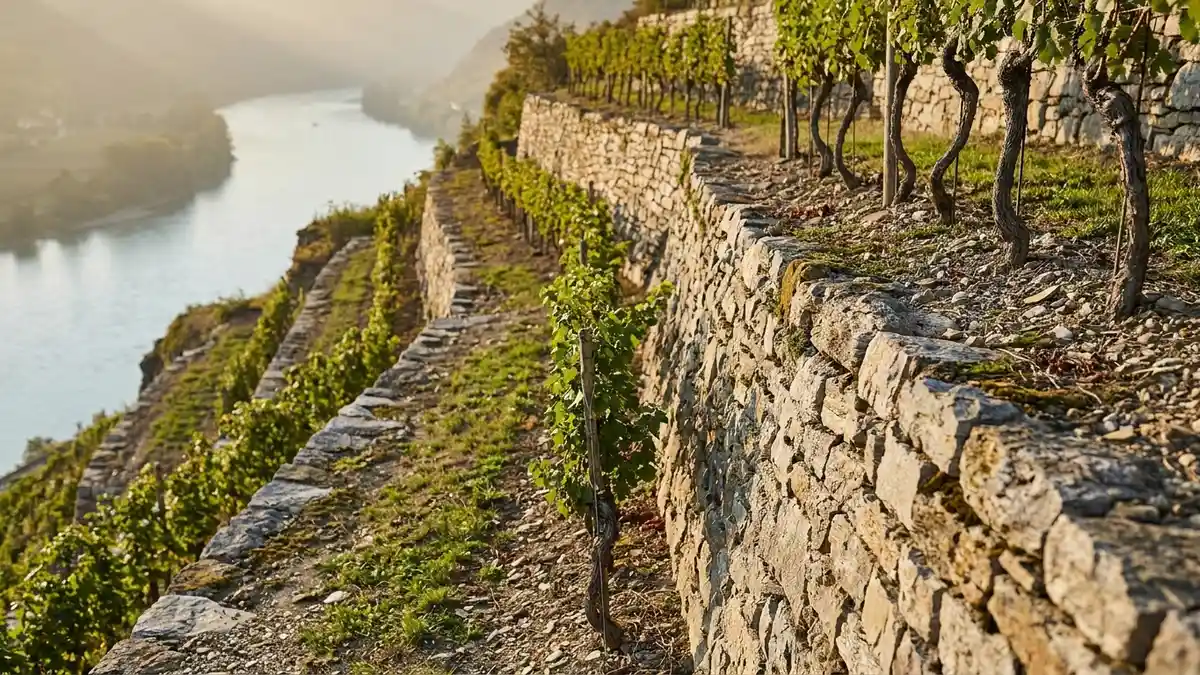
Austria's other great white is Riesling, and the contrast with Germany matters. Most Austrian Riesling is bone dry, concentrated, and built on stony soils — a different animal from the off-dry German style many beginners meet first. The greatest examples grow on steep terraces directly above the Danube and its side valleys, where heat-storing rock and cool river air create ideal conditions.
- Austrian Riesling — Color: pale to medium lemon · Body: medium (3/5) · Acidity: high (4/5). Typical aromas: peach, apricot, lime, white flowers, and a stony, mineral note. Dry, precise, and age-worthy, with stone fruit deepening into honey and petrol notes over time.
The difference between the two flagship whites is the single most useful comparison in Austrian wine:
- Grüner Veltliner: Peppery and savory · green apple, lime, herbs · the everyday and the serious · the house style of the country.
- Riesling: Floral and stone-fruited · peach, apricot, lime blossom · always dry in Austria · the connoisseur's grape of the steep Danube slopes.
To understand how Riesling shifts across countries and sweetness levels, our Riesling wine guide traces the grape from bone-dry to lusciously sweet.
The Key White-Wine Regions
Most of Austria's whites come from Niederösterreich (Lower Austria), the large province in the northeast that contains the famous Danube valleys. Three of them deserve to be learned by name, because they are where Grüner Veltliner and Riesling reach their peak.
- Wachau: The most celebrated stretch of the Danube, a dramatic valley of steep stone terraces. Makes intense, age-worthy Grüner Veltliner and Riesling and uses its own three-tier ripeness scale (below). Wines here are concentrated, mineral, and built to last.
- Kremstal: Just downriver from the Wachau, blending steep slopes with deeper soils. Produces both flagship whites in a slightly rounder, approachable style, often at gentler prices than its famous neighbor. A Kremstal DAC label signals regional typicity.
- Kamptal: Centered on the Kamp River valley, known for vibrant, expressive Grüner Veltliner and Riesling and the prized Heiligenstein site. Kamptal DAC wines balance freshness and concentration and are among the best-value serious whites in the country.
These three sit close together yet taste meaningfully different — a small-scale lesson in terroir, the way soil, slope, and climate shape a wine. Tasting one bottle from each side by side is one of the most rewarding exercises in Austrian wine, and exactly the kind of comparison the Sommy app turns into a guided lesson.
The Wachau's Ripeness Tiers
The Wachau classifies its dry whites by ripeness and weight using three traditional categories, set by a local growers' association. Knowing them lets you predict the style before you taste:
- Steinfeder: The lightest tier, low in alcohol (under about 11.5%), delicate and fragrant. Named after a wispy grass that grows in the vineyards. The freshest, most casual style.
- Federspiel: The classic middle tier, medium-bodied and dry, usually 11.5-12.5% alcohol. Balanced and versatile — the everyday face of fine Wachau wine.
- Smaragd: The ripest and richest tier, fuller-bodied and higher in alcohol (12.5%+), made from the most concentrated grapes. The most powerful, age-worthy, and prized style. Named after a green lizard that suns itself on the terraces.
The DAC Appellation System
Austria's labels became far clearer in 2003 with the launch of the DAC system — Districtus Austriae Controllatus. The idea is simple and learner-friendly: a DAC name guarantees the wine is typical of its region, made from the grapes and in the style that region is known for.
In practice, this means the region name tells you roughly what is in the glass. A Kamptal DAC or Kremstal DAC wine will be a dry Grüner Veltliner or Riesling. A Leithaberg DAC points to Burgenland whites and Blaufränkisch reds. Many DACs add a quality ladder you can read at a glance:
- Gebietswein (regional): The base tier — fresh, approachable wine typical of the wider DAC region. The smart everyday entry point.
- Ortswein (village): Wine from a single named village, showing clearer local character. A step up in specificity and concentration.
- Riedenwein (single vineyard): Wine from one named vineyard site, the most specific and ageworthy tier. The Austrian equivalent of a top cru.
The pattern echoes the best classification systems in Europe: the more specific the place named on the label, the higher the wine sits. Not every Austrian wine carries a DAC — some growers prefer the broader Niederösterreich designation for blends or experimental bottlings — but when a DAC appears, it is your fastest clue to grape and style.
Burgenland: Austria's Red-Wine and Sweet-Wine Heart
Head east toward the Hungarian border and the climate warms. Burgenland, the flat, sun-soaked province around Lake Neusiedl (Neusiedlersee), is where Austria makes its serious reds and its greatest sweet wines.
The Red Grapes
Austrian reds are still a well-kept secret, which makes them a rewarding thing to explore. Three grapes lead the way:
- Blaufränkisch: The flagship red. Deeply colored, structured, and peppery, with high acidity and firm tannins — the drying, grippy sensation reds leave on your gums. Typical aromas: blackberry, dark cherry, black pepper, and a savory, earthy edge. It ages well and is Austria's most serious red. Our Blaufränkisch wine guide covers the grape in full.
- Zweigelt: The most planted red in the country, a 20th-century cross of Blaufränkisch and St. Laurent. Juicy, medium-bodied, and approachable, with bright sour-cherry fruit and soft tannins. The easiest Austrian red to love — see our Zweigelt wine guide for styles and pairings.
- St. Laurent: A softer, perfumed red with a silky, Pinot-Noir-like character — red cherry, spice, and gentle tannins. Less common but worth seeking out for its elegance.
The three sit on a clear spectrum:
- Zweigelt: Lightest and juiciest · sour cherry · soft tannins · easy weeknight red.
- St. Laurent: Medium and silky · red cherry and spice · Pinot-like charm · the elegant middle.
- Blaufränkisch: Fullest and firmest · blackberry and black pepper · high acid, grippy tannins · the age-worthy flagship.
The Sweet Wines of Neusiedlersee
Around the shallow, mist-shrouded Lake Neusiedl, autumn humidity encourages noble rot — a benign mold (Botrytis cinerea) that shrivels grapes and concentrates their sugar. The result is some of Europe's finest dessert wines: rich and honeyed yet kept lively by Austria's trademark high acidity, so they taste vibrant rather than syrupy. They pair beautifully with blue cheese, fruit tarts, and foie gras, and they age for decades.
What Makes Austrian Wine Distinctive
Step back and a clear identity emerges. Austria is a cool-climate specialist that prizes freshness, dryness, and precision above weight or oak. A few traits set it apart:
- A signature grape no one else owns. Grüner Veltliner is grown widely only in Austria, giving the country a flagship that is instantly its own — peppery, citrusy, and food-loving.
- Dry Riesling at the highest level. Where Germany often keeps a touch of sweetness, Austria's Danube Rieslings are dry, mineral, and built to age.
- High acidity as a through-line. From light whites to rich sweet wines to structured reds, that bright, refreshing backbone runs through nearly everything.
- A readable appellation system. The DAC framework links region to grape to style, making Austrian labels easier to decode than many European rivals once you learn a handful of names.
That combination — a unique grape, world-class dry Riesling, and a logical map — is why Austria punches well above its size. It is a small producer by volume, but its best wines compete with anything in their class.
How a Beginner Should Start with Austrian Wine
You do not need rare bottlings to understand Austria. The smartest path is to taste a few clear contrasts and pay attention to what changes. Here is a practical order:
- Start with a dry Grüner Veltliner. Choose a Niederösterreich or Kamptal DAC bottle and hunt for the white-pepper note alongside green apple and lime. This is the house style of the whole country.
- Put a Danube Riesling beside it. Taste a Wachau or Kamptal Riesling next to the Grüner. Same dry, high-acid framework, but the Riesling turns floral and stone-fruited where the Grüner stays peppery and savory. The difference will be obvious in two sips.
- Climb the Wachau ladder. If you can, compare a Federspiel and a Smaragd from the same grape. The Smaragd will feel riper, fuller, and more powerful — a vivid lesson in ripeness.
- Meet the reds. Open a juicy Zweigelt for an easy introduction, then a Blaufränkisch when you want structure, pepper, and grip. Both come mostly from Burgenland.
- Finish with something sweet. A botrytized dessert wine from Neusiedlersee shows how Austria's acidity keeps even rich, honeyed wine feeling fresh.
As you taste, build the habit of naming what you sense — the color, the high acidity, the peppery or stony notes. Our guide to how to taste wine gives you the step-by-step method, and Sommy turns these comparisons into guided exercises: identifying aromas, scoring structure, and building the vocabulary to describe each glass.
You can start practicing free at sommy.wine, then bring the method to your next bottle of Grüner Veltliner. Tasting deliberately, in pairs, is how the differences between regions stop being words on a label and become things you can actually feel in the glass.
The Reward of Learning Austria
Austria rewards a learner with a rare combination: a country small enough to grasp, yet deep enough to keep surprising you. Learn two white grapes, three Danube valleys, the three Wachau tiers, and the warmer reds of Burgenland, and you can read almost any Austrian label with confidence.
Start small, taste in pairs, and let the contrasts teach you — Grüner against Riesling, Federspiel against Smaragd, Zweigelt against Blaufränkisch. The Sommy app is built to make that habit stick, turning each bottle into a short, guided lesson so the next Austrian wine you open is a little clearer than the last. For more on how Austria's logic compares with its neighbors, our guide to German wine regions is the natural next stop.
Sources
Frequently Asked Questions
What is Austria's most famous wine?
Grüner Veltliner is Austria's signature grape and its most planted variety, accounting for roughly a third of all vineyards. It makes a dry white wine with citrus, green apple, and a distinctive white-pepper note. Styles range from light and zesty to rich and age-worthy, which makes it the clearest starting point for understanding Austrian wine.
Is Austrian Riesling sweet or dry?
Most Austrian Riesling is bone dry, unlike many German Rieslings that keep some sweetness. The best examples come from steep stony sites along the Danube in the Wachau, Kremstal, and Kamptal. They are concentrated and mineral, with stone-fruit and citrus flavors, high acidity, and the ability to age for a decade or more.
What does the DAC system mean on an Austrian label?
DAC stands for Districtus Austriae Controllatus, Austria's appellation system. A DAC name on the label means the wine is typical of its region and made from the grapes that region is known for, such as Kamptal DAC for Grüner Veltliner and Riesling. It links the wine to a place and a recognizable style rather than just a grape.
What are Steinfeder, Federspiel, and Smaragd?
These are the three dryness and ripeness tiers of the Wachau region, defined by the local Vinea Wachau association. Steinfeder is the lightest and lowest in alcohol, Federspiel is medium-bodied and classic, and Smaragd is the ripest, fullest, and most concentrated. They apply mainly to Grüner Veltliner and Riesling from the Wachau.
What red wines does Austria make?
Austria's reds come mostly from warmer Burgenland in the east. Blaufränkisch is the flagship, giving structured, peppery reds with high acidity and firm tannins. Zweigelt, a cross of Blaufränkisch and St. Laurent, is the most planted red and makes juicy, cherry-driven wines, while St. Laurent offers a softer, Pinot-like style.
Where are Austria's sweet wines from?
Austria's great sweet wines come from around Lake Neusiedl (Neusiedlersee) in Burgenland. Autumn mists off the shallow lake encourage noble rot, concentrating sugar in the grapes. The result is rich dessert wines with high acidity that keeps them fresh rather than cloying. They are made from several varieties and pair well with blue cheese and fruit desserts.
How should a beginner start with Austrian wine?
Begin with a dry Grüner Veltliner from Niederösterreich to learn the peppery, citrusy house style. Then taste a Danube Riesling beside it to feel the difference between the two flagship whites. From there, try a juicy Zweigelt or a more serious Blaufränkisch from Burgenland to meet Austria's reds.
Sommy Team
LinkedInFounder & Wine Educator
The Sommy Team is building the world's most approachable wine education app, helping beginners develop real tasting skills through structured courses and AI-guided practice.