Blaufränkisch Wine Guide: Central Europe's Elegant Red

By the Sommy Team — AI-assisted, human-edited.
Updated Jun 16, 2026
Contents (10)
- What Is Blaufränkisch Wine?
- Blaufränkisch in 100 Words
- Blaufränkisch Tasting Notes and Flavor Profile
- Why Blaufränkisch Is Compared to Syrah and Cabernet Franc
- Terroir: How Place Shapes Blaufränkisch
- Where Blaufränkisch Grows
- Aging Potential
- How to Pair Blaufränkisch with Food
- Blaufränkisch vs Other Reds
- How a Beginner Should Approach Blaufränkisch
TL;DR
Blaufränkisch is a dark-skinned red grape grown across Austria, Germany, and Hungary, where it is called Lemberger and Kékfrankos. It delivers blackberry and blackcurrant fruit, cracked black pepper, firm acidity, and structured tannins, often compared to Syrah and Cabernet Franc. The best examples age for a decade or more.
What Is Blaufränkisch Wine?
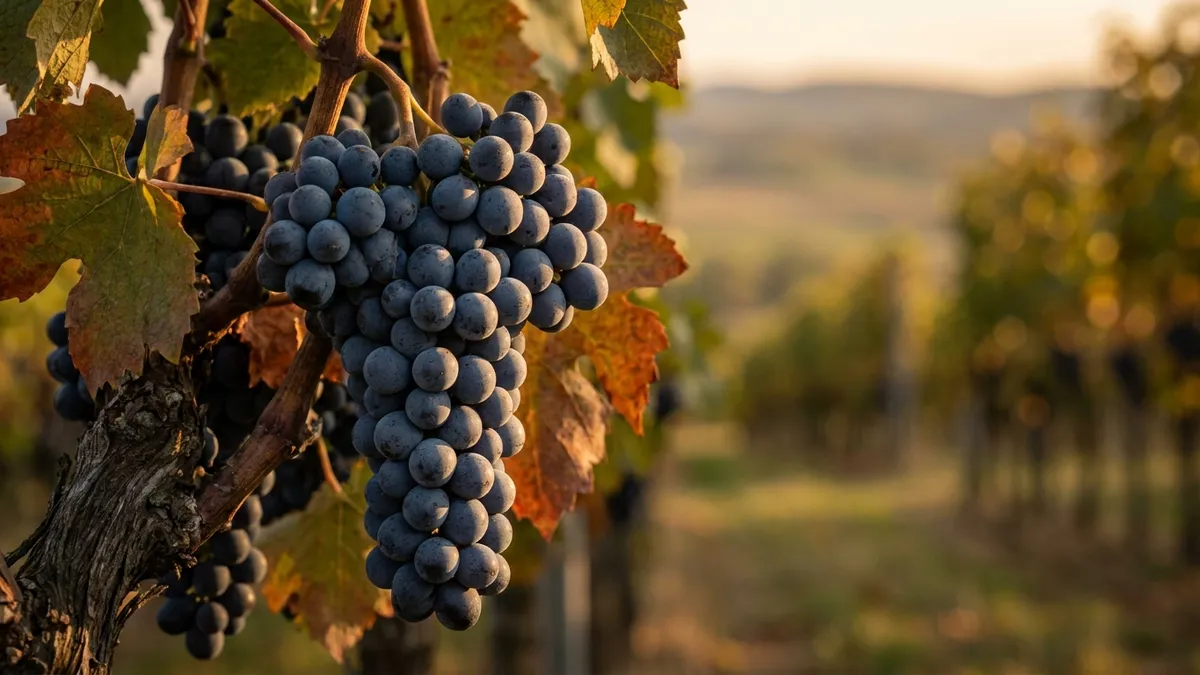
Blaufränkisch is a dark-skinned red grape and the most important quality red of Central Europe. It anchors the great reds of Austria's Burgenland region and travels under three names: Blaufränkisch in Austria and Germany, Lemberger in parts of Germany and the United States, and Kékfrankos in Hungary. The grape produces a blaufrankisch wine marked by blackberry and blackcurrant fruit, cracked black pepper, firm acidity, and a stony, savory finish.
The name translates loosely as "blue Frankish," a nod to its blue-black skins and Central European roots. For decades it sat in the shadow of international varieties, dismissed as a rustic workhorse. That reputation no longer holds. Careful vineyard work and gentler winemaking have revealed a grape capable of real elegance, structure, and longevity.
If you already enjoy Syrah (peppery, dark-fruited) or Cabernet Franc (herbal, high-acid, savory), Blaufränkisch sits comfortably between them — and usually costs less than either.
Blaufränkisch in 100 Words
Blaufränkisch wine is a medium to full-bodied dry red built on blackberry, blackcurrant, and dark cherry fruit, cracked black pepper, and firm acidity with structured, medium-to-high tannins. Grown across roughly 20,000 hectares in Austria, Germany, Hungary, and small US plantings, it is known as Lemberger and Kékfrankos depending on the country. Cool-climate sites give bright, peppery, tart wines around 12.5–13.5% alcohol; warmer sites and oak aging produce richer, plummier bottles that cellar ten to fifteen years. Tasters often compare it to a cross between Syrah and Cabernet Franc, with more acid lift than either.
Blaufränkisch Tasting Notes and Flavor Profile
Blaufränkisch is a savory, structured red rather than a soft, fruity one. The fruit is dark and the spine is firm. Once you learn its black-pepper-and-acid signature, you can pick it out of a lineup with surprising ease.
The Core Flavors
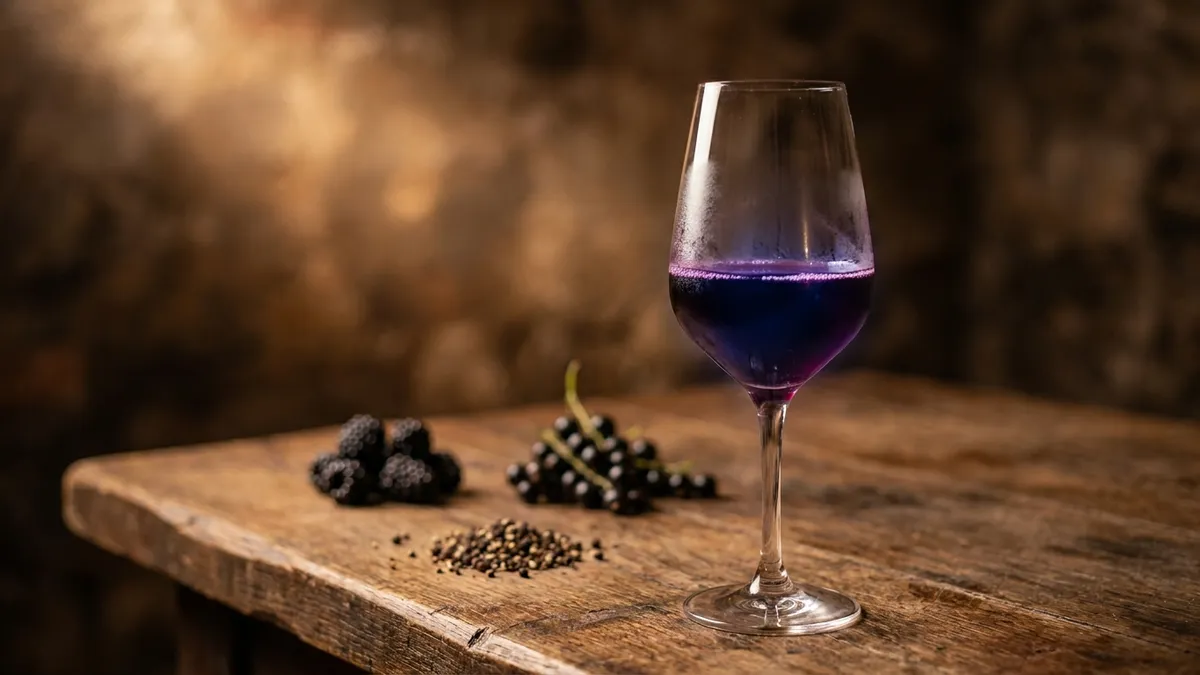
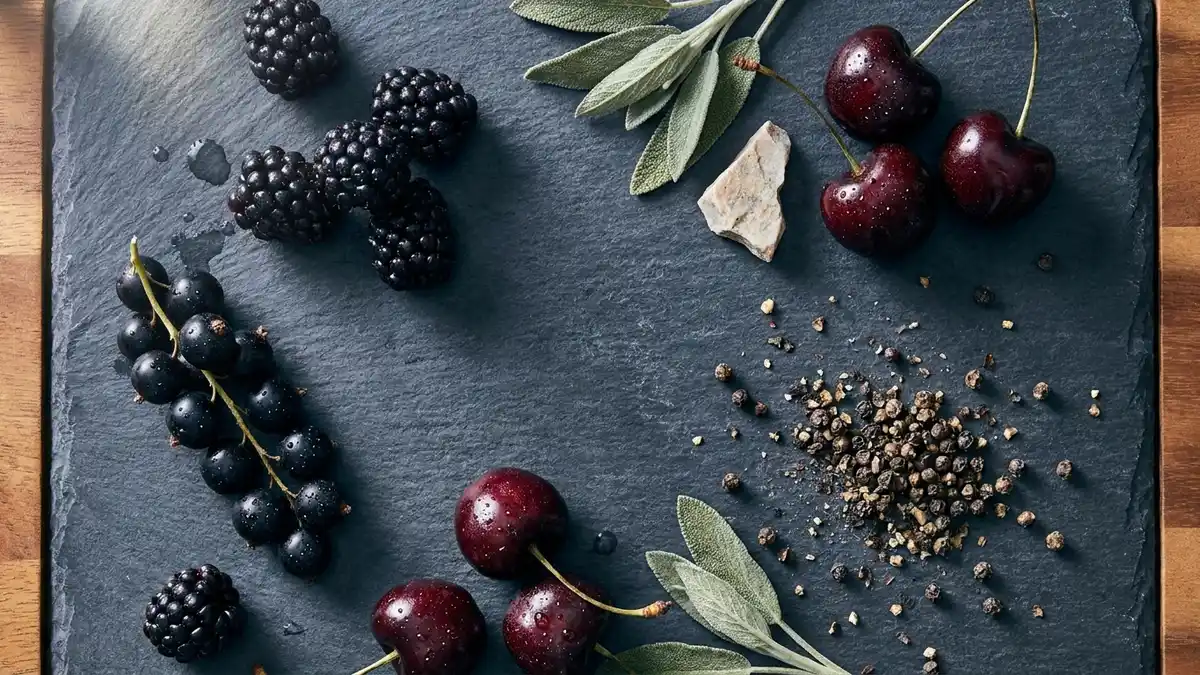
- Dark fruit — blackberry, blackcurrant, dark cherry, and sometimes blueberry in warmer years
- Spice — cracked black pepper is the calling card, often joined by clove and a whiff of cinnamon
- Herbal and earthy — dried herbs, undergrowth, and a wet-stone minerality on cooler sites
- Oak-derived (when present) — cedar, vanilla, and tobacco from time in barrel
The grape's thick skins give deep color and real tannic grip, while its naturally high acidity keeps everything bright and tense. That combination is why the wines taste so refreshing alongside food rather than heavy on their own.
Structure at a Glance
Blaufränkisch leans medium-bodied with assertive acidity and firm, fine-grained tannins. Reading these three axes — body, acidity, and tannin — is the fastest way to understand any red. If the terms are new, the guide to tannins, acidity, and body breaks them down.
Body medium (3/5) · Acidity high (4/5) · Tannin high (4/5)
Warm-vintage and oak-aged bottlings nudge the body up toward full and soften the tannins, while cool-site, unoaked wines stay leaner and more cutting. Either way, the acidity rarely drops below "crisp."
Why Blaufränkisch Is Compared to Syrah and Cabernet Franc
These comparisons help a beginner place the grape, but each has limits worth understanding.
The Syrah Connection
The shared peppery spice is real and chemical — both grapes can carry meaningful levels of rotundone, the peppercorn compound. Blaufränkisch, though, is usually lighter in body and brighter in acidity than warm-climate Syrah. Think of it as Syrah's cooler, leaner Central European cousin rather than a copy.
The Cabernet Franc Connection
The link to Cabernet Franc is about structure and attitude: firm acidity, herbal lift, medium tannin, and a savory, food-first personality. Both grapes reward a roast over a fruit-forward sip. Blaufränkisch trades Cabernet Franc's leafy, bell-pepper edge for more black pepper and dark berry.
Blaufränkisch is Syrah's pepper meeting Cabernet Franc's backbone — with more acid lift than either.
If you want the bigger picture of how dark grapes relate to one another, the overview of black grapes and the round-up of indigenous grapes worth trying both place Blaufränkisch in wider company.
Terroir: How Place Shapes Blaufränkisch
Few grapes shift personality with soil and climate as clearly as this one. Blaufränkisch is a sensitive translator of where it grows, which is why single-vineyard bottlings have become the region's calling card.
Cool Sites and Stony Soils
On the limestone and slate of the Leithaberg hills, Blaufränkisch turns finely structured, mineral, and almost weightless despite its tannin — bright red and black fruit over a cool, stony core. These are the wines most often likened to fine Pinot or Cabernet Franc in elegance. The variety's thick skins and late ripening also mark it as a thick-skinned grape, which explains the deep color and firm tannin even from cooler sites.
Warm Sites and Deeper Soils
On the warmer clay and loam of Mittelburgenland, sometimes called Blaufränkischland, the grape ripens fuller, with plummier fruit, riper tannins, and more generous body. Oak aging is common here, adding cedar and spice. These are the crowd-pleasing, structured reds that first put the grape on serious wine lists.
The lesson for a taster is simple: the name on the label is only the starting point. Two bottles of the same grape, grown twenty kilometers apart, can taste like different wines.
Where Blaufränkisch Grows
Austria — Burgenland
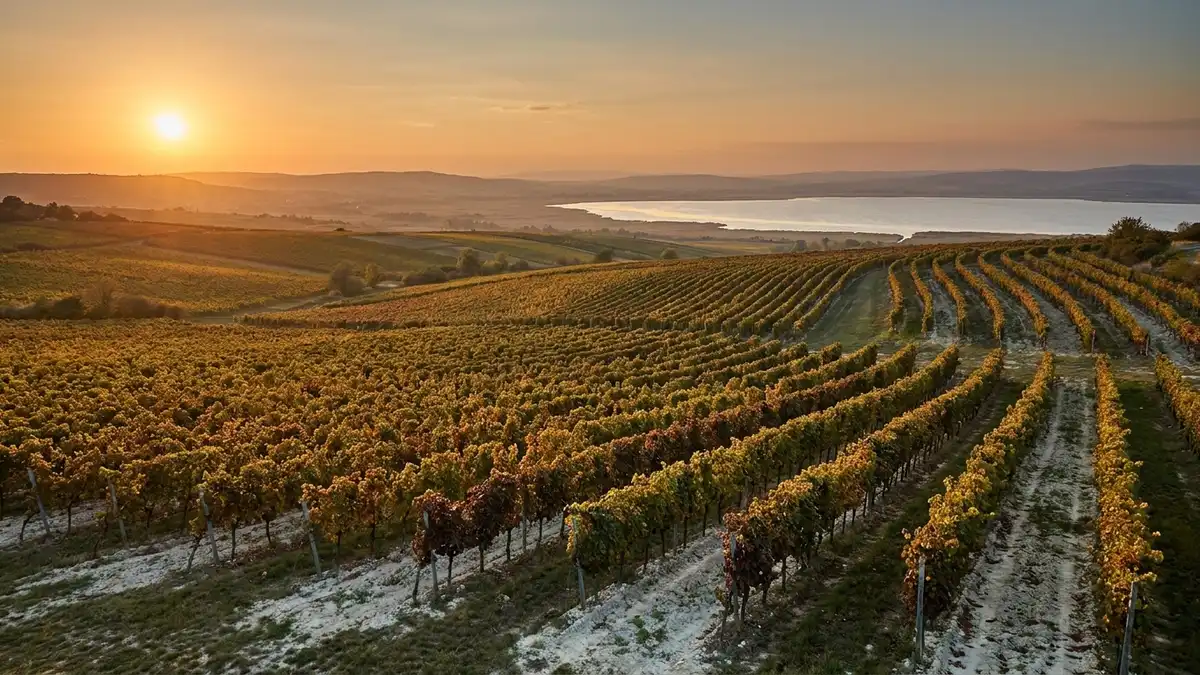
Burgenland, on Austria's eastern edge near the Hungarian border, is the grape's quality heartland. The region's warm continental climate, moderated by the shallow Lake Neusiedl, ripens Blaufränkisch reliably while preserving acidity. Four areas matter most:
- Mittelburgenland — the fullest, most structured style, often oak-aged
- Leithaberg — limestone and slate sites producing the most elegant, mineral wines
- Eisenberg — iron-rich soils giving lean, spicy, savory wines
- Neusiedlersee — warmer lakeside sites with riper, rounder fruit
Burgenland is also where Blaufränkisch features in Zweigelt, a popular crossing of Blaufränkisch and St. Laurent. The two grapes share shelf space across Austria, and the Zweigelt guide is worth a read if you enjoy lighter, juicier Austrian reds.
Germany — Lemberger
In Germany, the grape is called Lemberger (occasionally Blauer Limberger) and is concentrated in Württemberg in the southwest. German Lemberger ranges from easy, fruity everyday reds to serious, barrel-aged bottlings. The cooler climate tends to emphasize the grape's red-fruit and peppery side over deep black fruit.
Hungary — Kékfrankos
Hungary is the volume leader, where the grape goes by Kékfrankos ("blue Frankish" in Hungarian). It is the country's most planted red, grown widely in regions such as Sopron, Eger, and Szekszárd. Kékfrankos is also a backbone grape in Egri Bikavér, the spicy red blend known in English as Bull's Blood. Styles run from bright and peppery to dark and brooding.
The United States — Washington and the Finger Lakes
American plantings are small but rising. Washington State grows it as Lemberger, producing ripe, full-bodied versions in its warm interior valleys. New York's Finger Lakes — a cool-climate region better known for Riesling — turns out brighter, more peppery, high-acid wines that echo the Austrian and German originals. Both are usually labeled Lemberger or Blaufränkisch.
Aging Potential
Blaufränkisch's firm acidity and structured tannins make it a natural keeper, even though most bottles are sold to drink young.
- Everyday styles — drink within 2–4 years for fresh, peppery fruit
- Mittelburgenland and oak-aged wines — 5–10 years, gaining depth and spice
- Top single-vineyard Leithaberg and Eisenberg wines — 10–15 years or more
With time, the bright blackberry fades into dried fruit, leather, tobacco, and forest floor, while the firm young tannins relax into something silkier. The acidity that can feel tart in a young wine becomes the quality that keeps an aged bottle lively and precise.
How to Pair Blaufränkisch with Food
Blaufränkisch was born at the table. Its acidity cuts through fat, its tannins handle protein, and its savory pepper note bridges to spiced and roasted dishes. The principle is the same one behind all structured reds: match the wine's grip and acid to the dish's richness.
Reliable Pairings
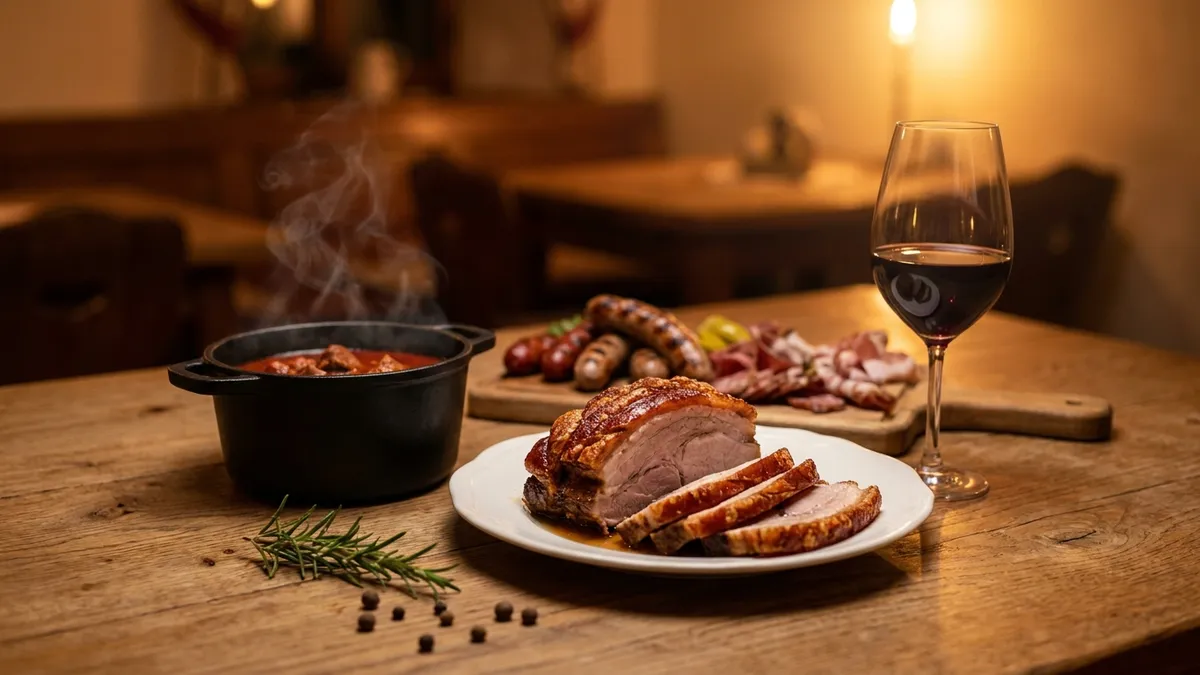
- Roast pork and braised beef — Central European classics that mirror the wine's savory depth
- Goulash and paprika-spiced stews — the pepper and acid lift heavy, warming dishes
- Grilled sausages and charcuterie — fat and salt meet the wine's cutting acidity
- Duck and game — the savory, earthy notes flatter darker, richer meats
- Mushroom dishes — earthy echoes the grape's undergrowth character
- Aged hard cheeses — Gruyère, aged Gouda, and similar styles match its structure
What to Avoid
Skip very delicate fish and creamy, sweet desserts — the wine's pepper and acidity will overpower both. Save the lighter, unoaked styles for charcuterie and tomato-based pasta, and bring out the structured, oak-aged bottles for the roast.
Blaufränkisch vs Other Reds
Placing the grape next to familiar varieties makes its profile easier to remember.
How Blaufränkisch compares to three familiar reds.
- Body: Blaufränkisch medium to full; Syrah full; Cabernet Franc medium; Pinot Noir light to medium
- Acidity: Blaufränkisch high; Syrah medium; Cabernet Franc medium to high; Pinot Noir high
- Tannins: Blaufränkisch medium to high; Syrah high; Cabernet Franc medium; Pinot Noir low to medium
- Key flavors: Blaufränkisch blackberry, black pepper, stone; Syrah black fruit, pepper, smoke; Cabernet Franc red fruit, herbs, graphite; Pinot Noir cherry, earth, rose
- Oak affinity: Blaufränkisch good; Syrah excellent; Cabernet Franc good; Pinot Noir moderate
- Best with: Blaufränkisch roast pork, goulash, game; Syrah grilled red meat, stew; Cabernet Franc roast lamb, herbs; Pinot Noir duck, mushrooms
If this savory, peppery profile appeals, you may also enjoy the structure of Cabernet Sauvignon, the warmth of Grenache, or the transparency of Pinot Noir. For the foundational varieties every taster should know first, the guide to the noble grapes is the place to start.
How a Beginner Should Approach Blaufränkisch
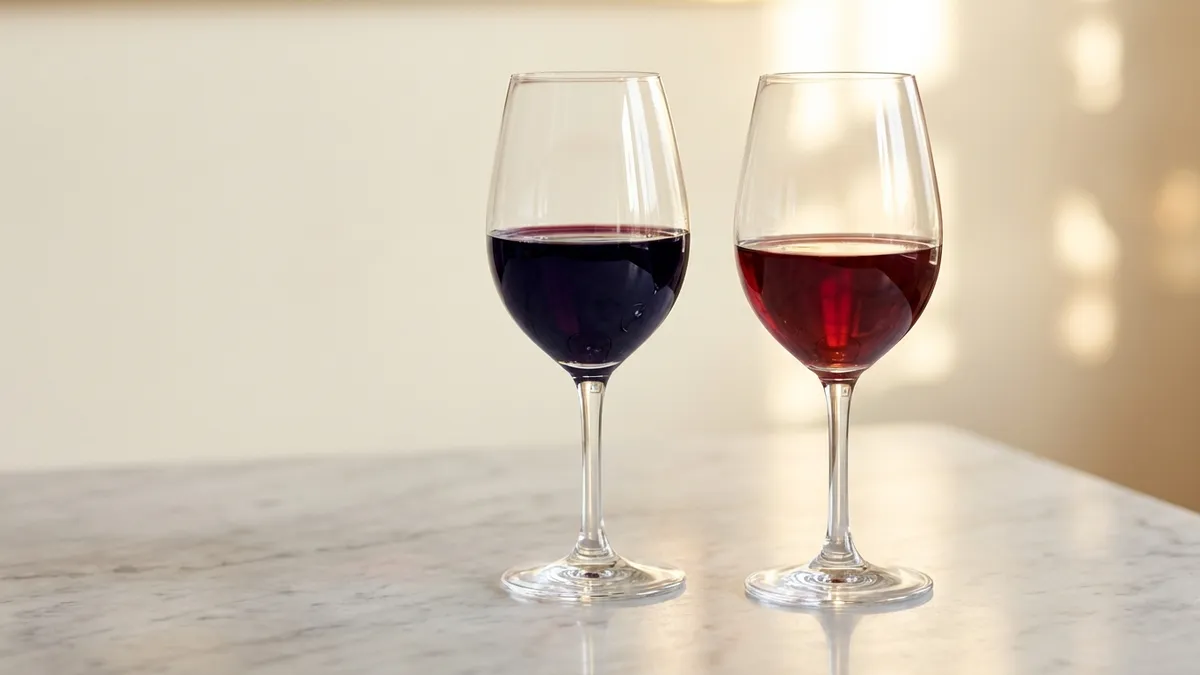
The smartest way to learn any grape is to taste it across two contrasting styles, side by side. Blaufränkisch makes this easy because its range is so wide.
- Start fresh and unoaked. Pour a young Mittelburgenland or Hungarian Kékfrankos and lock onto the black-pepper-and-acid signature. This is the grape's fingerprint.
- Then taste a single-vineyard wine. A Leithaberg or Eisenberg bottling shows how stony soils and a touch of oak add structure, depth, and a longer finish.
- Note the shift. Watch how fruit moves from tart blackberry to riper plum, how tannins firm up, and how the finish stretches. Those changes are terroir and winemaking made tangible.
The point of a comparison is to give your senses a contrast to react to. A single glass tells you little; two glasses side by side teach you the variable that changed. That habit of systematic tasting is the single fastest way to build a real palate.
The Sommy app walks you through exactly these structured comparisons — guiding you to name the pepper, gauge the acidity, and put words to the difference between two bottles of the same grape. Blaufränkisch, with its clear signature and wide stylistic spread, is an ideal grape to practice on, one peppery, savory glass at a time.
Sources
- Blaufränkisch — Wikipedia
- Austrian Wine — Blaufränkisch — Austrian Wine Marketing Board
- Blaufränkisch: Central Europe's Great Red Grape — Wine Folly
Frequently Asked Questions
What does Blaufränkisch taste like?
Blaufränkisch tastes of blackberry, blackcurrant, and dark cherry layered with cracked black pepper, dried herbs, and a stony, earthy edge. It has firm acidity, medium to high tannins, and a savory finish. Cool-climate examples lean tart and peppery, while warmer sites show riper, plummier fruit and a fuller body.
Is Blaufränkisch the same as Lemberger and Kékfrankos?
Yes. Blaufränkisch is the Austrian and German name, Lemberger is used in parts of Germany and the United States, and Kékfrankos is the Hungarian name. All three refer to the same dark-skinned red grape. The wine style varies by region and climate, but the grape variety itself is identical across every name.
Is Blaufränkisch similar to Syrah or Cabernet Franc?
It shares traits with both. Like Syrah, Blaufränkisch carries dark fruit and a peppery spice note. Like Cabernet Franc, it shows firm acidity, herbal lift, and a savory, food-friendly structure. It is generally lighter in body than warm-climate Syrah and more brightly acidic than ripe Cabernet Franc from warmer regions.
Where is Blaufränkisch grown?
Austria's Burgenland region, especially Mittelburgenland and Leithaberg, is the spiritual home. Germany grows it as Lemberger, mainly in Württemberg. Hungary produces large volumes as Kékfrankos. In the United States, Washington State and the Finger Lakes in New York make a small but growing amount, usually labeled Lemberger or Blaufränkisch.
How long can Blaufränkisch age?
Everyday Blaufränkisch is best within two to four years of the vintage. Single-vineyard wines from top Burgenland sites can age ten to fifteen years or more. The grape's firm acidity and structured tannins act as a natural preservative, letting the fresh dark fruit slowly evolve into dried fruit, leather, tobacco, and forest-floor notes.
What food pairs well with Blaufränkisch?
Blaufränkisch is a versatile table wine. Its acidity and pepper suit roast pork, braised beef, goulash, grilled sausages, and mushroom dishes. The savory edge flatters duck, game, and aged hard cheeses. Lighter, fresher styles also handle tomato-based pasta and charcuterie well, since the acidity cuts through fat and salt.
Is Blaufränkisch a good wine for beginners?
Yes, especially if you enjoy savory, food-friendly reds over jammy fruit bombs. Start with a fresher, unoaked Mittelburgenland or Hungarian Kékfrankos to learn the grape's pepper-and-acid signature. Then try a single-vineyard Leithaberg bottling to taste how stony soils and oak aging add structure, depth, and a longer finish.
Sommy Team
LinkedInFounder & Wine Educator
The Sommy Team is building the world's most approachable wine education app, helping beginners develop real tasting skills through structured courses and AI-guided practice.