Zweigelt: Austria's Most Popular Red Grape

By the Sommy Team — AI-assisted, human-edited.
Updated Jun 16, 2026
Contents (9)
TL;DR
Zweigelt is Austria's most-planted red grape, a 1922 crossing of Blaufränkisch and St. Laurent created by Fritz Zweigelt. It delivers juicy sour cherry, red berry, light pepper, soft tannins, and medium body. Styles run from light, chillable, fruit-forward bottles to richer oak-aged reds. Slightly chilled, it suits warm-weather drinking and varied food.
Zweigelt wine is Austria's most-planted red grape and the country's everyday red of choice — a juicy, sour-cherry-driven variety that drinks beautifully slightly chilled. If Grüner Veltliner is Austria's signature white, Zweigelt is its red counterpart: friendly, fruit-forward, and built for the table rather than the cellar. With roughly 6,400 hectares under vine, it accounts for about 14 percent of all Austrian vineyards, more than any other red variety.
What sets Zweigelt apart is how modern its story is. Most famous grapes have origins lost in centuries of folklore. Zweigelt was deliberately bred in a laboratory in 1922, making it one of the youngest internationally grown red grapes — and one of the most successful crossings in wine history.
What Is Zweigelt Wine, in 90 Words
Zweigelt wine is a dry, medium-bodied Austrian red made from a single grape created in 1922 by crossing Blaufränkisch and St. Laurent. Expect juicy sour cherry, raspberry, and cranberry with a light dusting of black pepper, soft low-to-medium tannins, and bright acidity. Styles range from light, chillable, unoaked bottles meant for early drinking to richer, oak-aged versions with five-to-ten-year aging potential. Austria grows roughly 6,400 hectares, about 14 percent of national vineyards. Slightly chilled at 12–14°C, Zweigelt suits warm-weather drinking and a wide range of food.
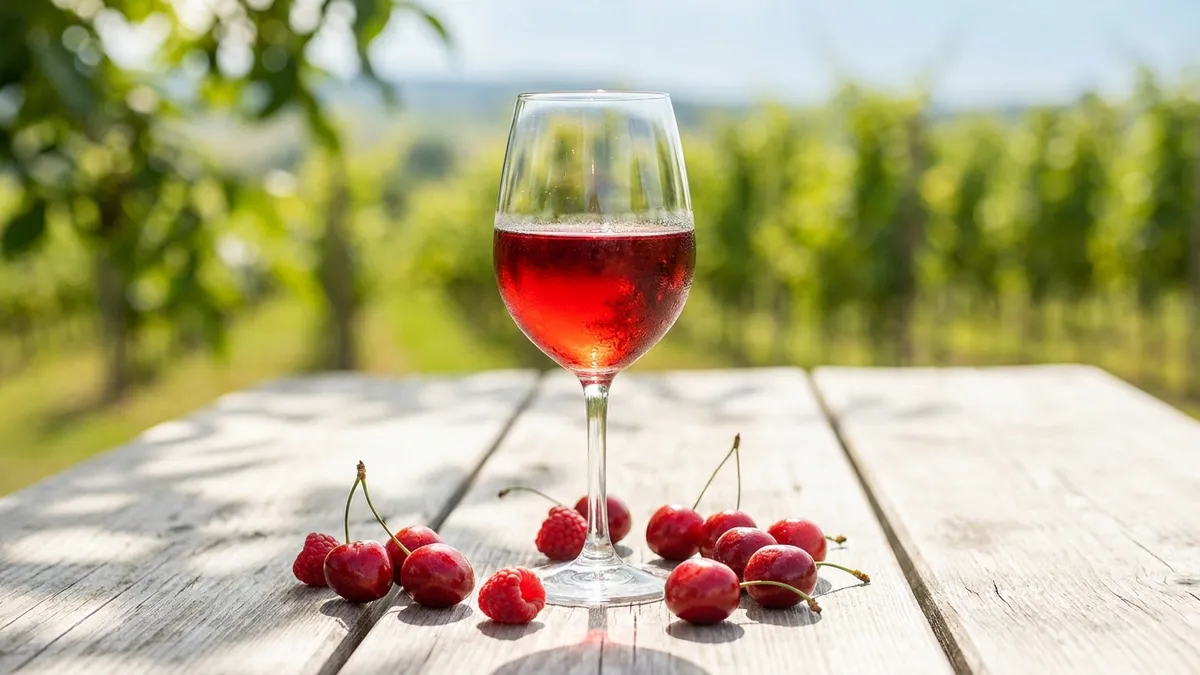
The Story of a Lab-Made Grape
Zweigelt was created in 1922 by Fritz Zweigelt, a viticultural scientist at the research and teaching institute in Klosterneuburg, near Vienna. He set out to combine the best qualities of two established Austrian reds into a single, reliable variety.
The result was a crossing (a deliberate cross-pollination between two grapes of the same species, Vitis vinifera) of two parents:
- Blaufränkisch — the parent that contributes structure, spice, dark fruit, and firm acidity. It is itself a noble Central European grape and the backbone of many serious Austrian reds.
- St. Laurent — the parent that contributes soft red fruit, silky texture, and a gentle, Pinot-like elegance.
The cross took the structure of one and the softness of the other, producing a grape that ripens reliably, resists frost reasonably well, and yields generously. For a country with a short, cool growing season, that combination was transformative.
For decades the grape was known by the cumbersome name Rotburger. It was officially renamed Zweigelt in 1975, in honor of its creator, and the new name stuck. To explore the parent that gives Zweigelt its spine, see the Blaufränkisch wine guide.
Sommelier tip: When a grape is a crossing, tasting it next to both parents is one of the fastest ways to understand it. Zweigelt sits between Blaufränkisch's structure and St. Laurent's softness — closer to the soft, juicy end.
Zweigelt Tasting Notes and Flavor Profile
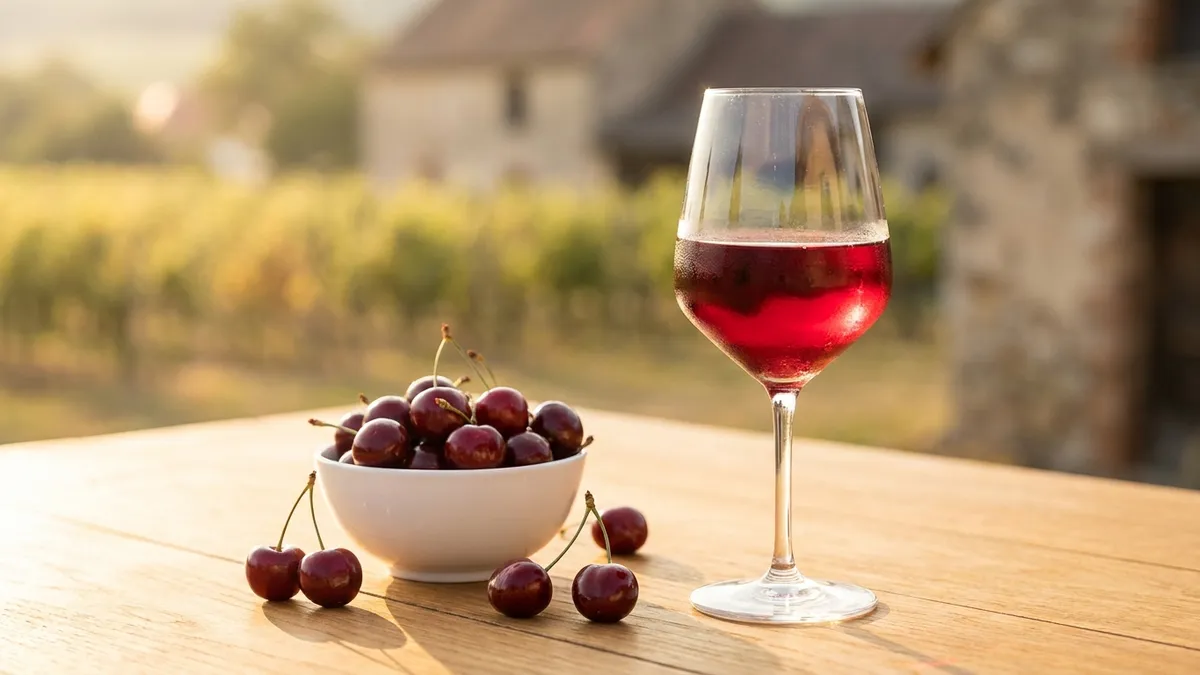
The defining note of Zweigelt is sour cherry — bright, tart, and mouth-watering rather than sweet and jammy. Around that core sit fresh red berries and a faint peppery lift. The wine is medium-bodied with soft tannins, which is exactly why it feels so easy to drink.
Typical aromas: sour cherry, red cherry, raspberry, cranberry, red plum, black pepper, violet.
The Core Aromas
- Sour cherry — the signature note, tart and juicy, like fresh Morello cherries
- Red berries — raspberry, cranberry, and red currant in the fruit-forward styles
- Light pepper — a faint black-pepper spice inherited from the Blaufränkisch parent
- Red plum and violet — softer floral and dark-fruit notes that emerge with a little age
- Savory hints — in oak-aged bottles, gentle vanilla, dried cherry, and an earthy edge
The Palate Structure
Zweigelt's structure is what makes it so beginner-friendly. The numbers below describe a typical fresh, unoaked bottle.
Body medium (3/5) · Acidity high (4/5) · Tannin low (2/5)
The body lands squarely in the medium range — fuller than Pinot Noir but lighter than a Cabernet. The acidity is bright and refreshing, which is what gives slightly chilled Zweigelt its lift. Most importantly, the tannins (the drying, gripping sensation in red wines) are soft and low, so the wine never feels harsh or astringent. If you find big tannic reds tiring, Zweigelt is a relief.
To understand how body, acidity, and tannin work together to shape any red wine, the guide to tannins, acidity, and body breaks down each component with practical tasting cues.
The Color in the Glass
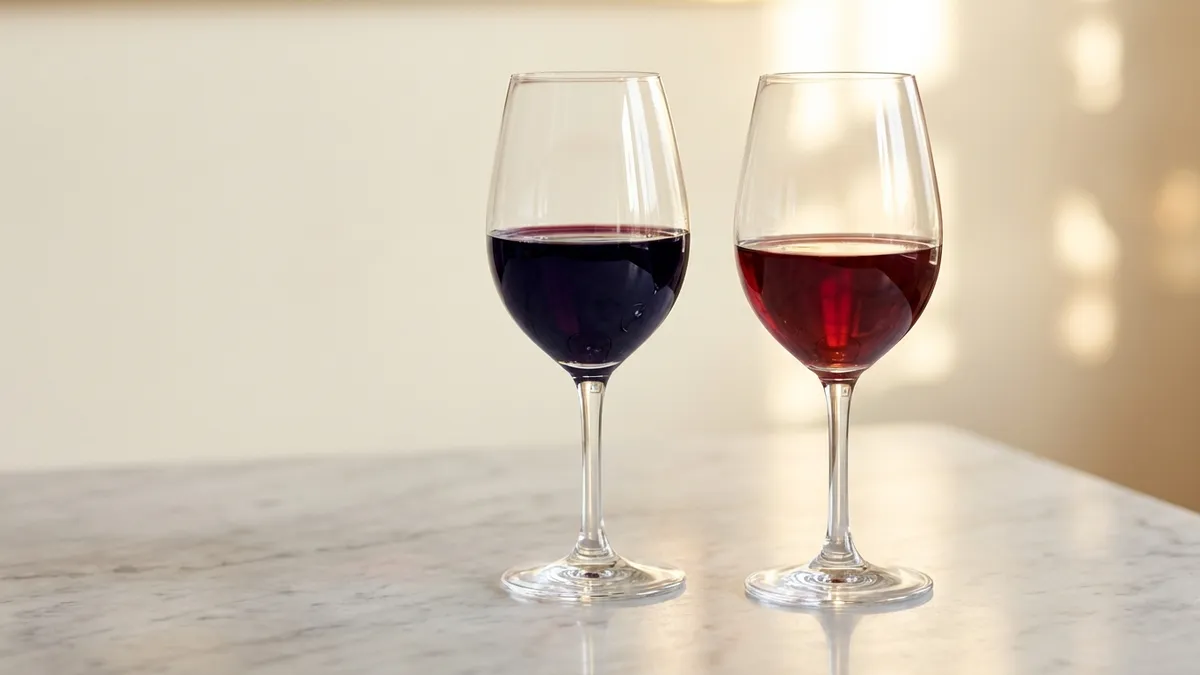
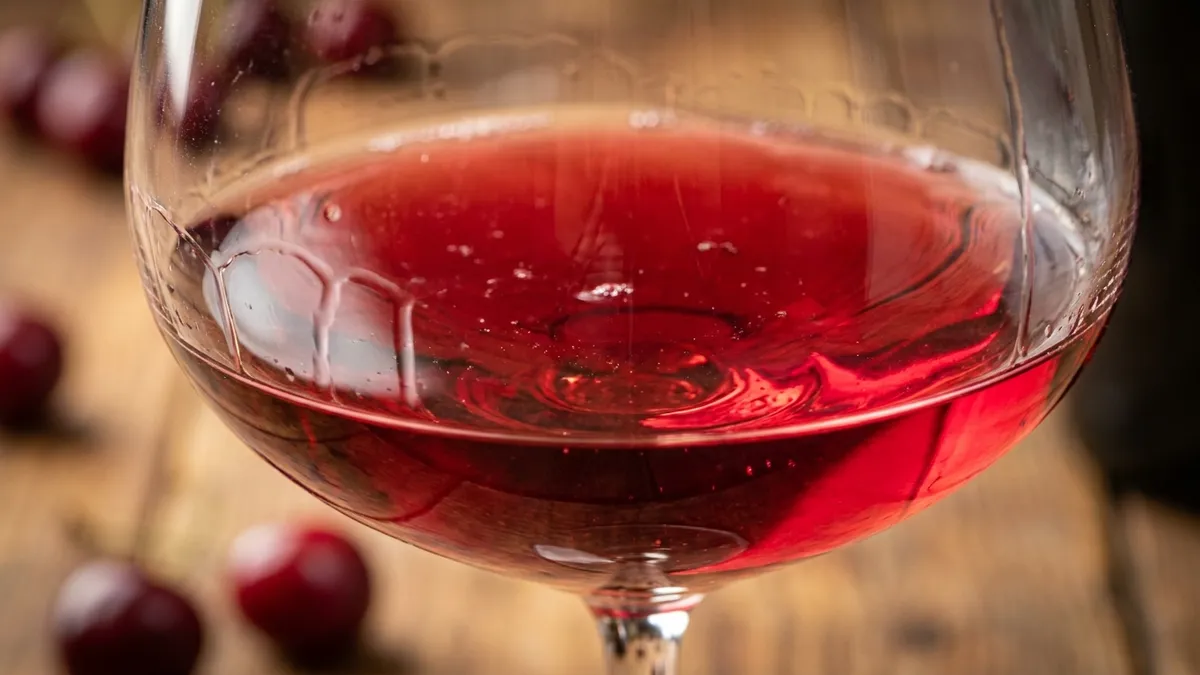
Zweigelt pours a bright, medium ruby — lighter and more translucent than a Syrah or Cabernet, but deeper than a pale Pinot Noir. Younger bottles show purple-pink edges; with a few years, the rim shifts toward garnet. The relatively light color is an honest preview of the light-on-its-feet style in the glass.
Styles of Zweigelt — From Chillable to Cellar
One grape, several very different wines. Knowing which style is in the bottle tells you how to serve it and what to expect.
Light, Fruit-Forward, Chillable
This is the everyday face of Zweigelt and the reason it has become so popular. These wines see little or no oak, are bottled young, and lead with pure sour-cherry and red-berry fruit. They are bright, juicy, and gently tannic.
- Best served — slightly chilled, 12–14°C (54–57°F)
- Best for — picnics, pizza, charcuterie, warm-weather drinking
- Drink — within one to three years of the vintage
This is one of the great chillable reds — light reds that taste better cool, sharpening the fruit and acidity rather than muting the wine the way chilling would dull a heavy, tannic red. If you have only ever served reds at room temperature, Zweigelt is the ideal grape to break that habit with.
Classic Medium-Bodied Zweigelt
A step up in concentration. These wines may see a little neutral oak, carry slightly more body, and balance their fresh fruit with a touch of savory depth. They are the versatile dinner-table option — substantial enough for roast chicken or pork, still soft enough to please a crowd.
Oak-Aged and Single-Vineyard Zweigelt
At the serious end, top producers in Burgenland and Carnuntum make concentrated, barrel-aged Zweigelt from low-yielding old vines. These wines trade some of the easy fruit for structure, spice, and an earthy, savory complexity. They can age for five to ten years, developing dried cherry, leather, and gentle oak-derived vanilla.
- Best served — 16–18°C (60–65°F), like most full reds
- Best for — braised beef, game, aged cheese, special occasions
- Drink — within five to ten years
How to Serve Zweigelt
Temperature is the single biggest lever you have with Zweigelt, because the lighter styles genuinely improve when cool.
Serving Temperature
- Light, unoaked Zweigelt — 12–14°C (54–57°F). About 20–30 minutes in the fridge from room temperature, or 10 minutes in an ice bucket.
- Medium-bodied Zweigelt — 14–16°C (57–60°F). A short chill keeps the fruit lively without flattening the wine.
- Oak-aged Zweigelt — 16–18°C (60–65°F). Treat it like any structured red.
A common beginner mistake is serving every red at warm room temperature, which makes light reds taste flabby and alcoholic. For a fuller breakdown by style, the wine serving temperature chart shows where each red and white belongs.
Glassware and Decanting
Zweigelt does not need fussy glassware or long decanting. A standard red-wine glass is plenty. Light styles can be poured straight from the bottle. Older oak-aged bottlings benefit from 20–30 minutes of air to let the savory notes open up, but they rarely throw heavy sediment.
How to Pair Zweigelt with Food
Zweigelt's combination of bright acidity and soft tannins makes it remarkably food-friendly — the acidity refreshes the palate while the gentle tannins stay out of the way. It bridges casual and formal meals more easily than most reds.
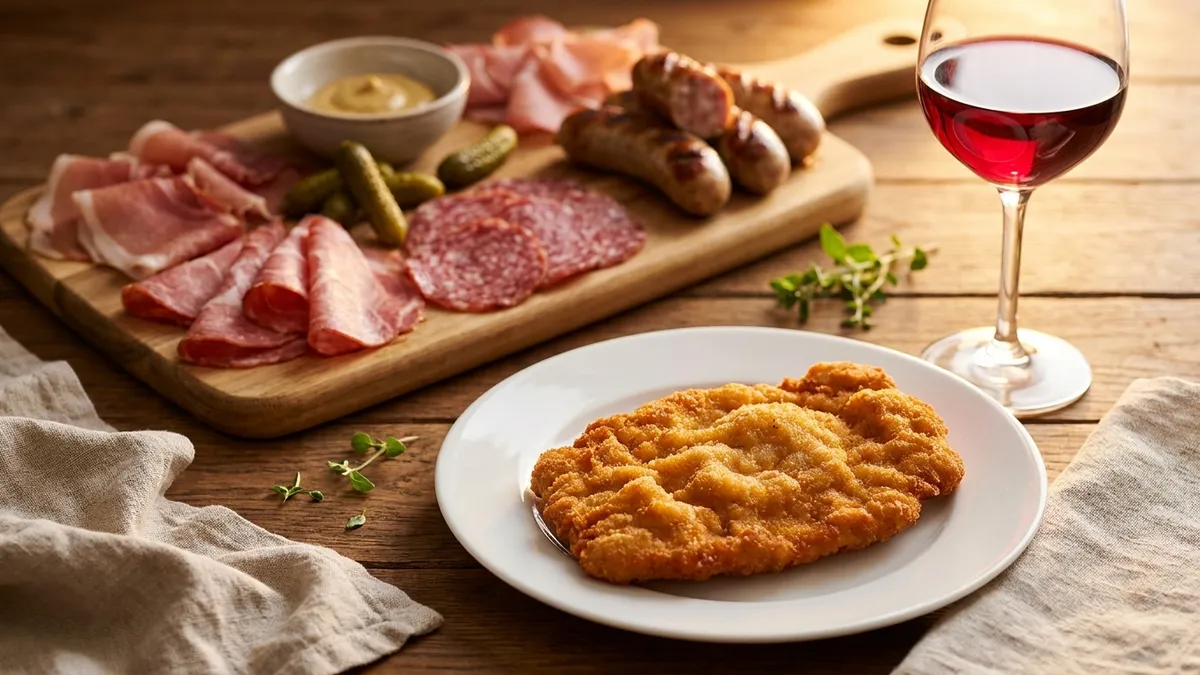
Pairings for Light, Chilled Zweigelt
- Charcuterie and cured meats — salami, speck, prosciutto; the acidity cuts the fat
- Pizza and tomato-based pasta — fruit and acidity echo the tomato's brightness
- Roast or grilled chicken — soft tannins keep the pairing gentle
- Grilled sausages and bratwurst — a classic Austrian beer-garden match
Pairings for Oak-Aged Zweigelt
- Braised beef and stews — the wine's structure stands up to rich, slow-cooked dishes
- Game and duck — savory depth meets savory meat
- Mushroom dishes — risotto, ragout, or roasted mushrooms find the earthy notes
- Aged hard cheeses — Gruyère, aged Gouda, or a firm alpine cheese
For the underlying logic of why these matches work, the wine and food pairing guide explains how acidity, tannin, and fat interact at the table.
What to Avoid
Zweigelt's delicate fruit can be overwhelmed by very heavily spiced or sugary dishes. A blistering chili curry or a sweet barbecue glaze will flatten its sour-cherry character. Save it for clean, savory food where the fruit can shine.
Zweigelt vs Other Red Grapes
Placing Zweigelt next to familiar grapes is the quickest way to locate it on the red-wine map. It lives in the light-to-medium, soft-tannin, high-acid corner alongside other juicy, chillable reds.
How Zweigelt sits among other light-to-medium, high-acid reds.
- Body: Zweigelt medium · Gamay light-medium · Pinot Noir light-medium · Blaufränkisch medium-full
- Tannins: Zweigelt low-medium · Gamay low · Pinot Noir low-medium · Blaufränkisch medium-high
- Acidity: high across all four
- Key flavors: Zweigelt — sour cherry, red berry, pepper · Gamay — cranberry, banana, violet · Pinot Noir — cherry, earth, rose · Blaufränkisch — blackberry, spice, dark cherry
- Oak affinity: Zweigelt moderate · Gamay low-moderate · Pinot Noir moderate · Blaufränkisch excellent
- Chill it? Zweigelt yes · Gamay yes · Pinot Noir lightly · Blaufränkisch no
If Zweigelt's easy, chillable style appeals to you, you will likely enjoy Gamay wine, the grape behind Beaujolais, which shares its low tannins and bright acidity. For a touch more structure, Grenache offers riper red fruit with a warmer feel, while Zweigelt's parent Blaufränkisch takes the same family in a darker, spicier, more serious direction.
Where Zweigelt Grows
Austria is overwhelmingly the home of Zweigelt, growing roughly 90 percent of the world's plantings. The grape thrives across the country's eastern wine regions, where the warm, sunny days and cool nights preserve its trademark acidity.
Niederösterreich (Lower Austria)
Austria's largest wine region and the heartland of fresh, fruit-forward Zweigelt. Sub-regions like Carnuntum, east of Vienna, produce some of the most respected, age-worthy single-vineyard examples, often from warm, gravelly sites near the Danube.
Burgenland
Bordering Hungary in the east, Burgenland is warmer and produces the richest, most structured Zweigelt. Around the Neusiedlersee (Lake Neusiedl), the lake's moderating influence and long growing season yield deeply fruited, ageable wines, both as a varietal bottling and as a partner in red blends.
Beyond Austria
Small but growing plantings appear in Hungary, Slovakia, the Czech Republic, Germany, Canada, and Japan. Most of these follow the light, fruit-forward template, and few rival the depth of top Austrian bottlings. Zweigelt's frost tolerance and reliable ripening make it appealing to cool-climate growers experimenting with red varieties.
Zweigelt sits within a wider family of fascinating, lesser-known grapes. To meet more of them, see our overview of indigenous grapes worth trying and the broader guide to black grapes. Because Zweigelt ripens early and reliably, it also features in our look at early- versus late-ripening grapes and how harvest timing shapes a wine's style.
How a Beginner Should Approach Zweigelt
Zweigelt is one of the most forgiving red grapes to learn on, which is why it deserves a place early in any tasting journey. There are no harsh tannins to overcome and no long aging required — the pleasure is immediate.
Start with a light, unoaked bottle, chilled for about 25 minutes. Pour a glass and work through the basics:
- Look — note the bright, translucent ruby color and the purple-pink rim
- Smell — search for that tart sour-cherry note first, then the red berries and faint pepper
- Taste — feel how soft the tannins are and how the acidity makes your mouth water
- Compare — taste the same wine at room temperature an hour later and notice how the chill sharpened it
That last step is the real lesson. Most beginners have never tasted the same red at two temperatures, and Zweigelt makes the difference obvious. If you want a structured way to build this habit, the framework in how to taste wine walks through the look-smell-taste method step by step.
Zweigelt also pairs naturally with learning the broader red-wine map. Once you can pick out its sour-cherry signature, you have a reference point for comparing it against the noble grapes and the other juicy reds. The Sommy app turns each of these tastings into a guided exercise — prompting you to log the aromas you find, rate the soft tannins, and build a personal record of how your palate develops one glass at a time.
The takeaway is simple: Zweigelt rewards curiosity without demanding expertise. Chill it, pour it, pay attention to the sour cherry, and you are already tasting like a student of wine rather than just a drinker.
Sources
- Austrian Wine — Zweigelt grape variety — Austrian Wine Marketing Board, austrianwine.com
- Wine Grapes: A Complete Guide to 1,368 Vine Varieties — Jancis Robinson, Julia Harding, José Vouillamoz, 2012
- The Oxford Companion to Wine — Jancis Robinson (ed.), Oxford University Press, 2015
Frequently Asked Questions
What does Zweigelt wine taste like?
Zweigelt tastes of juicy sour cherry, fresh red berries like raspberry and cranberry, and a light dusting of black pepper. It is medium-bodied with soft, low-to-medium tannins and bright acidity. The overall impression is fresh, drinkable, and fruit-forward, which makes it one of the most approachable red wines for beginners to enjoy.
Is Zweigelt a good red wine to chill?
Yes. Zweigelt is one of the best chillable reds because its soft tannins and bright sour-cherry acidity show beautifully at a cool temperature. Serve lighter, unoaked styles at 12 to 14°C (54 to 57°F). A 20 to 30 minute stint in the fridge sharpens the fruit and makes the wine more refreshing on a warm day.
What grapes is Zweigelt made from?
Zweigelt is a single grape variety, not a blend. It was bred in 1922 by Austrian scientist Fritz Zweigelt as a crossing of two parent grapes: Blaufränkisch, which gives structure and spice, and St. Laurent, which gives soft red fruit and a silky texture. The cross combined the best traits of both parents into one easy-drinking variety.
Where is Zweigelt grown?
Zweigelt is Austria's most-planted red grape, covering roughly 6,400 hectares, about 14 percent of national vineyard area. The main regions are Niederösterreich (Lower Austria), Burgenland, and parts of the Carnuntum and Neusiedlersee areas. Small plantings also exist in Hungary, Slovakia, the Czech Republic, Germany, Canada, and Japan, but Austria remains the benchmark.
What food pairs well with Zweigelt?
Zweigelt's bright acidity and soft tannins make it versatile at the table. It pairs with roast chicken, pork schnitzel, grilled sausages, charcuterie, mushroom dishes, and tomato-based pasta. The lighter chilled style suits picnics, cured meats, and pizza, while richer oak-aged versions handle braised beef, game, and harder aged cheeses with ease.
Is Zweigelt dry or sweet?
Zweigelt is a dry red wine. It is fermented until nearly all the grape sugar converts to alcohol, leaving little to no residual sweetness. The ripe sour-cherry and red-berry fruit can give an impression of sweetness, especially in younger fruit-forward bottlings, but the wine itself finishes dry with refreshing acidity.
Is Zweigelt good for beginners?
Zweigelt is one of the best red wines for beginners. Its soft tannins mean it never feels harsh or drying, its bright sour-cherry fruit is easy to recognize, and it is usually affordable. The fresh, chillable style is forgiving and food-friendly, which makes it a low-pressure way to start building a red-wine tasting vocabulary.
How long can Zweigelt age?
Most Zweigelt is built for early drinking within one to three years of the vintage, when its fresh fruit is at its peak. Serious oak-aged and single-vineyard bottlings, especially from top Burgenland sites, can develop over five to ten years, gaining savory spice, dried cherry, and earthy depth while keeping their characteristic bright acidity.
Sommy Team
LinkedInFounder & Wine Educator
The Sommy Team is building the world's most approachable wine education app, helping beginners develop real tasting skills through structured courses and AI-guided practice.