Early vs Late Ripening Grapes: How Harvest Timing Shapes Wine

By the Sommy Team — AI-assisted, human-edited.
Updated Jun 16, 2026
Contents (9)
- Early vs Late Ripening Grapes, in One Paragraph
- What Ripening Actually Means
- Early Ripening Grapes: Built for Cool Climates
- Late Ripening Grapes: Built for Long Warm Seasons
- Early vs Late Ripening Grapes at a Glance
- What Goes Wrong When You Mismatch a Grape
- How a Warming Climate Is Shifting Plantings
- What Ripening Means for Vintage Variation
- Putting It All Together
TL;DR
Early late ripening wine grapes describe how fast a variety reaches full sugar and flavor. Early ripeners like Pinot Noir and Chardonnay suit cool climates; late ripeners like Cabernet Sauvignon and Nebbiolo need long warm seasons. Mismatch a grape and you get green, harsh, or jammy wine.
Early vs Late Ripening Grapes, in One Paragraph
Early late ripening wine grapes are sorted by how long they take to reach full sugar, soft tannins, and ripe flavor. Early ripeners — Pinot Noir, Chardonnay, Gamay, Muller-Thurgau, Sauvignon Blanc — finish in a short, cool season and keep their fresh acidity, which is why they shine in cool climates. Late ripeners — Cabernet Sauvignon, Nebbiolo, Mourvedre, Grenache, Tannat, Carignan — need a long warm autumn, often 180 to 200-plus growing days, to ripen fully and soften firm tannins. Match the grape to the climate and the wine tastes balanced. Mismatch it and you get green pyrazine flavors and harsh tannins from a late grape in the cold, or flabby, jammy fruit from an early grape in the heat.
What Ripening Actually Means
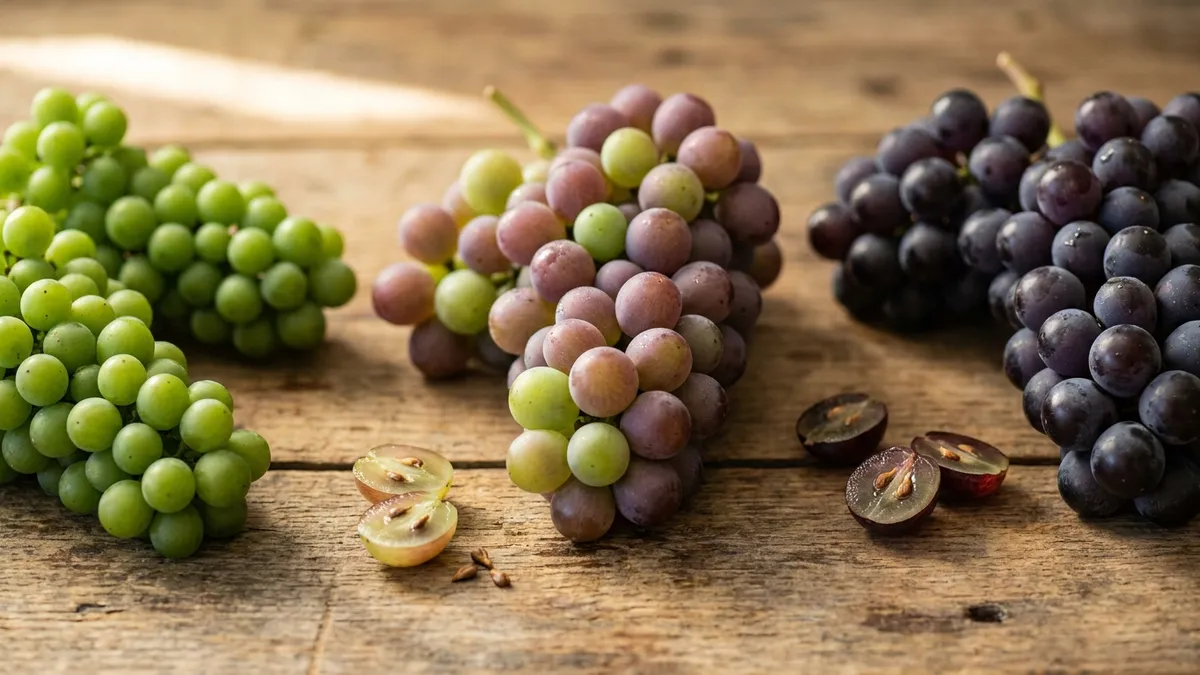
When growers talk about ripening, they are tracking several things happening in the grape at once. Sugar climbs, acidity falls, and the seeds and skins mature so the tannins (the drying, gripping sensation in red wine) become smoother. At the same time, green, vegetal aroma compounds break down and ripe fruit flavors build.
A grape is ready to pick when these move into balance: enough sugar for the target alcohol, enough acidity to keep the wine fresh, and tannins that grip without rasping. The trick is that they ripen on different clocks. Sugar can race ahead in a heat spike while the tannins are still hard and the flavors still green — a problem winemakers call uneven, or physiological versus sugar ripeness.
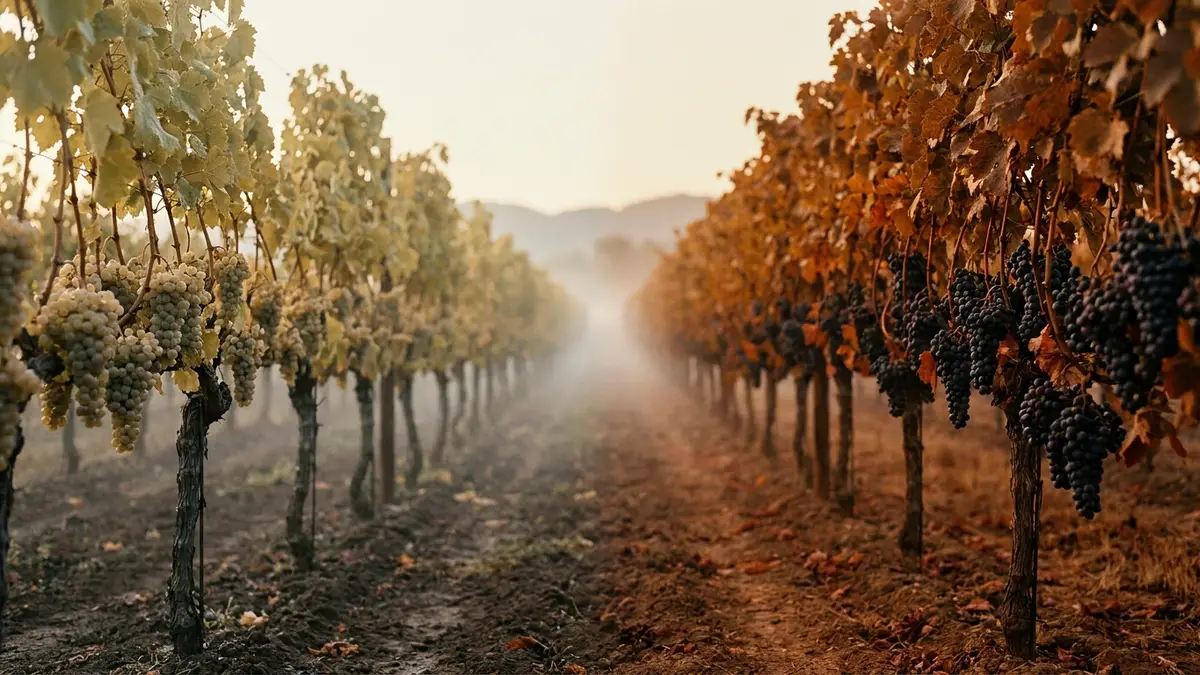
The length of season a grape needs to bring all of this into balance is its ripening window. That single trait — short and quick, or long and slow — sorts the grape world into early and late ripeners and explains why grape-climate matching is the most important decision in the vineyard.
Growing Degree Days, the Number Behind the Window
Growers measure a season's warmth in growing degree days (a running total of how far each day's average temperature sits above the 10°C threshold vines need to grow). A cool region like the Mosel might accumulate a low total over a short season; a warm region like the southern Rhone piles up far more over a longer one.
Early ripeners are built for low totals. Late ripeners need high ones. Plant a high-requirement grape in a low-total region and the math simply does not work out — the grape runs out of season before it runs out of greenness. This is the same climate logic explored in the climate and wine flavor guide, applied to the calendar rather than the thermometer.
Early Ripening Grapes: Built for Cool Climates
Early-ripening varieties reach maturity in a short season, so they thrive where summers are cool and autumns arrive quickly. Picking before the cold and rain set in is exactly what they are good at. Their reward for ripening fast is retained acidity and delicate, precise aromatics — the signatures of cool-climate wine.
The classic early ripeners are:
- Pinot Noir — the benchmark cool-climate red. Thin skins, pale color, high acidity, red-cherry and forest-floor aromas. It loses its elegance fast in heat, turning jammy and flat.
- Chardonnay — adaptable, but at its most precise in cool sites like Chablis, where early ripening preserves the green-apple bite and minerality.
- Gamay — the grape of Beaujolais. Light, juicy, high-acid reds that depend on an early, fresh harvest.
- Muller-Thurgau — a cool-climate workhorse bred specifically to ripen early in northern Germany and beyond.
- Sauvignon Blanc — aromatic and racy, defined by the high acidity an early, cool harvest protects.
Because they finish quickly, early ripeners can succeed in marginal climates where the season is genuinely short. That is also why they are risky: in a cool, wet year they may not finish at all, while in a hot year they can over-ripen before acidity has a chance to set the wine's frame.
Why Acidity Is the Early-Ripener Superpower
Acidity falls as grapes ripen, so a grape that finishes fast holds onto more of it. That bright acidity (the mouth-watering, tart sensation that makes wine feel fresh) is what gives cool-climate whites their snap and cool-climate reds their lift. Pair this with the structural ideas in understanding tannins, acidity, and body and you can predict how an early-ripening wine will feel before you taste it: lighter, brighter, more nervy.
Late Ripening Grapes: Built for Long Warm Seasons
Late-ripening varieties need many more weeks of warmth and sun to finish. Their thick skins and firm tannins take a long time to mature, and their seeds need a long, warm autumn to lose their bitterness. Give them that season and they reward you with deep color, ripe dark fruit, and structured tannins that age for decades.
The classic late ripeners are:
- Cabernet Sauvignon — the late-ripening icon. Thick-skinned, deeply tannic, full of blackcurrant and cedar when ripe — and full of green bell pepper when not. Explored fully in the Cabernet Sauvignon wine guide.
- Nebbiolo — named for the autumn fog (nebbia) it ripens under, often picked in late October. Pale but ferociously tannic and high-acid, as covered in the Nebbiolo wine guide.
- Mourvedre — one of the latest of all. Needs serious heat ("its feet in water, its head in fire") or it stays green and reductive.
- Grenache — a late, heat-loving grape that builds high sugar and generous red-berry fruit in warm Mediterranean sites.
- Tannat — the tannin powerhouse of southwest France and Uruguay, needing a long season to tame its formidable grip.
- Carignan — high-yielding and very late, prone to harsh acidity and tannin unless it gets full ripeness, often from old, low-yield vines.
What Late Ripeners Demand from a Region
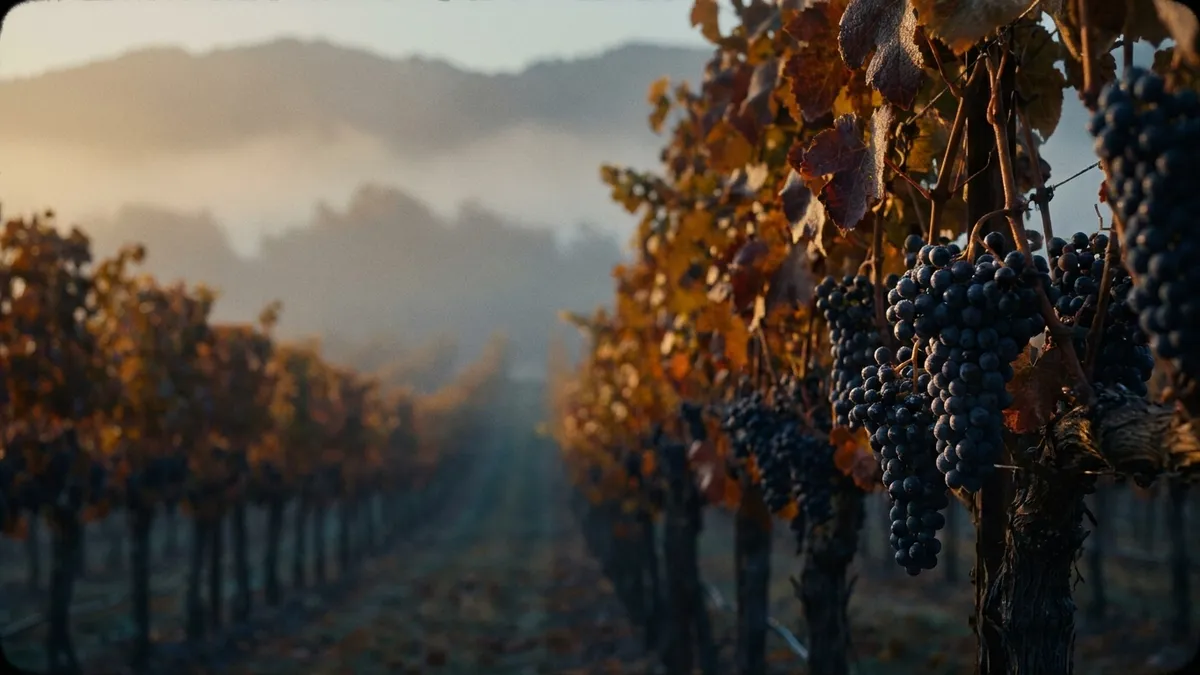
A late ripener wants more than peak-summer heat. It needs the warmth to stretch into autumn, so the grape can hang on the vine for weeks of slow, final ripening. Regions like Bordeaux, the Napa Valley, the southern Rhone, and Piedmont all offer that long, warm tail to the season — which is why they became homes to Cabernet, Grenache, Mourvedre, and Nebbiolo respectively.
This is the flip side of the early-ripener story. Where early grapes manage risk by finishing before the weather turns, late grapes gamble on the weather staying kind right to the end. A cold snap or early rain at harvest can ruin a late-ripening vintage that looked promising all summer.
Early vs Late Ripening Grapes at a Glance
Ripening window vs ideal climate for common early and late ripening grapes.
- Pinot Noir — Ripening: early · Ideal climate: cool · Risk if mismatched: in heat, jammy, flat, low acidity
- Chardonnay — Ripening: early · Ideal climate: cool to moderate · Risk if mismatched: in heat, heavy, blowsy, loses minerality
- Gamay — Ripening: early · Ideal climate: cool · Risk if mismatched: in heat, loses freshness, turns soft
- Muller-Thurgau — Ripening: early · Ideal climate: cool · Risk if mismatched: in heat, dilute, low-acid, bland
- Sauvignon Blanc — Ripening: early · Ideal climate: cool · Risk if mismatched: in heat, tropical-jammy, loses zip
- Cabernet Sauvignon — Ripening: late · Ideal climate: warm, long season · Risk if mismatched: in cold, green pepper, hard tannins
- Nebbiolo — Ripening: late · Ideal climate: warm, long season · Risk if mismatched: in cold, harshly tannic, underripe
- Mourvedre — Ripening: late · Ideal climate: hot, long season · Risk if mismatched: in cold, green, reductive, never ripens
- Grenache — Ripening: late · Ideal climate: hot, dry · Risk if mismatched: in cold, thin, sour, underripe
- Tannat — Ripening: late · Ideal climate: warm, long season · Risk if mismatched: in cold, brutally tannic, bitter
- Carignan — Ripening: late · Ideal climate: hot, long season · Risk if mismatched: in cold, harsh acid and tannin
What Goes Wrong When You Mismatch a Grape
Grape-climate matching matters because the two ways to get it wrong produce two very different, equally unbalanced wines. Learning to spot them in the glass is one of the most useful tasting skills you can build, and a great place to practice the method in how to taste wine.
Late Grape, Cool Climate: Green and Harsh
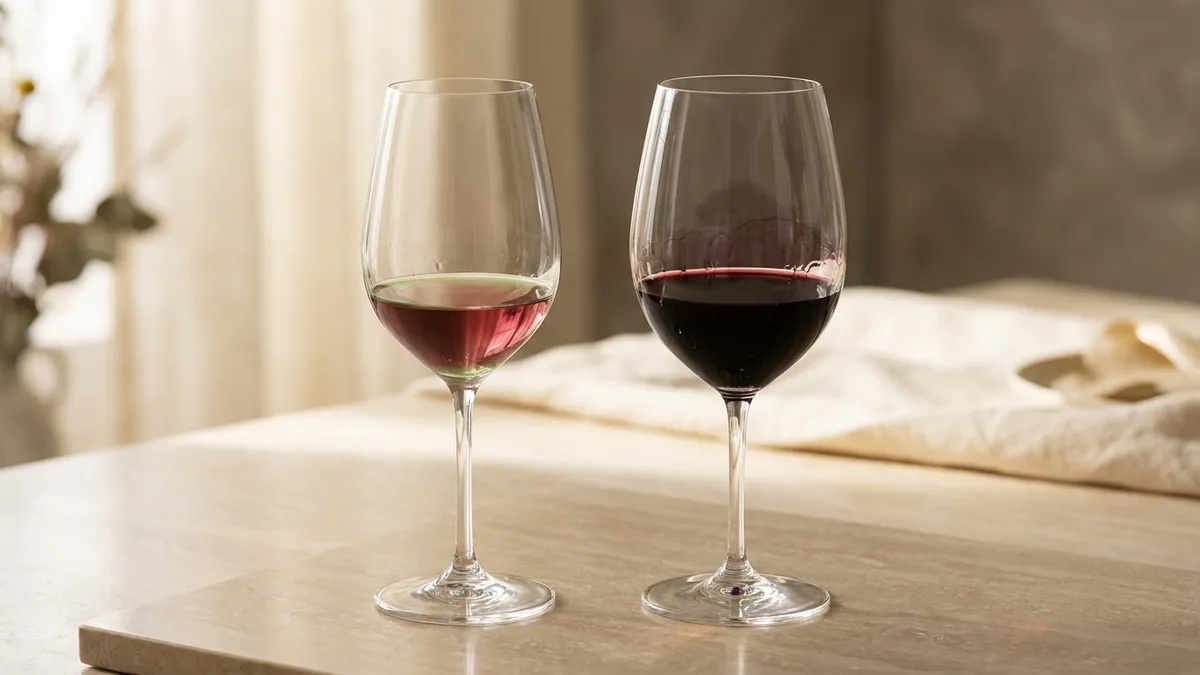
Put Cabernet Sauvignon or Nebbiolo somewhere too cold and the grape never finishes. The result is dominated by pyrazines (green aroma compounds that smell of bell pepper, jalapeno, and cut stems). Underripe seeds and skins leave tannins that are hard, bitter, and astringent rather than smooth. The fruit tastes sour and unripe, the wine feels mean and angular.
A whisper of pyrazine can be appealing — it is part of the appeal of Loire Cabernet Franc. But when a late grape simply ran out of season, the green note is not a stylistic choice; it is a signal the grape was picked unripe because the climate could not carry it further.
Early Grape, Warm Climate: Flat and Jammy
Run the mismatch the other way and an early ripener like Pinot Noir in a hot site races to high sugar before its acidity and structure are set. The wine comes out high in alcohol, low in acidity, and jammy (cooked, stewed, overripe fruit flavors instead of fresh ones). It tastes flabby — soft and shapeless, missing the tension that makes the grape worth growing.
The same grape can taste underripe or overripe depending entirely on whether its ripening window matched the season. The grape did not change. The climate did.
These outcomes are not about good or bad winemaking. They are about whether the grape's ripening window fits the place it was planted — the core of what terroir means.
How a Warming Climate Is Shifting Plantings
Ripening windows used to be fixed against a stable climate. They no longer are. As regions warm, more growing degree days accumulate each season, which changes what can ripen where.
The shifts are already visible across the wine world:
- Cool regions ripen later grapes. Areas that once struggled to ripen anything but early grapes can now finish later-ripening varieties, expanding their options.
- Warm regions risk overripeness. Hot regions that long suited late ripeners now risk pushing them — and any early grapes still planted — into jammy, high-alcohol territory.
- Growers move uphill and earlier. Planting at higher altitude restores the cool nights that preserve acidity, and harvest dates are creeping earlier to pick before sugars run away.
- Variety choices are changing. Some growers in warming cool-climate zones are trialing later-ripening grapes that would have failed there a generation ago.
The throughline is that grape-climate matching is a moving target. The ideal-climate column in the table above is shifting, region by region, as the seasons lengthen and warm.
What Ripening Means for Vintage Variation
Ripening windows also explain why some wines swing wildly from year to year while others stay consistent. Vintage variation (how much a wine differs between harvest years) is largest exactly where the grape's window barely fits the climate.
- Cool-climate early ripeners vary the most. In a marginal cool region, each year's weather is decisive. A warm year ripens the grapes beautifully; a cool, wet one leaves them green. This is why vintage matters so much for cool-climate Pinot Noir and Chardonnay.
- Warm-climate late ripeners vary less. Where heat is reliable and rarely the limiting factor, late ripeners finish dependably most years, so the swings are smaller.
That is the practical payoff of understanding ripening. When you see a wine from a marginal cool climate, the vintage on the label is doing real work — it tells you whether the season gave the early-ripening grape what it needed. The Sommy app helps you connect these dots, building the habit of reading climate and vintage from what is in your glass.
Putting It All Together
Early and late ripening is not trivia — it is the single idea that ties grape, place, and flavor together. An early ripener keeps acidity and freshness by finishing fast in a cool season. A late ripener trades that speed for depth, color, and structure, but only if it gets the long warm autumn it demands.
When the grape's ripening window matches the climate, the wine is balanced. When it does not, you taste it immediately: green and harsh from a late grape in the cold, or flat and jammy from an early grape in the heat. Carry that one comparison into your next tasting and a huge amount of the wine world suddenly makes sense — including why the same grape can taste so different depending on where it grew, a theme worth exploring in why grapes look the same but taste different and across the six noble grapes.
Sources
- Understanding Wine Technology — David Bird, DBQA Publishing, 2010
- Wine Grapes — Jancis Robinson, Julia Harding, Jose Vouillamoz, Allen Lane, 2012
- The Oxford Companion to Wine, 4th Edition — Jancis Robinson (ed.), Oxford University Press, 2015
- Climate Change and Global Wine Quality — Gregory V. Jones et al., Climatic Change journal, 2005
Frequently Asked Questions
What does early ripening versus late ripening mean for a grape?
It describes how many warm days a variety needs to reach full sugar, soft tannins, and ripe flavor. Early ripeners finish in a short, cool season. Late ripeners need a long, warm autumn to fully ripen. The window decides which climates suit each grape and how its wine tastes.
Which grapes are early ripening?
Pinot Noir, Chardonnay, Gamay, Muller-Thurgau, and Sauvignon Blanc are classic early ripeners. They reach maturity in cooler regions with shorter seasons, which lets them keep fresh acidity and delicate aromatics. In hot climates these grapes often ripen too fast, losing acidity and turning flat or jammy.
Which grapes are late ripening?
Cabernet Sauvignon, Nebbiolo, Mourvedre, Grenache, Tannat, and Carignan are late ripeners. They need a long, warm growing season to develop ripe fruit and soften their firm tannins. Planted in a climate that is too cool, they stay green, herbaceous, and harshly tannic because they never finish ripening.
What happens when a grape is planted in the wrong climate?
Two failures are common. An early ripener in a hot climate ripens too fast, losing acidity and turning flabby or overripe. A late ripener in a cool climate never finishes, leaving underripe pyrazine flavors like green pepper and hard, bitter tannins. Both wines taste unbalanced because the grape and the season did not match.
What are pyrazines in underripe wine?
Pyrazines are aroma compounds that smell green: bell pepper, jalapeno, fresh-cut stem. They are highest in underripe grapes and break down as the fruit ripens in sunlight and warmth. A little can be attractive, but in a late-ripening grape that never finished, strong pyrazines signal the wine was picked before it reached maturity.
How does climate change affect which grapes get planted where?
As regions warm, cool-climate sites can now ripen grapes that once struggled there, while traditionally warm regions risk overripeness. Growers respond by planting later-ripening varieties in warming cool regions, moving vineyards to higher altitudes, and picking earlier. The match between grape ripening window and local climate is shifting across the wine world.
Why do early ripening grapes vary so much vintage to vintage?
Early ripeners often grow in marginal cool climates where each year's weather is decisive. A warm year delivers ripe, balanced fruit; a cool, wet year leaves the grapes underripe. Late ripeners in reliably warm regions see smaller swings because heat is rarely the limiting factor, so vintage variation matters more for cool-climate early ripeners.
Sommy Team
LinkedInFounder & Wine Educator
The Sommy Team is building the world's most approachable wine education app, helping beginners develop real tasting skills through structured courses and AI-guided practice.