Barossa Valley Wine Guide: Australia's Shiraz Heartland

By the Sommy Team — AI-assisted, human-edited.
Updated Jun 17, 2026
Contents (10)
- What Is Barossa Valley Wine?
- The Grape That Defines the Barossa: Shiraz
- Warm Climate and Old Soils: The Barossa Terroir
- Some of the World's Oldest Vines
- Grenache and the Classic GSM Blend
- Eden Valley: The Cool High Country for Riesling
- German Heritage and the Shape of the Region
- What Makes the Barossa Distinctive
- How a Beginner Should Start with the Barossa
- The Reward of Learning the Barossa
TL;DR
The Barossa Valley is South Australia's most famous wine region, a warm climate built for bold, full-bodied Shiraz from some of the world's oldest vines. It also makes rich Grenache blends, while the cooler high Eden Valley turns out crisp Riesling. This Barossa Valley wine guide shows beginners where to start.
What Is Barossa Valley Wine?
This Barossa Valley wine guide begins with the grape that made the region world-famous: Shiraz. The Barossa Valley is South Australia's most celebrated wine region, a warm, sunny valley about an hour northeast of Adelaide that produces some of the boldest, richest red wines on earth. Its signature is full-bodied Shiraz — known as Syrah elsewhere — grown on vines so old they predate most of the world's modern vineyards. Alongside Shiraz sit generous Grenache blends, while the cooler, higher Eden Valley to the east makes crisp, age-worthy Riesling. Add a deep German settler heritage and over a century of unbroken vine history, and you have one of the most distinctive wine regions anywhere.
The Grape That Defines the Barossa: Shiraz
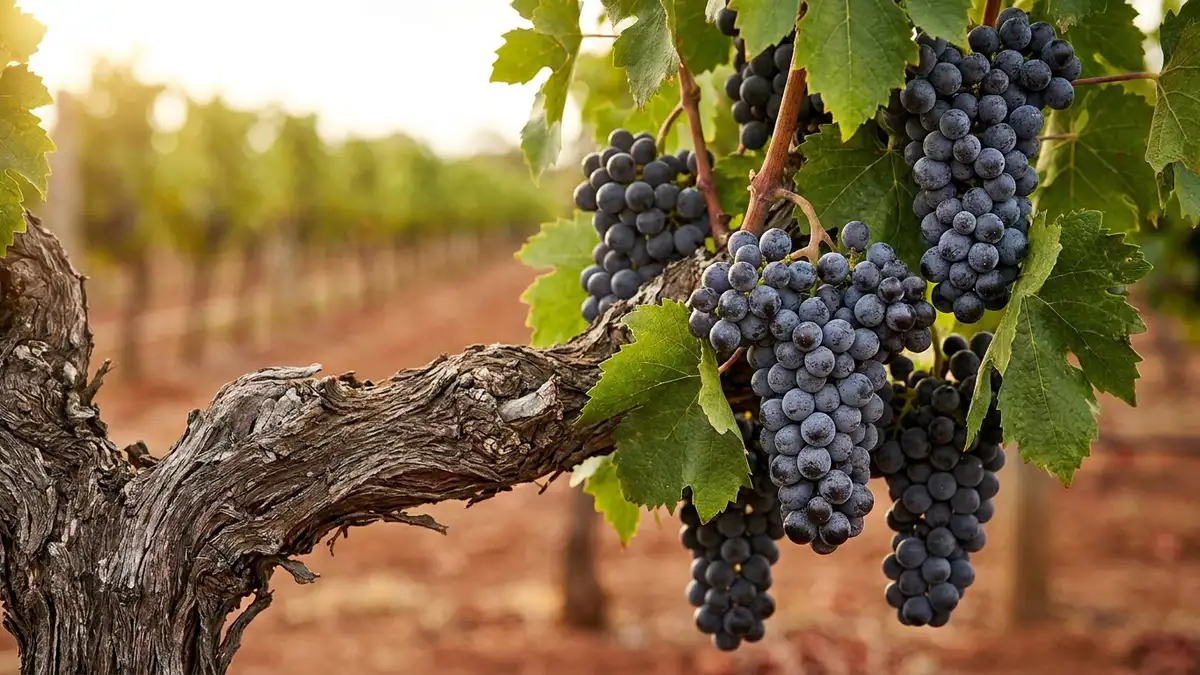
If Burgundy is a region of subtlety, the Barossa is a region of generosity. Its calling card is Shiraz, and the local style is unmistakable: ripe, full-bodied, and packed with dark fruit. This is the wine that put Australia on the global map and remains the reason most people first reach for a Barossa bottle.
Shiraz and Syrah are the same grape variety. The name is a style signal, not a botanical difference. Syrah tends to mean the cooler, peppery, more restrained style of France's northern Rhône, while Shiraz signals the riper, fuller, fruit-forward Australian style the Barossa perfected. If that distinction interests you, our guide to Syrah vs Shiraz breaks down exactly how climate reshapes one grape into two personalities.
What does Barossa Shiraz actually taste like? Typical aromas: blackberry, plum, dark cherry, black pepper, licorice, chocolate, and sweet vanilla from oak ageing. On the palate it is rich and mouth-filling, with soft, plush tannins (the drying, grippy sensation reds leave on your gums) and warming alcohol. Body: full (5/5) · Tannins: medium and soft (3/5) · Acidity: medium (3/5) · Alcohol: medium-to-high (4/5). To understand how those building blocks fit together, see our primer on understanding tannins, acidity, and body.
Warm Climate and Old Soils: The Barossa Terroir
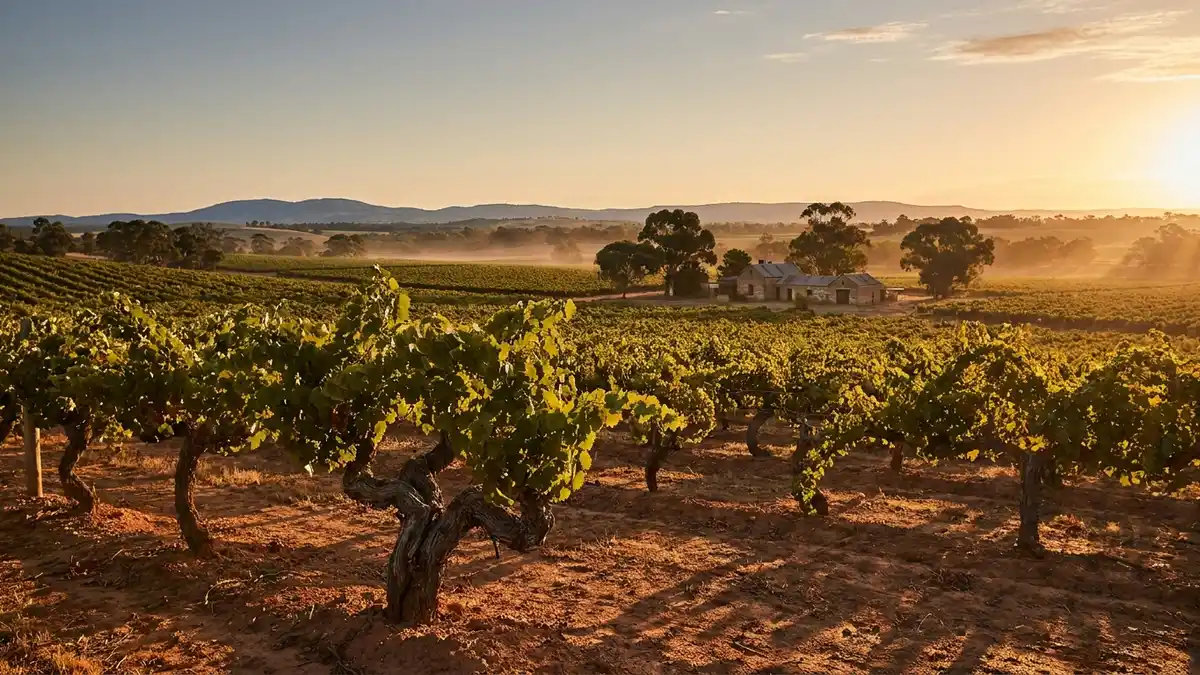
The Barossa owes its bold style to a warm continental climate. Hot, dry summers ripen grapes fully, building the high sugar that ferments into rich, concentrated wine with generous alcohol. Cool nights help the grapes hold onto enough acidity to keep all that ripeness from turning flat. The result is fruit at its plushest rather than at its leanest.
This is terroir — the full environment a grape grows in, including soil, climate, altitude, and exposure — working in one clear direction. Where a cool region like the Loire pushes a grape toward restraint, the Barossa pushes toward power. The same logic separates the old world from the new world in wine: warmth and sunshine yield riper, bolder bottles, and few regions show it as plainly as the Barossa.
The soils add their own signature. The valley floor mixes sandy and clay loams over deep beds, holding just enough water to carry old vines through dry summers without irrigation. Thicker-skinned grapes like Shiraz thrive in this heat, building deep color and ample tannin — our look at thick-skinned versus thin-skinned grapes explains why skin thickness shapes so much of a red's character.
The Barossa does not whisper. It sets out to make the ripest, most generous expression of a grape that warmth allows, and it does so with conviction.
Some of the World's Oldest Vines
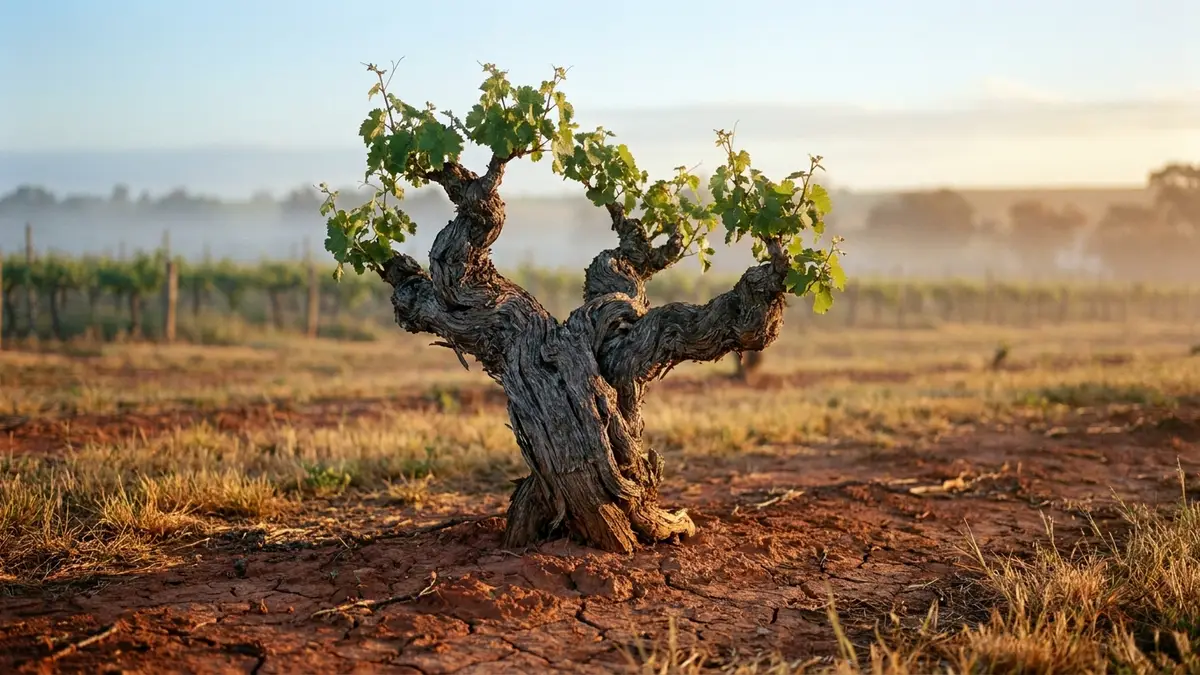
The Barossa's most remarkable feature is hidden underground, in its roots. This region is home to some of the oldest continuously producing vines on earth — Shiraz plants over 100 years old that still bear fruit every vintage.
The reason is a single word: phylloxera. In the late 1800s this microscopic root louse devastated nearly every vineyard in Europe and much of the world, forcing growers to replant onto resistant American rootstocks. The Barossa, protected by strict quarantine and isolation, escaped the plague entirely. Many of its vines survive pre-phylloxera, growing on their own original roots in an unbroken line back to the 1800s.
Old vines matter for what is in the glass. As a vine ages, it naturally yields fewer, smaller grapes, and that lower volume concentrates flavor. Old-vine Barossa Shiraz tends to show greater depth, savory complexity, and intensity than wine from young plantings. The region protects these vines through a charter that recognizes them by age:
- Old Vine: 35 years or older — established, with noticeably more concentration than young vines.
- Survivor Vine: 70 years or older — vines that have weathered drought, war, and changing fashions.
- Centenarian Vine: 100 years or older — a living link to the region's earliest plantings.
- Ancestor Vine: 125 years or older — the rarest tier, among the oldest fruiting vines anywhere on the planet.
Tasting an old-vine bottle beside an entry-level one is one of the most instructive comparisons in wine. The Sommy app turns exactly that kind of side-by-side into a guided exercise, helping you name the extra layers of flavor that age in the vine brings.
Grenache and the Classic GSM Blend
Shiraz may be the headline, but the Barossa is also a great home for Grenache, a thin-skinned grape that loves heat and ripens to bright, juicy red fruit. On its own, Barossa Grenache offers strawberry, raspberry, and white-pepper spice with lighter color and softer tannins than Shiraz. Our Grenache wine guide covers the grape's character in depth.
Grenache truly shines in the region's signature blend: GSM, short for Grenache, Shiraz, and Mourvèdre. The Barossa borrowed this trio from France's southern Rhône, and the three grapes complement each other neatly. Compare the parts as a bold-bullet list:
- Grenache: Bright red fruit · soft tannins · warmth and high alcohol · the juicy, perfumed heart of the blend.
- Shiraz: Dark fruit, pepper, and chocolate · fuller body · adds depth, color, and richness.
- Mourvèdre: Firmer structure · savory, gamey, earthy notes · brings backbone, grip, and ageing potential.
Together they make a generous, food-friendly red that balances richness with freshness — often more approachable than a big single-varietal Shiraz, and a smart second step once you know the region's flagship grape.
Eden Valley: The Cool High Country for Riesling
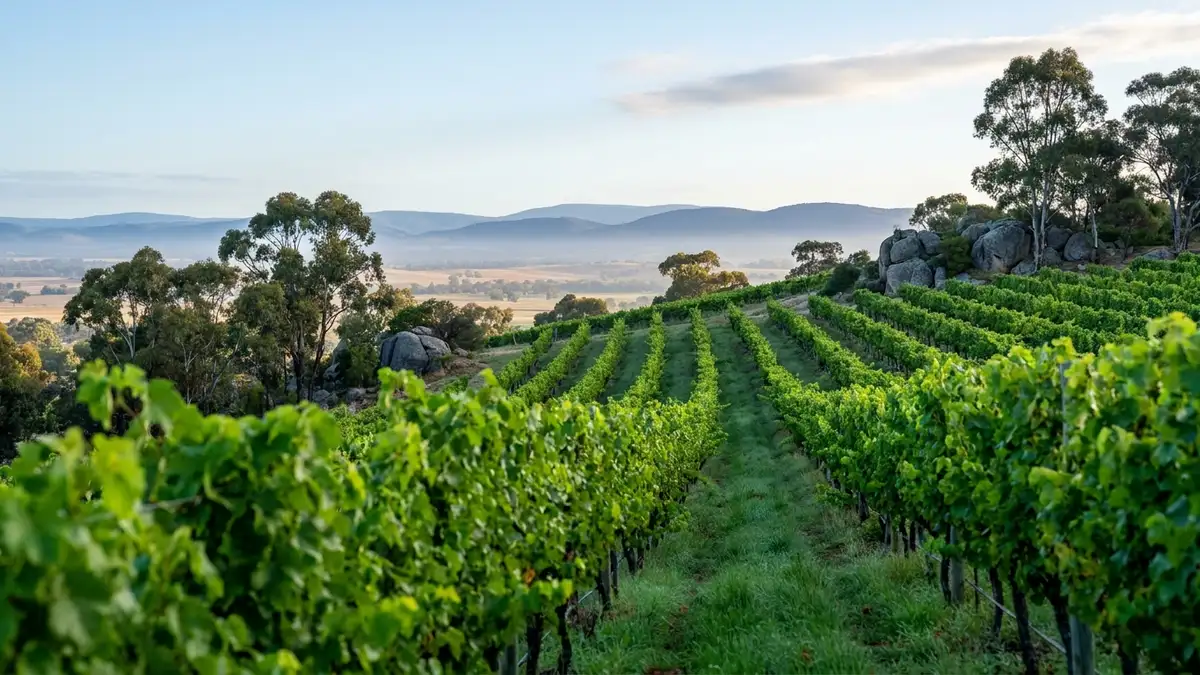
Not all of the Barossa is built for big reds. Climb east into the hills and you reach the Eden Valley, a sub-region within the wider Barossa zone that sits at noticeably higher altitude. The extra elevation means cooler temperatures, and cooler temperatures mean a completely different style of wine.
Eden Valley's star is Riesling, an aromatic white grape that needs cool conditions to keep its trademark high acidity and delicate floral perfume. Here it makes bone-dry, racy Riesling with typical aromas of lime, green apple, white flowers, and a flinty, mineral edge. These wines are crisp and refreshing young, and they age remarkably well, developing a famous toasty, honeyed character over a decade or more.
The contrast within one wine zone is striking. The valley floor bakes ripe, powerful reds while the hills above turn out taut, nervy whites. It is a vivid lesson in how altitude shapes wine, and a reason the Barossa is more versatile than its big-red reputation suggests. To meet the grape properly, our Riesling wine guide walks through its full sweet-to-dry range.
German Heritage and the Shape of the Region
The Barossa's character was set by the people who settled it. In the 1840s, Lutheran immigrants from Silesia — in what is now Poland and Germany — arrived in South Australia seeking religious freedom, alongside British settlers. They brought their language, food, and farming know-how, and their influence is still everywhere in the valley today.
That heritage shows up in town names, traditional bakeries, smokehouses, and a deep-rooted food culture built around hearty, savory dishes that pair naturally with the region's rich reds. The German connection also helps explain the prominence of Riesling in the cooler Eden Valley, since the grape sits at the heart of German winemaking tradition.
Understanding the heritage is not just trivia. It explains why the Barossa feels like a place with a continuous story rather than a modern wine factory — the same families have farmed the same vines for generations, which is part of why those old plantings survive. For broader context on how grape choice and place define a region's identity, our overview of the noble grapes sets out the varieties every learner should know first.
What Makes the Barossa Distinctive
Plenty of warm regions make rich reds. A few things set the Barossa apart and are worth holding in mind when you taste:
- Unbroken old-vine history: Pre-phylloxera vines over a century old, still producing — a depth of vine age few regions can match.
- A single dominant signature: Shiraz so closely identified with the place that "Barossa" and "big Shiraz" are nearly synonymous worldwide.
- One zone, two climates: A hot valley floor for power and a cool high Eden Valley for racy Riesling, side by side.
- Approachable by design: Ripe fruit and soft tannins make the reds enjoyable young, without the years of cellaring some classic regions demand.
- A living culture: German settler roots that shaped its food, towns, and the survival of its oldest vines.
Unlike France's tiered cru systems, the Barossa has no formal vineyard-ranking ladder. Instead, the Barossa Old Vine Charter — the age tiers above — is the closest thing to a classification, recognizing vines rather than ranking plots. The label clues to learn here are simpler: the grape or blend, the words "old vine" if present, and whether the bottle is a warm-valley red or a cool Eden Valley white.
How a Beginner Should Start with the Barossa
You do not need an expensive collector's bottle to understand the Barossa. The region is famously welcoming, and a deliberate tasting order teaches you the most. Here is a practical path:
- Start with an entry-level Shiraz. This is the regional house style in its clearest form — ripe dark fruit, soft tannins, a warm finish. Notice the fullness and the pepper-and-chocolate edge that mark it as Barossa.
- Try a GSM blend next. After a pure Shiraz, a Grenache-led blend shows how the same region can be brighter, juicier, and more savory. Feel the lift the Grenache brings.
- Reach for an Eden Valley Riesling. Switch entirely. A dry, lime-fresh Riesling proves the region is not just about big reds, and it resets your palate with high acidity.
- Compare young versus old vine. If you can, taste an everyday Shiraz beside an old-vine bottling. The added concentration and savory depth of old vines becomes obvious side by side.
- Build the tasting habit. Score the body, name the dark fruit, and notice how soft the tannins feel. Our guide to how to taste wine gives you the full step-by-step method to apply to every glass.
Sommy turns these comparisons into guided practice — naming the aromas, scoring the structure, and building the vocabulary to describe exactly what you sense in a glass of Barossa Shiraz. You can start free at sommy.wine, then bring the method to your next bottle.
The Barossa also teaches a wider lesson that pays off across all wine: that climate and vine age can reshape a single grape entirely. Once that idea clicks, every warm-climate red you meet — from California to Spain — becomes easier to read. Australia's other regions extend the story too, from the maritime cool of Margaret River to the rich reds of McLaren Vale, and exploring them deepens what the Barossa first teaches.
The Reward of Learning the Barossa
The Barossa is one of the most beginner-friendly regions in the world precisely because it commits so fully to a style. Its bold Shiraz is easy to enjoy and easy to learn from, its old vines tell a story you can taste, and its cool Eden Valley keeps the region from being one-note. Few places reward a curious beginner so quickly.
Start with a single ripe Shiraz, then branch into a GSM blend and an Eden Valley Riesling, and you will have mapped the whole region in three glasses. The Sommy app is built to make that habit stick — turning each bottle into a short, guided lesson so the next Barossa you open is a little clearer than the last. For more on the country's regional spread, our overview of French wine regions offers a useful contrast in how an old-world system organizes its wines compared with Australia's grape-led labels.
Sources
Frequently Asked Questions
What wine is the Barossa Valley famous for?
The Barossa Valley is famous above all for Shiraz, called Syrah elsewhere. Its warm climate produces rich, full-bodied reds with ripe dark fruit, pepper, and chocolate notes. The region also makes Grenache-based GSM blends and, in the cooler high Eden Valley sub-region, crisp dry Riesling that ages beautifully for many years.
Where is the Barossa Valley?
The Barossa Valley sits about an hour northeast of Adelaide in South Australia. It is one of the country's oldest and most renowned wine regions, settled in the 1840s by German and British immigrants. The wider zone includes two parts: the warm Barossa Valley floor and the cooler, higher Eden Valley to the east.
Why are Barossa Valley vines so old?
The Barossa avoided phylloxera, the root louse that destroyed most of the world's vineyards in the late 1800s. Strict quarantine kept the pest out, so many original vines survive on their own roots. Some Shiraz vines are over 100 years old and still producing, making them among the oldest continuously fruiting vines on earth.
What is a GSM blend?
GSM stands for Grenache, Shiraz, and Mourvèdre, a classic blend the Barossa borrowed from France's southern Rhône. Grenache brings bright red fruit and warmth, Shiraz adds dark fruit and body, and Mourvèdre contributes structure and savory depth. The result is a generous, food-friendly red that balances richness with freshness.
What does Barossa Shiraz taste like?
Barossa Shiraz is full-bodied and rich, with ripe blackberry, plum, and dark cherry fruit layered with black pepper, licorice, chocolate, and sweet vanilla from oak. It has soft, plush tannins, medium-to-high alcohol, and a warm, smooth finish. Old-vine versions add extra concentration and savory complexity to that generous fruit core.
Is Barossa Valley wine good for beginners?
Yes. Barossa reds are approachable because their ripe fruit and soft tannins are easy to enjoy young, without needing years of cellaring. The bold, fruit-forward style is friendly to new palates learning to taste. Starting with an entry-level Barossa Shiraz, then trying a GSM blend and an Eden Valley Riesling, builds a clear sense of the region.
What is the difference between Shiraz and Syrah?
Shiraz and Syrah are the same grape with different names. Syrah usually signals a cooler-climate, more restrained, peppery style, as in France's northern Rhône. Shiraz, the Australian name, signals the riper, fuller, fruit-forward style the Barossa made famous. The label name is a clue to the style inside the bottle rather than a different variety.
Why does the Barossa Valley have German heritage?
Lutheran settlers from Silesia, in what is now Poland and Germany, arrived in the 1840s seeking religious freedom. They brought language, food, and farming traditions still visible today in town names, bakeries, and smokehouses. Their cool-climate roots also shaped the nearby Eden Valley's reputation for Riesling, a grape central to German winemaking.
Sommy Team
LinkedInFounder & Wine Educator
The Sommy Team is building the world's most approachable wine education app, helping beginners develop real tasting skills through structured courses and AI-guided practice.