Négociant Wine Explained: What It Means and Why It Matters

By the Sommy Team — AI-assisted, human-edited.
Updated Oct 1, 2026
Contents (9)
- What Is Négociant Wine, in One Paragraph?
- How Is a Négociant Different From a Domaine?
- How Do You Spot a Négociant Wine on the Label?
- What Does NM Mean on a Champagne Label?
- Are Négociant Wines Lower Quality?
- When Should You Buy Négociant Wine?
- What Does a Négociant-Éleveur Do?
- Why Does Burgundy Have So Many Négociants?
- Do Négociants Own Vineyards?
TL;DR
A négociant is a merchant that buys grapes, juice or finished wine from growers and sells the result under its own name. Burgundy depends on them because its vineyards are split into tiny plots. On a Champagne label the code NM marks the same model. It describes a business, not a quality level.
Négociant wine is made by a merchant from grapes, juice or wine it bought from growers. The name on the label is the cellar that made it, and the vines belong to someone else. That one fact explains why a famous Burgundy village can appear on dozens of bottles, and why a Champagne label carries a two-letter code at the bottom.
What Is Négociant Wine, in One Paragraph?
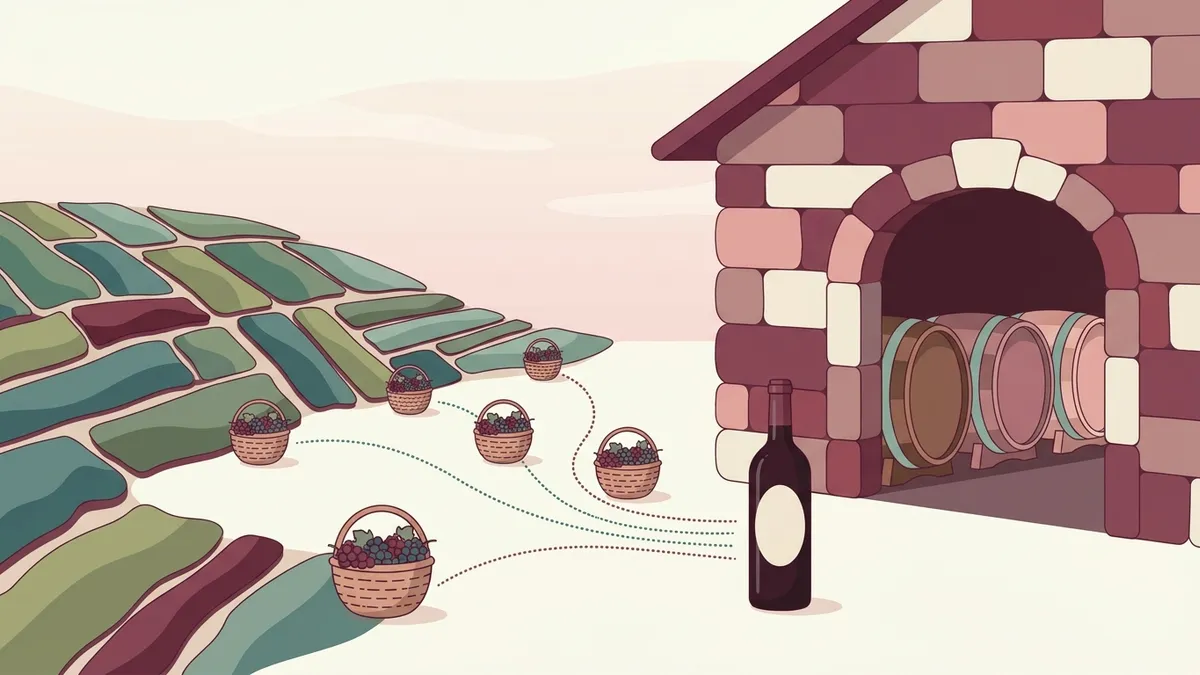
Négociant wine is wine sold under a merchant's name and made from grapes, juice or finished wine that the merchant bought from other growers. Négociant is French for merchant. The house can buy at any stage: grapes at harvest, must (fresh juice with its skins) or finished wine. It then blends, ages and bottles it under its own name. The model dominates Burgundy, where on the commonly cited figures about 115 négociants control around 8% of the vineyard area yet make most of the wine. In Champagne the same model is printed on the label as NM.
How Is a Négociant Different From a Domaine?
A domaine grows the grapes it bottles. A négociant buys them, or buys the wine, and bottles it under its own name. Between them sit the négociant-éleveur, which raises bought wine, and the cooperative, where growers pool grapes. All four can print the same village name, as the Burgundy wine guide shows.
| Producer type | Grows the grapes? | Makes the wine? | Label clue | Buy it when |
|---|---|---|---|---|
| Domaine (estate) | Yes, its own vines | Yes | Mis en bouteille au domaine, au château or à la propriété | You want one grower's take on one named plot |
| Négociant (merchant) | Mostly no | Buys wine, or buys grapes and makes it | Company name plus 'négociant' or 'maison' and a town | You want a famous village at a fair price |
| Négociant-éleveur | Sometimes | Ages and blends in its own cellar | 'Négociant-éleveur' in the bottler line | You want a steady house style year to year |
| Micro-négociant | No, buys from chosen rows | Yes, in small batches | A small producer name with no 'domaine' | You want a young winemaker's style without land costs |
| Cooperative | Members grow them | Yes, pooled | Cave coopérative, or CM on Champagne | You want a cheap, reliable everyday bottle |
A micro-négociant is the modern twist: a winemaker with no vineyard of its own who buys grapes from specific rows, often under long contracts, and makes tiny lots. The fruit is bought, but every cellar decision is the winemaker's.
How Do You Spot a Négociant Wine on the Label?
Look at the bottler line. "Mis en bouteille au domaine", "au château" or "à la propriété" means the estate bottled its own wine. A company name followed by "négociant", "négociant-éleveur" or "maison" and a town means a merchant did, often with "mis en bouteille par" in front.
The bottler line is usually small print along the bottom of the front label or on the back. Our guides to how to read a wine label and what the back label tells you show where it sits on French and American bottles.
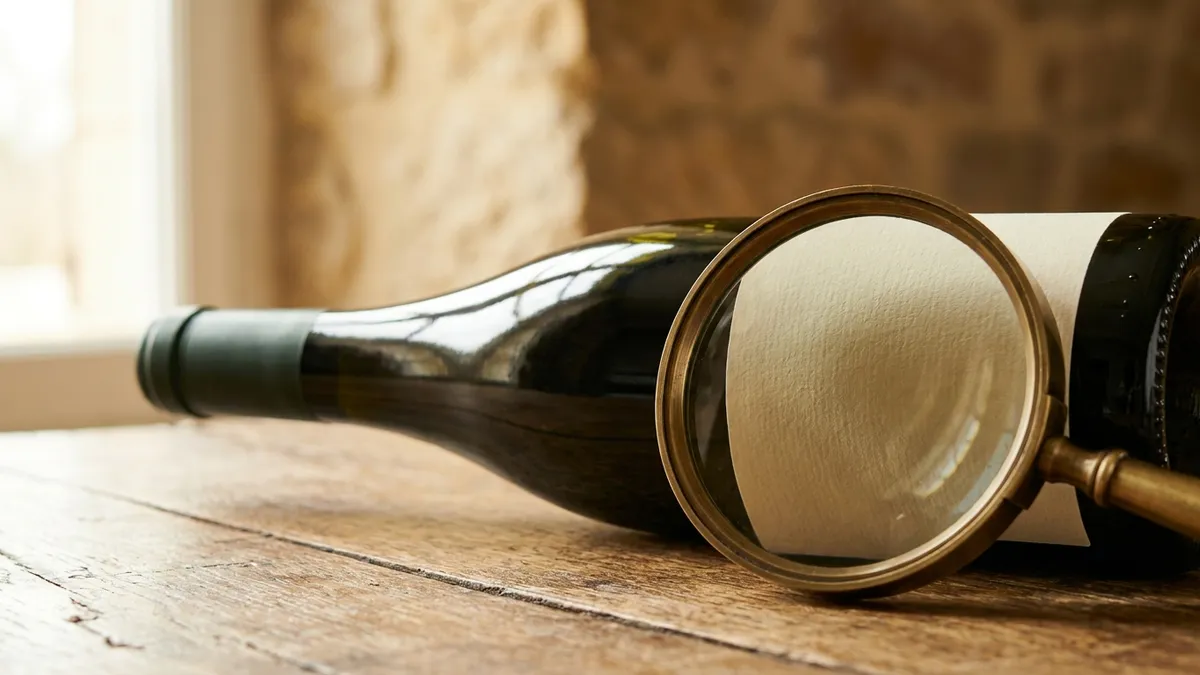
The front name can mislead. A merchant may use the word "Maison" or just its family name, and a house that also owns vines may print "Domaine" on its estate wines and leave it off the rest. If the bottler line says "au domaine" or "à la propriété", the producer grew the grapes. If it names a company and a town without that phrase, assume a merchant bought the fruit or the wine.
What Does NM Mean on a Champagne Label?
NM stands for négociant-manipulant, a Champagne house that buys grapes and makes the wine itself. Most large brands carry it. The code sits in tiny print near the bottom of the label, before a registration number. Every Champagne bottle carries it, so it works even when the front shows only a brand.
The codes you will meet most:
- NM (négociant-manipulant): a house that buys grapes and makes the wine.
- RM (récoltant-manipulant): a grower making wine from its own grapes, with at most 5% bought in. This is grower Champagne.
- CM (coopérative de manipulation): a cooperative making wine from its members' grapes.
- ND (négociant distributeur): a merchant selling under its own name wine it did not make.
- MA (marque d'acheteur): a buyer's own brand name, unrelated to the producer or grower.
The split is lopsided. Champagne has about 410 houses and more than 16,000 growers working some 34,000 hectares. Growers own nearly 90% of the vines, so houses buy most of their grapes. Only a minority of growers make wine from their own fruit, and grower Champagne held less than 3% of the market in 2008.
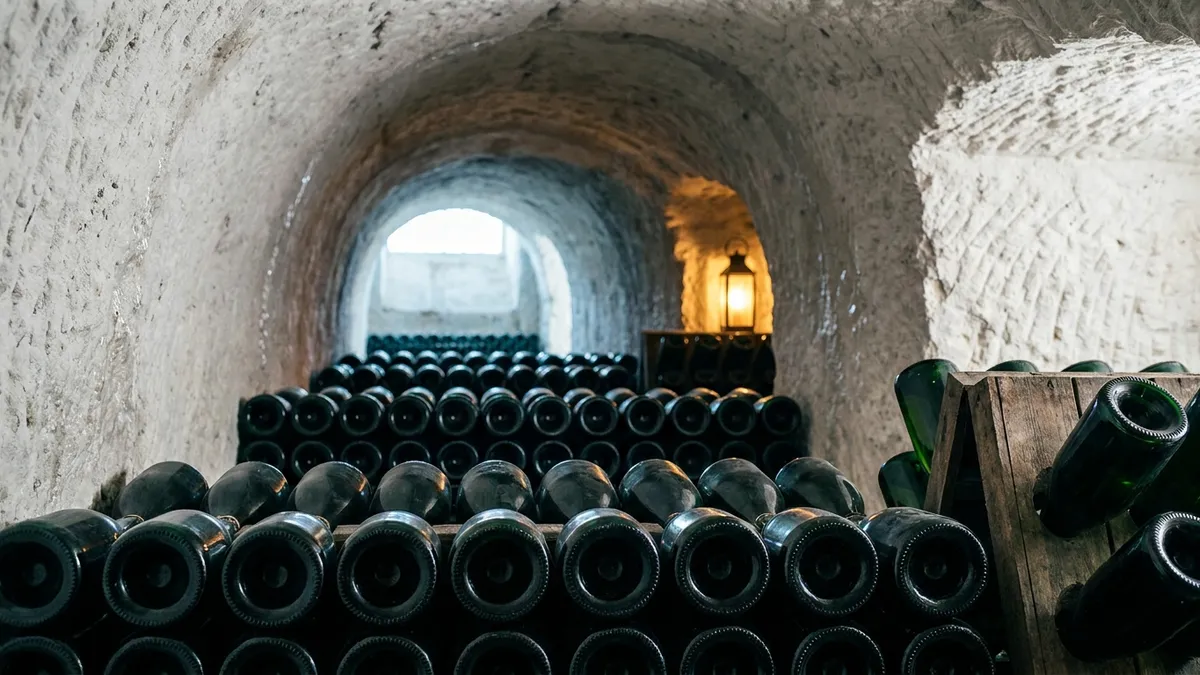
If you want the same taste every year, buy NM. Houses blend grapes from many villages and years to hold a style, the logic behind non-vintage Champagne (see vintage vs non-vintage wine). If you want one village's chalk and one family's choices, look for RM. The Champagne region guide maps those villages.
Are Négociant Wines Lower Quality?
No. Négociant is a business model, not a quality tier. The merchant controls the cellar, and the cellar decides as much of the final taste as the vineyard. A careful négociant with good contracts beats a careless grower on a famous slope, and the reverse is true too.
The myth has a real root. Some merchants buy finished wine in bulk and simply bottle it, and that end of the trade sells plenty of plain regional wine. But the top houses buy grapes rather than wine, pay growers to farm to their standards, and make the wine themselves. Some of the most sought-after Burgundy is made this way.
What a négociant label does tell you is that the wine reflects a house more than a single plot. Merchants blend fruit from several growers within the same appellation (a protected place name, explained in what is an appellation), which smooths out one grower's bad year. A domaine wine shows one patch of ground and one family's choices, for better or worse. Price follows the place name far more than the business model, as wine price vs quality explains.
When Should You Buy Négociant Wine?
Buy négociant wine when you want a famous place name at a fair price and a steady style. Buy from a domaine when you want one grower's take on one plot and you know the name is good. The deciding factor is how specific the label is.
- Regional and village wines. If the label names a region or a village and the price is modest, a merchant bottling is the safer bet. Merchants buy from many growers, so a bad parcel is diluted.
- Premier and Grand Cru. If the label names a single top vineyard, check who made it before you pay. At that level one producer's skill outweighs the vineyard name.
- Champagne. If you are buying for a party, NM gives a predictable style. If you are buying to learn, an RM bottle teaches one village.
- Learning a grape. Taste two merchant bottlings of Pinot Noir from the same village before chasing domaines, so you know the village taste first.
What Does a Négociant-Éleveur Do?
A négociant-éleveur buys grapes, must or finished wine and then matures it in its own cellars before bottling. Éleveur means raiser, the same word French farmers use for raising animals. The raising is called élevage: the months between fermentation and bottling.
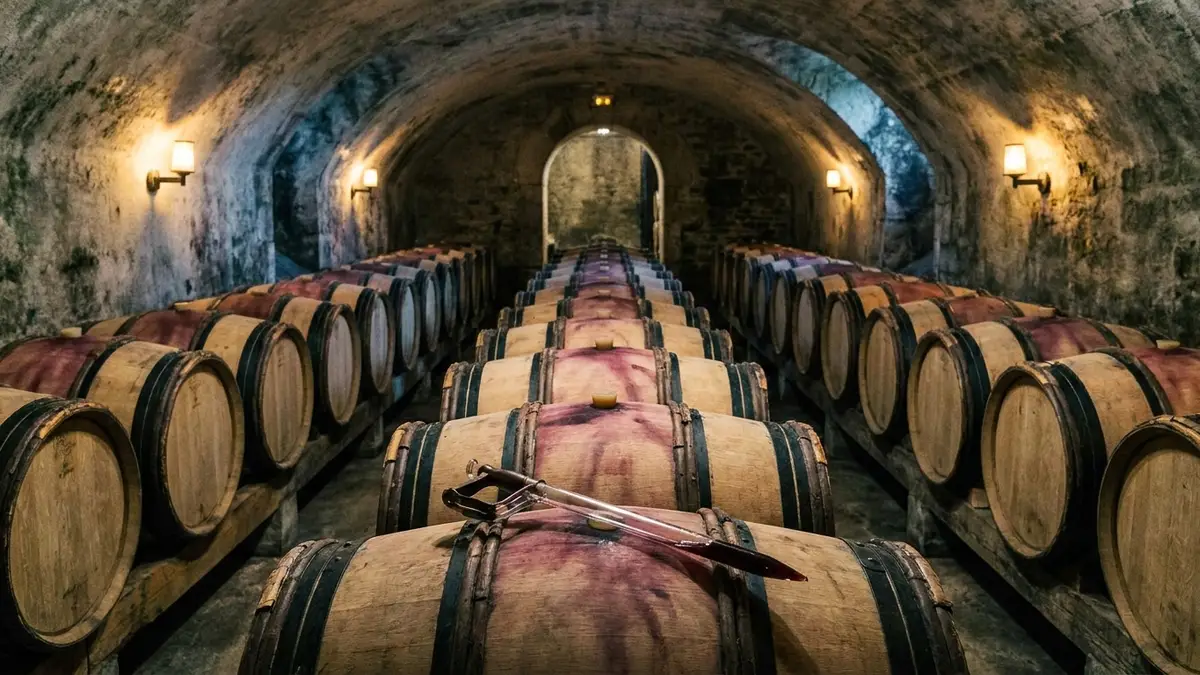
During élevage the house makes the choices a drinker can taste. It picks the oak (barrels that add vanilla, toast or spice, compared in French oak vs American oak), decides how much of it is new, blends lots from different growers, and chooses when to bottle. Two négociant-éleveurs buying grapes from the same village can sell wines that smell nothing alike, because one used plenty of new oak and the other aged in old barrels.
Why Does Burgundy Have So Many Négociants?
Because Burgundy's vineyards were split into tiny pieces after the French Revolution, and many growers own too little to bottle and sell alone. The Church's vineyards were broken up and sold from 1791. French inheritance law then divided every holding among heirs, generation after generation, until some growers hold only a row or two of vines.
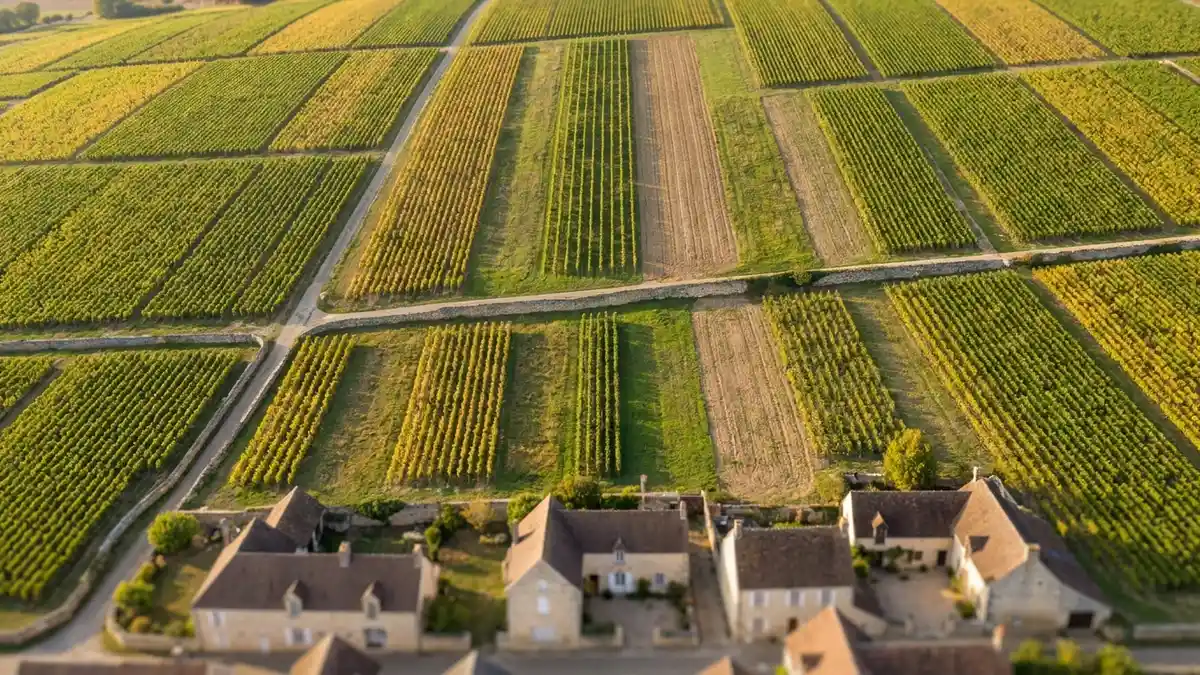
A grower with three rows makes a few barrels at most. Bottling, labelling and selling that alone rarely pays. For most of the region's history, growers sold grapes or young wine to merchants, who gathered enough to fill a cellar and reach export markets. Burgundy had about 50 domaines bottling their own wine in the early 19th century and around 3,200 by 2000, but merchants still make most of the wine.
The commonly cited split is stark. About 115 négociants control roughly 8% of the vineyard area but produce the majority of the wine. Individual growers hold about 67% of the land and sell only about 25% of the wine. So one vineyard name, and its terroir, reaches you through many different cellars.
Do Négociants Own Vineyards?
Many do. Some négociant houses rank among the largest vineyard owners in Burgundy, and big Rhône merchants own vines too, so a merchant name never rules out estate fruit. A large house often sells wine from its own vines next to wine from grapes it bought under contract.
The line also moves the other way. Some domaines now buy grapes from neighbours to make a second range, usually under a separate company name so the estate label stays estate-only. So "négociant" and "domaine" describe how one bottle was sourced. If a house sells both, the bottler line on each bottle tells you which one you are holding.
More wine shaped by how it is made, rather than where, sits in the wine styles hub, and blending choices are covered in wine blends explained. The Sommy app at sommy.wine has a bite-sized France course and an AI-guided tasting mode. Tonight, open a bottle and find its "mis en bouteille" line. Then taste it in the tasting mode and photograph the label so your notes log who made it.
Sources
Frequently Asked Questions
What does négociant mean in wine?
A négociant is a wine merchant that assembles the produce of smaller growers and sells the result under its own name. It can buy grapes, grape juice, or wine at any stage of completion. The word is French for merchant or trader, and the model is most common in Burgundy, Champagne, Beaujolais and the Rhône.
What is the difference between a négociant and a domaine?
A domaine grows its own grapes and bottles wine from vineyards it owns or farms. A négociant buys grapes, juice or wine from other growers and bottles it under the merchant's name. On a French label, 'mis en bouteille au domaine' points to an estate bottling, while a company name with 'négociant' or 'maison' points to a merchant.
Are négociant wines lower quality than domaine wines?
Not as a rule. Négociant describes how a wine is sourced, not how good it is. Some of the largest vineyard owners in Burgundy are négociant houses, and their cellar work decides the result as much as the grapes do. A careful merchant beats a careless grower. Judge the producer's reputation, not the business model.
What does NM mean on a Champagne label?
NM stands for négociant-manipulant: a Champagne house that buys grapes and makes the wine itself. Most of the large, widely sold brands carry it. RM marks a grower making wine from its own grapes, with at most 5% bought in, and CM marks a cooperative that makes wine from its members' grapes.
What is a négociant-éleveur?
A négociant-éleveur buys grapes, juice or finished wine and then matures it in its own cellars before bottling. Éleveur means raiser, the way a farmer raises animals. The merchant chooses the barrels, the blend, how long the wine rests and when it is bottled, so the house style comes from its cellar.
Do négociants own vineyards?
Many do. In Burgundy several négociant houses rank among the largest vineyard owners in the region. A single house often sells wine from its own vines alongside wine made from bought grapes, so check the bottler line on each bottle rather than assuming the whole range is estate grown or bought in.
Sommy Team
LinkedInFounder & Wine Educator
The Sommy Team is building the world's most approachable wine education app, helping beginners develop real tasting skills through structured courses and AI-guided practice.