Natural Wine Guide: What It Is and How to Drink It

By the Sommy Team — AI-assisted, human-edited.
Updated Apr 29, 2026
Contents (14)
- How to Actually Drink Natural Wine
- Natural Wine, in 90 Seconds
- The Four Principles, Translated for Drinkers
- What Natural Wine Tastes Like
- Good Funk Versus Real Fault
- Styles to Know
- Regions Worth Knowing
- How to Buy Natural Wine Without Getting Burned
- Pairing Strategy: Why Natural Wine Loves Food
- Serving and Storing
- A Practical Four-Bottle Intro Flight
- The Three Stages of a Natural Wine Palate
- Common Pitfalls
- The Honest Closing
TL;DR
Natural wine is a movement, not a legal category. It means organic farming plus low-intervention winemaking — wild yeasts, no additives, little or no added sulfites. The taste skews cloudy, juicy, sometimes funky. Buy from trusted small importers, drink within a year or two, pair with bistro food, and learn to tell good funk from real faults.
How to Actually Drink Natural Wine
If you have ever stood in front of a cloudy bottle with a hand-drawn label and wondered whether to risk thirty dollars on it, this natural wine guide is for you. There is no shortage of articles defining the category. There are far fewer that walk you through the practical part — buying, tasting, pairing, and building a palate that can tell living wine from broken wine.
The goal here is not to convert anyone. Natural wine is a style, not a quality grade. Some bottles are luminous and unforgettable. Some are flat, vinegary, or genuinely faulty. The difference between a fan and a frustrated drinker is usually just orientation — knowing what to expect, what to look for, and how to choose.
This guide is the field manual we wish we had handed every beginner who walked into a natural wine bar nervous about ordering. By the end of it, you should be able to scan a list, ask a useful question, pour a glass, and know within a minute whether the wine in front of you is alive or off.
Natural Wine, in 90 Seconds
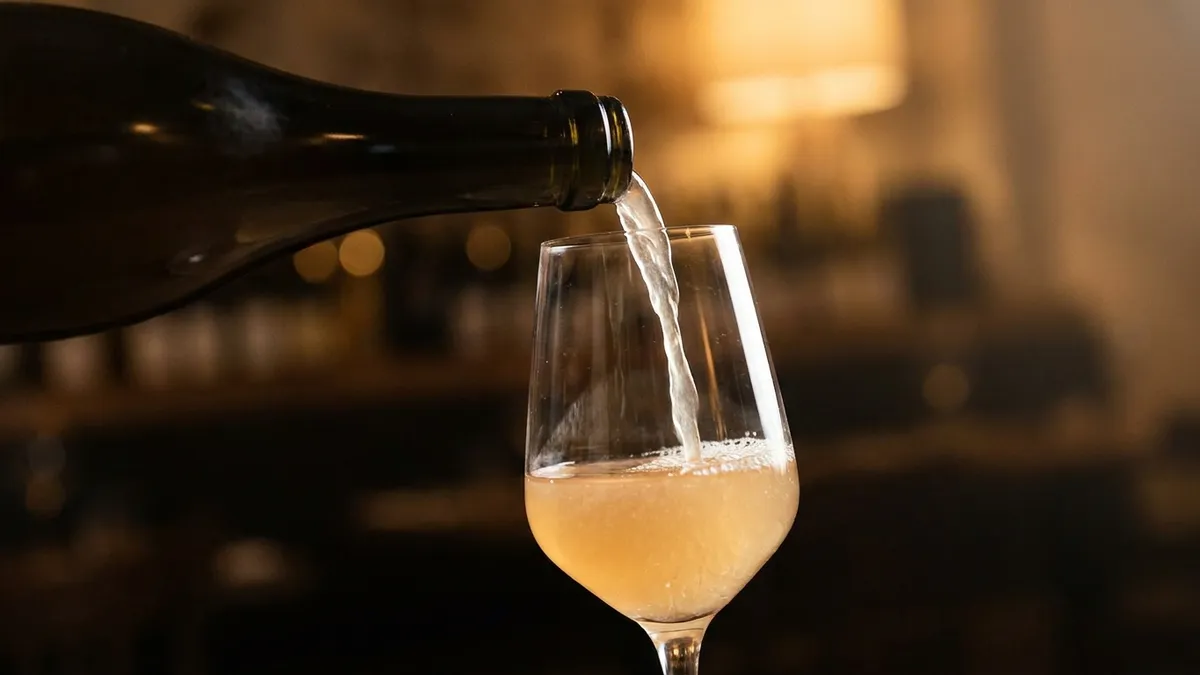
Natural wine is a movement, not a legal category. There is no government certification for it. Producers and importers loosely agree on four principles: organic or biodynamic farming, hand-picked grapes, fermentation with wild yeasts only, and minimal additives — including little or no added sulfites.
Compared to organic wine, which only certifies the farming, natural wine extends the philosophy into the cellar. The result tends to be cloudy, lower in alcohol, higher in acid, and more food-friendly than the polished, additive-supported wines that dominate supermarket shelves. Some bottles taste vivid and alive. Some taste funky in interesting ways. A few taste broken.
Drink natural wine to understand fermentation as a living process rather than an industrial one. Pair it with bistro food, serve it slightly cooler than conventional wine, and finish the bottle within a day or two. That is the whole game in 90 seconds — the rest of this guide is detail.
The Four Principles, Translated for Drinkers
Every natural wine producer interprets the rules slightly differently, but the framework is consistent enough to be useful at the shelf.
Organic or biodynamic farming. No synthetic pesticides, herbicides, or fertilizers. Biodynamic adds a layer of lunar-calendar planting and compost preparations. Both produce healthier vineyards regardless of philosophy.
Hand-picked grapes. Machine harvesting is fast but bruises the fruit and forces winemakers to compensate with cellar additions. Hand-picking is the gateway to lower-intervention winemaking.
Wild yeast fermentation. Conventional wine uses commercial yeast strains selected for predictable flavor and clean fermentation. Natural wine relies on the wild yeasts present on the grape skins and in the cellar. The result is more vintage variation, more character, and occasionally more risk.
Minimal additives. Conventional winemaking permits dozens of legal additions — clarifying agents, color stabilizers, acid adjusters, sugar, oak chips, sulfites at every stage. Natural winemaking strips most of these out. The bottle in your hand is closer to fermented grape juice than processed beverage.
For more on how this differs from a sticker on the label, see our breakdown of organic versus conventional wine and our deeper definition piece on natural wine explained.
What Natural Wine Tastes Like
The taste signatures are recognizable once you know them.
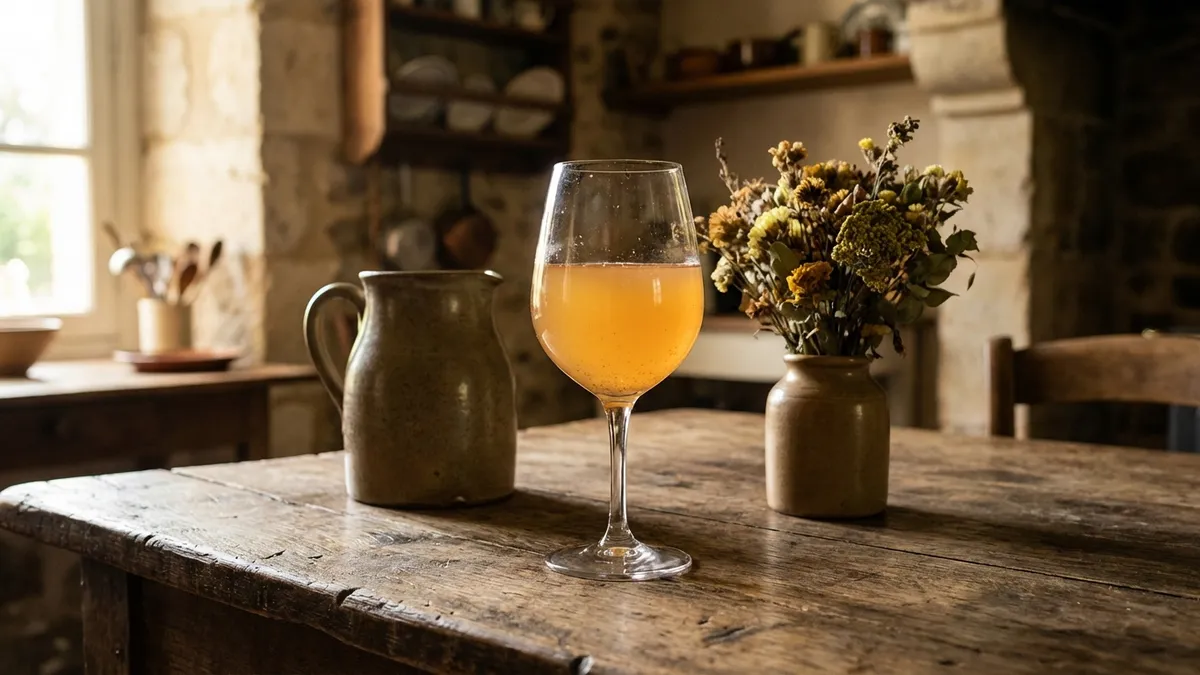
Cloudy or hazy. Most natural wines are unfiltered. Some are unfined. The wine carries fine sediment that scatters light and softens the color. This is cosmetic, not a fault.
Funky aromas. Barnyard, cidery lift, savory tea, sometimes a whiff of cured meat. Some of this comes from Brett — short for Brettanomyces, a wild yeast that produces leathery, smoky compounds. Mild Brett is characterful; aggressive Brett is a fault. Read Brett in wine for the full breakdown.
Lower alcohol, higher acidity. Many natural producers pick earlier to preserve freshness. Expect 11-12.5% alcohol where conventional reds run 13.5-15%. The acid feels lifted, almost like a squeeze of lemon under the fruit.
Light, juicy, expressive. Especially in reds. The fruit is forward and direct rather than oak-shaped or extracted.
Sometimes oxidative. Bruised apple, dried tea leaves, walnut skin. Lower sulfites mean a small amount of oxygen contact during winemaking, which softens fruit and adds nutty complexity. Done well, it is gorgeous. Done badly, it tips into oxidized wine territory.
Good Funk Versus Real Fault
This is the make-or-break skill for natural wine drinkers, and it only develops with practice.
Good funk smells like a place — a stable, a wet stone, a cellar, a lemon rind. It adds dimension. The wine still has fruit, structure, and a finish.
Bad fault smells like a problem — sharp vinegar that dominates the nose, an acrid mousy note that grows in the glass, a vegetal flatness with no fruit at all. The wine tastes broken rather than alive. Our guide to volatile acidity in wine covers the most common fault you will meet in low-sulfite bottles.
A useful test: pour a glass, swirl, and wait two minutes. Living wine opens up — fruit emerges, the funk recedes, the finish lengthens. Broken wine does the opposite. If your second sip is worse than the first, the bottle is probably faulty.
This skill is exactly what the Sommy app is built to train. The aroma library walks you through the line between character and fault one glass at a time.
Styles to Know
Natural wine is not a single flavor — it is an umbrella over several distinct styles. The most common ones on a wine list:
Pet-Nat. Short for petillant naturel. Sparkling wine bottled before fermentation finishes, so the bubbles form naturally inside the bottle. Cloudy, low-pressure, often capped with a beer crown. Pairs with everything from oysters to fried chicken.
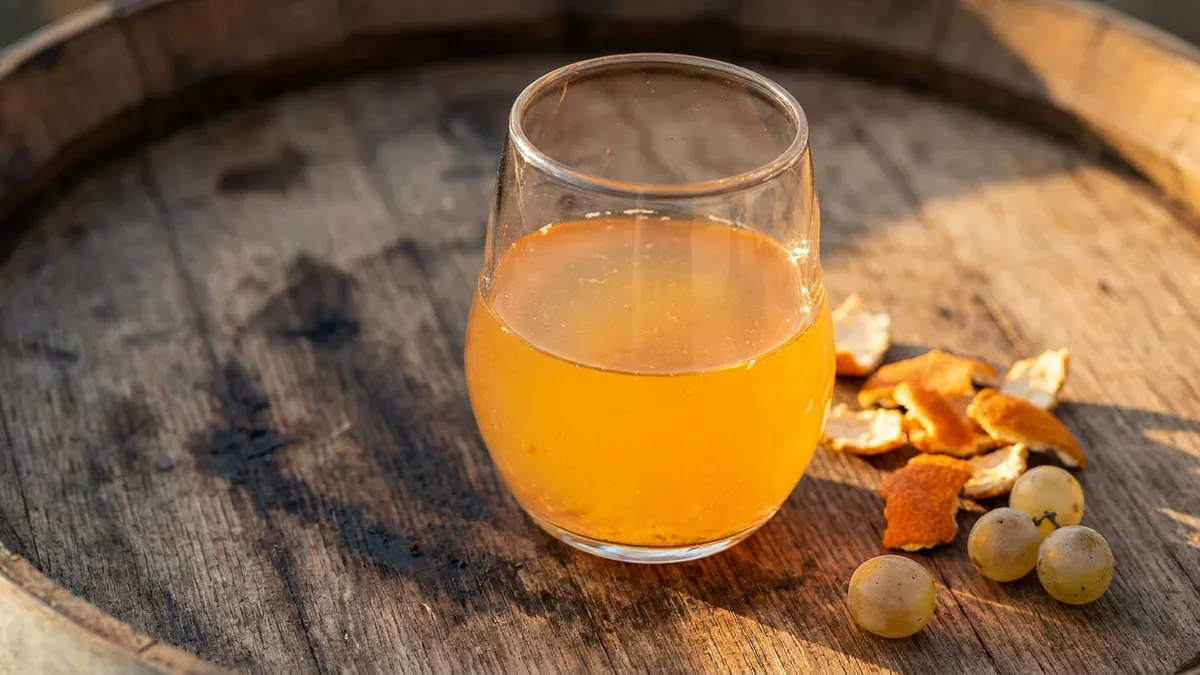
Orange wine. White grapes fermented on their skins, like a red. Amber-colored, lightly tannic, savory. Read orange wine explained for the full overview.
Glou-glou. French slang for "glug-glug" — light, juicy reds made for early drinking. Low alcohol, high acid, served with a slight chill. The category that converts the most skeptics.
Skin-contact whites. A short maceration (a day or two) on the white grape skins to add texture and aromatic complexity without going full orange.
Carbonic-style reds. Whole-cluster fermentation in a sealed tank, which produces the bright bubblegum-and-violet aromatics associated with Beaujolais — but now made all over the world by natural producers.
Regions Worth Knowing
The natural wine movement has clear geographic anchors. Knowing them turns a wine list into a roadmap.
France. Beaujolais (where the modern movement was born), the Loire (Anjou, Touraine, Muscadet), the Languedoc, the Jura, and increasingly the Rhone.
Italy. Friuli for skin-contact whites, Sicily and Etna for volcanic reds, Emilia-Romagna for Lambrusco-adjacent pet-nats.
Slovenia. Brda, just across the Friuli border, is a quietly serious natural wine region with a long skin-contact tradition.
United States. Oregon's Willamette Valley, the Finger Lakes in New York, Mendocino and the Santa Cruz Mountains in California.
Australia. Adelaide Hills and the Mornington Peninsula lead a strong low-intervention scene with a distinctive Pacific-leaning style.
Eastern Europe. Hungary, the Czech Republic, and the country of Georgia (where 8,000 years of clay-amphora tradition makes "natural" the default rather than the exception).
How to Buy Natural Wine Without Getting Burned
The single most reliable signal is the importer. In every export market, a small handful of independent importers specialize in low-intervention wine and curate their portfolios tightly. Once you find an importer whose palate matches yours, their lineup becomes a shortcut — you can buy with much higher hit rate.
Read the back label. Useful signals:
- "Indigenous yeasts" or "wild ferment"
- "No added sulfites" or "minimal sulfites added at bottling"
- "Unfiltered" and "unfined"
- "Biodynamic" or the Demeter logo
- "Made by [single grower name]" rather than a brand-only front label
Less useful: front-label aesthetics. Hand-drawn labels and clever names are everywhere now and tell you nothing about what is in the bottle.
Price ranges to expect, away from collector territory:
- Entry level: $20-35 buys a thoughtfully made natural wine from a competent producer
- Fine examples: $40-80 enters the territory of cult producers and limited cuvées
- Below $18: approach with caution; small-scale natural winemaking is labor-intensive and rarely cheap
For more general guidance on shopping with confidence, the Sommy team's primer on how to read a wine label translates the rest of the bottle.
Pairing Strategy: Why Natural Wine Loves Food
Natural wines tend to share three structural traits — higher acid, lower alcohol, savory complexity — that make them exceptional food wines. They lift food rather than compete with it.
The pairings that consistently work:
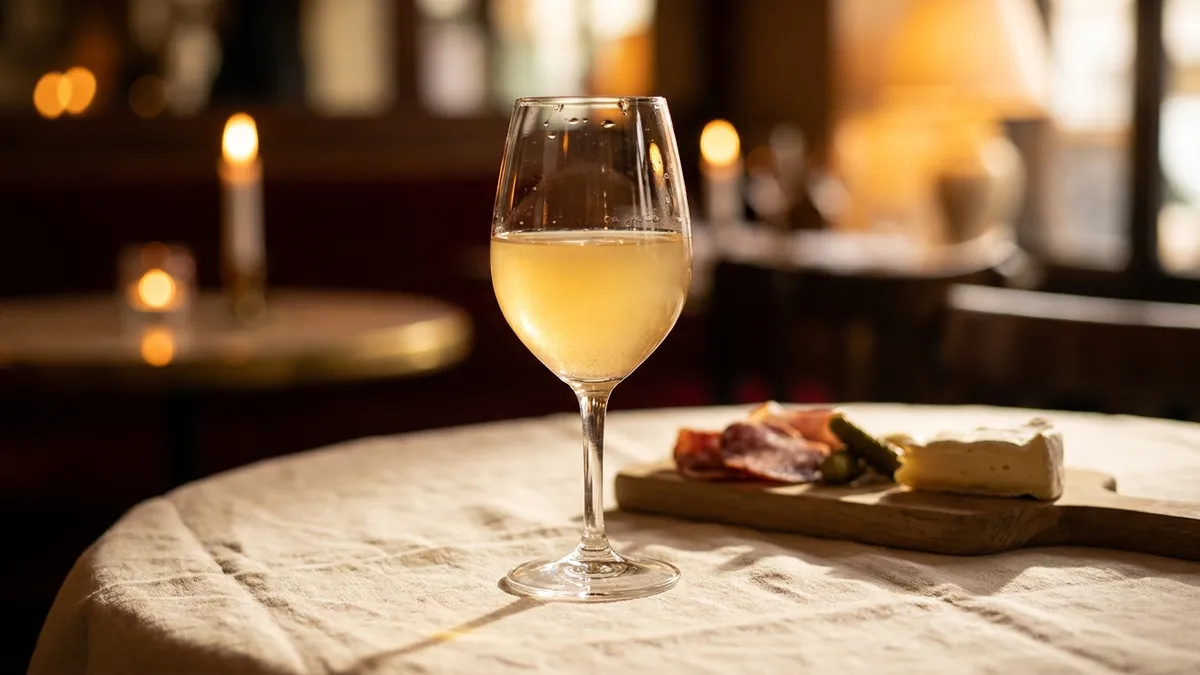
- Charcuterie and hard cheeses. The salt and fat soften acid; the wine cuts through richness.
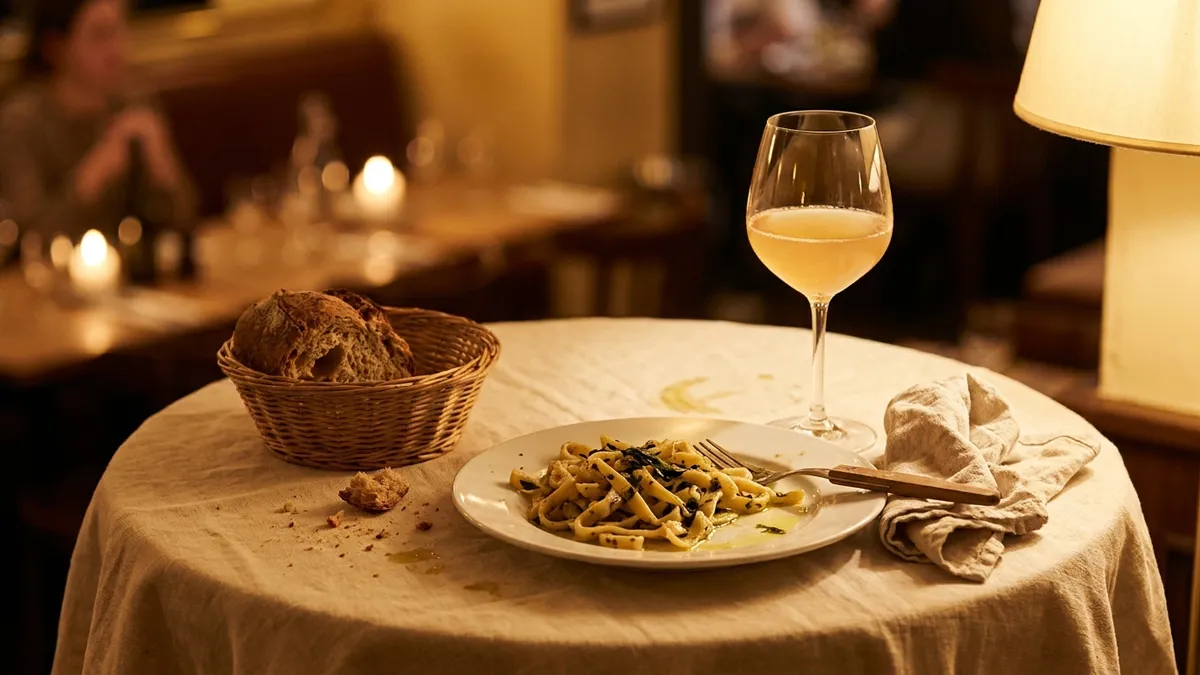
- Simple pasta. Tomato-based sauces, olive oil and garlic, peas and pecorino. Natural reds were almost designed for this plate.
- Mediterranean dishes. Grilled fish, lemony vegetables, olive oil everywhere.
- Korean and Japanese small plates. Fermented flavors, soy, ginger, and gentle spice harmonize with funky aromatics in surprising ways.
- Roasted vegetables and grain bowls. Natural wines bring savory weight that vegetables often need.
What does not work:
- Heavy cream sauces. They flatten the lift.
- Slow-braised stews. Conventional structured reds handle this better.
- Very spicy food. Higher-alcohol natural wines amplify chili heat.
For a fuller view of the principles, our guide to how food changes wine taste explains the underlying mechanics.
Serving and Storing
Serve natural wine slightly cooler than its conventional equivalent. Light reds want 12-14°C (54-57°F), not room temperature. Whites and orange wines want 8-12°C (46-54°F). A slight chill tightens up any volatile-acidity lift and makes the fruit pop.
Decant briefly — five to ten minutes in a wide vessel — to let off any reductive notes that built up under the cork. Skip aggressive decanting; the wine is delicate.
Store horizontally in a cool, stable place. Heat is the enemy. Most natural wine should be drunk within one to three years of release; only a handful of structured examples cellar gracefully beyond that. Once opened, finish within 24-48 hours.
A Practical Four-Bottle Intro Flight
If you want to taste your way into the category in a single evening, this lineup covers the spectrum without committing you to anything weird.
- A Loire pet-nat. Light, citrusy, low-pressure bubbles. The friendliest entry point.
- A Beaujolais-style natural Gamay. Bright cherry, violet, peppery lift. The "this is delicious" moment for most beginners.
- A short-maceration skin-contact white. Three to five days of skin contact. Texture and savory complexity without going full amber.
- A funkier Italian indigenous red. Etna Rosso made naturally, or a Friulian Refosco. The "earn your wings" bottle.
Drink in that order — lightest to most challenging. Take notes. Compare.
The Sommy app's structured tasting walkthrough is built exactly for this kind of comparative session — you can log each wine alongside the others and see your impressions side by side. You can explore Sommy to see how it works.
The Three Stages of a Natural Wine Palate
Most drinkers move through a recognizable arc. Knowing the arc means you can locate yourself on it without panicking that you "do not get" natural wine.
Stage 1 — Aversion. The funk is overwhelming. The wine feels broken compared to the supermarket reference points your palate has trusted for years. Stick with lighter, fresher styles. Glou-glou reds and pet-nats are made for this stage.
Stage 2 — Tolerance and curiosity. A few bottles click. You can name what you like and what you do not. You start asking shop staff for recommendations rather than guessing.
Stage 3 — Discrimination. You can tell good funk from real fault. You have favorite producers and a working list of importers you trust. Conventional wines feel a little flat to you now, though you can still appreciate the great ones.
There is no shortcut through this arc. There is only practice. Building a vocabulary helps — our wine tasting vocabulary cheat sheet is a starting point — and so does deliberate practice with a structured note-taking system. The Sommy approach to develop your wine palate walks through the daily habits that compress the timeline.
Common Pitfalls
Buying only natural and assuming it is better. Natural is a method, not a rating. Plenty of conventional wines are stunning and plenty of natural wines are dull. Curiosity, not loyalty, is the right stance.
Ignoring obvious faults. If the wine smells like nail-polish remover, finishes like cider vinegar, or has a strong rodent-cage note, it is faulty. You can return it. Read how to tell if wine is corked for the broader fault-detection toolkit.
Treating it as healthier. Alcohol is alcohol. Lower sulfites help only the genuinely sulfite-sensitive (a small minority).
Cellaring it like a Bordeaux. Most natural wine peaks in its first two to three years. Plan accordingly.
Skipping food. Natural wine alone, especially the higher-acid styles, can feel jagged. With food, the same wine sings.
For the broader landscape of wine styles this guide sits inside, see our wine styles overview.
The Honest Closing
Natural wine is one of the most exciting movements in modern wine because it forces you to taste actively. There are no shortcuts — no winemaker pre-balancing the wine for you, no oak doing the heavy lifting, no acid adjustment smoothing out a hot vintage. What is in the glass is what the vineyard, the yeasts, and the year produced.
That honesty is what makes it rewarding and occasionally frustrating. Your job as a drinker is simply to show up with curiosity, eat alongside your bottle, and trust your palate when something tastes alive — or when something tastes wrong. Both signals are real, and both get sharper with practice.
Frequently Asked Questions
Is natural wine the same as organic wine?
No. Organic certifies the farming — no synthetic pesticides or herbicides on the grapes. Natural wine goes further: organic or biodynamic farming plus minimal-intervention winemaking with wild yeasts, no additives, and little or no added sulfites. Many natural wines are made from organic grapes, but plenty of organic wines are made with conventional cellar techniques.
Why does natural wine sometimes taste funky?
Wild yeast fermentation, no filtration, and low sulfites all open the door to flavors conventional winemaking suppresses — barnyard notes from Brettanomyces, vinegar lift from volatile acidity, oxidative bruised-apple character. Some of this is intentional and characterful. Some is genuinely faulty. Telling the difference takes practice.
How can I tell if a natural wine is faulty or just funky?
Mild barnyard, light cidery lift, or a savory tea-like edge usually mean character. Sharp vinegar that dominates the wine, an aggressive popcorn or rodent-cage smell that grows in the glass, or a flat lifeless finish usually mean fault. If it tastes broken rather than alive, trust your palate.
Is natural wine healthier than conventional wine?
There is no strong scientific evidence that natural wine is healthier. Lower sulfite levels may help people who are genuinely sulfite-sensitive, but most wine headaches are not caused by sulfites. Natural wine still contains alcohol, which is the main health variable in any wine.
How long does natural wine last after opening?
Less time than conventional wine. With little or no added sulfites, natural wine oxidizes faster once exposed to air. Most are best within 24 to 48 hours of opening, kept sealed and refrigerated. Some lighter styles taste better on day two — others fall apart quickly.
Can I age natural wine?
Most natural wines are made for early drinking — within one to three years of release. Low sulfite levels and unfiltered bottles make them less stable in long cellaring. A small number of structured natural wines age beautifully, but treat them as exceptions, not the rule.
What food pairs best with natural wine?
Bistro food. Natural wines tend toward higher acid, lower alcohol, and savory complexity, which makes them shine alongside charcuterie, hard cheeses, simple pasta, grilled vegetables, Mediterranean dishes, and Korean or Japanese small plates. Avoid heavy cream sauces and rich slow-braised meats — they tend to flatten lighter natural reds.
Where should I buy natural wine?
Independent wine shops with a curated by-the-glass or by-the-bottle natural section, restaurants known for their wine programs, and online retailers who name their importers. Reliable small-importer portfolios are the best signal — once you find an importer whose taste matches yours, their lineup becomes a shortcut.
Sommy Team
LinkedInFounder & Wine Educator
The Sommy Team is building the world's most approachable wine education app, helping beginners develop real tasting skills through structured courses and AI-guided practice.