Morocco Wine Guide: North Africa's Surprising Wine Scene

By the Sommy Team — AI-assisted, human-edited.
Updated Sep 25, 2026
Contents (10)
- Morocco Wine Guide: The Short Answer
- Does Morocco Actually Make Wine?
- What Does Moroccan Wine Taste Like?
- Which Moroccan Wine Should You Buy First?
- What Food Goes With Moroccan Wine?
- Can You Buy and Drink Wine in Morocco as a Visitor?
- What Are Morocco's Wine Regions?
- How Does Moroccan Wine Law Work? AOG vs AOC
- Why Did Morocco's Wine Industry Rise, Fall and Return?
- Is Moroccan Wine Worth Trying?
TL;DR
Morocco makes wine at real scale, about 400,000 hectolitres in 2013, and over three quarters of it is red. Cinsault leads, pale vin gris is the house pink, and white is rare. Wine law has two tiers: 14 broad AOG zones from 1977 and a handful of stricter AOCs added since 1998.
Morocco makes real wine at real scale: mostly soft, Cinsault-led reds and pale pink vin gris, grown where Atlantic breezes and Atlas altitude cool a hot country. A Morocco wine guide starts in the glass and on the plate. Then come the visitor's buying rules, the regions, the label law and the history that made the grapes French.
Morocco Wine Guide: The Short Answer
Morocco produced about 400,000 hectolitres of wine in 2013, second in the Arab world after Algeria. Over 75 per cent of it is red, almost 20 per cent is rosé and pale vin gris, and only around 3 per cent is white (2005 figures). Cinsault is the leading grape at close to 40 per cent of plantings. Vineyards sit in five regions holding 14 AOG zones, the broad legal tier set in 1977, with a small group of stricter AOCs added from 1998.
The industry was built under French rule, collapsed after independence in 1956 when France cut its import quotas, and was rebuilt from the 1990s by leasing state vineyards to Bordeaux firms. Today most Moroccan wine is drunk at home, and visitors find it in supermarkets and tourist-facing restaurants.
Does Morocco Actually Make Wine?
Yes: Morocco produced about 400,000 hectolitres in 2013 and ranked as the Arab world's second-biggest wine producer after Algeria. Production is legal and taxed, it employs tens of thousands of people, and most of the wine is drunk inside Morocco rather than exported.
French Wikipedia puts output at 34 to 35 million bottles a year, and about 30 million of them are drunk on the home market, by residents and by visitors. The sector is credited with around 20,000 direct farm jobs and more than 10,000 related ones. It turns over about 100 million euros, with some 45 million euros going to the Moroccan treasury in taxes.
That scale surprises people who assume a majority-Muslim country cannot have a wine trade. Morocco is a working wine producer, not a curiosity kept alive for tourists, and it has its own appellation law. The closest parallel sits at the far end of the Mediterranean: Lebanon also pairs a French-era winemaking legacy with a love of Cinsault, as the Lebanon wine guide shows.
What Does Moroccan Wine Taste Like?
Mostly light-to-medium red with soft tannin, because Cinsault, the country's leading grape, makes gentle, cherry-scented wine. Over 75 per cent of production is red, almost 20 per cent is rosé or vin gris, and only around 3 per cent is white.
Start with structure. Body is the weight of the wine in your mouth, like skimmed milk against whole milk. Tannin is the drying grip you feel on your gums. A typical Moroccan red sits in the middle for body and low for tannin, so it slides down easily. Cinsault gives it red cherry and raspberry that taste ripe, because long sunny summers push sugar up.
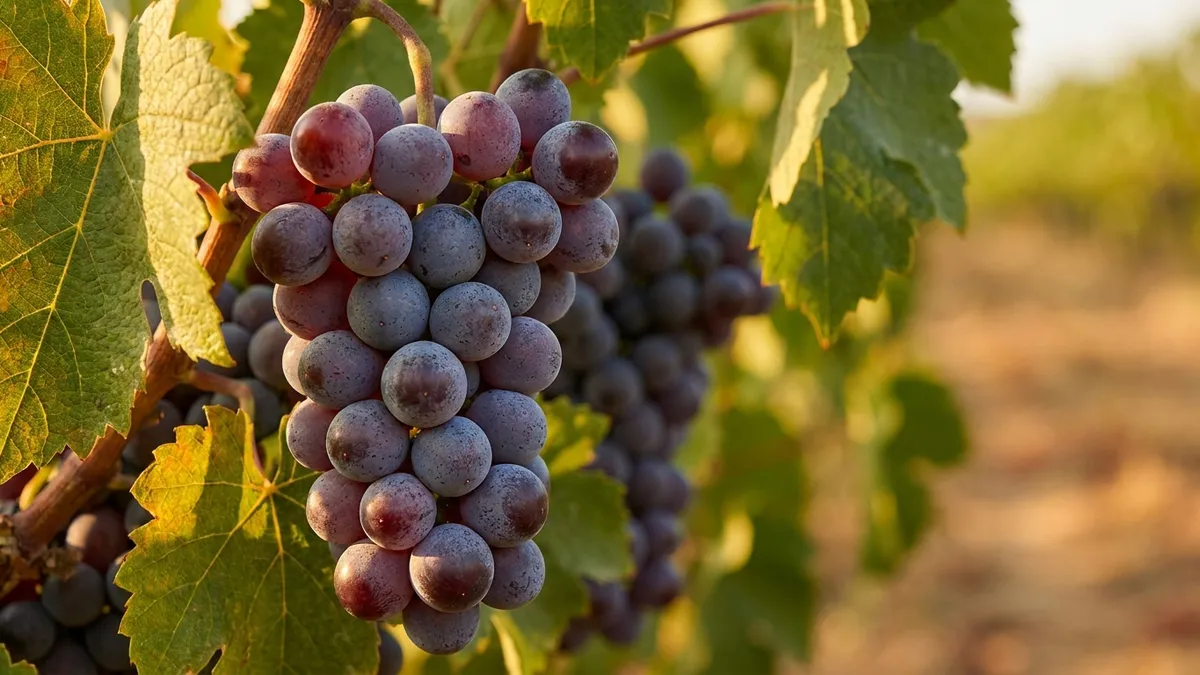
The grape mix explains the rest. A 2002 count put Cinsault at 37.2 per cent of plantings, Carignan at 16.0 per cent, Alicante Bouschet at 10.9 per cent and Grenache at 7.6 per cent. Carignan adds sharper acidity and colour, Alicante Bouschet adds deep purple colour because even its flesh is red, and Grenache adds strawberry and warmth. Cabernet Sauvignon, Merlot and Syrah together made up around 15 per cent by 2005, and they bring the firmer tannin and blackcurrant you find in the more expensive bottles. The Cinsault wine guide and the Carignan wine guide cover both grapes around the world.
Vin gris (gray wine) is the country's signature pink. It is made from red grapes, pressed so fast that the juice picks up only a blush of colour, so it looks like onion skin and tastes dry, light and faintly of strawberry. White wine is a small niche built on Clairette and Muscat, with some Chardonnay, Chenin Blanc and Sauvignon Blanc. Taferielt, a native grape, is multi-purpose: wine, table grapes and raisins.
Which Moroccan Wine Should You Buy First?
Start with a Cinsault-led red or a vin gris, the two styles that make up most of what Morocco sells. They are inexpensive, easy to find in shops that stock the country, and they show the house style more clearly than the Bordeaux-grape bottles.
| Style | Main grapes | Tastes like | Food match | Serve |
|---|---|---|---|---|
| Vin gris | Red grapes such as Cinsault | Very pale, dry, faint strawberry, crisp | Salads, grilled fish, sweet-spiced chicken tagine | Well chilled |
| Rosé | Red grapes such as Cinsault | Deeper pink, riper strawberry and cherry | Merguez, grilled vegetables, mezze | Well chilled |
| Everyday red | Cinsault, Carignan, Alicante Bouschet | Soft tannin, red cherry, raspberry | Tagine with prunes or apricots, couscous | Lightly chilled |
| Firmer red | Syrah, Cabernet Sauvignon, Merlot | More tannin, blackberry, pepper | Charred lamb, kefta, grilled beef | Cool room |
| Crémant de l'Atlas | Varies by producer | Bubbles made the Champagne way | Aperitif, olives, fried starters | Well chilled |
| White | Clairette, Muscat, Chardonnay | Light, floral or citrus, rarely oaked | Fish chermoula, lemon chicken | Chilled |
Read the front label for two words. If it says "gris", expect a very pale, dry pink wine made from red grapes. If it names an AOC such as Les Coteaux de l'Atlas, the wine comes from the strictest legal tier, explained in the law section below.
If the back label lists Syrah or Cabernet Sauvignon first, expect more grip and darker fruit than the Cinsault house style. Serving temperatures for every style sit in the wine serving temperature chart, and the rosé wine guide places vin gris among the world's pink wines.
What Food Goes With Moroccan Wine?
Moroccan reds and vin gris suit spiced, slow-cooked food, because soft tannin does not fight chilli or sweet dried fruit. High tannin tastes harsher next to spice and bitter next to sugar, and most Moroccan reds have little of it.
Match the wine to the strongest thing on the plate:
- Sweet spice (tagines with prunes, apricots, honey or cinnamon): a cold vin gris or a lightly chilled Cinsault red, because low tannin does not turn bitter against the sugar.
- Chilli heat (harissa, spicy merguez): a gris or rosé around the lower end of the alcohol range, because heat makes alcohol burn.
- Fat and char (grilled lamb chops, kefta skewers): a Syrah or Carignan-heavy red, because the fat softens its grip and the char meets its pepper.
- Lemon and herbs (chermoula fish, chicken with preserved lemon): a crisp white or gris, because the acidity keeps pace with the lemon.
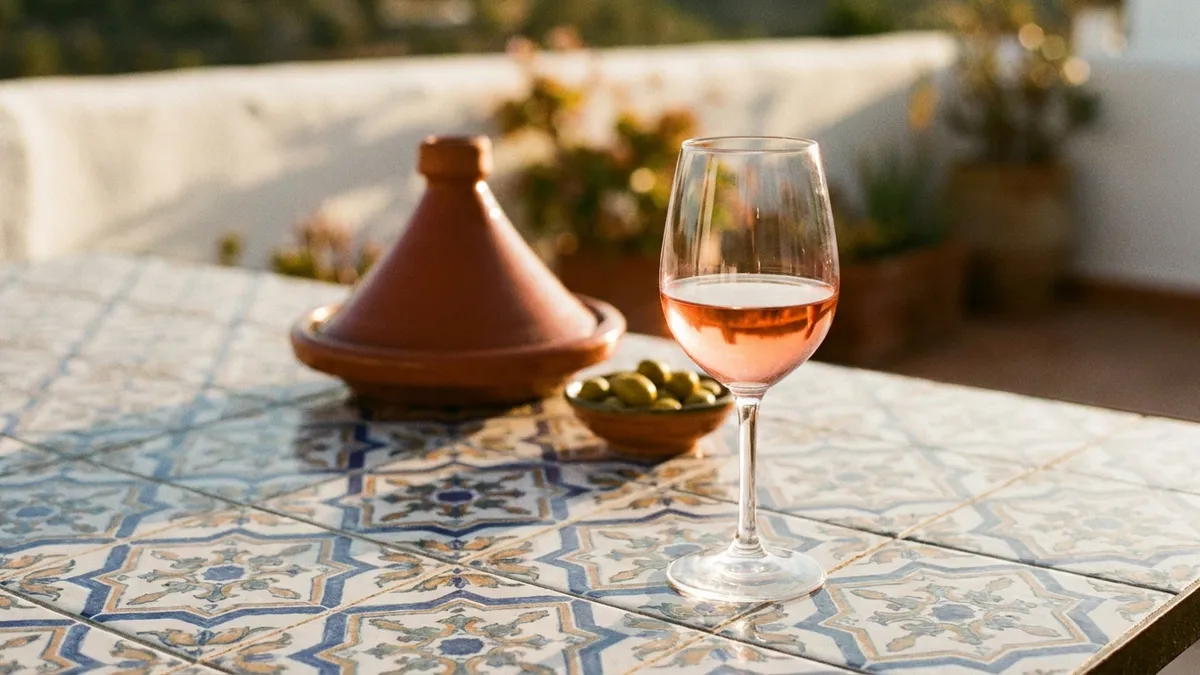
If the dish is sweet or hot, pick the paler, softer wine; if it is charred meat, pick the firmer red. Grenache-based reds also handle ras el hanout and preserved lemon well, and the Grenache wine guide lists more dishes. For the principles behind these picks, see wine with spicy food, wine with lamb and wine with Middle Eastern food.
Can You Buy and Drink Wine in Morocco as a Visitor?
Yes, in supermarkets and in restaurants that cater to visitors, but the law restricts sale to Muslim customers and supply tightens during Ramadan. Making wine is legal. Selling it is the part the law controls, and the rules shape where a visitor can find a glass.
In practice, visitors find wine in the alcohol sections of some supermarkets in larger cities, in hotels, and in restaurants that serve an international clientele. Many traditional restaurants, cafés and small shops do not serve alcohol at all. The Moroccan wine page on Wikipedia describes the law as restricting sale to Muslim customers, and enforcement varies.
During Ramadan and other Islamic holidays, alcohol is generally not available, except in some outlets aimed mainly at non-Muslims. If you travel during Ramadan, plan to drink wine at your hotel or at a restaurant that serves tourists, and do not expect to find it in shops. Drink discreetly and never in the street.
What Are Morocco's Wine Regions?
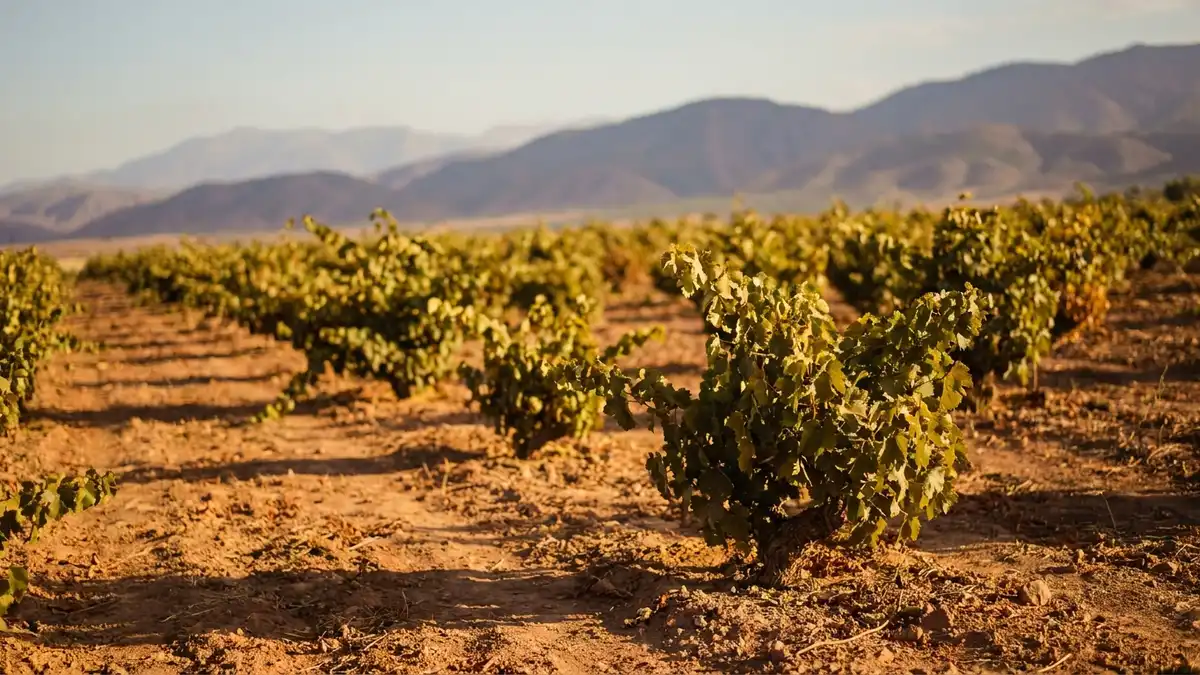
Morocco has five wine regions holding 14 AOG zones, and the best sites are cooled by the Atlantic or by altitude in the Atlas foothills. A warm climate makes riper, softer and stronger wine, and a cool climate makes tarter, lighter wine. Morocco's winemakers look for the cooler pockets inside a hot country.
The five regions and their AOG zones:
- The Eastern Region, near the Algerian border: Beni Sadden, Berkane and Angad.
- Meknès/Fès, on the inland plateau below the Middle Atlas: Guerrouane, Beni M'Tir, Saïs and Zerhoun.
- The Northern Plain: Gharb (also spelled Rharb).
- Rabat/Casablanca, the Atlantic belt: Chellah, Zemmour, Zaër, Zenata and Sahel.
- El Jadida: Doukkala.
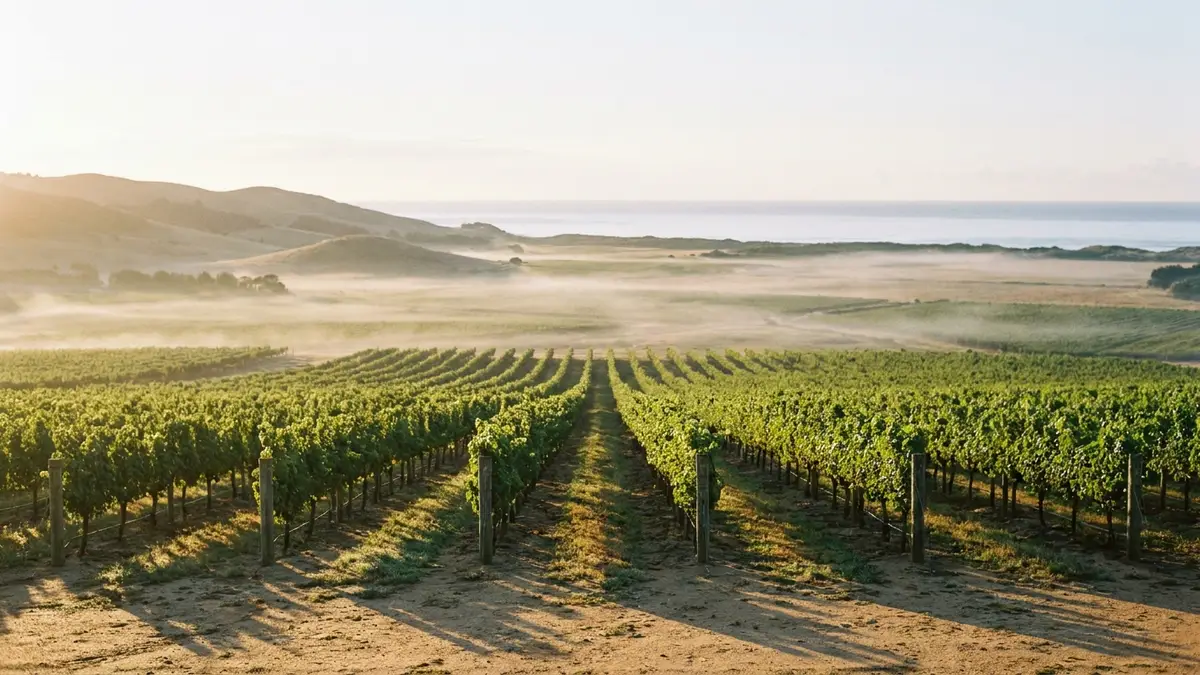
Wikipedia's overview credits Morocco with strong natural potential for quality wine, because of its high mountains and the cooling influence of the Atlantic. The Meknès/Fès zones gain freshness from height. The Rabat/Casablanca zones gain it from sea air, which keeps nights cooler and holds acidity in the grapes. The climate and wine flavour guide explains why a few degrees change the taste, and the wine regions hub maps other countries the same way.
How Does Moroccan Wine Law Work? AOG vs AOC
Morocco has two tiers: 14 broad AOG zones set in 1977, and a short list of stricter AOCs added from 1998. An appellation is a protected place name on the label, and the tier tells you how tightly that place is defined.
The AOG tier, Appellation d'Origine Garantie, covers the 14 zones listed above. The name guarantees where the grapes grew. AOG is not AOC: the AOC tier, Appellation d'Origine Contrôlée, is the narrower and stricter layer placed on top. The what is an appellation explainer covers how these systems work in general.
The AOC ladder, in order:
- Les Coteaux de l'Atlas (1998), the first Moroccan AOC, in the Atlas foothills.
- Crémant de l'Atlas (2009), for sparkling wine. Crémant is the French term for sparkling wine made the Champagne way, with a second fermentation in the bottle; the crémant wine guide explains the method.
- Côtes de Rommani (2014).
- Côtes de Sebaa Ayoun and Hauts Plateaux de Meknès (both 2022).
Five AOCs in a quarter century is slow growth. If you see one of these names on a label, you are holding wine from Morocco's most closely defined vineyards.
Why Did Morocco's Wine Industry Rise, Fall and Return?
French planting built it, independence broke its export market, and state leases to foreign firms rebuilt it from the 1990s. That history is why a Moroccan label reads in French, why the grapes come from southern France, and why so much of the wine is soft red made for volume.
The push came from Europe. From 1875 phylloxera, a root-eating aphid, destroyed vineyards across Europe, and French growers looked to North Africa for new land. Wine ships sailed from Casablanca to Europe from 1905, and around 80,000 hectares were under vine before the First World War. The French protectorate ran from 1912 to 1956. A 1948 trade deal let 1 million hectolitres of Moroccan wine into France duty-free every year, and production passed 3 million hectolitres in the 1950s. Cinsault and Carignan were planted for that bulk trade, because they give large crops in hot, dry conditions.
Independence came on 2 March 1956. Sources disagree on how many vines Morocco had then: English Wikipedia gives 55,000 hectares and French Wikipedia about 70,000, so a range of 55,000 to 70,000 hectares is the safer answer. What is clear is the fall that followed. When France cut the duty-free quotas, exports dropped from 1.7 million hectolitres in 1959 to 700,000 in 1968.
The state stepped in. SODEA, a state agricultural company created in 1972, took over the vineyard estate. By the early 1990s Morocco had about 40,000 hectares of vines, but only 13,000 hectares for wine; by 2005 wine grapes covered 10,700 hectares. From the 1990s SODEA leased vineyards to major Bordeaux firms, and plantings of Cabernet Sauvignon, Merlot and Syrah grew. By 2005 a Moroccan brand from one of those groups was the best-selling foreign wine in France.
Is Moroccan Wine Worth Trying?
Yes, as an inexpensive way to taste Cinsault and vin gris from a warm Mediterranean-style climate. Most bottles are soft everyday wine at modest prices. If you want to trade up, look for a label carrying one of the five AOC names, the strictest tier Morocco has.
It also teaches a useful skill: spotting what a warm climate and a low-tannin grape do in the glass. Cinsault is also a key grape in Lebanon, southern France and South Africa, so a Moroccan red is a cheap first look at all of them.
Tonight, pour a vin gris or a Cinsault red next to a spiced chicken or a tagine. Photograph the label in the Sommy app, and its AI-guided tasting mode walks you through look, smell and taste and saves the notes to your tasting journal. Then taste the wine before and after a bite, and write down whether the spice makes it taste sweeter or harsher.
Sources
Frequently Asked Questions
Does Morocco make wine?
Yes. Morocco produced about 400,000 hectolitres of wine in 2013 and was then the second-biggest wine producer in the Arab world after Algeria. Wine is made legally, from vineyards planted mostly during French rule, and most of it is drunk inside Morocco. One estimate puts output at 34 to 35 million bottles a year, about 30 million of them for the home market.
What grapes are grown in Morocco for wine?
Cinsault is the leading grape, close to 40 per cent of plantings in 2005. Carignan, Alicante Bouschet and Grenache follow among the traditional reds, and Cabernet Sauvignon, Merlot and Syrah together made up around 15 per cent. White grapes are rare: Clairette and Muscat are the traditional ones. Taferielt is a native grape used for wine, eating and raisins.
What is Moroccan vin gris?
Vin gris, or gris, is a very pale pink wine made from red grapes whose juice spends almost no time on the skins, so it picks up only a blush of colour. In Morocco it comes from red grapes such as Cinsault. Together with rosé it made up almost 20 per cent of Moroccan wine in 2005. Serve it cold with salads, grilled fish or sweet-spiced tagines.
Can tourists buy wine in Morocco?
Yes. Wine is sold in some supermarkets and served in restaurants and hotels that cater to visitors, mostly in the larger cities. The law restricts the sale of alcohol to Muslim customers, and supply tightens during Ramadan and other Islamic holidays, when outlets aimed mainly at non-Muslims are the exception. Plan ahead during Ramadan and drink at your hotel or a tourist-focused restaurant.
Is Moroccan wine good quality?
Most of it is good-value everyday wine: soft, fruity reds and pale gris at modest prices. The best sites are cooled by Atlantic air or by altitude in the Atlas foothills, and a small AOC tier has grown since 1998, with two new appellations in 2022. Expect good value and a clear taste of Cinsault rather than rare collector wines.
What is the difference between AOG and AOC in Moroccan wine?
AOG, Appellation d'Origine Garantie, is the broad tier: 14 delimited zones set in 1977 across five regions. AOC, Appellation d'Origine Contrôlée, is the stricter tier layered on top. Les Coteaux de l'Atlas became the first Moroccan AOC in 1998, followed by Crémant de l'Atlas in 2009, Côtes de Rommani in 2014 and two more in 2022.
What food goes with Moroccan wine?
Moroccan reds and gris suit Moroccan food. A soft Cinsault red or a cold gris handles sweet-spiced tagines with prunes, apricots or cinnamon, because low tannin does not clash with sugar and spice. Charred lamb and merguez want a firmer red with Syrah or Carignan in the blend, because their fat and char soften its grip.
Sommy Team
LinkedInFounder & Wine Educator
The Sommy Team is building the world's most approachable wine education app, helping beginners develop real tasting skills through structured courses and AI-guided practice.