Commandaria Wine: The Oldest Wine Name Still on a Label

By the Sommy Team — AI-assisted, human-edited.
Updated Oct 1, 2026
Contents (9)
- What Is Commandaria Wine, in One Paragraph?
- How Is Commandaria Made, and Is It Fortified?
- How Does Commandaria Compare With Port, PX and Vin Santo?
- What Does Commandaria Taste Like?
- How Should You Serve and Pair Commandaria?
- How Do You Pick a Bottle?
- Which Grapes and Villages Make Commandaria?
- Is Commandaria Really the Oldest Named Wine?
- Why Did UNESCO List Commandaria in 2025?
TL;DR
Commandaria is a sweet amber wine from 14 villages in the Troodos foothills of Cyprus. Xynisteri and Mavro grapes dry in the sun for 7 to 10 days, ferment to roughly 14 to 15% alcohol, may be fortified up to 20%, and age at least two years in oak. Its name dates to the 12th century.
Commandaria wine is an amber sweet wine made from grapes dried in the Cypriot sun. Its name comes from a 12th-century crusader estate, which makes it the oldest wine name still in production. A small glass tastes of dried apricot, fig and orange zest, and the label tells you whether spirit was added.
What Is Commandaria Wine, in One Paragraph?
Commandaria is a PDO (Protected Designation of Origin, a legally protected place name) sweet wine from 14 villages on the southern slopes of Cyprus's Troodos mountains. It is made from two native grapes, white Xynisteri and red Mavro, picked late and dried in the sun for 7 to 10 days. That drying pushes the juice to 390 to 450 grams of sugar per litre. Yeast ferments it to roughly 14 to 15% alcohol and stalls, leaving around 200 g/l of sugar. Producers may add grape spirit up to 20%. The wine then spends at least two years in oak barrels before release.
How Is Commandaria Made, and Is It Fortified?
Sometimes. Every Commandaria starts as sun-dried grapes fermented until the yeast gives up, and some producers then add grape spirit. A common belief says Commandaria is always fortified (spirit added, about 15 to 22% alcohol), like Port. Not all are: some get their strength comes only from the sugar the sun left in the grapes.
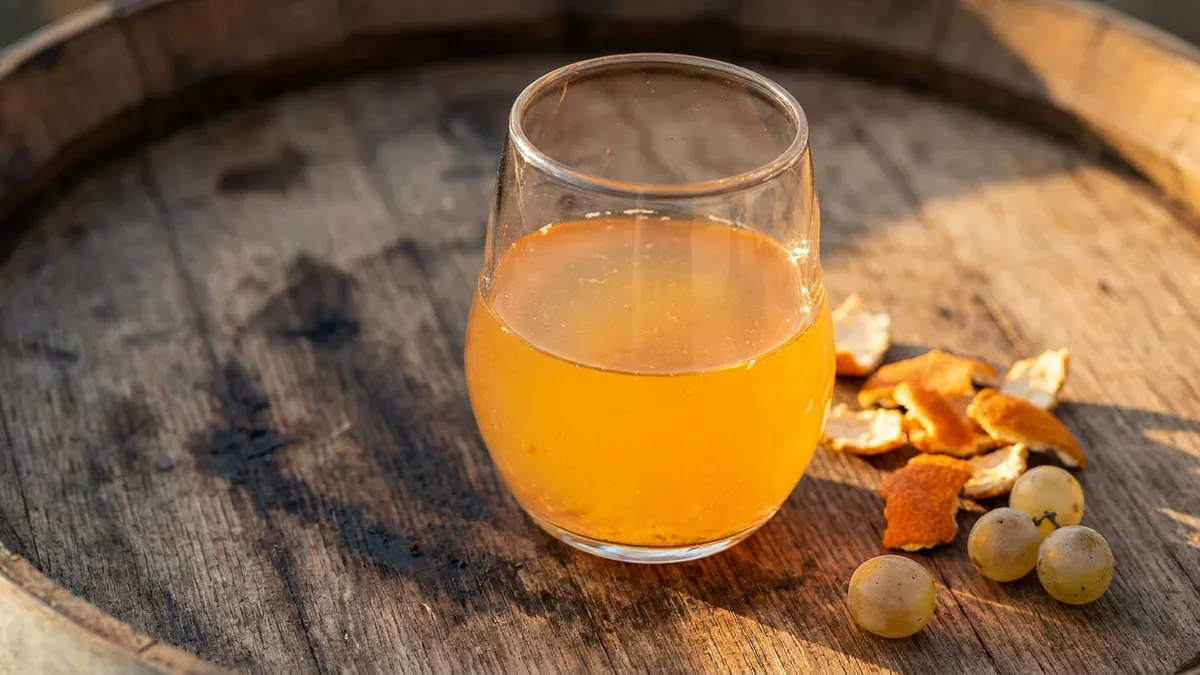
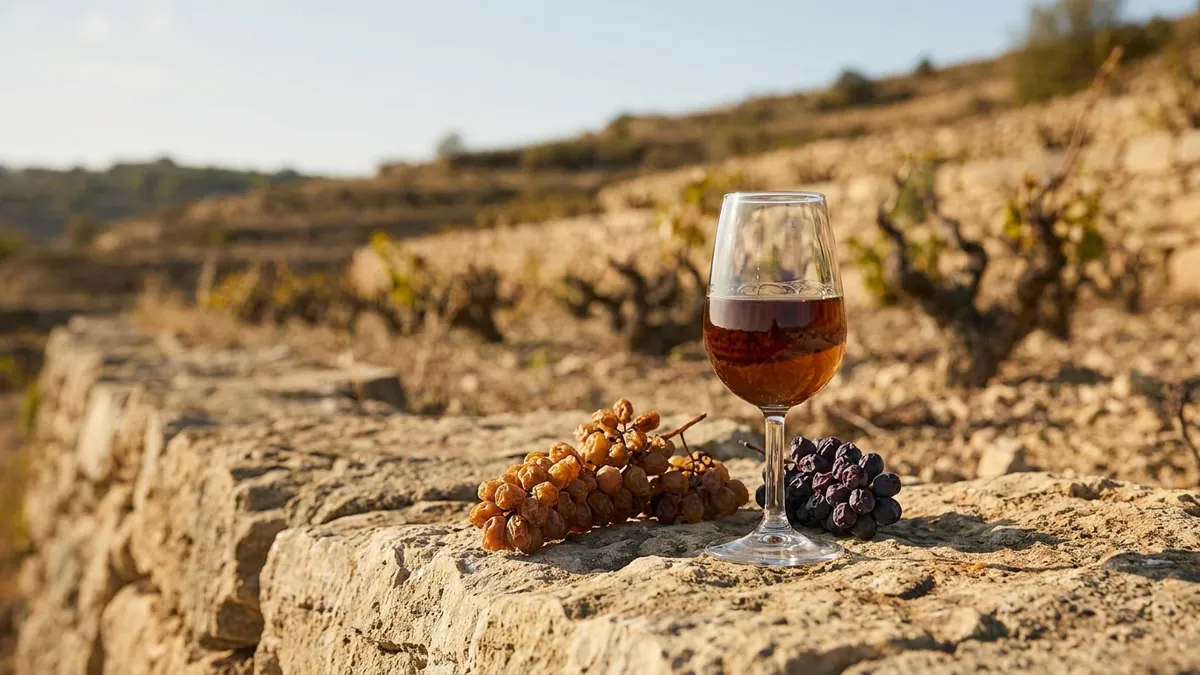
The grapes are picked late and spread out to dry for 7 to 10 days. Water evaporates from the berries while the sugar stays, so the juice reaches 390 to 450 g/l. The same idea drives the Italian wines in our straw wine and passito explainer.
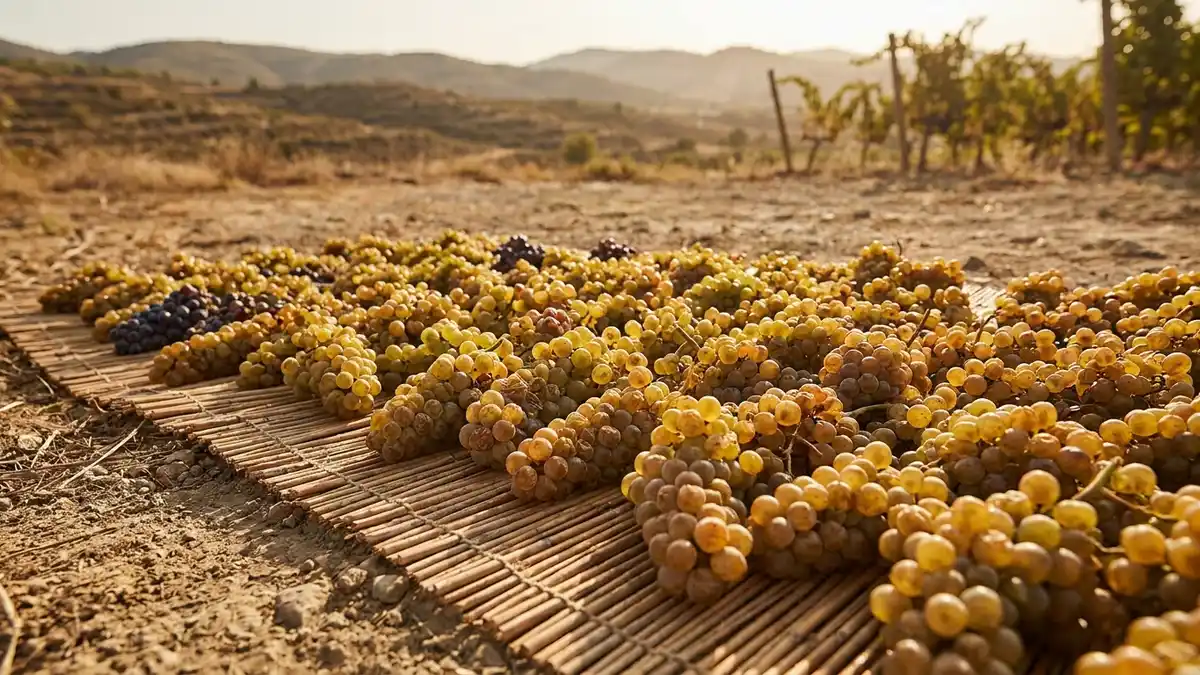
Yeast struggles in juice that sweet. It converts sugar to alcohol until it reaches roughly 14 to 15% and then stops, with about 200 g/l of residual sugar (grape sugar left unfermented) still in the wine. Producers who want a stronger wine add grape spirit at this point, up to a legal ceiling of 20% alcohol. Our guide to tasting residual sugar shows how to judge that sweetness in the glass.
Then comes the wood. The law sets a minimum of two years in oak (barrels that add vanilla, toast and spice, and let in a little air). Slow contact with air through the barrel turns fresh apricot toward marmalade and nuts.
How Does Commandaria Compare With Port, PX and Vin Santo?
Commandaria sits between Vin Santo and Pedro Ximénez. It is less syrupy than PX, often sweeter and stronger than Vin Santo, and unlike Port it gets its sugar from the sun rather than from stopping fermentation early. Commandaria and Vin Santo can both reach the bottle with no added spirit.
| Wine | Where the sugar comes from | Alcohol | Sweetness | Pick it when |
|---|---|---|---|---|
| Commandaria (Cyprus) | Xynisteri and Mavro dried in the sun 7 to 10 days | About 14 to 15% natural, up to 20% fortified | Around 200 g/l | You want dried apricot and orange with enough acidity to finish a meal |
| Port (Portugal) | Red Douro grapes; spirit added mid-fermentation | 19 to 22% | Sweet, half the grape sugar kept | You want dark berry fruit with chocolate or blue cheese |
| Pedro Ximénez (Spain) | PX grapes sun-dried to raisins on mats | 15 to 17% after fortifying | 350 to 500 g/l | You want the stickiest pour, over vanilla ice cream |
| Vin Santo (Tuscany) | Malvasia and Trebbiano dried indoors for weeks or months | 11 to 17%, never fortified | Bone dry to very sweet | You want to dunk almond biscuits |
If you love Pedro Ximénez but find a whole glass too heavy, buy Commandaria. If you want berry fruit, the Port wine guide is the better shelf. Tuscany's version is covered in the Vin Santo guide.
What Does Commandaria Taste Like?
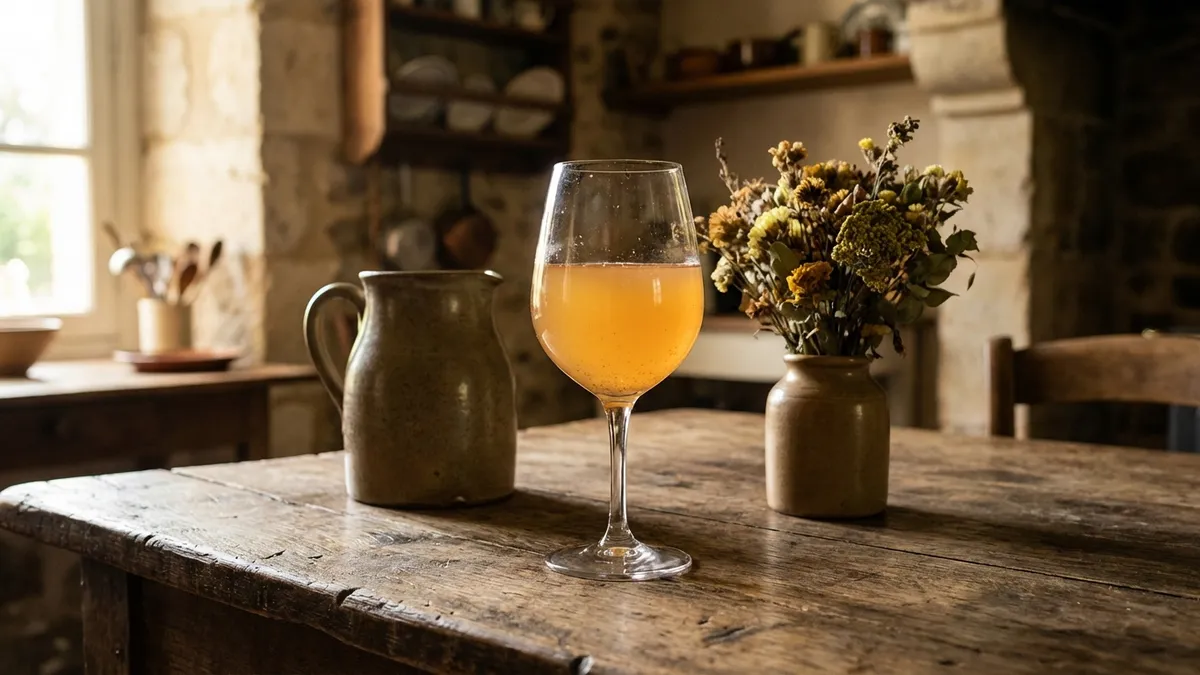
Like dried apricot, fig and orange zest when young, moving toward marmalade and roasted nuts as oak age builds. The colour runs from deep gold to mahogany, darker with each year in barrel. The sugar is obvious, but acidity keeps the finish from sticking.
Sweetness hits first, at the tip of the tongue. Acidity (the tartness that makes your mouth water) follows along the sides, and in Commandaria it comes mainly from Xynisteri, a white grape. That is why it feels lighter than its sugar figure suggests. The older nutty and caramel notes are tertiary aromas (flavours that come from age rather than from the grape), the same family found in aged tawny Port.
The fortified bottles carry a little more warmth in the throat. The method in how to taste fortified wine works for both kinds.
How Should You Serve and Pair Commandaria?
Lightly chilled, in small pours, after dinner, with salty cheese, nuts or a dessert less sweet than the wine. Half an hour in the fridge from room temperature gets it cool without numbing the fruit. Pour about 50 ml into a small white-wine glass, and keep the opened bottle corked in the fridge.
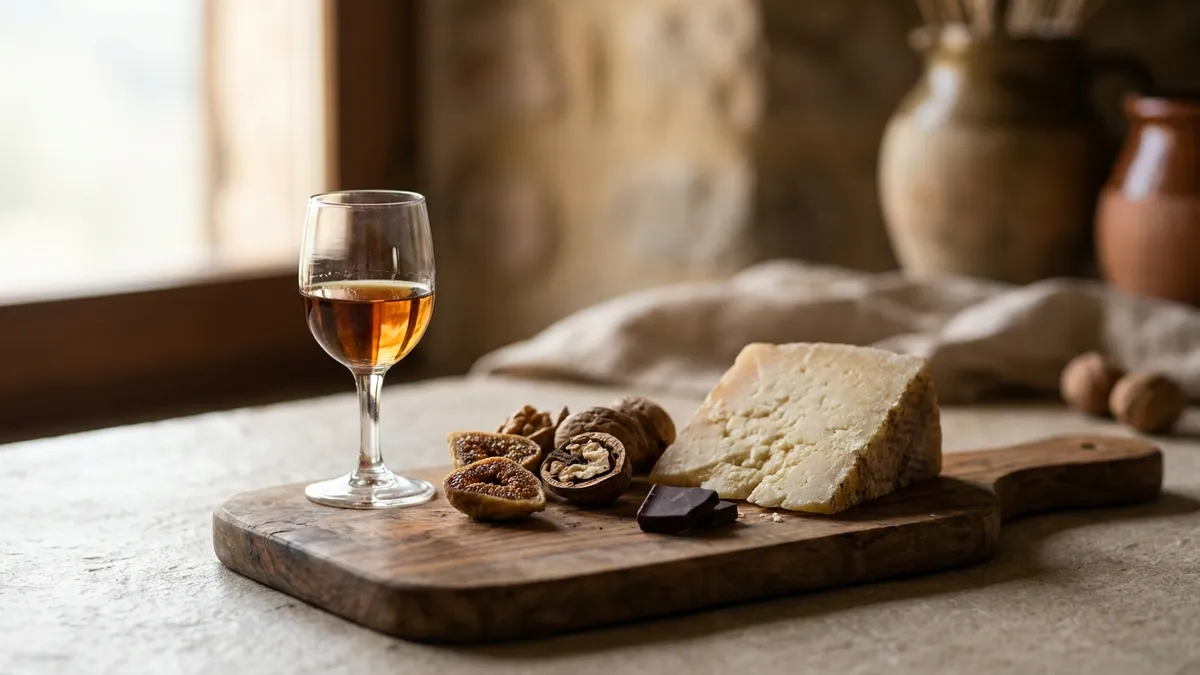
Pair on salt, fat and bitterness, because each one cuts the sugar:
- Hard, salty cheese. Aged sheep or goat cheese makes the wine taste fruitier, and the wine makes the cheese taste less salty. Our wine and cheese pairing guide explains the salt-sugar swap.
- Walnuts and almonds. Their bitter skins pick up the roasted-nut notes from oak.
- Dried figs, dates and fruit tarts. They echo the dried-apricot side of the wine.
- Dark chocolate above 70%. The bitterness keeps the pairing from turning cloying.
If the dessert is sweeter than the wine, the wine will taste thin and sour; swap the dessert for cheese and nuts. Our wine serving temperature chart places Commandaria with the other sweet wines.
How Do You Pick a Bottle?
Read the label for one of three things: a vintage year, no year at all, or the word solera. Commandaria is made in all three styles, and each one tells you roughly how old the wine is and whether fresh fruit or nutty age will lead the glass.
- Vintage. One harvest year on the label. Closer to the minimum age, it shows more fresh apricot and orange.
- Non-vintage. A blend of years for a steady house style, usually the cheapest entry point.
- Solera. A solera (a stack of barrels where young wine tops up older wine, so each bottle holds a share of very old wine) gives more nuts, caramel and darker colour.
If the label shows a recent vintage, expect fruit first; if it says solera or names a long ageing period, expect marmalade and walnuts. The alcohol figure tells you the rest: 14 to 15% is likely unfortified, anything near 20% has had spirit added.
Which Grapes and Villages Make Commandaria?
Two native grapes, mostly white Xynisteri with some red Mavro, grown on unirrigated bush vines (free-standing vines pruned into a low goblet, with no wires) in 14 designated villages. Xynisteri usually makes up 85 to 95% of the blend, which is why the wine is amber rather than red.
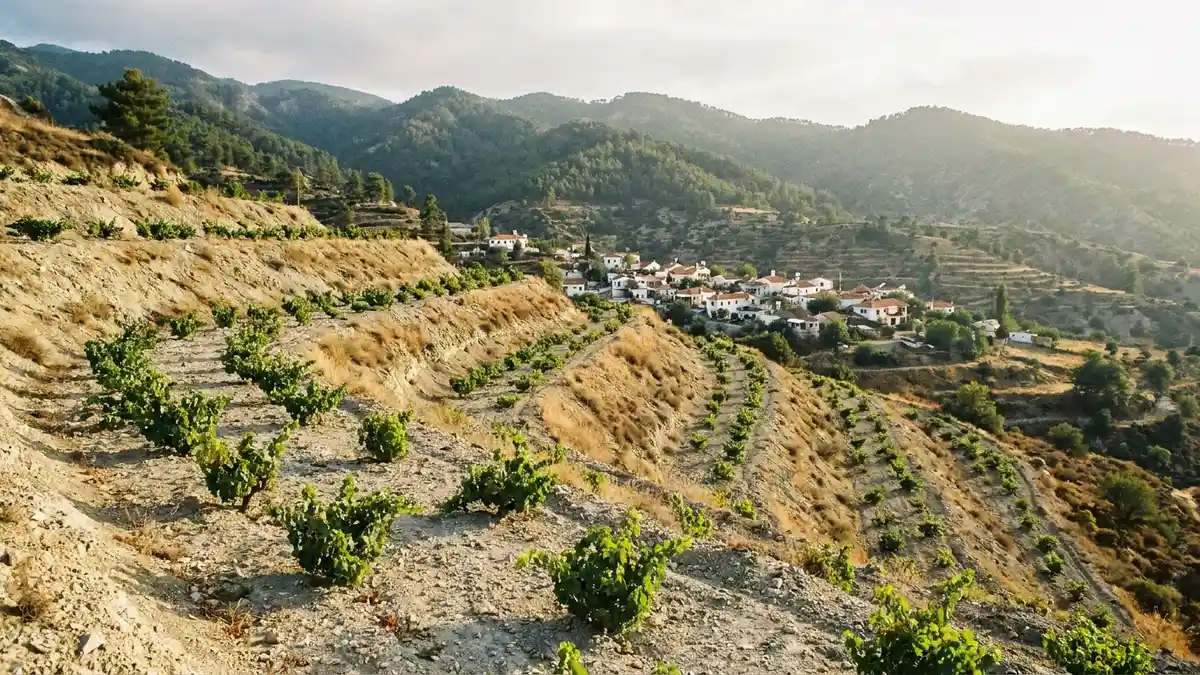
Each grape has a job. Xynisteri brings the acidity and the apricot. Mavro, picked at higher sugar, adds colour and a darker raisin edge. Both are local to the island; our list of the oldest grape varieties covers other ancient grapes still in use.
The villages sit on the southern slopes of the Troodos mountains, north of Limassol. Without irrigation the vines push deep roots and give small crops of concentrated fruit. Grapes must be grown and fermented inside the zone, but the oak ageing may happen elsewhere in Cyprus under official control.
Is Commandaria Really the Oldest Named Wine?
The name is the oldest wine name still in use; the idea that the wine itself is ancient is tradition, not proof. The name is traced to the crusader knights of the late 12th century. The sun-dried wine before it rests on an ancient poem and local belief, and two famous stories are legends.
| Claim | Date | What it rests on |
|---|---|---|
| An ancient sun-dried sweet wine | Around 700 BC | Tradition: the poet Hesiod describes drying grapes in the sun ten days and nights, without naming Cyprus; the link to Commandaria is commonly believed, not proven |
| The name 'vin de Commanderie' | 12th century | History: crusader knights exported it from their estate near Kolossi, La Grande Commanderie |
| Richard the Lionheart's praise | 12th century | Legend: 'the wine of kings and the king of wines', said to be spoken at his wedding in Limassol |
| Winning the Battle of the Wines | 13th century | Legend: a French tasting won by a sweet Cypriot wine believed to be Commandaria |
| Protected name and 14 villages | 2 March 1990 | Law: Cypriot legislation |
The Knights Templar, and later the Knights Hospitaller, held an estate near Kolossi called La Grande Commanderie, and the wine they shipped to Europe took the estate's name. That crusader-era name is what sits on bottles today. The Hesiod passage resembles the drying method still in use, which is why the tradition is strong, but no document connects his wine to theirs.
Why Did UNESCO List Commandaria in 2025?
UNESCO listed the making of Commandaria as intangible cultural heritage (skills and customs that people keep alive by practising them) in December 2025. The listing covers late harvest, sun-drying and oak ageing in the Troodos villages, and serving the wine at weddings, funerals and religious ceremonies.
UNESCO notes that the skills pass down informally, through farm work, family events and festivals.
The listing changes no production rule, so the label reads the same as before. More dried-grape and fortified styles sit together in the dessert wine guide and the wine styles hub.
The Sommy app at sommy.wine has bite-sized wine courses and an AI-guided tasting mode that starts from a photo of the label. Pour a small glass of Commandaria tonight at fridge-cool, set a walnut and a slice of hard cheese beside it, and taste the wine before and after each.
Sources
Frequently Asked Questions
What is Commandaria wine?
Commandaria is a protected sweet wine from Cyprus. It is made in 14 designated villages on the southern slopes of the Troodos mountains from two native grapes, white Xynisteri and red Mavro. The grapes are dried in the sun before fermentation, and the wine must age at least two years in oak barrels. It tastes of dried apricot, fig and orange zest.
Is Commandaria the oldest wine in the world?
Its name is the oldest wine name still in production, dating to the crusades of the 12th century, when the knights' estate called La Grande Commanderie exported 'vin de Commanderie'. The claim that the wine itself goes back to a sun-dried wine described around 700 BC is a strong local tradition, but no record proves an unbroken line between the two.
Is Commandaria a fortified wine?
It can be, but it does not have to be. The sun-dried grapes ferment until the yeast stops at roughly 14 to 15% alcohol, with plenty of sugar left. Some producers bottle it at that strength. Others add grape spirit, which can take the wine to a maximum of 20%. The label's alcohol figure tells you which you have.
What does Commandaria taste like?
Young Commandaria smells of dried apricot, fig and orange zest. With longer time in oak it moves toward marmalade, roasted nuts and caramel. It is clearly sweet, with residual sugar around 200 grams per litre, but the Xynisteri grape keeps enough acidity to stop it feeling syrupy, especially next to Pedro Ximénez.
How should you serve Commandaria?
Serve it lightly chilled, after about half an hour in the fridge, in a small glass with a pour of about 50 ml. It suits the end of a meal, either on its own or with salty hard cheese, walnuts, dried figs or a dessert that is less sweet than the wine. If the dessert is sweeter than the wine, the wine will taste thin and sour.
How is Commandaria different from Port?
Port gets its sweetness by adding grape spirit partway through fermentation, which kills the yeast while half the sugar remains, and it is made from red Douro grapes at 19 to 22% alcohol. Commandaria gets its sugar from sun-drying mostly white Xynisteri grapes, ferments on its own first, and fortification is optional. It tastes of apricot and orange rather than dark berries.
Sommy Team
LinkedInFounder & Wine Educator
The Sommy Team is building the world's most approachable wine education app, helping beginners develop real tasting skills through structured courses and AI-guided practice.