Claret Wine: Three Meanings Side by Side, and What to Buy

By the Sommy Team — AI-assisted, human-edited.
Updated Nov 3, 2026
Contents (8)
- What Does Claret Mean, in One Paragraph?
- Is Claret the Same as Red Bordeaux?
- Is Claret the Same as Clairet?
- What Does Claret Taste Like, and Is It Dry?
- How Do You Buy Claret Without Overspending?
- How Should You Serve Claret, and With What Food?
- Why Did the British Call It Claret?
- Why Is Claret Also a Colour?
TL;DR
Claret is the British English name for dry red Bordeaux, a blend led by Cabernet Sauvignon and Merlot. The word comes from clairet, the pale wine England bought from Bordeaux for centuries. Today's Bordeaux Clairet is a dark rosé, so read the label: claret is red, Clairet is pink.
Claret is the British name for dry red Bordeaux. On a London wine list, in a Victorian novel or on a supermarket shelf, it points to one place: red blends from Bordeaux in south-west France, led by Cabernet Sauvignon and Merlot. It does not mean any red, and it is not Clairet, Bordeaux's dark rosé.
What Does Claret Mean, in One Paragraph?
Claret is a name used mainly in British English for red Bordeaux. Its meaning has narrowed to a dry, dark red Bordeaux wine. The word comes from the French clairet, a pale wine that was Bordeaux's most common export until the 18th century. Inside the EU, "claret" is a protected name describing red Bordeaux. The French long used it only on wine made for export. Today's Bordeaux Clairet survives as a rare dark rosé.
| Where you see it | What it means | What to do |
|---|---|---|
| A British wine list or menu | A red Bordeaux, dry and medium- to full-bodied | Ask which part of Bordeaux; it tells you firm or soft |
| A bottle label from Bordeaux | Red Bordeaux; since the 2025 vintage, "Bordeaux Claret" is also a light red style | Read the place name to judge the level; chill a Bordeaux Claret |
| A US or Australian label | A Bordeaux-style red blend from elsewhere | Check the back label for the grapes and the region |
| "Bordeaux Clairet" on a label | A dark rosé, not a red | Chill it like rosé and drink it young |
| A novel or an old letter | Red Bordeaux; before about 1600, a pale wine | Picture a dark red after 1700, a pink wine before |
| A paint chart or a boxing report | A dark purplish red; slang for blood | No wine involved |
Is Claret the Same as Red Bordeaux?
Yes, in its proper sense. Inside the EU, "claret" is a protected name that describes red Bordeaux. White Bordeaux, the sweet whites of Sauternes and Bordeaux rosé are never claret. A wine list that offers a "house claret" is offering a red from Bordeaux.
The French label their wine by appellation (a protected place name), so a French bottle sold at home says Bordeaux, Médoc or Saint-Émilion and leaves claret out. The word turns up mostly on generic red Bordeaux made for export, and since the 2025 vintage on an official new style, Bordeaux Claret: a light, low-tannin red made to be served chilled.
Outside Europe the rule loosens. In the United States, "claret" has appeared as a semi-generic label for red wine in the Bordeaux style, and older Australian bottles used it the same way.
If the label says claret but the back label names no Bordeaux appellation, it is a Bordeaux-style blend from somewhere else. The region itself, from its rivers to its 1855 ranking, is mapped in the Bordeaux wine guide.

Quick check
One question on what you just read
A wine label says Bordeaux Clairet. What kind of wine is in the bottle?
Tap an answer to see how you did.
Is Claret the Same as Clairet?
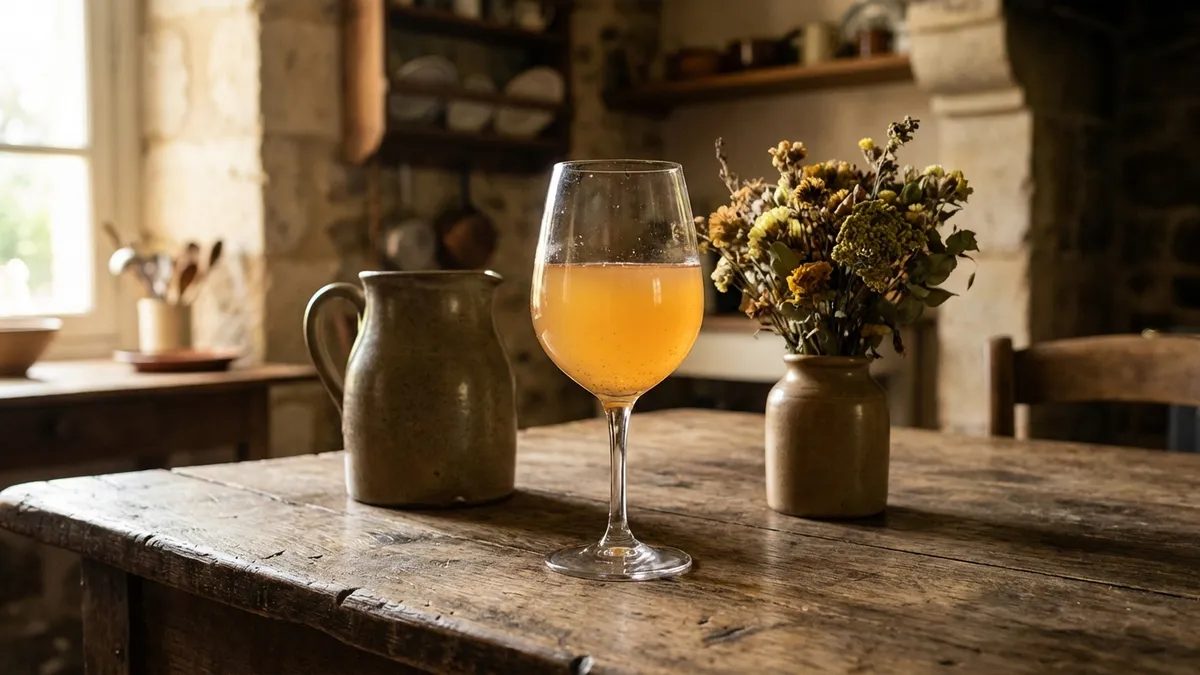
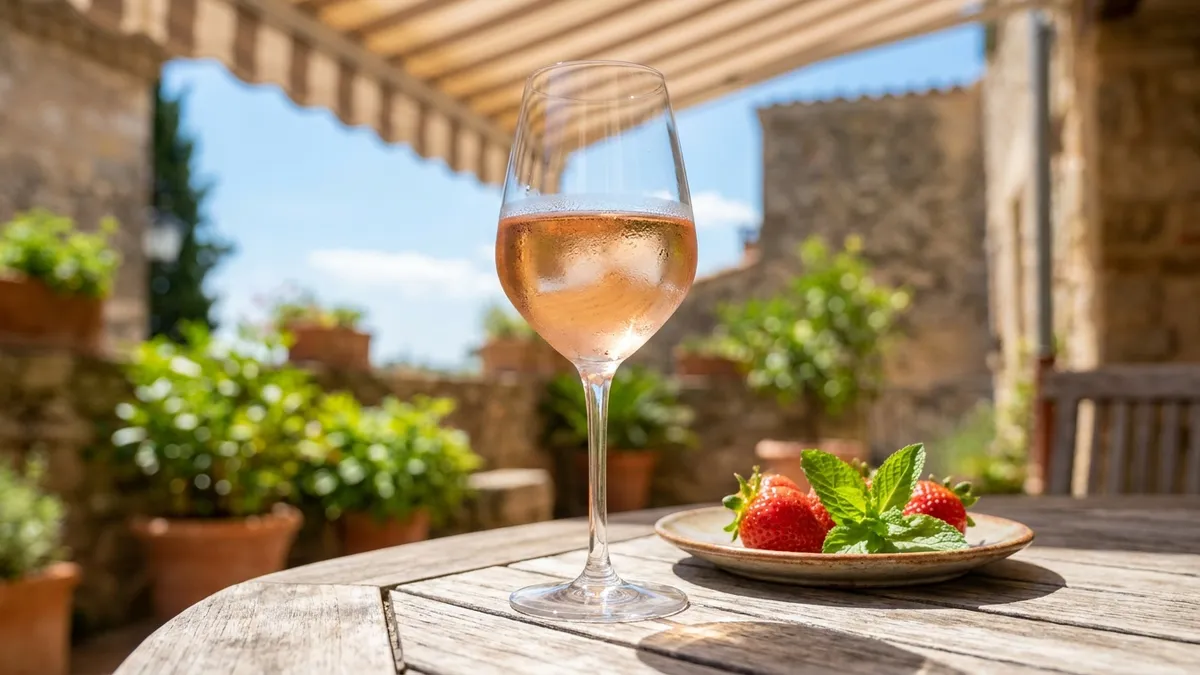
No. Clairet is a dark rosé from Bordeaux, sold as Bordeaux Clairet, while claret is the region's red. Clairet is fuller and deeper in colour than most rosé, close to a light red in the glass, but it is still pink and it is served chilled.
The names share a root, and that is the trap. English claret took its name from the pale clairet Bordeaux shipped for centuries, then kept the name after the wine itself turned dark.
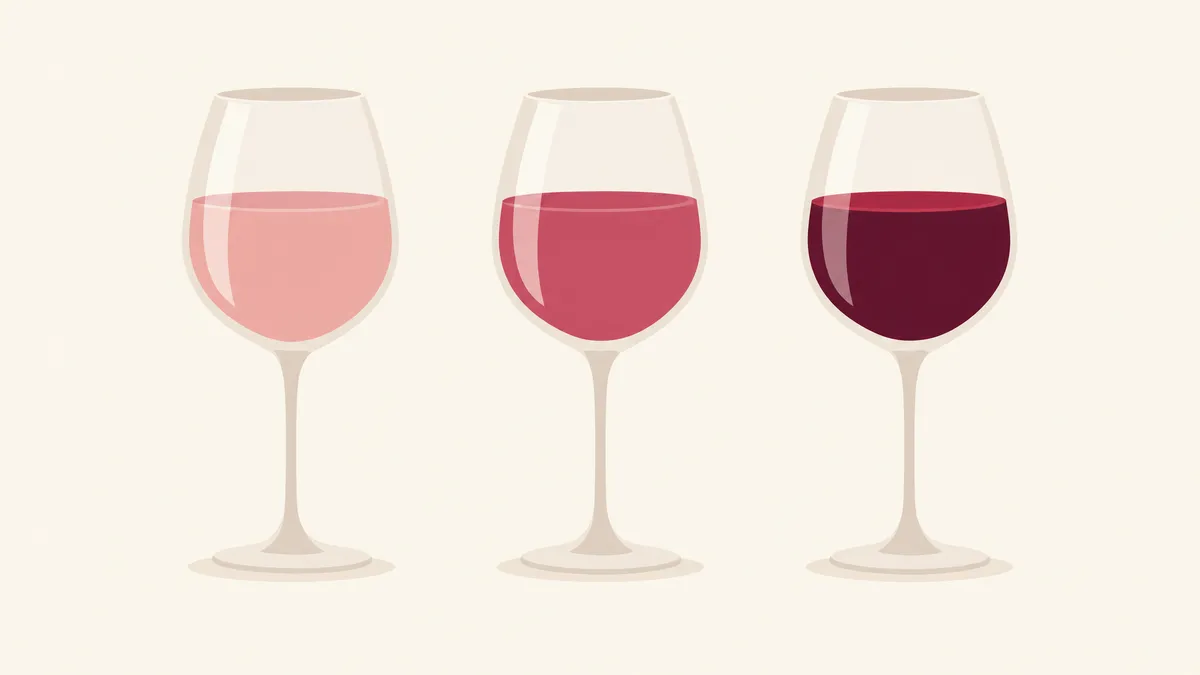
| Claret | Bordeaux Clairet | |
|---|---|---|
| Colour | Dark ruby to garnet | Deep pink, near light red |
| Style | Dry red, medium- to full-bodied | Dry, full-bodied rosé |
| How to spot it | Red Bordeaux; "claret" on British lists and export labels | "Bordeaux Clairet" on the label |
| Serve | Slightly cool, 16 to 18°C | Fridge-cold, like rosé |
| Order it when | Lamb, steak or hard cheese is on the plate | Charcuterie, grilled fish or a warm afternoon |
Clairet suits the same tables as any rosé; the rosé wine guide covers how the colour is made.
What Does Claret Taste Like, and Is It Dry?
Claret is dry, medium- to full-bodied, with firm tannin and fresh acidity. Dry means no sugar you can taste; ripe fruit on the nose is not sweetness. Tannin is the drying grip on your gums, and in claret it comes mostly from the grape skins, thickest in Cabernet Sauvignon.
Bordeaux's six traditional red grapes are Cabernet Sauvignon, Merlot, Cabernet Franc, Petit Verdot, Malbec and Carménère. Most claret leans on the first two, and the balance between them sets the taste. Each grape's role is broken down in Bordeaux blend grapes.
- Cabernet-led claret smells of blackcurrant and cedar, because the grape ripens late on warm gravel and keeps its firm skins. Its tannin dries the gums for several seconds.
- Merlot-led claret tastes of ripe plum, because the grape ripens earlier in cool clay and makes softer, rounder tannin.
- Aged claret turns toward leather, dried leaves and cigar box, because years in bottle soften the tannin and fade the fresh fruit.
Body is weight in the mouth, like skimmed versus whole milk. Claret sits in the middle, with enough acidity (the tartness that makes your mouth water) to taste fresh with food. It is lighter than a ripe Australian Shiraz and heavier than Pinot Noir. The three structural parts are explained in understanding tannins, acidity and body.
How Do You Buy Claret Without Overspending?
Buy by the place name on the label, because the word claret alone says only "red Bordeaux". The narrower the place, the more the grower usually asks, and the longer the wine needs in bottle before its tannin softens. Start at the broad end and move up one step at a time.
- Bordeaux AOC: the broadest name and the usual "claret" on export labels. Fresh and ready to drink.
- Bordeaux Supérieur: the same area under stricter rules. A step up in weight for little more money.
- Côtes de Bordeaux and the Saint-Émilion satellites: Merlot-led, soft and ready younger.
- Médoc and Haut-Médoc: Cabernet-led, firmer, better after a few years.
- A named commune such as Pauillac, Margaux or Pomerol: the top of the price range, often built to age for a decade or more.
If dinner is tonight, buy a Merlot-led name such as a Saint-Émilion satellite or Côtes de Bordeaux. If the bottle will wait two or three years, or a steak is on the menu, buy a Médoc or Haut-Médoc. On a restaurant list, the house claret is usually the cheapest red Bordeaux; if the list names its appellation, judge it on that.
The vintage (the harvest year) counts more here than in sunnier regions, because Atlantic rain changes the quality from one year to the next. The year on a label is decoded in what is wine vintage, and the rest of the label in how to read a wine label.
How Should You Serve Claret, and With What Food?
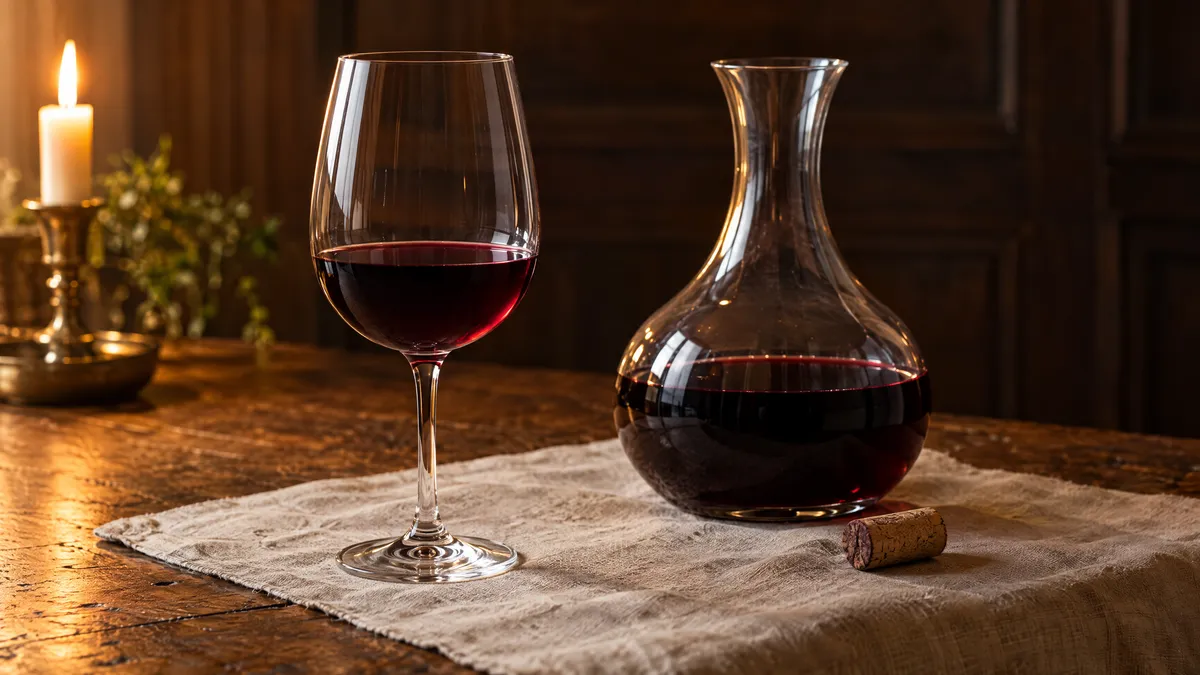
Serve claret slightly cool, at 16 to 18°C, and decant a young one an hour before dinner. A bottle kept in a warm kitchen needs about 20 minutes in the fridge to get there, as the wine serving temperature chart shows for full-bodied reds.
If the claret is young and Cabernet-led, pour it into a jug or decanter an hour ahead, because air softens young tannin. If it is old, stand the bottle upright for a day so the sediment sinks, then pour slowly and stop when the dregs reach the neck. Both jobs are covered in how to decant wine.
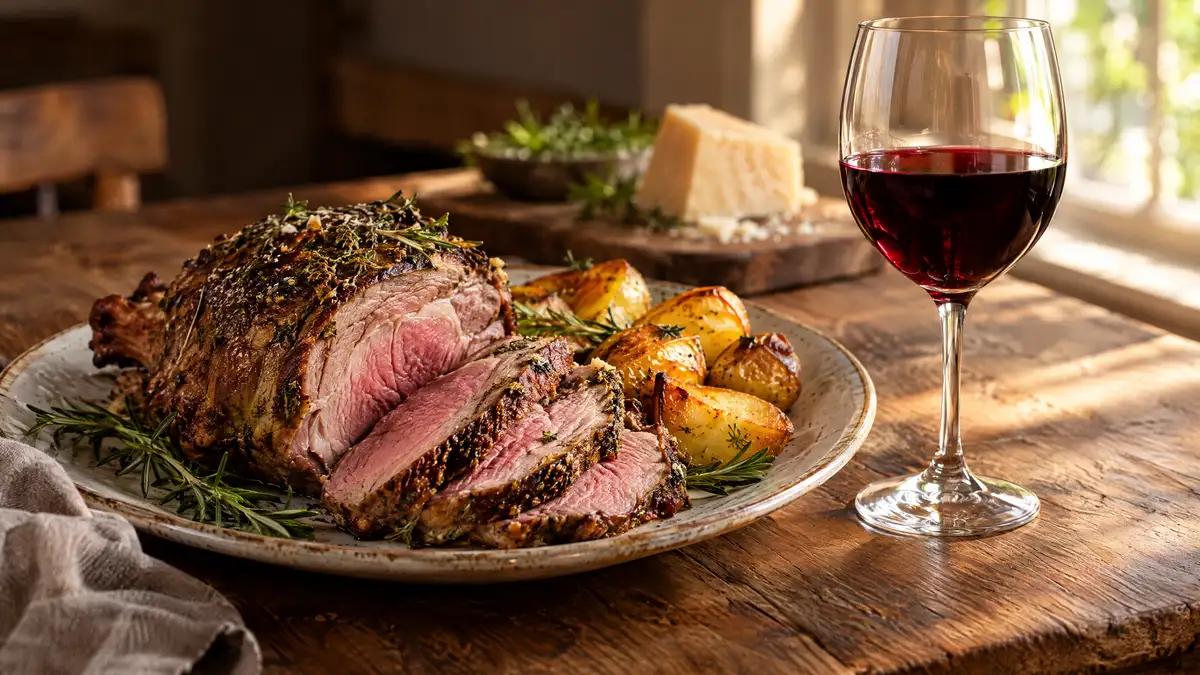
Claret needs fat and protein on the plate. They coat the mouth and soften the tannin, so the fruit tastes riper:
- Roast lamb: the classic British pairing, set out in wine with lamb.
- Steak: a Cabernet-led Médoc meets the char and the fat; cuts and sauces are matched in wine with steak.
- Hard cheese: aged Cheddar or Comté, whose salt and fat tame the grip.
- Roast chicken, duck or mushrooms: choose a Merlot-led claret, whose softer tannin will not swamp them.
If the dish is delicate white fish or carries chilli heat, open a different wine. Tannin makes fish taste metallic, and alcohol makes chilli burn harder.
Why Did the British Call It Claret?
Because Bordeaux belonged to the English crown for three centuries, and the wine England bought there was pale. From 1152 to 1453, its clairet sailed north to English ports. The name stayed after the wine turned dark, which is why claret on a British label still means red Bordeaux.
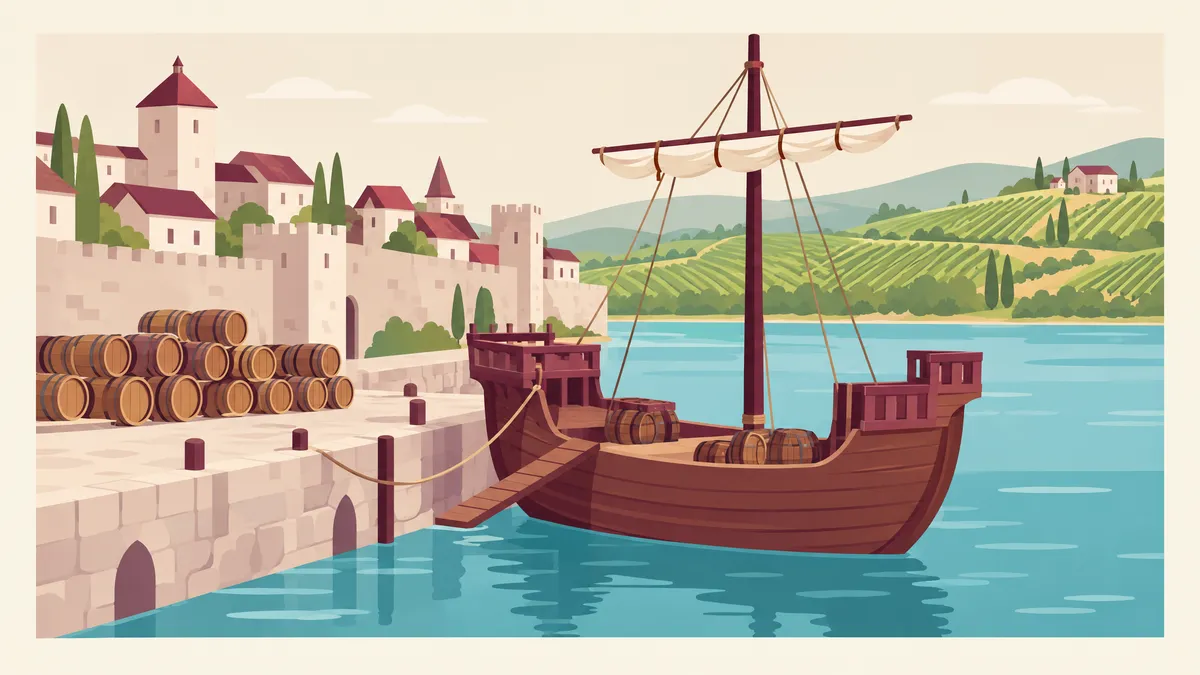
- 1152: Henry Plantagenet, the future Henry II of England, wed Eleanor of Aquitaine, duchess of lands that included Bordeaux.
- 1300s: at the trade's peak, some estimates say Bordeaux sent Britain enough wine for six bottles per man, woman and child. That wine was clairet, light and close to rosé.
- 1453: the Hundred Years' War ended and Bordeaux returned to France. The word stayed in England.
- About 1600: according to the Oxford English Dictionary, the English stopped contrasting claret with darker reds and began using it for red wines in general.
- 1663: the diarist Samuel Pepys recorded a French wine sold under one estate's name, with "a good and most particular taste that I never met with."
- 1700s: Wine Spectator dates the first known uses of claret for dark red Bordeaux to this century. Some historians place the shift earlier.
The darker style of that era came to be called "New French Claret": deeper in colour, more flavourful, and able to age.
Claret started pale, not dark, so any medieval scene in a novel that pours "claret" means a pink wine. Read anything set after about 1700 as a glass of the red you can buy today. How Bordeaux's style compares with the other great French red is laid out in Bordeaux vs Burgundy.
Why Is Claret Also a Colour?
Claret also names the dark, purplish red of red Bordeaux in the glass, so a claret coat or sofa is that colour. In Britain and Australia, claret is also old slang for blood. A boxing report that says a fighter's claret was flowing describes a cut.
In a novel, the context tells you which: a decanter on the table means wine, a bloody nose in a pub fight means the slang.
Other styles named by place and tradition sit in the wine styles hub. The Old World habit of naming wine by place is explained in Old World vs New World wine.
The Sommy app at sommy.wine has a bite-sized France course and an AI-guided tasting mode. Buy a Bordeaux Supérieur tonight, photograph its label in the app, and taste it with a slice of hard cheese.
Sources
Frequently Asked Questions
Is claret the same as Bordeaux?
Claret is the British name for red Bordeaux, so a claret is a red wine from the Bordeaux region of south-west France. White and sweet Bordeaux are never called claret. Inside the European Union the word is a protected name for red Bordeaux, although in the United States it has been used loosely on Bordeaux-style reds from elsewhere.
Is claret dry or sweet?
Claret is dry. Its meaning settled on dry, dark red Bordeaux, a blend of Cabernet Sauvignon, Merlot and Cabernet Franc with no sugar you can taste. Ripe plum or blackcurrant can read as fruity on the nose, but fruity is not sweet. The sweet wine of Bordeaux is Sauternes, which is white and never called claret.
What is the difference between claret and Clairet?
Claret is red Bordeaux. Clairet is a dark rosé from the same region, sold under the appellation Bordeaux Clairet: deeper in colour and fuller than most rosé, but still pink. The two words share a root, because English claret was named after the pale clairet that Bordeaux shipped to England for centuries before its reds turned dark.
Why do the British call red Bordeaux claret?
Bordeaux came to the English crown through the 1152 marriage of Henry Plantagenet and Eleanor of Aquitaine, and stayed English until the Hundred Years' War ended in 1453. In those centuries Bordeaux sent England a pale wine called clairet. The English kept the name after the wine grew darker in the 1600s and 1700s, and the French long used it only on export labels.
What grapes are in claret?
Claret is a blend of Bordeaux's six traditional red grapes: Cabernet Sauvignon, Merlot, Cabernet Franc, Petit Verdot, Malbec and Carménère. Most bottles lean on the first two. Wines from the Médoc lead with Cabernet Sauvignon and taste firmer, while wines from Saint-Émilion and Pomerol lead with Merlot and taste softer and readier young.
What food goes with claret?
Roast lamb and steak are the classic matches, because their fat and protein soften claret's tannin and make the fruit taste riper. Hard cheese and mushroom dishes work for the same reason. Avoid delicate white fish, which turns metallic beside tannin, and chilli heat, which makes the alcohol burn. A Merlot-led claret is the safer pick for chicken or duck.
What does claret mean as a colour?
As a colour, claret is the dark, purplish red of red Bordeaux in the glass. A claret coat or sofa is simply that colour. In Britain and Australia, claret is also old slang for blood, so an older novel that says a fighter's claret was flowing describes a cut, not a drink.
Sommy Team
LinkedInFounder & Wine Educator
The Sommy Team is building the world's most approachable wine education app, helping beginners develop real tasting skills through structured courses and AI-guided practice.