Bordeaux vs Burgundy: Side by Side (Grape, Taste, Label)

By the Sommy Team — AI-assisted, human-edited.
Updated Oct 23, 2026
Contents (7)
- Bordeaux vs Burgundy, in One Paragraph
- Is Bordeaux a Blend and Burgundy a Single Grape?
- What Do Red Bordeaux and Red Burgundy Taste Like?
- How Do You Read a Bordeaux Label vs a Burgundy Label?
- Why Are Bordeaux and Burgundy Bottles Different Shapes?
- Is Burgundy Red or White, and Is Bordeaux Only Red?
- Bordeaux or Burgundy: Which Should You Open First?
TL;DR
Bordeaux, in southwest France, blends Cabernet Sauvignon, Merlot and other grapes and labels the wine by estate and appellation. Burgundy, in east-central France, usually bottles Pinot Noir or Chardonnay alone and labels it by village or vineyard. Red Bordeaux tastes darker and firmer, red Burgundy paler and lighter. The bottles differ too: tall shoulders versus sloping ones.
Bordeaux vs Burgundy comes down to one split. Bordeaux blends several grapes and sells the wine under an estate's name. Burgundy usually bottles one grape and sells it under the name of a village or vineyard. In the glass, red Bordeaux is darker and firmer, red Burgundy paler and lighter.
Bordeaux vs Burgundy, in One Paragraph
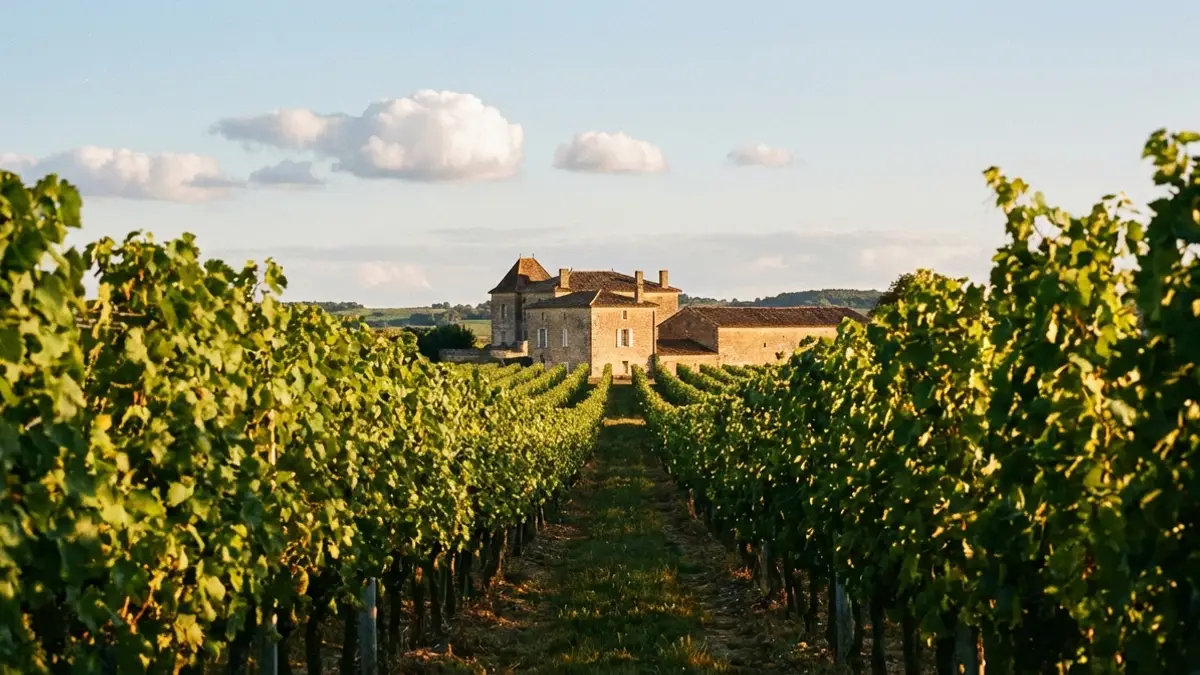
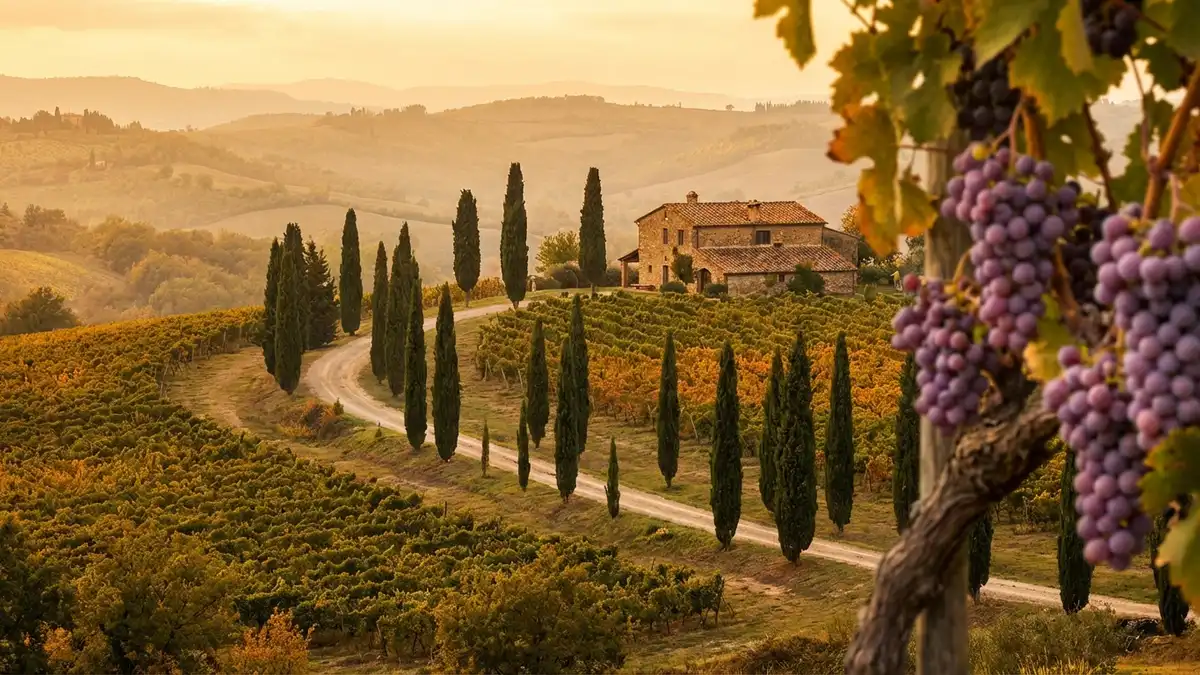
Bordeaux and Burgundy are two French wine regions whose names are also the names of their wines. Bordeaux, in southwest France, is best known for reds based on Cabernet Sauvignon and Merlot, and its reds and whites are almost always blends. Burgundy, in east-central France, makes red wine from Pinot Noir and white wine from Chardonnay, usually one grape per bottle. Bordeaux's famous 1855 ranking lists estates, while Burgundy ranks vineyard sites in four levels, from regional Bourgogne up to grand cru.
| Bordeaux | Burgundy | |
|---|---|---|
| Where | Southwest France, near the Atlantic | East-central France, west of the Saône |
| Red grapes | Cabernet Sauvignon and Merlot, plus Cabernet Franc and others | Pinot Noir (Gamay mainly in Beaujolais) |
| White grapes | Sauvignon Blanc and Sémillon, dry or sweet | Chardonnay |
| Blend or one grape | Almost always a blend | Usually one grape |
| Red in the glass | Deep colour, firm tannin, blackcurrant or plum | Pale colour, low tannin, cherry and raspberry |
| What gets ranked | The estate (the 1855 list, mostly Médoc reds) | The vineyard: regional, village, premier cru, grand cru |
| Label leads with | Estate name and appellation | Village or vineyard name and its level |
| Bottle | Straight sides, tall shoulders | Slightly fatter, sloping shoulders |
| Pick it when | Steak, lamb or hard cheese is on the plate | Roast chicken or a mushroom dish is on the plate |
Is Bordeaux a Blend and Burgundy a Single Grape?
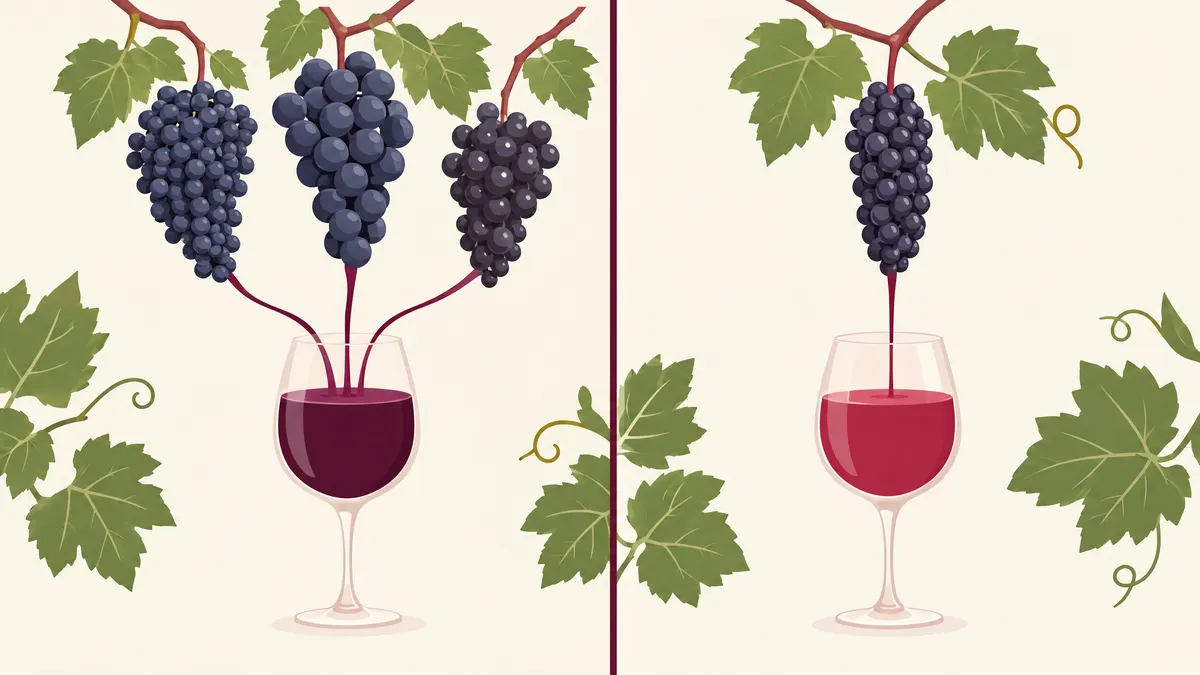
Mostly, yes. Red and white Bordeaux are almost always blends (wines made from more than one grape variety). Red Burgundy is usually Pinot Noir on its own and white Burgundy Chardonnay on its own, so two Burgundies from neighbouring vineyards differ by place and grower.
Bordeaux has six classic red grapes: Cabernet Sauvignon, Cabernet Franc, Merlot, Petit Verdot, Malbec and Carménère. The side of the Gironde estuary decides which one leads. On the Left Bank, which includes the Médoc, Cabernet Sauvignon dominates the blend. On the Right Bank, around Saint-Émilion and Pomerol, Merlot leads. Bordeaux blend grapes shows what each adds; the Bordeaux wine guide maps both banks.
Burgundy's southern Beaujolais area grows Gamay, yet "red Burgundy" on a wine list means Pinot Noir; the Beaujolais wine guide covers Gamay. Aligoté makes cheaper whites with higher acidity.

Quick check
One question on what you just read
Which grape usually leads a red blend from Bordeaux's Left Bank?
Tap an answer to see how you did.
What Do Red Bordeaux and Red Burgundy Taste Like?
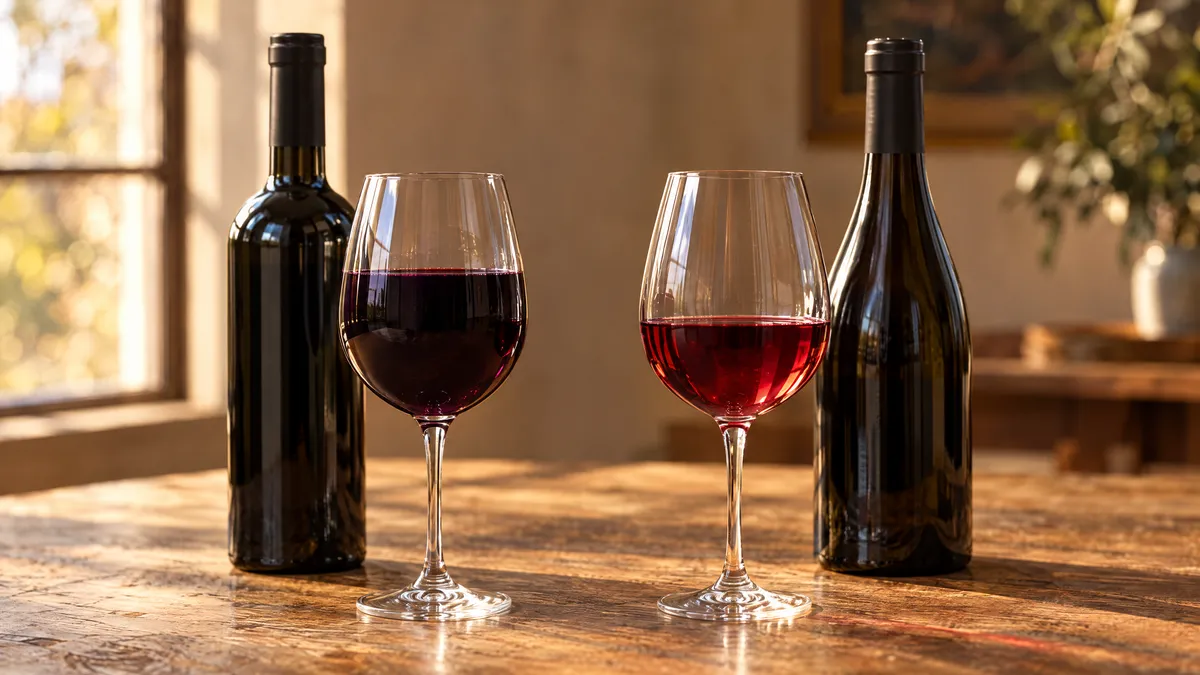
Red Bordeaux tastes darker and firmer, and red Burgundy paler and lighter, because of the grapes' skins. Cabernet Sauvignon's thick skins give deep colour and high tannin (the drying grip on your gums). Pinot Noir's thin skins give pale colour, low tannin and a light to medium body (weight in the mouth, like skimmed versus whole milk).
A young Left Bank red smells of blackcurrant, the classic Cabernet Sauvignon note, and turns toward cedar after years in bottle. Merlot is softer and fleshier, so a Right Bank red feels rounder and tastes of ripe plum (Cabernet Sauvignon vs Merlot splits the two). Young red Burgundy smells of fresh cherry and raspberry, as the Pinot Noir guide describes.
If the plate holds steak, lamb or hard cheese, pour red Bordeaux, because fat and protein soften its tannin. If it holds roast chicken or a mushroom dish, pour red Burgundy: lean meat has little fat to soften tannin, so a low-tannin red fits it.
How Do You Read a Bordeaux Label vs a Burgundy Label?
A Bordeaux label leads with an estate name and an appellation; a Burgundy label leads with a village or vineyard name and its level. On both, the place does the work: learn which grapes each place grows and the label tells you what is in the bottle (how to read a wine label covers the rest).
A Bordeaux label generally shows the château (the wine estate) and the appellation (a protected place name), plus the vintage and the alcohol, and rarely names the grapes. Every grape must come from the appellation printed. If the place is Pauillac or Margaux, expect a Cabernet-led Left Bank wine; if it is Saint-Émilion or Pomerol, expect Merlot. The 1855 classification ranks estates, and with one exception it covers only Médoc reds and sweet Sauternes and Barsac.
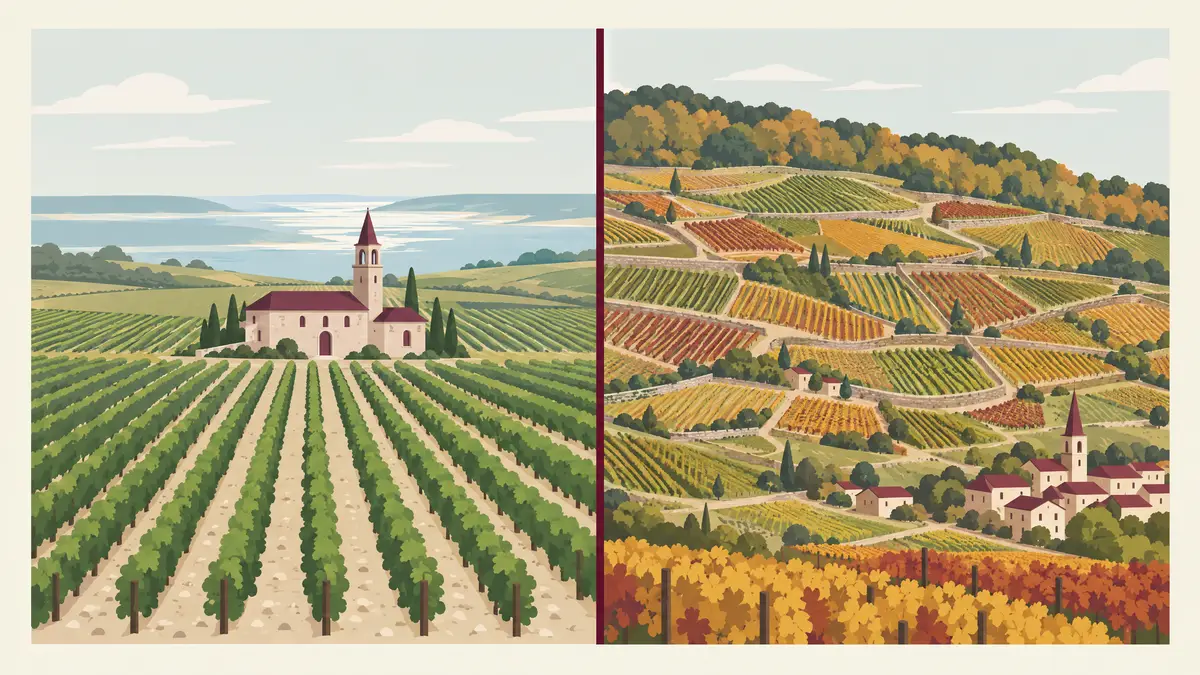
Burgundy ranks the vineyard itself, in four levels. From the top:
- Grand cru: the label shows only the vineyard name.
- Premier cru: the village name, the words Premier Cru or 1er Cru, and usually the vineyard name.
- Village: the name of one village.
- Regional: Bourgogne, the generic appellation for wine from anywhere in the region.
Those vineyard names come from the climats, roughly 1,247 named plots south of Dijon that UNESCO added to its World Heritage List in 2015. The producer's name often sits at the bottom in smaller type. If it is a négociant, a merchant bought grapes or wine from small growers, then blended and bottled it (négociant wine explained). The word cru names an estate in Bordeaux and a vineyard in Burgundy, as what cru means shows.
Why Are Bordeaux and Burgundy Bottles Different Shapes?
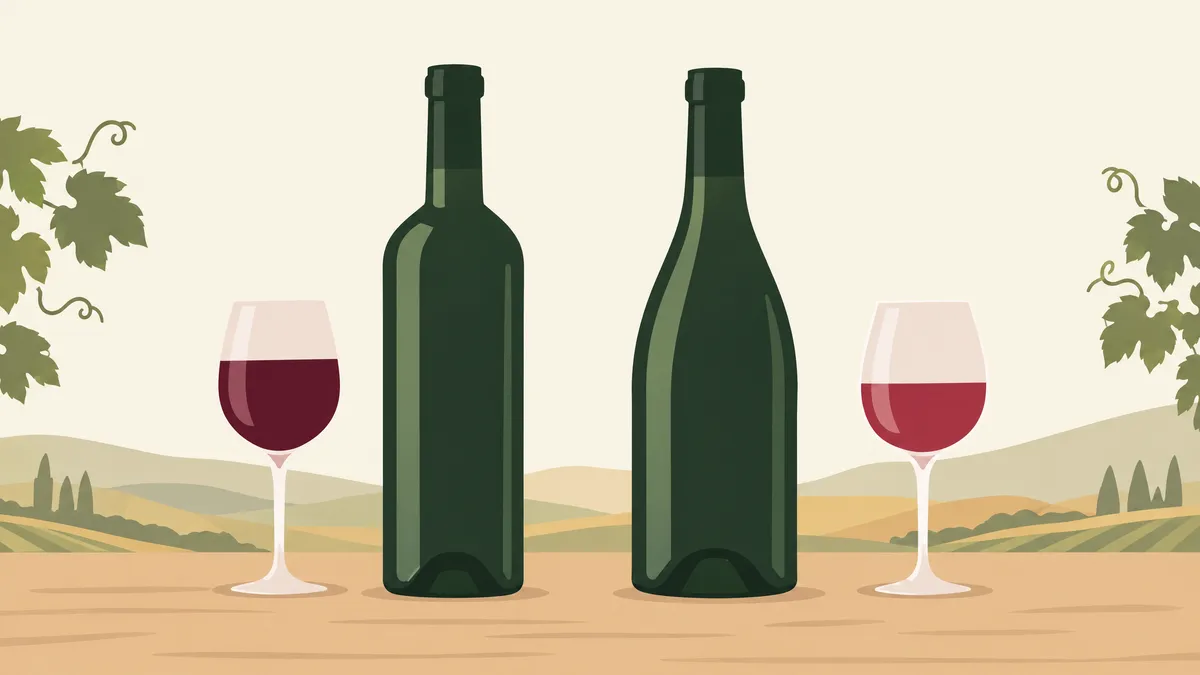
Tradition. Bordeaux bottles have straight sides and tall shoulders (where the body narrows into the neck), while Burgundy bottles are slightly fatter with more sloping shoulders. Two unproven theories explain them: Bordeaux producers wanted a pronounced shoulder to trap sediment when pouring, or glassblowers found the Burgundy shape easier to make.
Most producers now choose the shape to signal the style inside, so the shoulders give a first guess before you read a word. The shoulder shows a tradition, not a guaranteed grape: some wineries pick a shape just to stand out. If the shoulders slope, guess Pinot Noir or Chardonnay first, then confirm it on the label. Wine bottle shapes covers the Rhine flute and sparkling bottles.
Is Burgundy Red or White, and Is Bordeaux Only Red?
Both regions make both colours. Burgundy is known equally for its whites and its reds, and Bordeaux, best known for red, also makes dry whites and the sweet wine Sauternes. If a list says white Burgundy, expect Chardonnay; if it says white Bordeaux, expect a blend of Sauvignon Blanc and Sémillon.
On a British wine list, red Bordeaux is often called claret. Much of the white wine from Burgundy's far north is labelled Chablis and is Chardonnay too, while the Sauternes wine guide covers Bordeaux's sweet white.
Bordeaux or Burgundy: Which Should You Open First?
Choose by how much grip you want. Dark reds with a firm grip point to Bordeaux; pale, light reds point to Burgundy. Within Bordeaux the bank sets the grip, because Right Bank Merlot has softer tannin than Left Bank Cabernet Sauvignon. Pick this if you want:
- A soft dark red: a Right Bank Bordeaux from Saint-Émilion, Pomerol or nearby.
- A firm dark red for steak: a Left Bank Bordeaux from the Médoc.
- A pale, light red for chicken: a red Burgundy, which means Pinot Noir.
Sommy's course French Wines: The Classic Regions gives each region a module, with lessons from "Two Banks, One River: The Bordeaux Story" to "The Vineyard Hierarchy: Grand Cru to Bourgogne". The Burgundy wine guide, French wine regions and the wine regions hub go deeper.
Open one red from each region tonight and photograph both labels in Sommy. Then taste the two glasses side by side: the AI-guided tasting walks you through look, smell and taste and saves both sets of notes to your journal.
Sources
Frequently Asked Questions
Which is lighter, Bordeaux or Burgundy?
Red Burgundy is lighter. It is made from Pinot Noir, a thin-skinned grape that gives pale colour, low tannin and a light to medium body. Red Bordeaux is built on Cabernet Sauvignon and Merlot, and Cabernet's thick skins give deeper colour and firm tannin that grips the gums. A Merlot-led Right Bank Bordeaux sits in between, softer than a Left Bank one.
Is Pinot Noir the same as Burgundy?
Red Burgundy is Pinot Noir: Burgundy is the grape's home, and its famous reds are made from it alone. Pinot Noir also grows in many other places, and those wines cannot be called Burgundy, which is a protected place name in east-central France. Burgundy also makes white wine from Chardonnay, and its southern Beaujolais area grows Gamay.
Why are Bordeaux and Burgundy bottles different shapes?
The shapes are regional traditions. Bordeaux bottles have straight sides and tall shoulders; Burgundy bottles are slightly fatter with sloping shoulders. One theory says the Bordeaux shoulder traps sediment when pouring, another that glassblowers found the Burgundy shape easier to make. Most producers now pick the shape to signal the style inside, so it hints at the grape family without proving it.
Is Burgundy red or white?
Both. Burgundy is known equally for its white wines, made from Chardonnay, and its red wines, made from Pinot Noir. Bordeaux makes both colours too. It is best known for reds based on Cabernet Sauvignon and Merlot, but it also makes dry whites from Sauvignon Blanc and Sémillon and the sweet wine Sauternes.
What do grand cru and premier cru mean on a Burgundy label?
They are the top two of Burgundy's four levels, which rank vineyard sites. Grand cru is the highest, and its label shows only the vineyard name. Premier cru comes next, labelled with the village, the words Premier Cru or 1er Cru, and usually the vineyard. Below them sit village wines, named after one village, and regional Bourgogne from anywhere in the region.
What is the difference between Left Bank and Right Bank Bordeaux?
The Gironde estuary splits Bordeaux in two. On the Left Bank, which includes the Médoc, Cabernet Sauvignon leads the blend and gives firmer, more tannic reds. On the Right Bank, around Saint-Émilion and Pomerol, Merlot leads and gives softer reds that taste of plum. The appellation on the label tells you which bank a wine comes from.
Should a beginner start with Bordeaux or Burgundy?
Start with the red closest to what you already drink. If you like dark reds with grip, begin with a Merlot-led Right Bank Bordeaux, then try a Cabernet-led Left Bank one next to it. If you prefer pale, light reds, begin with a red Burgundy. Tasting one of each side by side, with the glasses held over white paper, shows the difference in colour and grip.
Sommy Team
LinkedInFounder & Wine Educator
The Sommy Team is building the world's most approachable wine education app, helping beginners develop real tasting skills through structured courses and AI-guided practice.