Wine with Snacks: Pairing Chips, Popcorn and Party Food

By the Sommy Team — AI-assisted, human-edited.
Updated Oct 1, 2026
Contents (9)
- What Wine Goes with Snacks, in One Paragraph?
- Which Wine Goes with Which Snack?
- Why Does Sparkling Wine Work So Well with Chips?
- What Wine Goes with Popcorn?
- Does Sweetness Level Matter with Salty Snacks?
- What Wine Goes with Flavoured Chips?
- Can Rosé or Still White Wine Work with Party Food?
- Can Red Wine Work with Snacks?
- How Do You Set Up a Wine and Snack Night?
TL;DR
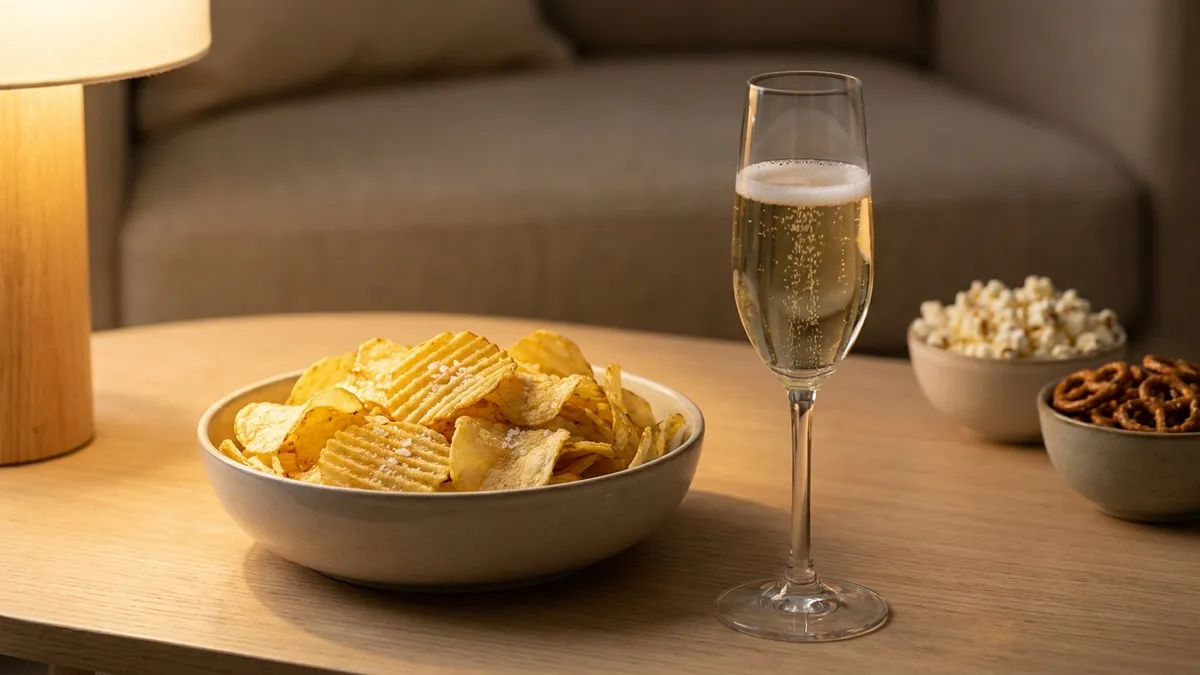
Salty, fried snacks need a wine with high acidity, and bubbles help even more. Dry sparkling wine is the default for chips and popcorn. Sweet or spicy snacks need a touch of sugar, so extra dry beats brut there. Light, low-tannin reds and dry rosé also work; big tannic reds rarely do.
Wine with snacks follows one rule: salt and frying oil want a wine with high acidity, and bubbles make it even better. That makes dry sparkling wine the default for chips, popcorn, pretzels and most party food. The snack's loudest flavour then fine-tunes the choice. Butter wants a creamier wine, sugar wants a wine with some sugar of its own, and chilli wants low alcohol.
What Wine Goes with Snacks, in One Paragraph?
Pour a dry sparkling wine labelled brut. Its acidity and bubbles cut through salt and frying oil, and its moderate alcohol stays calm next to salt, which makes stronger wines feel hot. For sweet-salty snacks such as kettle corn or BBQ chips, move to extra dry, which holds 12 to 17 grams of sugar per litre, or an off-dry Riesling. Crisp unoaked whites and dry rosé are the still options for dips, olives and nuts. Light, low-tannin reds such as Gamay or Lambrusco work served cool; big tannic reds are usually high in alcohol, which salt makes feel hot. One bottle of brut and one of something off-dry covers almost any snack table.
Which Wine Goes with Which Snack?
Match the wine to the snack's loudest trait: fat wants acidity, salt wants freshness, sugar wants a wine at least as sweet, and chilli wants low alcohol. If a snack is fried, the wine needs high acidity before anything else. The table sorts the usual party bowls by that trait.
| Snack | Loudest trait | Pour this | Why |
|---|---|---|---|
| Plain salted chips | Salt and frying oil | Brut sparkling wine | Acid and bubbles reset the mouth after each chip |
| Salt and vinegar chips | Sharp acid | Brut nature or dry Riesling | A wine less tart than the snack tastes flat |
| Sour cream and onion chips | Creamy, tangy | Crisp Sauvignon Blanc | High acid cuts the cream; green notes echo the onion |
| Cheese puffs or cheese crackers | Fat and salty cheese | Traditional-method sparkling | Acid cuts the cheese; bready flavours suit the crust |
| BBQ or sweet chilli chips | Sweet, smoky, hot | Off-dry Riesling or extra dry sparkling | Sugar calms heat; modest alcohol keeps the burn down |
| Plain or lightly salted popcorn | Light, dry, little fat | Brut sparkling or Pinot Grigio | A light snack needs a light wine |
| Buttered popcorn | Butter fat | Lightly oaked Chardonnay or traditional-method sparkling | Creamy texture meets creamy texture |
| Caramel or kettle corn | Sugar and salt | Demi-sec sparkling or Moscato d'Asti | The wine must be sweeter than the snack |
| Salted nuts and pretzels | Salt, dry crunch | Brut sparkling or fino sherry | Salt likes acid and a savoury edge |
| Olives, hummus and dips | Salt, oil, garlic | Dry rosé | Enough acid for oil, enough fruit for garlic |
Why Does Sparkling Wine Work So Well with Chips?
Because acidity cuts fat and salt, and bubbles add a second scrub on every sip. Acidity is the tartness that makes your mouth water. A chip leaves a film of oil and a coat of salt on the tongue, and a tart wine rinses both away, so the next chip tastes like the first.
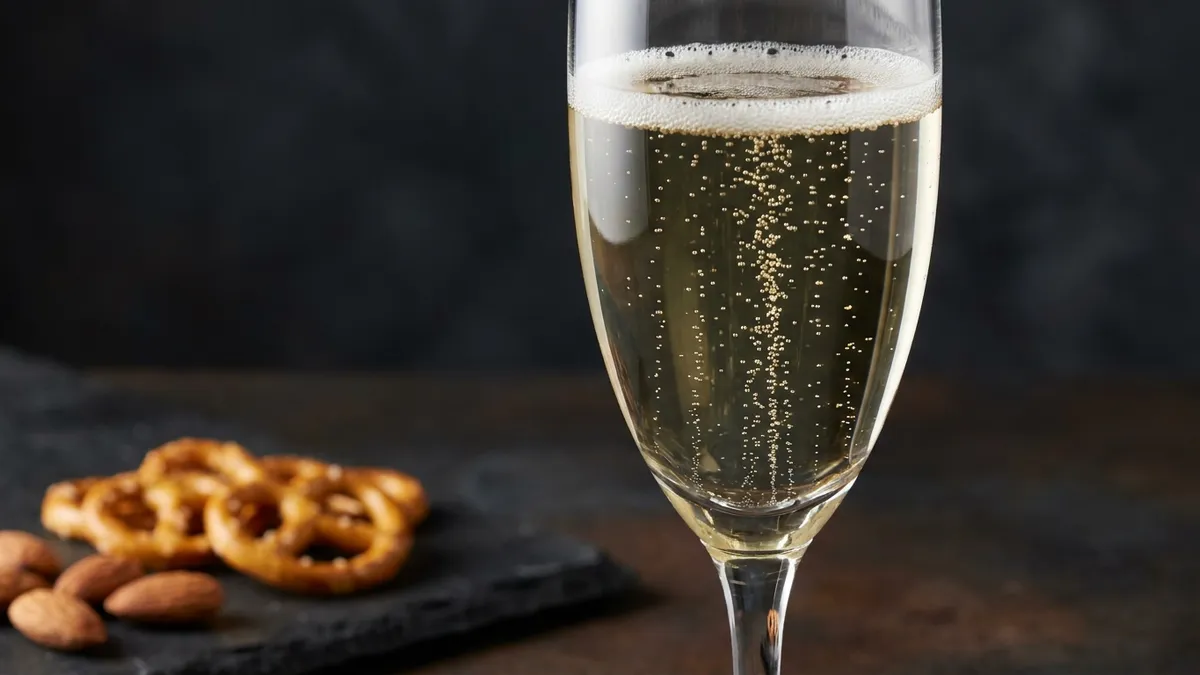
The bubbles come from carbon dioxide held under pressure in a sealed bottle, 5 to 6 atmospheres in Champagne. As they burst on the tongue they add a prickle that lifts oil the way a squeeze of lemon lifts batter. Most dry sparkling wines are also moderate in alcohol, so salt has less heat to amplify.
Style decides this match, not price. Champagne and other traditional-method wines (second fermentation inside each bottle, which adds bready, toasty flavours) do the same job as Charmat wines, which get their bubbles in large pressurised steel tanks. If the budget is tight, a tank-method Prosecco or a traditional-method Cava cuts through oil just as well. Our guide to sparkling wine types sorts the styles, and Champagne vs Prosecco vs Cava explains what changes in the glass.
What Wine Goes with Popcorn?
The topping decides: plain popcorn takes a crisp, dry white or brut bubbles, buttered popcorn takes a creamier wine, and sweet popcorn takes a wine with sugar. Plain air-popped popcorn is only about 4% fat, a light and crunchy snack that suits brut sparkling, Pinot Grigio or a dry Riesling.
Cinema-style popcorn is a different snack. It is usually popped in coconut oil and then topped with butter or margarine. If butter is on it, pick a creamier wine: a lightly oaked Chardonnay, whose barrel time adds a soft, creamy feel, or a traditional-method sparkling with bready flavours. Both meet the butter on texture while their acid keeps the fat from building up.
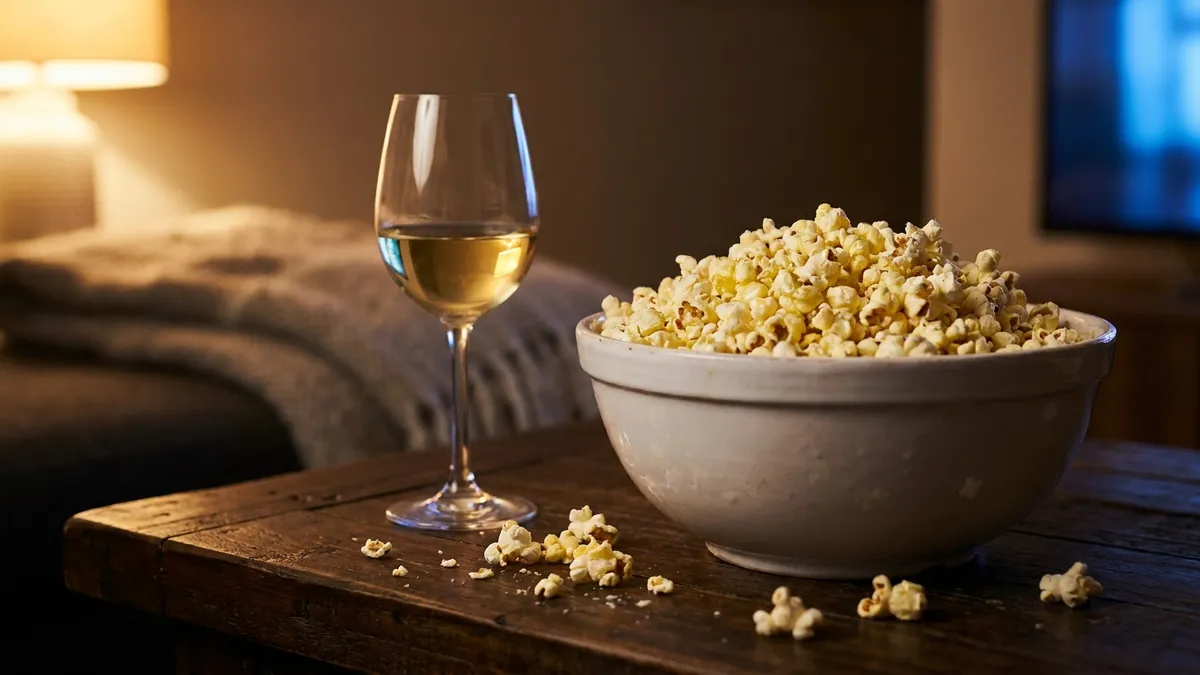
If the popcorn is caramel or kettle corn, the sugar changes everything. A dry wine next to a sweet snack tastes thin and sour, because the sugar in your mouth makes the wine's acid stand out. So the wine must be at least as sweet as the snack: a demi-sec sparkling or a gently fizzy Moscato d'Asti.
Does Sweetness Level Matter with Salty Snacks?
Yes, and the label word tells you how much sugar is in the bottle. Sparkling wine gets a small dose of sugar before it is sealed, called the dosage, and EU rules name each sweetness band. The surprise is in the middle of the scale: extra dry is sweeter than brut.
| Label word | Sugar per litre | Snack it suits |
|---|---|---|
| Brut nature | Under 3 g | Salt and vinegar chips, salted seeds |
| Extra brut | Under 6 g | Salted nuts, olives, pretzels |
| Brut | Under 12 g | Plain chips, plain popcorn, fried party food |
| Extra dry | 12 to 17 g | Kettle corn, honey-roasted nuts, sweet chilli crisps |
| Dry (sec) | 17 to 32 g | BBQ chips, spiced nuts with a sugar glaze |
| Demi-sec | 32 to 50 g | Caramel popcorn, chocolate-coated pretzels |
If the snack is plain and salty, choose brut or drier. If it carries sugar or chilli, move up to extra dry or dry. A wine that is a little sweet is called off-dry, and the same idea works for still wines: an off-dry Riesling does for spicy crisps what extra dry does in the sparkling aisle. The wine sweetness scale shows where still styles sit.
What Wine Goes with Flavoured Chips?
Let the seasoning choose: the stronger it is, the more it decides the wine. Plain chips are about salt and oil, which any brut handles. Flavoured chips add vinegar, cream, cheese, sugar or chilli on top, and that extra layer sets the wine's acid, sweetness and alcohol.
- Salt and vinegar. The chips are tart, so the wine must be at least as tart, or it tastes flat. Brut nature sparkling or a dry Riesling holds up.
- Sour cream and onion. Creamy and tangy, so a crisp, unoaked Sauvignon Blanc cuts the cream and its green, grassy smell sits well with the onion.
- Cheese. Cheese puffs and cheese crackers act like a mini cheese board. Sparkling wine's acidity cuts the richness of cheese, and the bready flavours of a traditional-method sparkling suit the creaminess. The same logic runs through our wine and cheese pairing guide.
- BBQ. Sweet, smoky and often a little hot. An off-dry Riesling or a fruity dry rosé meets the sugar.
- Chilli and hot spice. Salt and chilli heat both make alcohol feel hotter in the mouth. If the chips sting, pick a wine with modest alcohol and a touch of sugar, such as an off-dry Riesling; our guide to wine with spicy food goes further.
The Riesling guide explains how to spot the dry and off-dry styles on a label.
Can Rosé or Still White Wine Work with Party Food?
Yes: a dry rosé or a crisp unoaked white handles dips, olives and nuts almost as well as bubbles. Rosé gets its pink from a short soak of red grape skins in the juice, typically 2 to 20 hours. That short contact gives light colour, little tannin and fresh strawberry and watermelon flavours from just-ripe red grapes.
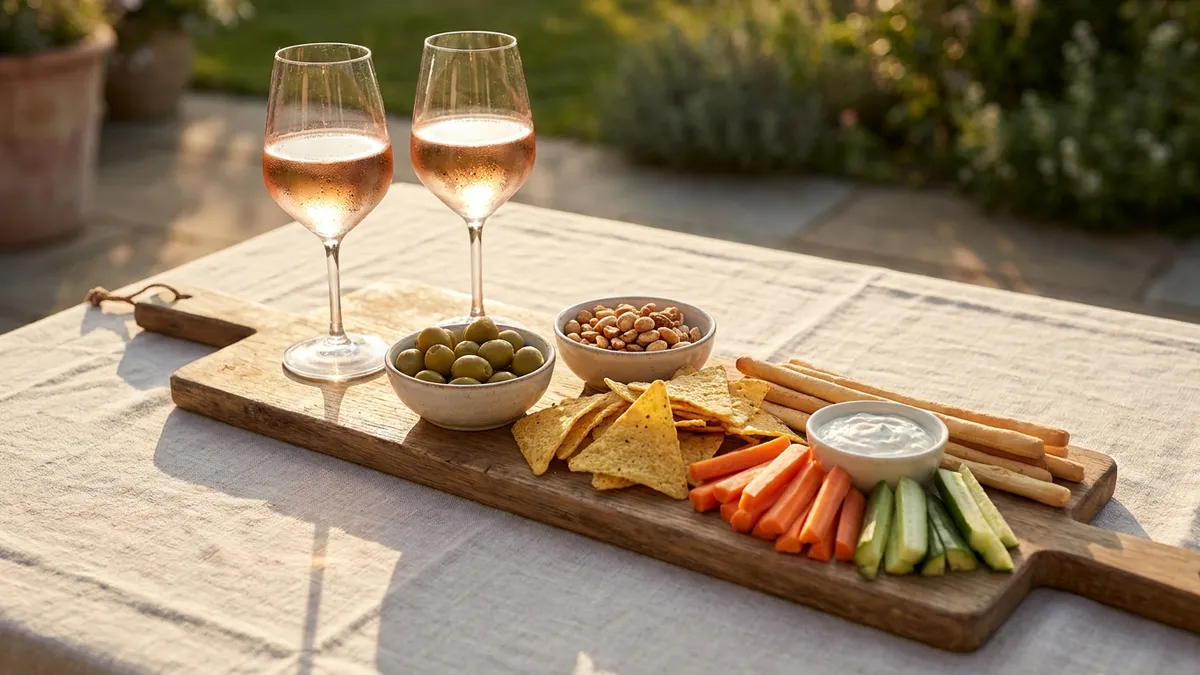
That combination suits a mixed party board. Rosé has enough acid for olive oil and fried tortilla chips and enough fruit to stand up to garlic and herbs in hummus or salsa. If the dip is creamy, such as a sour cream or yoghurt dip, a crisp white with higher acid does better than rosé. Sauvignon Blanc, Albariño and Pinot Grigio all fit, and they match the light body (the weight of a wine in the mouth, like skimmed versus whole milk) of most dips. Our rosé wine guide explains which pale, dry styles to look for.
Can Red Wine Work with Snacks?
Yes, if it is light and low in tannin, and served cool. Tannin is the drying grip a red wine leaves on your gums. As a rule of thumb, big tannic reds sit badly with snacks: their grip feels heavy against light, crunchy food, and their high alcohol feels hotter next to salt. If the red has firm tannin, save it for the cheese board or a steak.
Light reds behave differently. Salt drowns out bitterness, so a light red with only a faint bitter edge tastes rounder next to salted nuts or crisps. Gamay and light Pinot Noir, served cool from the fridge door, handle salty snacks, sausage rolls and mini pizzas. Lambrusco, a sparkling red from northern Italy, is the strongest red for a snack table, because its bubbles do the same scrubbing job as brut. Our Lambrusco guide explains its dry and sweet styles, and what are tannins shows how to feel them. Pizza bites follow their own rules, set out in wine with pizza.
How Do You Set Up a Wine and Snack Night?
Open two bottles, one dry sparkling and one off-dry, chill both well, and put out salty snacks before sweet ones. That pair covers almost every bowl in the table above. If there is a third bottle, make it a dry rosé or a light red served cool.
Cold matters more with snacks than with dinner. Warm sparkling wine loses its fizz quickly, and warm alcohol feels hotter next to salt. Our wine serving temperature chart gives the range for each style, and how to chill wine fast helps when guests arrive early.
Keep the bowls small and serve them in order: plain and salty first, flavoured and spicy next, sweet last. Sweet snacks make dry wine taste sour, so once the caramel corn is out, switch to the sweeter bottle. Set out water too, since salty snacks make people thirsty and they will reach for the wine to fix it. For a bigger crowd, the wine tasting party guide covers pours and glasses, and the food pairing hub collects every pairing we have written.
The Sommy app teaches the basics of acidity, sweetness and tannin in its bite-sized Wine 101 course. Pour a glass of brut tonight, put out a bowl of plain chips and one of popcorn, and taste a sip after each.
Sources
Frequently Asked Questions
What wine goes best with potato chips?
A dry sparkling wine labelled brut. Its high acidity cuts through the frying oil and its bubbles rinse salt off the tongue, so each chip tastes as good as the first. A crisp, unoaked white such as Sauvignon Blanc or a dry Riesling does a similar job without bubbles. Avoid big tannic reds, whose high alcohol feels hotter next to salt.
Does champagne go with popcorn?
Yes, and it is one of the easiest matches for movie night. Plain or lightly salted popcorn has little fat, so a brut sparkling wine keeps it fresh. Buttery popcorn suits a traditional-method sparkling with bready, creamy flavours. Caramel or kettle corn needs a sweeter style, such as extra dry or demi-sec, or the wine will taste sour.
Why does sparkling wine go so well with salty snacks?
Two things work together. Acidity cuts through fat and salt, so the mouth feels clean after each bite. Bubbles add a scrubbing feel that lifts oil off the tongue. Most sparkling wines are also moderate in alcohol, which matters because salt makes alcohol feel hotter. That combination is why brut bubbles suit chips, pretzels, nuts and fried party food.
Can you drink red wine with chips?
Yes, if the red is light and low in tannin. Gamay, light Pinot Noir and Lambrusco, served slightly cool, handle salty chips well. Lambrusco's bubbles help even more. Big, tannic reds such as young Cabernet Sauvignon tend to taste hot and drying next to salty, crunchy snacks, so save them for a cheese board or a steak.
What wine goes with spicy or BBQ chips?
Pick a wine with a touch of sweetness and modest alcohol. Salt and chilli both make alcohol feel hotter, so a strong wine burns. An off-dry Riesling or an extra dry sparkling wine calms the heat, and its sugar matches the sweet glaze on BBQ seasoning. A fruity dry rosé is a good second choice for milder BBQ flavours.
What is the difference between brut and extra dry?
Extra dry is the sweeter of the two, which surprises most people. Under the EU's sparkling-wine terms, brut means less than 12 grams of sugar per litre, while extra dry means 12 to 17 grams. Brut suits plain salty snacks. Extra dry suits snacks with sweetness or heat, such as kettle corn, honey-roasted nuts or sweet chilli crisps.
Sommy Team
LinkedInFounder & Wine Educator
The Sommy Team is building the world's most approachable wine education app, helping beginners develop real tasting skills through structured courses and AI-guided practice.