Red Wine Stain Removal: What Works, From Salt to Peroxide

By the Sommy Team — AI-assisted, human-edited.
Updated Oct 1, 2026
Contents (10)
- How to Remove a Red Wine Stain, in One Paragraph
- What Should You Do in the First Minute After a Spill?
- Does Salt Actually Remove Red Wine Stains?
- What Is the Best Way to Get Red Wine Out of Clothes?
- How Do You Get Red Wine Out of Carpet or a Sofa?
- How Do You Remove a Dried or Old Red Wine Stain?
- Is Hydrogen Peroxide Safe on Coloured Fabric?
- Why Does Red Wine Stain So Stubbornly?
- How Do You Clean Red Wine Off Wood, Marble or Stone?
- How Can You Stop Spills at Your Next Tasting?
TL;DR
Blot a red wine spill at once, sponge it with cool water or club soda, and keep heat away. On washable fabric, a hydrogen peroxide and liquid soap mix beat seven other cleaners in a UC Davis test. Salt and white wine did nothing useful except on nylon.
Red wine stain removal comes down to two moves: dilute the wine before it dries, then lift the pigment with an oxidising cleaner. When researchers at UC Davis tested eight cleaners on fabric, a mix of hydrogen peroxide and liquid soap worked best. Salt, white wine and commercial wine-stain removers did far less.
How to Remove a Red Wine Stain, in One Paragraph
Blot the spill with a clean white cloth without rubbing, then sponge it with cool water or club soda and blot again. On washable fabric, soak the spot for 15 minutes in 1 quart of warm water with 1/2 teaspoon of detergent and 1 tablespoon of white vinegar. Test hydrogen peroxide (sold at 3 to 6% for home use) and liquid soap on a hidden seam, dab it on what remains, rinse, and wash. Keep the item out of the dryer until the mark is gone. Silk, wool and dry-clean-only pieces go to a cleaner after the first blot.
What Should You Do in the First Minute After a Spill?
Blot, do not rub: press a clean white cloth onto the spill to pull up the liquid, then sponge the spot with cool water or club soda and blot again. Repeat until the cloth comes away pale. The aim is to dilute the wine and remove it before the pigment dries into the fibres.
Use white cloths or paper towels so you can see how much colour is still coming out. Work from the outside of the stain toward the middle, which keeps the ring from spreading. On a shirt or tablecloth, hold the cloth behind the fabric and rinse from the back, so the wine is pushed out the way it came in.
Two habits make stains permanent. Rubbing grinds pigment deeper into the weave. Heat, from hot water, an iron or a tumble dryer, can set a stain so washing no longer lifts it.
If you cannot treat the stain properly right now, keep it wet with cool water and come back to it. A damp stain is far easier to lift than a dry one.
Does Salt Actually Remove Red Wine Stains?
No. In a UC Davis test of eight cleaners, salt was useless on every fabric except nylon. The researchers tried each cleaner on several fabrics, both immediately after the spill and 24 hours later. White wine failed as well, and commercial wine-stain removers were among the least effective of all.
Salt does one small thing: it soaks up liquid sitting on the surface, which is why the University of Georgia Extension still suggests a sprinkle on a fresh spill. Salt draws up the puddle, not the dye already in the cloth. The study was reported in 2002, so today's commercial products may perform differently.
| Remedy | What the test or guide found | What to do instead |
|---|---|---|
| Salt | Useless except on nylon (UC Davis); absorbs surface liquid (UGA) | Blot first; use salt only to soak up a puddle you cannot reach with a cloth |
| White wine | No effect (UC Davis) | Use cool water or club soda to dilute |
| Commercial wine-stain remover | Among the least effective on each fabric (UC Davis, 2002) | Try peroxide and soap first; follow the label if you use one |
| Hydrogen peroxide + liquid soap | Best performer on fabric (UC Davis) | Test on a hidden seam, then dab on the stain and rinse |
| Cool water or club soda | First step for fabric and carpet (UGA) | Sponge and blot within the first minute |
| Rubbing alcohol | Next step if a soaked stain remains; may remove dye (UGA) | Use only on colourfast fabric, then rinse and wash |
What Is the Best Way to Get Red Wine Out of Clothes?
Rinse the stain from the back with cool water, soak it, then treat what is left with hydrogen peroxide and liquid soap before washing. That order moves from the gentlest step to the strongest, so you stop as soon as the mark is gone.
The University of Georgia Extension gives a precise soak: 1 quart of warm water, 1/2 teaspoon of detergent and 1 tablespoon of white vinegar, for 15 minutes. Rinse with water afterwards. Warm water is fine here because the spill has already been blotted and diluted.
If a shadow remains, use the mix that topped the UC Davis test. Combine a little hydrogen peroxide with a few drops of liquid dish soap. Exact ratios vary between guides and none of them was tested, so test the mix on a hidden seam first. Dab it on with a white cloth, give it a few minutes, then rinse and launder.
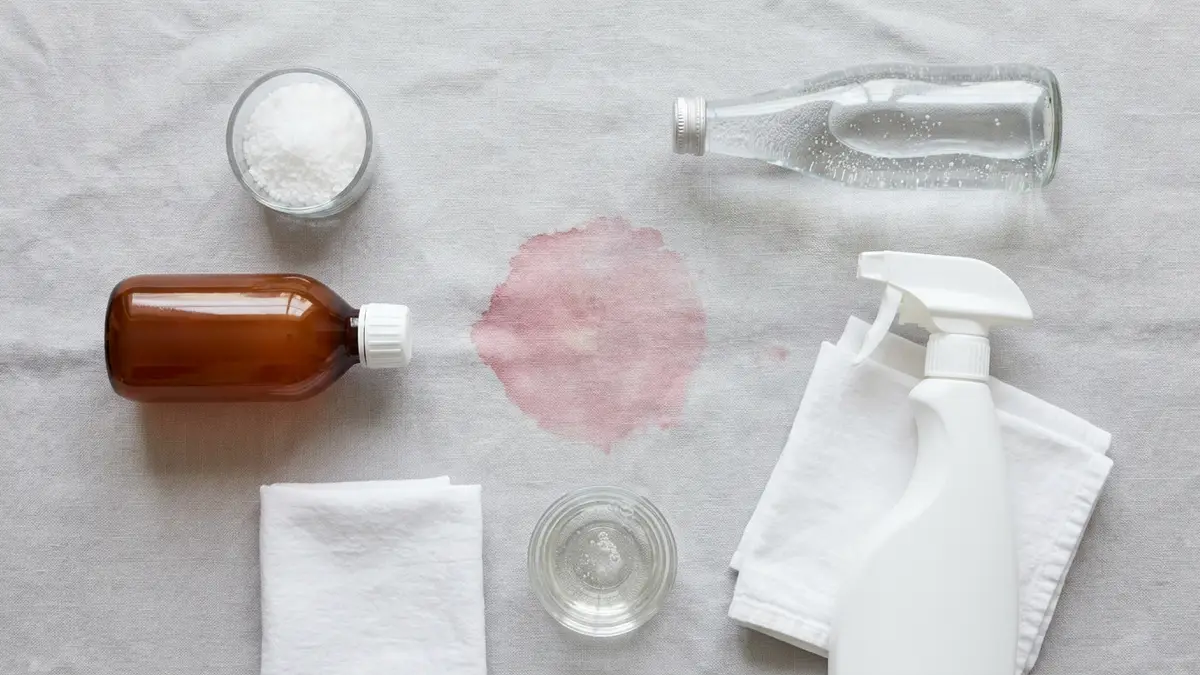
The UGA guide adds rubbing alcohol as a further step: sponge it on, rinse well and wash. Its own warning is blunt: alcohol may remove fabric dye.
If the label says dry clean only, or the fabric is silk or wool, blot with cool water and take it to a cleaner that day. In the UC Davis test, the only method that worked on silk was a product used mainly in commercial settings rather than homes.
How Do You Get Red Wine Out of Carpet or a Sofa?
Pour on club soda or cool water, blot it up with white cloths, and repeat until the cloth comes away clean. This is how the University of Georgia Extension's carpet method for wine starts, and it suits carpet because carpet cannot be soaked or rinsed from behind.
Use only a little liquid at a time. Soaking the carpet pushes wine into the backing and pad, out of reach of your cloth. Stand on a folded towel over the spot to draw out deep moisture, then finish with a dry cloth.
For a mark that stays, test the peroxide and soap mix on a hidden corner, such as inside a cupboard or under a sofa cushion. Dab it on, wait, then rinse with a small amount of cool water and blot again. Flush and blot with clean white cloths until no soap remains, since leftover soap attracts dirt.
Upholstery follows the same steps, with one extra check. Look for the cleaning code on the tag, and follow it over any home remedy. If colour transfers to your test cloth, or the fabric is wool or silk, stop and call a professional cleaner.
How Do You Remove a Dried or Old Red Wine Stain?
Treat it like a fresh stain, only longer: rewet it, soak it, then apply peroxide and soap. The UC Davis researchers tested every cleaner on 24-hour-old stains as well as fresh ones. Rewet the spot with cool water first, so the cleaner reaches pigment rather than a dry crust.
Start with the warm-water, detergent and vinegar soak and leave it for the full 15 minutes. If the mark is still visible, apply the peroxide and soap mix after a hidden-seam test, wait, rinse, and soak again. Expect to repeat the cycle for a stain that dried overnight.
If the item has already been through a hot dryer, the heat may have set the stain. Soak it longer, repeat the peroxide treatment, and accept that some marks on dyed cotton will only fade rather than vanish. Check every time before the dryer. Air-dry the piece until the stain is fully gone.
Is Hydrogen Peroxide Safe on Coloured Fabric?
Usually, but test it first: hydrogen peroxide is a bleaching agent, so some dyes fade under it. The bottles sold for household use are a dilute 3 to 6% solution. At that strength many fabrics come through a short treatment unchanged, but some dyes fade.
Colourfast means a fabric's dye stays put when it gets wet or treated. The hidden-seam test above is how to check it. If the test fades the colour, use only the vinegar soak and take the item to a cleaner for anything stronger.
Keep peroxide out of your eyes and off skin as much as you can, and rinse well after using it. Do not mix it with other cleaning chemicals. Store the bottle closed and dark, because peroxide breaks down in light and loses strength over time.
Why Does Red Wine Stain So Stubbornly?
Red wine carries anthocyanins (the pigments that colour red grape skins), and they cling to fibres much as a fabric dye does. White wine has almost none, which is why it rarely leaves a mark. Red wine's colour, from purple to brick, is traced in our guide to wine colour and what it means.
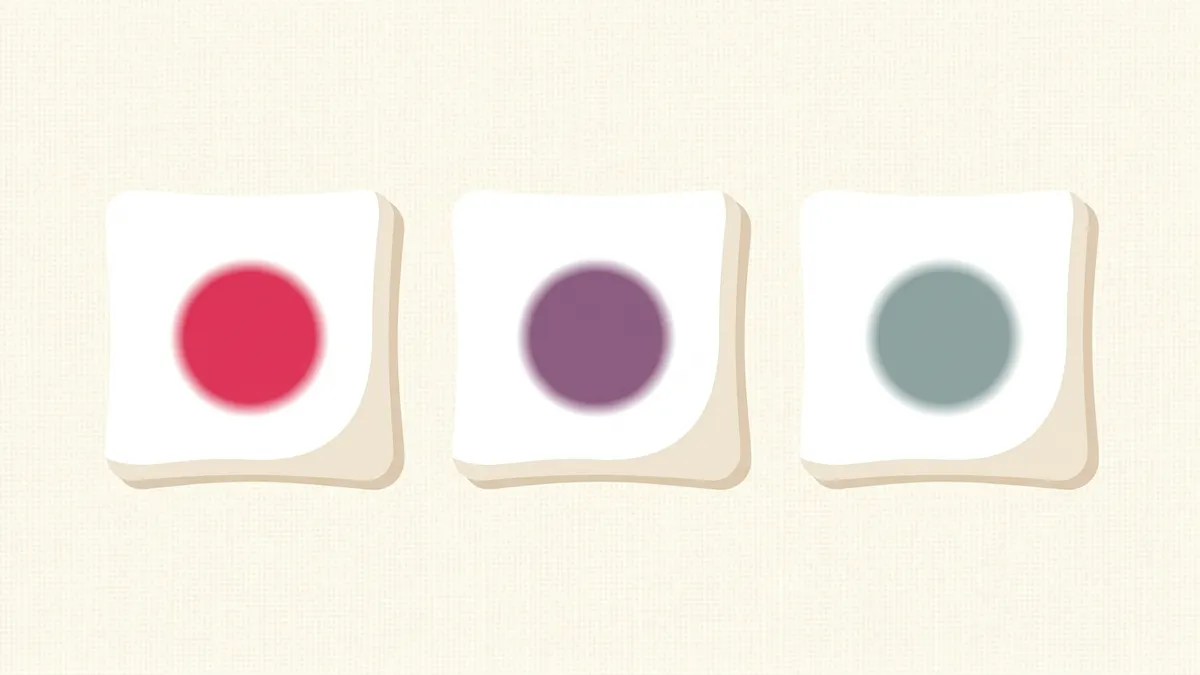
Anthocyanins change colour with pH (a scale of how acidic or alkaline a liquid is, with 7 as neutral). They are red in acidic liquid below pH 7, purple near neutral, and greenish-yellow when alkaline. Wine is acidic, so its pigment shows red; the tartness behind that is explained in what wine acidity is.
That chemistry explains a common scare. Many soaps and detergents are alkaline, so a red spill can turn purple, blue or grey as you clean it. A stain that turns blue is the same pigment in a new colour, not a new stain. Keep treating it. This follows from the pigment's known chemistry; the UC Davis test did not measure it.
Red wine also carries tannin (the compounds that make your gums feel dry), which binds tightly to proteins. What tannins are covers how they work in the glass.
How Do You Clean Red Wine Off Wood, Marble or Stone?
Wipe it up at once with a cloth dampened in cool water, then dry the surface fully. Spills on wood, marble and stone lift easily while still wet. Once wine soaks into an unsealed finish or porous stone, it is much harder to shift.
For sealed wood, a cloth dampened with water and a drop of mild dish soap is enough; dry it straight after so water does not mark the finish. For marble and other natural stone, blot rather than wipe, and use a cleaner labelled safe for marble. If the surface is marble or limestone, never use vinegar or lemon, since both are acids and wine is acidic already. If a ring remains on unsealed wood or stone, ask a refinisher or stone specialist before trying anything abrasive.
How Can You Stop Spills at Your Next Tasting?
Plan for spills before the first pour. A tasting puts several open bottles, many glasses and moving hands on one table, so a spill or two is likely. A white cloth, club soda and small pours keep each one minor. Four setup choices keep a spill to a quick blot.
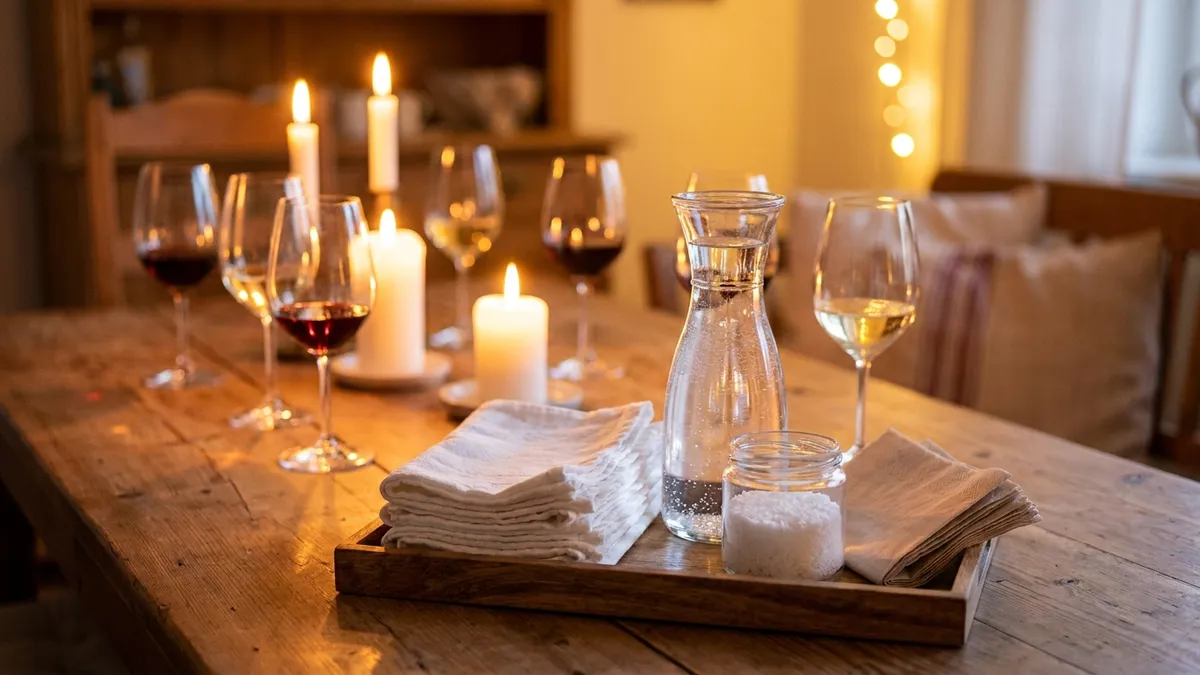
- Pour small. Tasting pours are smaller than dinner pours, so a tipped glass spills less. Our guide to how many glasses are in a bottle shows how far each bottle goes.
- Use steady glasses. Glasses with a wide base and a bowl only a third full tip less. The wine glass guide covers shapes.
- Choose the cloth. A white tablecloth makes every drop visible; a washable dark runner hides small drips.
- Keep a spill kit within reach. White cloths, a bottle of club soda and paper towels on a tray at the end of the table.
Setting up a full evening is covered in our wine tasting party guide and the step-by-step on how to host a wine tasting at home. Afterwards, cleaning your wine glasses properly keeps them clear for the next one. More on pouring, storing and serving sits in the serving and storage hub.
At the tasting itself, the Sommy app's AI-guided tasting mode lets each guest photograph a label and walk through look, smell and taste, saving notes to a tasting journal. Put white cloths and a bottle of club soda in one drawer near your dining table tonight, before you pour the first glass.
Sources
Frequently Asked Questions
What is the fastest way to get red wine out of clothes?
Blot the spill with a white cloth, then rinse the fabric from the back with cool water. If you can wash it soon, soak it for 15 minutes in warm water with a little detergent and white vinegar. Dab any remaining mark with hydrogen peroxide and liquid soap after testing a hidden seam, then wash. Skip the dryer until the stain is gone.
Does salt really remove red wine stains?
Not in a lab test. A UC Davis test of eight cleaners on several fabrics, reported in 2002, found salt useless on everything except nylon. Salt can soak up some liquid sitting on the surface of a fresh spill, which is why extension guides still mention it. It does not lift the dye that has already reached the fibres.
Does white wine take out red wine?
No. The same UC Davis study found pouring white wine on a red wine stain was as useless as salt. White wine is still a fruit drink with its own acids and sugars, and it adds more liquid to a spill. Cool water or club soda does the same diluting job without leaving anything behind.
Does hydrogen peroxide bleach coloured fabric?
It can. Hydrogen peroxide is a bleaching agent, sold for home use at around 3 to 6% strength. Many fabrics hold their colour through a short treatment, but some dyes fade. Dab a little on a hidden seam, wait a few minutes, and blot with a white cloth. If colour moves, skip the peroxide.
Can you use hot water on a red wine stain?
Not at first. Stain-removal guides advise keeping heat away from a fresh stain, so start with cool water or club soda. Warm water is fine for a soak once you have blotted the spill, and the University of Georgia's wine recipe uses it. The real danger is the dryer or an iron, which can set any mark that is left.
How do you get a dried red wine stain out?
Rehydrate it, then treat it like a fresh one with more patience. Soak the fabric in warm water with detergent and a spoonful of white vinegar, then dab on hydrogen peroxide and liquid soap after a hidden-seam test. Repeat the soak and treatment before washing. If the item has been through a hot dryer, expect several rounds.
Does club soda work on wine stains?
It works as well as cool water, which is to say it helps. The University of Georgia Extension lists club soda as a first rinse for both fabric and carpet. Its job is to dilute the wine before it dries. There is no strong evidence the bubbles do more than plain cool water, so use whichever is closer.
Sommy Team
LinkedInFounder & Wine Educator
The Sommy Team is building the world's most approachable wine education app, helping beginners develop real tasting skills through structured courses and AI-guided practice.