Wine Foil Cutter: Do You Need One? Opening Tools Ranked

By the Sommy Team — AI-assisted, human-edited.
Updated Oct 1, 2026
Contents (10)
- Do You Need a Wine Foil Cutter, in One Paragraph?
- Which Wine Opening Accessories Are Worth Owning?
- Where Should You Cut the Foil on a Wine Bottle?
- How Do You Cut Foil With a Waiter's Corkscrew?
- When Is a Dedicated Foil Cutter Better?
- Can You Just Push the Corkscrew Through the Foil?
- How Do You Open Wax, Plastic and Sparkling Capsules?
- What Is the Foil on a Wine Bottle For?
- Is Old Wine Foil Made of Lead?
- What Is the Simplest Opening Kit to Start With?
TL;DR
A wine foil cutter is a convenience, not a requirement: the small blade on a waiter's corkscrew cuts foil just as well. Cut just below the raised lip so wine never pours over a torn edge. Wax gets drilled or warmed, and lead capsules have been banned in the US since February 1996.
A wine foil cutter is optional. The small blade folded into a waiter's corkscrew cuts the capsule (the foil or plastic sleeve over the cork and neck) just as well. Where you cut matters more than what you cut with: just below the raised glass ring at the top of the neck, so the wine leaves the bottle from bare glass.
Do You Need a Wine Foil Cutter, in One Paragraph?
No. A waiter's corkscrew (the folding pocket tool with a blade, a spiral and a lever) already carries a foil knife. As Tasting Table puts it, there is "no one single tool that is necessary" for removing the capsule.
A dedicated foil cutter clamps over the bottle top and slices a neat circle in one twist. It earns a place if your corkscrew has no blade, or if you open a dozen bottles at a party. Either tool should cut just below the lip in three moves: half the neck, the other half, then one short slice up over the lip.
Which Wine Opening Accessories Are Worth Owning?
A waiter's corkscrew with a blade handles nearly all still wines. A foil cutter, a small kitchen knife and an Ah-So (a cork puller with two thin prongs that slide down the sides of the cork) each solve one narrower problem. Ranked by how often they earn their drawer space:
| Rank | Tool | Cut quality | Wax or thick plastic | Buy it if |
|---|---|---|---|---|
| 1 | Waiter's corkscrew blade | Clean once you practise the three cuts | Yes, slowly | You own one corkscrew: get a double-hinged model with a blade |
| 2 | Squeeze-and-twist foil cutter | Neatest circle, fastest | Struggles | Your corkscrew has no blade, or you open many bottles at once |
| 3 | Small kitchen or pocket knife | Fine, a little ragged | Yes | Never buy for this; use one you already have |
| 4 | Fingers and the pull tab | Rough unless the foil has a tab | No | Free: sparkling wine and tabbed capsules |
| 5 | Ah-So cork puller | Does not cut foil | Not relevant | You age bottles for years and their corks turn brittle |
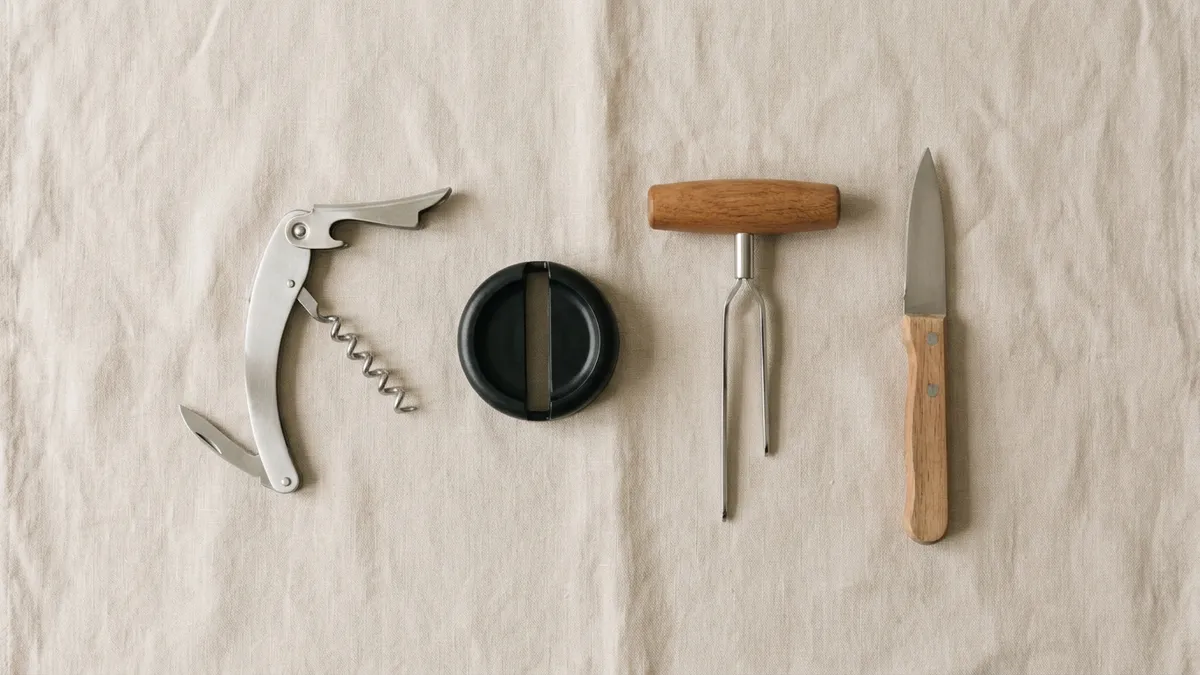
If your corkscrew already has a blade, skip the foil cutter. If it is a winged or lever model with no blade, a foil cutter is the cheapest fix. The corkscrews themselves, from winged to electric, are compared in the types of corkscrews guide.
Where Should You Cut the Foil on a Wine Bottle?
Cut just below the lip, the raised ring of glass at the top of the neck; its bottom edge is also called the second lip. Below that ring, as The Takeout explains, "no wine will come in contact with the foil as you pour."
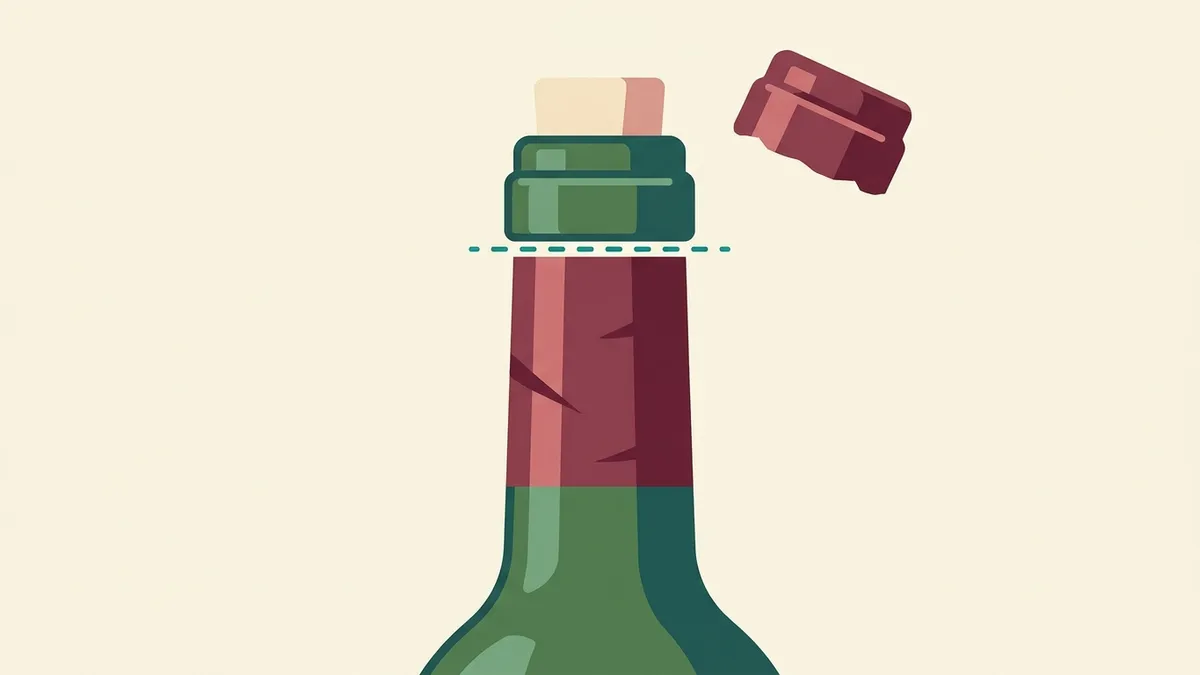
Cutting above the lip leaves a band of foil around the mouth. Wine Enthusiast's guide warns that if the foil frays and the wine touches it, it can spoil the taste. The practical risk is small: a scrap in the glass, a metallic drip, a messy pour, and a low cut avoids all three.
If the foil above your cut tears or bunches, peel it down past the lip by hand. If a loose old capsule spins and will not cut cleanly, pull off all of it; the bottle is fine bare.
How Do You Cut Foil With a Waiter's Corkscrew?
Slice halfway around the neck below the lip, turn your wrist and slice the other half, then make one short cut up over the lip and lift the disc off. That last vertical slit gives the blade tip an edge to hook under, so the disc lifts in one piece.
Wine Enthusiast's version starts: "Place the knife just below the lip, and slice horizontally halfway around the neck of the bottle." It ends with a vertical cut "up across the protruding lip to the top of the bottle."
The steps, in order:
- Hold the bottle by the body and open the blade.
- Set the blade just below the lip and cut toward you, halfway round.
- Keep the bottle still, turn your wrist, and cut the back half to meet the first cut.
- Slice once straight up over the lip.
- Hook the blade under that slit, lift the foil disc away, and wipe the glass.
Keeping the bottle still comes from restaurant service, where the label always faces the guest. At home it simply keeps your grip steady. The worm, the lever and the two-step lift that follow are set out in the corkscrew technique in how to open a wine bottle.
When Is a Dedicated Foil Cutter Better?
A foil cutter wins when speed and a perfectly round edge matter more than carrying one tool. It is a short plastic cylinder with small cutting wheels inside. Set it over the bottle top, squeeze, twist, and the foil disc lifts out with a clean circle below it.
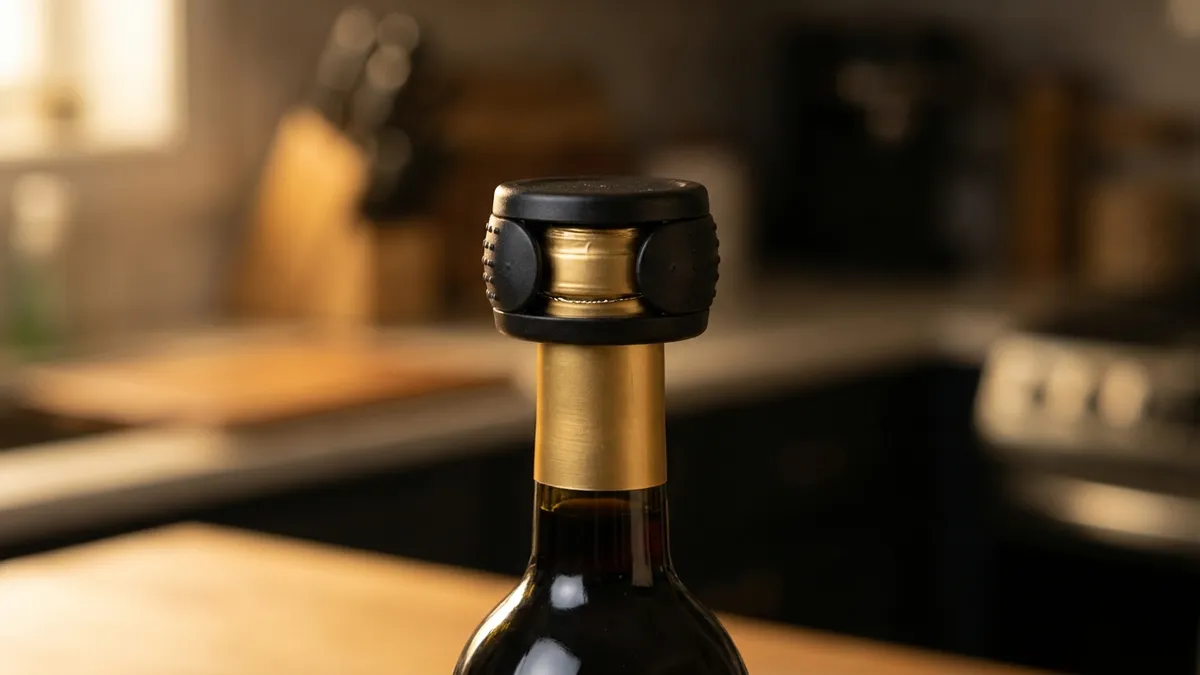
It never needs a steady knife hand, which helps anyone with weak grip or shaky hands. It also keeps the bottle upright, useful when an old red has sediment you do not want to stir, as explained in wine sediment explained.
Sommeliers use the corkscrew blade because it is already in their pocket, not because cutters do a worse job. A blade also copes with the cutter's weak spots: thick plastic, wax, and the odd bottle whose top is too wide or narrow for a cutter to grip.
If you open many bottles in one evening, such as a tasting or a party, a foil cutter earns its drawer space. If you open one bottle at a time, the corkscrew blade is enough.
Can You Just Push the Corkscrew Through the Foil?
Yes, the worm will go through foil, but the torn foil stays at the mouth of the bottle and the wine pours across it. Plenty of people do it at home; on one wine forum thread, collectors describe pulling the capsule off by hand first, or using "a capsule cutter" when it will not budge.
The quick version works on a weeknight if you finish the job. After the cork is out, peel the torn foil down below the lip with your fingers and wipe the rim with a clean cloth. On a thin, loose capsule, twisting the foil top off by hand before you start is faster still.
If the capsule is plastic, skip this shortcut. Plastic does not tear neatly, and a ragged collar can catch the pour.
How Do You Open Wax, Plastic and Sparkling Capsules?
Wax gets drilled through or warmed off, thick plastic gets a knife, and sparkling foil gets peeled by its tab. A foil cutter handles none of these well, because its small wheels are made for thin foil on a standard neck.
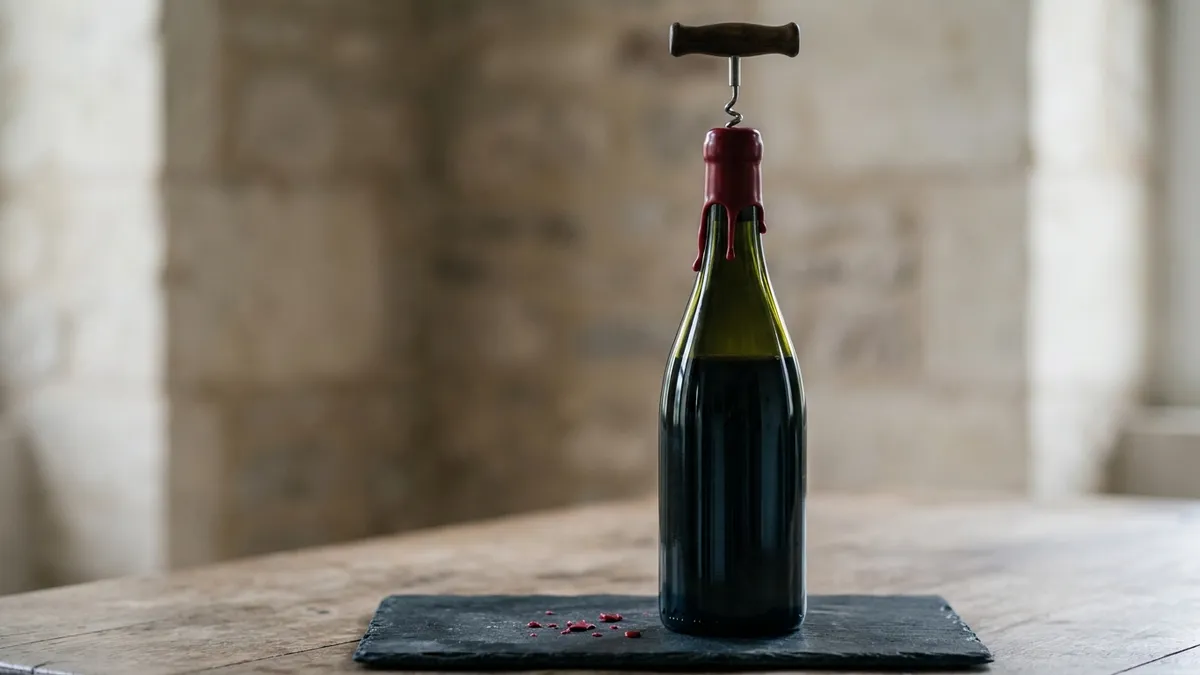
Wax. If the wax is thin and soft, drive the corkscrew straight through the centre and pull the cork as usual; the wax cracks around it. Brush the crumbs off the lip before pouring. If the wax is thick and hard, soften it first. One collector on the same forum thread, who pushes the corkscrew straight through, says it "even works with wax; just run warm water over the top of the wax to soften it."
Thick plastic. A plastic capsule can be too stiff for a foil cutter's wheels. Use the corkscrew blade or a small kitchen knife, press harder, and make the same three cuts.
Sparkling wine. The foil covers a wire cage, and most bottles have a tab you pull to tear it away. No cutter is needed. Leave the cage on until your hand is over the cork.
Screw caps. Twist the cap and the band of metal below it stays on the bottle. There is nothing to cut; screw cap vs cork explains which wines use which.
What Is the Foil on a Wine Bottle For?
Today the capsule is mostly decoration with a little protection in shipping; it began as a guard against pests that ate corks. The cork underneath does the sealing, so a cut capsule changes nothing about how long a bottle keeps.
According to The Takeout, capsules were "initially made of lead or tin and used to keep cork moths and other pests from damaging the cork." The FDA's 1996 rule lists three purposes: to "prevent insect infestation, as a barrier to oxygen, and for decorative purposes."
The Takeout calls the modern capsule "mostly decorative, though it can provide some protection during shipping and storage."
The capsule still tells you something before you open it. A sticky top or dried wine crusted on the foil means wine has seeped past the cork, often from heat; cooked wine shows the other signs.
Is Old Wine Foil Made of Lead?
Not on any bottle sealed in the US since 8 February 1996. From that date, the FDA ruled wine "adulterated" if "a tin-coated lead foil capsule is applied to the wine bottle." The Federal Register notice gives the reason: "the lead in the foil becomes a component of food."
That matters only for older bottles. If a pre-1996 bottle has a soft, heavy, dull grey capsule, assume it may be lead. Cut below the lip, or remove all of the capsule, then wipe the lip and the top of the neck with a damp cloth before pulling the cork. Newer capsules need only the normal wipe.
Old bottles often need gentler cork handling too. An Ah-So works where a spiral would crumble a brittle cork, and how to decant wine covers pouring the wine off its sediment.
What Is the Simplest Opening Kit to Start With?
One double-hinged waiter's corkscrew, plus an Ah-So if you keep old bottles. The corkscrew's blade cuts the foil, its spiral pulls the cork and its two-step lever eases long corks out. Add a foil cutter only if you prefer the twist, and a stopper from the wine preservation tools roundup for whatever is left over.
If you age bottles for years, add the Ah-So. If you drink what you buy within a year or two, the corkscrew is enough. More serving guides sit in the serving and storage hub.
Tonight, check whether your corkscrew has a blade. Then open the next bottle with three cuts below the lip and pour one glass. Sommy walks you through tasting it.
Sources
- Tasting Table: Are Wine Foil Cutters Really Necessary?
- The Takeout: Where Should You Be Slicing Your Wine Foil?
- Wine Enthusiast: How to Use a Waiter's Corkscrew
- Federal Register (FDA), 8 February 1996: Lead-Containing Foil Capsules on Wine Bottles, final rule
- Wine Berserkers forum: How do you remove your wine capsules?
Frequently Asked Questions
Do you need a foil cutter to open wine?
No. Any blade that can score thin metal works, and the small knife folded into a waiter's corkscrew is the usual choice. A dedicated foil cutter is worth buying only if your corkscrew has no blade, such as a winged or lever model, or if you open many bottles in one sitting and want a fast, round cut every time.
Where do you cut the foil on a wine bottle?
Cut just below the raised ring of glass at the top of the neck, along its bottom edge, also called the second lip. Below that ring, the wine leaves the bottle from bare glass and never touches the cut foil edge as you pour. Cutting above it leaves foil at the mouth, where a frayed edge can drip into the glass.
Can you push a corkscrew straight through the foil?
You can, and the cork will come out. The problem comes after: torn foil stays around the mouth of the bottle, and the wine pours across its ragged edge. If you skip the cut, peel the torn foil back below the lip with your fingers before you pour, and wipe the rim.
What is the foil on a wine bottle for?
The capsule began as a lead or tin cap that kept cork moths and other pests away from the cork. The FDA also lists it as an oxygen barrier and decoration. Today it is mostly decorative, with some protection for the cork in shipping and storage. The cork, or the screw cap, is what actually seals the wine.
Is old wine bottle foil made of lead?
It can be. The US Food and Drug Administration ruled wine adulterated if a tin-coated lead capsule was applied on or after 8 February 1996, so bottles sealed in the US since then do not use them. On an older bottle with a soft, heavy metal capsule, remove the foil below the lip and wipe the glass clean before pouring.
How do you open a wine bottle sealed with wax?
For thin, soft wax, drive the corkscrew straight through the centre of the wax into the cork and pull as normal, then brush away crumbs before you pour. For thick, hard wax, run the neck under warm water for a minute to soften it, or tap it to crack it off first. Either way, wipe the lip before pouring.
What is the best tool to cut wine foil?
For most people it is the blade on a double-hinged waiter's corkscrew, because it travels with the corkscrew and handles every capsule, including thick plastic. A squeeze-and-twist foil cutter is faster and makes a neater circle on thin foil, but it struggles with wax and some plastic capsules.
Sommy Team
LinkedInFounder & Wine Educator
The Sommy Team is building the world's most approachable wine education app, helping beginners develop real tasting skills through structured courses and AI-guided practice.