Wine Blending at Home: A Simple Kitchen Bench Trial

By the Sommy Team — AI-assisted, human-edited.
Updated Oct 1, 2026
Contents (9)
- How Does Wine Blending at Home Work, in One Paragraph?
- What Does Each Grape Bring to a Blend?
- What Do You Need for a Home Blending Trial?
- How Do You Run a Blending Trial Step by Step?
- What Ratios Should You Start With?
- How Do You Pick the Winning Blend?
- Which Mistakes Spoil a Home Blend?
- Is a Home Blend the Same as a Field Blend?
- What Do Blend Rules Mean for a Home Blender?
TL;DR
Blend wine at home by mixing two or three finished reds in small measured samples, starting near 70% base, 20% lift and 10% spice. Grenache adds fruit and warmth, Syrah colour and tannin, Mourvèdre structure and acidity. Taste the samples blind, keep the one you would pour again, then scale it up.
Wine blending at home is a measured experiment, and it works best with a simple formula: one base wine at about 70%, a second wine for lift, a splash of a third for spice. Mix them in small samples, taste blind, and only then pour a full glass. Two or three supermarket reds and a measuring cylinder are enough for a first trial, and the trial shows what tannin, acidity and alcohol each do faster than single bottles can.
How Does Wine Blending at Home Work, in One Paragraph?
Wine blending at home means mixing two or three finished wines in measured proportions, tasting the samples side by side, and scaling the winner up to a carafe. Winemakers call this a bench trial (a small test blend made before committing a full tank). Pick a base wine (the one that makes up most of the blend) and one or two wines that fix its gap: more colour, more grip, more freshness.
Mix 100 ml samples at three ratios, such as 70/20/10, 60/30/10 and 80/10/10. Taste them blind and keep the one you would pour a second glass of. Grenache, Syrah and Mourvèdre, the classic Rhône trio, are the easiest grapes to learn on.
What Does Each Grape Bring to a Blend?
Each grape fills a different gap: some add fruit and warmth, others add colour, tannin (the drying grip on your gums) or acidity (the tartness that makes your mouth water). Components are chosen by the gap in the base wine. The table lists the five red grapes easiest to find as single-variety bottles.
| Grape | What it adds | Where you feel it | Add it when the base is |
|---|---|---|---|
| Grenache | Alcohol, warmth, ripe strawberry fruit, no extra tannin | Mid-palate weight, warm finish | Lean, tart or short on fruit |
| Syrah / Shiraz | Deep colour, backbone, tannin, black pepper | Grip on the gums, darker colour | Pale, soft or fading on the finish |
| Mourvèdre | Structure, acidity, savoury meaty notes | Firmness and freshness at the back | Fruity but loose or flabby |
| Cabernet Sauvignon | Firm tannin, blackcurrant, acidity | Drying grip that lasts | Round and plush but shapeless |
| Merlot | Softer tannin, plum fruit, roundness | Fleshy middle | Hard, angular or too tannic |
Body (the weight of wine in your mouth, like skimmed versus whole milk) moves with alcohol and tannin. A thin base wants Grenache or Syrah; a heavy, tiring base wants Mourvèdre's acidity. Blends are not a way to hide lesser wine: most Bordeaux and southern Rhône reds are blends by tradition. The grapes behind those two families are mapped in Bordeaux blend grapes and Rhône blend grapes.
What Do You Need for a Home Blending Trial?
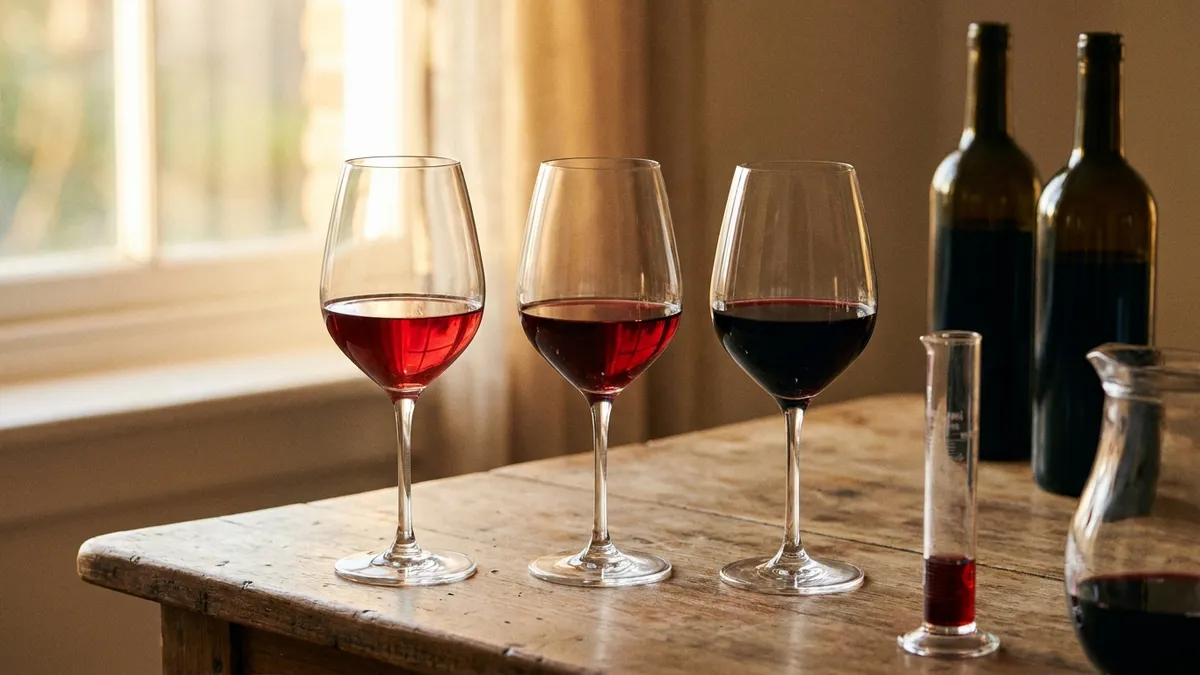
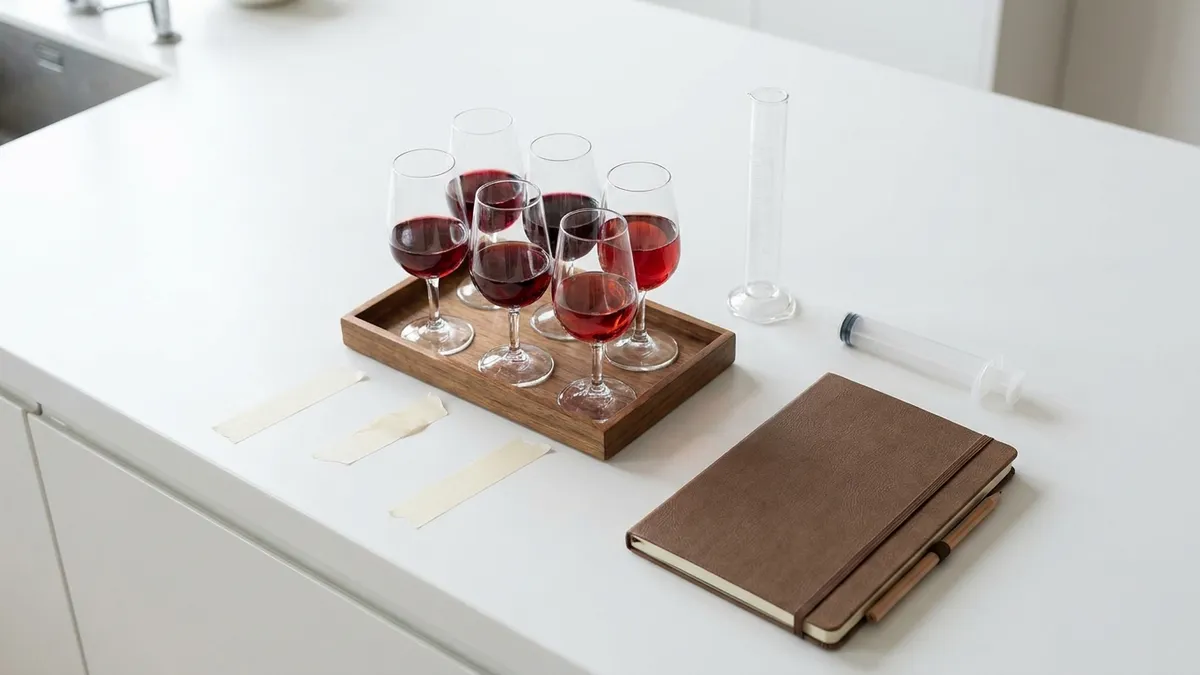
A 100 ml measuring cylinder or a kitchen syringe, identical glasses, two or three bottles and a notepad are enough. Precision matters more than fancy kit, because a 5 ml slip in a 100 ml sample shifts the ratio by five points.
- Measure: a glass or plastic measuring cylinder, or a 10 ml oral syringe from a pharmacy.
- Glasses: four identical tulip-shaped glasses, so shape does not change the smell. The wine glass guide explains why one shape suits a whole flight.
- Wines: two or three single-variety reds at similar prices, opened the same day.
- A jug or carafe for scaling up the winner.
- Labels for the glasses: a strip of masking tape on the foot, out of sight while tasting.
If you have no measuring cylinder, use the syringe and count fills: seven, two and one fills of 10 ml give a 70/20/10 sample. Keep the bottles at the same temperature too, because a cold component tastes tarter and a warm one tastes hotter.
How Do You Run a Blending Trial Step by Step?
Taste each wine alone, mix three small samples at different ratios, taste them blind, then scale the winner up. The full trial takes about 40 minutes, uses less than half of each bottle, and leaves the rest of each wine for comparing with the finished blend at dinner.
Taste each component alone
Pour 30 ml of each wine. Sip and write one word for what each lacks: thin, hot, soft, tart or flat. The base is the wine with the fewest gaps; the others are chosen to fill them.
Mix three samples
Make three 100 ml samples: 70/20/10, 60/30/10 and 80/10/10. Pour each into a jug, stir, then into its own glass. Mark the foot of each glass with tape.
Wait ten minutes
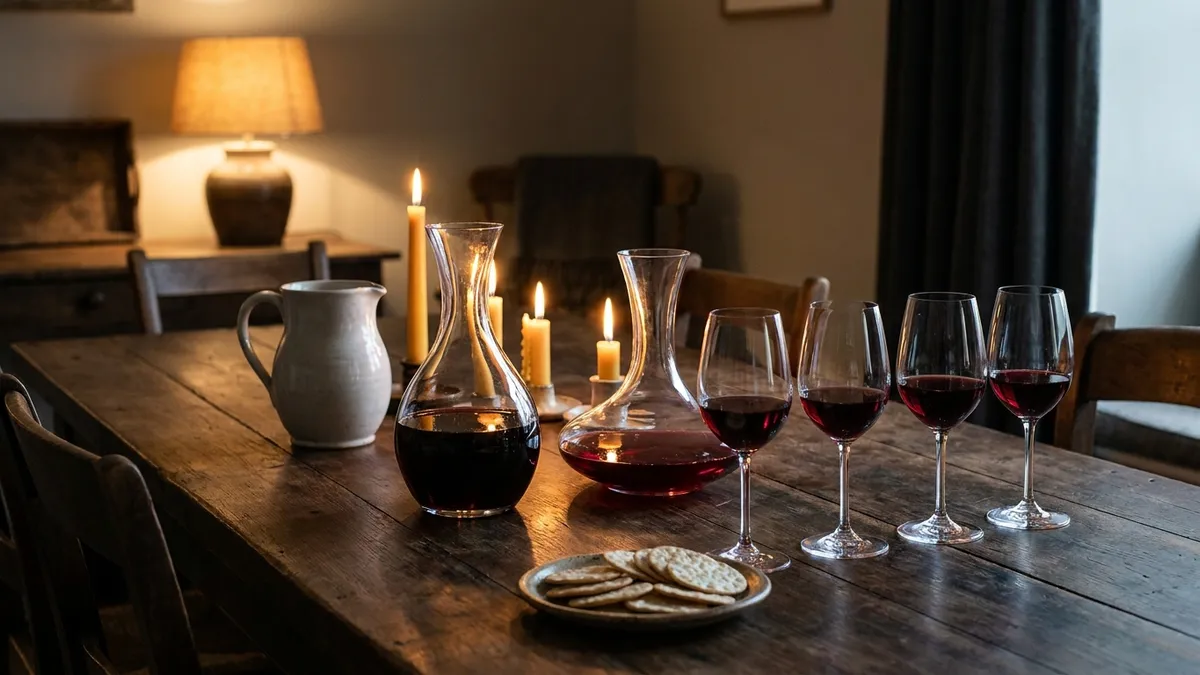
Freshly mixed wine can taste disjointed for a few minutes. Let all three samples sit while you rinse your mouth with water and eat a plain cracker.
Taste blind and rank
Have someone shuffle the glasses. Smell, sip and rank them. Write why the top glass won in one line.
Refine and scale up
Move the winning ratio by 5 to 10 points in one direction and test once more. Then multiply the best ratio to fill a carafe and taste it again after twenty minutes.
If two samples tie, keep the one with fewer components or the larger base share: it is easier to repeat with new bottles.
What Ratios Should You Start With?
Start at 70% base, 20% lift and 10% spice, then move each share by 10 points. This rule of thumb also shows up in famous wines. The Lytton Springs vineyard in California, a historic field blend, was planted at about 70% Zinfandel, 20% Petite Sirah and 10% Grenache and Carignan.
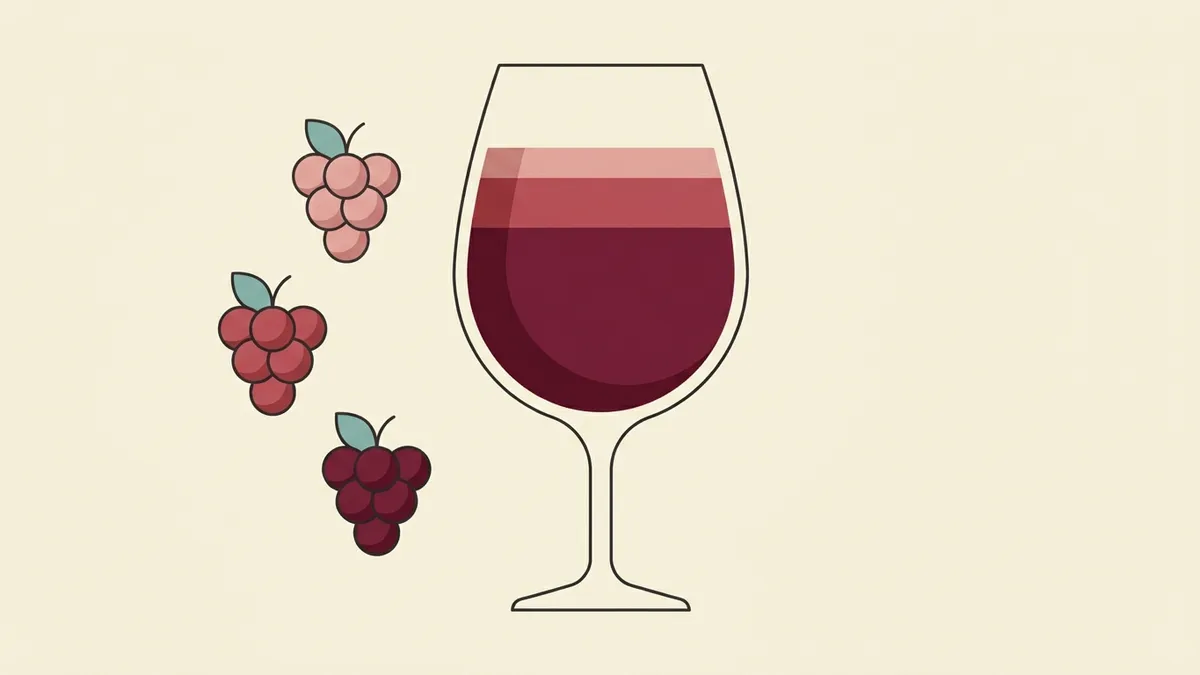
The 70% base carries the wine's identity. The 20% component changes its structure enough to notice. The 10% component works like seasoning: more than that and it starts to take over. Bordeaux works on the same principle with a longer list of six traditional red grapes: Cabernet Sauvignon, Cabernet Franc, Merlot, Petit Verdot, Malbec and Carménère.
Three starting blends:
- Rhône-style: 70% Grenache, 20% Syrah, 10% Mourvèdre. Ripe strawberry from the Grenache, with colour and grip from the Syrah.
- Two-grape starter: 70% Grenache, 30% Syrah. The simplest way to feel what tannin and colour add.
- Bordeaux-style: 70% Cabernet Sauvignon, 20% Merlot, 10% Cabernet Franc. Firm and dark, with the Merlot filling the middle.
If the base tastes thin, raise the Syrah or Cabernet share. If it tastes hot and heavy, cut the Grenache and add Mourvèdre for acidity. Change one share at a time, or you will not know which move helped.
How Do You Pick the Winning Blend?
Pick the sample you would pour a second glass of, judged blind. A big, ripe sample often wins sip one and tires you by sip three, so taste each glass at least three times before you rank it. The blind order keeps the label from voting.
If a sample tastes good on sip one and tiring by sip three, drop it. If two samples feel equal on the palate, decide on the finish: count the seconds the flavour lasts after you swallow. Note the ratio, the wines and the reason in a wine tasting notes template, so the winning recipe can be repeated with new bottles.
Blind ranking also works as a group game. Set three samples per pair of guests and let everyone vote, using the format in the wine tasting party guide.
Which Mistakes Spoil a Home Blend?
Most failed home blends start with a bad component wine or too many wines at once. Both are avoidable before the first sample is poured, and the remaining errors come from guessing volumes, using stale leftovers and judging too soon:
- A faulty component. If a wine smells of wet cardboard or vinegar, leave it out. Blending spreads a fault; it rarely dilutes it away.
- Five wines in one glass. Each extra component makes the result harder to read and harder to repeat. Stop at three.
- Guessing the volumes. A splash from the bottle can be 20 ml or 50 ml. Measure every sample.
- Leftovers from last week. An opened bottle that tastes flat or sherry-like adds that staleness to the blend. Open fresh bottles on the day.
- Judging too fast. Ten minutes of rest after mixing can change the first impression; taste after the wait.
Why each classic blend family uses the grapes it does is set out in wine blends explained.
Is a Home Blend the Same as a Field Blend?
No. A field blend is grown mixed in one vineyard, while a home blend combines finished wines in the glass. A field blend is a wine made from two or more grape varieties planted together in the same vineyard, then picked and usually fermented together. Vienna's Gemischter Satz is made this way.
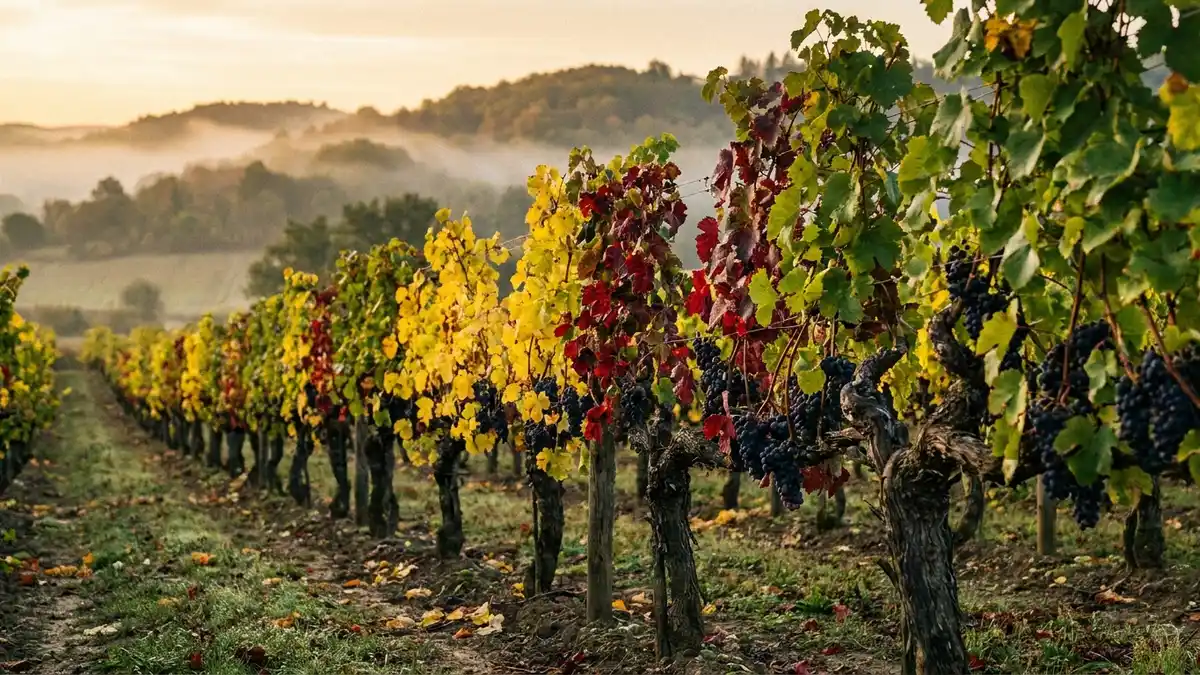
The difference changes what you can control. A field blend's ratio is fixed by what was planted, often decades ago. A cellar blend, like yours, is set by tasting, so it can change with every new set of bottles. The old vineyards behind field blends are covered in the field blend wine guide.
What Do Blend Rules Mean for a Home Blender?
None of the label thresholds apply to a blend you mix for your own table. They decide what a commercial bottle may call itself, which helps you read a label before buying components. A varietal label (a label that names one grape) needs a minimum share of that grape.
| Rule | Threshold | What it tells you in the shop |
|---|---|---|
| US varietal label | At least 75% of the named grape | A US Cabernet can hide up to 25% of other grapes |
| US varietal label, labrusca grapes | At least 51% | Applies to native American grapes such as Concord |
| EU varietal label | At least 85% of the named grape | A European single-grape label is purer by rule |
For component wines, buy bottles from the EU if you want the purest single-grape sample: 85% is a tighter floor than 75%. Federal rules let a US household make up to 100 gallons of wine a year with one adult, or 200 gallons with two or more, and none of it may be sold. Grape-by-grape label reading is covered in single varietal vs blend. More wine styles built by blending sit in the wine styles hub.
Tonight, open a Grenache and a Syrah. Pour 70 ml of Grenache and 30 ml of Syrah into one glass, set it beside each wine alone, and taste all three. The Sommy app can guide that tasting through look, smell and taste and log the winning ratio in your journal.
Sources
Frequently Asked Questions
Can you blend two different wines together at home?
Yes. Mixing two finished wines you bought is legal for your own table and takes no special equipment beyond a way to measure. Measure in small samples first, so a failed ratio costs 100 ml rather than a bottle. Use sound wines only: blending cannot rescue a corked or vinegary wine, and the fault spreads into the good wine instead.
What is a good ratio for blending red wines?
Start near 70% of a base wine, 20% of a second wine that fills its main gap, and 10% of a third for spice or acidity. Then make two variations that move one share by 10 points. The historic Lytton Springs field blend in California sat at about 70% Zinfandel, 20% Petite Sirah and 10% other grapes, the same shape.
What is a bench trial in winemaking?
A bench trial is a small-scale test blend. Winemakers mix measured samples from separate tanks or barrels at different ratios, taste them side by side, and only then blend the full volume. At home the same idea works with a measuring cylinder or kitchen syringe and 100 ml samples, so every ratio can be compared before anything is committed.
Why do winemakers blend grapes?
Each grape fills a different gap. In the classic Rhône trio, Grenache brings alcohol, warmth and fruit without adding tannin, Syrah adds colour, backbone and tannin, and Mourvèdre adds structure and acidity. A blend can be fuller, firmer or fresher than any single component, which is why most Bordeaux and southern Rhône reds are blends by design.
Is a field blend the same as a blended wine?
No. A field blend comes from two or more grape varieties planted mixed together in one vineyard, then picked and usually fermented together. A cellar blend, like the one you make at home, combines wines that were made separately. The field blend is set by the planting; the cellar blend is set by measured tasting decisions.
How much wine can you legally make at home in the US?
US federal rules let a household make up to 100 gallons of wine a year with one adult, or 200 gallons with two or more adults, and none of it may be sold. State laws can add their own limits. Mixing wines you bought for your own glass is serving, and the label percentage rules for varietal wines only apply to wine sold under a label.
Sommy Team
LinkedInFounder & Wine Educator
The Sommy Team is building the world's most approachable wine education app, helping beginners develop real tasting skills through structured courses and AI-guided practice.