Wine Aerators: Do They Work and Which Should You Buy?

By the Sommy Team — AI-assisted, human-edited.
Updated Jul 24, 2026
Contents (10)
- What a Wine Aerator Does, in One Paragraph
- What Is a Wine Aerator?
- How Does a Wine Aerator Work?
- Do Wine Aerators Actually Work?
- Types of Wine Aerators
- Which Wines Benefit From an Aerator?
- How to Use a Wine Aerator
- Aerator, Decanter, or Just Let It Breathe?
- Common Wine Aerator Mistakes
- Do You Actually Need a Wine Aerator?
TL;DR
A wine aerator forces air into wine as you pour, doing in about five seconds what a decanter does in 30 minutes. It softens young tannic reds and lifts muted fruit aromas, but does little for aged, delicate, white, or sparkling wines. Handy for weeknight reds, and easy to skip for everything else.
Pour a young, tannic red straight from the bottle and it can taste tight — grippy, closed, all structure and no charm. A wine aerator promises to fix that in a single pour, forcing air into the wine so it opens up the moment it hits the glass. But do these gadgets actually do anything, or are they kitchen-drawer theatre? This guide explains how a wine aerator works, which bottles genuinely benefit, the types worth owning, and how to decide whether you need one at all.
What a Wine Aerator Does, in One Paragraph
A wine aerator is a small device that injects oxygen into wine as you pour it, softening the drying grip of tannin and lifting muted fruit aromas. A pour-through model replicates roughly 30 to 60 minutes of decanting in about five seconds by forcing the stream past a series of air ports. It works best on young, structured reds — Cabernet Sauvignon, Syrah, Malbec — and does little for aged, delicate, white, or sparkling wines. Unlike a decanter, an aerator cannot separate sediment, so it is a fast weeknight tool, not a replacement for careful service of old bottles. Most home drinkers who mainly open young reds get real value from one; everyone else can skip it.
What Is a Wine Aerator?
A wine aerator is a small tool — usually plastic, sometimes glass or stainless steel — that increases a wine's contact with air at the moment of pouring. Some sit in your hand over the glass, some screw onto the bottle neck, and some are battery-powered pumps. Whatever the shape, they all chase the same goal: get more oxygen into the wine, faster.
The reason air matters comes down to two chemical changes. First, dissolved oxygen reacts with tannins — the drying, gripping compounds in red wine that make your gums feel like sandpaper — and rounds off their harsh edge. Second, air helps volatile aroma compounds escape the liquid and reach your nose, so a closed wine smells more expressive.
This is the same process behind swirling your glass and behind decanting. An aerator simply does it in one motion instead of over an hour. If you want the fuller picture of what air does to flavor, our guide to whether decanting changes wine flavor covers the chemistry in depth.
How Does a Wine Aerator Work?
The most common aerator is the pour-through type, and its physics is simple and clever. As wine flows through the narrow body of the device, it speeds up and its pressure drops — a consequence of the Venturi effect, the same principle that lets a perfume atomizer or a carburetor pull one fluid into another. That pressure drop opens small air ports on the sides of the aerator, and ambient air rushes in to fill the gap.
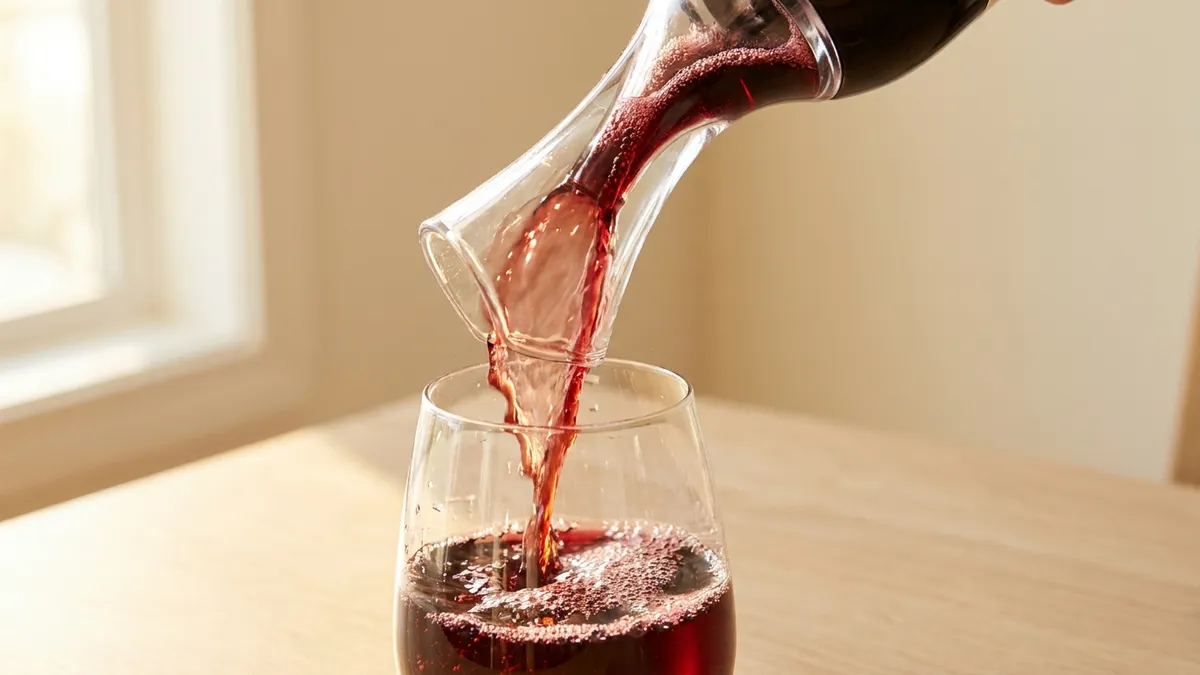
The result is turbulence. Instead of a smooth ribbon of wine, you get a stream churned full of tiny air bubbles, each one a fresh surface for oxygen to dissolve into. By the time the wine reaches the glass, it has absorbed far more oxygen than a plain pour would deliver.
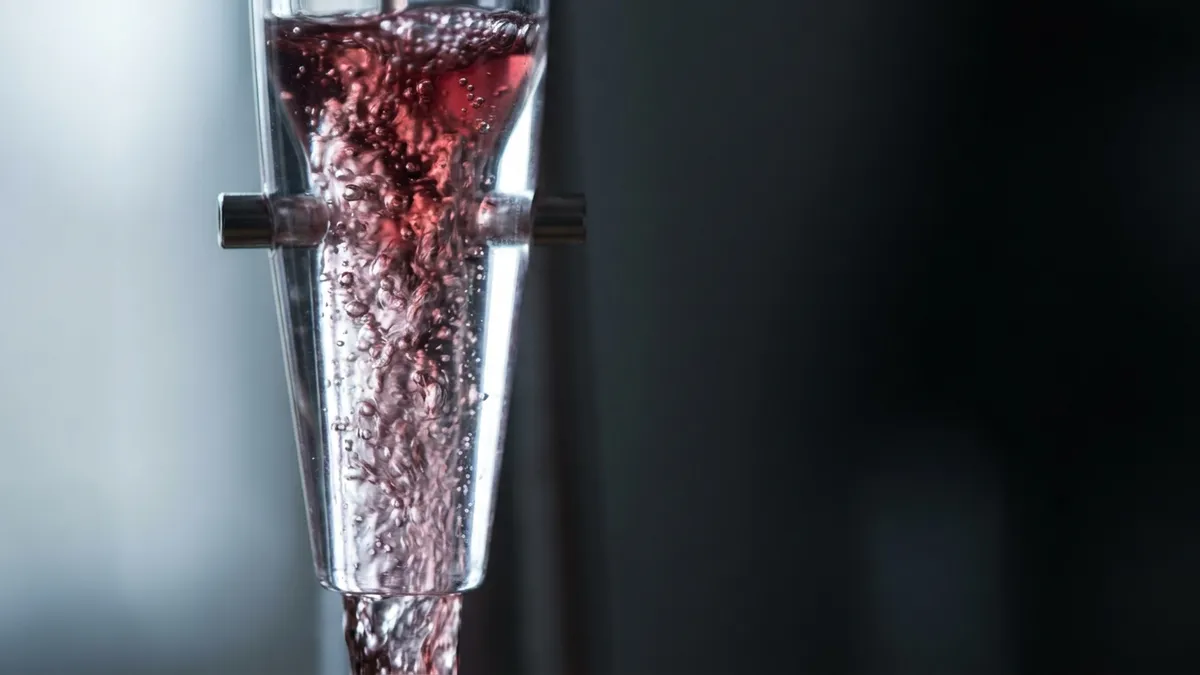
The comparison that makes this click: a bottle neck exposes about a square inch of wine to air, so a bottle left open "to breathe" barely changes for hours. An aerator, in the two seconds it takes to fill a glass, exposes thousands of times more surface area. That is why five seconds through an aerator can rival half an hour in a decanter — the tool is not adding magic, just a lot of surface area in a hurry.
Do Wine Aerators Actually Work?
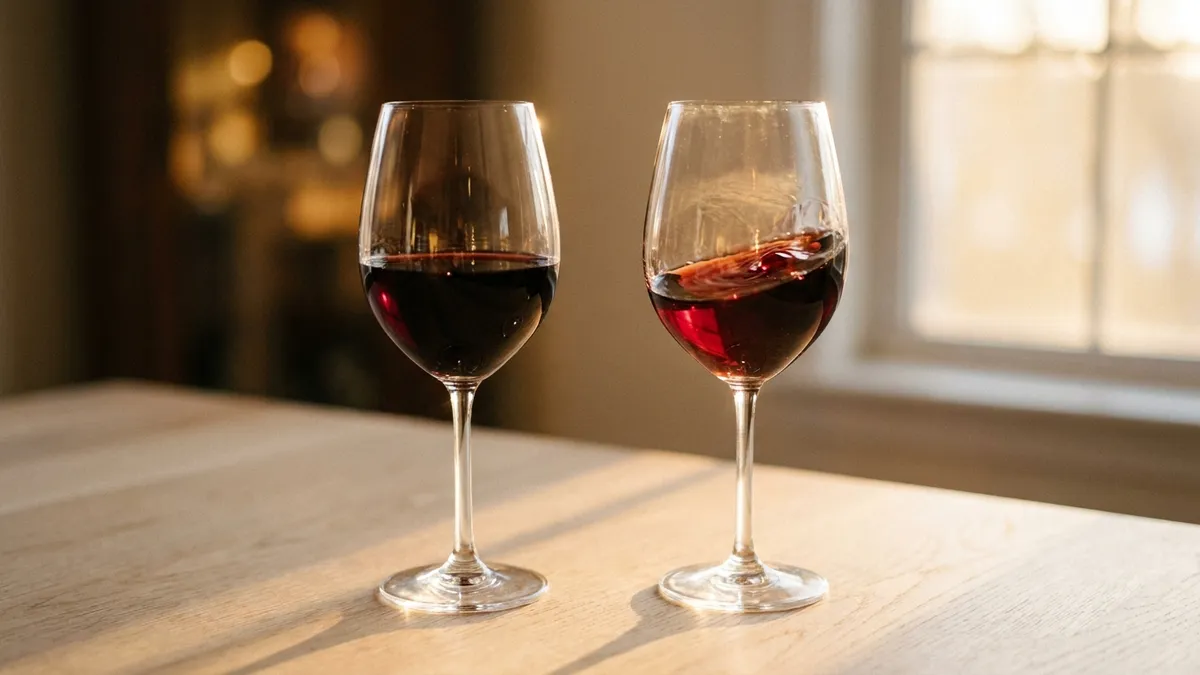
This is the honest crux, and the answer is a qualified yes. On young, tightly wound red wines, aeration produces a real and repeatable effect. In side-by-side pours of the same young Cabernet Sauvignon or Syrah — one straight from the bottle, one through an aerator — tasters consistently find the aerated glass softer, rounder, and more aromatic. The grippy tannin eases and the fruit steps forward.
But "works" depends entirely on the wine. Three things determine whether an aerator helps:
- Tannin level. High-tannin reds have the most to gain. Soft, fruity, low-tannin wines change little because there is less grip to smooth out.
- Age. Young wines are often closed and benefit from air. Aged wines have already softened over years in bottle and can be harmed by aggressive aeration.
- Fragility. Delicate aromatics — think the rose and forest-floor notes of aged Pinot Noir — can be blown off by turbulence rather than lifted.
So aerators work — on the right wine. Match the tool to the bottle rather than reaching for it out of habit, and it delivers. Reach for it on everything, and half your pours see no benefit while a few actively suffer.
Types of Wine Aerators
Aerators come in several mechanical styles, and they are not equal. Here is what separates them.
| Type | How it works | Best for | Worth it? |
|---|---|---|---|
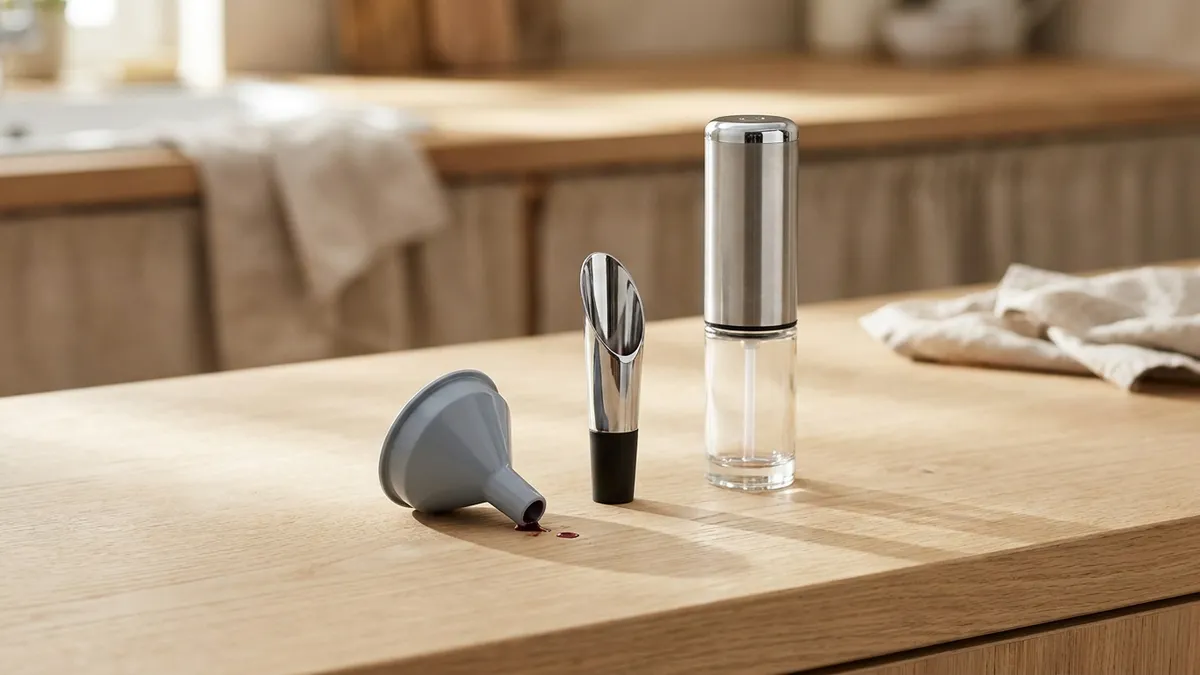
| Pour-through (Vinturi-style) | Held over the glass; wine passes through air ports as you pour | Everyday young reds, fast weeknight use | Yes — the default choice |
| In-bottle / on-neck | Screws onto the bottle and aerates every pour | Serving several glasses from one bottle | Fine, but can drip |
| Electric | Motorized pump draws wine up and dispenses it aerated | Countertop show, hands-free pouring | Overkill for a five-second job |
| Wand / twist stem | Stirred or swirled inside the glass | A quick single glass with no gadget | Weakest — barely beats a good swirl |
For nearly everyone, the pour-through type is the right answer. It is inexpensive, easy to rinse clean, and delivers the strongest effect for the money. Electric aerators look impressive on a counter but solve a problem — the labor of pouring — that was never really a problem. Wand aerators barely outperform a firm swirl of the glass, a technique you can practise for free with our guide to how to swirl wine.
Which Wines Benefit From an Aerator?
The single most useful skill with an aerator is knowing when to leave it in the drawer. Aeration is not a universal upgrade — it is a targeted fix for a specific problem.
Young, tannic reds: yes. This is the aerator's home turf. Wines with firm structure and youthful grip open up beautifully with a fast dose of air. That includes young Cabernet Sauvignon, Syrah/Shiraz, Malbec, Tannat, Petit Verdot, Aglianico, and young Nebbiolo from Barolo and Barbaresco. If a red tastes tight and grippy on opening, the aerator is your friend.
Aged, delicate reds: no. Once a wine has a decade or more in bottle, its tannins have softened and its aromatics have grown fragile. Aggressive aeration can flatten a bouquet that took twenty years to develop. Aged Burgundy, aged Pinot Noir, and old Barolo want a gentle decant for sediment, not a churning pour. For these bottles, reach for a decanter instead — our decanter vs aerator comparison lays out exactly which wines belong with which tool.
Most whites and rosés: rarely. These wines lead with primary fruit and floral aromatics that need no forcing. A full-bodied, oaked Chardonnay can take a light swirl, but the aerator is overkill and the gadget mostly gets in the way.
Sparkling wine: never. Aeration drives off the dissolved carbon dioxide that makes the bubbles. A flat Champagne, Cava, or Prosecco tastes thin and strangely sweet. Sparkling wine goes straight from bottle to glass, no exceptions.
If you are still learning to read a wine's tannin and structure, the Cabernet Sauvignon vs Merlot comparison is a good primer on how grape choice drives grip — and grip is exactly what an aerator addresses.
How to Use a Wine Aerator
Using a pour-through aerator takes seconds, but a few small habits get the most from it.
Pick the right wine
Reach for a young, tannic red — a Cabernet Sauvignon, Syrah, or Malbec that tastes tight on opening. Leave aged, delicate, white, and sparkling wines out of it.
Hold the aerator over the glass
Position a pour-through aerator directly above the wine glass, or fit an in-bottle model snugly onto the bottle neck so nothing drips down the side.
Pour in a steady stream
Pour at a moderate, even pace so the wine passes cleanly through the air ports. You will hear a soft hiss as air is drawn in — that sound means it is working.
Swirl, smell, then taste
Give the glass a short swirl, take a sniff to confirm the aromas have opened, then sip. For the full effect, pour a second glass without the aerator and compare.
That last step — the side-by-side comparison — is the fastest way to learn what aeration actually does to a wine, and it turns an abstract gadget into a skill you can feel.
Aerator, Decanter, or Just Let It Breathe?
These three approaches get muddled constantly, so here is the clean version.
An aerator adds air instantly during the pour. It is fast, cheap, and perfect for weeknight reds, but it cannot handle sediment. A decanter adds air gradually over 30 to 120 minutes in a wide vessel, and it also lets you pour aged wine off its sediment — a job no aerator can do. Full mechanics live in our how to decant wine walkthrough.
Letting a wine "breathe" in the bottle barely works at all. With only that square inch of surface at the neck exposed, an open bottle changes little even after an hour — the trick is mostly folklore. If a young red needs air, pour it through an aerator or into a decanter; do not leave the bottle standing and hope.
An aerator does the job in five seconds, a decanter in an hour, and leaving the bottle open does almost nothing at all.
For a wine you have already opened and want to keep, aeration is the opposite of what you want — there, the goal is to slow oxygen down, which is why how long wine lasts after opening and the risk of oxidized wine matter once the cork is out.
Common Wine Aerator Mistakes
A few habits undo the benefit or actively hurt the wine.
- Aerating aged or fragile reds. The number-one error. Forced turbulence strips the delicate tertiary aromas — leather, dried cherry, forest floor — that make old wine special. These bottles get a gentle decant, not an aerator.
- Aerating whites and sparkling wine. White wine rarely needs it, and sparkling wine is ruined by it. Keep the tool for structured reds.
- Expecting it to fix cheap wine. An aerator smooths existing tannin; it cannot invent flavor. A soft, low-tannin budget red has little to work with.
- Skipping the clean. Dried wine residue in the air ports clogs the device and taints the next pour. Rinse it with warm water after each use and let it dry fully.
Do You Actually Need a Wine Aerator?
Here is the straight answer, based on what you drink. If you mostly open young, tannic reds on a weeknight and want them to taste their best without waiting an hour, a pour-through aerator is a genuinely useful ten-to-thirty-dollar tool. It earns its keep on the very first grippy young Cabernet.
If you mostly drink whites, rosés, sparkling wine, or aged bottles, an aerator will spend its life in a drawer. Those wines either do not need air or are harmed by it, and your money is better spent on good stemware — our wine glass guide explains why glass shape moves the needle more than most gadgets.
The real skill is not owning the tool; it is knowing when air helps and when it hurts. That judgment comes from tasting attentively, and it is exactly what the Sommy app trains — the same structured look, swirl, smell, sip method that turns "this wine tastes tight" into a clear read on tannin, aroma, and whether a splash of air is the answer.
Once you can feel what air does to a young red, you have learned something more valuable than any gadget: how to read a wine's structure and give it exactly what it needs. Keep building that instinct with our wine serving temperature chart and the full serving and storage learning path, which walk through temperature, glassware, decanting, and aeration in sequence — the small habits that turn a casual drinker into a confident one.
Sources
- Aeration and decanting entries — The Oxford Companion to Wine, Jancis Robinson & Julia Harding (eds.), Oxford University Press
- Understanding Wine Chemistry — oxygen, phenolics, and tannin — Waterhouse, Sacks & Jeffery, Wiley
- Aerate — definition — Merriam-Webster
- Decanter — wine vessel and aeration — Encyclopaedia Britannica / Wikipedia
Frequently Asked Questions
Do wine aerators really work?
For young, tightly wound red wines under about ten years old, yes. A pour-through aerator injects oxygen into the stream and softens grippy tannin while lifting muted fruit, replicating roughly half an hour of decanting in seconds. For aged, delicate reds the aggressive turbulence can strip fragile aromatics, so the honest answer is that aerators work well on some wines and hurt others.
What does a wine aerator do?
A wine aerator pulls air into wine as it flows through the device, dissolving extra oxygen into the liquid. That oxygen softens the drying grip of tannin and helps locked-up aroma compounds escape into the glass. The effect is the same chemistry as decanting or swirling, just delivered faster and in a single pour rather than over 30 to 90 minutes in a wide vessel.
Which wines should you aerate?
Aerate young, structured red wines with firm tannin — Cabernet Sauvignon, Syrah, Malbec, Tannat, young Nebbiolo, and Bordeaux blends. These open up noticeably with air. Skip aeration for aged and delicate reds like old Pinot Noir, and for almost all white, rosé, and sparkling wines. Their aromatics are subtle or fragile, and forced air flattens more than it helps.
Is a wine aerator better than a decanter?
Neither is strictly better — they do overlapping jobs at different speeds. An aerator adds air instantly on the pour, which suits weeknight reds. A decanter adds air gradually and also separates sediment from old bottles, which an aerator cannot do. For fast casual drinking, an aerator wins on convenience. For aged wine, ceremony, or serving a table, a decanter is the right tool.
Can you aerate white or sparkling wine?
Rarely for white wine and never for sparkling. Most whites and rosés are built on delicate aromatics that do not need forcing, though a full-bodied oaked Chardonnay can take a gentle swirl. Sparkling wine must never be aerated: the turbulence drives off the dissolved carbon dioxide, and a flat Champagne, Cava, or Prosecco reads thin and oddly sweet.
How long should you aerate wine?
A pour-through aerator works in the seconds it takes to fill the glass — there is no waiting. If you decant instead, young tannic reds usually peak after 30 to 60 minutes of air, while aged wines need far less, often 15 to 30 minutes, before their aromatics fade. When in doubt, taste the wine every 15 minutes and stop when it shows best.
Sommy Team
LinkedInFounder & Wine Educator
The Sommy Team is building the world's most approachable wine education app, helping beginners develop real tasting skills through structured courses and AI-guided practice.