Wine Decanter vs Aerator: Which Do You Need?

By the Sommy Team — AI-assisted, human-edited.
Updated Apr 29, 2026
Contents (15)
- TLDR
- Decanter vs Aerator, in 90 Seconds
- What a Decanter Actually Does
- What an Aerator Actually Does
- The Two Jobs vs One Job Difference
- When Each Tool Is Right
- Common Mistakes With Both Tools
- A Simple Test You Can Run Tonight
- Decanter Shapes Worth Knowing
- Aerator Types Worth Knowing
- What About a Coravin?
- The Double Decant Pro Move
- Cost and What to Buy
- What Should You Actually Own?
- The Practical Takeaway
TL;DR
A decanter does two jobs: aerates young tannic reds over 30 to 120 minutes, and separates sediment from old fragile bottles. An aerator does one job: pulls air into young reds in 5 to 10 seconds. They overlap on speed and air, but only the decanter handles sediment, ceremony, and aged wine safely.
TLDR
A decanter does two jobs: aerates young tannic reds over 30 to 120 minutes, and separates sediment from old fragile bottles. An aerator does one job: pulls air into young reds in 5 to 10 seconds. They overlap on speed and air, but only the decanter handles sediment, ceremony, and aged wine safely.
Decanter vs Aerator, in 90 Seconds
Here is the short version. A decanter is a wide open glass vessel that uses time and surface area to expose wine to oxygen. It also lets you pour aged wine off the dust and tannin sediment that settles in old bottles. An aerator is a small handheld device that forces wine through narrow channels and air ports as you pour, replicating roughly 30 to 60 minutes of decanter aeration in about five seconds. Both tools soften young tannic reds and lift muted fruit aromas. Only a decanter separates sediment, only a decanter handles aged delicate bottles safely, and only a decanter doubles as a serving piece on the table. The decanter vs aerator choice comes down to how much time you have, how old your wines are, and whether you want one elegant tool or one fast one. For most home drinkers, a single wide-bottomed decanter plus an optional pour-through aerator covers ninety-five percent of bottles.
What a Decanter Actually Does
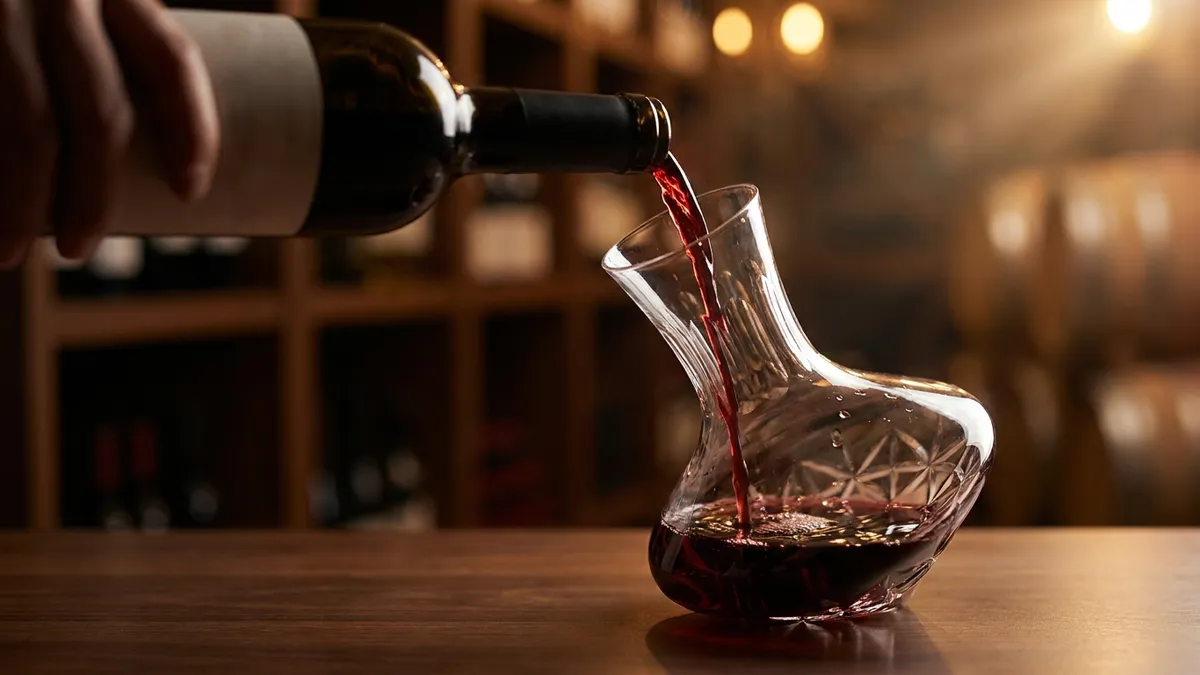
A decanter is just a wide open glass vessel — usually crystal, sometimes plain glass — designed to hold the contents of a wine bottle in a shape that maximizes contact with air. There is no mechanism, no moving parts, and no electricity. The whole tool is geometry plus time.
The geometry matters because aeration — the chemical reaction between dissolved oxygen and the wine — happens at the surface where liquid meets air. A bottle exposes about a square inch of wine through the neck. A wide-bottomed decanter exposes a face the size of a salad plate. That difference in surface area is why a decanter aerates a wine in 30 to 90 minutes and an unopened bottle barely changes overnight.
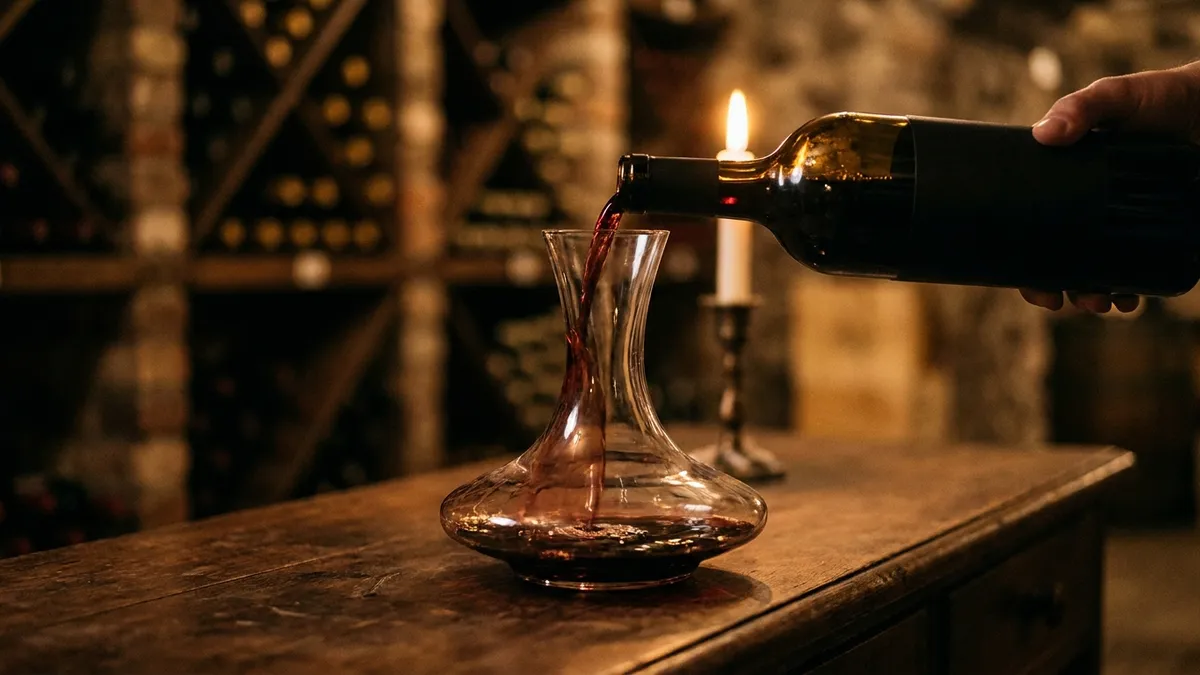
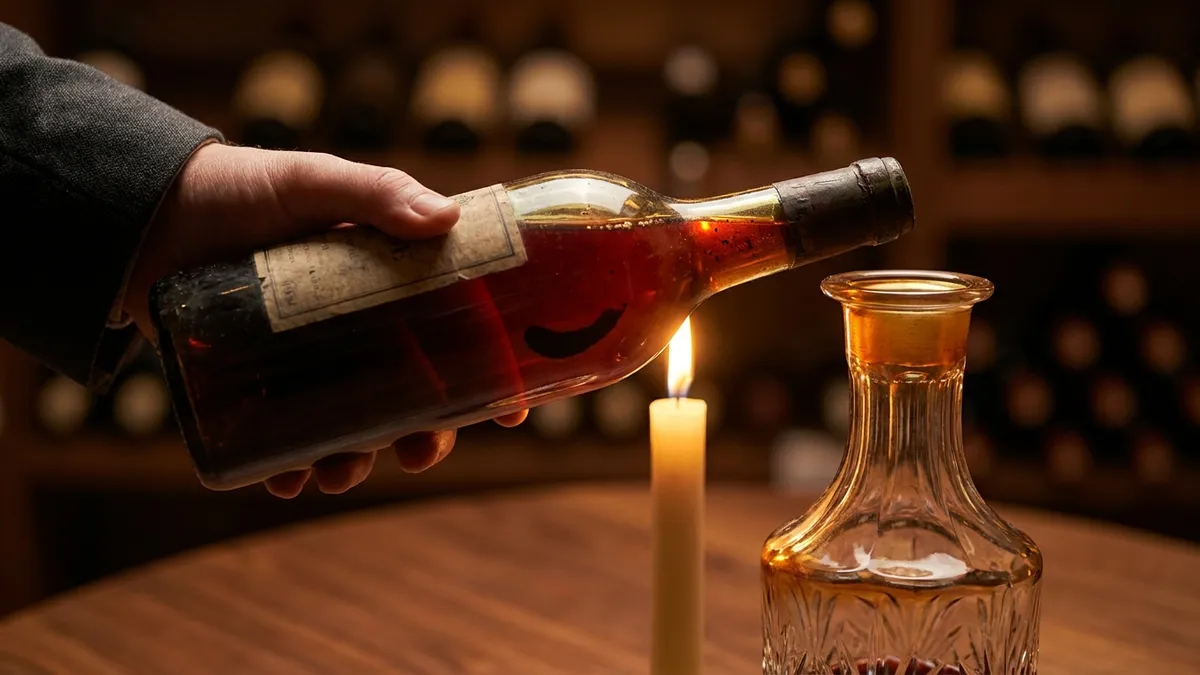
A decanter also serves a second, completely separate purpose: sediment separation. Old red wines drop solid particles — precipitated tannin, color pigments, and tartrate crystals — onto the inside of the bottle over years in storage. Pouring slowly into a decanter, with a candle or flashlight behind the bottle neck, lets you watch for the cloudy ribbon of sediment and stop pouring before it joins the clear wine.
For the full mechanics of how decant times change wine flavor, our companion guide on how to decant wine walks through exact times for every style, and if the vocabulary is new, our explainer on what decanting is defines the term from scratch. This article focuses on whether a decanter or an aerator is the right tool for the bottle in your hand.
What an Aerator Actually Does
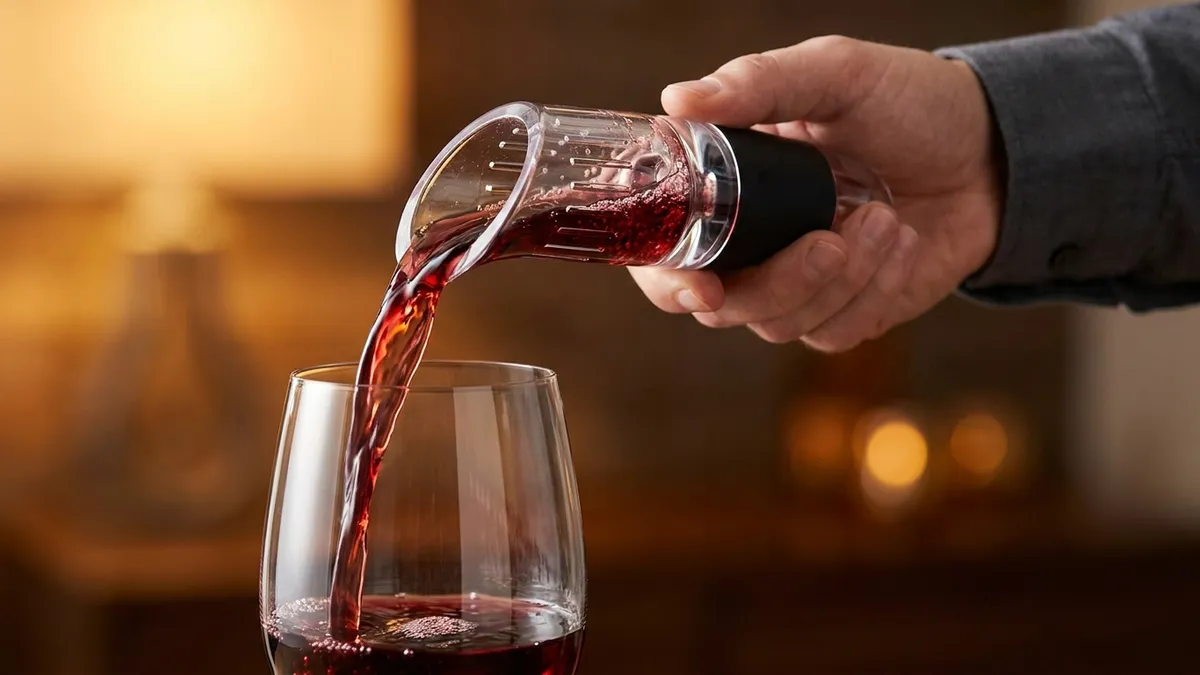
A wine aerator is a small device — usually plastic, sometimes glass or metal — that you either screw onto the bottle neck or hold over a glass while pouring. As wine flows through the device, it gets pulled past a series of air ports or perforated channels that inject oxygen into the stream.
The Vinturi was the first popular pour-through aerator, and the name has become shorthand for the whole category. The physics is straightforward: the wine moves fast, narrow channels create a pressure drop, ambient air rushes in to fill the gap, and the resulting turbulence dissolves more oxygen into the liquid than a slow pour would.
The result is real. Side-by-side blind tests on young tannic reds — Cabernet Sauvignon, Syrah, Malbec — consistently show tasters can identify the aerated glass as softer, more open, and more aromatic. The aerator is doing in five seconds what a decanter does in 30 to 60 minutes.
The trade-off is control. A decanter is gentle and gradual. An aerator is aggressive and instant. For young muscular reds, that is a feature. For aged delicate reds, it is a problem.
The Two Jobs vs One Job Difference
This is the cleanest way to keep decanter vs aerator straight. A decanter does two distinct jobs and an aerator does one.
Job one — aeration. Both tools handle this. A decanter takes 30 to 120 minutes; an aerator takes 5 to 10 seconds. The end result on young tannic reds is roughly comparable. Pick based on how much time you have.
Job two — sediment separation. Only a decanter does this. An aerator is on the bottle neck during the pour, which means sediment goes through the device along with the wine. There is no version of an aerator that handles aged sediment-throwing reds correctly.
The implication is simple. If you mostly drink young weeknight reds, an aerator covers you. If you drink anything aged, anything traditional, anything with a decade or more in bottle, you need a decanter. Aerators cannot serve aged Bordeaux, aged Barolo, vintage Port, or any unfiltered red over ten years old without making a mess.
When Each Tool Is Right
The matchup is wine-specific. Here is the practical decision matrix.
Young tannic reds under 10 years old. Both tools work. An aerator is faster and fine for casual drinking. A decanter is better if you are serving multiple glasses or want to taste evolution over an hour. Wines in this category include young Cabernet Sauvignon, Syrah, Malbec, Tannat, Aglianico, Petit Verdot, and structured young Nebbiolo from Barolo or Barbaresco. The structural contrast between these wines and softer reds is laid out in our Cabernet Sauvignon vs Merlot comparison.
Aged classical reds 15+ years old. Decanter only — and gently. Use a wide bottle stand or hold the bottle nearly horizontal, pour slowly with a candle behind the neck, and stop when sediment reaches the shoulder. Drink within 30 minutes. Aerators are too aggressive for this category and can flatten the bouquet within minutes.
Aged Burgundy and aged Pinot Noir. Brief decanting, 15 to 30 minutes maximum, primarily for sediment. The fragile florals of Pinot Noir — rose petal, raspberry, sous-bois, mushroom — sit on a thin structural frame and dissipate quickly in air. Aerators are off the table here entirely.
Aged Barolo and Bordeaux. A wide-bottom decanter at 20 to 45 minutes for the 10 to 20 year-old window, then 15 to 30 minutes once past 15 years. Our Bordeaux wine guide and Barolo guide cover the regional structure that determines how long each can hold up to air.
Whites. Rarely needed. Full-bodied oaked Chardonnay or aged Riesling can benefit from a 15 to 30 minute decant. Skip the aerator — the gentle pour into the decanter is enough, and the device is overkill for white wine.
Sparkling wine. Neither tool. Pouring kills the bubbles and a flat sparkling wine reads thin and sweet. Champagne, Cava, Prosecco, and pet-nat go from bottle straight to flute or tulip glass.
Common Mistakes With Both Tools
The biggest mistakes happen when people use a tool out of habit rather than judgment.
Using an aerator on aged Burgundy. This is the number-one error. The aggressive air injection strips the tertiary aromas — leather, dried cherry, forest floor, truffle — that took the wine 20 years to develop. Inside ten minutes the bouquet collapses. Aged Burgundy gets a careful slow pour into a narrow-necked decanter and drinks fast.
Decanting cheap wine "to make it taste expensive." Most wines under $25 are made in a fruit-forward, soft-tannin style designed to drink on release. A 60-minute decant changes them very little. The tool needs structural raw material to work on, and a $10 weeknight Merlot does not have it. Save the decanter for higher-tannin bottles that genuinely benefit.
Decanting sparkling wine. Already covered, but worth repeating. A flat Champagne is a destroyed Champagne, and the time-delay between decanting and serving is enough to lose the mousse entirely.
Letting wine "breathe in the bottle for an hour." Pulling the cork exposes only about a square inch of wine to air. After an hour, the bottle has barely changed. Either pour into a decanter or aerator-pour into the glass — bottle breathing is theatre, not aeration.
A Simple Test You Can Run Tonight
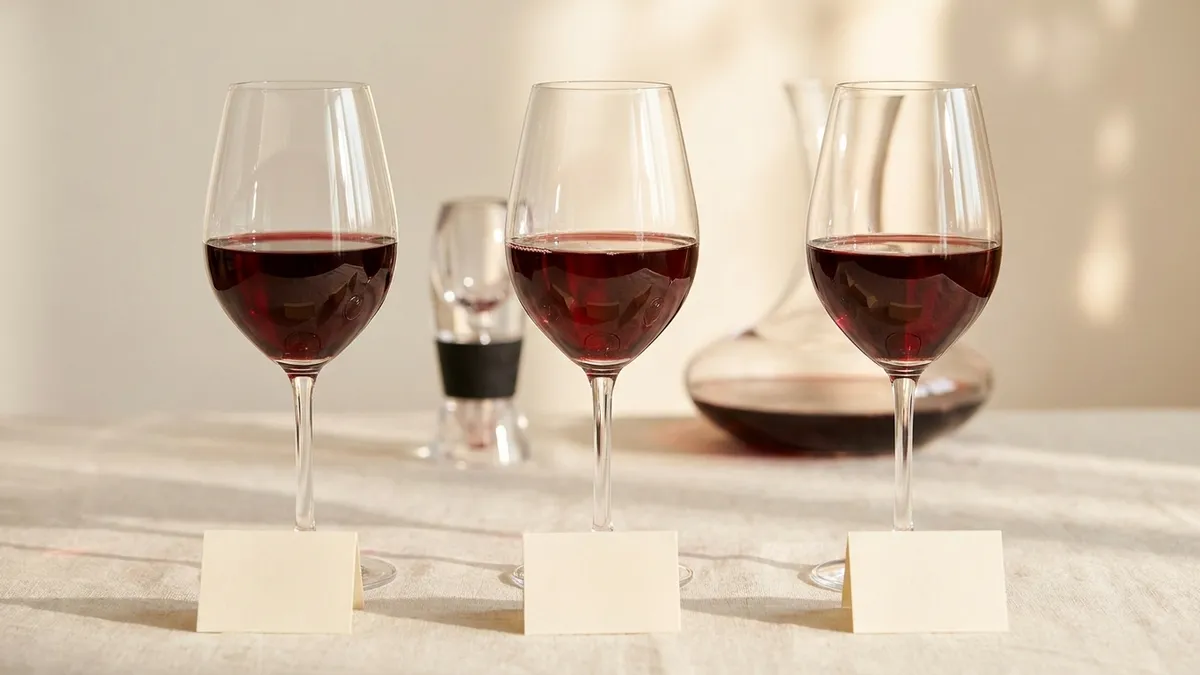
The fastest way to internalize how each tool works is to do it deliberately. Open a young, structured red — a young Cabernet Sauvignon or Syrah is perfect. Pour two glasses. Use an aerator on the third glass as you pour. Decant the rest of the bottle.
Taste each glass at 0, 10, 20, and 30 minutes. The undecanted glass will still feel tight, with grippy tannin and muted fruit. The aerated glass will feel smoother and more open immediately, but flat after 20 minutes. The decanted glass will evolve gradually, peaking around the 30 to 60 minute mark.
The exercise teaches a lot in one evening — what aeration does to young tannin, how each tool delivers it, and how the wine itself changes as oxygen integrates into the structure. Side-by-side comparison is also one of the fastest ways to develop your wine palate, and Sommy builds this kind of structured side-by-side practice into its tasting courses so the calibration happens through guided exercises rather than guesswork.
Decanter Shapes Worth Knowing
Decanters are not interchangeable. The shape changes how fast aeration happens.
A wide-bottomed decanter maximizes the wine's surface area against air. The wine forms a thin pool with a large face exposed to oxygen, which speeds up aeration. This is the right shape for tight young reds that need help opening up.
A narrow-necked decanter — sometimes called a Port duck or sediment decanter — limits oxygen exposure. The wine sits in a tall narrow column with minimal exposed face. This is the right shape for older wines that need sediment removed but should not be aerated aggressively.
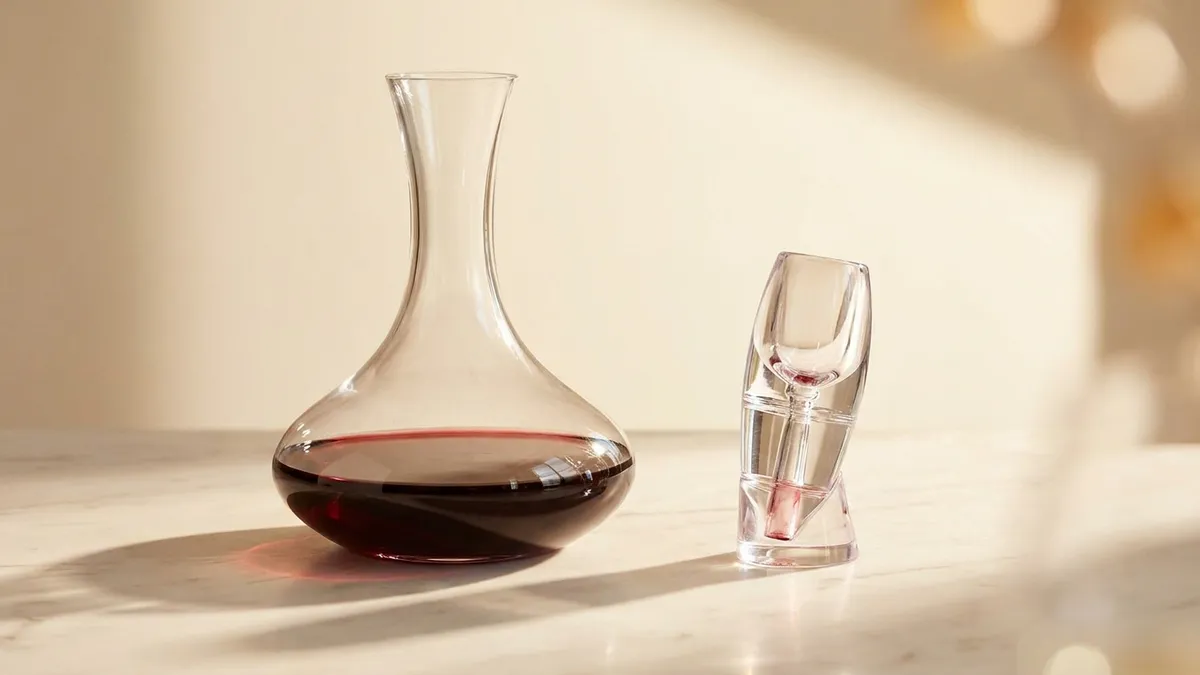
A standard glass carafe sits in the middle. Plenty of surface area for everyday aeration, easy to clean, no special storage needed. For most home drinkers, a plain glass carafe in the $20 to $50 range is the right starting point.
A duck-shape decanter has a long horizontal body designed for vintage Port and Madeira. Most home drinkers do not need this, but it is the traditional vessel for fortified wines covered in our Port wine guide.
The key insight: shape is a refinement, not a requirement. A clean glass jug pours wine as well as a $400 hand-blown crystal decanter, even if it does not photograph as nicely.
Aerator Types Worth Knowing
Aerators come in a few mechanical variants.
Vinturi-style handheld. You hold the device over the glass and pour through it. Cheap, effective, easy to clean. The most popular type and the right starting point at $20 to $40.
On-bottle aerators. Screw onto the bottle neck and aerate as you pour. Convenient because they live on the bottle for the duration of service. The trade-off is that they make the bottle awkward to hold and can drip.
Electric aerators. Motorized devices that draw wine up through a tube and dispense it aerated. Look fancy on a counter, work fine, but mechanically overkill for what is essentially a five-second pour problem. Hard to justify the price.
Wand and stem aerators. Glass or stainless wands you stir into the glass. Effectively a slow swirl, less efficient than a pour-through. Best as gimmicks.
For most home drinkers, the answer is a Vinturi-style pour-through. Skip the electric and the wand variants. Our dedicated wine aerator guide goes deeper on how each type works and which wines actually benefit.
What About a Coravin?
A Coravin is often confused with an aerator because it is a wine tool you use during pouring, but it is a completely different category. A Coravin pierces the cork with a fine hollow needle, draws out a single pour through that needle, and replaces the displaced volume in the bottle with argon gas — an inert gas that protects the remaining wine from oxidation.
The Coravin is a preservation tool, not an aeration tool. It is for slow drinkers, restaurants pouring expensive wine by the glass, or collectors checking how a bottle is evolving without committing to drinking the whole thing. It does nothing to soften tannin or lift muted fruit aromas — those are aeration jobs that decanters and aerators handle.
If your problem is "I want to drink one glass and save the rest of the bottle for a week," a Coravin is the answer. If your problem is "this young Cabernet tastes tight on opening," a decanter or an aerator is the answer.

The Double Decant Pro Move
Restaurant sommeliers often use a technique called the double decant for older bottles, especially when the table will appreciate seeing the original label.
The steps are simple. Pour the wine slowly into the decanter as usual, leaving sediment behind. Rinse the original bottle with cold water and shake it dry — never warm or hot water, which can shock cork residue and add off flavors. Then pour the decanted wine back into the clean bottle.
The wine gets two transfers worth of aeration in about three minutes, and the original bottle returns to the table looking dignified rather than generic. For an older Bordeaux or Barolo that needs short aeration plus sediment separation, the double decant is the elegant solution. The technique pairs naturally with the rituals covered in our wine tasting vocabulary cheat sheet and the broader sequence in how to taste wine like a sommelier.
Cost and What to Buy
Tools cost less than the wines they serve. Here is the realistic price ladder.
A plain glass decanter in the $20 to $50 range is functionally identical to a $200 crystal one. You are paying for aesthetics, not aeration. Start here unless you specifically want a showpiece.
A crystal decanter in the $80 to $200 range looks better on the table and feels nicer in the hand. No functional difference in how it aerates wine.
A Vinturi-style aerator in the $20 to $40 range is the cheapest meaningful upgrade you can make to weeknight drinking. It pays for itself in one bottle of young Cabernet.
A Coravin in the $200 to $400 range is for slow drinkers who want to keep bottles fresh across multiple weeks. Not for aeration. Not for everyone.
The right wine glass guide matters more than the decanter brand. Spending $300 on a crystal decanter and pouring into thick everyday tumblers is backwards.
What Should You Actually Own?
The honest decision tree, based on what you drink.
If you mostly drink young reds under $25. Buy a $30 Vinturi aerator. That is it. A decanter is overkill for the wines you open most weeknights.
If you drink fine wines that age — Cabernet, Bordeaux, Barolo, structured Italian reds. Buy a wide-bottomed decanter. Skip the aerator until you find a use case that justifies it.
If you drink aged classical reds. Buy a decanter and a candle for sediment spotting. Aerators are not safe for the wines you care about.
If you drink mostly whites and sparkling wine. Neither tool. Spend the money on better stemware instead.
If you drink everything across the price and age spectrum. A decanter and an aerator. Add a Coravin if you tend to drink slowly and waste half-bottles.
The point is to buy for the wines you actually open, not for the wines you imagine you will open. A $400 crystal decanter sitting unused on a shelf serves nobody.
The Practical Takeaway
Decanters and aerators are not competitors so much as different speeds of the same idea. Both expose wine to oxygen. The decanter does it slowly, with control, in a vessel that also handles sediment and looks elegant. The aerator does it instantly, in five seconds, in a small device that fits in a kitchen drawer.
For young tannic reds, either works. For aged delicate reds, only the decanter. For sparkling wine, neither. For most home drinkers, a single wide-bottomed decanter covers ceremony, multiple-glass service, and aged bottles, while an optional Vinturi covers fast weeknight pours.
The Sommy app builds serving and aeration habits directly into its tasting practice, so the question of "decant or not" turns from a guess into a calibrated reflex. For a broader curriculum on how the choices around the bottle shape what ends up in your glass, the Sommy serving and storage learning path walks beginners through temperature, glassware, decanting, and storage in sequence.
Want to keep building the small habits that turn a casual drinker into a confident one? Start with the structured tasting courses at sommy.wine — short, hands-on lessons that train palate, vocabulary, and serving instincts together, one glass at a time.
Frequently Asked Questions
What is the difference between a decanter and an aerator?
A decanter is a wide open vessel that uses time and surface area to expose wine to air, and it can also separate sediment from older bottles. An aerator is a small device that forces wine through air channels as you pour, replicating roughly 30 to 60 minutes of decanting in about five seconds. Decanters do two jobs — aeration and sediment separation. Aerators do one — fast aeration on a single pour.
Do aerators actually work?
For young, tightly wound red wines under ten years old, yes. Vinturi-style pour-through aerators reliably soften tannin and lift fruit aromas in a side-by-side blind comparison. For aged delicate reds, no — the aggressive turbulence can strip aromatics that took decades to develop. Match the tool to the wine, not the other way around.
Should I buy a decanter or an aerator?
If you mostly drink young reds and want a quick weeknight tool, buy a Vinturi-style aerator for around 30 dollars. If you drink older bottles or want a tool that also handles sediment and looks elegant on the table, buy a wide-bottomed decanter. If you can afford both and drink everything from young Cabernet to aged Barolo, owning one of each covers every situation.
Can you use an aerator on aged wine?
It is a bad idea for fragile old wines, especially aged Burgundy, aged Pinot Noir, and old Barolo. Their aromatics are delicate and dissipate fast in air. The forced turbulence of an aerator can flatten the bouquet within minutes. For wines over fifteen years old, use a decanter for a short, controlled pour to remove sediment and drink soon after.
Does decanter shape really matter?
Yes. A wide-bottomed decanter exposes a large surface area and speeds up aeration, which is ideal for tight young reds. A narrow-necked decanter (sometimes called a Port duck) limits oxygen and is better for fragile aged wines that need sediment removed but not aerated aggressively. A plain glass carafe sits in the middle and works fine for everyday drinking.
What is a Coravin and is it the same as an aerator?
No. A Coravin is a wine preservation tool, not an aeration tool. It pierces the cork with a thin needle, draws out a single pour, and replaces the volume with argon gas so the rest of the bottle stays sealed and protected from oxidation. It is useful for slow drinkers and sommeliers pouring expensive wine by the glass. It does nothing for aeration.
Is letting wine breathe in the bottle the same as decanting?
Almost not at all. Pulling the cork exposes only the small disc of wine at the bottle neck — about a square inch of surface area — to air. After an hour of this, the rest of the wine has barely interacted with oxygen. Pouring the bottle into a decanter exposes thousands of times more surface area in seconds. The bottle breathing trick is mostly theatre.
Should I decant or aerate sparkling wine?
Never. Both methods kill the carbon dioxide that creates the bubbles. A flat sparkling wine reads as thin and sweet, regardless of base wine quality. Champagne, Cava, Prosecco, and pet-nat all stay in the bottle and pour straight into the glass.
Sommy Team
LinkedInFounder & Wine Educator
The Sommy Team is building the world's most approachable wine education app, helping beginners develop real tasting skills through structured courses and AI-guided practice.