Vin Doux Naturel Guide: France's Sweet Fortified Wines

By the Sommy Team — AI-assisted, human-edited.
Updated Oct 9, 2026
Contents (8)
- What Is Vin Doux Naturel, in One Paragraph?
- Which Vin Doux Naturel Should You Buy?
- What Do Blanc, Grenat, Ambré, Tuilé and Rancio Mean on the Label?
- How Is Vin Doux Naturel Different From Port?
- How Do You Serve and Pair Vin Doux Naturel?
- How Long Does Vin Doux Naturel Last Once Opened?
- How Is Vin Doux Naturel Made?
- Why Is It Called "Naturel" If Spirit Is Added?
TL;DR
Vin doux naturel is a sweet French wine whose fermentation is stopped with up to 10% grape spirit, keeping the grape's own sugar at about 15 to 17% alcohol. White Muscat versions taste fresh and floral; red Grenache ones from Banyuls and Maury taste of cherry, then nuts and cocoa with age.
Vin doux naturel is wine that is stopped halfway to dry. Grape spirit goes in while the juice is still sweet, the yeast dies, and the grape's own sugar stays in the bottle. In the glass that means a sweet wine around 15 to 17% alcohol, lighter than Port, made in the south of France from Muscat or Grenache.
What Is Vin Doux Naturel, in One Paragraph?
Vin doux naturel (VDN, "naturally sweet wine") is a lightly fortified (spirit added, which lifts the alcohol) sweet wine from the south of France. Producers add up to 10% of a 95% grape spirit before fermentation finishes, so the wine keeps its natural grape sugar and ends around 15 to 17% alcohol. Most VDN is made from white Muscat or red Grenache.
The best-known appellations (protected place names) are Muscat de Beaumes-de-Venise in the Rhône, Rivesaltes, Banyuls and Maury in Roussillon, Muscat de Frontignan in the Languedoc and Muscat du Cap Corse in Corsica. Young versions taste of fresh fruit; versions aged with air taste of nuts, dried fruit and cocoa.
Which Vin Doux Naturel Should You Buy?
Pick by grape first: Muscat for fresh orange blossom and peach, Grenache from Banyuls or Maury for cherry and cocoa. Then use the age word on the label to choose between fresh fruit and nutty depth. There are about a dozen VDN appellations across Roussillon, the Languedoc, the southern Rhône and Corsica, so the shop shelf is wider than Banyuls alone.
| Appellation | Main grape | Where | In the glass | Pour it with |
|---|---|---|---|---|
| Muscat de Beaumes-de-Venise | White Muscat | Southern Rhône | Orange blossom, peach, grapey and fresh | Fruit tarts, peach desserts, an apéritif on ice-cold evenings |
| Muscat de Rivesaltes | White Muscat | Roussillon | Fresh grape, citrus peel, honey | Lemon tart, fresh goat cheese |
| Muscat de Frontignan | White Muscat | Languedoc | Apricot, orange peel, soft and sweet | Almond pastries, apricot desserts |
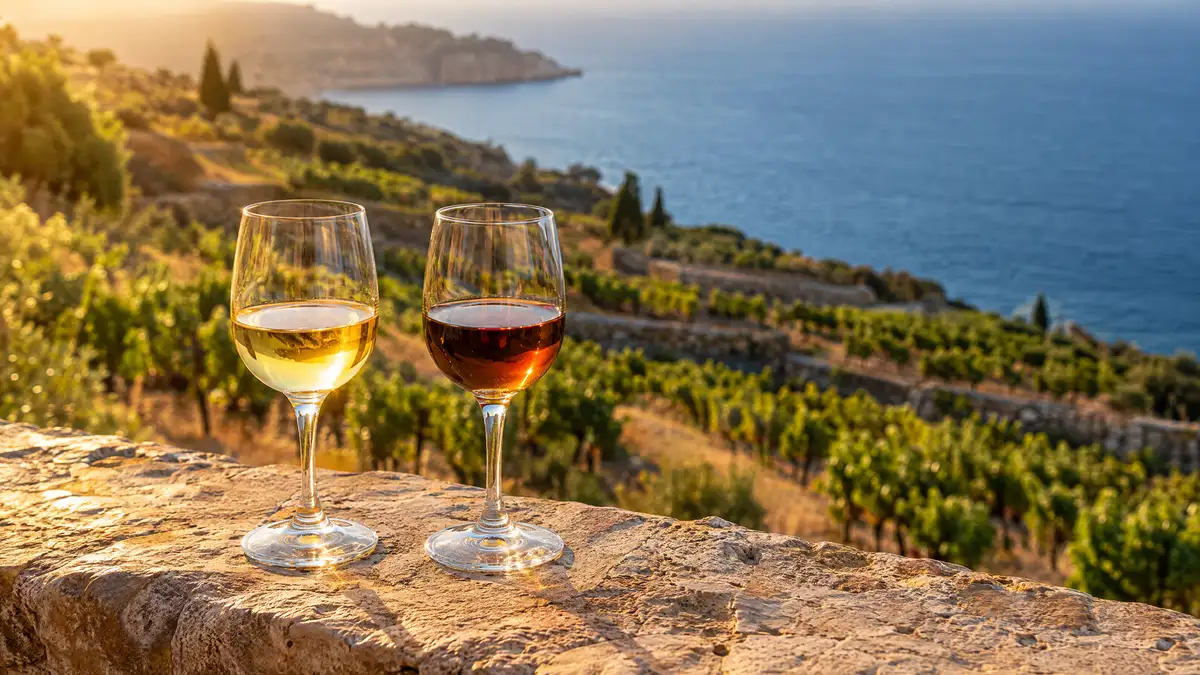
| Banyuls | Red Grenache | Roussillon coast | Cherry and plum when young; cocoa and coffee when aged | Dark chocolate, berry desserts |
| Maury | Red Grenache (75% minimum) | Roussillon, inland | Black cherry and fig; walnut and coffee when aged | Chocolate cake, blue cheese |
| Rivesaltes | Grenache in three colours, plus others | Roussillon and a corner of the Languedoc | From fresh red fruit to amber walnut and toffee | Nuts, dried figs, aged cheese |
| Rasteau | Mainly red Grenache | Southern Rhône | Plum and cherry, firmer and darker | Chocolate and cherry desserts |
If the label says Muscat, expect a pale gold wine that tastes of fresh grapes and serve it fridge-cold. If it names Banyuls, Maury or Rasteau with no age word, expect a young purple-red wine full of cherry. Rivesaltes is the widest appellation, spanning about 90 villages in Roussillon and nine more in the neighbouring Languedoc, so its label words matter most.
The Muscat wine guide covers the grape family behind the white styles. The Grenache wine guide covers the red grape in its dry forms.
What Do Blanc, Grenat, Ambré, Tuilé and Rancio Mean on the Label?
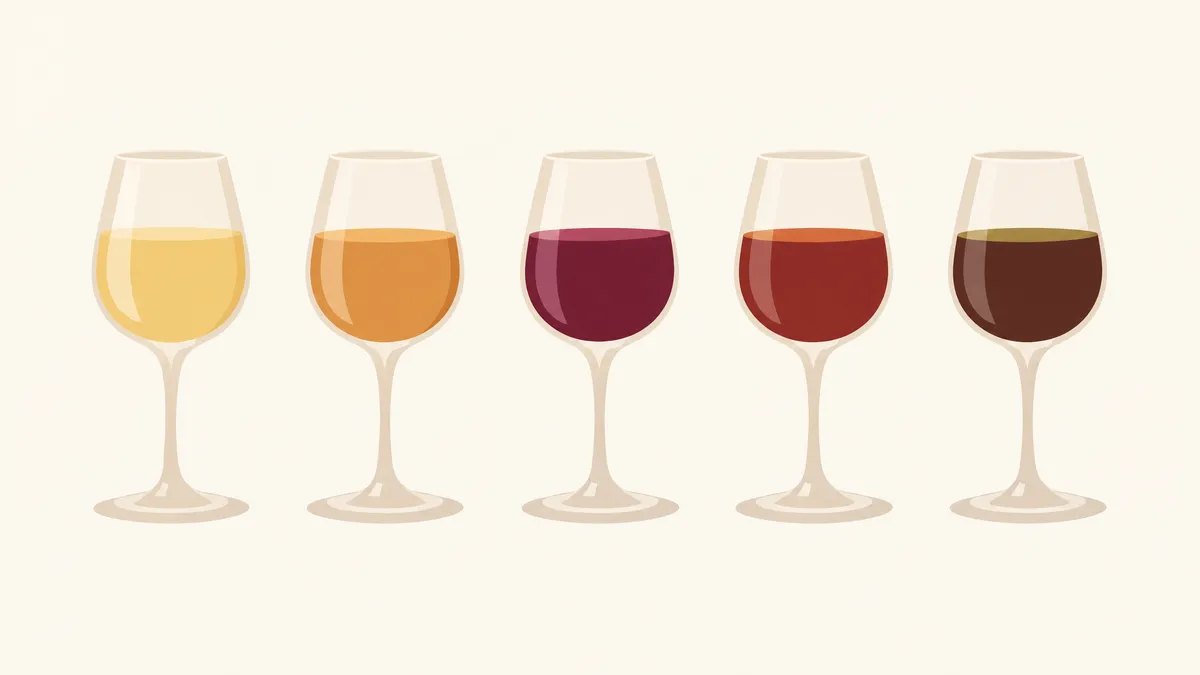
They name the colour and how the wine aged, and that tells you whether to expect fresh fruit or nuts and dried fruit. Young styles are kept away from air. Aged styles are oxidative (deliberately exposed to air, which turns fruit flavours into nut, caramel and dried-fig flavours).
- Blanc: a young white, usually Muscat. Pale gold, floral, fresh.
- Rosé: a young pink version, rarer, tasting of strawberry and raspberry.
- Grenat: a young red Grenache bottled early to keep its purple colour and cherry fruit.
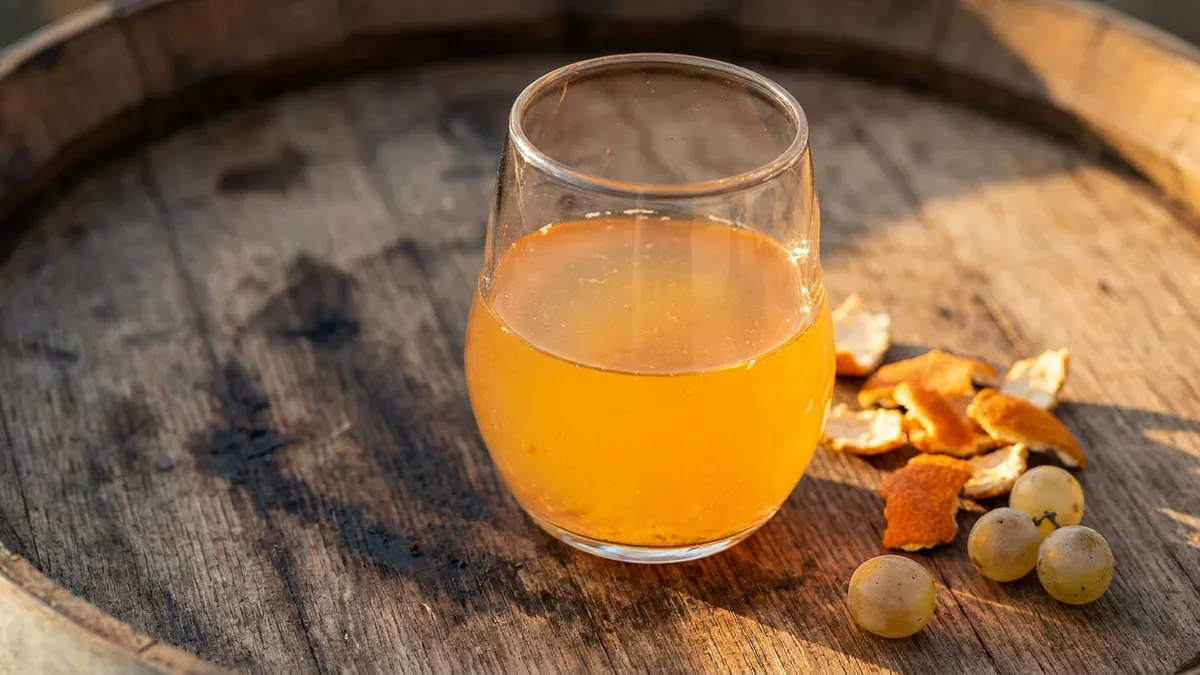
- Ambré: a white aged with air until it turns amber. Tastes of orange peel, walnut and toffee.
- Tuilé: a red aged with air until it turns the brick colour of a roof tile. Tastes of dried cherry, cocoa and coffee.
- Hors d'âge: "beyond age", held for many years before release.
- Rancio: aged long and hot with lots of air. Tastes of walnut, curry spice and old wood, with a sweetness that reads drier.
If the label says rancio or hors d'âge, save it for sipping with nuts and cheese after dinner. Its savoury edge clashes with fresh fruit desserts.
How Is Vin Doux Naturel Different From Port?
Both stop fermentation with grape spirit, but VDN uses less of it and finishes around 15 to 17% alcohol, where Port ends around 20 to 22%. That gap is easy to taste: VDN feels less hot on the finish and shows its fruit more plainly.
A WSET Level 2 instructor quoted by Decanter China describes this family of wines as "almost like a cocktail": a little wine, a lot of grape juice and some un-aged brandy.
| Vin doux naturel | Port | |
|---|---|---|
| Country | France | Portugal |
| Finished alcohol | About 15 to 17% | About 20 to 22% |
| Main grapes | Muscat (white), Grenache (red) | Mainly red Douro grapes |
| Colours | White, pink, amber, red, brick | Mostly red and tawny; some white |
| Feel | Lighter, fresher, less heat | Heavier, warmer, more grip |
The bigger difference for a shopper is the white side. Most Port is red, while a Muscat VDN is a light, floral sweet white that works as an apéritif. The red Grenache styles are the ones to compare directly with Port. A young grenat Banyuls sits close to a ruby Port; a tuilé or rancio sits closer to a tawny. The Port wine guide covers those Port styles.
How Do You Serve and Pair Vin Doux Naturel?
Serve fresh styles cold and aged styles cool, in small pours, and match the wine's sweetness to the plate. Put Muscat and young grenat in the fridge for a few hours. Pour about half a normal glass, since the wine is sweet and around 16% alcohol.
Take ambré, tuilé and rancio out of the fridge 20 minutes before pouring, because cold mutes their nut and caramel smells. The wine serving temperature chart gives ranges for sweet wines.
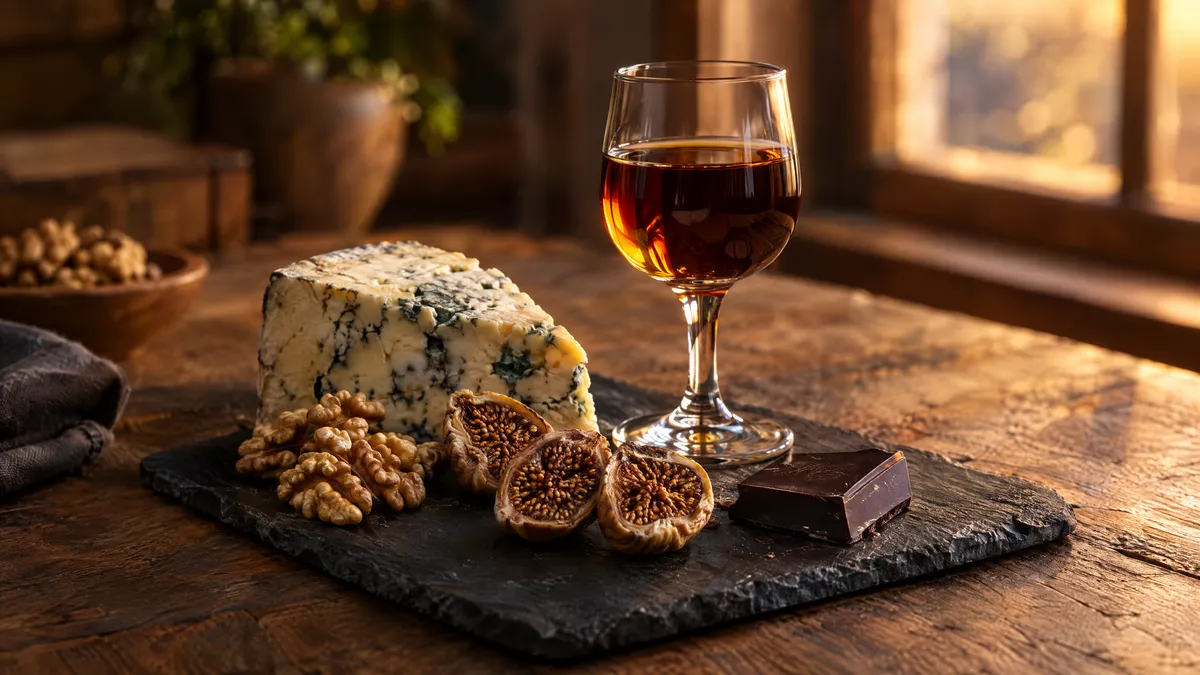
The wine must be at least as sweet as the dish, or it tastes thin and sour. Within that rule, match colour to flavour:
- Fruit tarts and lemon desserts: Muscat. Its acidity and orange-blossom smell meet the fruit and cut the pastry's butter.
- Dark chocolate: red grenat or tuilé Banyuls or Maury. Cocoa bitterness meets cherry and cocoa in the wine, and the sugar stops the chocolate tasting chalky. The wine with chocolate guide goes through it by cacao percentage.
- Blue cheese: Maury or aged Rivesaltes. Salt makes the sugar taste rounder; see wine with blue cheese.
- Walnuts, dried figs, coffee desserts: ambré, tuilé or rancio. Nut meets nut.
If the dessert is chocolate, pour red Grenache; if it is fresh fruit or citrus, pour Muscat. For tasting a fortified glass properly, follow the method in how to taste fortified wine.
How Long Does Vin Doux Naturel Last Once Opened?
Fresh styles last a few days in the fridge; air-aged styles last weeks to months. The deciding factor is how much air the wine met before bottling. A Muscat or young grenat was protected from oxygen, so once opened it fades fast.
Stopper it, refrigerate it and finish it within a few days. An ambré, tuilé, hors d'âge or rancio has already spent years with air, so a few more weeks change little.
If it is pale or purple, treat it like an opened white wine. If it is amber, brick or brown, keep it on a cool shelf and pour from it for weeks. The general rules for other styles are in how long wine lasts after opening.
How Is Vin Doux Naturel Made?
Spirit goes in while the juice still holds sugar; the yeast stops working and the sugar stays. This step is called mutage (French for "muting" the fermentation). Producers add up to 10% of a neutral grape spirit at 95% alcohol before fermentation is complete.
The high alcohol kills the yeast, so the sugar it had not yet eaten remains as residual sugar (the sugar left in a finished wine).
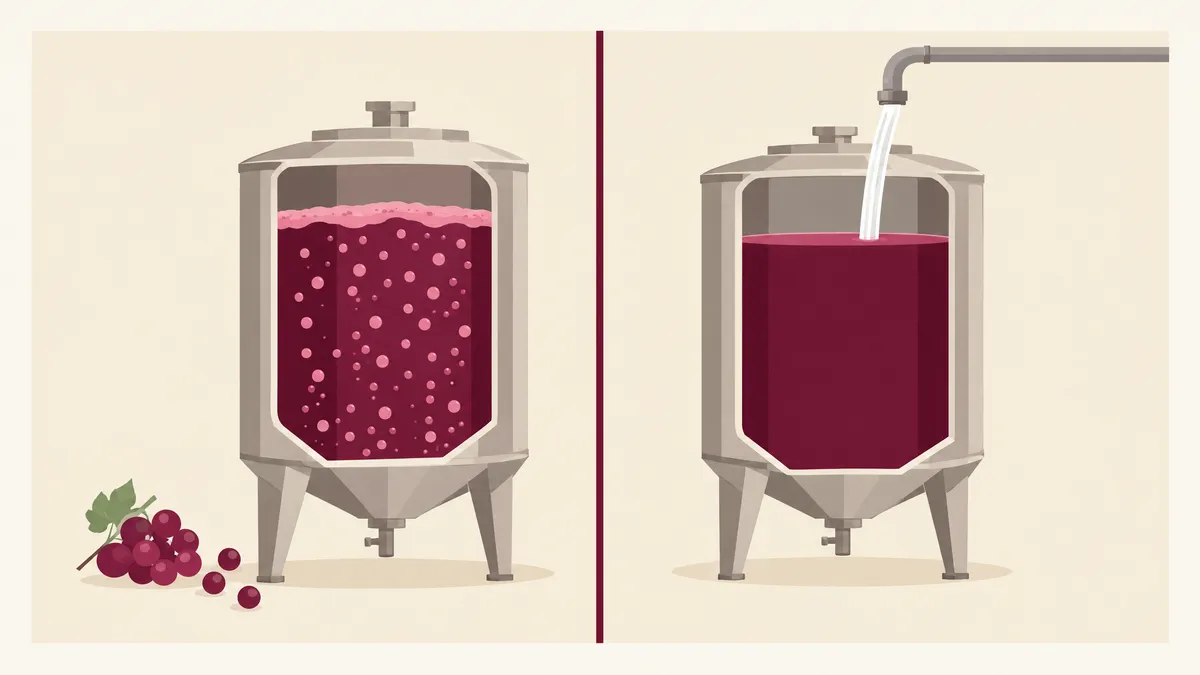
The timing sets the sweetness. Add the spirit early and more grape sugar survives; add it later and more has already become alcohol.
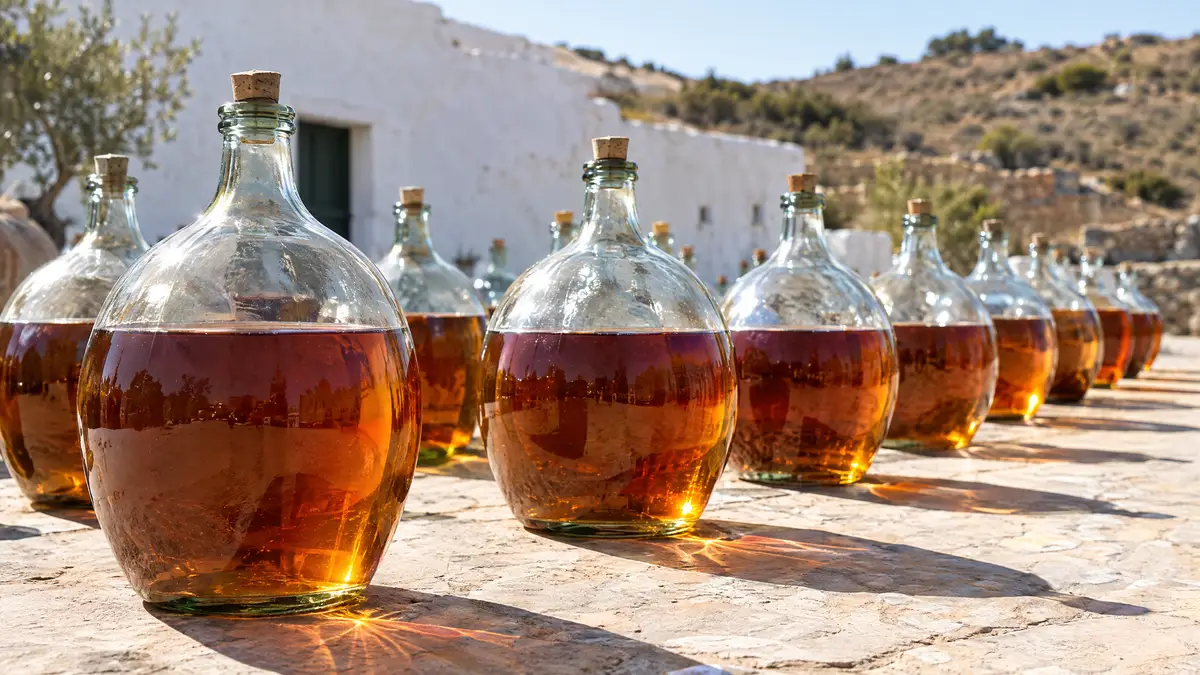
After mutage the wine follows one of two paths. Fresh styles go into tanks or bottles quickly to keep the fruit. Oxidative styles age in oak barrels, concrete vats, or large glass jars called bonbonnes that sit outdoors in the sun, often for a year or more. Sun and air turn cherry into dried cherry and cocoa, and golden Muscat or white Grenache into amber walnut.
Why Is It Called "Naturel" If Spirit Is Added?
Naturel refers to the sugar, which comes from the grape alone, not to an absence of spirit. A VDN is fortified, but nothing sweet is added to it: every gram of sweetness was in the ripe grapes. The spirit only stops the yeast from turning that sugar into alcohol.
The method is old. Arnaud de Villeneuve, at the University of Montpellier, perfected it in the 13th century. Maury became an official appellation in 1936. Since 2011, the label "Maury Sec" covers dry red table wine from the same village. If a Maury label says sec, expect a dry red. For more fortified and sweet styles, see the wine styles hub and the dessert wine guide.
Tonight, buy a half bottle of Muscat de Beaumes-de-Venise or Muscat de Rivesaltes, chill it for three hours and pour it with a fruit tart. Open Sommy, photograph the label, and log what you smell before and after the first bite.
Sources
Frequently Asked Questions
What is vin doux naturel?
Vin doux naturel is a lightly fortified sweet wine from the south of France. Grape spirit is added before fermentation finishes, which stops the yeast and leaves the grape's natural sugar in the wine. Most are made from white Muscat or red Grenache, in appellations such as Muscat de Beaumes-de-Venise, Banyuls, Maury and Rivesaltes, and they finish at roughly 15 to 17% alcohol.
Why is it called naturel if spirit is added?
The word refers to the sugar, not the method. Every gram of sweetness in a vin doux naturel comes from the grapes themselves; nothing sweet is added. The grape spirit only stops the yeast from turning that sugar into alcohol. So the wine is fortified, but its sweetness is natural, which is what the name protects.
Is vin doux naturel the same as Port?
They use the same idea but not the same recipe. Both stop fermentation with grape spirit to keep sugar in. Vin doux naturel uses less spirit and finishes around 15 to 17% alcohol, while Port ends around 20 to 22%. Vin doux naturel also includes white Muscat styles, while most Port is red, so many bottles taste fresher and lighter.
What does vin doux naturel taste like?
The grape and the ageing decide it. Young Muscat versions smell of orange blossom, grapes and peach and are clean and sweet. Young red Grenache versions taste of ripe cherry and plum. Styles aged with air, labelled ambré, tuilé or rancio, move towards walnut, dried fig, coffee and cocoa, and their sweetness feels drier and more savoury.
How long does vin doux naturel last after opening?
Fresh, fruity styles such as young Muscat or a red grenat should be stoppered, kept in the fridge and finished within a few days. Styles that were aged with air, such as ambré, tuilé, hors d'âge or rancio, have already met oxygen, so they keep for weeks and often months after opening with little change.
What food goes with vin doux naturel?
Match the sweetness and the colour. Fresh Muscat styles suit fruit tarts, lemon desserts and fresh goat cheese. Red Banyuls and Maury suit dark chocolate and berry desserts. Aged amber and rancio styles suit walnuts, dried figs, blue cheese and coffee desserts. The wine should always be at least as sweet as the dish.
What is the difference between Banyuls, Maury and Rivesaltes?
All three are vin doux naturel appellations in Roussillon. Banyuls comes from steep terraces by the sea and Maury from an inland valley; both make mainly red wine from Grenache, and Maury requires at least 75% Grenache noir. Rivesaltes is the largest, spanning about 90 villages, and makes white, amber, red and aged styles from several grapes.
Sommy Team
LinkedInFounder & Wine Educator
The Sommy Team is building the world's most approachable wine education app, helping beginners develop real tasting skills through structured courses and AI-guided practice.