Puglia Wine Guide: Primitivo, Negroamaro, Nero di Troia

By the Sommy Team — AI-assisted, human-edited.
Updated Sep 24, 2026
Contents (11)
- Puglia Wine Guide: The Short Answer
- Which Grapes Matter in Puglia, and How Do They Differ?
- What Does Puglian Primitivo Taste Like?
- What Does Negroamaro Taste Like?
- Where Does Nero di Troia Fit?
- What Food Goes With Puglia Wine?
- How Should You Serve and Taste a Puglia Red?
- What Are Puglia's DOCG Wines?
- Is Primitivo the Same Grape as Zinfandel?
- Why Do Heat, Sea and Limestone Shape Puglia's Wine?
- Your First Puglia Tasting
TL;DR
Puglia is Italy's hot southern heel, and three red grapes define it. Primitivo gives ripe, full-bodied reds that can reach 16% alcohol. Negroamaro gives dark, earthy reds and rosato from Salento. Nero di Troia anchors Castel del Monte, where a Riserva must age two years. Read the grape name first.
A Puglia wine guide fits in one idea you can repeat at dinner. Puglia, the sun-baked heel of Italy, splits its red wine between three grapes: Primitivo for ripe power, Negroamaro for dark, earthy bitterness, and Nero di Troia for structure that lasts.
Puglia Wine Guide: The Short Answer
Puglia (Apulia in English) is the long region that forms the heel of Italy's boot, with a long coastline and summers that can pass 40°C. Almost all of its famous wine is red. Primitivo gives the ripest, strongest reds, up to 16% alcohol, best known as Primitivo di Manduria. Negroamaro grows almost only in the Salento peninsula and gives deep-coloured reds and rosé with a bitter finish. Nero di Troia leads in the north at Castel del Monte. Puglia holds four DOCGs, and one is a sweet Primitivo.
For the wider map, the Italian wine guide places Puglia among Italy's other regions.
Which Grapes Matter in Puglia, and How Do They Differ?
Three red grapes do most of the work: Primitivo, Negroamaro and Nero di Troia, with Bombino Nero as a fourth grape used in rosé. Each one belongs to a different part of the region, from Castel del Monte in the north to Salento in the south.
Those label words are mostly a DOC (Denominazione di Origine Controllata), an appellation: a protected place name with rules on grapes, yield and alcohol. The table puts the four grapes side by side, with the moment to reach for each.
| Grape | Where it grows | Label words to look for | Weight and taste | Choose it when |
|---|---|---|---|---|
| Primitivo | Centre and south: Manduria, Gioia del Colle | Primitivo di Manduria, Gioia del Colle | Full-bodied, ripe blackberry and plum, up to 16% alcohol | Grilled meat, a cold evening, fans of Zinfandel |
| Negroamaro | Salento peninsula, the far heel | Salice Salentino, Copertino, Squinzano, Brindisi | Deep colour, earthy, bitter finish | Tomato sauce, pizza, or a rosato on a hot day |
| Nero di Troia | North: Andria, Barletta, Castel del Monte | Castel del Monte Rosso, Nero di Troia Riserva | Firmer tannin, built to age | Slow-cooked beef, a bottle to keep |
| Bombino Nero | North: Castel del Monte | Castel del Monte Bombino Nero | Used for rosé | Light lunches and chilled pours |
What Does Puglian Primitivo Taste Like?
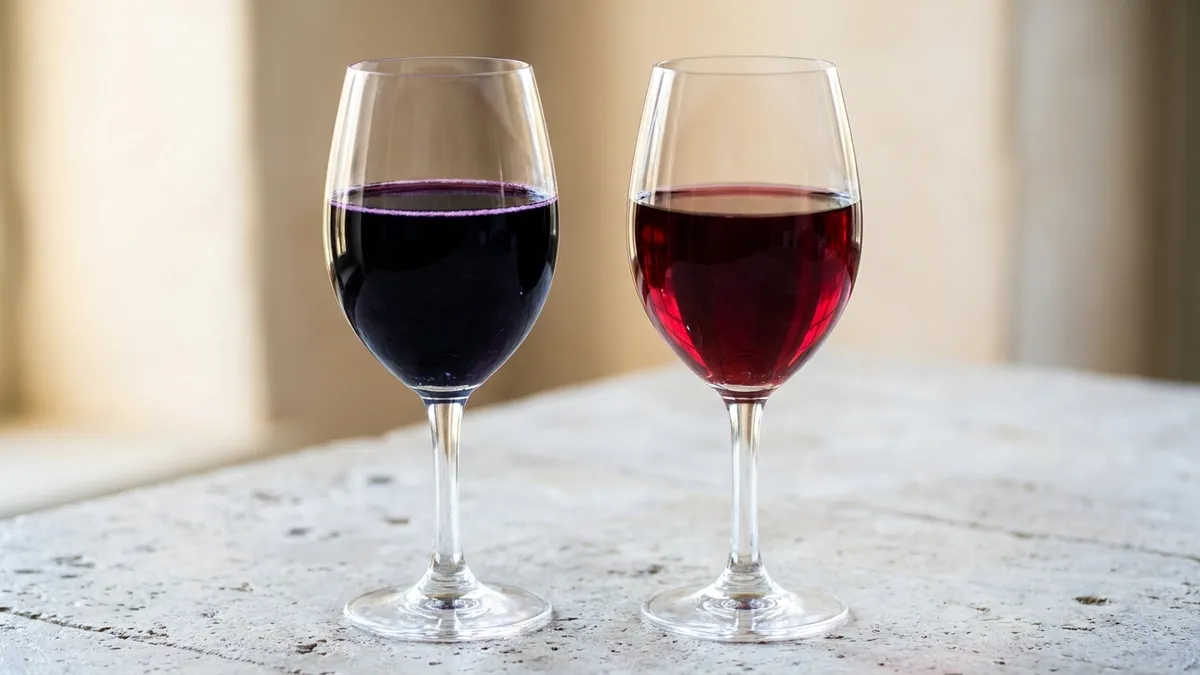
Puglian Primitivo is a full-bodied red, meaning heavy in the mouth like whole milk against skimmed. It smells of blackberry and plum ripened almost to jam, because the grape ripens early in a very hot place. Its name comes from Italian words for "early-ripening", and that head start lets sugar pile up in the berries.
More sugar at harvest becomes more alcohol in the glass. Modern Italian Primitivo can reach 16% alcohol, which you feel as warmth at the back of the throat. The dry red from Primitivo di Manduria usually lands around 14%. Some Puglian producers age Primitivo in American oak, which adds vanilla and coconut, to echo the Californian Zinfandel style.
Three DOC zones are built on the grape:
- Primitivo di Manduria, around Manduria in the province of Taranto, 100% Primitivo.
- Gioia del Colle, inland near Bari, 100% Primitivo, with a Riserva version.
- Falerno del Massico, across the border in Campania, at least 85% Primitivo.
Most Primitivo is dry, meaning it has no sugar you can taste, even though its fruit smells sweet. If the label says Primitivo di Manduria Dolce Naturale, expect a sweet wine; if it says only Primitivo di Manduria, expect a dry one. The Primitivo wine guide covers the grape's styles in more depth, and Falerno's home region is in the Campania wine guide.
What Does Negroamaro Taste Like?
Negroamaro is deep in colour and full in body, with a perfumed nose and an earthy bitterness on the finish. The name likely means "black and bitter", though "amaro" may instead come from the Greek "mavro", another word for black.
That bitterness is a flavour at the end of the sip. The wine itself is dark and weighty, so "amaro" is no sign of a light red. The grape is described as rustic: perfumed on the nose, earthy on the palate, and it prefers the chalky, lime-rich soils of the south.
Negroamaro grows almost only in Puglia, and above all in Salento, the narrow peninsula at the tip of the heel. Its main DOCs are Salice Salentino, Copertino, Squinzano, Brindisi, Leverano and Lizzano. In Salice Salentino it is usually blended with Malvasia Nera, a scented red grape that softens the bitter edge, and that blend is counted among Puglia's best reds.
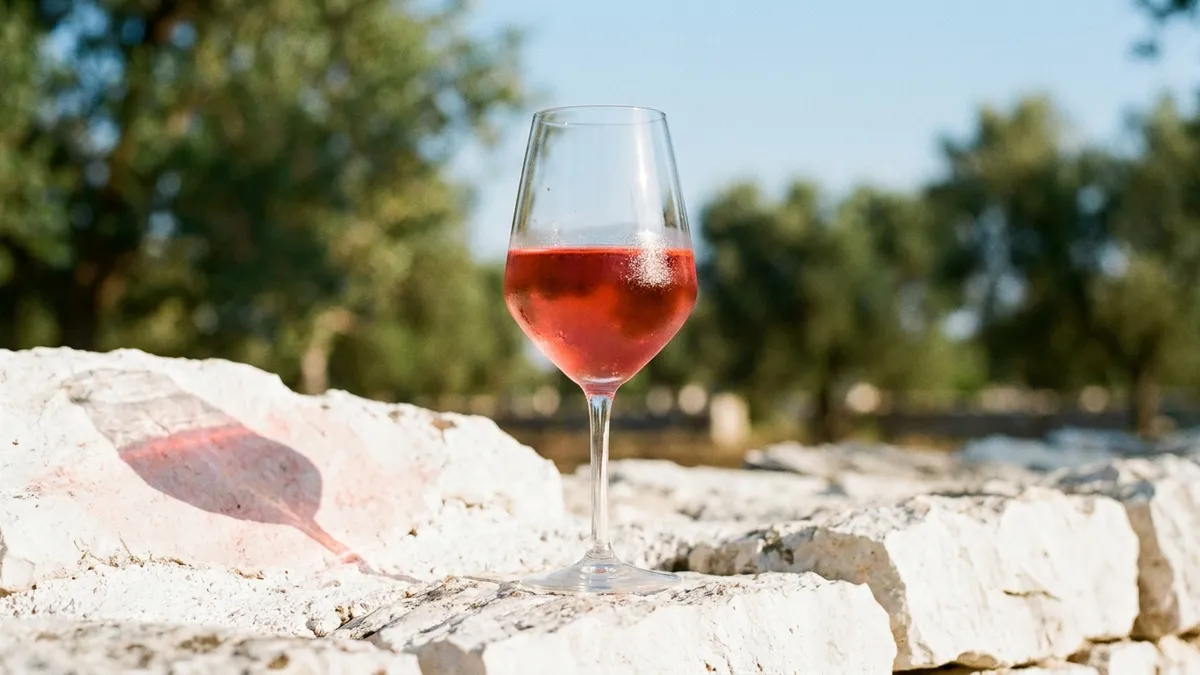
Negroamaro also makes rosato, the Italian word for rosé. Because the skins are so dark, a short soak still gives a deep coral pink with more body than a pale Provence-style rosé. If you want a Puglian wine for a hot afternoon, pick a Negroamaro rosato and serve it cold. The rosé wine guide shows where it sits among other pink styles.
Where Does Nero di Troia Fit?
Nero di Troia is the grape of northern Puglia and the backbone of Castel del Monte. Its name comes from the town of Troia in the province of Foggia, legendarily founded by the Greek hero Diomedes. It grows mainly around Andria and Barletta, and also leads the Rosso Barletta and Rosso Canosa DOCs.
It is the most structured of the three. Tannin, the drying grip you feel on your gums, sits firmer here than in Primitivo, and the Castel del Monte ageing rules are written around it. The base Castel del Monte DOC rules say:
- Red and rosé must contain 65 to 100% Nero di Troia (rosé may use Bombino Nero instead).
- Up to 35% can be other red grapes, such as Montepulciano or Aglianico.
- Harvests are capped at 14 tonnes per hectare.
- Reds need at least 12% alcohol, rosé 11%.
A Riserva, now its own DOCG, must age two years, one of them in wood, and reach 13% alcohol. Time in wood softens the tannin, so if you want a Puglia red to keep in the rack, look for Riserva on a Castel del Monte label. For more on that grip, see what tannins are.
What Food Goes With Puglia Wine?
Puglia's reds want food with fat, char or tomato, because their ripe fruit and alcohol need something to push against. Match the grape to the main thing on the plate: the fat, the sauce, the salt or the sugar decides which bottle to open.
- Primitivo with grilled sausage, lamb chops or aged hard cheese. Fat coats the mouth and char echoes the jammy fruit, so 14% or more of alcohol feels softer.
- Negroamaro with tomato pasta or pizza. Tomato is sour and sweet at once, and the bitter finish of Negroamaro cuts through the sugar in a slow-cooked sauce.
- Negroamaro rosato with grilled fish or fried seafood. Salt and oil need a cold, fresh wine, and the rosato's extra body stands up to a crisp batter.
- Nero di Troia with braised beef or game. Long-cooked protein softens firm tannin, and the tannin cuts the fat in the sauce.
- Sweet Primitivo di Manduria Dolce Naturale with blue cheese or dark chocolate. The wine must be at least as sweet as the food, or it tastes sour.
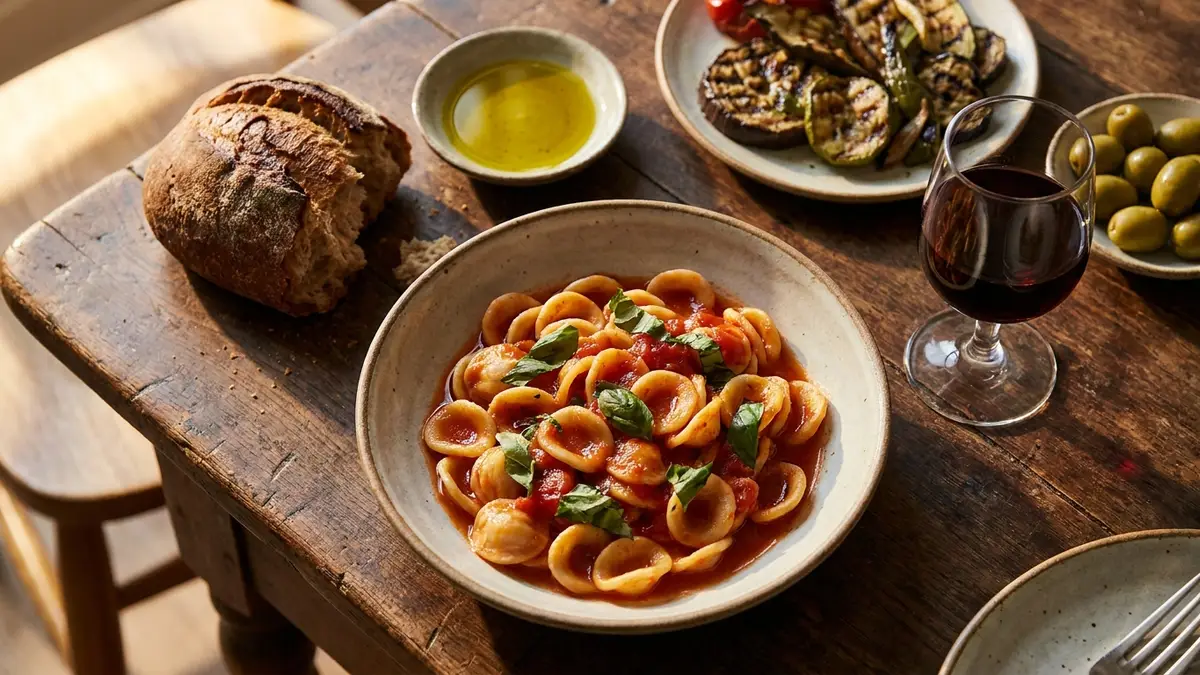
Watch the chilli. Heat makes alcohol burn, so if a dish is spicy, pick Negroamaro over a 15% Primitivo. For sauce-by-sauce ideas, the wine with pasta guide and wine with pizza guide go further.
How Should You Serve and Taste a Puglia Red?
Serve Puglia's reds a little cooler than the room, in a large glass, and taste for alcohol before fruit. A warm room makes a strong red taste hotter and flabbier. A short spell in the fridge before pouring pulls the alcohol back and lets the fruit show. The wine serving temperature chart gives the exact range for each style.
Pour a small measure and swirl. Smell for three things: ripe or jammy fruit, a savoury earthy edge, and any vanilla from oak. Then sip and follow the wine from front to back. Primitivo shows sweet-smelling fruit up front and warmth at the back. Negroamaro shows its bitter note on the finish. Nero di Troia dries the gums. The steps are the same as in how to taste red wine.
What Are Puglia's DOCG Wines?
Puglia has four DOCGs, its top legal tier: Primitivo di Manduria Dolce Naturale and three wines from Castel del Monte. A DOCG (Denominazione di Origine Controllata e Garantita) sits one step above a DOC, with stricter rules. Three of the four are Castel del Monte wines, so the north holds most of the top tier.
- Primitivo di Manduria Dolce Naturale, a naturally sweet red from the provinces of Taranto and Brindisi.
- Castel del Monte Bombino Nero, from the hills north of Bari.
- Castel del Monte Nero di Troia Riserva, the aged Nero di Troia.
- Castel del Monte Rosso Riserva, the aged red blend.
The trap is the Manduria name. Primitivo di Manduria and Primitivo di Manduria Dolce Naturale are two separate classifications and two different wines: one dry, one sweet. They are no quality ladder. If you want a dessert wine, the words "Dolce Naturale" must be on the label. The how to read a wine label guide explains where these terms sit, and the dessert wine guide places the sweet style among its peers.
Is Primitivo the Same Grape as Zinfandel?
Yes, the same vine, confirmed by DNA fingerprinting in 1993. The chain of discovery ran backwards from what most people assume. Primitivo cuttings reached California in 1968, and ampelographers, who identify vines by their leaves and bunches, declared the two identical in 1972.
In 1993 the geneticist Carole Meredith used DNA fingerprinting to confirm that Primitivo and Zinfandel are clones of the same variety. In 2001 a vine sampled in Kaštel Novi, Croatia, matched the same profile: Crljenak Kaštelanski. Later studies in 2014 and 2020 point instead to Montenegro as the most likely birthplace. So the grape reached California in the 1800s by way of the Austrian empire, and reached Italy from across the Adriatic, never the other way round.
Same vine, different wine. Puglia's appellations set yields and alcohol levels, and California Zinfandel has no equivalent appellation law, so the two are made to different rules. The Zinfandel wine guide covers the Californian side.
Why Do Heat, Sea and Limestone Shape Puglia's Wine?
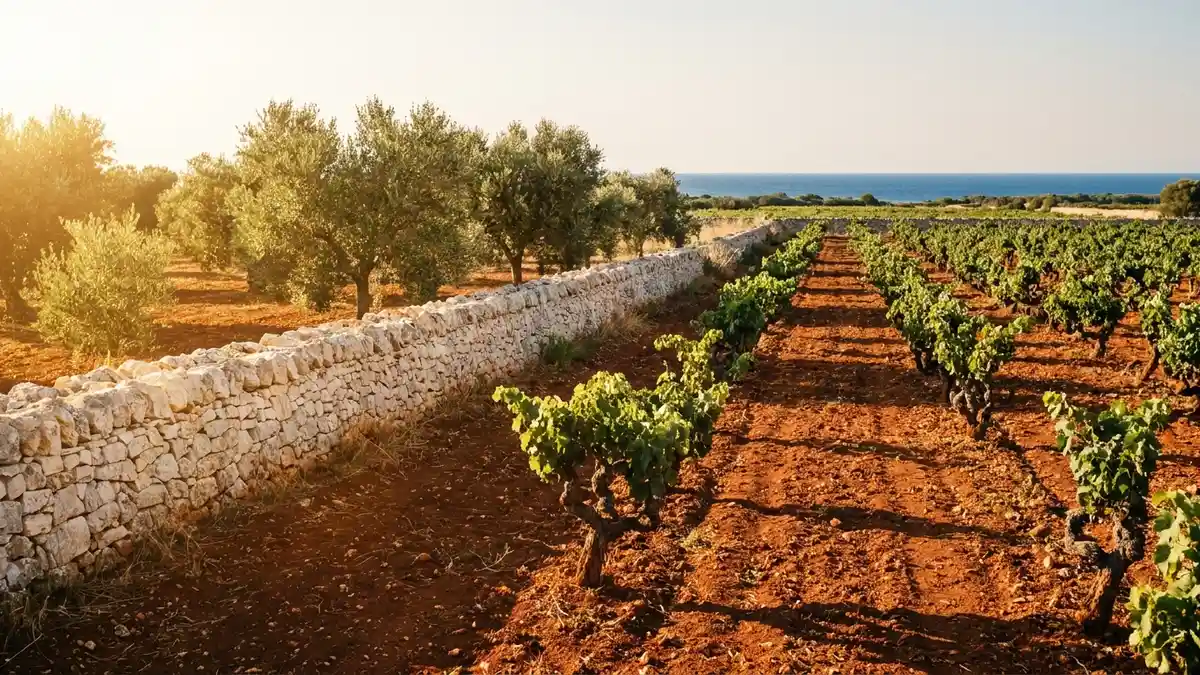
Heat, dry summers and limestone push Puglia's grapes to full ripeness, and ripeness is what becomes alcohol. The Salento peninsula, covering the provinces of Lecce, Brindisi and Taranto, is made of limestone and splits the Gulf of Taranto from the Strait of Otranto.
Summers there are hot, dry and sunny, and sometimes pass 40°C. The Sirocco, a southern wind, can even drop Saharan dust on the vines. Winters are mild. Those conditions explain the 14 to 16% alcohol common in the glass, and they explain why an early-ripening grape did so well here. For the soil side, see how soil affects wine taste.
Vines are old news in Puglia. The Roman writer Pliny the Elder called Manduria "viticulosa", full of vineyards. After Rome fell, monasteries kept winemaking alive. In the 1790s a priest near Bari picked out an early-ripening vine that then spread. By the 1870s Italian government papers called it Primitivo, the name now printed on the bottle. For neighbouring southern regions, compare the Sicily wine guide or browse the wine regions hub.
Your First Puglia Tasting
Buy two bottles tonight: a dry Primitivo di Manduria and a Salice Salentino. Pour them side by side, sip each, and find the jammy warmth in one and the bitter finish in the other. Snap each label in the Sommy app at sommy.wine and it walks you through look, smell and taste, then saves both notes to your tasting journal. Its Italy course covers the rest of the boot.
Sources
Frequently Asked Questions
What is Puglia wine known for?
Puglia is known for ripe, full-bodied red wines from three native grapes. Primitivo gives the most powerful reds, Negroamaro gives dark, earthy reds and deep-coloured rosato in the Salento peninsula, and Nero di Troia gives firmer, longer-lived reds in the north around Castel del Monte. The region's hot, dry summers ripen grapes fully, so alcohol levels of 14% and above are common.
What is the difference between Primitivo and Negroamaro?
Primitivo is the riper, fruitier and usually stronger of the two, tasting of blackberry and plum close to jam, with alcohol that can reach 16%. Negroamaro is deep in colour and more savoury, with a perfumed smell and an earthy bitterness at the finish. Primitivo suits grilled and fatty meat; Negroamaro suits tomato sauces and makes a fine rosato.
Is Primitivo the same as Zinfandel?
Yes, genetically. DNA fingerprinting in 1993 confirmed that Primitivo and Zinfandel are clones of the same variety, and a Croatian grape, Crljenak Kaštelanski, was later matched to the same profile. The wines still differ, because Puglia's climate, appellation rules and cellar habits shape them differently from California's. Some Puglian producers even age Primitivo in American oak to copy the Californian style.
What is Primitivo di Manduria?
Primitivo di Manduria is a DOC, a protected place name, for dry red wine made from 100% Primitivo around the town of Manduria in the province of Taranto. It typically lands around 14% alcohol. Its sweet sibling, Primitivo di Manduria Dolce Naturale, is a separate DOCG and a naturally sweet wine, so check which of the two names is on the label.
What food goes with Puglia wine?
Match the grape to the plate. Primitivo, the ripest and strongest, goes with grilled sausages, lamb and hard aged cheese, because fat and char soften its alcohol. Negroamaro, with its bitter edge, goes with tomato-based pasta and pizza. Negroamaro rosato, served cold, goes with grilled fish and fried seafood. Nero di Troia, with firmer tannin, goes with slow-cooked beef or game.
What are the DOCG wines of Puglia?
Puglia has four DOCGs, Italy's highest legal tier. One is Primitivo di Manduria Dolce Naturale, a naturally sweet red from the provinces of Taranto and Brindisi. The other three come from Castel del Monte, north of Bari: Castel del Monte Bombino Nero, Castel del Monte Nero di Troia Riserva and Castel del Monte Rosso Riserva.
Sommy Team
LinkedInFounder & Wine Educator
The Sommy Team is building the world's most approachable wine education app, helping beginners develop real tasting skills through structured courses and AI-guided practice.