Pinotage vs Merlot: Side by Side (Taste, Body, Food)

By the Sommy Team — AI-assisted, human-edited.
Updated Oct 29, 2026
Contents (8)
- Pinotage vs Merlot, in One Paragraph
- How Do Pinotage and Merlot Taste Different?
- Which Has More Tannin, Acid and Alcohol?
- Why Does Pinotage Sometimes Taste Smoky or Like Paint?
- What Food Goes With Pinotage vs Merlot?
- How Should You Serve Each?
- Is Pinotage a Blend of Pinot Noir and Merlot?
- Which Should You Pick Tonight?
TL;DR
Pinotage and Merlot are both dry reds with medium-high tannin. Pinotage, South Africa's own cross of Pinot noir and Cinsaut, is fuller and tarter, often over 15% alcohol, with blackberry, smoke and game. Merlot runs 13.5 to 15%, with softer acidity, plum and chocolate. Pour Pinotage with grilled meat, Merlot with roasts.
Pinotage vs Merlot comes down to acid, alcohol and smoke, because both grapes grip your gums about equally. Pinotage is South Africa's own red: fuller, tarter and often over 15% alcohol, tasting of blackberry, smoke and game. Merlot is rounder and tastes of plum and chocolate. Pour Pinotage with grilled meat and Merlot with a roast.
Pinotage vs Merlot, in One Paragraph
Pinotage and Merlot are both dry reds with medium-high tannin (the drying grip on your gums), according to Wine Folly's grape profiles. The difference sits elsewhere. Pinotage has medium-high acidity (the tartness that makes your mouth water), a full body and often over 15% alcohol. Merlot has medium acidity, a medium-full body and 13.5 to 15% alcohol. Pinotage smells of blackberry, black cherry and often smoke; Merlot smells of plum, cherry and chocolate. Serve both at 15 to 20°C. Pinotage goes with barbecue and peppered steak, Merlot with roast lamb, turkey and pizza.
How Do Pinotage and Merlot Taste Different?
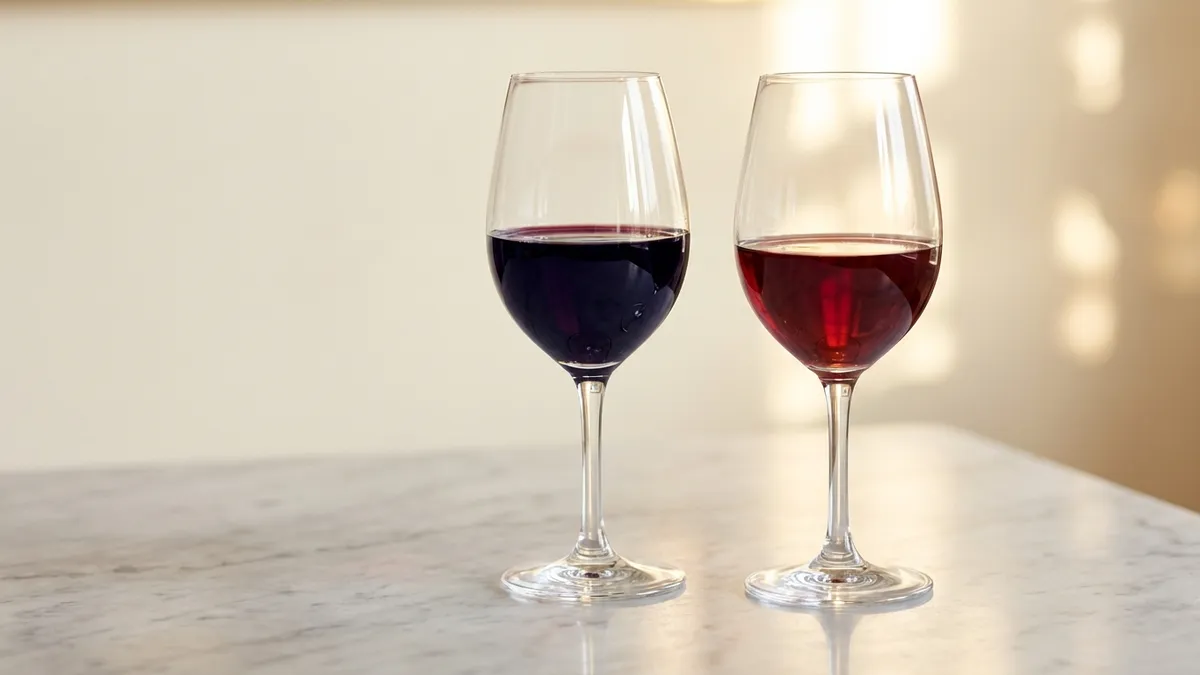
Pinotage smells of blackberry, black cherry and often smoke or game; Merlot smells of plum and cherry, with chocolate and vanilla when it has spent time in oak. Pinotage also feels heavier in the mouth, with more acidity and alcohol.
| Pinotage | Merlot | |
|---|---|---|
| Body | Full | Medium-full |
| Tannin | Medium-high | Medium-high |
| Acidity | Medium-high | Medium |
| Alcohol | Often over 15% | 13.5 to 15% |
| Smells of | Blackberry, black cherry, fig, mint, game, smoke | Plum, cherry, chocolate, bay leaf, vanilla |
| Serve at | 15 to 20°C (60 to 68°F) | 15 to 20°C (60 to 68°F) |
| Air before pouring | Up to 1 hour in a jug or decanter | About 30 minutes |
| Pour it with | Barbecue, peppered steak, braised short ribs | Roast lamb or turkey, pizza, BBQ chicken |
Body (weight in the mouth: skimmed versus whole milk) is the first gap most people feel. Wine Folly notes that Pinotage from warm sites shows riper fruit, more alcohol and a fuller body. If the label reads 15% or more, expect that riper, heavier style.
Merlot comes in two main styles. Warm-climate Merlot tastes of ripe plum and blackberry at high alcohol. Bordeaux-style Merlot tastes of fresh raspberry and strawberry at moderate alcohol, the style furthest from Pinotage. Each grape's full profile is in the Pinotage guide and the Merlot guide.
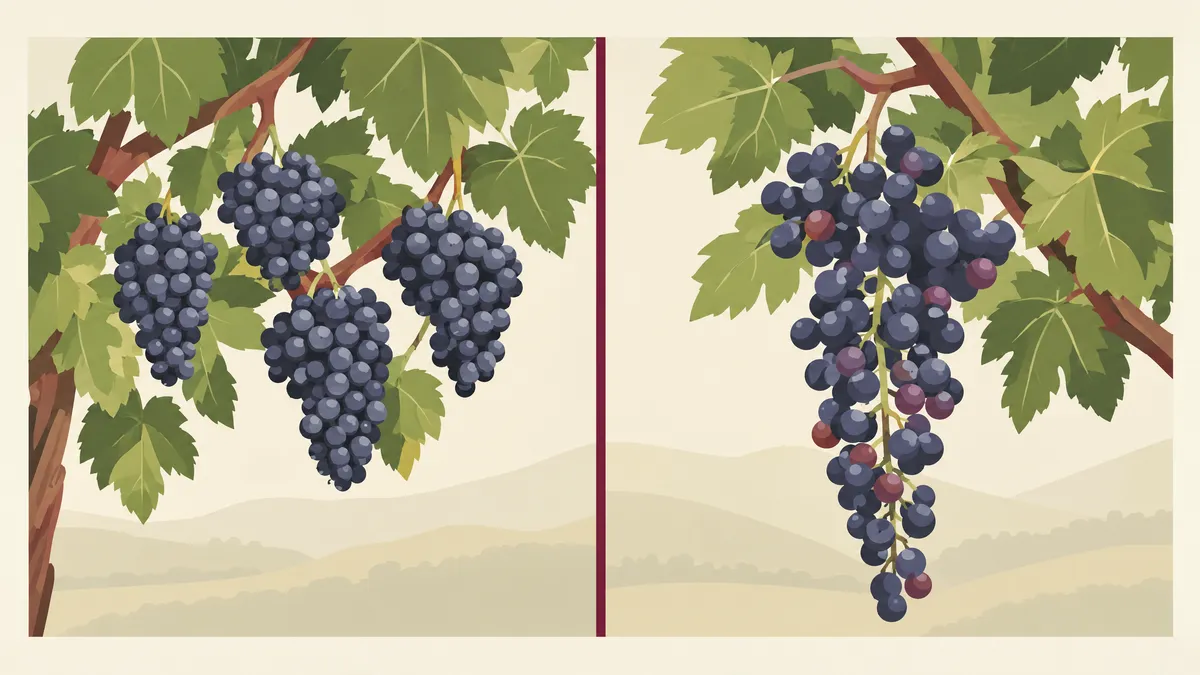

Quick check
One question on what you just read
Pinotage and Merlot grip your gums about equally. So what mainly sets them apart?
Tap an answer to see how you did.
Which Has More Tannin, Acid and Alcohol?
Tannin is close to a tie: Wine Folly rates both grapes medium-high. The gap is acidity and alcohol, not tannin. Pinotage has the higher acidity and usually the higher alcohol, so it feels sharper and warmer. Merlot's medium acidity lets its tannin feel cushioned, which is why many drinkers call it the softer wine.
The winemaker decides how firm a Pinotage feels. Wikipedia calls the grape naturally high in tannins, which shorter skin contact softens. A long soak on the skins gives a grippy Pinotage; a short one gives a softer wine. Merlot has fewer tannins than Cabernet Sauvignon, so it is soft mainly next to Cabernet, a gap measured in Cabernet Sauvignon vs Merlot. To feel tannin on its own, try the exercises in what tannins are.
Why Does Pinotage Sometimes Taste Smoky or Like Paint?
Smoke, bramble and earth are Pinotage's normal flavours; the paint smell comes from the cellar. Some bottles also smell of banana, from isoamyl acetate (the compound behind the smell of banana sweets), which forms during fermentation. Pinotage tends to develop more of it than other reds. In large amounts it smells like paint, a fault in that one bottle.
Merlot's vanilla comes from oak (barrels that add vanilla, toast or spice), and toasted barrels can add a little smoke too. If a Merlot smells smoky, look for vanilla beside it: that pair points to the barrel. Smoke from wildfires is a separate fault, covered in wine smoke taint.
What Food Goes With Pinotage vs Merlot?
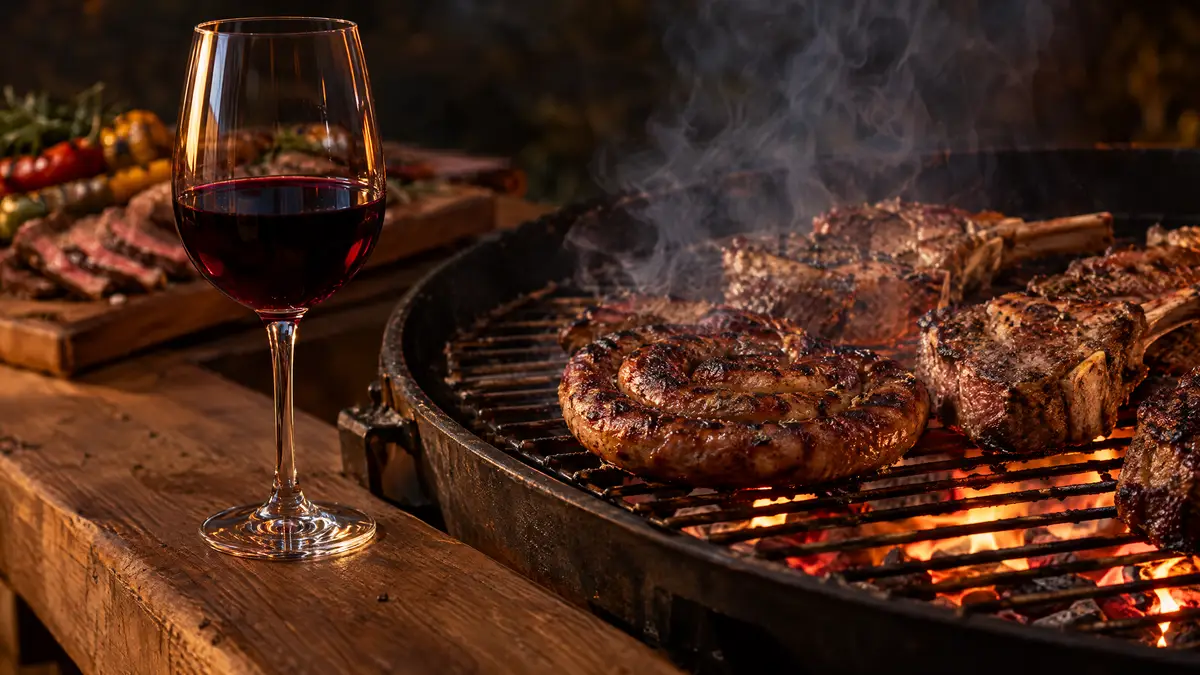
Give Pinotage smoke and char; give Merlot roasted meat and gentler sauces. If the meat comes off a fire, open the Pinotage: its smoky flavour echoes the char, and its higher acidity cuts through the fat. Wine Folly suggests braised short ribs or a pepper-crusted steak for the fuller bottles.
In South Africa the local match is a braai (a wood or charcoal barbecue) with spiced sausage. For earthier Pinotage, Wine Folly points to roast duck or mushroom risotto.
If the meat is roasted in an oven or served in a mild sauce, open the Merlot. Its plum fruit and medium acidity sit beside roast turkey, rack of lamb or beef short rib without covering their flavour. Wine Folly also pairs easy-drinking Merlot with pizza and BBQ chicken, everyday food that needs a red without much edge.
If the dish carries chilli heat, pick the lower-alcohol bottle, which is usually the Merlot, because alcohol makes chilli burn harder. More matches by dish are in wine with BBQ, wine with lamb and wine with steak.
How Should You Serve Each?
Serve both at 15 to 20°C, but give Pinotage up to an hour in a jug or decanter and Merlot about 30 minutes. If the bottle has been standing somewhere warm, chill it briefly until the glass feels cool in your hand.
Exact ranges for every style are in the wine serving temperature chart.
Is Pinotage a Blend of Pinot Noir and Merlot?
No. Pinotage is a cross (a new grape bred from two parent vines) of Pinot noir and Cinsaut, not of Merlot. Abraham Izak Perold, the first Professor of Viticulture at Stellenbosch University, made the cross in the mid-1920s. Cinsaut was known as Hermitage in South Africa then, which gave the name: Pinot plus Hermitage.
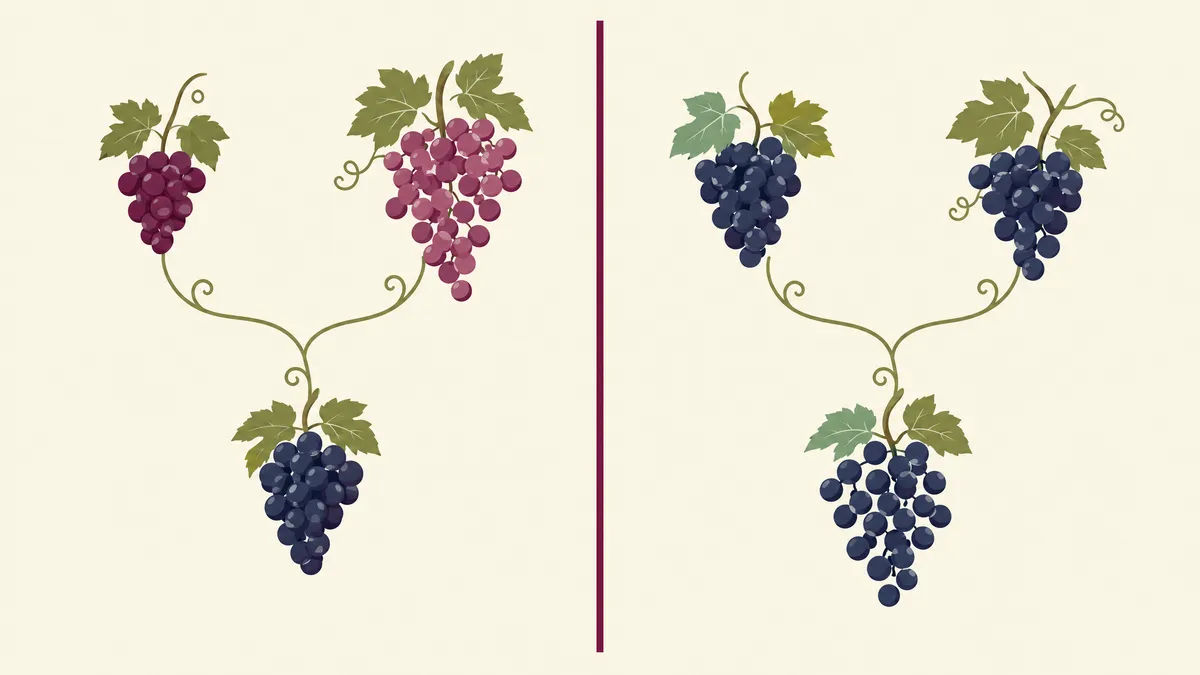
Merlot's family is French. DNA analysis showed its parents are Cabernet Franc and Magdeleine Noire des Charentes, which makes it a half-sibling of Cabernet Sauvignon. Merlot ripens up to two weeks earlier than Cabernet Sauvignon, so it ripens more easily and builds more sugar than Cabernet. Pinotage shares only a parent with Pinot Noir, a paler, lighter red again, compared in Pinot Noir vs Merlot.
Pinotage covered 6,979 hectares in 2017, about 7% of South Africa's vineyards. Merlot covered about 266,000 hectares worldwide in 2015. So Merlot fills shelves from many countries, while Pinotage stays a South African speciality.
Which Should You Pick Tonight?
Pick Merlot for an easy red with plum and chocolate; pick Pinotage for a stronger, smokier red to drink with grilled food. If one bottle has to cover a mixed table, take the Merlot, which Wine Folly matches with a wide variety of foods.
- Merlot if the wine will be drunk on its own or with a roast, or if red wine is still new to you.
- A Merlot-led Pomerol or Saint-Émilion if you want fresh raspberry and strawberry at moderate alcohol: Merlot leads the blends on Bordeaux's Right Bank.
- Pinotage if the food is grilled, smoked or peppered, or you want a red with more acidity than Merlot.
- A Cape blend if you want Pinotage as one part of a blend: a Cape blend (a South African red blend) usually contains 30 to 70% Pinotage.
The South African wine guide and the Stellenbosch wine guide show where Pinotage grows, and more grape pairs sit in the grape varieties hub. Sommy's AI tasting mode at sommy.wine walks you through look, smell and taste for each glass and saves both sets of notes to your tasting journal.
Buy one bottle of each tonight, pour them side by side slightly cool, and taste the Merlot first.
Sources
Frequently Asked Questions
Is Pinotage sweeter than Merlot?
Neither is sweet in its usual form. Wine Folly lists Pinotage as dry and Merlot as bone dry, which means the yeast has eaten the grape sugar. Merlot can seem sweeter because its plum, chocolate and vanilla flavours feel round and its acidity is lower. Pinotage's higher acidity makes it taste tarter, even when its fruit is just as ripe.
Is Pinotage a mix of Pinot Noir and Merlot?
No. Pinotage is a cross of Pinot noir and Cinsaut, bred at Stellenbosch University in the 1920s by Abraham Perold. Cinsaut was called Hermitage in South Africa at the time, which gave the new grape its name. Merlot has no part in it: Merlot's own parents are Cabernet Franc and a rare French grape, Magdeleine Noire des Charentes.
Which feels softer, Pinotage or Merlot?
Merlot, for most drinkers. Wine Folly rates both grapes medium-high in tannin, so the difference comes from acidity and alcohol. Merlot's medium acidity and 13.5 to 15% alcohol feel rounder. Pinotage's medium-high acidity and frequent 15%-plus alcohol feel sharper and warmer. A ripe, warm-climate Merlot is the softest glass of the two you are likely to find.
Which has more alcohol, Pinotage or Merlot?
Pinotage, usually. Wine Folly puts Pinotage at over 15% alcohol and Merlot at 13.5 to 15%. Those are typical figures, not rules. Warm sites push both grapes higher, and a Pinotage from a cooler site can come in lower. The strength printed on the label is the quickest check before you buy.
Is Pinotage a good red for beginners?
It makes a good second red rather than a first. Merlot's plum and chocolate flavours and softer acidity are easy to like from the first glass. Pinotage brings smoke, game and mint, with more acidity and alcohol. Taste it after a Merlot and with grilled food, and its flavours make sense quickly. A fruit-forward bottle is the gentlest start.
What food goes with Pinotage vs Merlot?
Pinotage suits smoke and char: barbecue, a pepper-crusted steak, braised short ribs or grilled sausages. Its acidity cuts through fat and its smoky flavour echoes the grill. Merlot suits gentler cooking: roast turkey, rack of lamb, beef short rib or pizza. Its plum fruit and softer acidity sit easily beside roasted meat without competing with it.
Where do Pinotage and Merlot grow?
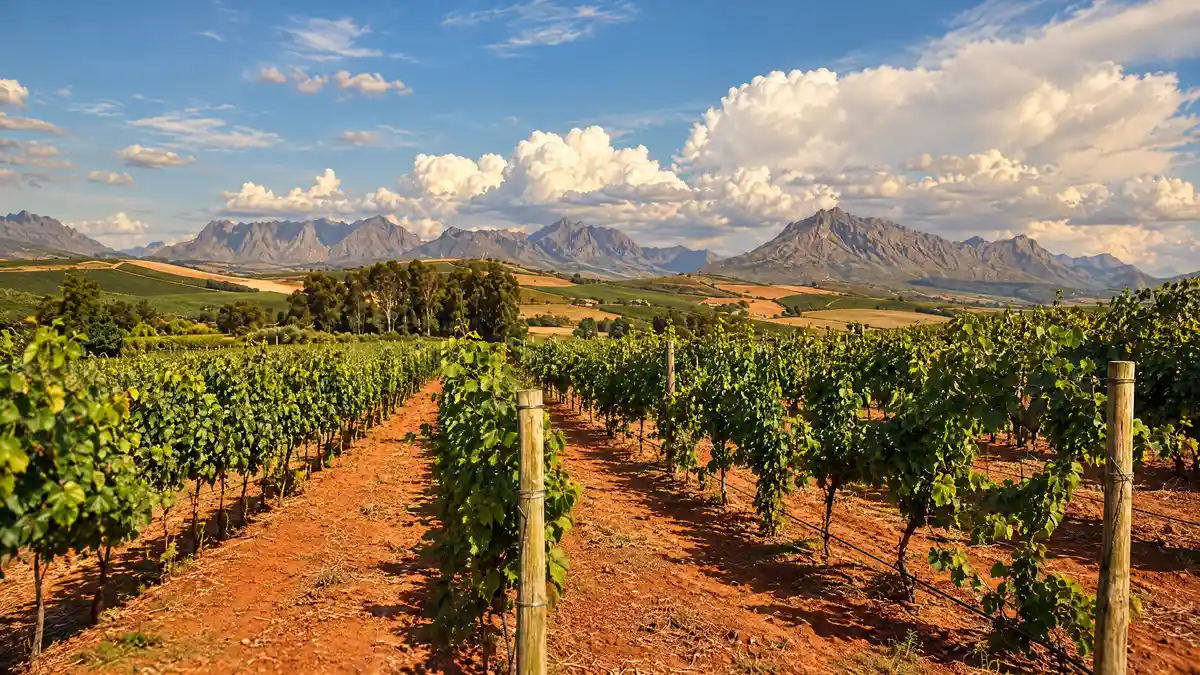
Pinotage is South Africa's grape, bred in Stellenbosch. It covered 6,979 hectares there in 2017, about 7% of the country's vineyards. Merlot is planted worldwide, about 266,000 hectares in 2015. It leads the blends of Pomerol and Saint-Émilion on Bordeaux's Right Bank and also grows in South Africa, where it is bottled alone and in Bordeaux-style blends.
Sommy Team
LinkedInFounder & Wine Educator
The Sommy Team is building the world's most approachable wine education app, helping beginners develop real tasting skills through structured courses and AI-guided practice.