Pinot Noir vs Merlot: How the Two Reds Taste Different

By the Sommy Team — AI-assisted, human-edited.
Updated Oct 9, 2026
Contents (9)
- Pinot Noir vs Merlot, in One Paragraph
- How Do Pinot Noir and Merlot Taste Different?
- Which Has More Tannin, and Which Feels Softer?
- Why Is Pinot Noir Lighter and Merlot Rounder?
- Which Is Sweeter or Drier?
- Which Food Goes With Pinot Noir, and Which With Merlot?
- How Should You Serve Each One?
- Can Merlot Ever Taste Like Pinot Noir?
- Which Should You Try First?
TL;DR
Pinot Noir is a pale, tart red with low tannin, about 12 to 14% alcohol, tasting of raspberry and cherry. Merlot is darker and rounder, with more tannin, less acidity and 13.5 to 15% alcohol, tasting of plum and chocolate. Serve Pinot cooler, with salmon or mushrooms; serve Merlot with lamb or stew.
Pinot Noir vs Merlot comes down to skin and sun. Pinot Noir has thin skins and grows best in cool places, so it makes a pale, tart red that tastes of raspberry. Merlot ripens earlier and fuller, so it makes a darker, rounder red that tastes of plum. Pick Pinot for salmon and mushrooms, Merlot for lamb and stew.
Pinot Noir vs Merlot, in One Paragraph
Pinot Noir and Merlot are both dry reds, but Pinot Noir is paler, tarter and lower in tannin, while Merlot is darker, rounder and higher in alcohol. Wine Folly rates Pinot Noir at 12 to 14% alcohol with low tannin (the drying grip on your gums) and medium-high acidity (the tartness that makes your mouth water). Merlot sits at 13.5 to 15% alcohol with medium-high tannin and medium acidity. Pinot smells of fresh cherry and raspberry; Merlot smells of ripe plum and chocolate. Serve Pinot at 12 to 15°C and Merlot at 15 to 20°C. Pinot goes with salmon, mushrooms and charcuterie; Merlot goes with lamb, duck, pork and stews.
How Do Pinot Noir and Merlot Taste Different?
Pinot Noir smells of fresh cherry, raspberry and strawberry; Merlot smells of plum and black cherry, with chocolate in warmer styles. In the mouth, Pinot feels lighter and makes your mouth water. Merlot feels heavier and warmer. That difference in body (weight in the mouth: skimmed versus whole milk) is the first thing most people notice.
| Pinot Noir | Merlot | |
|---|---|---|
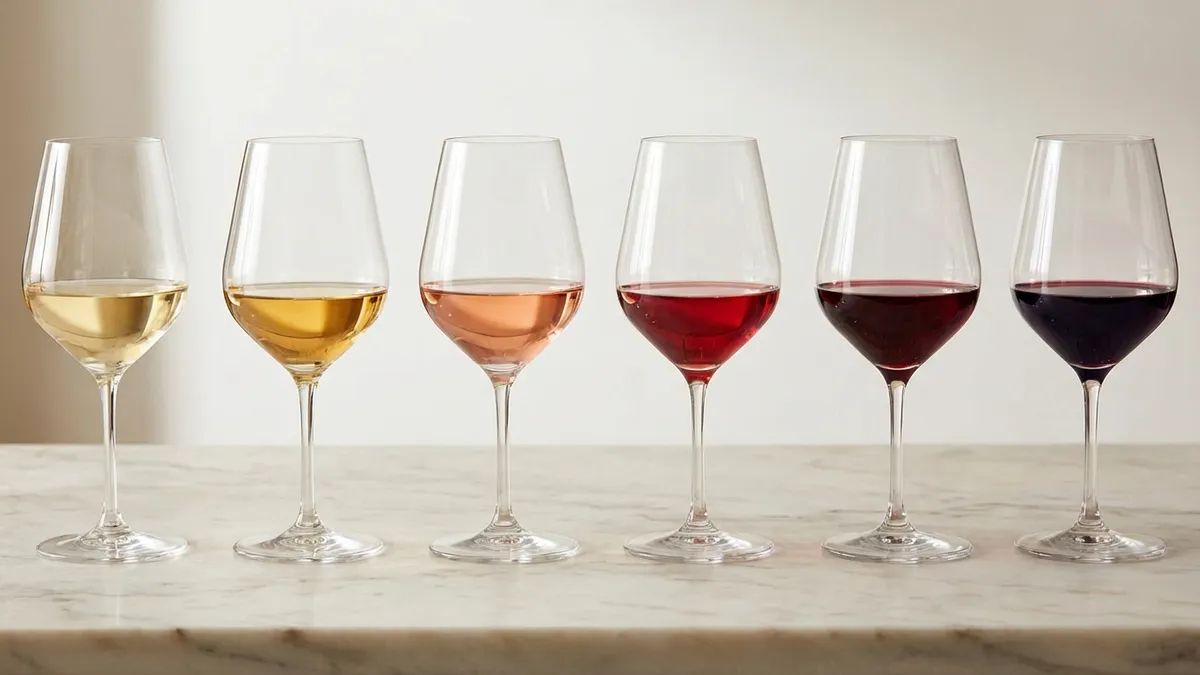
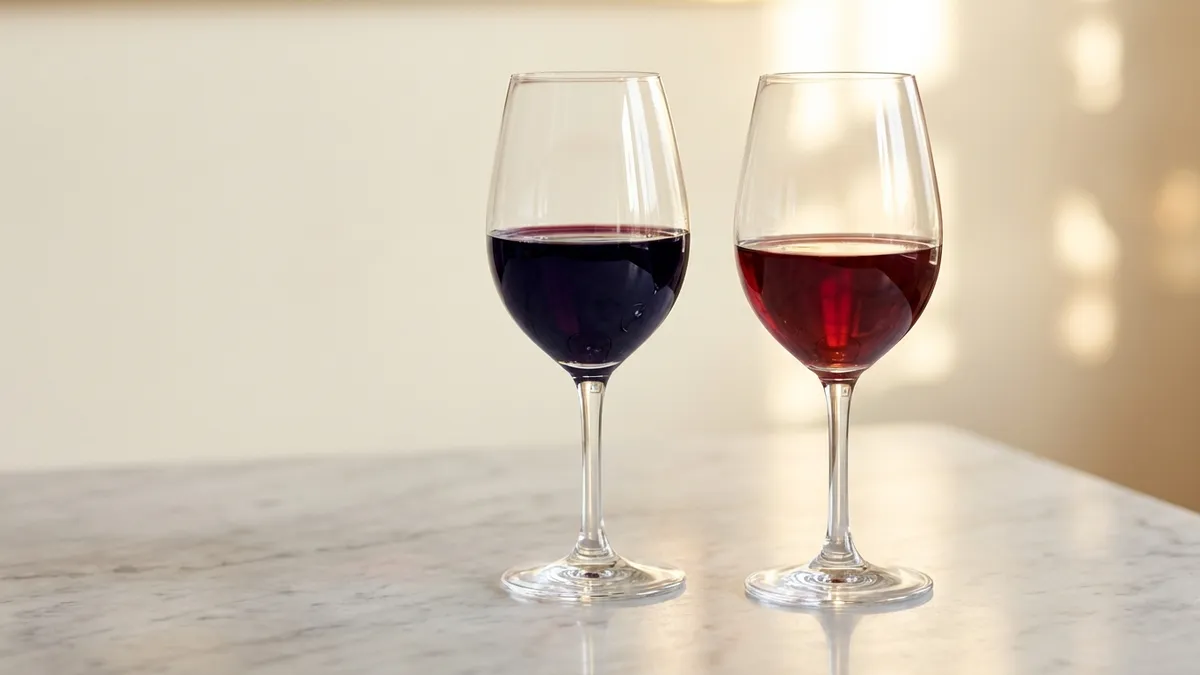
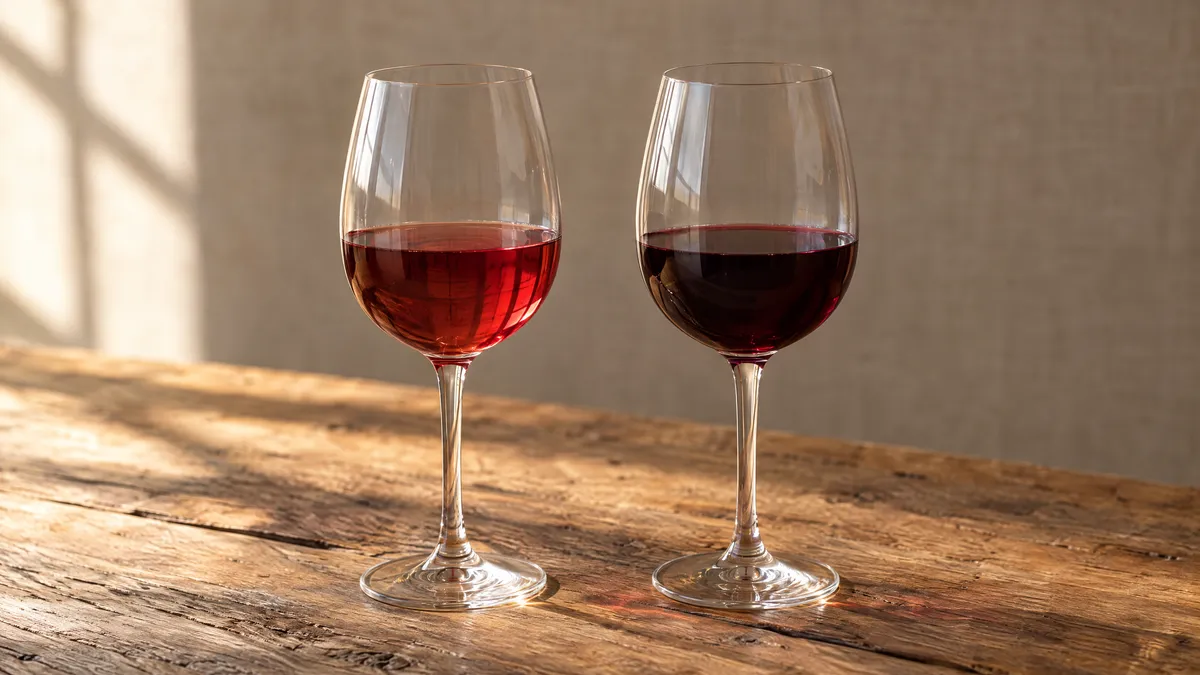
| Colour | Pale, see-through ruby | Deeper ruby to purple |
| Body | Medium | Medium-full |
| Tannin | Low | Medium-high |
| Acidity | Medium-high | Medium |
| Alcohol | 12 to 14% | 13.5 to 15% |
| Smells of | Raspberry, cherry, mushroom | Plum, cherry, chocolate, bay leaf |
| Serve at | 12 to 15°C (55 to 60°F) | 15 to 20°C (60 to 68°F) |
| Reach for it when | Salmon, mushrooms, charcuterie, a warm evening | Lamb, duck, pork, stew, a cold night |
Ratings follow Wine Folly's grape profiles. Age changes Pinot more than the table shows. Young bottles smell of fresh cherry; older ones move toward damp leaves, mushroom and a farmyard smell that Burgundy fans prize. For the full portrait of each grape, see the Pinot Noir guide and the Merlot guide.
Which Has More Tannin, and Which Feels Softer?
Merlot has more tannin than Pinot Noir, yet many drinkers call Merlot the softer wine. Tasting Table describes Merlot as "velvety on the palate" and gives Pinot "higher acidity than merlot". The difference is acidity: Pinot's tartness makes a low-tannin wine feel lean and lively, while Merlot's lower acid lets its ripe tannin feel cushioned.
Sources disagree on how much tannin Merlot has. Wine Folly rates it medium-high; retail pages often call it soft. The deciding factor is ripeness. Fully ripe Merlot from a warm year has rounded tannin you barely notice. Merlot picked early in a cool year grips harder.
Pinot is not simply the easy, mild option either. Its acidity is the sharpest feature in the glass, and a cool-year bottle can taste sour beside a plate of food that has no fat or salt. Learn to tell the two sensations apart with what tannins are and what acidity is in wine.
Why Is Pinot Noir Lighter and Merlot Rounder?
Thin skins make Pinot Noir pale and light; earlier, fuller ripening makes Merlot darker and rounder. Colour and tannin in red wine come from the skins. Wikipedia notes that Pinot's thin skins and low levels of phenolic compounds (the colour and tannin molecules) lead to "mostly lightly colored, medium-bodied and low-tannin wines".
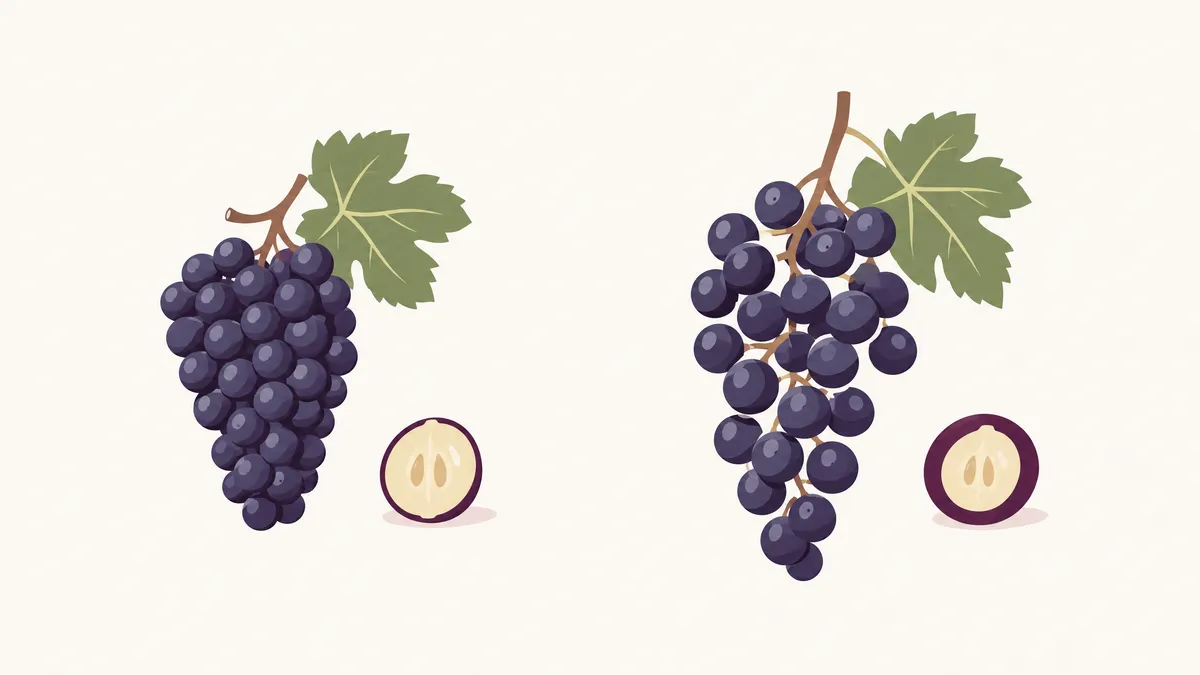
Climate does the rest. A cool climate makes tarter, lighter wine; a warm climate makes riper, stronger wine. Pinot's home is Burgundy's Côte d'Or, a cool strip of slopes in eastern France with about 4,500 hectares of the grape. Cool weather keeps its acidity high and its alcohol moderate.
Merlot ripens up to two weeks earlier than Cabernet Sauvignon, so it reaches full sugar even in Bordeaux's damper years. More sugar becomes more alcohol, which is why Merlot runs to 15%. Its parent is Cabernet Franc, which also makes it a relative of Cabernet Sauvignon. The Cabernet Sauvignon vs Merlot comparison covers that family side.
Which Is Sweeter or Drier?
Neither: most Pinot Noir and Merlot are dry, meaning no sugar you can taste. Both are fermented until the yeast has eaten the grape sugar. Merlot reads sweeter because its ripe plum and chocolate flavours and higher alcohol feel round.
Alcohol itself tastes faintly sweet, which adds to the effect. Fruity is not sweet, though. A dry Merlot holds no more sugar than a dry Pinot. Pinot reads drier because its acidity cuts across the fruit. The sweet vs dry wine guide explains why the tongue mixes these up.
Which Food Goes With Pinot Noir, and Which With Merlot?
Pinot Noir goes with salmon, mushrooms and charcuterie; Merlot goes with lamb, duck, pork and stews. The split follows tannin and weight. If the plate is fish, mushrooms or cured meat, pour Pinot. If it is roast or braised red meat with fat to soften tannin, pour Merlot.
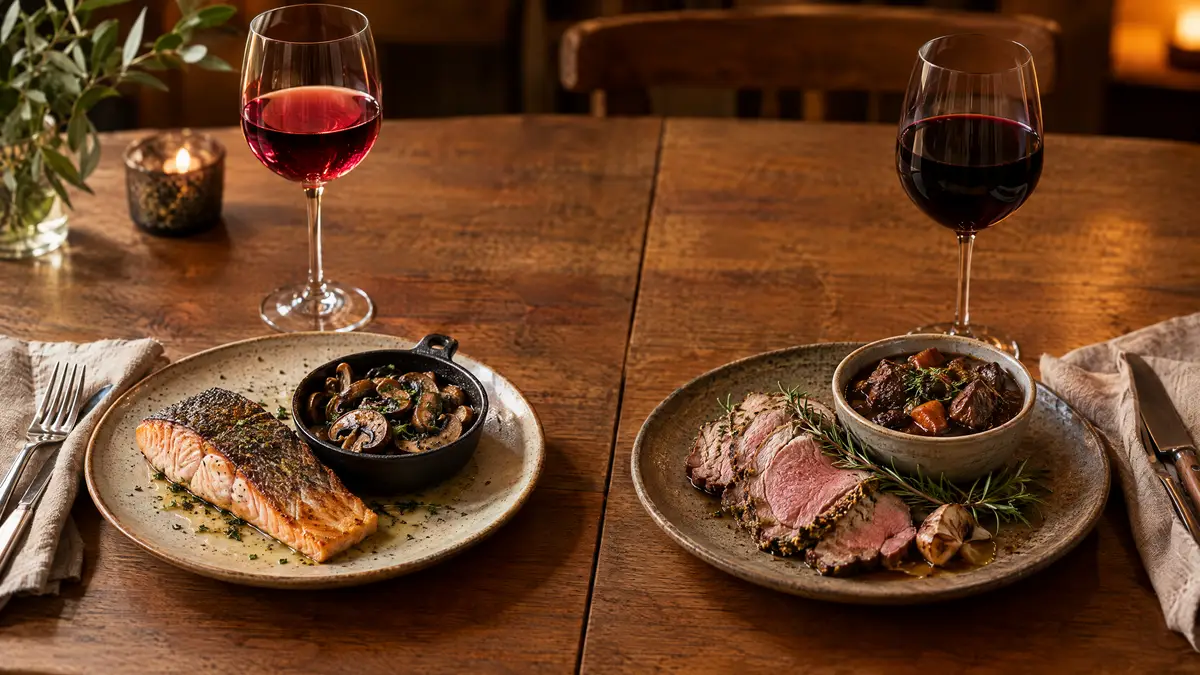
Each match rests on something on the plate:
- Salmon: an oily fish with no tannin of its own. Pinot's light, low-tannin style clashes with fish less than a big red does, and its acidity cuts the oil. More options in wine with salmon.
- Mushrooms and charcuterie: earthy and salty. Salt softens acidity, so Pinot tastes rounder beside a plate of ham or a mushroom risotto.
- Lamb and duck: fat and protein bind Merlot's tannin, so the wine feels softer and the meat less heavy. See wine with lamb.
- Stews and pork roasts: long cooking adds sweetness and weight, which Merlot's riper fruit and 14% alcohol can match.
If a dish is fiery with chilli, choose the Pinot: higher alcohol makes chilli heat burn harder. Pizza and burgers sit in the middle, so pick by the topping: mushroom pizza takes Pinot, a sausage pizza takes Merlot.
How Should You Serve Each One?
Serve Pinot Noir cooler than Merlot: about 12 to 15°C (55 to 60°F) for Pinot and 15 to 20°C (60 to 68°F) for Merlot, per Wine Folly. Most rooms sit above both ranges. If the bottle has been at room temperature, give Pinot 20 to 30 minutes in the fridge and Merlot about 15.
Too warm, Pinot loses its fresh cherry smell and tastes of alcohol. Too cold, Merlot's tannin feels harder. The wine serving temperature chart gives the ranges for every style.
Glass shape matters less than temperature, but a wide bowl helps Pinot, whose smell is its main attraction.
Can Merlot Ever Taste Like Pinot Noir?
Yes, cool-climate Merlot can come close, and warm-climate Pinot can drift toward Merlot. Wikipedia sorts Merlot by climate: cool sites give strawberry, red berry, plum, cedar and tobacco; moderate sites give blackberry, black plum and black cherry; hot sites give fruitcake and chocolate.
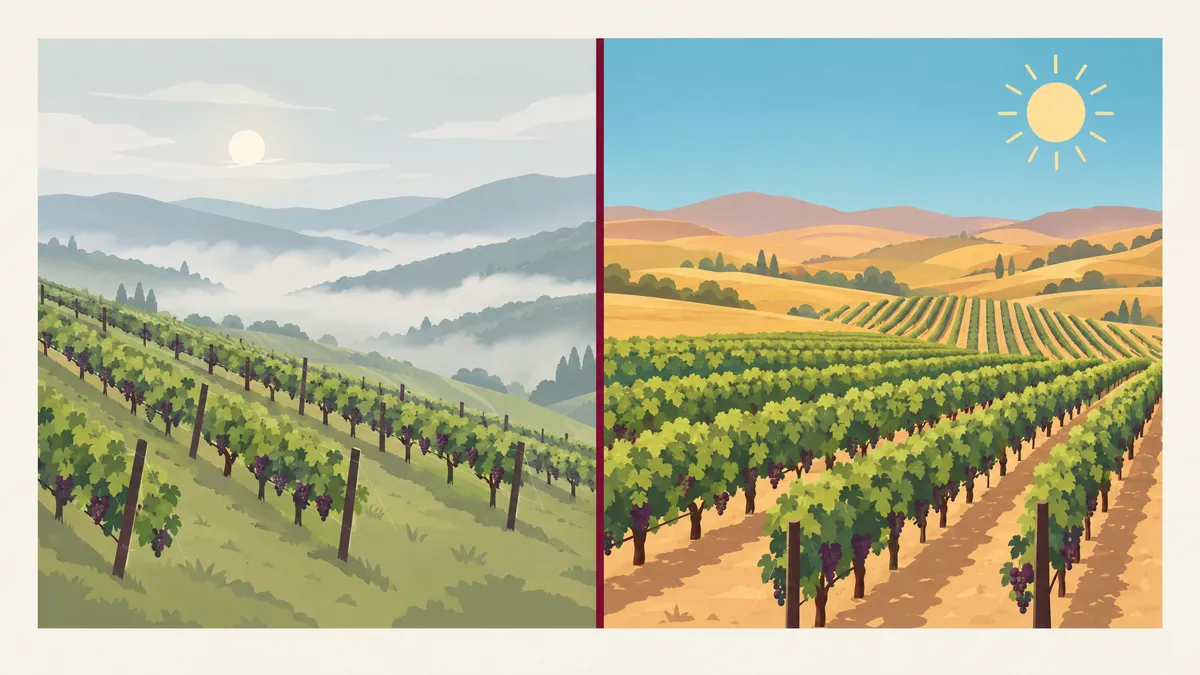
So a lighter Merlot from a cool site and a riper Pinot from a warm one can taste closer to each other than to their own extremes. The label word decides it. If it says Bourgogne, Burgundy or a Côte d'Or village, the red is almost always Pinot Noir. If it says Saint-Émilion or Pomerol, on Bordeaux's Right Bank (north of the Dordogne river), the blend is usually mostly Merlot. A bottle that names only the grape and a hot region will sit at the ripe end of its range.
Which Should You Try First?
For a fresh, tart drink, start with Pinot Noir; for something soft and warming, start with Merlot. Your usual dinner is the tiebreaker: fish and chicken point to Pinot, red meat and stews to Merlot. If you drink red without food, Merlot's lower acidity is easier on its own.
Merlot's reputation should not steer the choice. The 2004 film Sideways mocked Merlot, and a study cited by Wikipedia linked it to a decline in US Merlot sales. The grape behind the joke still fills most of the blend in Pomerol, among Bordeaux's most prized wines. The Bordeaux wine guide and the Burgundy wine guide show each grape at its home.
The fastest way to learn the difference is a side-by-side tasting, set up as in how to compare two wines. Use three sips. First, colour depth against white. Second, fresh raspberry or ripe plum on the nose. Third, the finish: mouth-watering means acidity and points to Pinot; a warm, padded feel means body and points to Merlot. More grapes are mapped in the grape varieties hub.
Sommy's tasting mode walks you through look, smell and taste for each glass and saves both sets of notes to your tasting journal. The Wine 101 course at sommy.wine covers tannin, acidity and body in short lessons. Buy one Pinot Noir and one Merlot at a similar price tonight, chill the Pinot for 20 minutes, and taste them side by side.
Sources
Frequently Asked Questions
Which is sweeter, Pinot Noir or Merlot?
Neither is sweet in its usual dry form. Both are fermented until no sugar you can taste is left. Merlot often seems sweeter because its riper plum and chocolate flavours and higher alcohol feel round and warm, while Pinot Noir's higher acidity makes it taste tarter. Fruity flavour and sugar are different things, and a dry Merlot has no more sugar than a dry Pinot.
Is Pinot Noir or Merlot better for beginners?
Start with Merlot if you want a soft, warming red that tastes of plum and needs little thought with dinner. Start with Pinot Noir if you like tart, fresh drinks such as cranberry juice or lemonade, or you mostly eat fish, chicken and mushrooms. Buying one of each and tasting them side by side teaches more than either bottle alone.
Which has more tannin, Pinot Noir or Merlot?
Merlot has more. Wine Folly rates Pinot Noir low in tannin and Merlot medium-high, because Pinot's thin skins give little tannin to the wine. Merlot still feels soft to many drinkers because its tannin is ripe and its acidity is lower, while Pinot's mouth-watering tartness can make a low-tannin wine feel lean.
Should Pinot Noir be chilled?
Slightly. Wine Folly suggests 12 to 15°C (55 to 60°F) for Pinot Noir, which is cooler than most rooms. If a bottle has been sitting at room temperature, 20 to 30 minutes in the fridge brings it down. Merlot is served warmer, at 15 to 20°C (60 to 68°F), so it needs less time, or none in a cool room.
Which goes better with steak, Pinot Noir or Merlot?
Merlot. A steak's fat and protein soften Merlot's medium-high tannin, and its weight matches the meat. Pinot Noir is light enough that a fatty, charred steak can flatten it. Pinot works better with leaner red meat such as a fillet, with duck breast, or with dishes built on mushrooms, where its acidity and lighter body fit.
Which is lighter, Pinot Noir or Merlot?
Pinot Noir is lighter in colour, body and alcohol. It is usually 12 to 14% alcohol and medium in body, pale enough to see your fingers through. Merlot is usually 13.5 to 15% alcohol and medium-full in body, with a deeper colour. A cool-climate Merlot can come close to a warm-climate Pinot, so the overlap is real.
Why did Merlot get a bad reputation?
Much of it traces to the 2004 film Sideways, whose hero mocks Merlot and praises Pinot Noir. A study cited by Wikipedia linked the film to a decline in Merlot sales in the United States. The grape itself stayed widely planted, and it still makes up most of the blend in Pomerol and Saint-Émilion, two of Bordeaux's most prized wine areas.
Sommy Team
LinkedInFounder & Wine Educator
The Sommy Team is building the world's most approachable wine education app, helping beginners develop real tasting skills through structured courses and AI-guided practice.