High Altitude Wine: Why Elevation Makes Wine Different

By the Sommy Team — AI-assisted, human-edited.
Updated Oct 1, 2026
Contents (8)
- What Is High Altitude Wine, in One Paragraph?
- How Does Altitude Change the Grapes?
- What Does High Altitude Wine Taste Like?
- Where Are the Highest Wine Regions?
- How Do You Spot High Altitude Wine on a Label?
- Is High Altitude Wine Always Better?
- What Are the Downsides of Mountain Vineyards?
- Taste the Altitude Effect Tonight
TL;DR
High altitude wine comes from vineyards where the climb itself cools the site. Air cools by roughly 0.6 to 1°C per 100 metres, nights get colder, and UV light grows stronger. The result is ripe fruit with fresh acidity and deep colour, though altitude only matters where a region is otherwise hot.
High altitude wine is the answer to a hot-country problem. Climbing a mountain cools the vineyard, makes nights colder and turns up the UV light. The grapes ripen in strong sun yet keep their acidity, and red grapes grow darker skins.
What Is High Altitude Wine, in One Paragraph?
High altitude wine is wine from vineyards planted high enough that the climb itself cools the site, usually from about 1,000 metres up in warm, sunny countries.
Air cools by roughly 0.6 to 1°C for every 100 metres, so a vineyard at 1,200 metres runs several degrees cooler than one at sea level on the same latitude. Mountain air also swings more between day and night, and UV light gets stronger with height. The grapes keep more acidity (the tartness that makes your mouth water) and build deeper skin colour. The most famous examples come from Argentina, where Mendoza's average vineyards sit at 600 to 1,100 metres and Salta's climb past 3,000.
How Does Altitude Change the Grapes?
Altitude works through three levers: a cooler average temperature, a wider gap between day and night, and stronger ultraviolet light. Each one is measurable, and each one shows up in the glass in a different way: as acidity, as ripe fruit or as colour.
| Lever | What changes with height | Measured example | What to look for in the glass |
|---|---|---|---|
| Cooler average | Air cools about 0.6 to 1°C per 100 m | Up to 4°C cooler mean temperature; harvest up to 2 months later | Fresher acidity, sometimes lower alcohol |
| Day-night swing | Clear, thin air loses heat fast after sunset | Mendoza at 766 m: swing up to 10°C wider than a 117 m site in Washington | Ripe fruit flavour with a crisp finish |
| Stronger UV | Less atmosphere filters the sun | UV-B up 15% from 1,231 m to 2,393 m in Mendoza | Deeper colour in reds, more perfume in aromatic whites |
A cooler average temperature
The air thins as you climb and holds less heat. WSET puts the drop at about 0.6°C per 100 metres; other sources give 1°C. Either way, moving from 600 to 1,200 metres in Mendoza cools a vineyard by roughly 4 to 6°C. A review of Mendoza research reported mean temperatures up to 4°C lower at the highest sites, which delayed harvest by up to two months. Slower ripening is the point: sugar builds while acid holds on.
A wider day-night swing
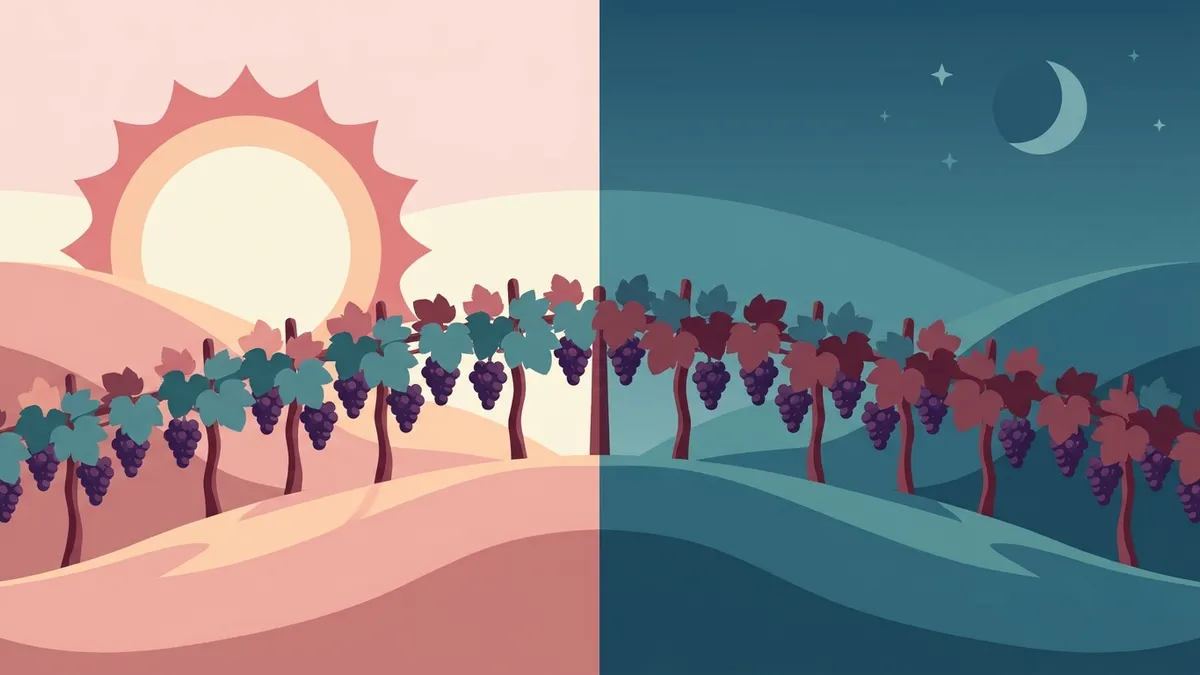
The diurnal swing is the gap between the day's high and the night's low. Dry, clear mountain air lets the day's heat escape quickly after dark. The same review found that a Mendoza site at 766 metres had a swing up to 10°C wider than a vineyard at 117 metres in Washington State. Warm days ripen the fruit; cold nights slow the vine's use of acid.
Stronger UV light
There is less atmosphere above a mountain vineyard to filter the sun. In Mendoza, peak UV-B rose 15% between 1,231 and 2,393 metres. Red grapes answer with more anthocyanins (the red-purple pigments in the skin), which screen UV like sunscreen. In one experiment, Malbec exposed to UV-B carried 28.5% more skin anthocyanins than Malbec shielded from it.
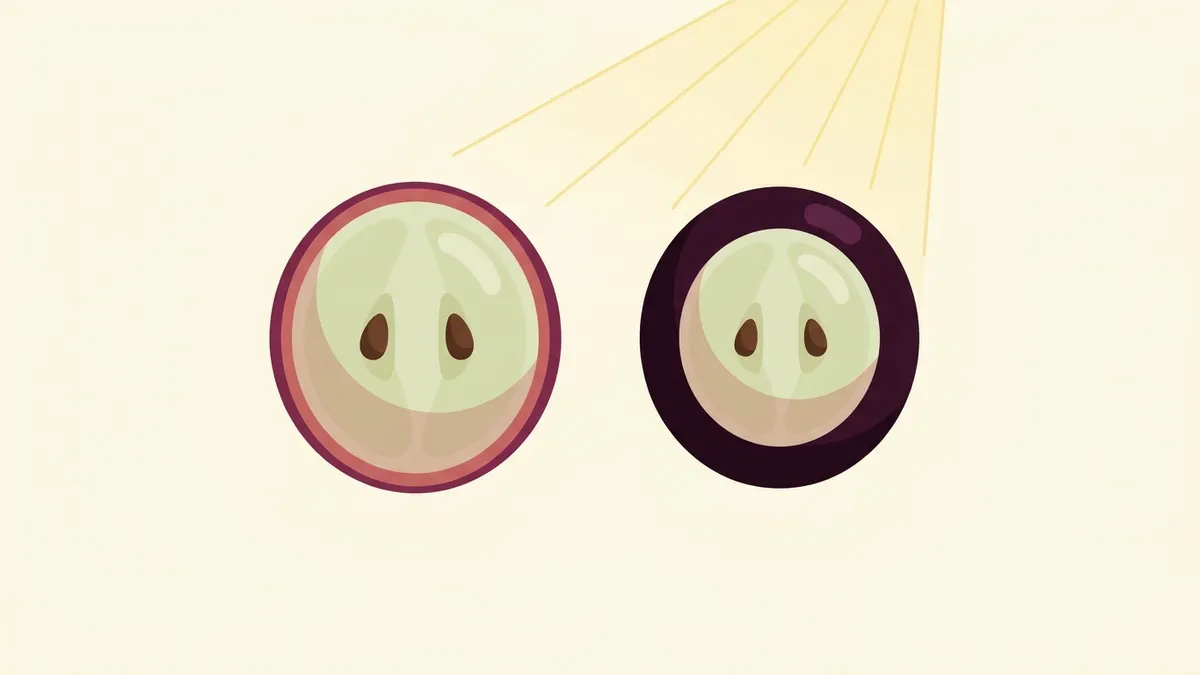
The thin air does not do this work directly; temperature and UV do. A study in Barolo country tested it at 215 to 400 metres, well below any mountain height. When researchers blocked UV from Nebbiolo bunches, the grapes ended up with fewer anthocyanins and flavonols.
What Does High Altitude Wine Taste Like?
High altitude wine tastes fresher than its sunshine suggests: firm acidity, deep colour and fully ripe fruit in the same glass. Start with structure. The acidity shows as a watering sensation along the sides of your tongue, and in reds the tannin (the drying grip on your gums) tends to feel fine-grained, because the skins ripen slowly.
Then the fruit. A high-altitude Malbec smells of ripe blackberry and plum, because the days are long and sunny, plus floral notes such as violet. Its colour is near-opaque purple with a bright violet rim. Mountain Torrontés smells of rose and peach yet tastes dry, since the cold nights keep its acid high.
Serve these reds cellar-cool rather than at room temperature. If a young mountain red feels sharp and tight, pair it with fatty food, such as grilled beef or hard cheese, because fat softens both acid and tannin. More on how acid works in the glass is in what is wine acidity.
Where Are the Highest Wine Regions?
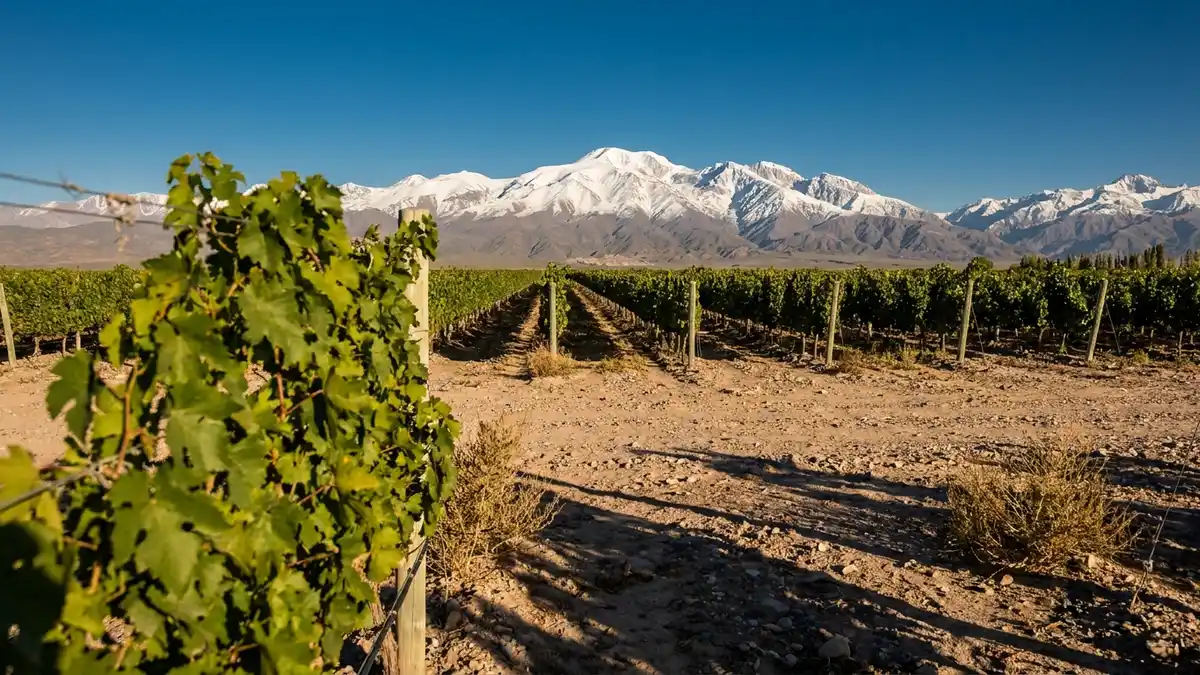
Many of the world's highest vineyards are in the Andes, where Argentina and Bolivia plant vines from about 1,000 metres to above 3,000. Outside South America, high sites are rarer, though a few in the Himalayan region top 2,000 metres. Elevation figures for the main high regions:
- Mendoza, Argentina. The average site sits at 600 to 1,100 metres, and the Uco Valley reaches nearly 1,200. The Mendoza wine guide maps its sub-zones by height.
- Cafayate, Salta, Argentina. About 3,300 hectares of vines grow between 1,650 and 2,000 metres. Days reach around 35°C and nights fall to 14 to 18°C, a swing of 15 to 20°C.
- Salta's highest vineyard. One site is planted at 3,111 metres, the highest figure cited in the sources consulted here.
- Bolivia. About 99% of the country's vineyards sit between 1,600 and 3,000 metres; the Tarija Valley runs from 1,600 to 2,150.
- Bekaa Valley, Lebanon. Vineyards at 1,000 to 1,200 metres show the same logic outside South America.
All five are hot, sunny places at lower latitudes, where height is the easiest way to find cool air.
How Do You Spot High Altitude Wine on a Label?
Look for a named high sub-zone or a metre figure on the back label, then judge it against the region's latitude. Many Andean producers print the vineyard's elevation because they know buyers look for it. A country name alone, such as "Argentina", tells you almost nothing about height.
If a label from a warm country names a sub-zone above about 1,000 metres, expect more acidity and deeper colour than the same grape from that country's lowland vineyards. In Mendoza, a Uco Valley Malbec is the high option; a wine labelled only "Mendoza" may blend fruit from many heights. In Salta, "Cafayate" on a Torrontés signals the high valley. The broader idea of how place shows up in a wine is explained in what is terroir.
Is High Altitude Wine Always Better?
No. Altitude is a stand-in for cool, and a vineyard can get cool other ways. Height earns its reputation in hot, sunny regions at lower latitudes, where a lowland vineyard would ripen grapes too fast and burn off much of their acidity.
Distance from the equator, called latitude, does the same job: the Mosel in Germany and Burgundy in France make tart, light wines from vineyards that are not high at all. A climb in Mendoza and a northern sky in the Mosel are two routes to the same slow ripening. Climate and wine flavour covers the latitude side.
So altitude is a correction for heat, and a correction only helps where there is something to correct. If a region is already cool, extra height can leave grapes struggling to ripen at all.
Claims about alcohol need the same care. One Argentine producer reports wines from its nearly 1,500-metre vineyard in the 13% range. That is a winery's own description, and alcohol is set by when the grapes are picked. A late harvest at altitude can make a 15% wine, so read the percentage on the label.
What Are the Downsides of Mountain Vineyards?
Mountain vineyards trade heat stress for frost, hail, sunburn and hard logistics. Cold air brings frost late in spring, when buds are tender, and early in autumn, before the harvest is in. The strong UV that builds colour can also scorch exposed bunches, so growers manage leaf cover to shade the fruit.
Hail is the most dramatic risk. In Mendoza, summer hail, known locally as la piedra, is the growers' main climate worry. Thin, rocky soils, scarce water fed by snowmelt and long drives to the winery add to the cost of farming high sites.
Taste the Altitude Effect Tonight
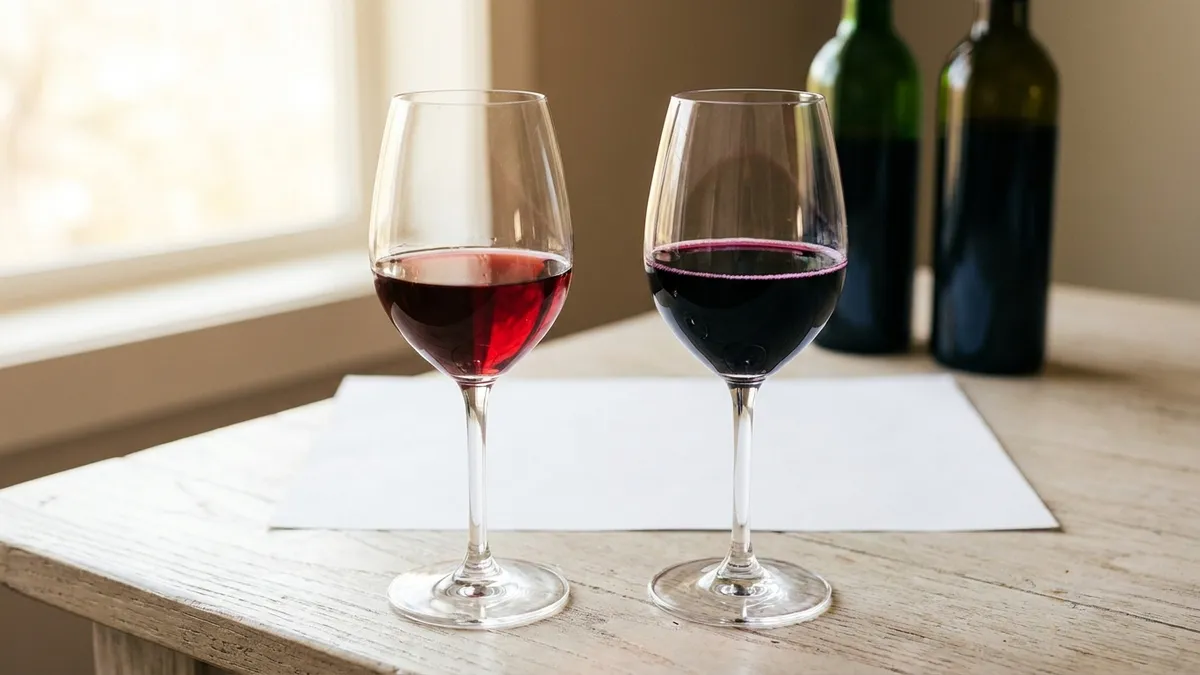
A side-by-side tasting makes altitude visible in ten minutes. Pour the two Malbecs from the label section. Look at colour first, then smell for violet, then sip and wait for the watering on the sides of your tongue. The higher wine should water your mouth more and leave a longer, tarter finish. If the two taste alike, check the alcohol: a riper harvest can hide the altitude effect. More reds built on altitude and climate sit in the wine styles hub.
For the region behind most high altitude wine, the Argentina wine guide covers Mendoza, Salta and Patagonia, and Sommy's Wine 101 course at sommy.wine teaches how to taste acidity and tannin in short lessons. Pour the Uco Valley Malbec tonight, taste one sip before dinner and one with food, and note which sip tastes fresher.
Sources
- Frontiers in Plant Science (2022): grapevine responses to high-altitude conditions in Mendoza
- PMC: UV exposure and temperature effects on Nebbiolo at three vineyard elevations in La Morra
- Wine With Seth: High-altitude viticulture (citing WSET and Decanter)
- Wine With Seth: Cafayate
- Wikipedia: Mendoza wine
Frequently Asked Questions
What is considered high altitude for a vineyard?
There is no legal cut-off. In practice the term is used where elevation changes the climate, which in warm, sunny countries usually means about 1,000 metres and up. Mendoza's average vineyards sit at 600 to 1,100 metres, Cafayate at 1,650 to 2,000, and one site in Salta reaches 3,111 metres.
How does altitude affect the taste of wine?
Mostly through acidity and colour. Cooler air and cold nights slow ripening, so the grapes keep more of their natural acidity and the wine tastes fresher. Stronger UV light pushes the skins to make more pigment, so reds tend to be deeper in colour. Expect ripe fruit and a mouth-watering finish in the same glass.
Why do grapes grown at high altitude have thicker skins?
UV light is stronger at altitude, and grape skins respond by building more of the compounds that screen it, including the red-purple pigments called anthocyanins. In one Malbec experiment, berries exposed to UV-B carried 28.5% more skin anthocyanins than shaded ones. Results vary by grape and year, so treat thicker, darker skins as a tendency, not a rule.
Is high altitude wine better?
Not automatically. Altitude is a way to get a cool site in a hot region, and a vineyard can be cool for other reasons, such as latitude or ocean breezes. A high site in a hot desert and a low site in northern Europe can both make fresh wine. Quality still depends on soil, slope, water and the grower's choices.
Where are the highest vineyards in the world?
Many of the highest vineyards are in the Andes. One vineyard in Argentina's Salta province is planted at 3,111 metres, and about 99% of Bolivia's vineyards sit between 1,600 and 3,000 metres. Lebanon's Bekaa Valley, at 1,000 to 1,200 metres, is a high region outside South America.
Does altitude make wine lower in alcohol?
Sometimes, but not by itself. Cooler mountain sites ripen grapes more slowly, which lets growers pick fully ripe fruit with less sugar, and some producers report wines around 13% alcohol. Alcohol still depends on when the grapes are picked, so a late harvest at altitude can make a strong wine. Check the percentage on the label.
Sommy Team
LinkedInFounder & Wine Educator
The Sommy Team is building the world's most approachable wine education app, helping beginners develop real tasting skills through structured courses and AI-guided practice.