Mendoza Wine Guide: High-Altitude Winemaking at Its Best

By the Sommy Team — AI-assisted, human-edited.
Updated Jun 17, 2026
Contents (10)
- What Is Mendoza Wine?
- Where Mendoza Sits: The Andes Rain Shadow
- Why Altitude Makes Mendoza Distinctive
- The Signature Grapes of Mendoza
- The Sub-Zones of Mendoza
- How Mendoza Compares to Its Neighbors
- Argentina's Wine Classification, in Plain Terms
- How a Beginner Should Start with Mendoza
- How Mendoza Fits Into South American Wine
- The Reward of Learning Mendoza
TL;DR
Mendoza sits in the Andes rain shadow in western Argentina, growing vines from roughly 600 to over 1,500 meters. Its signature grape is Malbec, joined by Bonarda and Cabernet, with floral Torrontés nearby. This Mendoza wine guide explains the altitude, the sub-zones, and where a beginner should begin.
What Is Mendoza Wine?
This Mendoza wine guide begins with the fact that shapes everything in the glass: altitude. Mendoza is Argentina's flagship wine region, a high desert in the west of the country tucked against the Andes mountains. Vineyards here climb from roughly 600 meters to over 1,500 meters in the highest sites of the Uco Valley, far higher than almost any vineyard in Europe. The signature grape is Malbec, a deep, plummy red that found its truest home in this thin, sunny mountain air, joined by Bonarda, Cabernet Sauvignon, and the floral white Torrontés grown in nearby provinces. Mendoza grows around three-quarters of all Argentine wine, and its three core sub-zones — Luján de Cuyo, Maipú, and the Uco Valley — each tell a different version of the same high-altitude story.
Where Mendoza Sits: The Andes Rain Shadow
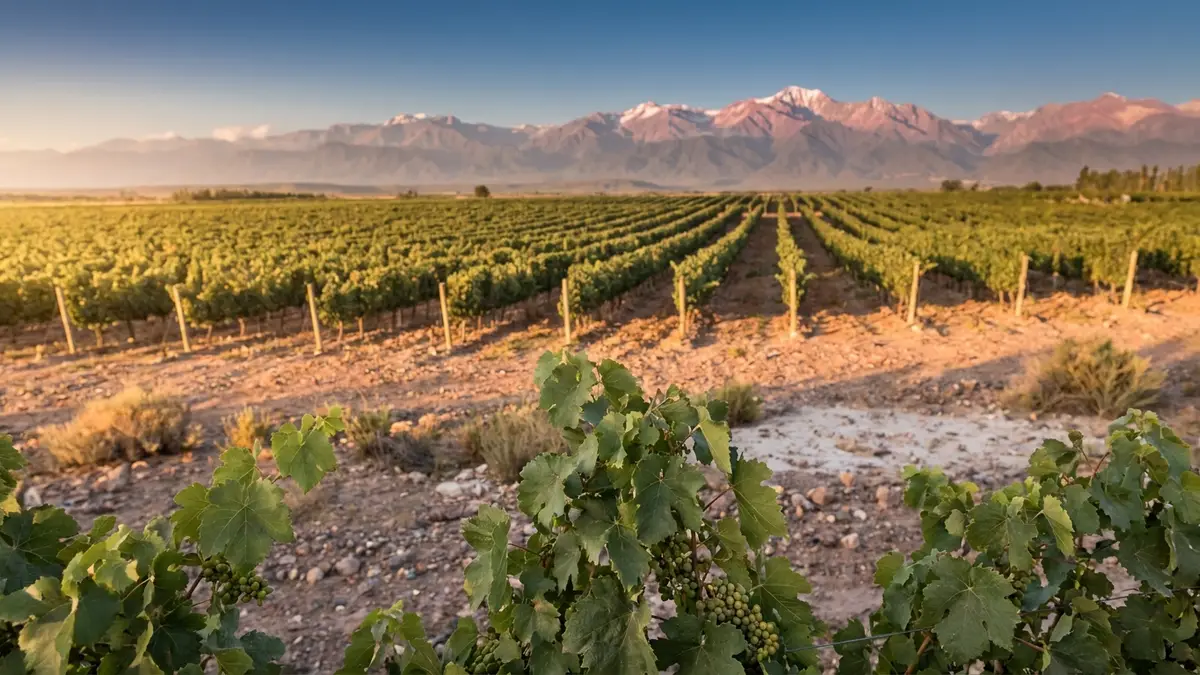
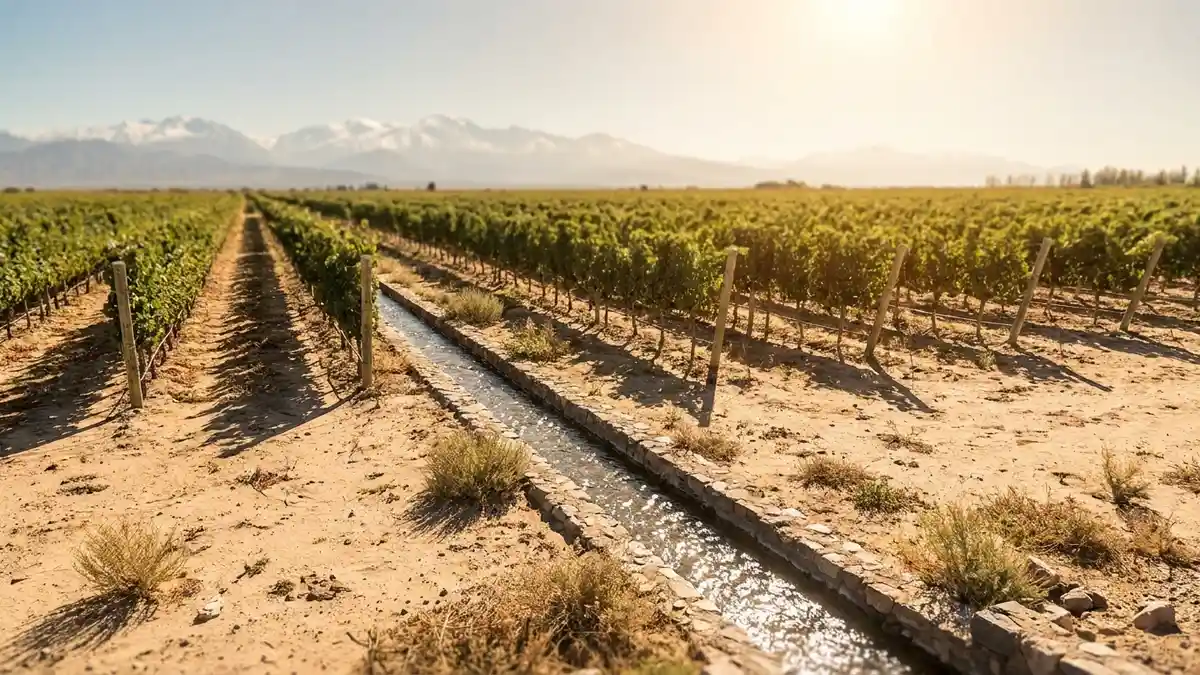
Mendoza lies in west-central Argentina, on the eastern flank of the Andes at roughly the same latitude south as Morocco is north. The mountains do something decisive here: they create a rain shadow (a dry zone formed when a mountain range blocks moist air, wringing the rain out before it can cross). Pacific weather drops its water on the Chilean side, and what reaches Mendoza is a sun-baked, near-desert climate that sees very little rainfall in a year.
A desert sounds like the worst place to grow wine, but for vines it is close to ideal. Dryness means very little disease pressure, so growers can farm cleanly with less intervention. The challenge is water, and Mendoza solved that centuries ago with an ingenious network of irrigation canals fed by Andean snowmelt. Each spring, meltwater from the high peaks flows down through these channels to the vineyards below, giving growers precise control over exactly how much each vine drinks.
The other gift of the Andes is sunshine and elevation. The air at altitude is thin and clear, so vines receive intense ultraviolet light that thickens grape skins — and thicker skins mean deeper color and more tannin (the drying, gripping sensation in red wine that gives it structure and the ability to age).
Why Altitude Makes Mendoza Distinctive
If one idea separates Mendoza from every other red-wine region, it is the diurnal swing — the large gap between hot daytime and cold nighttime temperatures at altitude. Days in the high vineyards are brilliantly sunny and warm, ripening the fruit fully; nights turn sharply cold as the mountain air sinks, slowing the grapes down and letting them rest. That daily rhythm is the engine of Mendoza's style.
Here is why the swing matters so much, broken down simply:
- Warm days build ripeness. Intense high-altitude sun pushes sugar and ripe fruit flavor into the grapes, so Mendoza wines taste generous and full rather than green or underripe.
- Cold nights preserve freshness. Cool nights slow the loss of natural acid, so the wines keep a bright, juicy acidity instead of turning flat and heavy the way warm-climate reds often do.
- Thin air thickens skins. Strong ultraviolet light at elevation builds thicker grape skins, which concentrate color, aroma compounds, and tannin.
- Aromatics stay vivid. The slow, cool ripening protects the delicate floral and fruit aromas — the violet lift that makes good Malbec so recognizable.
The result is a rare combination that lower, flatter regions struggle to achieve: full body and ripe fruit and fresh acidity in the same glass. This is the same terroir (the environment where grapes grow — soil, climate, altitude, and exposure) logic that defines great regions everywhere, but Mendoza expresses it through elevation more dramatically than almost anywhere on earth. To understand the structural pieces these wines balance so well, our guide to understanding tannins, acidity, and body breaks down exactly what you are sensing.
In Mendoza the vineyard's address is measured in meters above sea level, and those meters change the wine more than the vintage ever could.
The Signature Grapes of Mendoza
Mendoza is not a one-grape region, but it is unmistakably a Malbec region. Knowing its handful of important varieties tells you what is in nearly every Argentine bottle on the shelf.
Malbec: The Grape That Found Its Home
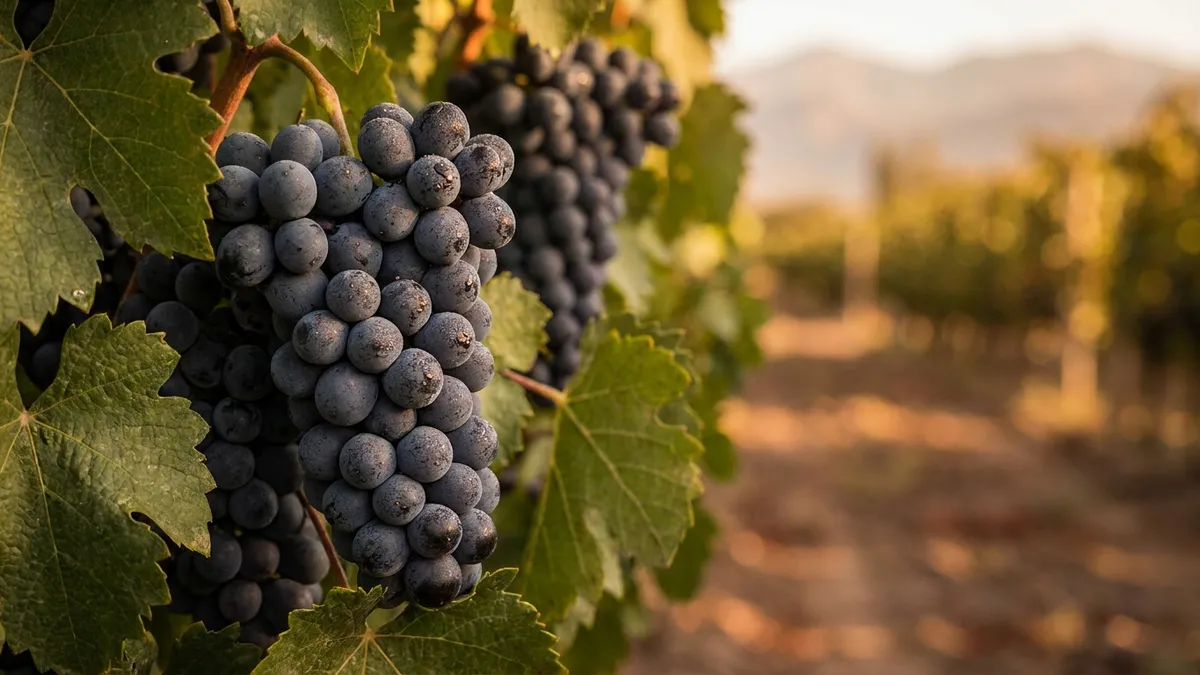
Malbec is the soul of Mendoza. Originally a blending grape in southwest France, it never reached greatness there — but transplanted to the high Argentine desert, it became a star. Mendoza Malbec is deep, opaque purple, full-bodied, and openly fruity, with smooth tannins and the altitude-given acidity that keeps it from feeling heavy.
Typical aromas: blackberry, plum, black cherry, violet, and cocoa or sweet baking spice when aged in oak. Body: full (4-5/5) · Tannins: medium-to-high but smooth (4/5) · Acidity: medium-to-high, fresh (3-4/5). The violet floral note is the giveaway — train your nose to find it and you can often spot a Malbec blind. For the full global picture of the grape, our Malbec wine guide covers its French roots and Argentine rise in depth.
Bonarda, Cabernet, and Beyond
Beyond Malbec, Mendoza grows a useful supporting cast worth tasting:
- Bonarda: Argentina's quietly important second red, often overshadowed by Malbec. It makes juicy, fruit-forward, easy-drinking reds with softer tannins and notes of red plum and fresh cherry — a great everyday counterpoint. Our Bonarda wine guide explains why it deserves more attention.
- Cabernet Sauvignon: Thrives in the warmer, lower sites and adds firm structure, blackcurrant, and a savory edge. It is frequently blended with Malbec to add backbone, and as a varietal it gives Mendoza a more classic, Bordeaux-leaning style. See how the grape behaves worldwide in our Cabernet Sauvignon guide.
- Syrah and other reds: Syrah does well in the warmer zones, bringing dark fruit and pepper, while small plantings of Tempranillo and Petit Verdot add variety.
Torrontés: Argentina's Floral White
For whites, the country's signature is Torrontés, an aromatic grape that smells intensely of rose petals, peach, and citrus blossom yet usually tastes dry and crisp — a delightful surprise for anyone expecting sweetness from such a perfumed nose. Most Torrontés grows north of Mendoza in even higher-altitude provinces, especially around the Cafayate valley in Salta, though Mendoza grows some too. Our Torrontés wine guide covers this distinctive white in full.
The Sub-Zones of Mendoza
Mendoza is large, and "Mendoza" on a label can mean very different wines depending on where the grapes grew. Three zones do most of the heavy lifting, and learning them turns a vague label into a useful clue about style.
- Maipú (warm, historic heartland): Just south of Mendoza city, Maipú is one of the oldest winegrowing areas in Argentina and sits at a lower, warmer elevation. The wines tend to be rich, ripe, and rounded, with generous fruit and softer acidity — the traditional, welcoming face of Mendoza Malbec. It is also a hub for olive groves and old vines.
- Luján de Cuyo (the classic Malbec home): Slightly higher and cooler than Maipú, Luján de Cuyo is widely seen as the birthplace of serious Argentine Malbec. Its prized district of Agrelo grows structured, age-worthy reds with deep fruit and firmer tannins. If you want the textbook Mendoza Malbec, this is its heartland.
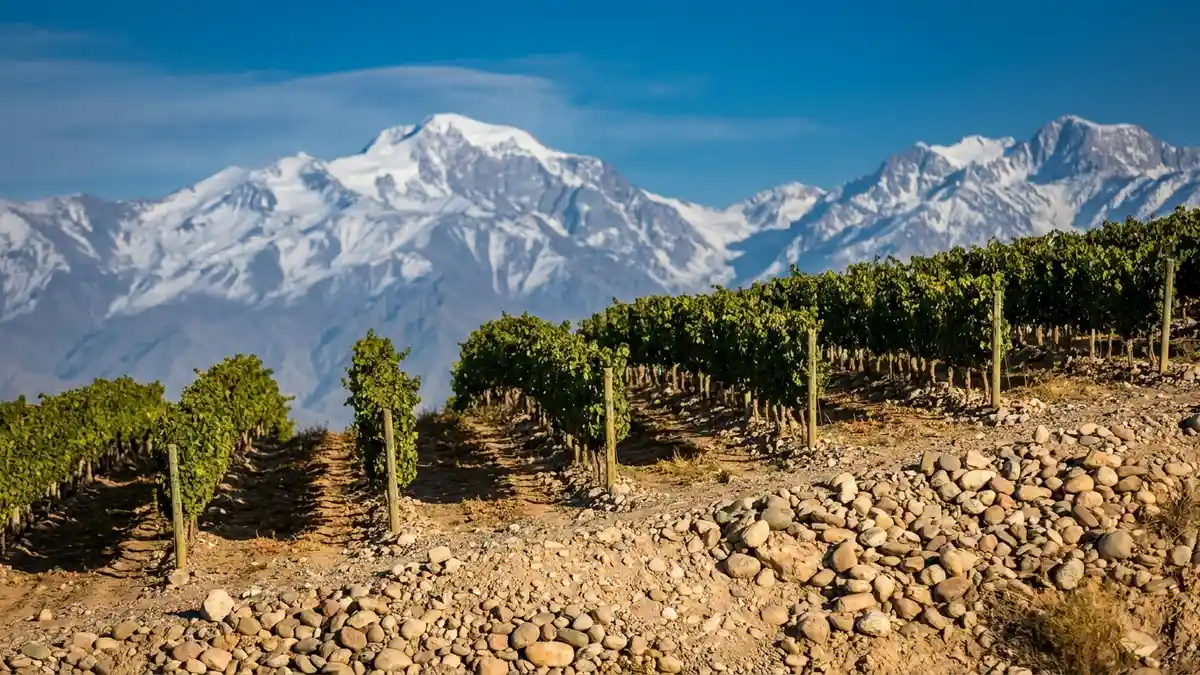
- Uco Valley (high-altitude frontier): Southwest of the city and pressed right against the Andes, the Uco Valley is the cool, high, modern frontier — with top sites such as Gualtallary climbing past 1,500 meters. The extreme altitude yields the most perfumed, fresh, and structured wines, with vivid floral aromatics and a tighter, more mineral feel. This is where Mendoza is pushing its quality ceiling.
The simple pattern: as you move from Maipú up to the Uco Valley, the wines generally get fresher, more aromatic, and more structured, while the warmer, lower zones give rounder, riper, earlier-drinking bottles. Same grape, different altitude — a clear, tasteable lesson in how place shapes wine.
How Mendoza Compares to Its Neighbors
Mendoza is the giant of South American wine, but it helps to place it among its peers. A few bold-bullet comparisons make the differences clear:
- Mendoza vs Chile (across the Andes): Climate: high desert in the rain shadow · Signature grape: Malbec · Style: ripe, floral, altitude-fresh reds. Chile sits on the wetter, ocean-cooled western side of the same mountains, leans on Cabernet Sauvignon and Carmenère, and tends toward a leaner, herbal, more Bordeaux-like profile.
- Mendoza Malbec vs French Malbec (Cahors): Mendoza: full-bodied, ripe black-and-blue fruit, smooth tannins, violet lift. French Cahors: more rustic, savory, with firmer tannins and earthier, tar-and-plum character. Same grape, two very different personalities.
- Mendoza vs northern Argentina (Salta): Mendoza: red-dominant, Malbec at 600-1,500 meters · focus on structure and fruit. Salta: white-leaning around Torrontés, with some of the highest vineyards on earth above 2,000 meters, giving even more intense aromatics.
These contrasts are the kind of thing Mendoza teaches better than most regions, because the variable in play — altitude — is so easy to taste. The broader idea that one grape can taste completely different depending on where it grows runs through our piece on why grapes that look the same can taste different.
Argentina's Wine Classification, in Plain Terms
Argentina does not have a strict cru ladder like Burgundy or a tightly tiered system like Germany. Instead it uses a place-based framework of Geographic Indications (legally defined growing areas, abbreviated GI) that name the region, sub-region, or district where the grapes were grown. The more specific the place on the label, the more precisely it tells you about style.
In practice this means you can read a Mendoza label from broad to narrow, much like other place-based regions:
- Province level (Mendoza): The broadest name, grapes sourced widely across the province. Reliable, fairly priced, and the easiest entry point.
- Sub-region level (Luján de Cuyo, Maipú, Valle de Uco): A named zone with a clearer house style — this is where the altitude and climate differences above start to show.
- District level (Agrelo, Gualtallary, Vista Flores): The narrowest and most site-specific, naming a particular high-quality pocket within a sub-region. These are the ambitious, terroir-driven bottles.
It is a younger, looser system than Europe's, but the logic is the same and beginner-friendly: a narrower place name usually signals a more specific, higher-intention wine. The Sommy app's tasting exercises help you connect what is written on the label to what you actually sense in the glass.
How a Beginner Should Start with Mendoza
Mendoza is one of the friendliest great regions to explore, because the wines are generous, widely available, and rarely require a big budget. Here is a practical order for getting your bearings:
- Start with a mid-priced Mendoza Malbec. Buy a single bottle labeled simply "Mendoza" and learn the house style first: deep purple color, ripe plum and blackberry, that violet floral lift, and smooth tannins balanced by fresh acidity.
- Taste altitude side by side. Open a Luján de Cuyo Malbec next to an Uco Valley Malbec. The Uco wine should feel fresher, more floral, and tighter; the Luján wine rounder and deeper. That difference is altitude — the clearest single lesson Mendoza offers.
- Add a Bonarda for contrast. A juicy, fruit-forward Bonarda shows how a second Argentine red can be lighter and more gulpable than Malbec, broadening your sense of the region.
- Try a Torrontés. Pour an aromatic, floral Torrontés to round out your picture of Argentine wine and to practice separating how a wine smells from how it tastes — the nose promises sweetness the palate does not deliver.
- Build the tasting habit. Note the color, the aromas, and the structure each time. Our guide to how to taste wine gives you the step-by-step method, and you can start with the broader noble grapes every learner should know.
Sommy turns these comparisons into guided exercises — naming the violet and blackberry aromas, scoring the tannins and acidity, and building the vocabulary to describe what you sense. You can start practicing free at sommy.wine, then bring the method to your next bottle of Mendoza Malbec.
How Mendoza Fits Into South American Wine
Mendoza did not become famous in isolation. Argentina and its neighbors share a long winemaking history rooted in vines brought by early settlers, including the humble País grape that once dominated the continent before international varieties took over. That older story is worth knowing for context, and our País grape wine guide traces how South American wine began before Malbec's rise.
Mendoza's place-based labeling also makes a useful bridge to Europe. If you have explored how France organizes its appellations, our overview of French wine regions shows the same broad-to-narrow logic that Mendoza's younger GI system borrows. Reading a Mendoza label and a French one with the same habit — place first, specificity equals intention — makes both far less intimidating.
The Reward of Learning Mendoza
Mendoza rewards a learner quickly. Where some regions demand months of study before the wines make sense, Mendoza hands you a clear, repeatable lesson in a single side-by-side tasting: change the altitude, change the wine. The grape stays Malbec, the violet aroma stays recognizable, but the freshness, structure, and perfume shift with every few hundred meters of elevation.
Start with one good Malbec, taste deliberately, and let the mountains do the teaching. The Sommy app is built to make that habit stick — turning each bottle into a short, guided lesson so the next Mendoza you open is a little clearer than the last.
Sources
Frequently Asked Questions
What wine is Mendoza famous for?
Mendoza is famous above all for Malbec, the deeply colored red grape that became Argentina's signature here. Mendoza grows roughly three-quarters of the country's wine, and Malbec is its flagship. The region also makes good Bonarda, Cabernet Sauvignon, and Syrah, plus floral white Torrontés grown in nearby high-altitude provinces.
Why is Mendoza wine grown at such high altitude?
Mendoza sits in the Andes rain shadow, a dry desert where vineyards climb from about 600 to over 1,500 meters. Altitude brings intense sunlight for ripeness and cool nights for freshness, and the wide day-to-night temperature swing locks in color, aroma, and acidity. Higher sites in the Uco Valley produce especially structured, perfumed wines.
What does Mendoza Malbec taste like?
Mendoza Malbec is deep purple with full body, ripe black and blue fruit, and a violet floral lift. Typical notes include blackberry, plum, black cherry, and violet, often with cocoa or sweet spice from oak. Tannins are smooth and ample, acidity is fresh thanks to altitude, and the finish is generous rather than austere.
What are the main sub-regions of Mendoza?
The three key zones are Luján de Cuyo, Maipú, and the Uco Valley. Luján de Cuyo is the classic home of structured Malbec, Maipú is the warm, historic heartland near the city, and the Uco Valley is the high, cool frontier where altitude reaches over 1,500 meters and produces the most perfumed, age-worthy wines.
Is Torrontés a Mendoza wine?
Torrontés is Argentina's signature white grape, but most of it grows north of Mendoza in high-altitude provinces such as Salta, especially the Cafayate valley. Some is planted in Mendoza too. It is aromatic and floral, with notes of rose, peach, and citrus, yet usually dry and crisp on the palate rather than sweet.
How does Mendoza irrigate vineyards in a desert?
Mendoza is one of the world's driest wine regions, receiving very little rain. Vineyards rely on snowmelt from the Andes, channeled through an old network of irrigation canals first developed centuries ago. This meltwater, combined with intense sun and cool nights, lets growers control vine vigor precisely and produce healthy, concentrated fruit.
Where should a beginner start with Mendoza wine?
Start with a mid-priced Mendoza Malbec to learn the region's house style, then taste a Luján de Cuyo bottle against an Uco Valley one to feel how altitude changes the wine. Add a Bonarda for a juicier red and a Torrontés for contrast. Note the violet aroma, ripe fruit, and fresh acidity each time.
Sommy Team
LinkedInFounder & Wine Educator
The Sommy Team is building the world's most approachable wine education app, helping beginners develop real tasting skills through structured courses and AI-guided practice.